


Kintone Pricing, Reviews, Pros and Cons: 2026 Breakdown
$24/user/month sounds reasonable - until you realize you can't buy fewer than five seats. That $120/month floor changes the math for small teams fast.
Kintone is a genuinely capable no-code workflow platform powering 14,000+ organizations globally, with 500,000+ apps built and roughly 1,000 new ones created daily. But whether it's worth your money depends entirely on team size and integration needs. We've dug through hundreds of user reviews, tested the trial, and compared the numbers so you don't have to guess.
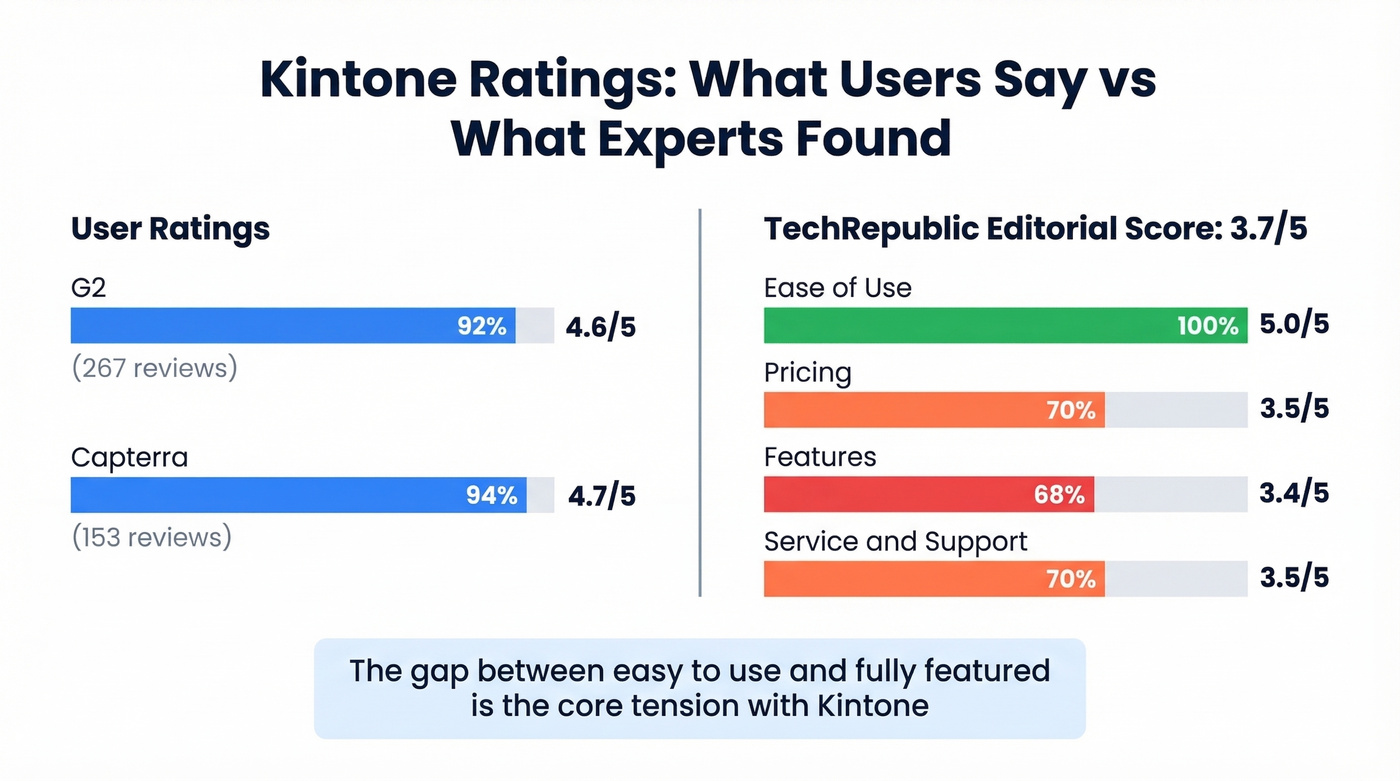
Here's the quick verdict: Kintone earns strong marks across 267 reviews on G2 (4.6/5) and 153 reviews on Capterra (4.7/5). It ships monthly updates - most recent in March 2026 - and the customer support is legitimately good. Skip it if you're under 5 users, need lots of third-party integrations, or want advanced reporting and a modern UI out of the box.
How Kintone Pricing Works
Kintone keeps it simple: one plan, all features, $24/user/month. The catch is the 5-user minimum, so you're paying $120/month even if only two people log in.
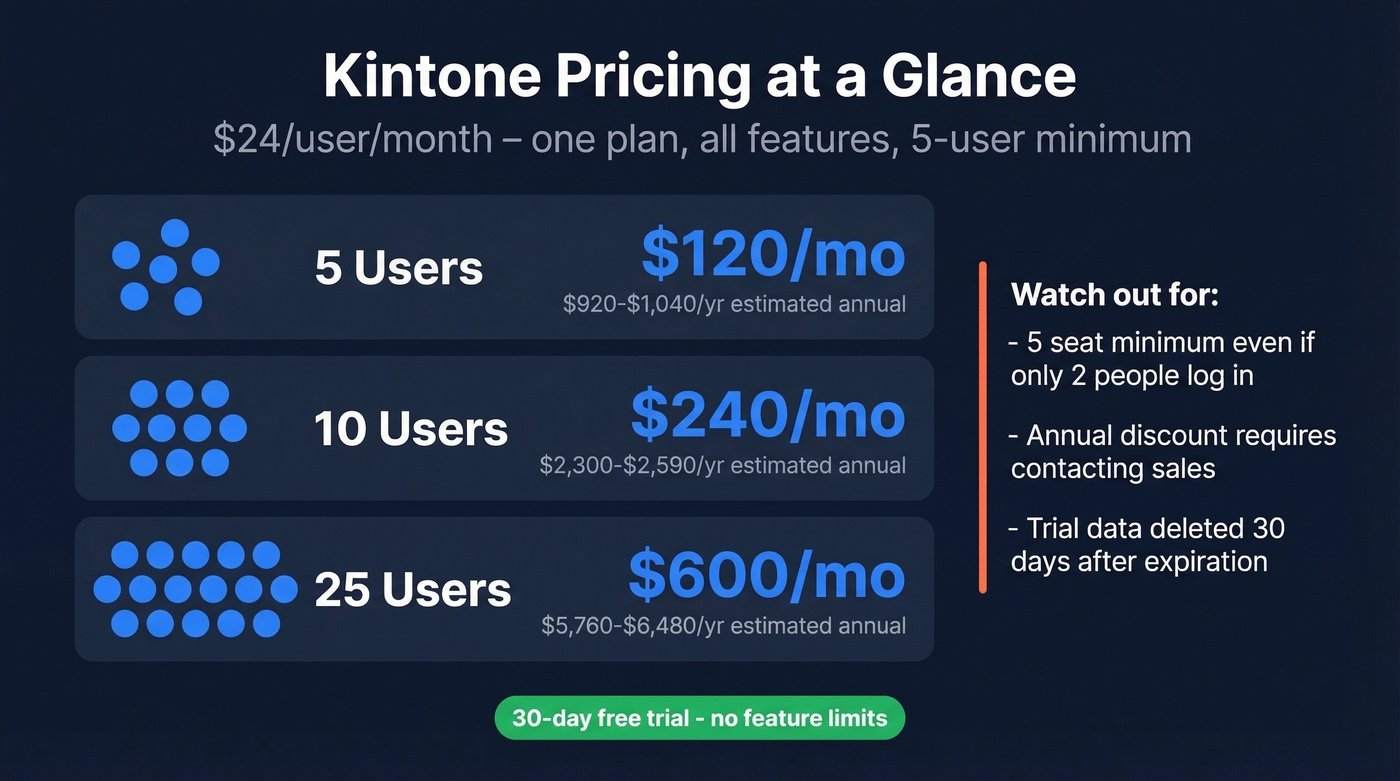
Annual contracts are available, but you'll need to contact sales for the rate. Expect a 10-20% discount. Nonprofits (501(c)3), education, and government orgs can negotiate discounts directly.
There's a 30-day free trial with zero feature limitations. If you don't convert, your trial data gets deleted 30 days after expiration - don't use it as a sandbox you plan to revisit later.
| Team Size | Monthly Cost | Annual Cost (est.) |
|---|---|---|
| 5 users | $120/mo | ~$920-$1,040/yr |
| 10 users | $240/mo | ~$2,300-$2,590/yr |
| 25 users | $600/mo | ~$5,760-$6,480/yr |
One Capterra reviewer noted that the pricing structure "could be more transparent" - and they're right. The single-plan simplicity is nice, but the 5-seat minimum and opaque annual discounting create friction that a simple pricing page doesn't resolve.
Pros: What Users Consistently Praise
Ease of use dominates G2 reviews with 31 mentions - more than any other theme. TechRepublic's hands-on rubric gave it a perfect 5/5 for ease of use, and that matches reality: teams with zero dev resources get productive in days, not weeks.
Customer support pulls 28 mentions, unusually high for a mid-market platform. Support runs 9am-5pm PST weekdays via tickets and live chat. Customization rounds out the top three at 17 mentions.
The drag-and-drop app builder genuinely works. Teams convert spreadsheets into database apps without touching code, and the template library shortens setup from days to hours. For a 10-30 person team that needs custom workflows across departments - approvals, task handoffs, inventory tracking, client onboarding - Kintone delivers on its core promise without requiring a single line of JavaScript.

Kintone can build the workflow, but it can't source the contacts. Prospeo gives you 300M+ verified professional profiles with 98% email accuracy - pipe them straight into your no-code apps via API, CSV, or native CRM integrations.
Stop building sales workflows on top of bad data.
Cons: Where Kintone Falls Short
"Missing features" is the top complaint on G2 with 12 mentions, followed by poor interface design (7 mentions) and limited customization (6 mentions). That last one is ironic given customization is also a top pro - the pattern is that the platform's customization is broad but shallow. You can build a lot, but you'll hit walls.
One Capterra reviewer put it bluntly: "It can't email documents from the app." Generating Word/PDF documents from records requires bolting on a third-party service. The visualization tools are basic compared to dedicated BI platforms, and the mobile app is limited compared to the desktop experience.

TechRepublic's editorial score of 3.7/5 - based on a hands-on trial - tells a different story than the aggregated user ratings. Their breakdown: Features 3.4/5, Pricing 3.5/5, Ease of use 5/5, Service & support 3.5/5. The gap between "easy to use" and "fully featured" is real. And with only 57 extensions available in the U.S., the integration ecosystem is thin compared to Airtable or Zapier-native tools.
Here's the thing: Kintone is the best no-code platform for people who hate software. The learning curve is genuinely flat. But if you're technical enough to evaluate integration ecosystems and API limits, you've probably outgrown what it offers - and you'll feel that ceiling within six months.
Platform Limits Nobody Mentions
These hard limits matter if you're scaling beyond a small team:
| Constraint | Limit |
|---|---|
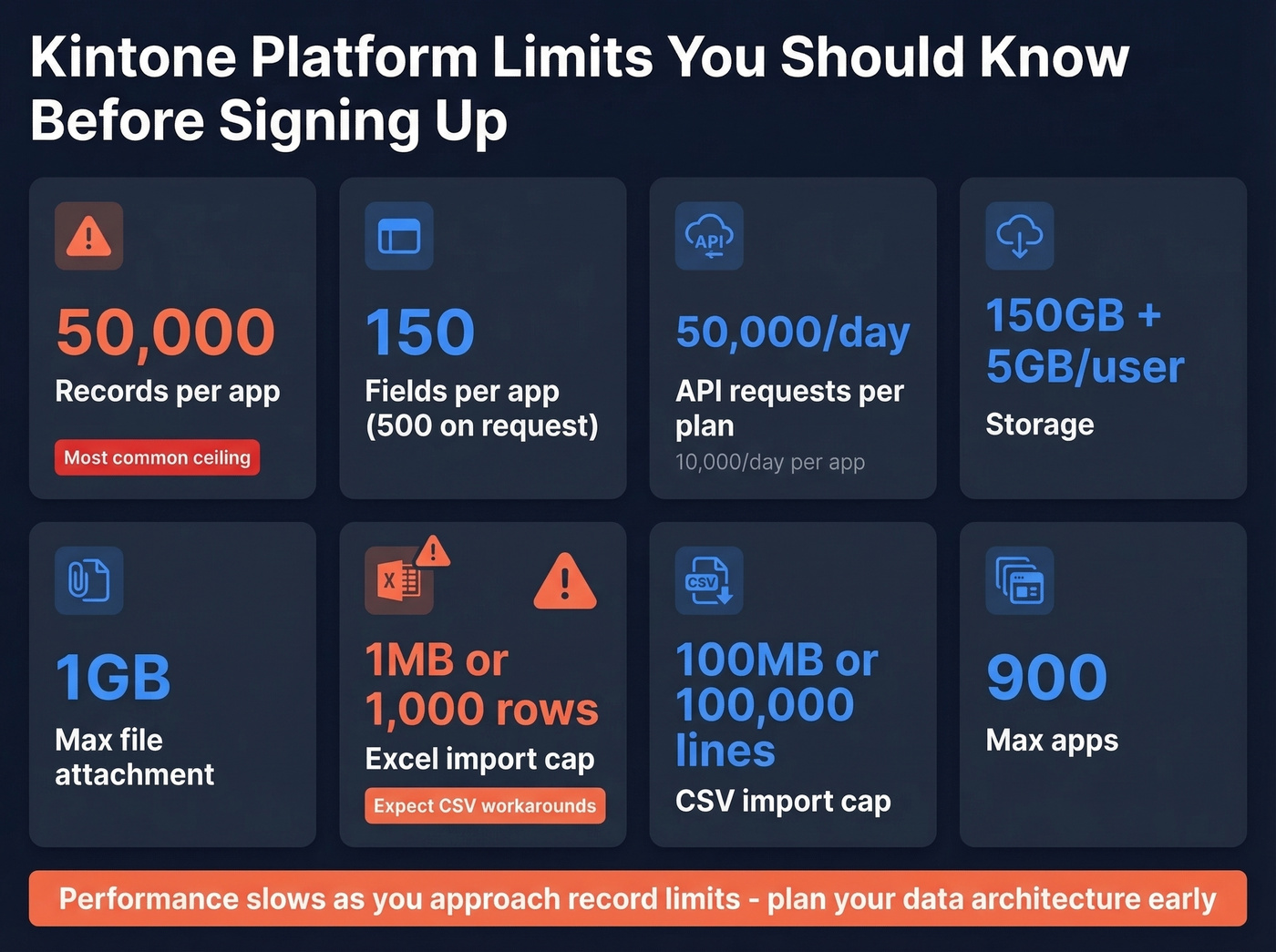
| Records per app | 50,000 |
| Fields per app | 150 (500 max on request) |
| API requests/day | 50,000/day (plan); 10,000/day per app |
| Storage | 150GB + 5GB/user |
| File attachment | 1GB |
| Excel import | 1MB / 1,000 rows |
| CSV import | 100MB / 100,000 lines |
| Max apps | 900 |
The 50,000 records-per-app ceiling is the one that bites first. Performance slows as records grow. The Excel import cap of 1,000 rows means you'll be doing CSV conversions for any serious data migration - a small annoyance that compounds quickly when you're onboarding a team and importing years of operational data from legacy spreadsheets.
Kintone vs Top Alternatives
| Feature | Kintone | Airtable | Quickbase | AppSheet |
|---|---|---|---|---|
| Starting price | $24/user/mo (5-user min) | Free (Team: $20/user/mo, annual) | Starts at $35/user/mo (annual) | $5/user/mo |
| Free tier | No (30-day trial) | Yes | No | Limited free |
| Min users | 5 | None | 20+ (estimated) | None |
| Records/app | 50,000 | 50,000/base (Team) | Not public | Varies |
| API limit | 50,000/day (plan); 10,000/day per app | 100,000/workspace/month (Team) | Not public | Varies |
| Best for | Custom workflows, 5-50 users | Small teams, free start | Enterprise databases | Google Workspace shops |
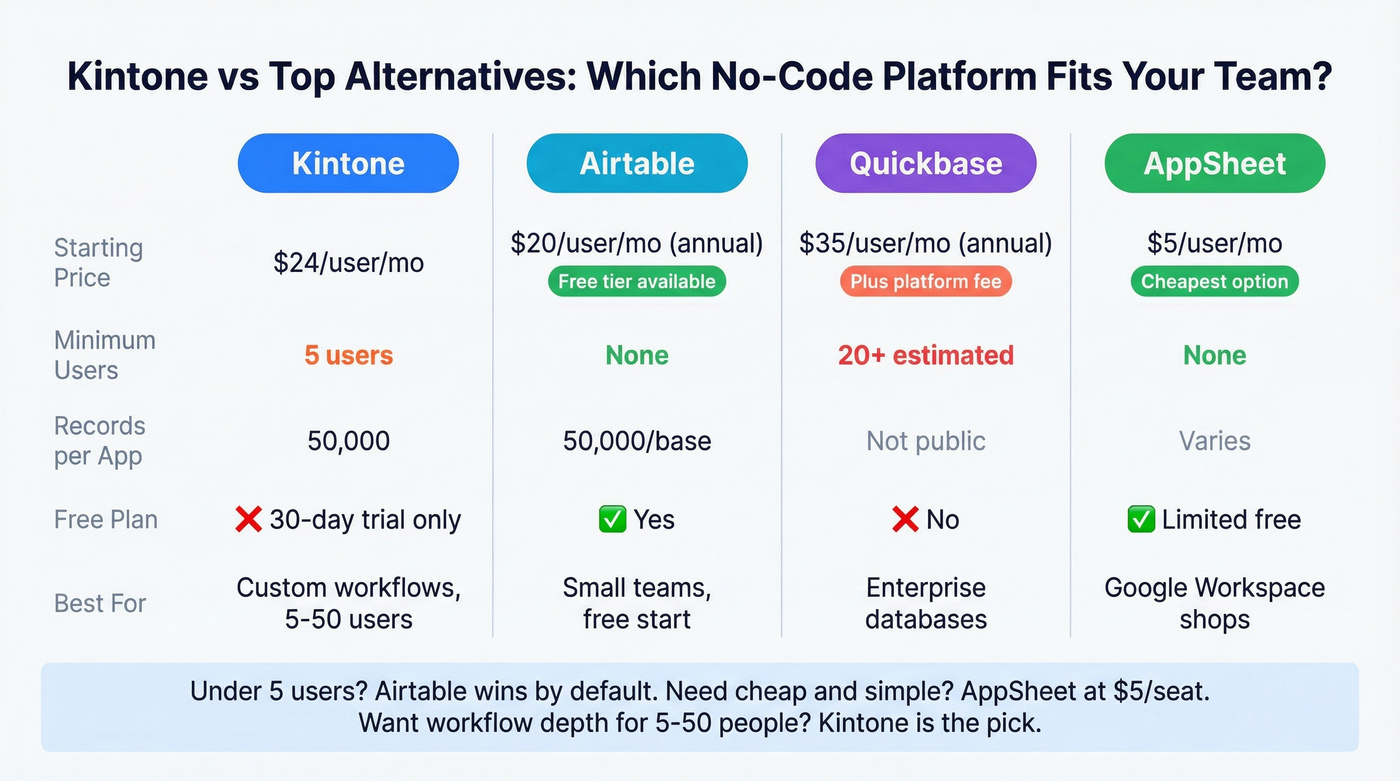
Airtable is the obvious comparison. It has a free tier, no minimum seats, and the same 50,000 records/base on its $20/user/month Team plan billed annually. If you're under 5 users, Airtable wins by default. There's no argument to be made otherwise.
For $5/user/month, AppSheet is the cheapest path to no-code apps if your team already lives in Google Sheets. It lacks Kintone's workflow depth, but at one-fifth the price per seat with no minimums, the ROI math is hard to beat for simple use cases.
Then there's Quickbase, which targets enterprise buyers starting at $35/user/month priced annually. That price excludes an undisclosed platform minimum fee that typically runs several thousand dollars per year on top of per-seat costs. At least Kintone's $120/month floor is transparent.
Who Should (and Shouldn't) Use Kintone
Use Kintone if you're a team of 5-50 that needs custom workflow apps without hiring a developer. It's particularly strong for operations teams managing approvals, task handoffs, and internal processes across departments.
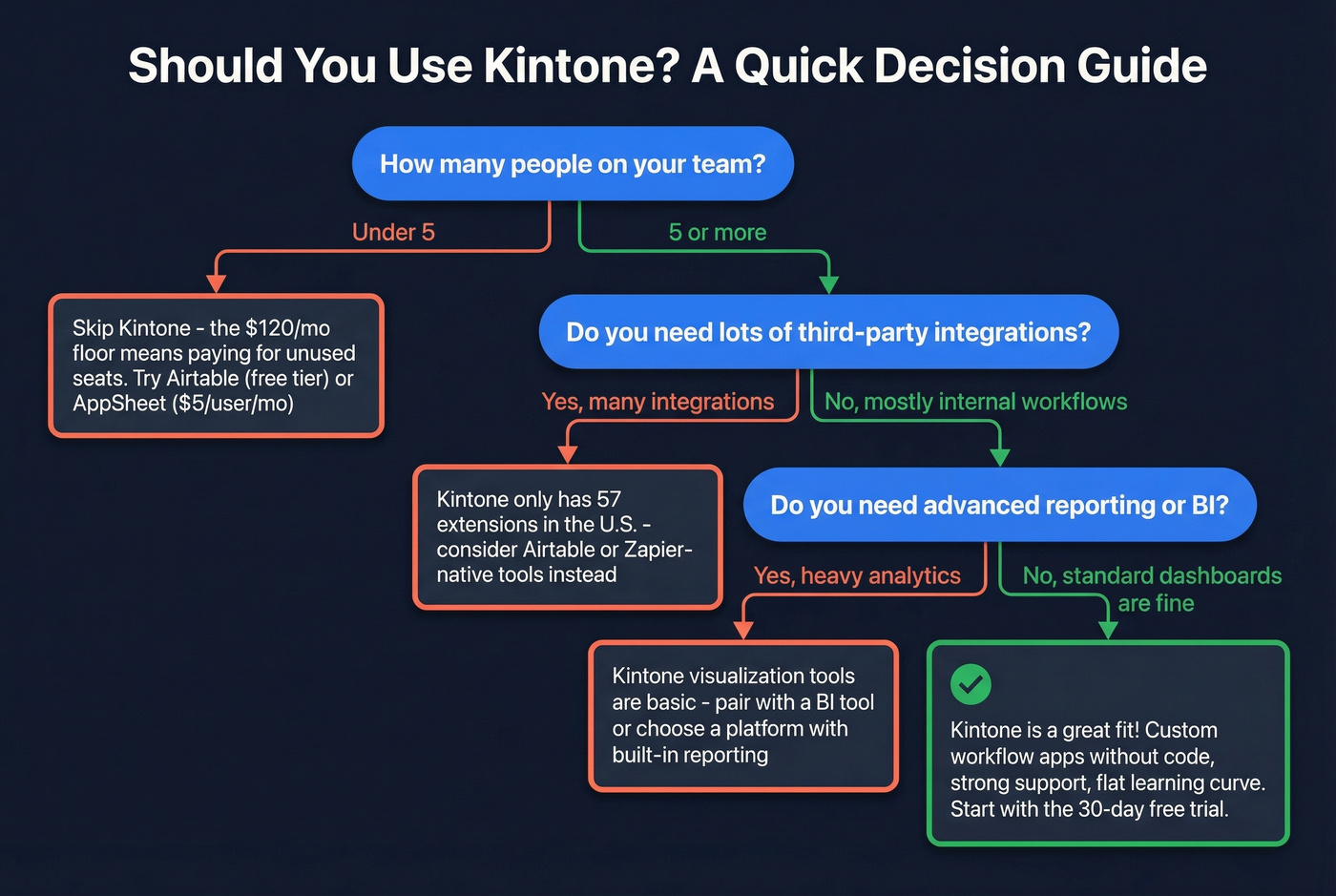
Skip Kintone if you're a solo user or team under 5 - that $120/month floor is real money for unused seats. Seat-minimum frustration is a recurring theme across no-code platform discussions on r/nocode, and for good reason. Also skip it if you need lots of integrations, advanced reporting, or a modern UI.
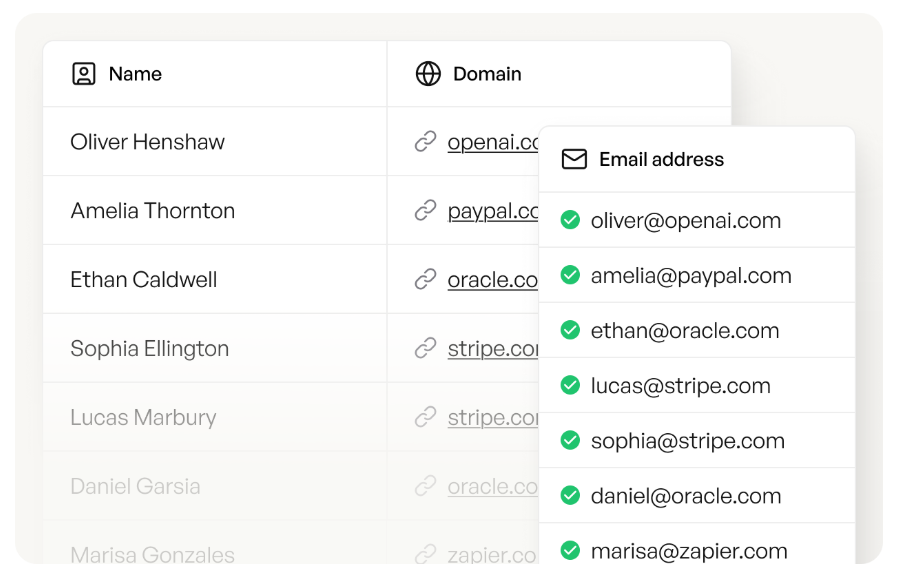
You're evaluating $24/user/month for workflow automation - but your outbound results depend on what goes into those workflows. Prospeo delivers verified emails at $0.01 each and 125M+ direct dials, refreshed every 7 days. No 5-seat minimums. No annual contracts.
Feed your sales workflows data that actually connects to real buyers.
FAQ
Is Kintone worth it for a team of 3?
No. The 5-user minimum means you'd pay $120/month for seats you don't use. Airtable's free tier or AppSheet at $5/user/month are better fits for teams under five, with no seat minimums and comparable no-code functionality.
Does Kintone have a free plan?
No free plan exists - only a 30-day free trial with no feature limitations. Your trial data gets deleted 30 days after expiration if you don't convert to a paid account, so export anything you want to keep.
What do reviewers say about Kintone's strengths and weaknesses?
The strongest praise centers on ease of use (31 G2 mentions) and customer support (28 mentions). The biggest complaints target missing features (12 mentions) and a dated interface (7 mentions). The consensus: easy to learn but limited once you need advanced functionality.
Can I use Kintone as a sales CRM?
Yes, but it manages workflows - it doesn't source contact data. You'll want a dedicated B2B data tool like Prospeo to keep records clean and outreach hitting real inboxes.