


The Best Lace Alternatives That Actually Stay Secure
You're halfway through a trail run and your left shoe comes untied for the third time. Or you're wrestling a toddler into a car seat while your own sneakers flop around loose. Traditional laces work fine - until they don't.
Here's every lace alternative worth considering, with real prices and honest opinions on each.
Hot take: Most people overthink this. A $10 pair of elastic laces solves 90% of lace frustration. The other 10% - accessibility needs, serious hiking, performance sports - is where the specialized options earn their price.
Our Top Picks for 2026
Best overall: Lock Laces - $9.99, backed by 87K+ Amazon reviews. Start here unless you have a specific reason not to.
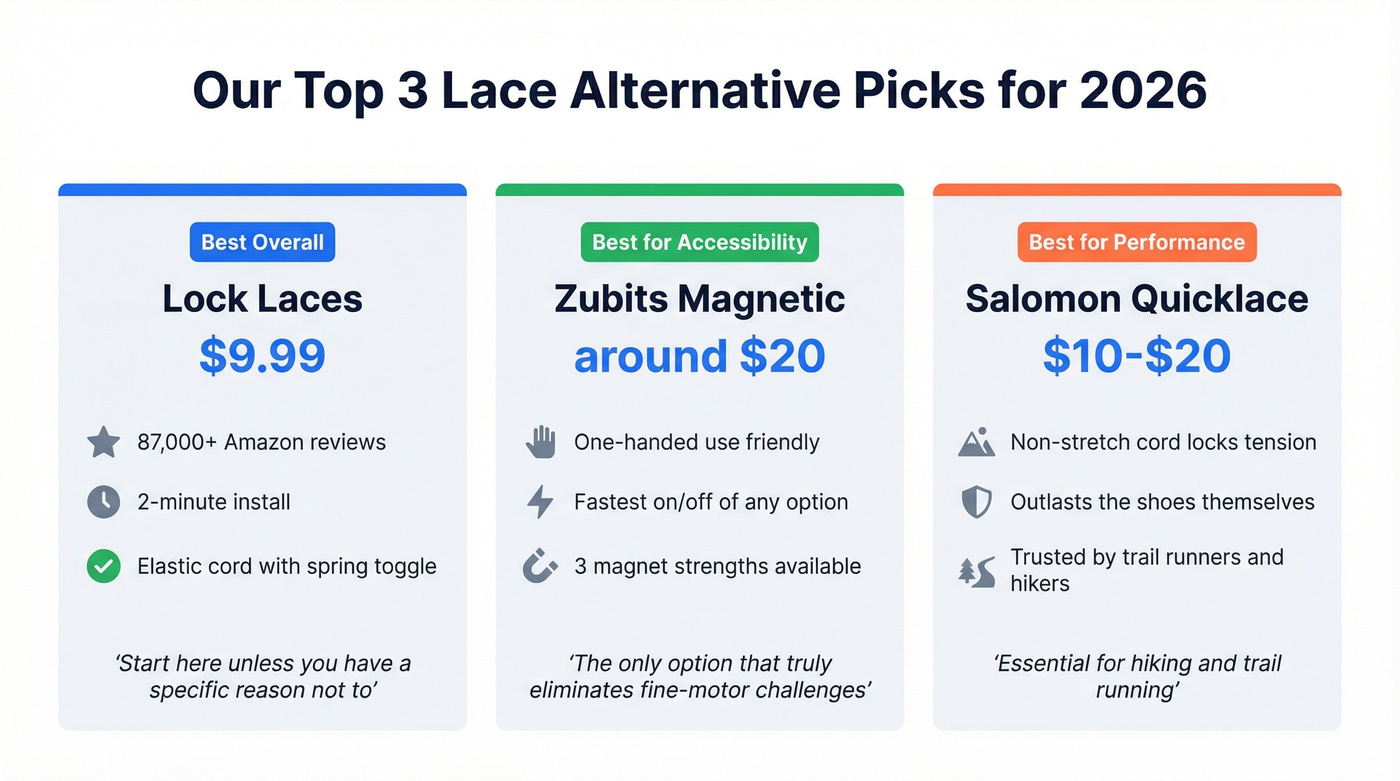
Best for accessibility: Zubits magnetic closures - ~$20. The fastest on/off of any option we've tested. Nothing else comes close for one-handed use.
Best for performance: Salomon Quicklace kit - typically $10-$20. The only option serious trail runners and hikers should trust on steep terrain.
Seven Types of Shoe Closure Systems
Most articles cover two or three categories. There are actually seven distinct closure types worth knowing about.
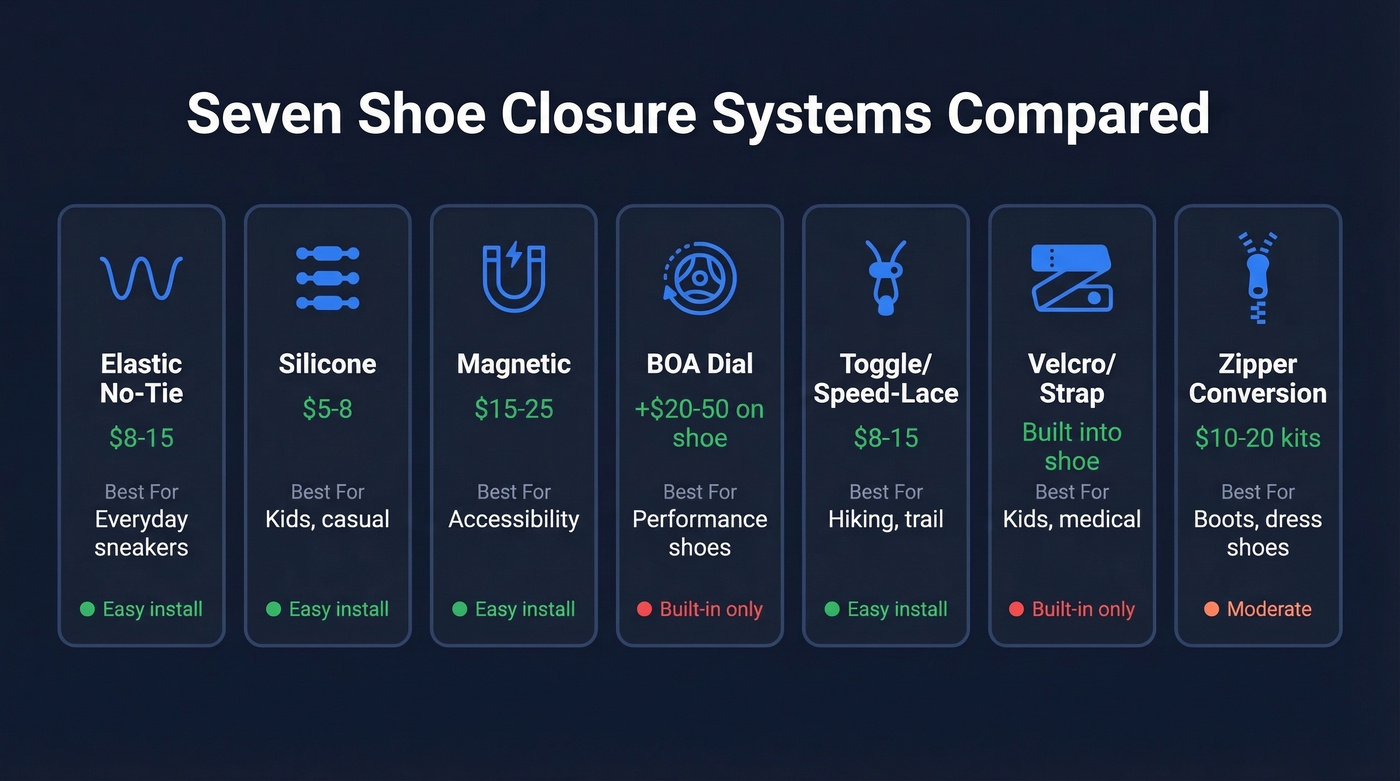
| Type | How It Works | Price Range | Best For |
|---|---|---|---|
| Elastic no-tie | Stretchy cord + toggle | $8-15 | Everyday sneakers |
| Silicone | Individual bars per eyelet | $5-8 | Kids, casual |
| Magnetic | Magnetic buckle over laces | $15-25 | Accessibility |
| BOA dial | Micro-adjustable dial | +$20-50 on shoe | Performance shoes |
| Toggle/speed-lace | Non-stretch cord + pull toggle | $8-15 | Hiking, trail |
| Velcro/strap | Hook-and-loop closure | Built into shoe | Kids, medical |
| Zipper conversion | Zip replaces lace function | $10-20 kits | Boots, dress shoes |
You don't have to wait for some future "smart shoe" to get a better system. The aftermarket is huge, and the options below already work.

You just spent time finding the perfect lace alternative to eliminate daily friction. Now do the same for your sales workflow. Prospeo gives you 300M+ verified contacts so you stop wrestling with bad data and start reaching real buyers.
Eliminate prospecting friction the way Lock Laces eliminate knots.
Best No-Tie Lace Alternatives Reviewed
Lock Laces
Start here. Lock Laces use an elastic cord with a spring-loaded toggle that locks tension in place. At $9.99-$11.99, they're cheap enough to try on a whim, and the sheer volume of positive reviews suggests most people don't go back to traditional laces afterward.
Installation takes two minutes: thread the elastic through your eyelets, clip the toggle, trim the excess, done. The elastic gives enough stretch to slip shoes on and off without touching the toggle, but stays snug during activity. We've used these on gym shoes for over a year and the only complaint is the toggle digging into the top of your foot on tight-fitting shoes. If yours have decent tongue padding, you won't notice it.
Verdict: The default recommendation. Skip them only if you need serious tension control on high-eyelet boots.
Lock Laces vs. Xpand
Xpand takes a different approach - flat elastic with no toggle at all. You set the tension once using their anchor system, and the laces hold position through friction. The result looks noticeably cleaner because there's no visible hardware on top of your shoe.
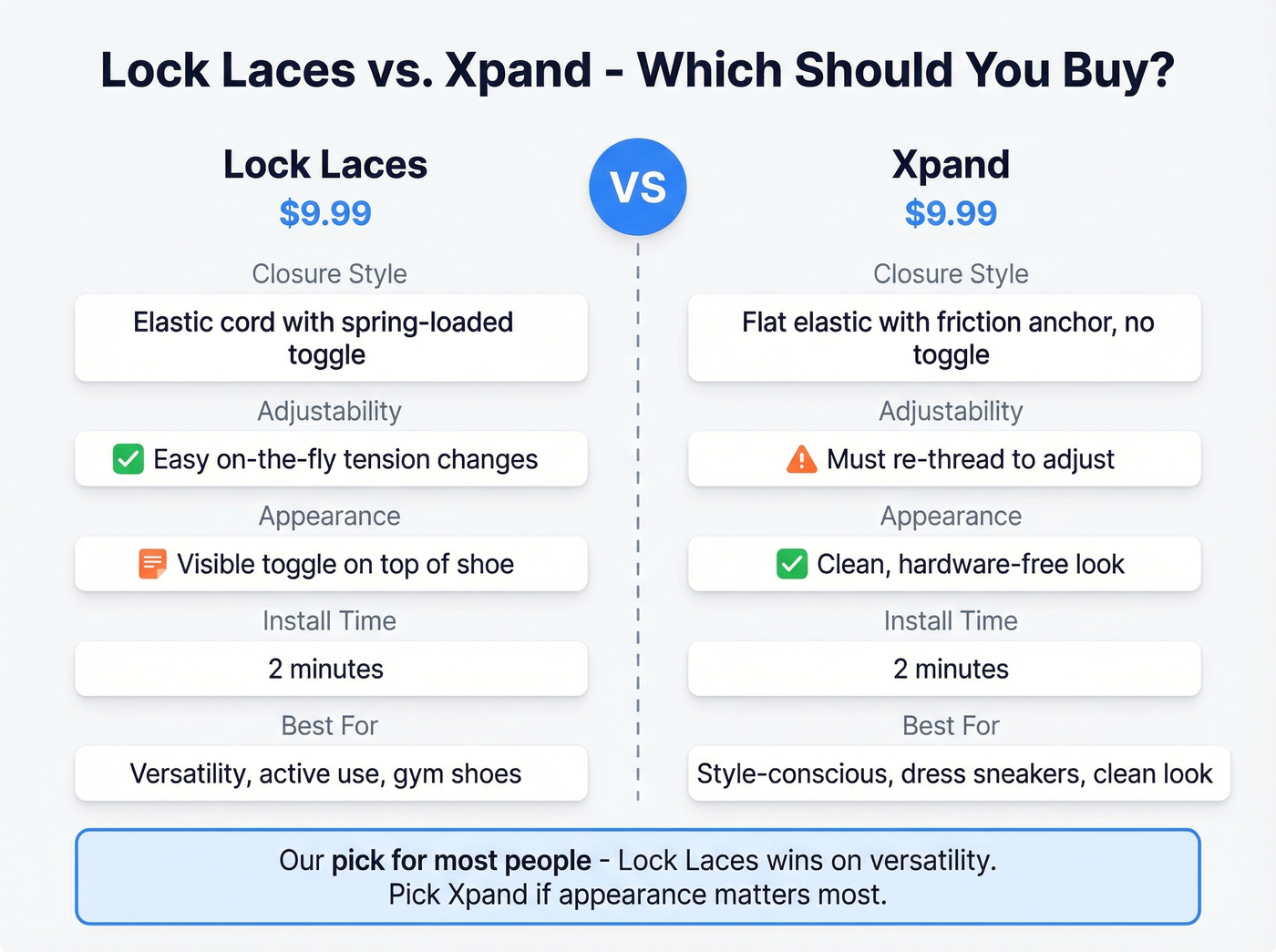
At $9.99, they're priced identically to Lock Laces. The tradeoff is adjustability: once you've set the tension, changing it means re-threading. Pick Lock Laces if you want easy on-the-fly tension adjustment. Pick Xpand if appearance matters more. For most people, Lock Laces win on versatility.
Zubits Magnetic Closures
Zubits aren't a lace replacement - they're a magnetic buckle that snaps over your existing laces, turning any shoe into a slip-on. At ~$20, they're the priciest option here, but for anyone with arthritis, limited hand strength, dyspraxia, or one-handed use requirements, they're the only option that truly eliminates the fine-motor challenge of lacing.
Three magnet strengths are available. For heavier activity, I still wouldn't trust any magnetic closure for serious running - lateral forces can snap them apart at the worst moment.
Who this is really for: Anyone with limited dexterity, elderly family members, or people wearing AFO braces who need a fast closure that works with orthotics. If that's you, stop reading and buy these.
Salomon Quicklace Kit
Salomon's toggle system uses a non-stretch cord. That's the critical difference from elastic options - you get precise, locked-in tension that won't give on steep descents. Replacement kits typically run $10-$20 and are a go-to fix when a speed-lace finally frays.
Hikers on r/trailrunning and r/hiking commonly say Quicklace-style setups outlast the shoes themselves. In our own experience on rocky trails, elastic laces feel sloppy by comparison once the grade gets steep.
Verdict: Overkill for daily sneakers. Essential for hiking and trail running.
BOA Dial System
BOA is a micro-adjustable dial built into the shoe that tightens a thin wire cable with precise, incremental control. You can adjust it on the fly, even with gloves on, which is why it shows up on higher-end cycling shoes, ski boots, and trail-focused models from brands like Salomon and Scarpa.
The catch: you can't retrofit it. BOA comes as part of the shoe, and it typically adds $20-$50 versus a standard-lace version. If you're buying new performance shoes anyway, check whether a BOA version exists before defaulting to traditional lacing.
HICKIES and Per-Eyelet Systems
HICKIES replace each lace crossing with an individual elastic anchor, letting you customize tension at every point on the shoe. They're designed to be fastened once, and they come in a rainbow of colors that kids love. Pricing sits under $15.
They're fun for children's sneakers where style matters and retying is a constant battle. For adults, the per-eyelet installation is tedious and creates more potential failure points than a single-cord system. Similar options include Caterpy (around $15, bumpy elastic that grips eyelets through friction) and uLace ($10-$20, modular elastic bands). All three are perfectly fine for casual wear - nothing more.
Budget pick: Generic silicone laces at $5-8 look cool and last a long time, but they can feel stiff. Adults with wide feet often find them uncomfortable after an hour.
How to Choose the Right Option
The right choice depends entirely on what you're doing in the shoes.
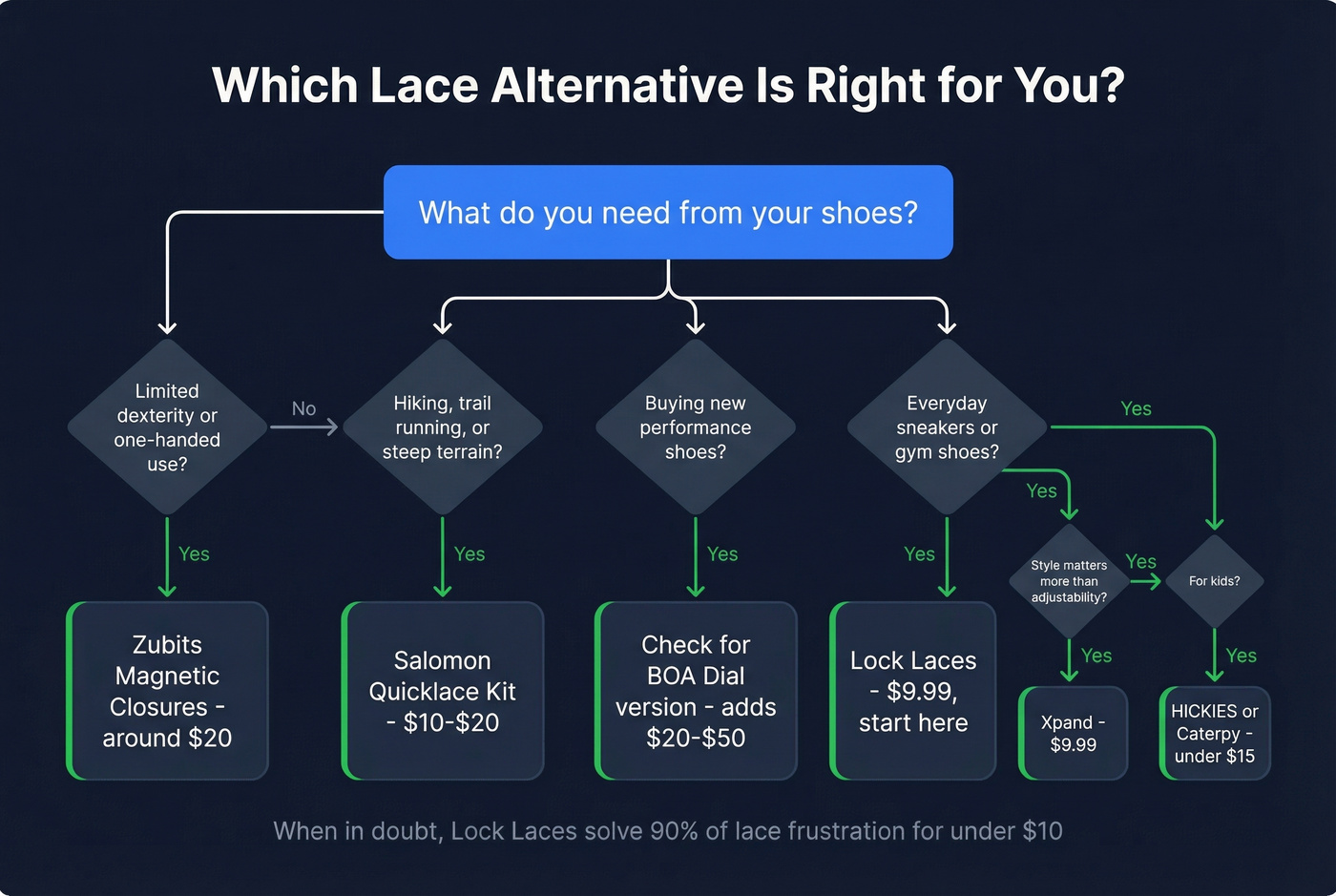
For running or hiking, go with a toggle system like the Salomon Quicklace. Elastic won't hold on technical terrain. For arthritis or limited dexterity, Zubits magnetic closures are the clear answer - nothing else removes fine-motor demands so completely.
Everyday sneakers? Lock Laces territory. Cheap, effective, installed in two minutes.
Kids do well with colorful options like HICKIES or Xpand, where style matters to them and you'll stop retying shoes six times a morning. For dress or casual shoes, Xpand's flat, toggle-free design keeps things clean. And if you're making a new shoe purchase, check whether a BOA dial version exists before settling for standard shoelaces.
Let's be honest - for most people reading this, the answer is just Lock Laces. Buy a pair, try them for a week, and you'll wonder why you waited.
FAQ
Do no-tie laces work on boots?
Standard elastic no-tie laces work on lightweight boots but lose tension on tall hiking boots with many eyelets. For serious boots, use a toggle-based system like Salomon Quicklace - it handles high-eyelet, high-tension applications without slippage.
How long do elastic laces last?
Quality elastic laces like Lock Laces and Xpand typically last around 12 months of daily wear before stretch degradation becomes noticeable. Cheaper generic sets can lose tension in as little as 6 months.
Are no-tie laces good for running?
Elastic no-tie laces work for treadmill and road running at moderate paces. For trail running, speed work, or anything involving quick direction changes, switch to a non-stretch toggle system - elastic gives too much under high lateral force.
What's the cheapest lace alternative that works?
Generic silicone no-tie laces at $5-8 are the cheapest functional option. They hold up for casual daily wear but feel stiff on wider feet. For $4 more, Lock Laces at $9.99 offer better comfort and adjustability - a worthwhile upgrade.
This guide is published by the team at Prospeo. We build B2B data tools, not shoelaces - but we tested all of these so you don't have to.
The best solutions are the ones you set once and forget - like no-tie laces. Prospeo's 7-day data refresh and 98% email accuracy mean your contact lists stay fresh without manual effort. At $0.01 per email, it's cheaper than a pair of elastic laces.
Set up Prospeo once and let accurate data flow on autopilot.