

Cloze vs Close: Definitions, Pronunciation, and When to Use Each
You've done a cloze exercise. You just didn't know it had a name. Those fill-in-the-blank reading passages from school? That's cloze. And yes, people constantly mix up cloze vs close - especially because they sound identical in one of "close"'s common pronunciations. It also doesn't help that at least one popular explainer page gets the two terms crossed.
What Does "Close" Mean?
"Close" is one of English's most versatile words and a heteronym), meaning it's pronounced differently depending on how you use it.
As a verb, it means to shut or end something: Close the door. Close the deal. As an adjective, it means near or careful: a close friend, a close reading. As a noun, it refers to an ending: the close of business.
The pronunciation shifts with the part of speech. Verb "close" rhymes with "doze." Adjective "close" rhymes with "dose." That split is where the confusion with "cloze" begins.
What Does "Cloze" Mean?
"Cloze" isn't a variant spelling of "close." It's a coined technical term, introduced by psychologist Wilson L. Taylor in 1953 in Journalism Quarterly ("Cloze procedure: A new tool for measuring readability"). Taylor derived it from "closure" in Gestalt theory - the idea that our brains naturally want to complete incomplete patterns.
A cloze test removes words from a passage and asks the reader to fill in the blanks using context clues. It measures reading comprehension and helps you gauge how difficult a text is for a specific audience. The term is standard academic vocabulary in education and linguistics, and it also shows up in NLP through cloze-style tasks and masked language modeling.
Pronunciation: Why the Confusion
| Word | Part of Speech | Pronunciation | Sounds Like |
|---|---|---|---|
| close | verb | /ˈkloʊz/ | rhymes with "doze" |
| close | adjective | /ˈkloʊs/ | rhymes with "dose" |
| cloze | noun | /ˈkloʊz/ | identical to verb "close" |
"Cloze" is pronounced exactly like the verb "close." Both end with a /z/ sound. To make matters worse, "clothes" is also often pronounced /ˈkloʊz/ in American English. Three words, one sound. No wonder people mix them up.

Cloze tests measure how well you can fill in the gaps. Prospeo does the same for your CRM - start with a name or company, and get back verified emails, direct dials, and 50+ data points per contact at 98% accuracy. 83% of leads come back enriched.
Stop guessing. Fill in every blank in your pipeline.
Cloze Reading vs Close Reading
These two terms sound nearly identical and both involve reading. That's where the similarity ends.
| Cloze Reading | Close Reading | |
|---|---|---|
| Goal | Assess comprehension / text difficulty | Deepen interpretation and analysis |
| Method | Fill in deleted words using context clues | Multiple re-reads with annotation |
| Focus | Vocabulary, syntax, readability | Meaning, structure, author's craft |
| Output | Comprehension score (% correct) | Discussion, essay, or evidence-based response |
| Best for | Measuring whether a text is at the right level | Teaching students to think critically about a text |
Use cloze to measure difficulty, close reading to build analytical skills. Cloze answers "Can my students understand this text?" Close reading answers "What can my students learn from this text?"
One reason this topic stays confusing: some educational resources mix up the labels. Oboe's explainer page, for instance, includes a "Fill in the Blank" description but tags it as a "Close Reading approach." That activity is cloze, not close reading.
How to Create a Cloze Test
Building a cloze test takes about five minutes:
- Pick a passage - 150-300 words works well.
- Keep the first and last sentences intact - they anchor the reader.
- Delete every 5th or 6th word - replace each with a blank of equal length.
- Have the reader fill in each blank with one word.
- Score it - count the percentage of blanks filled correctly. Per Nielsen Norman Group, synonyms and misspellings count as correct, because you're testing comprehension, not spelling.
Here's a quick example: "The sky turned dark as heavy _____ rolled in from the west. She grabbed her _____ and stepped outside, hoping the storm would _____ before noon."
A practical rule of thumb: if readers average 60% or higher, the text is reasonably comprehensible for that audience.
Applications Beyond the Classroom
The fill-in-the-blank principle has quietly spread well beyond grade-school worksheets, and we've been surprised by how many fields use it.
In UX research, Nielsen Norman Group uses cloze tests to evaluate whether website copy is comprehensible to target users - a practical alternative to readability formulas like Flesch-Kincaid. In spaced repetition, Anki's cloze deletion cards are a staple for language learners and med students, and a recurring debate topic on r/Anki where users argue endlessly about optimal deletion ratios.
In AI research, BERT's masked language modeling is essentially a cloze task at massive scale. Researchers have even built systems like CLOZER that auto-generate open cloze questions using masked language models - and in experiments evaluating 1,600 answers, CLOZER-generated questions performed better than the average non-native English teacher in a comparative setup. Researchers also study "word clozability," how predictable a specific word is from context, which matters for both test design and language model evaluation.
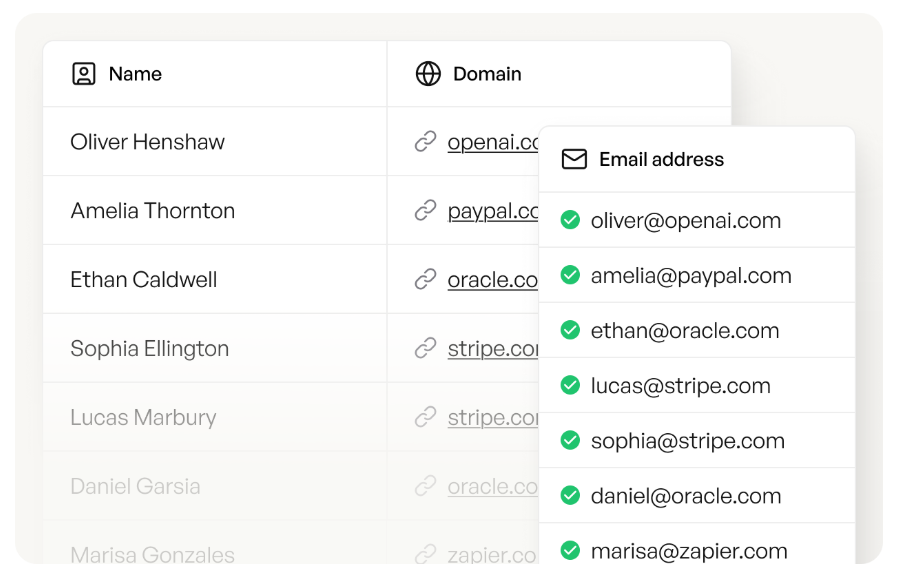
Here's the thing: the gap-filling concept shows up in unexpected places. In B2B sales, tools like Prospeo apply the same logic - you start with a partial contact record and the platform fills in the blanks, returning 50+ verified data points per contact.
Quick Reference Table
| Cloze | Close | |
|---|---|---|
| Type | Coined technical term (1953) | Common English word |
| Pronunciation | /ˈkloʊz/ | /ˈkloʊz/ (verb) or /ˈkloʊs/ (adj) |
| Meaning | Fill-in-the-blank comprehension test | Shut, near, end, careful |
| "___ the deal" | Never | Always |
| "___ reading" | Assessment strategy | Analytical strategy |
Let's correct something directly: at least one site lists "cloze the deal" as a valid phrase. It isn't. You close a deal. You never cloze one.
Most people searching this already know what "close" means. The real value is understanding that cloze is a legitimate, widely used testing methodology - not a typo, not slang, and not interchangeable with "close."
Taylor coined 'cloze' because our brains want to complete incomplete patterns. Your prospect lists have the same problem - missing emails, outdated numbers, blank fields. Prospeo fills those gaps across 300M+ profiles with a 7-day refresh cycle, at roughly $0.01 per email.
Close more deals when every contact field is filled in.
FAQ
Is "cloze" a real word?
Yes. Wilson L. Taylor coined it in 1953, deriving it from "closure" in Gestalt psychology. It's standard terminology in education, linguistics, and NLP - appearing in academic journals, standardized testing frameworks, and AI research papers.
Can you use "cloze" and "close" interchangeably?
Never. "Cloze" refers exclusively to fill-in-the-blank tests and related formats like cloze deletion. "Close" means shut, near, or careful. Swapping them is always incorrect, even though the verb form sounds identical.
What's a good cloze test score?
A practical benchmark is 60% or higher for text that's reasonably comprehensible to that audience. Below 40% typically means the passage is too difficult; above 80% suggests it's too easy for meaningful assessment.