


DataBees Pricing, Reviews, Pros and Cons: Is It Worth It?
Two conflicting DataBees price points on two different websites. CIENCE lists $1,590/mo. DataBees' own pricing page lists $975 to $1,690/mo across its published tiers, plus a custom Strategist tier. We dug through both - plus every G2 review - to give you the full picture so you don't have to piece it together yourself.
What Is DataBees?
DataBees isn't software. It's a done-for-you B2B data research service - human researchers paired with automation and AI to deliver human-verified account and contact data tailored to your ICP. Think of it as outsourcing your data ops team on a monthly subscription.
One quick note: DataBees at getdatabees.com is a completely different company from data-bees.com, which is a consumer cashback site. If you've stumbled across confusing Reddit threads mixing the two, that's why.
30-Second Verdict
DataBees is a strong managed data research service for teams with complex, niche ICPs - but at $975-$1,690/mo, it's overkill if your data needs are straightforward.
Use DataBees if you need ongoing, human-led research for hard-to-find data that standard databases like Apollo or ZoomInfo can't serve. Think niche industries, custom org charts, or deep account mapping.
Skip DataBees if you just need verified emails and direct dials fast. A self-serve platform like Prospeo delivers 98% email accuracy at roughly $0.01/lead with no retainer, no ramp-up period, and no monthly commitment beyond what you actually use.
DataBees Pricing Breakdown
Here's what DataBees actually charges, pulled directly from their pricing page:
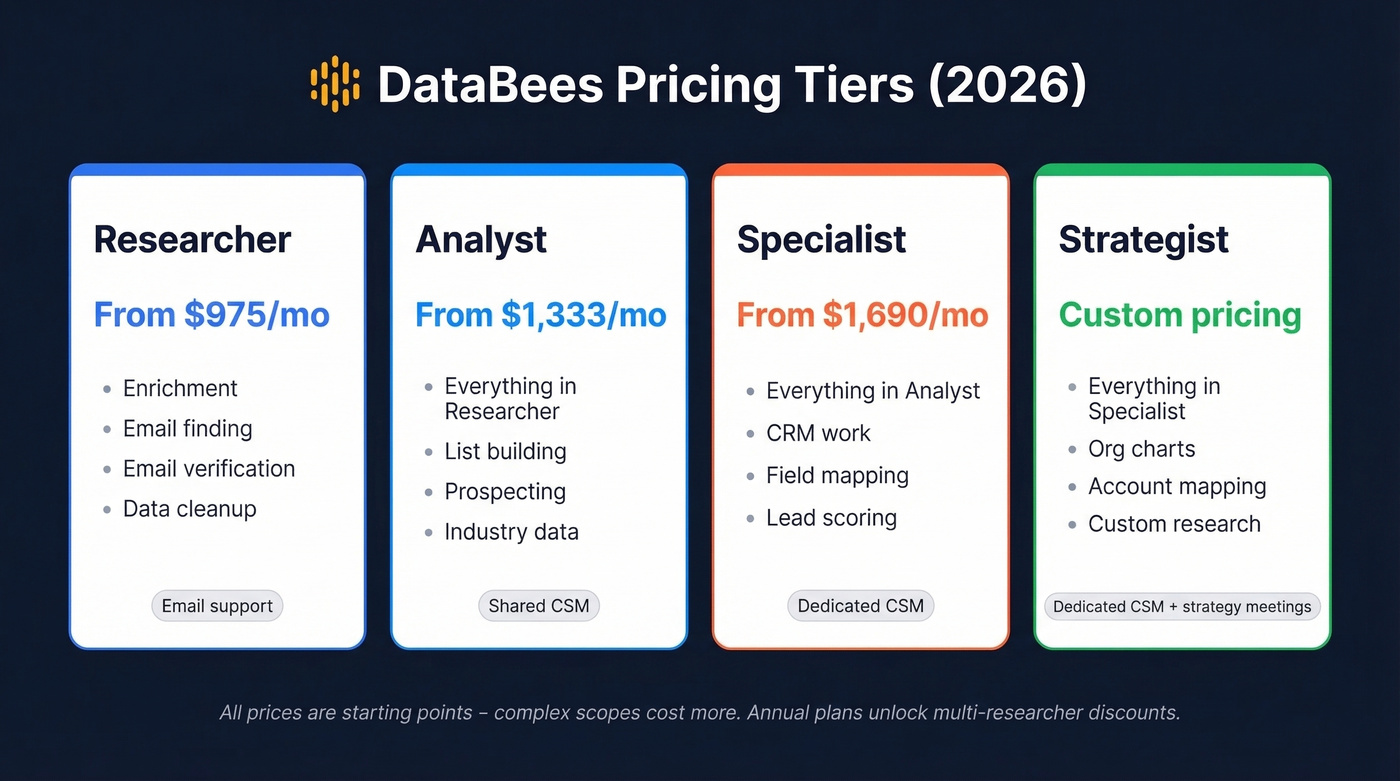
| Tier | Price/mo | Scope | Support |
|---|---|---|---|
| Researcher | From $975 | Enrichment, email finding, email verification, cleanup | Email support, shared quality team |
| Analyst | From $1,333 | + List building, prospecting, industry data | Shared CSM, dedicated quality analyst |
| Specialist | From $1,690 | + CRM work, field mapping, normalization, scoring | Dedicated CSM |
| Strategist | Custom | + Org charts, account mapping, custom research | Dedicated CSM + monthly strategy meetings |
All tiers are "starts from" pricing, meaning complex scopes push costs higher. Multi-researcher discounts are available but only on annual plans. You can pay via credit card or invoicing, and semi-annual and annual plans come with flexible payment options.
Here's what's frustrating: DataBees doesn't list exact monthly record or lead volumes on the pricing page. Based on the task complexity at each level, we'd estimate the Researcher tier handles hundreds to low thousands of enrichment records monthly, while Analyst and Specialist tiers focus on fewer, higher-complexity deliverables like list building and CRM operations. If you're evaluating tiers, ask your CSM for a concrete output estimate during the free sample - don't commit blind.
Ramp-up takes 3-5 working days for simple tasks, longer for complex or multi-researcher setups. DataBees offers a free sample with results in that same 3-5 day window, which is worth taking before you sign anything.
Now, about that pricing confusion. CIENCE's competitor page lists DataBees at $1,590/mo for "one assistant," with $8,640 semi-annual and $15,990 annual. That $1,590 figure doesn't match DataBees' current published tiers, so it's likely an older snapshot or different packaging. Treat DataBees' own pricing page as canonical - competitor marketing pages aren't always current.

DataBees starts at $975/mo with a 3-5 day ramp-up. Prospeo gives you 98% verified emails from 300M+ profiles instantly - no retainer, no CSM required. At ~$0.01/lead, you'd need to pull 97,500 contacts to match one month of DataBees' Researcher tier.
Skip the retainer. Get verified contact data in seconds, not days.
Pros and Cons From Real Users
What Users Love
DataBees carries a 4.8/5 on G2 from 32 reviews, with 96% of those being five-star ratings. That's a small sample, but the consistency is notable.
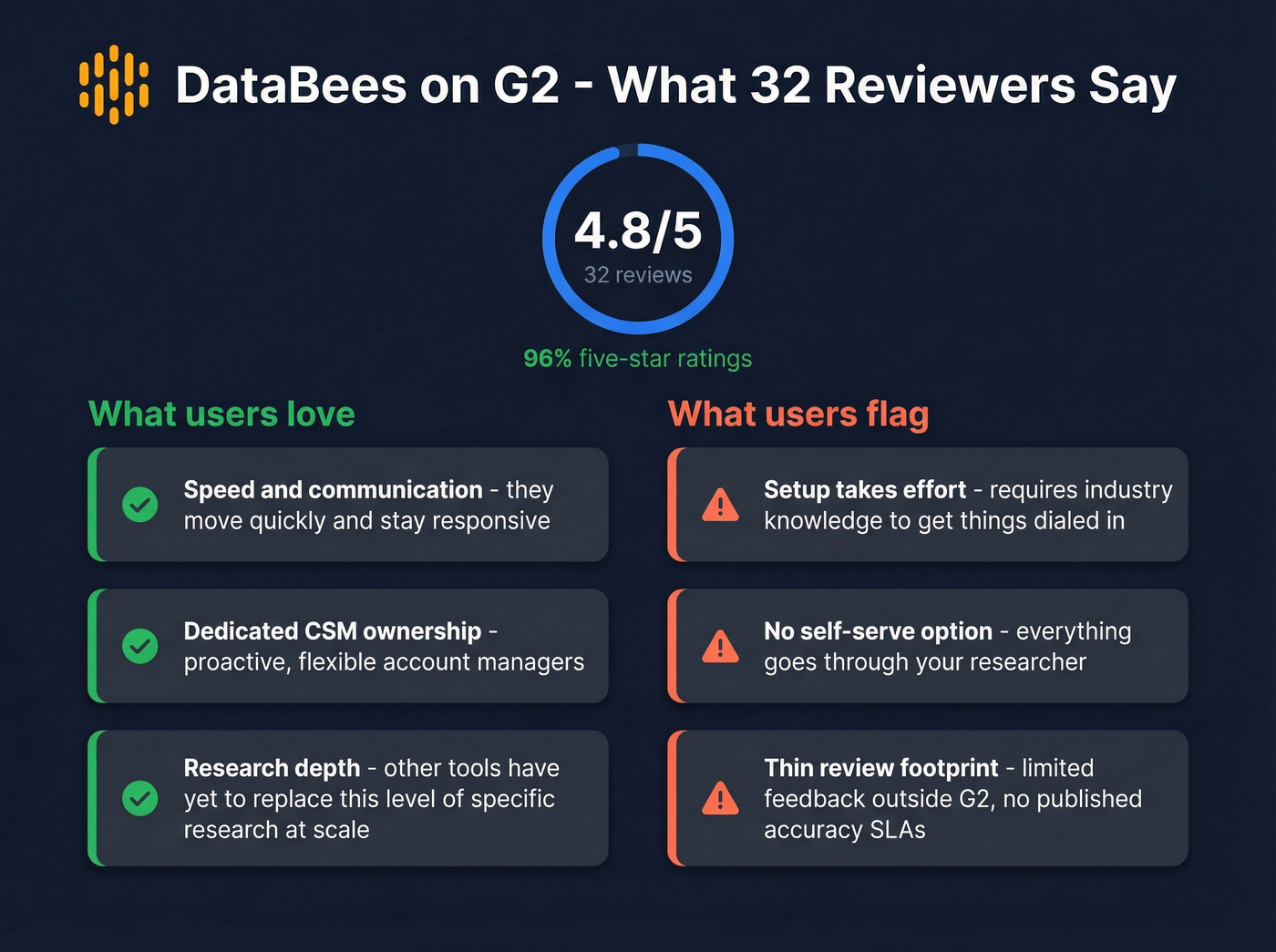
After we analyzed all 32 reviews, the recurring themes were clear. Speed and communication come up constantly - "They move quickly and are very communicative," as one reviewer put it. CSM ownership gets highlighted repeatedly, with reviewers calling out the dedication, flexibility, and proactive planning from their account managers. Transparency in data collection is another thread: users appreciate knowing exactly how their data is being sourced, which matters when you're feeding leads into outbound sequences.
For teams with niche requirements, the depth is the real differentiator. One reviewer summed it up well: "Other tools have yet to replace this depth of specific research at scale."
What Users Flag
The biggest friction point is setup. One reviewer noted it "requires a fair bit of effort and industry knowledge to get things dialed in" - though they added that once the groundwork is laid, quality becomes consistently strong. Expect an initial calibration period to get requirements, formats, and definitions aligned.
There's no self-serve option. You can't log in, run a search, and export a list. Everything goes through your researcher, which is the entire point of the service but also a bottleneck if you need data in the next hour.
The third-party review footprint is thin outside G2. Clutch shows limited feedback, TrustRadius has a listing but little usable review content, and community discussion is nearly nonexistent. DataBees also doesn't publish accuracy SLAs or guaranteed output volumes per tier, so you're trusting the process and your CSM relationship more than you would with a self-serve tool that shows you results before you pay.
Is the Price Justified?
Let's be honest: DataBees isn't booking meetings for you. It's giving your team clean, human-checked data so they can book meetings faster. Whether that's worth $975-$1,690/mo depends entirely on what you'd spend otherwise.
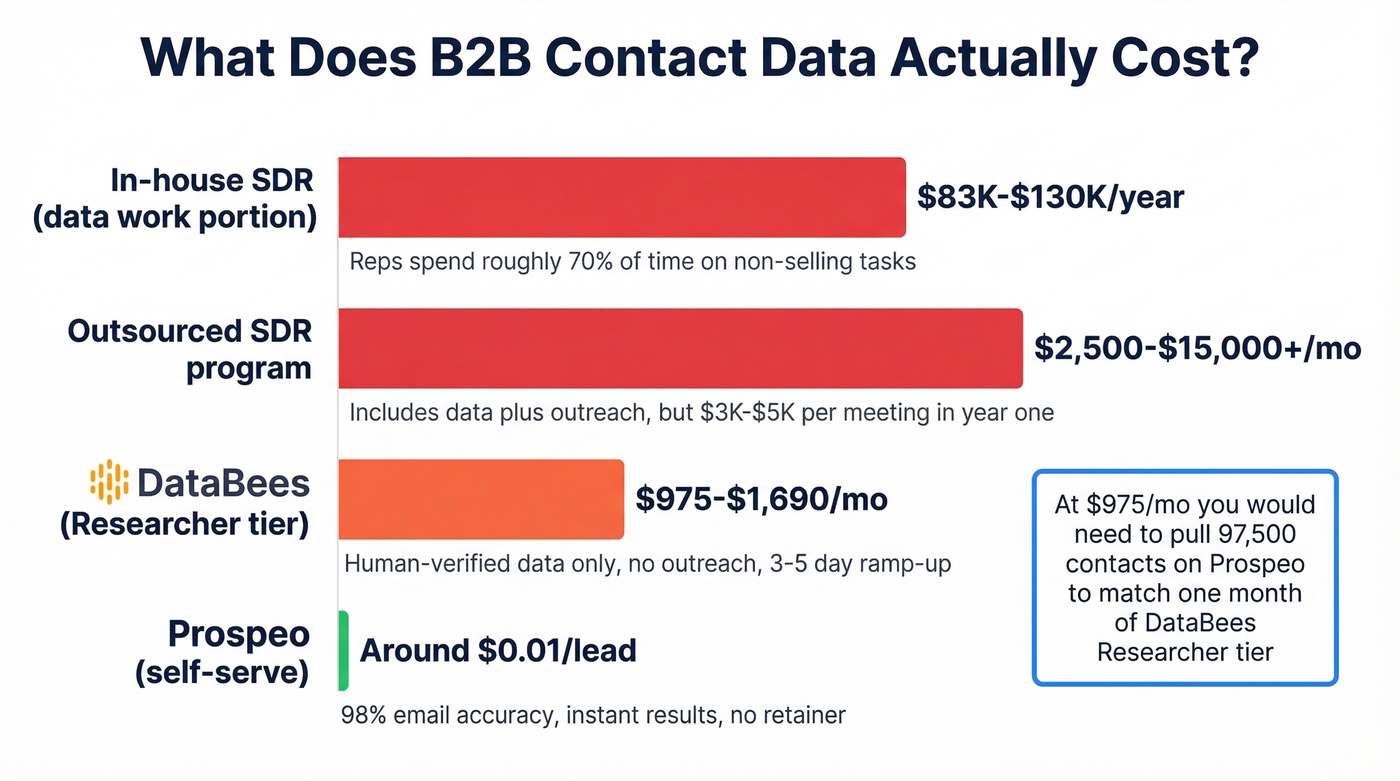
Outsourced SDR programs run $2,500-$15,000+/mo, and a fully loaded in-house SDR costs $83K-$130K/year. DataBees covers only the data layer, but that's precisely where SDR time gets wasted - sales reps spend roughly 70% of their time on non-selling activities, and a huge chunk of that is data work. At the Researcher tier, if your team enriches 1,000+ contacts monthly, you're paying under $1/contact for manually QA'd data. That's competitive with premium database subscriptions, but with human quality control baked in.
We've seen teams burn $3,000-$5,000 per meeting with full outsourced pipeline programs in year one. For complex ICPs where standard databases fall short, DataBees' data-only approach avoids that overhead.
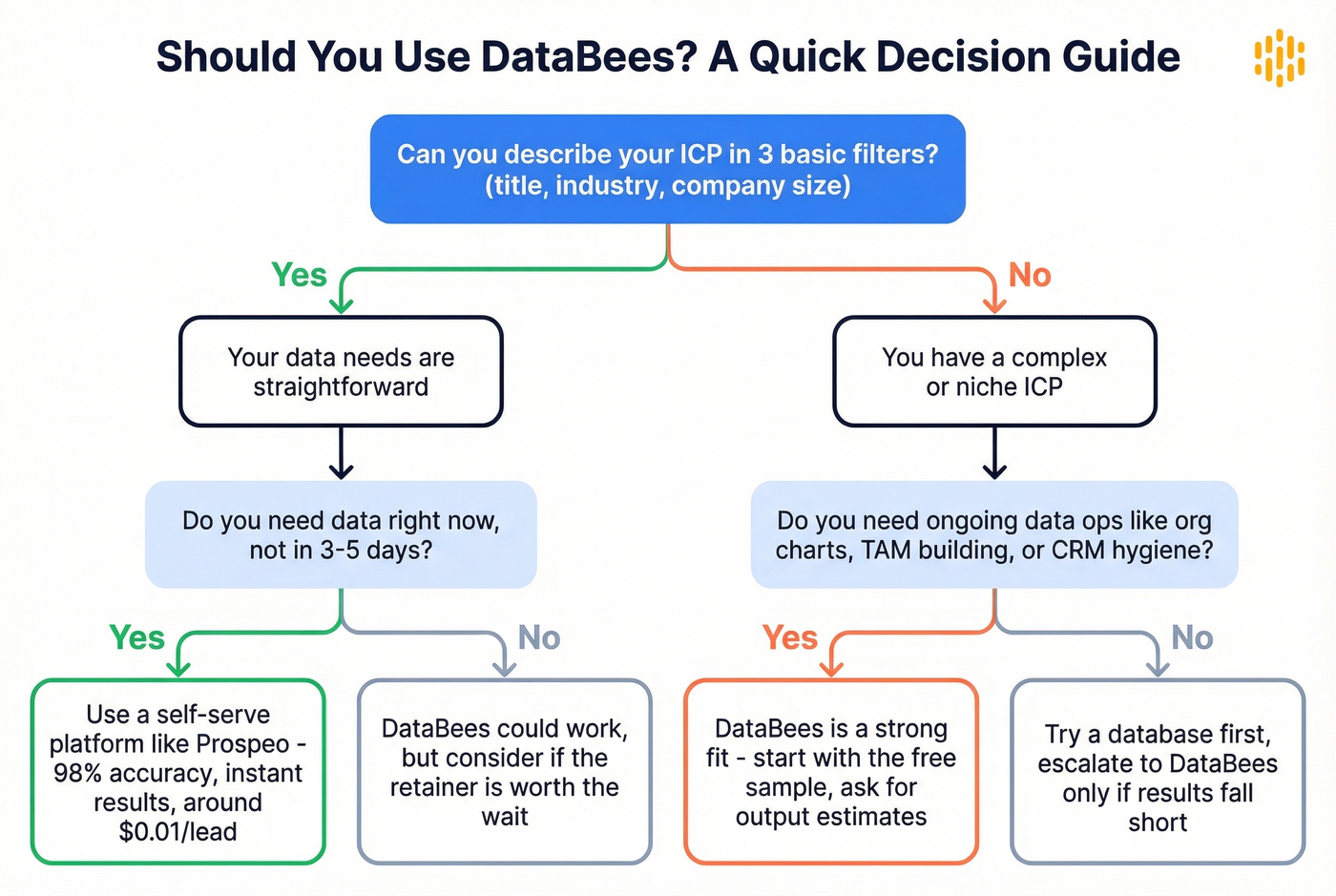
Our take: Most teams don't actually have ICPs complex enough to justify a managed data service. If you can describe your target buyer in three filters - industry, title, company size - you don't need human researchers. You need a good database. DataBees is for the teams whose ICPs make database vendors shrug.
Who Should Use DataBees
Best For
Mid-market teams with niche ICP requirements that self-serve databases can't serve are the sweet spot. The same goes for complex, ongoing data operations like TAM building, org charts, and CRM hygiene at scale. Organizations where data quality directly impacts pipeline - regulated industries, vertical SaaS, or hyper-specific buyer personas - will get the most value here.
Skip It If
Your data needs are straightforward: verified emails, phone numbers, basic firmographics. Your team is small and can't justify $975+/mo for data alone. You need data today, not in 3-5 business days. Or you want to self-serve, run searches on demand, and export instantly.
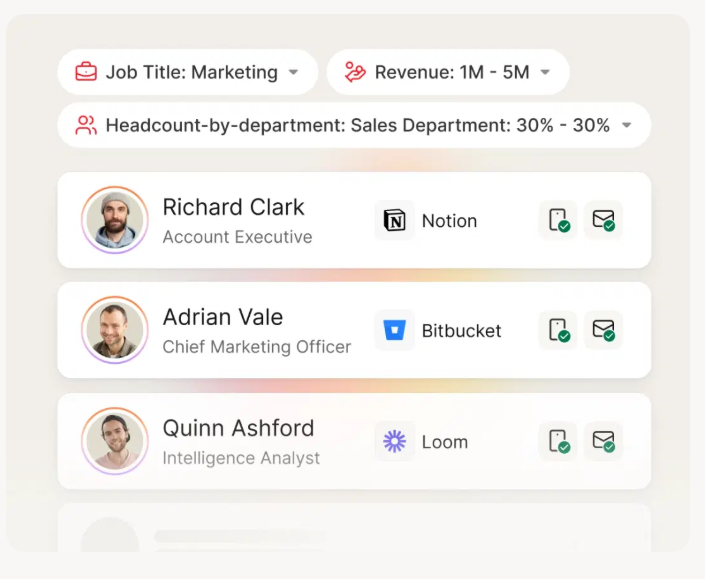
For teams in that camp, a self-serve platform makes more sense. Prospeo gives you 300M+ professional profiles, 98% email accuracy, and 125M+ verified mobile numbers - all available in minutes, starting at roughly $0.01/email with a free tier. Data refreshes every 7 days versus the 6-week industry average, and 30+ search filters cover buyer intent, technographics, job changes, and headcount growth without waiting on a human researcher.
Bottom Line
DataBees is genuinely good at what it does - but what it does is narrow. If you need human-led research for complex, niche data that no database can automate, it's a strong choice at a fair price point relative to full outsourced programs. If your needs are simpler - verified emails, direct dials, firmographic enrichment - you'll get the same contact data from a self-serve platform at a fraction of the cost and without the wait.
If your ICP fits standard filters like title, industry, and company size, you don't need human researchers - you need a database with 30+ filters, 98% email accuracy, and a 7-day refresh cycle. Prospeo delivers that with no contracts, no ramp-up, and 125M+ verified mobile numbers included.
Stop paying managed-service prices for self-serve data needs.