

ExactVerify vs Apollo.io: Which Verifies Better? (2026)
You exported 1,000 "verified" contacts from your prospecting platform, loaded them into your sequencer, and hit send. By morning, your bounce rate was above 2% and your sending domain had taken a hit it didn't need. We've watched teams torch new domains exactly this way - it's painful, and it's preventable.
If you're weighing ExactVerify vs Apollo.io, understand that these aren't the same category of tool. One cleans lists. The other builds them. That distinction matters more than any accuracy benchmark.
30-Second Verdict
Pick ExactVerify if you already have lists from forms, ESPs, or other sources and need cheap, predictable bulk cleaning.
Pick Apollo if you need a full prospecting platform and verification is a secondary feature inside your outbound workflow.
Skip both if your real problem is stale data and catch-all-heavy exports. Prospeo gives you fresh verified contacts at 98% email accuracy on a 7-day refresh cycle, so you spend less time cleaning and more time selling.
Side-by-Side Comparison
| Dimension | ExactVerify | Apollo.io | Winner |
|---|---|---|---|
| Primary purpose | Email verification | Sales intelligence + outreach | Depends on need |
| Verification method | SMTP, MX, syntax, catch-all | 7-step process + network signals | Depends on workflow |
| Accuracy (user-reported) | 5.0/5 on G2 (13 reviews) | 91% official; 96.8% in one benchmark | ExactVerify (reviews) |
| Catch-all handling | Flags and detects catch-alls | Differentiates valid vs invalid on catch-all domains via network signals | Depends on list |
| API | "Coming Soon" | Available on paid tiers | Apollo |
| CRM integrations | None | Salesforce, HubSpot, etc. | Apollo |
| Pricing model | Per-verification (PAYG or monthly) | Per-user + credits | ExactVerify (transparent) |
| Starting price | $6/mo (2,000 credits) | $49/user/mo (Basic, annual billing) | ExactVerify |
| Best for | Bulk list cleaning | Prospecting + sequences | - |
ExactVerify does one thing. Apollo does twenty things, including that one thing. The question is whether Apollo's verification blade is sharp enough on its own.
How Each Tool Verifies Emails
ExactVerify's Approach
ExactVerify runs the standard dedicated-verifier checklist: deduplication, syntax validation, MX record detection, SMTP verification, bounce checking, and catch-all detection. Catch-all handling is a core strength - Trustpilot reviewers confirm it, with multiple users saying ExactVerify spots catch-alls better than tools they've used before.

The review profile is thin but clean: 5.0/5 on G2 across 13 reviews, 4.4/5 on Trustpilot with 12 reviews. One G2 reviewer wrote that they switched from ZeroBounce for "more accurate results at a lower cost." The recurring cons? Requests for a more modern dashboard and better reporting. Fair criticisms for a tool founded in 2023.
Apollo's 7-Step Process
Apollo takes a fundamentally different approach. Beyond standard SMTP checks, it draws on its data contributory network - historical email traffic signals from millions of linked mailboxes - to assess emails. That's how Apollo positions its ability to differentiate valid from invalid emails on catch-all domains, something pure SMTP verification can't do alone.
Apollo's official accuracy rate is 91%. A Warmup Inbox benchmark testing 15 tools on a 10,000-contact list reported 96.8% observed accuracy, which is solid. Apollo also offers a 30-day bounce credit refund: if a verified email bounces, you get the credit back. Nice safety net, though it doesn't protect your domain reputation after the damage is done.
The Catch-All Problem
Here's the thing. The gap between "verified by Apollo" and "safe to send" can be enormous.
One Reddit user exported roughly 900 Apollo "Verified" leads and ran them through MillionVerifier. The result: about 19% valid, 21% invalid, and 60% risky/catch-all. That's not a verification failure in Apollo's eyes - those contacts passed their 7-step process. But for someone warming a new Google Workspace domain, sending to a 60% catch-all list is a death sentence.

A second Reddit thread paints an even grimmer picture: 18% hard bounces on day one, 25% of contacts had left the company, and only about 900 usable contacts out of 2,000 exported. The operational takeaway is simple - don't send to catch-all addresses from a new or warming domain. For established domains, segment catch-alls into a slower cadence and keep hard bounces under 1% at all times.
If you're running cold email on a warming domain with deal sizes under $15k, Apollo's bundled verification isn't verification. It's a suggestion. You need a dedicated verifier or a data source that doesn't require one.

Why run contacts through two tools when one gets it right? Prospeo's 5-step verification with catch-all handling, spam-trap removal, and honeypot filtering delivers 98% email accuracy - refreshed every 7 days, not every 6 weeks. At $0.01 per email, you skip the Apollo export → ExactVerify scrub → sequencer pipeline entirely.
Ditch the two-step workflow. Get emails that are actually safe to send.
Pricing Breakdown
| Metric | ExactVerify | Apollo.io |
|---|---|---|
| Model | Per-verification | Per-user + credits |
| Entry price | $6/mo (2,000 credits) | $49/user/mo (Basic, annual billing) |
| PAYG option | Yes (credits never expire) | No |
| PAYG examples | 2,000 for $8; 5,000 for $15; 10,000 for $28 | - |
| 10K verifications/mo | $22/mo | Included with plan credits |
| Credits roll over? | Yes (PAYG) | No - expire each billing cycle |
The scenario that matters: you need to verify 10,000 emails per month. On ExactVerify, that's $22. On Apollo, you're paying at least $49/user/month for the Basic tier, and verification is bundled into a broader credit system you also use for prospecting actions. The effective cost per contact on Apollo lands around $0.20-$0.40 based on typical usage patterns across searching, revealing, and exporting.
If verification is all you need, ExactVerify wins on cost by a wide margin. If you're already paying for Apollo as your prospecting platform, the bundled verification is a nice-to-have - just don't treat it as your only verification layer.
Integrations and Automation
ExactVerify's workflow is upload, clean, download. No public API yet (the API page still says "Coming Soon"), no CRM integrations, though a JavaScript widget exists for real-time form validation. If you need API-driven verification in an automated pipeline, ExactVerify isn't ready. That's a hard limitation.
Apollo is the opposite: mature API access on paid tiers, native CRM integrations with Salesforce and HubSpot, built-in sequences, a dialer, and inline verification during prospecting. For teams running programmatic workflows, Apollo is the only option between these two.
When to Use Which
Use ExactVerify if you have existing lists from forms, purchased databases, or event registrations and need cheap bulk cleaning with predictable per-email costs. You don't need a prospecting platform - you need a scrub.
Use Apollo if you need a full prospecting and engagement platform where verification is one feature among many. You're building lists, running sequences, and managing pipeline in one place.
Use both if you source contacts from Apollo but don't trust the bundled verification for cold sends on newer domains. Export from Apollo, run through ExactVerify, then load into your sending tool. We've seen this two-step workflow cut bounce rates by more than half compared to sending Apollo-verified lists directly.
A Third Option: Start With Clean Data
Let's be honest - the whole "source contacts, then clean them, then maybe clean them again" workflow is a tax on your time. Instead of sourcing stale contacts and scrubbing them, you can start with data that doesn't need cleaning in the first place.
Prospeo's 5-step verification process includes catch-all handling, spam-trap removal, and honeypot filtering baked into the data before you ever export it, with everything refreshed on a 7-day cycle. Teams using Prospeo book 35% more meetings compared to Apollo-sourced lists. Self-serve, no contracts, and there's a free tier with 75 verified emails per month so you can test it without commitment.
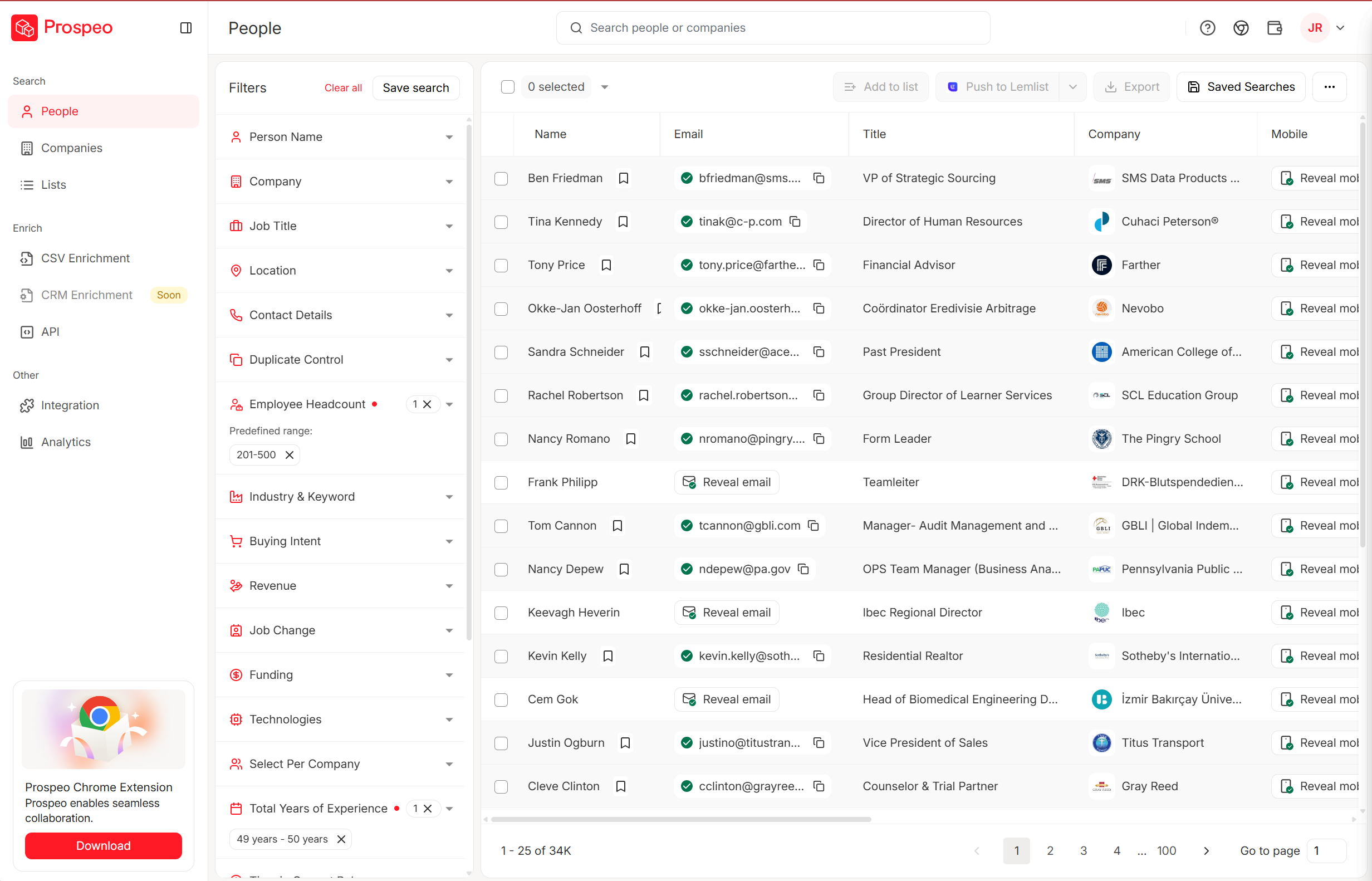
That Reddit horror story - 60% catch-alls, 18% hard bounces, torched domains - happens when verification is an afterthought. Prospeo's proprietary email infrastructure verifies before you ever see a contact. 98% accuracy, 7-day refresh cycle, and catch-all handling built in. No cleanup tool required.
Protect your domain. Start with data that doesn't need a second opinion.
FAQ
Is Apollo's built-in verification accurate enough for cold email?
Apollo's 91% official accuracy holds up reasonably well in controlled benchmarks (96.8% observed in one test). But real-world exports frequently show 60%+ catch-all/risky results after re-verification with a dedicated tool. For new or warming domains, always run Apollo exports through a dedicated verifier before sending.
Does ExactVerify have an API?
Not yet. As of 2026, the API page still says "Coming Soon." The workflow is manual: upload a CSV, clean it, download results. If you need API-driven verification, NeverBounce and ZeroBounce are solid options, and Prospeo offers a 92% match rate via its enrichment API.
What should I do with catch-all emails?
Never send to catch-all addresses from a new or warming domain - the bounce risk is too high. For established domains with strong sender reputation, segment catch-alls into a slower-send cadence and monitor bounce rates closely. The hard rule: keep hard bounces under 1% at all times. The consensus on r/coldemail is that catch-alls aren't worth the risk unless your domain has months of clean sending history behind it.
Can I use ExactVerify and Apollo together?
Yes, and many teams do. Source and build lists in Apollo, export them, run the CSV through ExactVerify for dedicated cleaning, then load verified contacts into your sending tool. This two-step approach significantly reduces bounce risk on cold sends.
How does ExactVerify's pricing compare to Apollo's?
ExactVerify charges per verification - $22/month covers 10,000 emails, and pay-as-you-go credits never expire. Apollo charges per user ($49-$119/mo on common tiers) plus credits that expire each billing cycle. For verification-only use cases, ExactVerify is roughly 10x cheaper per email verified. Apollo's pricing page breaks down the credit allocation by tier if you want the full picture.