

How to Get Past Gatekeepers Cold Calling - Or Skip Them Entirely
Reps spend up to 40% of their time trying to navigate past gatekeepers. Meanwhile, 80% of calls go straight to voicemail. Here's the thing most cold calling guides won't tell you: gatekeeper problems aren't pitch problems. They're data problems. The fastest path to a conversation isn't a better script for getting past gatekeepers. It's a better phone number.
If you've spent any time on r/sales, you've seen the frustration - "90% of my calls are gatekeepers telling me to send an email." That's the reality for reps dialing switchboard numbers all day. We're going to cover the scripts, timing, and data strategy that actually move the needle.
Skip the Gatekeeper Entirely
The average connect rate across cold calling teams is 5.4%. Top-quartile reps hit 13.3%. That gap isn't explained by smoother talk tracks - it's explained by better data. Top performers spend more time dialing direct numbers while average reps burn hours stuck in switchboards and automated phone trees.
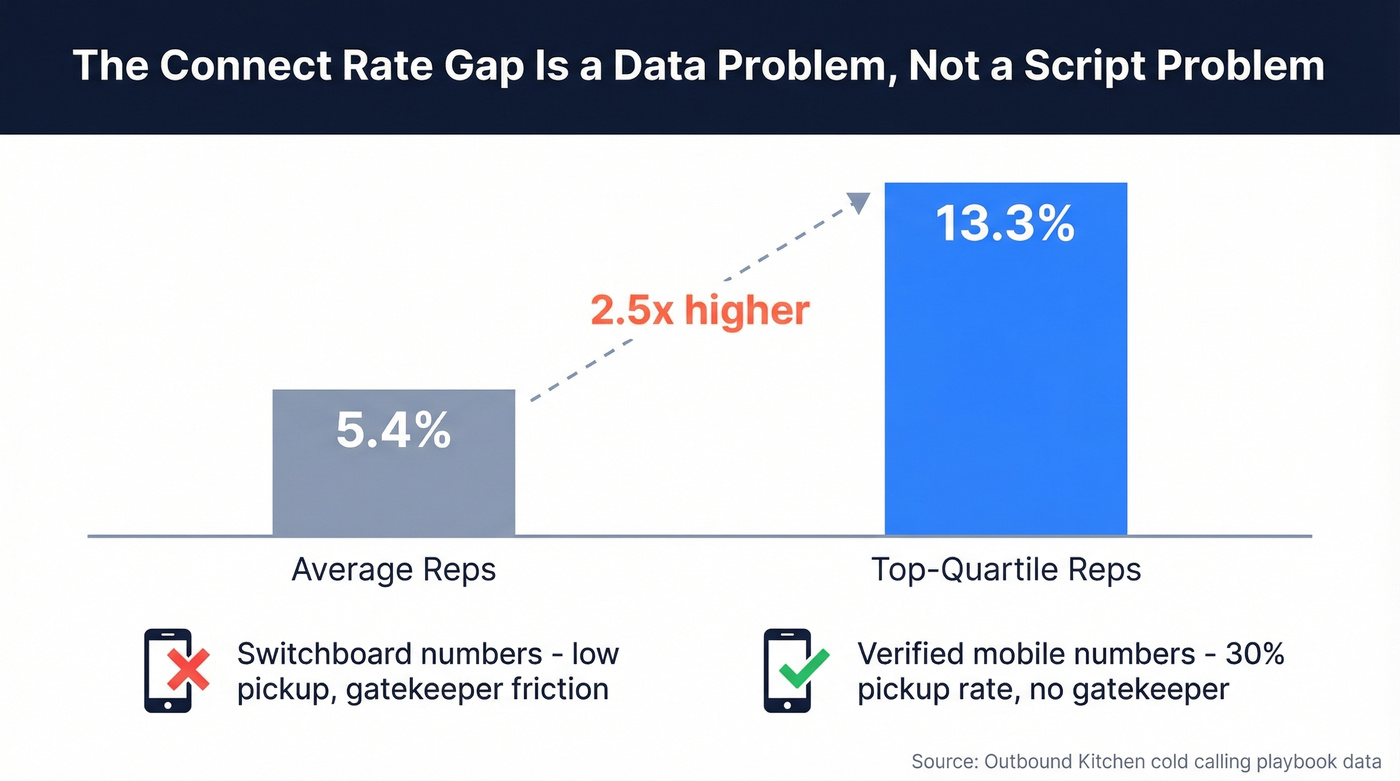
If your connect rate sits below 5% consistently, phone-number quality is the first thing to fix. Prospeo's database includes 125M+ verified mobile numbers with a 30% pickup rate, refreshed every 7 days, with pricing starting around $0.01 per lead. Not stale switchboards. Not phone trees. Actual mobile numbers that ring actual humans. The best gatekeeper strategy is not needing one.
The Psychology Behind Every Gatekeeper
A C-level EA fields 50+ calls per day. Every one of them runs a quick risk/reward calculation: "If I put this person through and it's a waste of time, does that reflect on me?" Your job isn't to trick them. It's to minimize their perceived risk.
Reference a strategic initiative or recent company news, and that perceived risk drops fast. A gatekeeper who thinks you might be relevant is a gatekeeper who transfers the call. Understanding this dynamic matters more than memorizing any single script.
5 Scripts That Actually Work
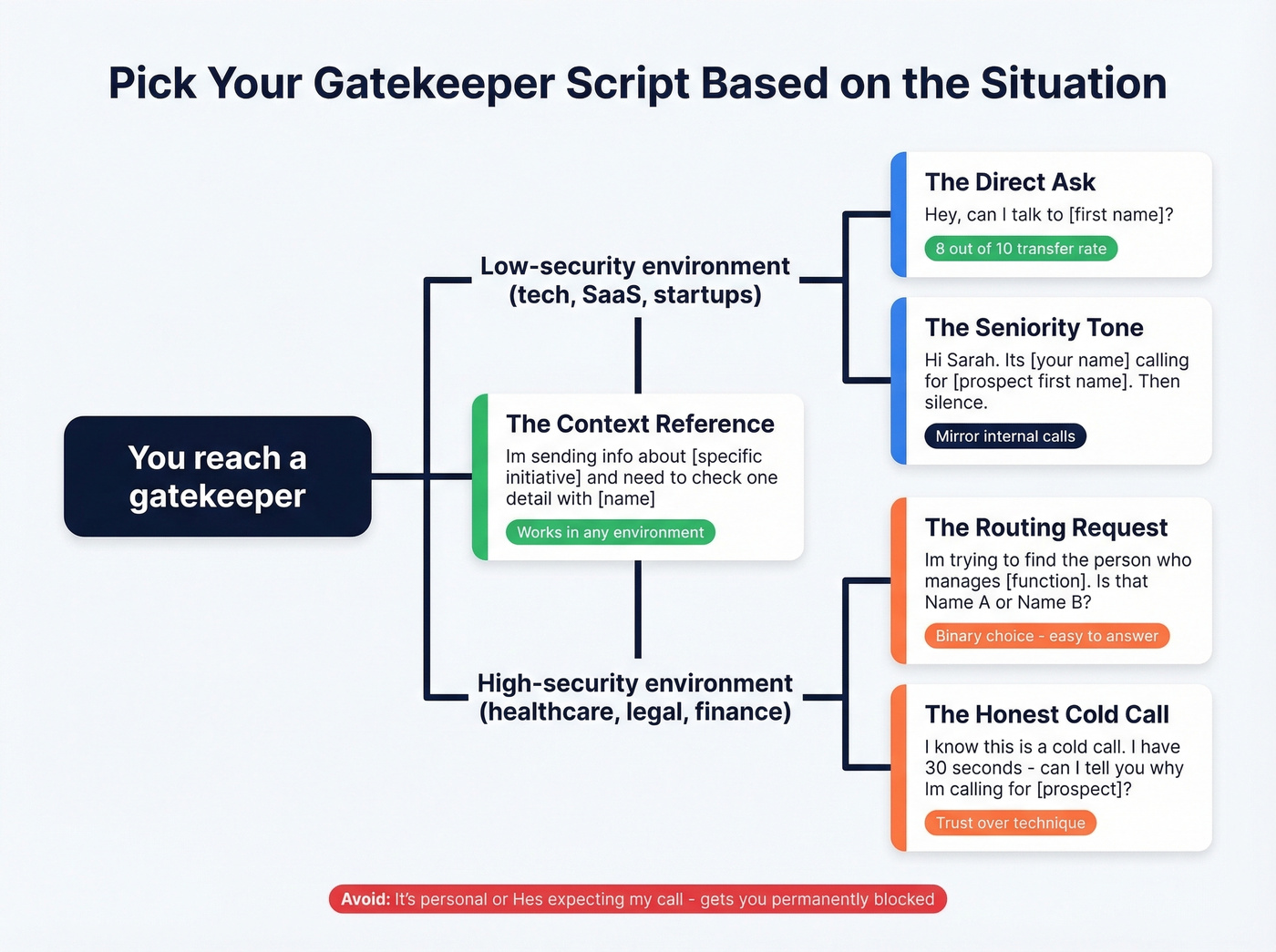
Every script below is honest. "It's personal" or "he's expecting my call" might get you through once - and can get you permanently blocked. We've seen reps torch entire accounts with that approach.
The Brevity Plays
These two scripts work on the same principle: mirror how internal colleagues call.
The Direct Ask: "Hey, can I talk to [first name]?"
No company name, no title, no preamble. One Reddit practitioner reports getting transferred 8 out of 10 times with this exact line. It works because it sounds like someone who already knows the person.
The Seniority Tone: "Hi Sarah. It's [your name] calling for [prospect first name]." Then silence.
Don't ask "is he available?" The implied familiarity plus the pause forces the gatekeeper to fill the gap - and the default response is to transfer.
The Context Reference
"I'm sending over information about [specific initiative - earnings call mention, job posting, press release] and need to check one detail with [name]."
This works best when you reference something public: a funding round, a job posting for a role you sell into, an earnings call mention. "Check one detail" minimizes the perceived time commitment and makes the call sound like it's already in motion.
When Honesty Is Your Edge
In healthcare, legal, and financial services, gatekeepers are trained to sniff out deception. Skip the cleverness here. Two approaches tend to work well:
The Routing Request positions the gatekeeper as the expert: "I'm trying to find the person who manages [function]. Is that [Name A] or [Name B]?" A binary choice is dramatically easier to answer than an open-ended question, and it gives the gatekeeper a way to be helpful rather than defensive.
The Honest Cold Call disarms entirely: "I know this is a cold call. I'm [name] from [company]. I have 30 seconds - can I tell you why I'm calling for [prospect]?" In our experience, this outperforms clever scripts in regulated industries where trust matters more than technique.

Top-quartile reps book 9x more meetings from the same dial volume - not because of better scripts, but because they dial verified direct numbers. Prospeo's 125M+ verified mobiles deliver a 30% pickup rate, refreshed every 7 days, so you skip the switchboard entirely.
Stop pitching gatekeepers. Start reaching decision-makers at $0.01 per lead.
When to Call
| Factor | Best | Worst | Source |
|---|---|---|---|
| Day | Tue & Wed (44% of demos) | Friday | ZoomInfo, 1.4M calls |
| Morning | 8-11 AM local (+15%) | Before 8 AM | Revenue.io / InsideSales |
| Afternoon | 4-5 PM local | 12-2 PM | Revenue.io internal data |
| Call length | 2-5 min (49% of successful calls) | Under 1 min (0% success) | HubSpot / Gong |
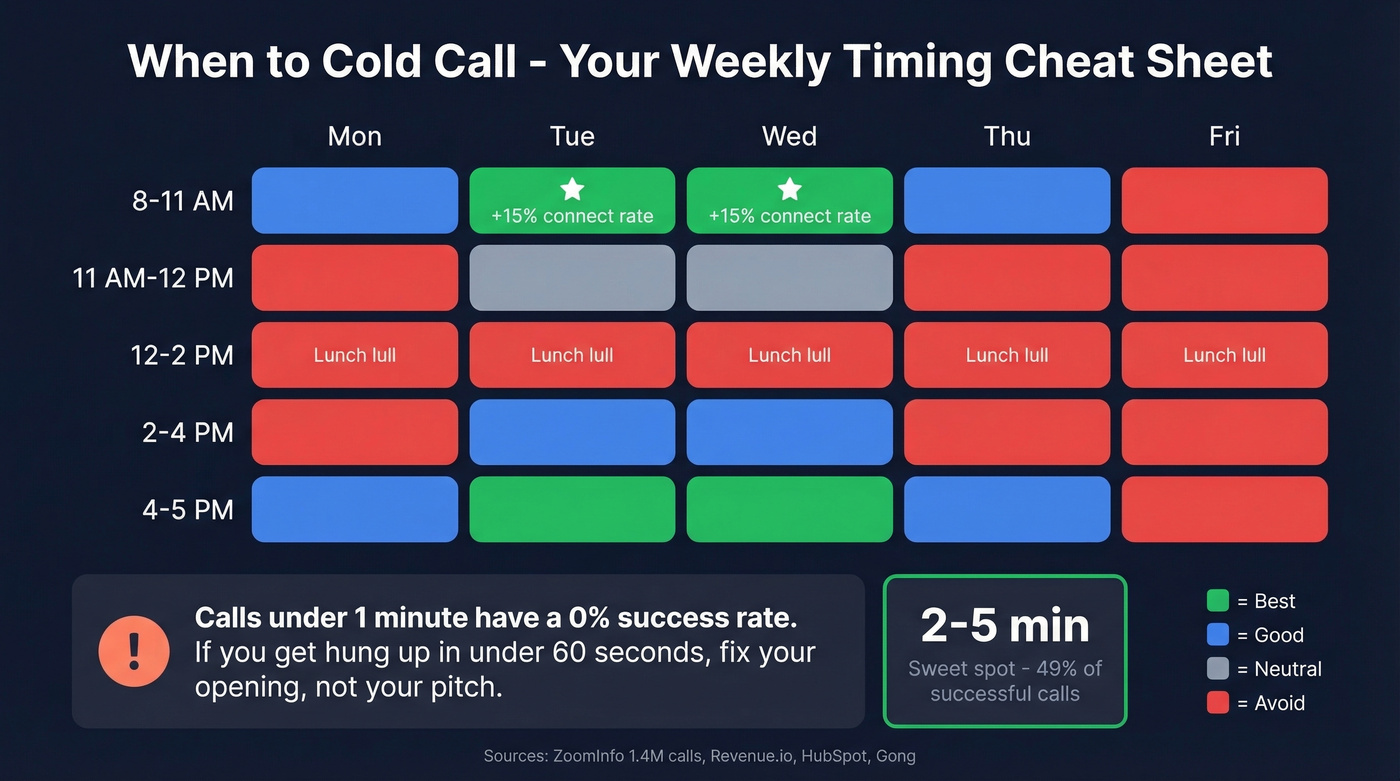
The call duration data is the most actionable insight in this table: calls under one minute have a 0% success rate. Zero. If you're getting hung up in under 60 seconds, the problem is your opening, not your pitch. Timing alone won't get you past a gatekeeper, but it stacks the odds.
Benchmarks - What Good Looks Like
For every 800 dials, an average rep connects on 43 and books 2 meetings. A top-quartile rep connects on 106 and books 18. Same dial volume. Nine times the output.
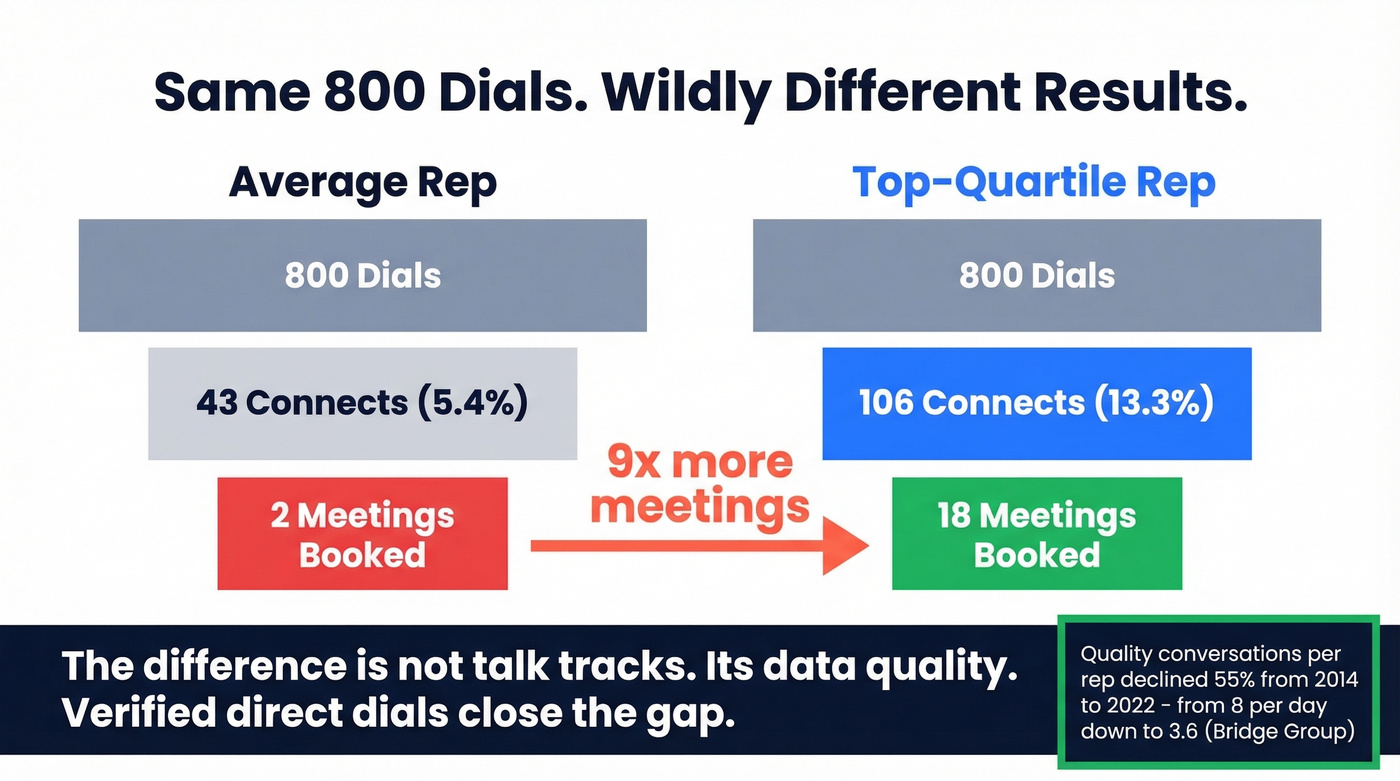
The Bridge Group tracked quality conversations per rep per day from 2014 to 2022 - they declined 55%, from 8 down to 3.6. Prospecting has genuinely gotten harder, and the gap between average and top quartile has widened too. The reps who close that gap invest in data quality first and scripts second, because navigating gatekeepers dial after dial is a grind that verified direct dials cut through entirely.
Let's be honest about priorities: if your deal sizes are under $10k, you don't need a $15k/year data platform. You need 200 verified mobile numbers per month and a Tuesday morning. Start there.
Every hour spent navigating phone trees is an hour not spent closing. Prospeo gives you verified mobile numbers for the exact decision-makers you need - 30+ filters including job title, intent signals, and headcount growth - so your Tuesday morning dials actually connect.
Replace 800 switchboard dials with 200 verified direct numbers that pick up.
Don't Forget Compliance
TCPA litigation surged roughly 95% year-over-year in 2025, and state-level regulations keep tightening. Connecticut restricts calling to 9 AM-8 PM local with penalties up to $20,000 per violation. Texas SB 140 expanded solicitation rules to include texts and images with treble damages. The FCC's consent revocation rule means consumers can revoke consent by any reasonable method - including a simple "stop" text - and cross-channel consent provisions effective April 2026 add another layer.
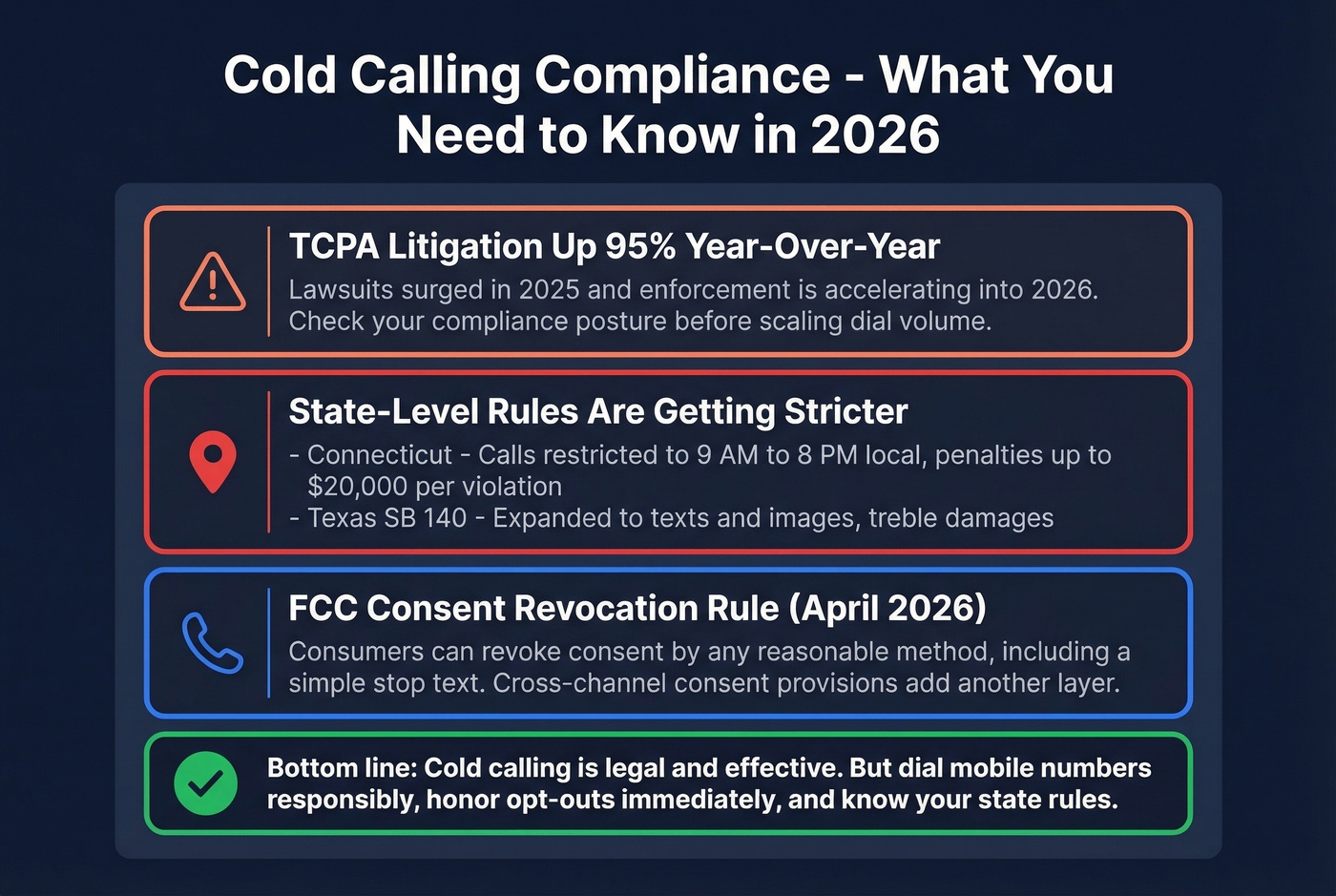
None of this should scare you off cold calling. But check your compliance posture before scaling dial volume, especially if you're dialing mobile numbers directly. Skip this step if you want to learn what treble damages feel like firsthand.
FAQ
What is a gatekeeper in cold calling?
A gatekeeper is anyone who controls access to the decision-maker - typically a receptionist, executive assistant, or office manager. Their job is to filter calls and protect their boss's calendar, not to block every legitimate conversation.
How do you get past gatekeepers cold calling?
Combine honest, brevity-based openers that mirror internal calls with public company references like funding rounds or job postings to reduce perceived risk. Whenever possible, dial verified mobile numbers to skip the gatekeeper entirely.
What's a good connect rate for cold calling?
Average is 5.4% and top-quartile is 13.3%, based on aggregated industry data. If you're consistently below 5%, your phone number data - not your script - is the most likely bottleneck.
What's the best time to cold call?
Tuesday and Wednesday mornings between 8-11 AM local time produce the highest connect rates. Late afternoons from 4-5 PM are a strong second window. Avoid Fridays and the midday lull between 12-2 PM.
Can I skip gatekeepers entirely?
Yes. Dial verified mobile numbers instead of main office lines. For many teams, removing the gatekeeper from the equation altogether beats trying to talk your way through every time.