

How to Improve Sales Team Performance (When Generic Advice Isn't Working)
69% of reps missed quota last year. Meanwhile, 17% of your team is carrying 81% of the revenue. The other 83% aren't lazy - they're under-coached, working bad data, and following a process nobody's audited in a long time.
If you want to improve sales team performance, stop reaching for another SKO or comp plan tweak. Here's what actually works.
Three Levers That Compound
Most articles give you 15 tips. We're giving you three levers - ranked by speed-to-impact - that compound when stacked together.
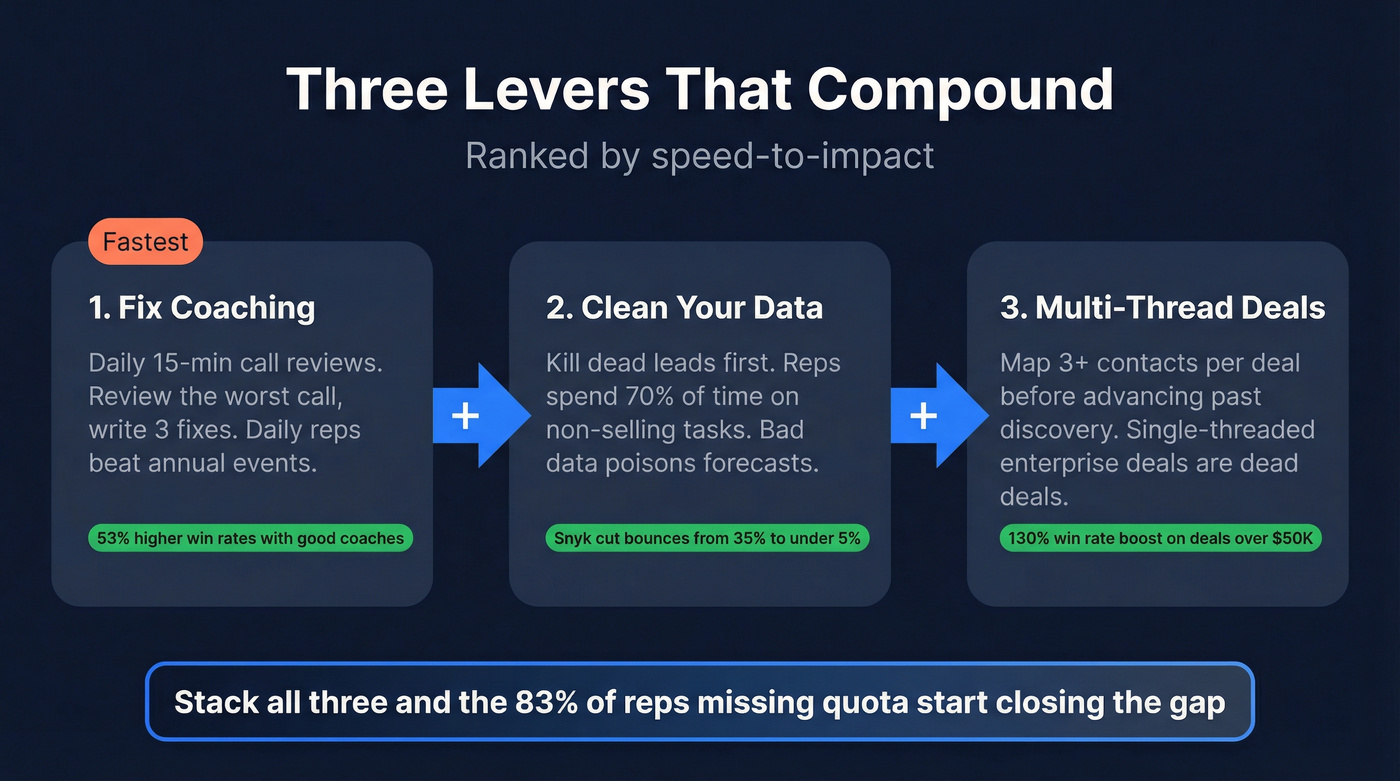
- Start a daily 15-minute call review habit. Review the worst call, write three fixes. Daily reps beat annual events every time.
- Fix your prospect data. Reps spend 70% of their time on non-selling tasks. Kill the dead leads first.
- Multi-thread every deal over $50K. Closed-won deals have 2x the buyer contacts of lost deals. Single-threaded enterprise deals are dead deals.
Know Your Benchmarks First
You can't fix what you haven't measured. Here's the win-rate-by-ACV breakdown from a benchmark study of 847 B2B SaaS companies:
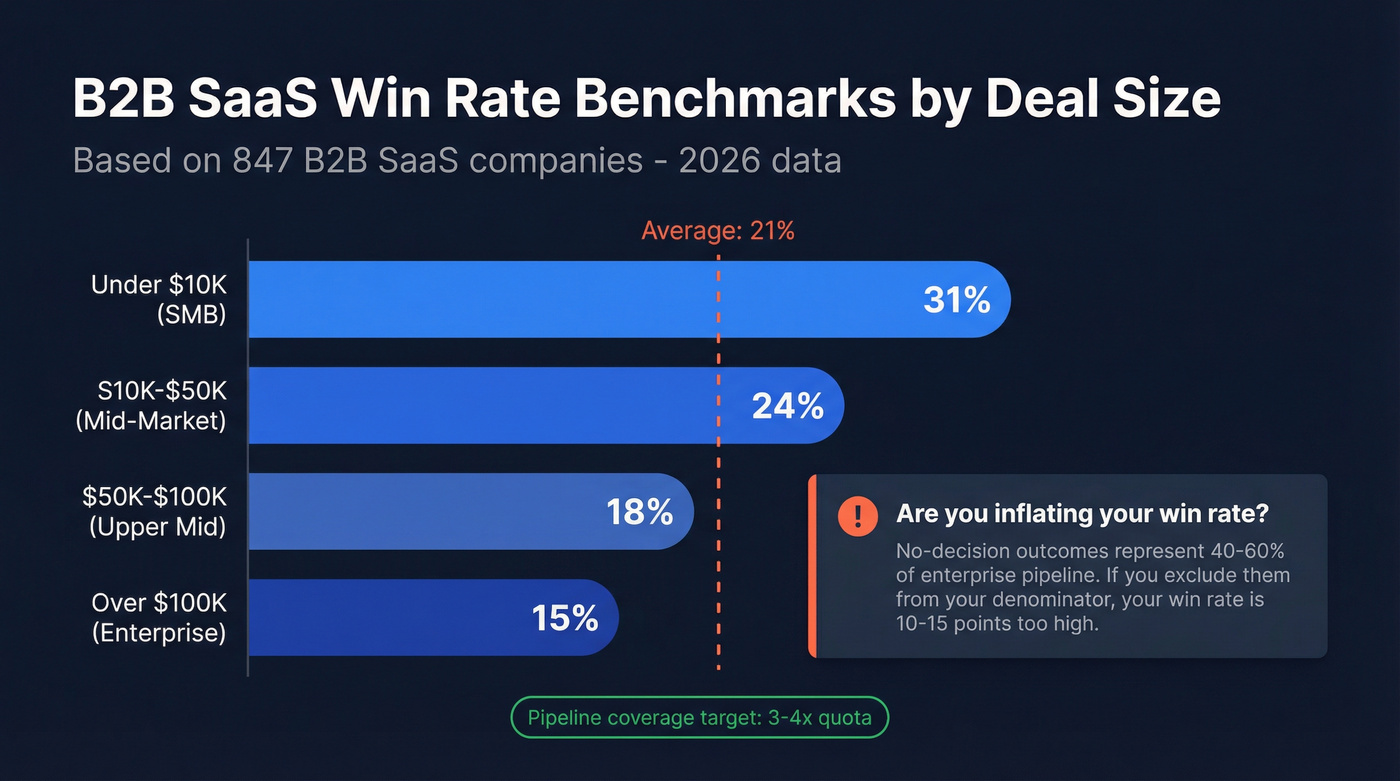
| Deal Size | Median Win Rate |
|---|---|
| Under $10K (SMB) | 31% |
| $10K-$50K (Mid) | 24% |
| $50K-$100K (Upper) | 18% |
| Over $100K (Ent.) | 15% |
The average across all B2B opportunities sits around 21%. But if you're excluding "no decision" outcomes from your denominator, you're inflating your win rate by 10-15 points. "No decision" represents 40-60% of enterprise pipeline - include it or you're lying to yourself about quota attainment.
Pipeline coverage should run 3-4x your target. Below 3x, your reps don't have a closing problem. They have a math problem.
Fix Coaching First
65% of organizations don't evaluate coaching skills when hiring sales managers. They promote the best closer, hand them a team, and wonder why nothing changes. The cost is staggering: 20% of new reps churn within their first 45 days due to poor onboarding, and replacing each one runs around $195K.
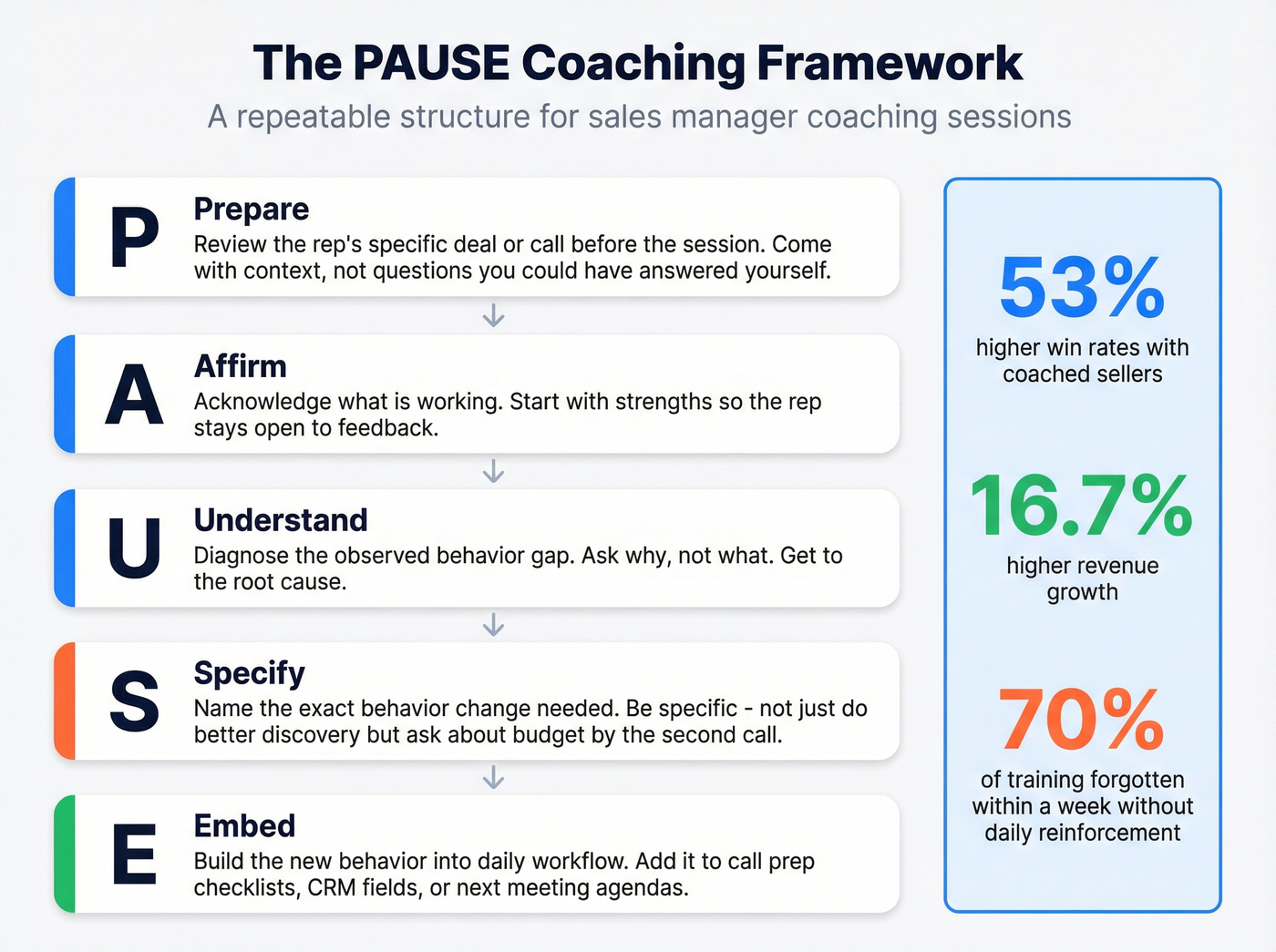
Here's the thing: most sales enablement budgets are wasted. 70% of training content is forgotten within a week. That $4.53 return per $1 invested only materializes with daily reinforcement - not a two-day workshop in January. Sellers with high-performing coaches hit 53% higher win rates and drive 16.7% higher revenue growth. The coach matters more than the curriculum.
The PAUSE framework from Challenger gives managers a repeatable structure:
- Prepare - review the rep's specific deal or call before the session
- Affirm - acknowledge what's working
- Understand - diagnose the observed behavior gap
- Specify - name the exact behavior change needed
- Embed - build the new behavior into daily workflow
That 15-minute worst-call review from the top of this article? A single Reddit post describes tripling close rate over about six months with this exact routine. That's one data point, but the principle - daily reps beat annual events - is well-established in skill acquisition research. We've seen teams where this single habit moved the needle more than big annual training programs ever did.
Stop Wasting Rep Time on Bad Data
Reps spend 70% of their time on non-selling tasks. Some of that is unavoidable admin. But a shocking amount goes to dialing disconnected numbers, sending emails that bounce, and manually researching prospects who left the company six months ago.
And nearly 70% of salespeople say they're overwhelmed by their tech stack - so the tools meant to help are often adding friction instead.
Let's be honest: if you want to optimize rep productivity, start by eliminating the garbage data your team is forced to work. Snyk had 50 AEs each spending 4-6 hours per week prospecting. Their bounce rate was running 35-40%. After switching to Prospeo, bounces dropped to under 5%, AE-sourced pipeline jumped 180%, and the team generated 200+ new opportunities per month. That freed each AE to spend those hours actually selling - not chasing ghosts. Prospeo's 7-day data refresh cycle, compared to the 6-week industry average, means reps aren't working stale records that erode confidence and poison pipeline forecasts.
In our experience, fixing data quality is the single fastest sales productivity win available. Bad data doesn't just waste time. It makes your forecast unreliable and your reps cynical.

Snyk's 50 AEs cut bounce rates from 35% to under 5% and grew pipeline 180% - by fixing their data first. Prospeo's 7-day refresh cycle means your reps never work stale records again.
Stop taxing your team with dead leads. Start selling.
Multi-threading requires verified contacts for every stakeholder on the buying committee. Prospeo gives you 300M+ profiles, 125M+ verified mobiles, and 30+ filters to map entire accounts in minutes - not hours.
Map the full buying committee before your competitor does.
Design Incentives That Don't Backfire
Compensation is the most overused lever in sales management. When performance dips, leadership's first instinct is to restructure comp. It rarely works.
Don't reward only new logos while ignoring renewals and expansion - only 25% of commission leaders incentivize upsells, and it shows in retention numbers. Don't change comp plans mid-quarter; it destroys trust faster than almost anything else. And don't use accelerators so steep that your top 17% earns disproportionately while the middle 60% sees no path to meaningful upside.
If your coaching is broken and your data is bad, no comp plan redesign will save you. You can't boost revenue from a team that doesn't trust its own pipeline numbers.
Multi-Thread or Lose the Deal
Gartner puts the typical B2B buying committee at 6-10 people. For enterprise deals, newer research shows 15-17+ stakeholders. If your rep is talking to one champion and hoping for the best, the math is against them.
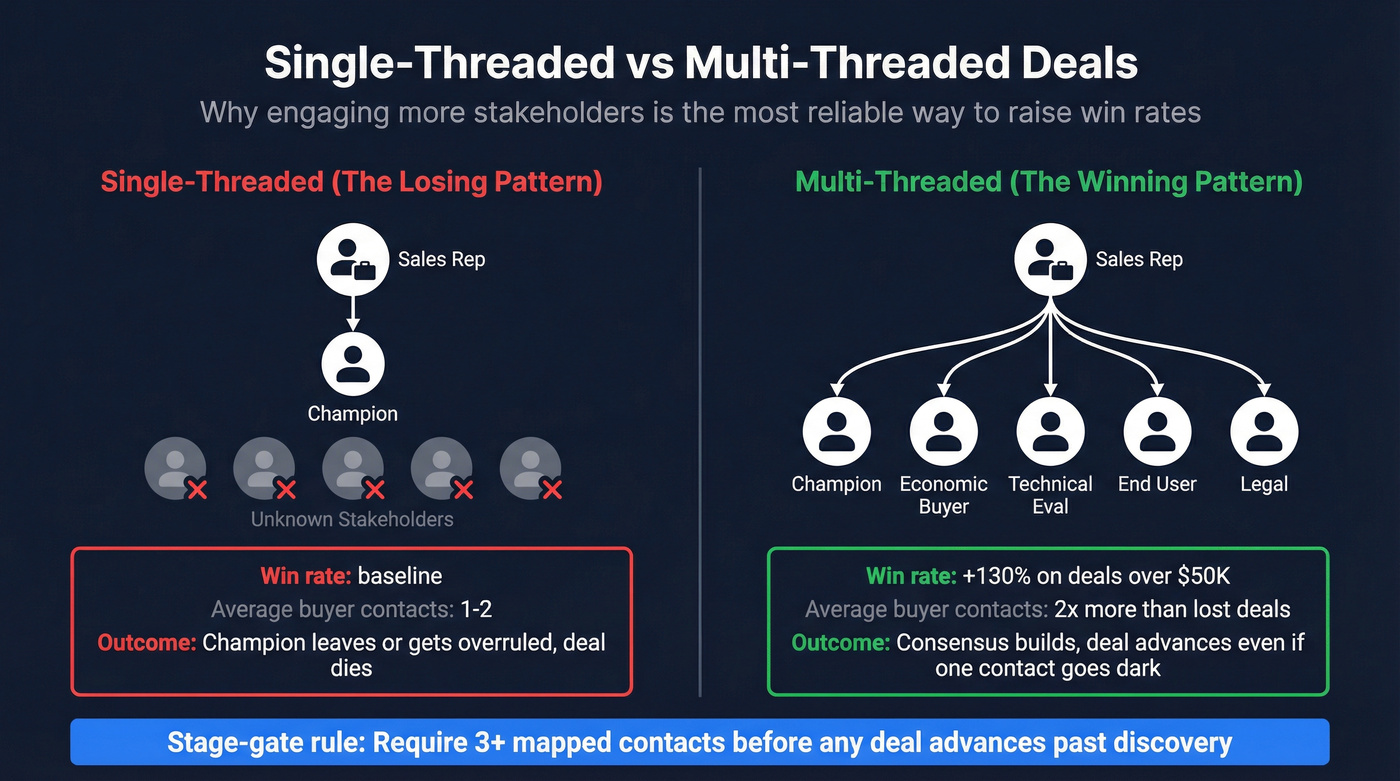
Closed-won deals average 2x the buyer contacts of lost deals. For deals above $50K, multi-threading boosts win rates by 130%. The practical move: require reps to map at least three contacts per opportunity before it advances past discovery. Build it into your stage-gate criteria so it's a process requirement, not a suggestion.
This is one of the most reliable ways to raise win rates without spending a dollar on new tools. Skip it at your own risk - the consensus on r/sales is that single-threaded enterprise deals are where pipeline goes to die.
Track Metrics That Actually Matter
Most teams track too many metrics or the wrong ones. Here are eight that tell you whether sales productivity is improving:
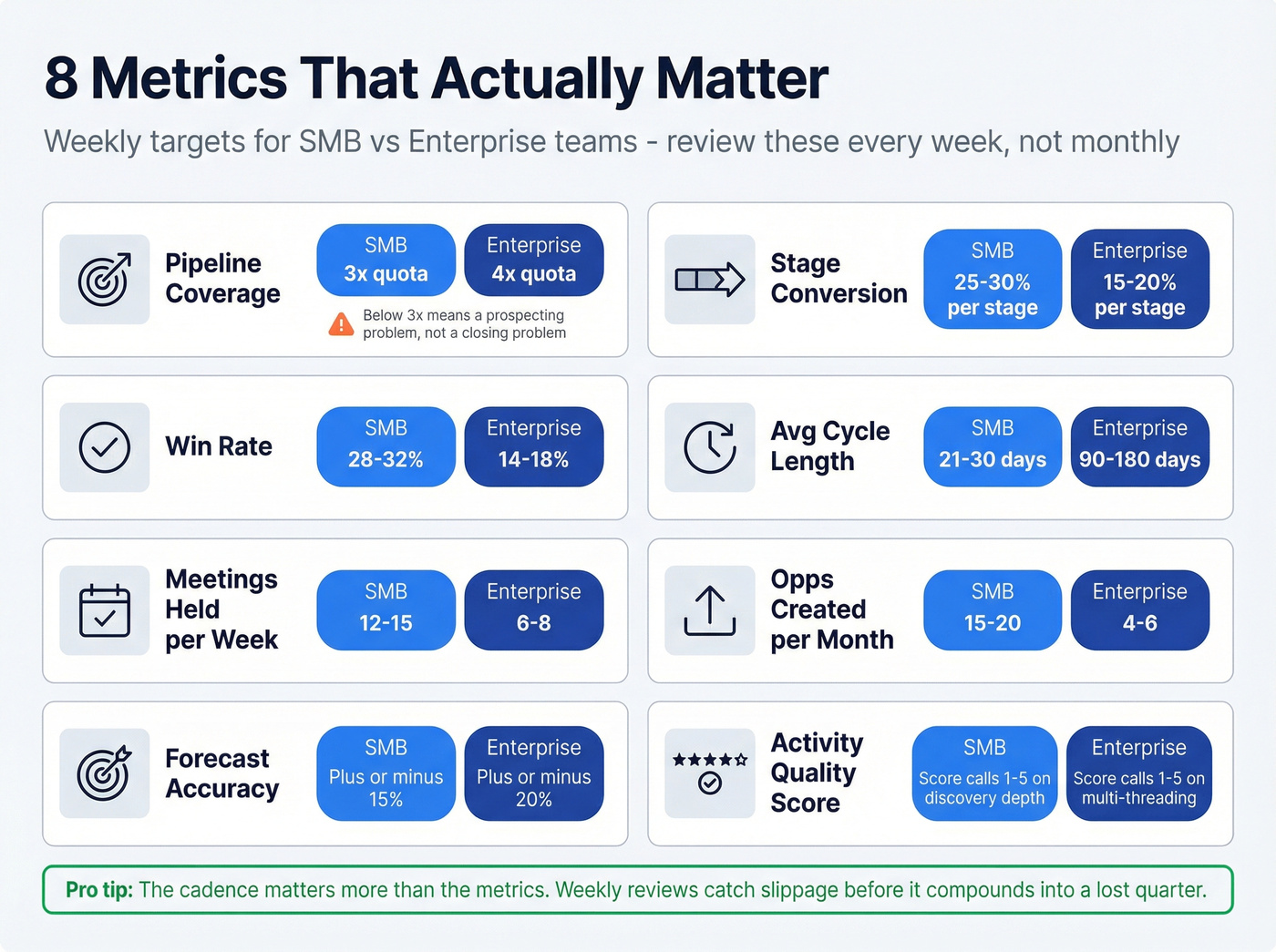
| Metric | SMB Target | Enterprise Target |
|---|---|---|
| Pipeline coverage | 3x quota | 4x quota |
| Stage conversion | 25-30% per stage | 15-20% per stage |
| Win rate | 28-32% | 14-18% |
| Avg. cycle length | 21-30 days | 90-180 days |
| Meetings held/week | 12-15 | 6-8 |
| Opps created/month | 15-20 | 4-6 |
| Forecast accuracy | ±15% | ±20% |
| Activity quality score | Score calls 1-5 on discovery depth | Score calls 1-5 on multi-threading progress |
Review these weekly - not monthly. The cadence matters because it catches slippage before it compounds. If pipeline coverage drops below 3x, you don't have a closing problem next quarter. You have a prospecting problem right now.
Consistent metric reviews are how you scale performance from a handful of top reps to the entire org. For teams that are already tracking these but still seeing inconsistent results, the issue is almost always that managers review the dashboard but don't act on what it says until the quarter is already lost.
Start Here Monday
The 17% carrying your revenue aren't superhuman - they're operating with better habits, better data, and more contacts per deal. Fix those three things for the other 83% and the gap closes fast.
That's how you improve sales team performance. Not with another offsite, but with daily systems that compound.
FAQ
What's a good win rate for B2B sales teams?
The average B2B win rate is 21% across all opportunities. For enterprise deals over $100K ACV, the median drops to 15%. Make sure you're including "no decision" outcomes in your denominator - most teams don't, and it inflates their number by 10-15 points.
How much time should sales managers spend coaching?
Top-performing teams dedicate 30-40% of manager time to structured coaching using frameworks like PAUSE - not ad hoc ride-alongs. Most managers spend less than 10%. Coached sellers hit 53% higher win rates and drive 16.7% higher revenue growth.
How does bad prospect data hurt sales performance?
Reps waste hours dialing disconnected numbers and emailing invalid addresses - time that should go toward selling. Snyk cut bounce rates from 35% to under 5% after switching their data provider, and AE-sourced pipeline jumped 180%. Tools with 98% email accuracy and weekly data refreshes eliminate this drag immediately.
What is multi-threading in sales?
Multi-threading means engaging multiple stakeholders within a buying committee instead of relying on a single champion. Closed-won deals average 2x the buyer contacts of lost deals, and multi-threading boosts win rates by 130% on deals above $50K. Require at least three mapped contacts before advancing past discovery.