

Probing Questions for Sales: 60+ Examples to Close More Deals
You just wrapped a discovery call. You asked fifteen questions, the prospect gave polite one-sentence answers, and you hung up knowing almost nothing you didn't already know. That call was dead before it started - not because your questions were bad, but because you never followed up on the answers. Nearly 25% of sellers say discovery questions are a top weakness, and the real problem isn't the questions themselves. It's the skill of going deeper.
You don't need 100 questions memorized. You need 10 great ones and the discipline to follow up on whatever the prospect actually says.
Quick Version
- The 4 "go deeper" follow-ups that work after any answer: "How long has this been a problem?" → "Why is it still a problem?" → "What have you tried?" → "Why didn't those solutions work?"
- The 70/30 rule: you talk 30% of the time, max. Over 50%? You're pitching, not probing.
- Technique beats volume. Ten questions with real follow-up will outsell sixty questions read from a checklist every single time.
- Spread your questions across the call - don't dump them all in the first five minutes.
What Are Probing Questions in Sales?
Probing questions are open-ended questions designed to uncover the why behind a prospect's situation - their pain, priorities, decision process, and urgency. A closed question confirms a fact ("Are you using Salesforce?"). A probing question opens a conversation ("What's frustrating about how your team uses Salesforce today?").
Teams with strong questioning skills report 20-30% win rates, while script-heavy teams relying on closed-ended questions sit in the low teens. The gap comes down to four question types that map directly to the SPIN framework:
| Type | Purpose | Example |
|---|---|---|
| Situational | Understand context | "How does your team handle X today?" |
| Problem | Surface pain | "What's not working about that?" |
| Implication | Quantify impact | "How does that affect revenue?" |
| Need-payoff | Build the case | "If you solved that, what changes?" |
One type to avoid: loaded questions. "Don't you think your current process is broken?" feels manipulative and shuts down honest conversation. Probing should open doors, not corner people.
How to Ask Probing Questions That Actually Work
Most articles give you a list of questions and wish you luck. The list is the easy part. The hard part is how you ask, when you ask, and what you do with the answer.
Spread Questions Across the Call
Gong Labs research found that top-performing reps spread their questions evenly across the entire call, while average reps dump most of their questions into the first five minutes and then shift into pitch mode. Frontloading turns discovery into an interrogation. The prospect's guard goes up, answers get shorter, and you lose the conversational rhythm that produces real insight.
Think of your questions as a resource you're budgeting across 30 minutes, not a checklist you're racing through. Ask two or three, listen, respond to what you hear, then ask the next one.
Mirror and Label to Go Deeper
These two techniques - both popularized by Chris Voss - are the fastest way to get a prospect talking without asking another question.
Mirroring: repeat the prospect's last one to three words with a slight upward inflection, then stop talking. They say "We've been struggling with pipeline visibility." You say "Pipeline visibility?" and wait. They'll elaborate. It feels too simple to work. It works.
Labeling: name the emotion you're hearing. "It sounds like that's been a real source of frustration for your team." Then pause. Don't follow it with a question - the silence does the work.
Both techniques exploit the same insight from Gong's data: longer buyer responses correlate strongly with closed deals. You don't need more questions - you need longer answers. Phrasing matters too. "Can you help me understand your biggest challenge?" consistently produces longer responses than "What's your biggest challenge?" The softened opener signals you want a real answer, not a soundbite.
Here's the full "go deeper" chain in action. Prospect says something vague like "We're not happy with our current vendor."
- "How long has this been a problem?"
- "Why is it still a problem?"
- "What have you tried in the past to solve it?"
- "Why haven't those solutions worked?"
Four follow-ups. No new topic. Just depth. By question four, you know more about their pain than most reps learn in three calls.
Know When to Stop
There's a moment in every discovery call where probing turns into interrogation. Watch for the signals: one-word answers, time-checking, or the prospect repeating something they already told you. When you see any of those, stop digging and advance the conversation.
The 70/30 talk-to-listen ratio is directionally right, but here's our actual take - response length matters more than talk time percentage. A call where you talk 40% but get three-minute answers is better than a call where you talk 25% and get ten-second responses.

Your probing questions are only as good as the people you're asking them to. Prospeo gives you 300M+ profiles with 30+ filters - buyer intent, job changes, tech stack - so every discovery call starts with the right prospect. 98% email accuracy means you actually get on the call.
Stop wasting perfect questions on the wrong prospects.
60+ Examples by Stage
Pick two or three per stage that feel natural to you, and practice the follow-up techniques above. Don't try to memorize all of these.
Rapport and Opening
Use these to set the tone and signal you've done your homework. Keep it brief - rapport isn't a stage, it's a warmup.
- What prompted you to take this call today?
- What's the most important thing you'd want to get out of our conversation?
- I noticed [specific company event] - how has that been going?
- What does a typical day look like for you right now?
- How long have you been in this role?
- What's top of mind for your team this quarter?
- What's changed since we last connected? (for follow-up meetings)
- Before we get started, is there anything specific you're hoping I can address?
Discovery and Situation
Establish context. Here's the thing: every situation question you could've researched beforehand is a wasted minute. We've seen reps burn half their calls on questions a two-minute search would answer. Minimize these ruthlessly.
- How does your team currently handle [process]?
- What tools are you using to support [process] today?
- How many people are involved in this workflow?
- What does your current tech stack look like for [function]?
- How do you measure success for [initiative]?
- Who else is involved in evaluating solutions like this?
- What's your timeline for making a decision?
- How did you end up with your current solution?
- What does your buying process typically look like?
- How is your team structured around [function]?
Pain and Problem
This is where deals are won. Pain and Problem questions generate about 80% of the insight that actually moves a deal forward - yet most reps spend the majority of their time on Situation questions that add nothing. Don't accept surface-level answers. Use the "go deeper" chain.
A common mistake is asking "What are your pain points?" verbatim. Prospects can smell a script from a mile away. Instead, anchor your question to something specific you've already heard:
Weak: "What are your pain points?" Strong: "You mentioned your team rebuilds that report manually every Monday. What happens when someone gets it wrong?"
- What's the biggest challenge you're facing with [process]?
- What's not working about your current approach?
- Where do things break down most often?
- What are the disadvantages of your current process?
- How often does [problem] come up?
- What happens when [problem] occurs - walk me through a recent example?
- If you could fix one thing about [process] tomorrow, what would it be?
- What's the most frustrating part of your day-to-day?
- What issues still haven't been resolved despite previous attempts?
- How severe is this problem on a scale of "annoying" to "blocking revenue"?
Impact and Implication
Quantify the pain. These are the questions that build the business case your champion will use internally - and they're the ones most reps skip entirely.
- How is this issue impacting your team's productivity?
- What does this problem cost you in revenue or time each quarter?
- Does this ever keep you from reaching your business goals?
- If this problem persists for another 12 months, what happens?
- How does this affect your team's ability to hit quota?
- What's the ripple effect on other departments?
- How does this impact your customers' experience?
- What opportunities are you missing because of this?
Qualification
Determine fit and buying readiness. Match these to your framework - BANT, CHAMP, or MEDDPICC. Picture this: you've had a great discovery call, the champion is excited, and then the deal stalls for six weeks because you never asked who else needs to sign off. These questions prevent that.
- What would need to be true for you to move forward this quarter?
- Who else needs to sign off on a decision like this?
- How have you handled purchases of this size before?
- What's your evaluation process look like from here?
- Is there a budget allocated for solving this, or would we need to build a business case?
- What competing priorities might push this back?
- What would make you say no?
- If we could prove [specific outcome], would that be enough to move forward?
Objection Handling
Objections aren't roadblocks - they're invitations to probe deeper. Map your questions to the four objection types:
- Price: "Compared to what you expected, what feels too high?"
- Price: "When you say it's expensive, what are you comparing it to?"
- Need: "If this problem disappeared tomorrow, how would that change things for you?"
- Need: "What would happen if you did nothing for the next six months?"
- Timing: "What's changing in the next 30-60 days that makes now feel off?"
- Timing: "Is there a trigger event that would make this more urgent?"
- Trust: "What would you need to feel confident moving forward with us?"
- Trust: "What's worked - or not worked - with vendors you've trusted in the past?"
Top-performing reps are 53% more likely to explore the why behind an objection rather than pivot away from it. Sit in the discomfort. The rep who says "Tell me more about that" after hearing "it's too expensive" wins more deals than the rep who immediately offers a discount.
Closing and Next Steps
These aren't "closing techniques." They're questions that confirm alignment and surface hidden objections before they kill the deal in week six.
- Based on what we've discussed, how does this compare to what you were expecting?
- What concerns do you still have that we haven't addressed?
- What would a successful implementation look like for your team?
- Is there anything that could derail this between now and [decision date]?
- Would doing [process improvement] make it easier to reach your business goals?
- What's the next step that makes sense from your side?
- If we could start tomorrow, what would you need to see first?
- Who else should be in the room for our next conversation?
Post-Sale and Expansion
Most reps stop probing after the contract is signed. That's a mistake - expansion revenue depends on the same questioning skills that closed the initial deal.
- Now that you've been using [product] for [timeframe], what's surprised you?
- What's one thing you wish worked differently?
- Are there other teams dealing with the same problem you had?
Match Your Framework to Your Sale
If you only learn one framework, learn SPIN. It's backed by Huthwaite's study of 35,000+ sales calls, it works across deal sizes, and its question sequence - Situation, Problem, Implication, Need-payoff - maps directly to how buyers actually think about problems. Every other framework is essentially a qualification checklist layered on top of SPIN's conversational logic.
SPIN Selling
SPIN was designed for complex, consultative deals, but its principles apply everywhere. The key insight: Situation and Problem questions identify pain, while Implication and Need-payoff questions build pain into a business case. Most reps stop at Problem. The best reps spend most of their time on Implication.
Situation - Establish context (minimize these):
- "What tools do you use to support [process] today?"
- "How is your team structured around [function]?"
- "What does your current workflow look like end to end?"
Problem - Surface pain:
- "What's the biggest challenge with that approach?"
- "Where does that process break down most often?"
- "What's not working the way you expected?"
Implication - Quantify impact (spend the most time here):
- "How does that impact your team's ability to hit their number?"
- "What does that cost you in lost deals per quarter?"
- "If this continues for another year, what's the downstream effect?"
Need-payoff - Build the case for change:
- "If you could cut that process in half, what would that free up?"
- "What would it mean for your team if [problem] went away?"
- "How would solving this change your ability to hit [goal]?"
BANT, CHAMP, and MEDDPICC
BANT works for shorter SMB cycles where budget is real and the buyer is the decision-maker. CHAMP flips the script by starting with challenges instead of budget - more buyer-centric, better for mid-market. MEDDPICC is the enterprise heavyweight, built for deals with 6-10+ stakeholders and multi-month procurement processes.
| Framework | Best For | Key Questions |
|---|---|---|
| BANT | SMB, short cycles | "Budget allocated?" / "Who signs off?" / "Timeline?" |
| CHAMP | Mid-market | "Top challenge?" / "Priority rank?" / "Authority path?" |
| MEDDPICC | Enterprise | "Success metrics?" / "Who's your champion?" / "Paper process?" |
Let's be honest: if your average deal closes under $15k, you probably don't need MEDDPICC. It's a powerful framework, but it adds overhead that doesn't pay off on smaller deals. SPIN plus BANT will cover you.
One important nuance from SPOTIO's framework analysis: a "champion" isn't someone who likes your product. It's someone willing to spend internal political capital to push the deal through. If they won't go to bat for you in meetings you're not in, they're a fan, not a champion.
Five Mistakes That Kill Discovery Calls
1. Talking too much. You're over 50% talk time and wondering why the prospect seems disengaged. The fix isn't silence - it's asking a question and then actually waiting for the full answer. In our experience, the reps who struggle most with discovery aren't bad at asking questions. They're bad at shutting up after asking them.
2. Accepting vague answers. Prospect says "We're looking to improve efficiency." You nod and move on. Bad move. Try: "Can you give me a specific example of where efficiency breaks down?" If you can swap the prospect's answer into any other company's mouth and it still makes sense, you haven't probed deep enough.
3. Frontloading all your questions. The first five minutes feel like a deposition, the last twenty feel like a pitch. Spread your questions across the entire call.
4. Asking questions you could've researched. "How many employees do you have?" is a Google search, not a discovery question. If you're burning more than two or three Situation questions, you didn't prep. Tools like Prospeo can pull firmographic and technographic data before the call, so you walk in already knowing the basics and can jump straight to Problem questions.
5. Reading from a checklist. The prospect can hear it. Your tone shifts, your pacing gets mechanical, and the conversation dies. Use your question list as a guide, not a script. The best discovery calls feel like conversations where you happen to learn everything you need.
Pre-Call Research Sharpens Every Probe
The best probing question is the one you don't have to ask. Every minute spent on basic Situation questions - company size, tech stack, recent funding - is a minute you're not spending on Problem and Implication questions that actually move deals.
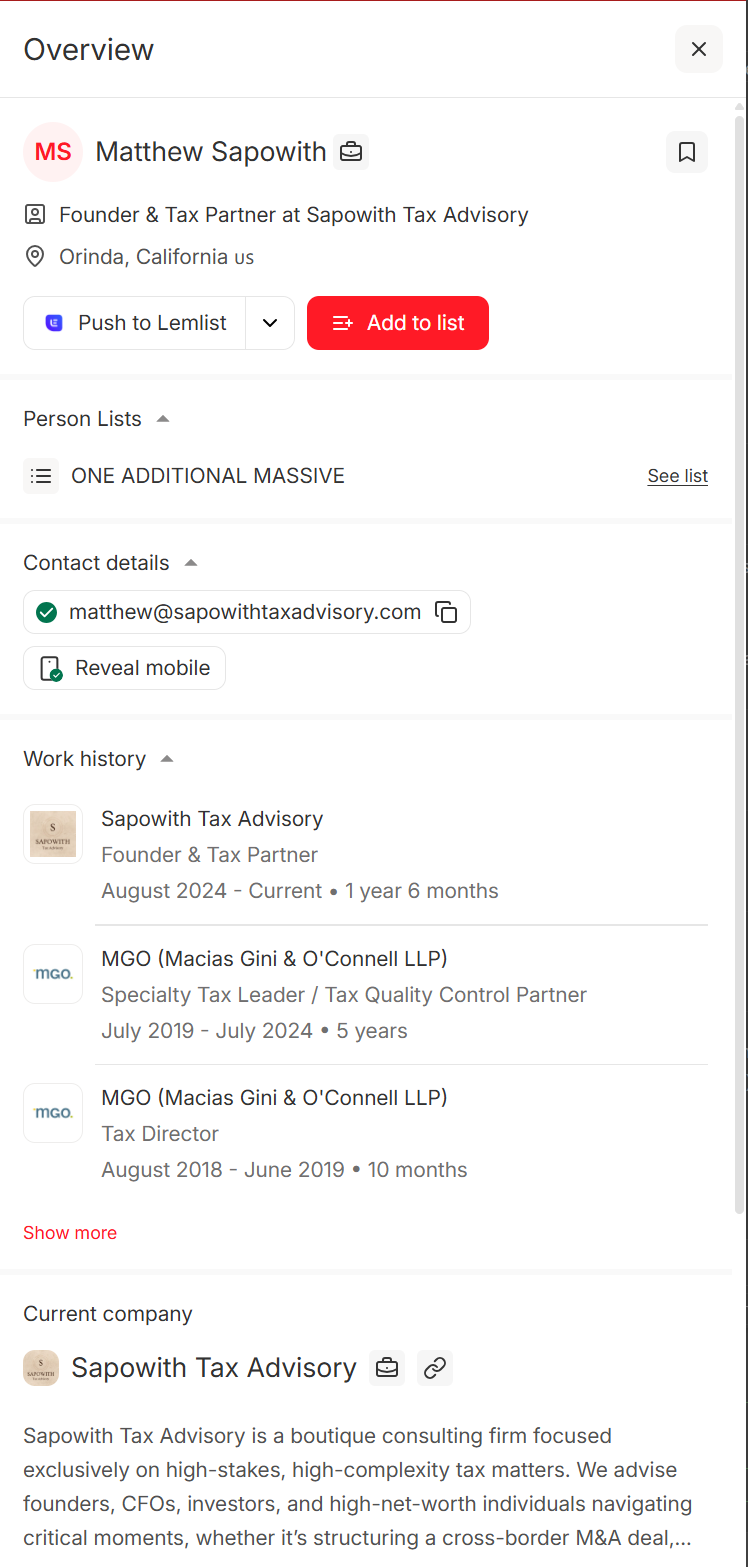
The SPIN framework is explicit about this: minimize Situation questions by doing your research beforehand. Before any discovery call, you should already know the company's headcount, recent funding rounds, tech stack, the prospect's role history, and any recent headcount changes. That's five data points that eliminate five wasted questions, and a platform like Prospeo can surface all of them in a single search across 300M+ profiles with 30+ filters - data that refreshes every seven days, so you're not walking into a call with stale information.
Skip pre-call research tools if your team runs fewer than ten discovery calls a week and you're comfortable doing manual prep. For teams running dozens of calls, the time savings compound fast.
You just learned how to run discovery calls that close deals. Now make sure your pipeline is full of prospects worth discovering. Prospeo's intent data tracks 15,000 topics so you reach buyers already researching solutions like yours - before your competitors do.
Reach in-market buyers while their pain is fresh.
FAQ
How many probing questions should I ask per call?
Aim for 8-12 strategic questions spread evenly across the call, roughly one every two to three minutes with follow-ups in between. Three great questions with genuine follow-up will outperform twelve surface-level ones every time.
What's the difference between probing and discovery questions?
Discovery questions open new topics - "Tell me about your current process." Probing questions dig deeper into answers already given - "You mentioned that breaks down quarterly. Why?" Discovery is the wide lens; probing is the zoom. You need both, but probing is where real insight lives.
How do I probe without sounding like an interrogator?
Use mirroring and labeling instead of rapid-fire questions. Repeat the prospect's last few words, or name the emotion you hear ("It sounds like that's been frustrating"), then pause. If you're genuinely curious, it won't feel like an interrogation - your tone does the heavy lifting.
When should I stop probing and advance the conversation?
Stop when the prospect repeats themselves, gives noticeably shorter answers, or you've quantified the problem's business impact. Continuing past that point erodes trust. You've got what you need - summarize what you heard and move forward.
What tools help me skip Situation questions?
B2B data platforms give you firmographic, technographic, and intent data before you pick up the phone. When you already know company size, tech stack, and recent funding, you can open with a Problem question instead of wasting time on basics.