

Scraping Fish Alternatives: 6 APIs That Actually Compete
G2's "alternatives" pages sometimes lump Scraping Fish in with tools like Okta and SAP Fiori - helpful if you're building enterprise IAM, useless if you need a scraping API that returns clean HTML. The web scraping market is on track to hit $2B by 2030, and the tool options keep multiplying. Here's what actually competes, with real benchmark numbers and pricing math that doesn't hide behind credit multipliers.
Our Top Picks at a Glance
| Tool | Best For | Starting Price | Benchmark Performance |
|---|---|---|---|
| ScrapingBee | Anti-bot reliability | $49/mo | 84.47% success (Proxyway) |
| Prospeo | Verifying scraped contacts | Free tier | 98% email accuracy |
| ZenRows | Protected sites | $69.99/mo | 70.39% success (Proxyway) |
| Scrapfly | Budget-friendly entry | $30/mo | Credit-efficient for datacenter scraping |
Why People Switch From Scraping Fish
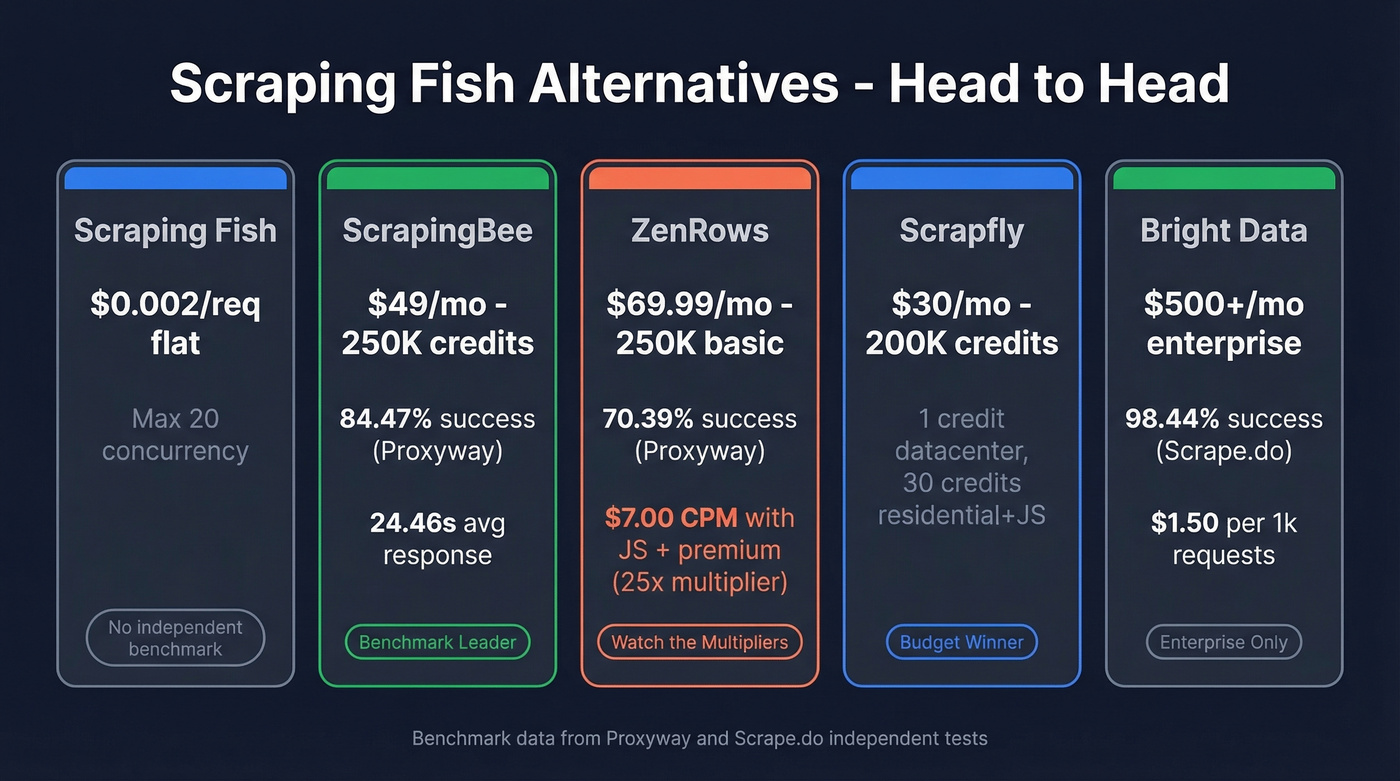
Scraping Fish charges a flat $0.002 per successful request - no credit multipliers, no feature surcharges. It runs mobile 4G/LTE proxies by default, uses ethically sourced IPs, and only bills for 200/404 responses. That simplicity is genuinely rare.
So why switch? Concurrency caps top out at 20 concurrent requests on the $2,000/mo unlimited plan. While Scraping Fish supports extraction rules, many teams still end up doing their own parsing or want richer structured extraction out of the box. And without widely cited third-party benchmarks, it's harder to compare protected-site performance against competitors who publish independent test results. Those gaps push teams toward more feature-rich APIs.
The Alternatives Compared
Proxyway's Web Scraping API Report tested 11 scraping APIs against 15 protected websites using ~6,000 unique URLs per target. We've cross-referenced those numbers with Scrape.do's independent benchmark to keep the comparison grounded.
ScrapingBee - The Benchmark Leader
ScrapingBee posted 84.47% success with a 24.46s average response time in Proxyway's tests. Scrape.do's benchmark told a different story: 92.69% success at $3.90 per 1,000 requests with a much faster 11.7s average. If you're running time-sensitive jobs, latency differences compound at scale, so pay attention to which benchmark better reflects your target sites.
Pricing starts at $49/mo for 250K credits with 10 concurrent requests, scaling to $599/mo for 8M credits and 200 concurrency. You get 1,000 free trial calls with no credit card. In our testing, ScrapingBee consistently handled JavaScript-heavy pages better than most mid-tier options, which is why it earns the top spot here.

ZenRows - The Multiplier Math Problem
Here's the thing about ZenRows: excellent anti-bot tech, but its pricing can punish anyone who doesn't do the multiplier math upfront.
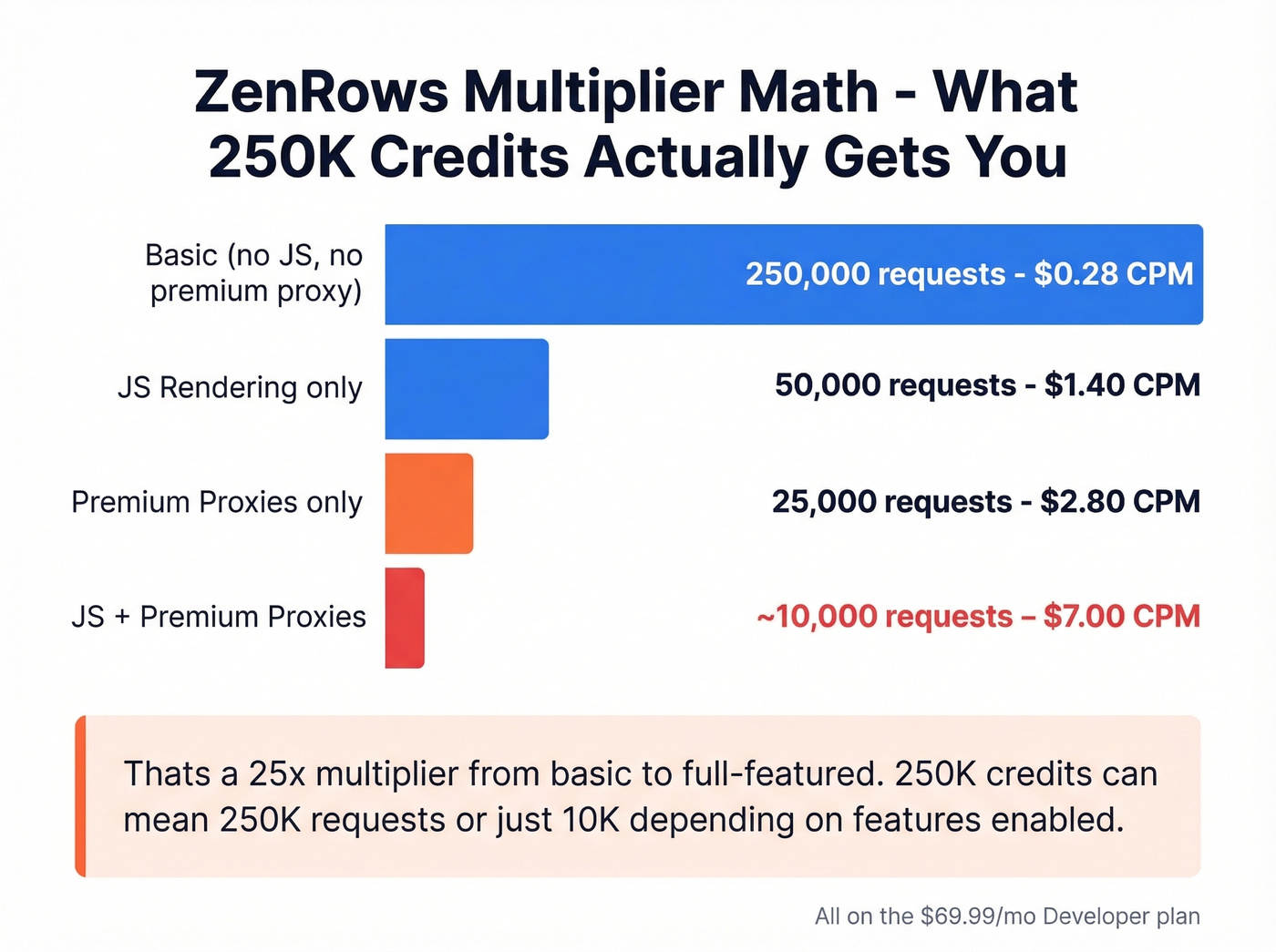
The Developer plan starts at $69.99/mo with 250K basic results and 20 concurrency. Base CPM is $0.28. Turn on JavaScript rendering and that jumps to $1.40. Add premium proxies: $2.80. Need both? $7.00 per 1,000 requests - a 25x multiplier. That's why 250K "basic results" can translate to roughly 10K protected-site requests on the same plan. Reddit threads on r/webscraping consistently flag this as a gotcha for new users.
Proxyway showed 70.39% success at 19.10s response time. Scrape.do reported a stronger 92.64% at $4.48/1k, which likely comes down to different target selections and test setups.
Scrapfly - Best on a Budget
Scrapfly's Discovery plan starts at $30/mo for 200K credits - the cheapest paid entry point on this list. Datacenter requests cost 1 credit. Residential proxies cost 25. Add JS rendering for another 5. A residential+JS request burns 30 credits, turning 200K credits into ~6,667 actual requests.
For datacenter-only scraping, it's hard to beat. Higher tiers scale to $100/mo for 1M credits and $500/mo for 5.5M credits. If your targets don't require residential proxies, Scrapfly is the clear budget winner.
Apify - Skip the Code
Apify isn't a drop-in "send URL, get HTML" API replacement. It's a platform with a marketplace of pre-built scrapers called Actors for targets like Amazon, Google, and social platforms. For teams that don't want to write custom parsers, this saves real development time.
There's a free tier with $5/month in usage credits, $29/mo for Starter, and $199/mo for Scale. Compute units run $0.25-$0.30/CU depending on plan, with residential proxies around $7-$8/GB.
ScraperAPI - Hard to Recommend
ScraperAPI showed 68.95% success in Proxyway's benchmark - one of the weakest results among major APIs tested. Scrape.do reported 92.70% but at $8.49 per 1,000 requests, the highest cost-per-request in their test.
Pricing starts around $49/mo. With weaker protected-site results and expensive cost-per-1k, ScrapingBee and ZenRows are usually better first options. Skip this unless you're already locked into their ecosystem.
Bright Data - Enterprise Overkill
Bright Data posted the highest success rate in Scrape.do's benchmark - 98.44% at roughly $1.50 per 1,000 requests. But this is enterprise infrastructure with pricing to match, typically starting around $500/mo for meaningful volume.
If you're switching from Scraping Fish's $0.002/request model, Bright Data is overkill unless you're running millions of requests monthly against the hardest targets.

Scraping APIs return raw HTML. Prospeo returns verified contacts. Enrich scraped data against 300M+ profiles with 98% email accuracy and skip the bounce-rate nightmare - at $0.01 per email.
Stop scraping for contacts when you can just look them up.
What You'll Actually Pay
Instead of forcing everything into a single CPM table - which gets misleading fast once credits and feature multipliers kick in - here's the cleanest way to think about cost:
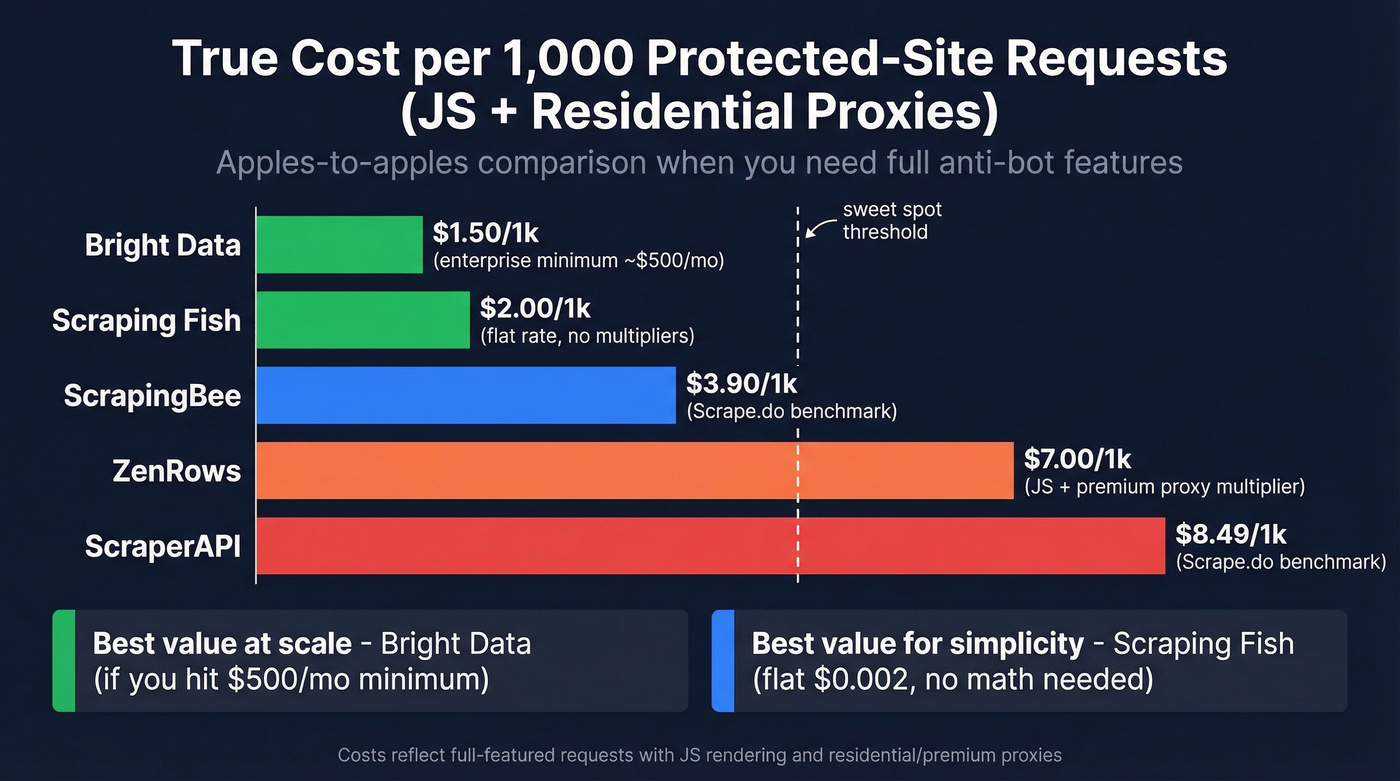
- Scraping Fish: $0.002 per successful request, flat. Packs start at $2 for 1,000 requests. Unlimited plans scale up to 20 concurrency.
- ZenRows: $0.28 CPM basic, $7.00 CPM with JS + premium proxies (25x).
- Scrapfly: Think in credits: 1 credit for datacenter, 30 credits for residential + JS.
- ScrapingBee: $49/mo for 250K credits. Effective CPM depends on feature usage.
- Bright Data: Enterprise pricing, typically $500+/mo.
Scraping Fish's flat pricing is genuinely simpler than most competitors. Many tools on this list use credit multipliers or tiered pricing that makes the advertised rate misleading for complex jobs.
Turning Raw HTML Into Verified Contacts
Scraping gets you HTML. Parsing gets you email addresses and names. But sending cold outreach to unverified scraped contacts is how you burn your domain reputation - bounces, spam traps, and honeypots will wreck your sender score fast.
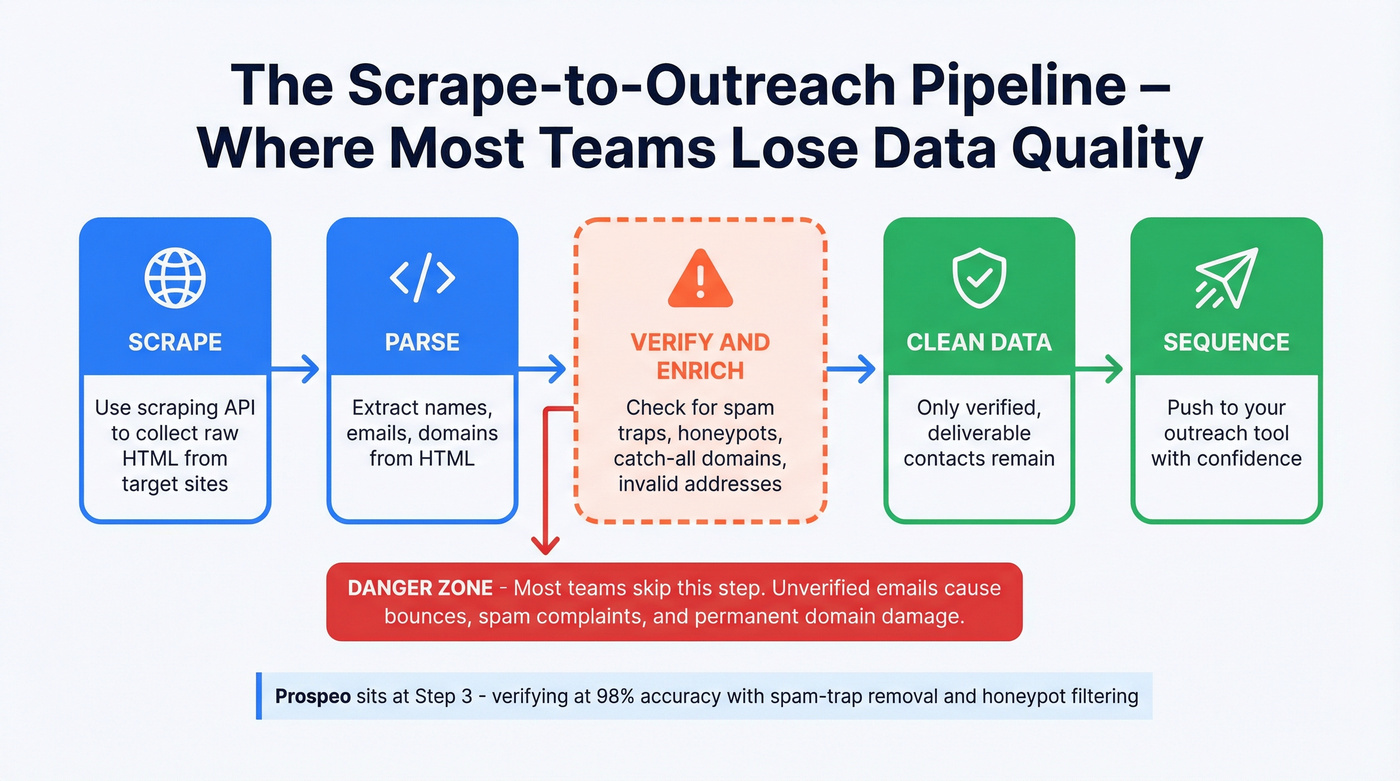
We've seen teams scrape thousands of contacts, blast them into a sequence, and tank their deliverability within a week. The scrape-to-outreach pipeline is where most teams lose data quality.
The workflow: scrape, parse, enrich and verify, push to your sequencer.
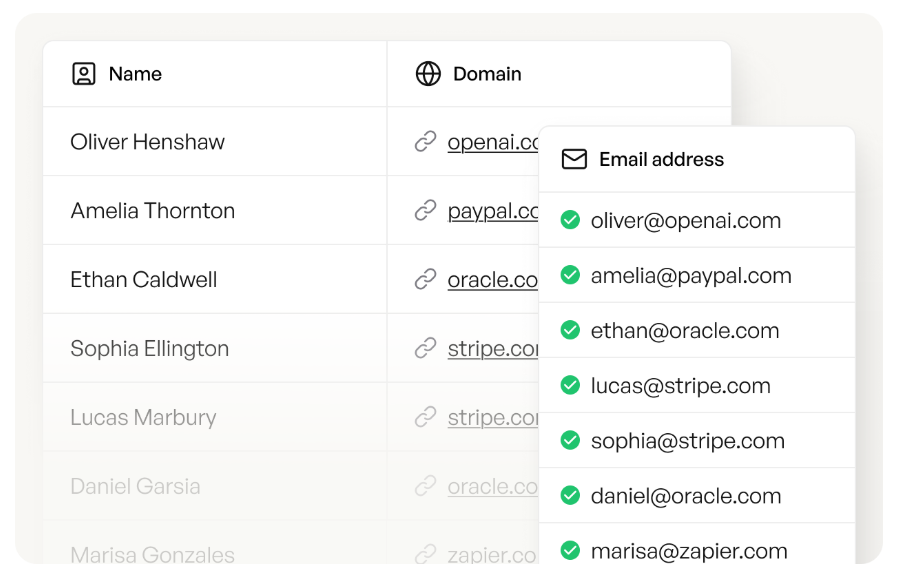
Teams that blast unverified scraped emails tank their sender score within days. Prospeo's 5-step verification - with spam-trap removal and honeypot filtering - keeps bounce rates under 4%. Plug it into your scrape-to-outreach pipeline via API or CSV enrichment.
Protect your domain. Verify every scraped contact before you hit send.
How to Pick the Right Tool
Simple flat pricing? Stick with Scraping Fish or try Scrapfly for the cheapest entry. Anti-bot reliability matters most? ScrapingBee's benchmark numbers are strong among mid-priced APIs. Targeting heavily protected sites? ZenRows with premium proxies - just do the multiplier math first. Don't want to write scrapers? Apify saves development time with its marketplace model.
Let's be honest: whichever Scraping Fish alternative you land on, the real differentiator is what happens after the scrape. Clean, verified data beats cheap data every time.
FAQ
Is Scraping Fish still worth using in 2026?
Yes. Its flat $0.002/request pricing with no credit multipliers makes it one of the simplest scraping APIs to budget for. The limitations are concurrency caps (max 20) and the need to handle parsing yourself. If those don't affect your workflow, there's no compelling reason to switch.
What's the cheapest alternative to Scraping Fish?
Scrapfly at $30/mo for 200K credits is the lowest paid entry point. But a residential+JS request costs 30 credits, so effective request counts drop fast. For datacenter-only jobs it's unbeatable; for complex scraping, Scraping Fish's flat rate is often cheaper at equivalent feature levels.
How do I verify contacts scraped from websites?
Run scraped emails through a dedicated verification tool before sending any outreach. Prospeo verifies at 98% accuracy across 143M+ emails and catches spam traps, honeypots, and catch-all domains - the free tier covers 75 verifications per month. Skipping this step risks bounces, spam complaints, and permanent domain reputation damage.