

Upsell Strategies: The Data-Backed Playbook for 2026
A new customer costs five to six times more to acquire than expanding an existing one. Yet most companies still pour the bulk of their budget into net-new pipeline. That math has never made sense.
Upselling converts at 60-70% with existing customers, compared to 5-20% for cold prospects. It's the cheapest revenue you'll ever earn, and most teams leave it on the table.
Quick version: The highest-converting upsell mechanism is the order bump, averaging 37.8% conversion. Cap your upsell at 25% above the original price and limit options to two or three. Everything below gives you the benchmarks, psychology, and implementation playbook to make it work.
Upselling vs Cross-Selling
| Upselling | Cross-selling | |
|---|---|---|
| What it is | Upgrading to a better version | Adding a related product |
| Example | Basic to Pro plan | Laptop + carrying case |
| Timing | During or after purchase | Usually at checkout |
| Revenue driver | Higher AOV per item | More items per order |
Upselling means offering a customer a better, more valuable version of what they've already decided to buy. The key is making the offer frictionless - no extra forms, no new decisions, just a clear step up. This guide focuses exclusively on upselling, not adjacent products.
Here's the thing most playbooks skip: upselling isn't a sales-only motion. The best companies treat it as a cross-functional responsibility spanning sales, customer success, support, account management, and product-led automation. If your approach lives in one department, you're capturing a fraction of the opportunity.
The Psychology Behind Effective Upsells
Every effective upsell taps into at least one cognitive bias. Understanding the mechanism behind each tactic lets you stack them intentionally rather than guessing.
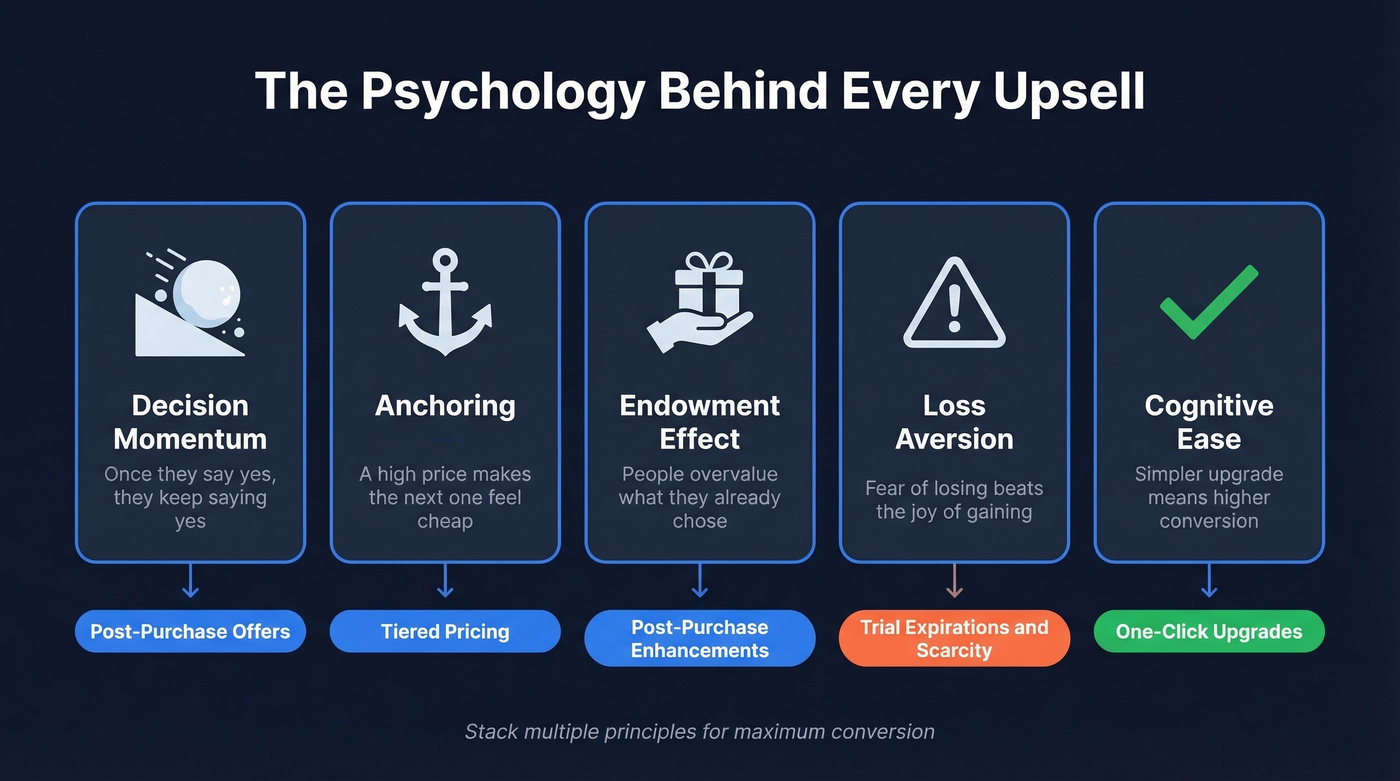
| Principle | How It Works | Tactic It Powers |
|---|---|---|
| Decision momentum | Once someone says "yes," they're primed to keep saying yes | Post-purchase offers |
| Anchoring | A high reference price makes the upsell feel reasonable | Tiered pricing |
| endowment effect | Customers overvalue what they've already chosen | Post-purchase enhancements |
| Loss aversion | Fear of missing out outweighs the joy of gaining | Trial expirations, scarcity |
| Cognitive ease | The simpler the upgrade, the more likely the conversion | One-click upgrades |
Decision momentum is the engine behind every checkout upsell. The customer has already committed psychologically - their wallet is open, their credit card is entered, and their brain is in "buying mode." Adding a one-click bump at that moment rides the wave of that initial commitment.
Anchoring works differently. When you show a $299/month enterprise tier next to a $99/month pro tier, the pro tier suddenly feels like a bargain. The enterprise price isn't there to sell enterprise. It's there to make pro feel inevitable.
The endowment effect is why post-purchase upsells work at all. Once someone has "chosen" a product, they value it more and become receptive to enhancements that protect or improve their choice. Canva does this brilliantly - after you've built a design on the free plan, the premium templates feel like a natural extension, not a new purchase.
12 Upsell Strategies That Convert
These are organized by where they work best, and each one maps back to the psychology framework above.
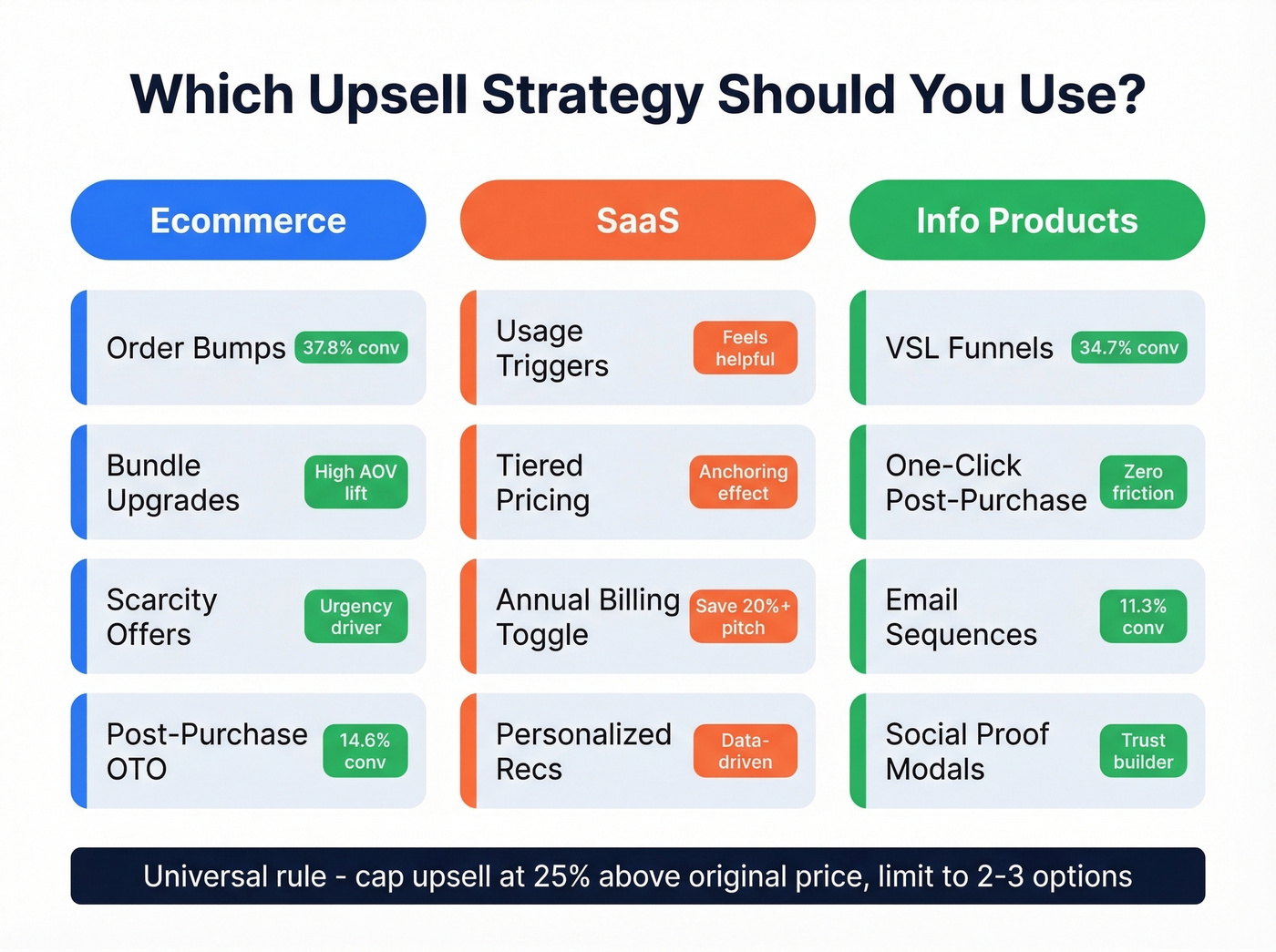
Quick decision matrix: Ecommerce - order bumps + bundles. SaaS - usage triggers + tiered pricing. Info products - VSL funnels + one-click post-purchase.
Ecommerce Techniques
Order Bumps at Checkout. The single highest-converting upsell mechanism at 37.8% average conversion. A checkbox on the checkout page - "Add priority shipping for $4.99." Zero additional decision-making. One checkbox. Done.
One-Click Post-Purchase Offers. After checkout, show a single upgrade offer requiring one click - no re-entering payment details. These convert at 14.6% on average, which is pure incremental revenue with zero acquisition cost. Classic funnel structure: $47 intro product, one-click bump, $497 course, downsell if declined.
Bundle Upgrades. Instead of upselling a single feature, bundle three related items at a discount. Bundles shift the mental math from "do I need this?" to "am I getting a deal?" The perceived value should exceed the sum of parts by at least 20-30%.
Upsell-Only Scarcity Offers. Create offers that only exist within the upsell flow. "This bundle is only available right now, at checkout" - and mean it. If customers discover the same offer on your pricing page next week, you've destroyed trust. Genuine upsell-exclusive pricing creates urgency that converts.
SaaS Techniques
Usage-Triggered Upgrades. Zoom prompts an upgrade at the 40-minute limit. Dropbox reminds you near your storage cap. Loom nudges near the recording ceiling. These triggers feel helpful rather than pushy because they arrive at the exact moment the customer experiences the limitation. Loss aversion does the heavy lifting here - the customer already has something they don't want to lose.
Tiered Pricing With Anchoring. Show three tiers. Make the middle one the obvious choice. The top tier exists primarily to anchor - it makes the middle tier feel like a deal.
| Tier | Purpose | Conversion role |
|---|---|---|
| Basic | Entry point | Gets foot in door |
| Pro | Target tier | "Best value" framing |
| Enterprise | Anchor | Makes Pro feel inevitable |
Checkout Plan Upgrades. The monthly-to-annual conversion at checkout is one of the simplest SaaS upsells. "Save 20% by switching to annual billing" - presented as a toggle. Show savings in absolute dollars: "$240/year instead of $29/month ($348)" hits harder than "save 31%."
Personalized Recommendations. Generic upsells convert at a fraction of personalized ones. When you know a customer clicked on a feature they can't access, or they're approaching a usage limit, the upsell becomes a service rather than a pitch.
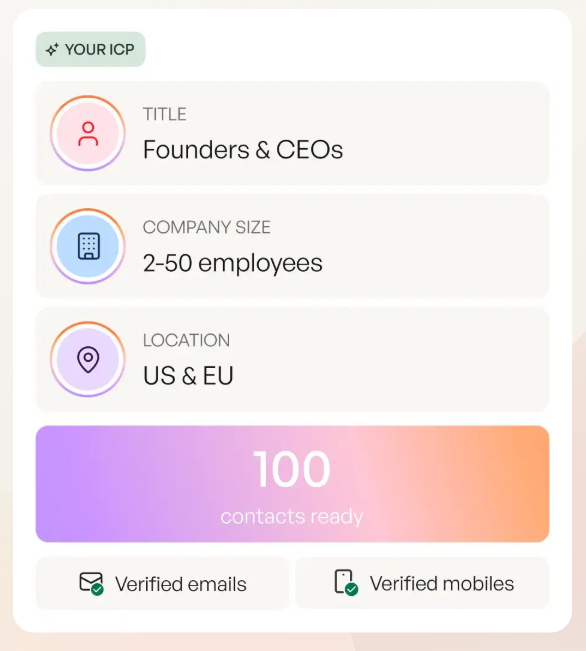
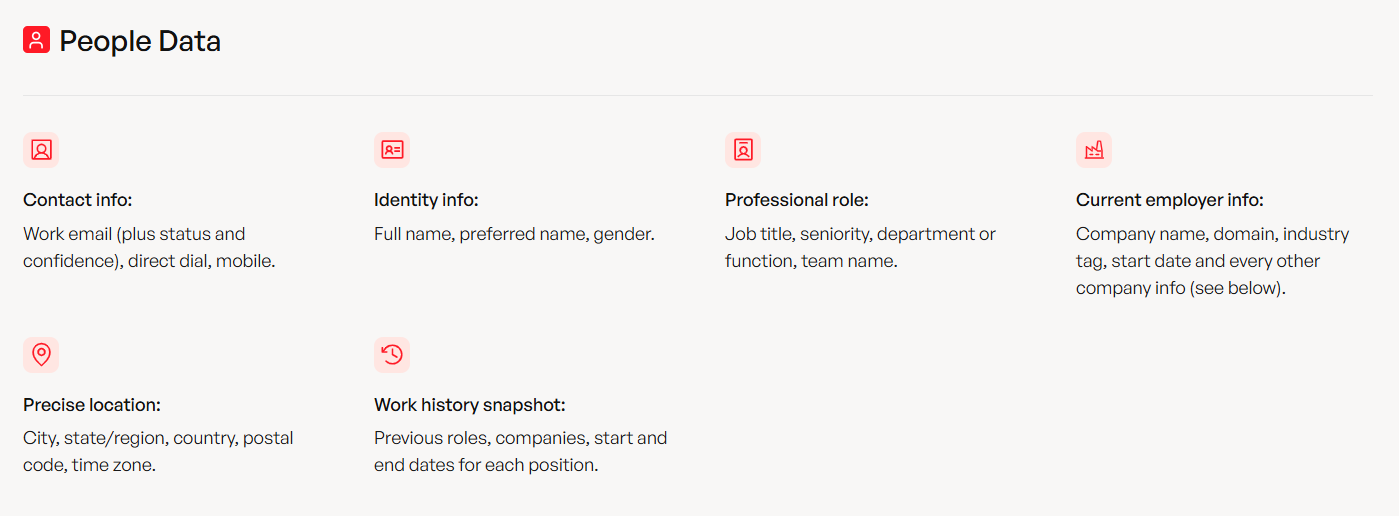
Personalized recommendations require accurate contact and behavioral data - which is where most teams fall short. Tools like Prospeo return 50+ data points per contact through CRM enrichment, giving you the segmentation foundation to target upsell offers by role, company size, and buying signals rather than blasting the same upgrade email to everyone.
Universal Techniques
Social Proof in the Upsell Flow. Brands like Buffer use social proof in upgrade messaging. Adding a single line - "12,000 teams upgraded this month" - to your upsell modal lifts conversion meaningfully. The proof should be specific to the upgrade, not generic brand trust.
Behavior-Triggered Email Sequences. Email upsells average 11.3% conversion - lower than in-app mechanisms but profitable at scale. Expect 25-45% open rates on engaged customer lists and 1-5% click-to-upgrade rates. The best sequences are 2-3 emails over 5-7 days, triggered by specific behavior, not arbitrary timers.
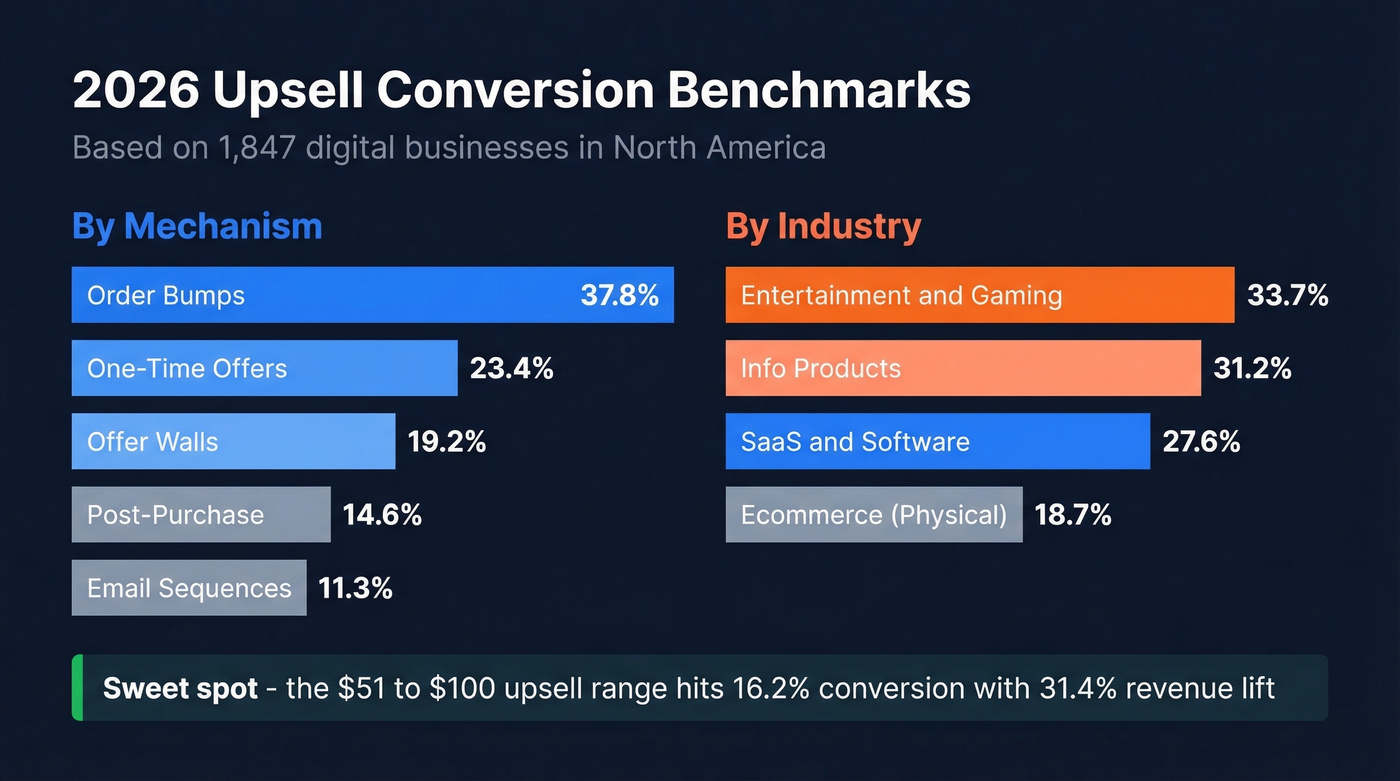
The $51-$100 Sweet Spot. Benchmark data shows the $51-$100 upsell range hits 16.2% conversion with a 31.4% revenue lift - the highest ROI bracket in the dataset. Too cheap and the upsell doesn't move the needle. Too expensive and conversion drops off a cliff.
Time Your Ask After the "Yes." The best time to upsell is after the customer has decided to buy but before checkout completes. Never upsell before the primary purchase decision - it creates friction that kills the original conversion.
SaaS Playbook: Land and Expand
SaaS companies generate about 16% of new ACV from upselling, and freemium-to-paid upgrade rates run 8-20%. Here's the operational playbook.
Trigger-Based Usage Alerts
Set automated alerts when accounts hit 80% of their license consumption, storage limits, or API call caps. In our experience, the 80% threshold is the sweet spot - earlier feels premature, later feels reactive. The alert should notify both the AE and CSM simultaneously, with a pre-built expansion opportunity created in your CRM.
Renewal Mapping (120-Day Playbook)
Align CS and Sales 120 days before every renewal. At 120 days, review usage data and identify expansion opportunities. At 90 days, present a QBR with ROI metrics. At 60 days, propose the renewal + expansion package. At 30 days, close.
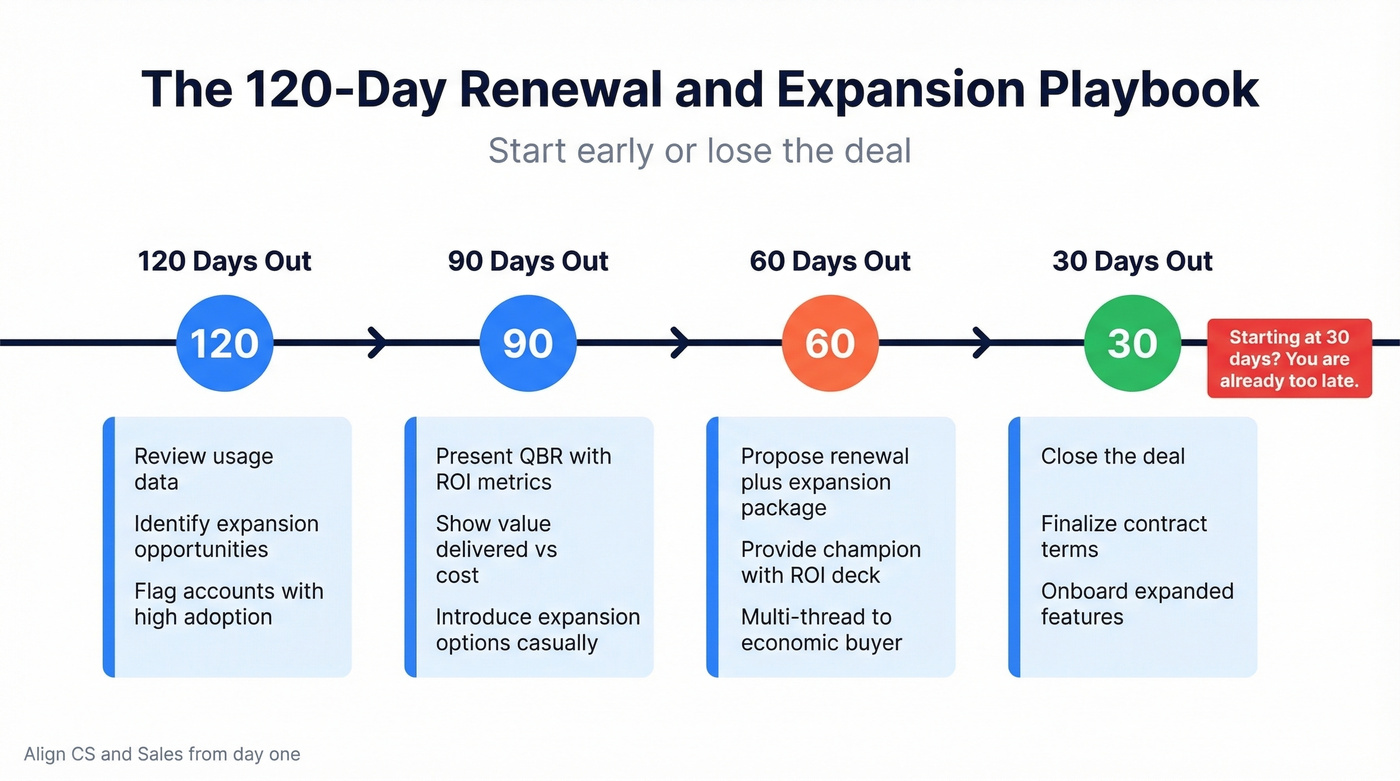
Teams that start renewal conversations at 30 days are already too late - the customer has been shopping alternatives for months.
Multi-Thread Every Account
Map stakeholders quarterly and add 2+ new contacts per account per quarter. Single-threaded accounts are churn risks - when your champion leaves, the deal dies. Multi-threading also creates more upsell surface area: the VP of Engineering cares about different features than the Director of Product.
Prospeo's Chrome extension makes finding additional stakeholders fast - pull verified emails and phone numbers from company websites and other web sources without leaving your browser.
Champion Enablement
Your champion wants to expand but needs ammunition for their CFO. Give them ROI decks, case studies, and internal presentation templates they can share without modification. The easier you make it for your champion to sell internally, the faster expansion deals close.
QBRs That End With an Ask
Every quarterly business review should end with a specific expansion recommendation - not "let us know if you need anything." CS-led QBRs that include ROI data and end with a concrete proposal convert at dramatically higher rates than passive check-ins. We've seen this pattern across dozens of accounts: the QBR that ends with a vague "anything else we can help with?" is the QBR that produces zero pipeline.
Upsell Benchmarks for 2026
Based on data from 1,847 digital businesses in North America tracked from January 15 through July 28, 2025.
By Industry:
| Industry | Avg Conversion | Top Quartile |
|---|---|---|
| SaaS & Software | 27.6% | 42.3% |
| Ecommerce (physical) | 18.7% | 29.4% |
| Information products | 31.2% | 47.8% |
| Entertainment & gaming | 33.7% | 49.3% |
By Mechanism:
| Mechanism | Avg Conversion |
|---|---|
| Order bumps | 37.8% |
| One-time offers (OTO) | 23.4% |
| Offer walls | 19.2% |
| Post-purchase upsells | 14.6% |
| Email sequences | 11.3% |
By Funnel Type:
| Funnel Type | Avg Conversion | AOV Increase |
|---|---|---|
| VSL funnels | 34.7% | 68.2% |
| Traditional sales funnels | 28.3% | 54.6% |
| Ecommerce stores | 19.8% | 31.4% |
By Device:
| Device | Avg Conversion |
|---|---|
| Mobile app | 31.4% |
| Desktop | 28.9% |
| Tablet | 24.2% |
| Mobile web | 18.7% |
A few things jump out. Mobile app conversions beat desktop - likely because in-app purchases benefit from stored payment credentials and native UI. Mobile web lags everything by 10+ points, which means if your upsell flow isn't optimized for mobile browsers, you're leaving serious money on the table.
Seasonal peaks matter too. Black Friday week hits 42.1% upsell conversion, and Cyber Monday runs 39.8%. Skip upsell campaigns during these windows and you're missing the highest-intent buying moments of the year.
Let's be honest about VSL funnels: a 68.2% AOV increase - nearly double traditional ecommerce - makes them the most underused upsell architecture in 2026. If you're selling information products, courses, or high-consideration SaaS and you're not using VSL funnels, you're optimizing the wrong thing.

Personalized upsells crush generic ones - but personalization requires data. Prospeo's CRM enrichment returns 50+ data points per contact at a 92% match rate, so you can segment upsell offers by role, company size, and intent signals.
Stop blasting the same upgrade email to every account.
Real-World Upselling Examples
New World Hoiana - 60% Revenue Increase
A 330-room beach resort in Vietnam was struggling to track upsells through their Opera PMS - the process was manual and time-consuming. They implemented the FPG IN-Gauge platform with monthly training sessions focused on building team confidence and recognition culture. From January to April 2025, they achieved a 60% increase in upsell revenue year-over-year with an ROI of 13.1x. The takeaway: upselling isn't just a tech problem - it's a training and culture problem.
HGS Financial Services - $50M From Analytics
A large financial services company partnered with HGS to combine agent coaching, speech analytics, and performance scorecards across their contact center. By mining calls for upsell opportunities and building structured coaching programs, they generated $50M in annual revenue from cross-sell and upsell initiatives while simultaneously improving NPS by 70%. Analytics-driven coaching scales upselling far beyond what individual rep intuition can achieve.
Georgia United - 96% Application Surge
Georgia United Credit Union restructured their upsell approach around member needs analysis, marketing automation triggers, and staff enablement, resulting in a 96% increase in application volume. The pattern matches what we've seen across financial services: when frontline staff are trained and incentivized to identify upgrade opportunities - and automation handles the timing - volume follows.
Mistakes That Kill Conversion
We've tested dozens of upsell flows, and the single biggest killer is timing. But it's not the only one.
| Mistake | Guardrail |
|---|---|
| Exceeding the 25% price cap | Keep upsells within 25% of the original purchase price |
| Offering 4+ options | Two to three options max - choice overload kills conversion |
| Upselling before the "yes" | Wait until the customer commits to the primary purchase |
| Skipping A/B tests | Your first offer is almost never your best |
| Ignoring mobile UX | 10-point gap between desktop and mobile web - fix this first |
| Generic offers | "You've used 847 of 1,000 credits" beats "Upgrade to Pro!" |
| No value demonstration | Show a side-by-side of current vs. upgraded results |
If you're only going to fix one thing on this list, fix mobile UX. That 10-point conversion gap between desktop and mobile web is the single largest structural leak in most upsell funnels, and it's usually just a formatting problem - buttons too small, forms too long, page loads too slow.
Handling Upsell Objections
The "Feel, Felt, Found" framework works well for live upsell conversations: "I understand how you feel. Other customers felt the same way. What they found was..." It acknowledges the objection without being defensive, then redirects with social proof.
For specific objections:
| Objection | Response Strategy | Example |
|---|---|---|
| "Too expensive" | Bundle or discount framing | "Annual saves you $240 - that's two months free" |
| "I don't need it" | Demo the value gap | "Here's what you're missing at your current tier" |
| "Too complicated" | Offer trial or guided setup | "Try it free for 14 days, we'll set it up" |
| "Too risky" | Money-back guarantee | "Full refund within 30 days, no questions" |
| "Not worth it" | Side-by-side ROI comparison | "Current plan: X results. Upgrade: 3X results" |
The most common objection isn't actually voiced - it's the silent "I'll think about it" that means "no." Combat this with urgency that's genuine (upsell-only pricing, limited-time bonuses) rather than manufactured countdown timers that reset every visit. The consensus on r/sales is pretty clear: fake urgency destroys trust faster than almost anything else you can do.
Tools to Power Your Upselling
Checkout & Funnel Tools: ThriveCart typically runs around $500-$700 as a lifetime deal - one of the best values in the space for order bumps and one-click upsells. SamCart sits in the ~$80-$320/month range and offers more sophisticated A/B testing for upsell flows. ClickFunnels (~$100-$300/month) is the heavyweight for full funnel builds. ReConvert (free to low-cost monthly plans) and CartFlows (commonly under ~$300/year) are solid Shopify and WordPress options respectively.
CRM & Automation: HubSpot (free CRM; paid tiers from ~$50/month) and Salesforce (from ~$25/user/month for Sales Cloud) both support trigger-based upsell workflows - usage alerts, renewal mapping, and expansion pipeline tracking. The key is connecting your product usage data to your CRM so upsell triggers fire automatically rather than relying on CSMs to check dashboards manually.
Data & Personalization: Before you build upsell workflows, verify your data. If your upsell emails are bouncing, nothing else matters. Prospeo's email verification runs at 98% accuracy with a 7-day refresh cycle, and CRM enrichment returns 50+ data points per contact at an 83% match rate - giving you the segmentation data that powers personalized offers based on role, seniority, company size, and buying signals. Free tier available, no contracts.
Behavior-triggered upsells need accurate contact data to land. With 98% email accuracy and a 7-day refresh cycle, Prospeo ensures your expansion emails reach real inboxes - not bounced addresses that tank your domain reputation.
Your upsell sequence is only as good as the data behind it.
Upsell Strategies FAQ
What's a good upsell conversion rate?
Order bumps average 37.8%, email upsells 11.3%, and SaaS companies average 27.6% overall. Top-quartile SaaS teams hit 42.3%. If you're below 15% across all channels, revisit your offer positioning and timing before anything else.
When's the best time to upsell?
After the customer commits to buying but before checkout completes - that's the highest-converting window. Post-purchase one-click offers are the second-best moment at 14.6% average conversion. Never present an upgrade before the primary purchase decision.
How much should an upsell cost?
Keep it within 25% of the original purchase price. The $51-$100 range shows the highest ROI - 16.2% conversion with a 31.4% revenue lift. Below $50, the revenue impact is negligible; above $100, conversion drops sharply.
What's the difference between upselling and cross-selling?
Upselling moves customers to a higher-value version of what they're already buying - a bigger plan, premium tier, or enhanced package. Cross-selling adds complementary products to the cart. Both increase revenue per customer, but upselling typically delivers higher AOV per line item while cross-selling increases items per order.
What tools help personalize upsell offers at scale?
CRM enrichment tools that return 50+ data points per contact, combined with HubSpot or Salesforce workflows, let you segment upsell offers by role, company size, and buying signals automatically. Pair enrichment data with behavioral triggers - usage limits, feature clicks, login frequency - for offers that feel like service, not spam.