

ZeroBounce Catch-All Emails: What to Do in 2026
You just exported your ZeroBounce results and 40% of your list is labeled "catch-all." Your campaign launches Monday. Do you send and risk your domain, or suppress and lose half your pipeline?
You're not alone. 15-25% of B2B emails on average lists are catch-alls, and enterprise-heavy lists can hit 30-50%. That's not a rounding error. It's a structural problem with how corporate email servers work, and no amount of re-verifying will make it disappear.
What "Catch-All" Actually Means
A catch-all (or "accept-all") domain is configured to receive messages even when the specific mailbox doesn't exist. Send an email to totally.fake.person@bigcorp.com and the server says "sure, I'll take it." That SMTP handshake comes back as "accepted" for completely fictional addresses, which is why catch-all is the hardest category in email verification: the server won't confirm whether the person is real until you actually send.
Think of it like a building with a front desk that accepts every package, even ones addressed to people who don't work there. The package gets in. It just never gets opened.
How ZeroBounce Handles Catch-Alls
ZeroBounce offers two layers beyond standard verification. Neither is a silver bullet, but both are worth understanding before you decide what to do with that 40% segment.
Worth knowing: ZeroBounce gives you 100 free monthly validations with a business/premium domain signup, and unknown results don't consume credits - so unresolved catch-alls won't cost you extra on the initial pass.
AI Scoring (ZeroBounce Score)
Use this if you need a quick directional signal on a large catch-all segment. Skip it if you expect definitive answers.
ZeroBounce Score is a 10-point scale, and scoring uses 1 credit per email on top of any verification you already ran. On a 10K catch-all segment at roughly $0.003-$0.01 per credit, scoring alone costs $30-$100. It's probabilistic, not definitive. An Allegrow benchmark found that a fictional character - Meredith Grey - scored an 8 out of 10, while multiple expected real professionals scored 0. That should give you pause.
Verify+ (Phase 2)
Use this if your batch has 10+ catch-all emails and you can wait up to 48 hours. Skip it if you need same-day turnaround.
Verify+ runs an extra Phase 2 step only when Phase 1 identifies at least 10 catch-all emails, and that second phase can take up to 48 hours. During upload, you can disable catch-all validation entirely by deselecting the checkbox. In Allegrow's 1,222-email benchmark, Verify+ found more real contacts than Standard mode - but with a 33.1% false positive rate, compared to Standard's 8.1%. You're trading precision for recall, and that tradeoff matters when your domain reputation is on the line.

If 40% of your list is catch-all, you don't need another scoring layer - you need data that's verified at the source. Prospeo runs 5-step verification with catch-all handling, spam-trap removal, and honeypot filtering before an email ever reaches your list. 98% accuracy. 7-day refresh. Under $0.01 per email.
Stop paying twice to clean data that should've been clean from the start.
What to Do With Your Results
Don't send your entire catch-all segment blind. Here's the framework we've seen work consistently across outbound teams:
Segment by score. 7+ means a cautious send. 4-6 is test-batch-only territory. Below 4? Suppress immediately.
Send a test batch of 200-500 emails from a secondary domain. Monitor bounce rates for 48 hours - some catch-all domains accept first and reject later. Scrubby's catch-all guidance puts the hard bounce rate for catch-all addresses at around 23%, so expect attrition.
If bounces stay under 5%, expand cautiously. If they exceed 5%, suppress the entire segment. No exceptions.
Check your CRM first. If you're on HubSpot or Salesforce, look for recent reply activity or sales email engagement on those contacts before you even bother with scoring. Engagement data is a stronger signal than any verification score for catch-all addresses.
And let's be clear about one thing: never send catch-alls from your primary domain. Use a secondary sending domain you can afford to burn. The pipeline isn't worth the reputation damage if things go sideways.
The Real Problem Is Upstream
Here's the thing: if 30-50% of your list is catch-all, the verification tool isn't your problem. Your data source is.
Enterprise-heavy targeting naturally produces more catch-all domains, and older lists get worse over time. One Reddit user verified a 50K list and saw 75-88% valid depending on list age, with older segments performing significantly worse. The consensus on r/coldemail is pretty consistent: if you're constantly re-verifying and still getting hammered by catch-alls, you need to fix the input, not add another verification layer on the output.
The fix isn't a better verification tool. It's a better data source - one that runs catch-all handling, spam-trap removal, and honeypot filtering before an email ever reaches your list, on a weekly refresh cycle instead of the six-week industry average.
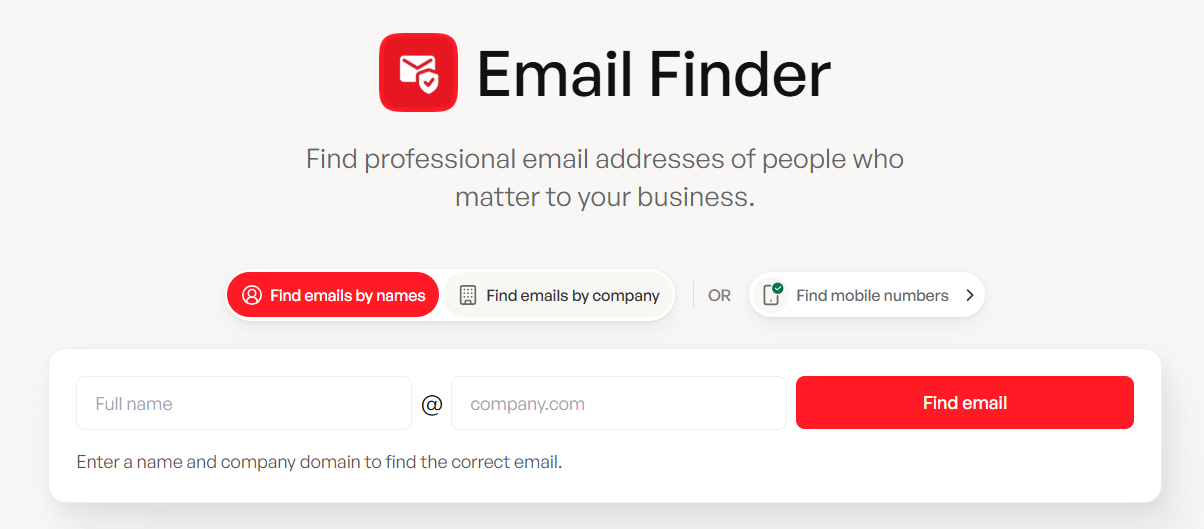
We've seen this firsthand with Prospeo's Email Finder, which runs 5-step verification with catch-all handling built into the sourcing workflow on a 7-day data refresh cycle. Teams like Stack Optimize run bounce rates under 3% across all clients with zero domain flags - that's the difference upstream verification makes versus paying twice to clean data after the fact.
Stack Optimize built a $1M agency on Prospeo data - bounce rates under 3%, zero domain flags across every client. That's what upstream catch-all handling looks like versus re-verifying bad data after the fact. Free tier, no contracts, no sales calls.
Fix the input and you'll never stress about catch-all segments again.
Catch-All Handling Across Tools
| Tool | Catch-All Method | Turnaround | Pricing | Key Limitation |
|---|---|---|---|---|
| Prospeo | 5-step verification at source | Real-time | ~$0.01/email; free tier | Upstream fix, not re-verification |
| ZeroBounce | Score (AI) + Verify+ | Minutes to 48 hrs | ~$0.003-$0.01/credit | Verify+ increases false positives; scoring costs extra |
| Scrubby | Burner-account test sends | 48-72 hours | $27/mo for 1K credits | Slow; small entry allotment |
| NeverBounce | Standard SMTP checks | Minutes | ~$0.003-$0.01/email | Most catch-alls flagged unverifiable |
| MillionVerifier | Standard SMTP checks | Minutes | From ~$0.001/email | Users report missed invalids |
No tool resolves catch-alls with 100% certainty. The real question is whether you fix the problem after sourcing or avoid it before sourcing. Teams that switch from post-hoc verification to verified-at-source data stop cycling through tools and start sending.
FAQ
Should I email catch-all addresses?
Only with caution. Test 200-500 first from a secondary domain, monitor bounces for 48 hours, and suppress the segment if bounces exceed 5%. Never risk your primary sending domain on unverified catch-all contacts.
How many catch-alls are normal on a B2B list?
15-25% for mixed lists. Enterprise-heavy lists targeting Fortune 500 companies hit 30-50%. If you're consistently above 30%, that signals a data-source problem, not a verification problem.
Can I avoid catch-all emails entirely?
Not entirely - catch-all is a server configuration outside your control. But sourcing from a provider that runs multi-step verification with catch-all handling at the point of data collection reduces the volume dramatically. A 7-day refresh cycle means fewer unresolvable addresses reach your list in the first place.
Does ZeroBounce charge extra for catch-all verification?
Standard verification credits cover the initial catch-all label. AI Scoring costs 1 additional credit per email, so scoring a 10K catch-all segment runs $30-$100 depending on your plan tier. Unknown results don't consume credits.