

How to Build an Automated Prospecting System That Actually Works
A RevOps lead on r/automation described their prospecting workflow: Sales Navigator for company discovery, Apollo for emails, ZoomInfo for phones, Crunchbase for firmographics, Lemlist for sending. Five tools, five logins, five browser tabs - and they still couldn't filter for the one ICP attribute that actually mattered.
That's the fragmentation tax. Reps spend 72% of their time on admin, tab-switching, and manual data entry. Only 28% goes to actual selling. The fix isn't working harder. It's building an automated prospecting system so reps spend time on conversations, not copy-paste.
What You Need (Quick Version)
This whole system requires three things working together: clean data, a sequencer, and a CRM. Most teams overcomplicate it with five or more tools when a minimum viable stack can run around $50-$150/month.
Prospeo handles verified emails, verified mobile numbers, and enrichment. Instantly or Lemlist runs your outbound sequences. HubSpot's free CRM tracks the pipeline. You can be operational in an afternoon.
Why Sales Prospecting Automation Is Non-Negotiable
Gartner projected [80% of B2B sales interactions](https://www.gartner.com/en/newsroom/press-releases/2025-08-25-gartner-says-by-2030-that-75-percent-of-b2b-buyers-will-prefer-sales-experiences-that-prioritize-human-interaction-over-ai) would be digital by 2025 - and the trend has only accelerated. Buyers now use roughly 10 channels on average, double the 5 channels they used in 2016. Mid-sized firm deals involve around seven decision-makers, and most require 5-12 touchpoints before a prospect converts. No human can manually manage that volume across that many surfaces.
The quota pressure makes it worse. 84% of reps missed quota last year, and 67% don't expect to hit it this year. Meanwhile, up to 50% of deals go to the first vendor that responds. 45% of sales teams now run a hybrid AI-SDR model to keep pace.
Here's the thing: you can't respond first if your reps are spending 15-30 minutes manually researching each prospect. Automating your outbound pipeline isn't about replacing reps - it's about giving them the throughput to compete.
What Automated Prospecting Actually Is
Automated prospecting uses software to handle the repetitive parts of finding, qualifying, and reaching potential buyers - lead sourcing, data enrichment, email verification, sequence enrollment, and follow-up scheduling. The human stays in the loop for strategy, personalization, and closing.
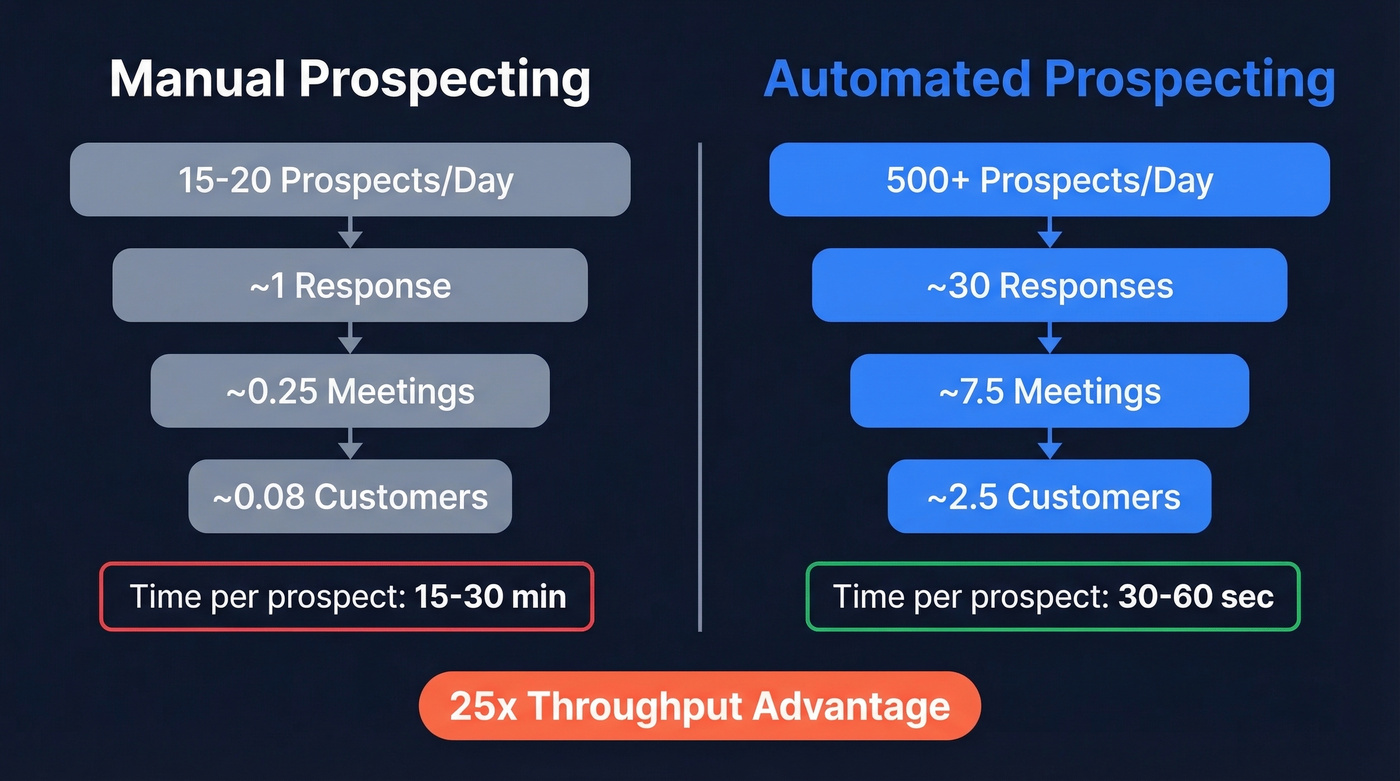
A typical outbound funnel looks like this: 200 emails, 12 responses, 3 meetings, 1 customer. Manually, a rep researches 15-20 prospects per day at 15-30 minutes each. With automation, that same rep processes 500+ prospects per day at 30-60 seconds each. That's a 25x throughput advantage on sourcing alone.
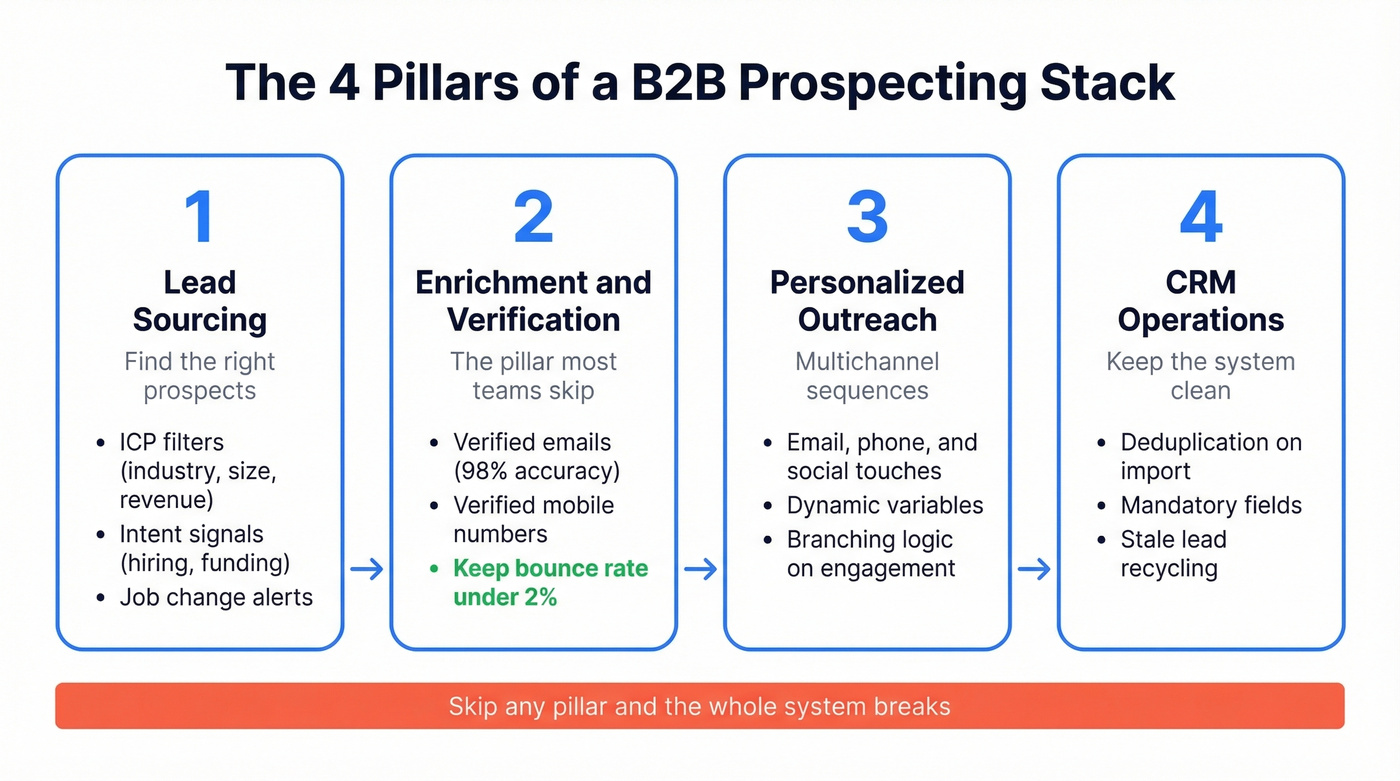
The 4 Pillars of a B2B Prospecting Stack
Most teams buy a lead sourcing tool and a sequencer, then wonder why results are mediocre. They're skipping two critical pillars.
Lead Sourcing
This is where prospects enter your funnel. You need a tool that lets you filter by ICP attributes - industry, headcount, revenue, tech stack, funding stage - and ideally surfaces intent signals like job changes, hiring surges, or topic-level buying intent.
Enrichment and Verification
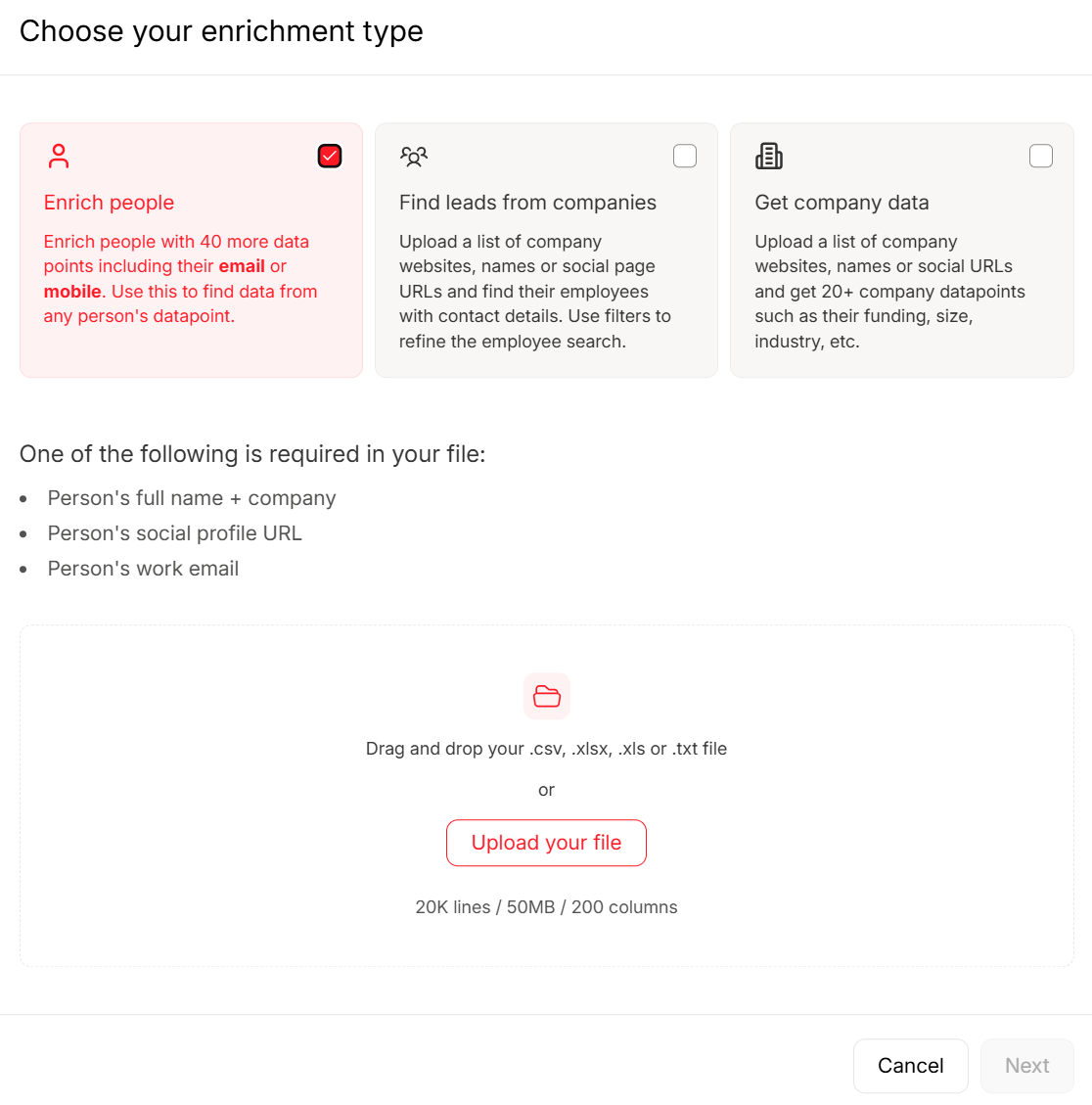
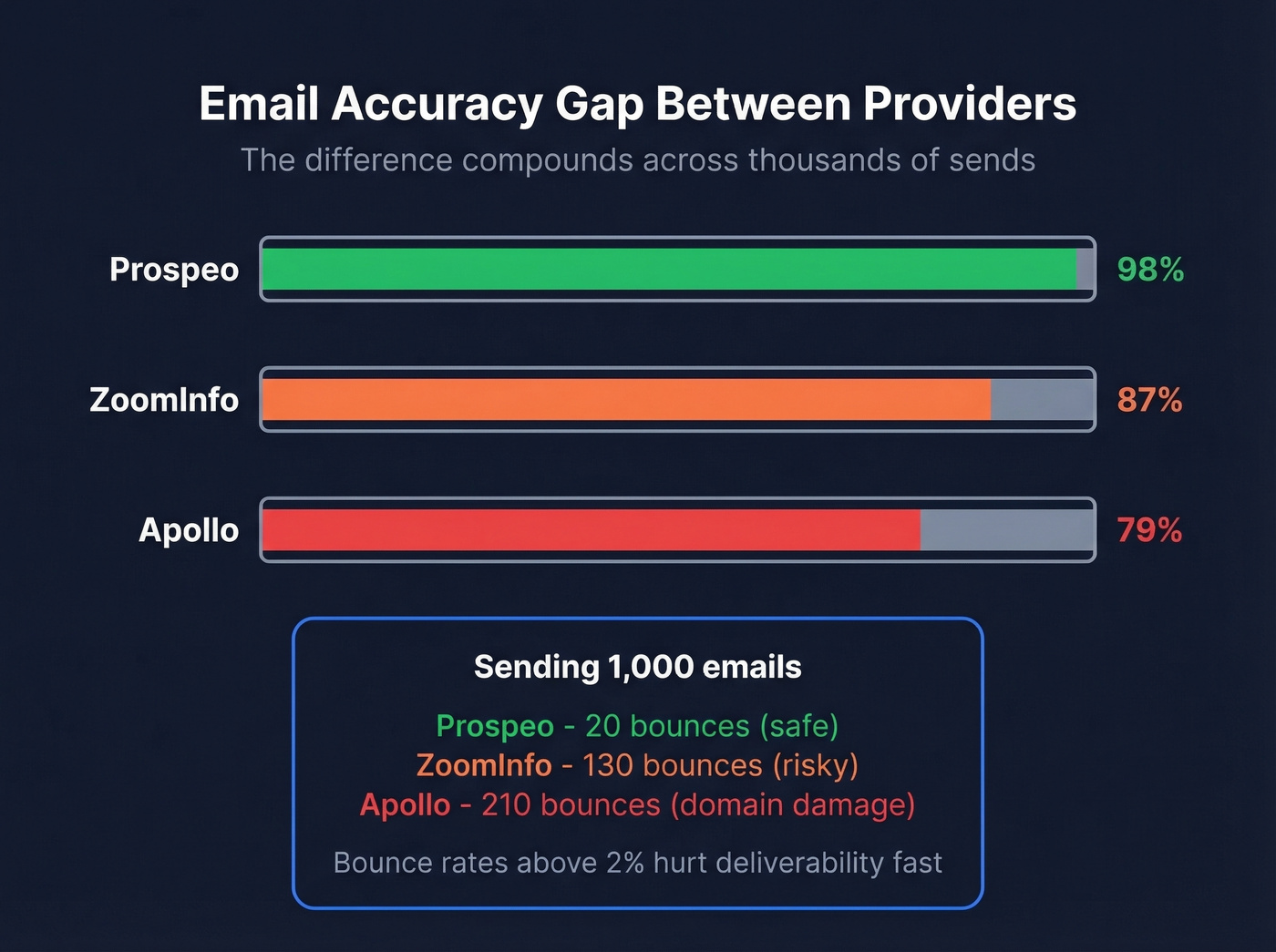
This is the pillar most teams skip, and it's the one that breaks everything downstream. If your bounce rate climbs above 2%, deliverability drops fast and inbox placement gets harder to recover. The accuracy gap between providers is massive: 98% at Prospeo versus 87% at ZoomInfo and 79% at Apollo. That difference compounds across thousands of sends, and we've watched it wreck domain reputations in a matter of days.
Personalized Outreach
[71% of buyers expect personalized interactions](https://www.mckinsey.com/capabilities/growth-marketing-and-sales/our-insights/the-value-of-getting-personalization-right-or-wrong-is-multiplying), and 75% get frustrated when they don't get them. Your sequencer needs dynamic variables, multichannel touchpoints across email, phone, and social, and branching logic that adjusts the sequence based on whether a prospect opens, clicks, or replies.
CRM Operations
Clean operations means deduplication, activity logging, lead routing, and reporting. If your CRM is a mess, your automation creates a bigger mess faster. Make critical fields mandatory, run dedup rules on import, and track "last activity" so stale leads get recycled or removed.

Your automated prospecting system is only as good as its data. Prospeo delivers 98% email accuracy and 125M+ verified mobiles on a 7-day refresh cycle - so your sequences hit real inboxes, not bounce logs. Teams using Prospeo book 35% more meetings than Apollo users and keep bounce rates under 4%.
Stop burning domains. Start with data that actually connects.
Build Your System in 5 Steps
1. Define Your ICP
Start with firmographic and demographic attributes: industry, company size, revenue range, job titles, geography. Then layer in behavioral signals - what technologies they use, whether they're hiring for specific roles, recent funding rounds. We've seen teams double response rates just by narrowing from "VP of Sales at SaaS companies" to "VP of Sales at Series B SaaS companies with 50-200 employees using Outreach or Salesloft."
2. Source Leads with Intent Signals
Don't just pull static lists. Use intent data to find companies actively researching solutions in your category. Job changes, funding announcements, tech adoption signals, and topic-level intent from providers like Bombora all indicate timing. Deals closed within 50 days carry a 47% win rate; after that, it drops to 20% or lower.
Timing matters more than most teams realize.
3. Enrich and Verify Before You Send
This is where most systems fail silently. You pull 1,000 leads, dump them into a sequencer, and 120 bounce. Your domain reputation takes a hit. Your next campaign lands in spam.
The fix is simple: never send to an unverified email address. Keep bounce rates below 2% and spam complaints under 0.01%. In our experience, teams that add a verification step between sourcing and sequencing see deliverability improvements within the first week - and they stop burning sending domains.
4. Build Multichannel Sequences
Cold outreach is no longer single-channel. The strongest sequences combine email, phone, and social touches across 5-8 steps over 2-3 weeks. Systems beat tools - the best sequencer in the world won't save you from poor infrastructure. Use dedicated sending domains, warm them up for at least 2 weeks, and keep daily volume under 50 emails per inbox.
A 5-step sequence to 200 well-targeted prospects outperforms a 2-step blast to 2,000 random contacts every single time. If your average deal size is under $10K, you probably don't need ZoomInfo-level data. You need accurate emails, a decent sequencer, and the discipline to write relevant messages.
5. Monitor, Measure, Iterate
Track open rates, reply rates, bounce rates, and meetings booked per sequence. If reply rates drop below 2-3%, your targeting or messaging is off. If bounce rates creep above 2%, your data source needs replacing. Run A/B tests on subject lines and opening lines - small changes compound over thousands of sends.
The teams that treat outbound metrics as a weekly review habit consistently outperform those that check dashboards only when pipeline dries up. Let's be honest: most teams set up a sequence, launch it, and don't look at the numbers until something breaks. Don't be that team.
Best Tools for Automated Prospecting in 2026
| Tool | Best For | Starting Price | Key Limitation |
|---|---|---|---|
| Prospeo | Verified emails, mobiles, enrichment | Free; ~$0.01/email | No built-in sequencer |
| Apollo.io | All-in-one prospecting + sequencing | Free (10K emails/mo); $49/user/mo | 79% email accuracy |
| Clay | Enrichment workflows, signal-based lists | Free (100 credits/mo); $149/mo | Credits add up fast |
| Instantly | Cold email at scale | $37/mo | Email only |
| Lemlist | Multichannel sequences | $55/user/mo | Per-seat pricing scales |
| ZoomInfo | Enterprise data + intent | ~$15K-$40K+/yr | No self-serve pricing |
| Hunter.io | Simple email lookup | Free-$99/mo | Small DB; no mobiles |
Prospeo
Prospeo covers 300M+ professional profiles with 143M+ verified emails and 125M+ verified mobile numbers. The 98% email accuracy rate is the highest we've tested, and the proprietary email-finding infrastructure doesn't rely on third-party providers. Mobile numbers carry a 30% pickup rate - compared to 12.5% at ZoomInfo and 11% at Apollo - which matters enormously when phone is part of your sequence.
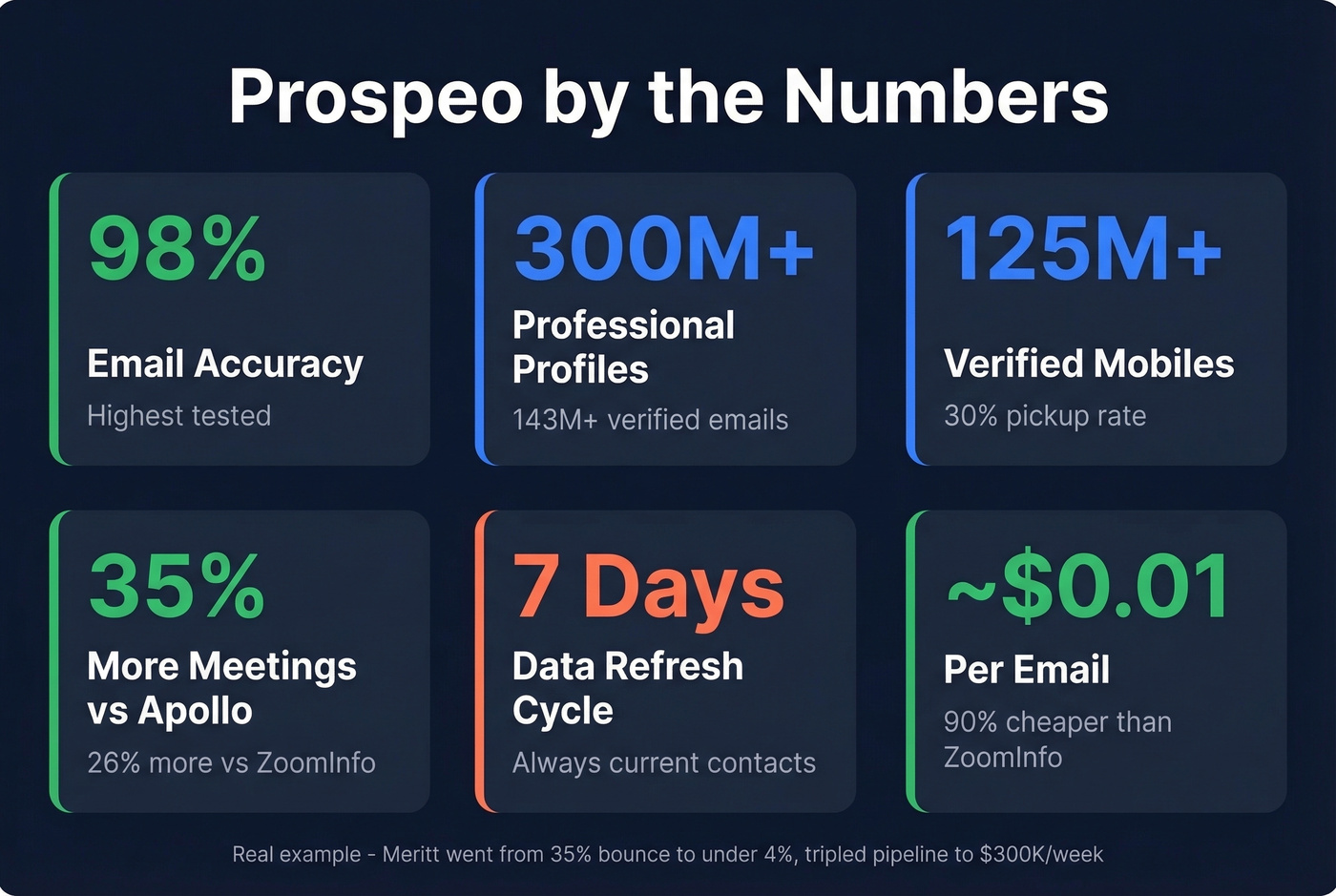
The 7-day data refresh cycle means you're not emailing people who changed jobs six weeks ago. Search with 30+ filters including buyer intent powered by Bombora, technographics, job changes, and headcount growth. Teams using the platform book 26% more meetings than ZoomInfo users and 35% more than Apollo users.
One example: Meritt cut bounce rates from 35% to under 4% and tripled pipeline from $100K to $300K/week after switching their data source. Pricing starts free, with paid plans running about $0.01 per email - roughly 90% cheaper than ZoomInfo on a per-lead basis.
Apollo.io
Apollo is the obvious starting point for teams that want everything in one platform: a 270M+ contact database, built-in sequencing, a dialer, and AI-assisted email writing - all starting at $49/user/month. The free tier gives you 10,000 email credits per month, which is generous enough to validate the tool before committing.
The tradeoff is data quality. At 79% email accuracy, you'll see higher bounce rates than with a dedicated verification layer. We've run bake-offs where teams paired Apollo's sourcing with external verification and cut bounces by more than half. Use Apollo for the workflow. Verify elsewhere.
Clay
Clay has earned a cult following among RevOps practitioners for good reason - it's an enrichment orchestration layer that pulls from 150+ data providers using "waterfall enrichment." If one source misses, the next one fills the gap. The AI research agent can scrape custom data points that no static database covers.
The catch is pricing: credit-based plans start at $149/month, but high-volume users routinely spend $500-$2,000+/month. Use Clay if you need complex, signal-based list building. Skip it if you just need clean emails and phones - you're paying for orchestration power you won't use.
The Rest of the Stack
Instantly ($37/mo) is the go-to for cold email at scale. Unlimited email accounts, built-in warmup, and a deliverability dashboard that actually helps you diagnose problems. Email-only, though - no phone or social touches.
Lemlist ($55/user/mo) adds multichannel sequences with email, phone tasks, and social steps in one workflow. Per-seat pricing gets expensive past 3-4 users, but for small teams it's the most complete sequencer under $100/month.
ZoomInfo (~$15K-$40K+/year) is enterprise-grade everything. For 200+ person sales orgs with budget, it's still the deepest US database. For everyone else, the price-to-value ratio doesn't work.
Hunter.io (free-$99/mo) does one thing: find and verify emails by domain. Fine for occasional lookups. Not a prospecting system.
Mistakes That Kill Your Pipeline
| Do This | Not That |
|---|---|
| Target 200 well-researched prospects with personalized, multichannel sequences | Blast 5,000 unverified contacts with a generic template |
| Verify every email before it enters a sequence | Trust that your data provider's "verified" label actually means verified |
| Personalize at least the first line and value prop per segment | Over-automate until every email reads like a mail merge |
| Check compliance requirements before you launch | Assume B2B email is unregulated - it isn't |
Compliance Quick Reference
| Regulation | Scope | Penalty | Opt-Out Timeline |
|---|---|---|---|
| TCPA | Automated SMS/calls (US) | $500-$1,500/violation | Immediately / 10 days |
| CAN-SPAM | Commercial email (US) | Up to $53,088/email | 10 business days |
| GDPR | All personal data (EU/UK) | EUR 20M or 4% revenue | Upon request |
| CCPA | Consumer data (California) | $2,663-$7,988/violation | 45 days |
Look, a 1,000-contact campaign without proper consent under TCPA carries $500K-$1.5M in potential fines. That's not theoretical - it's the math regulators use. Document your data sources, include opt-out links in every message, and use GDPR-compliant data providers where opt-out is enforced globally and DPAs are available on request.
Most teams need five tools to source, enrich, verify, and send. Prospeo replaces three of them - lead sourcing with 30+ ICP filters, real-time enrichment returning 50+ data points, and verification that catches spam traps and honeypots before they wreck your sender reputation. All at $0.01 per email.
Kill the fragmentation tax. One platform, verified data, zero bounced domains.
FAQ
Is automated prospecting legal?
Yes, provided you follow GDPR, CAN-SPAM, TCPA, and CCPA rules. Use compliant data sources, include opt-out links in every email, and immediately stop contacting anyone who opts out. Fines range from $500 per TCPA violation to EUR 20M under GDPR - compliance isn't optional.
How much does a prospecting automation stack cost?
A functional SMB stack runs $50-$150/month: Prospeo for verified data with a free tier available, Instantly at $37/month for sequencing, and HubSpot's free CRM. Enterprise tools like ZoomInfo start at $15K+/year, but most teams under 10 reps don't need them.
What's the single most important tool in the stack?
Your data provider. Every downstream tool - sequencer, dialer, CRM - depends on accurate contact information. At 98% email accuracy with a 7-day refresh cycle, a strong data layer keeps bounce rates under 2% so your sequences reach real inboxes instead of triggering spam filters.
Does automated prospecting work for B2C?
The playbook in this guide focuses on B2B outreach, where emailing professional addresses is standard and legally straightforward under CAN-SPAM. B2C prospecting has stricter consent requirements under TCPA and GDPR - the same tools apply, but you'll need explicit opt-in before any automated contact.