

6 Biziverse Alternatives That Actually Fit Indian MSME Budgets (2026)
You're running a 15-person manufacturing unit, your Biziverse plan caps out at 1,000 stock items, and the integrations you need - like a clean Tally workflow - have become the real bottleneck. The ERP that was supposed to simplify operations is now slowing you down.
On r/ERP, there's clear demand from Indian small manufacturers for options that stay affordable without collapsing under real inventory and production complexity. We've helped several teams through this exact transition, so here are six alternatives worth evaluating - with realistic pricing, implementation cost callouts, and no fluff.
Why MSMEs Outgrow Biziverse
Biziverse scores a 3.3/5 on Techjockey from just 5 reviews. Not a confidence-inspiring signal.
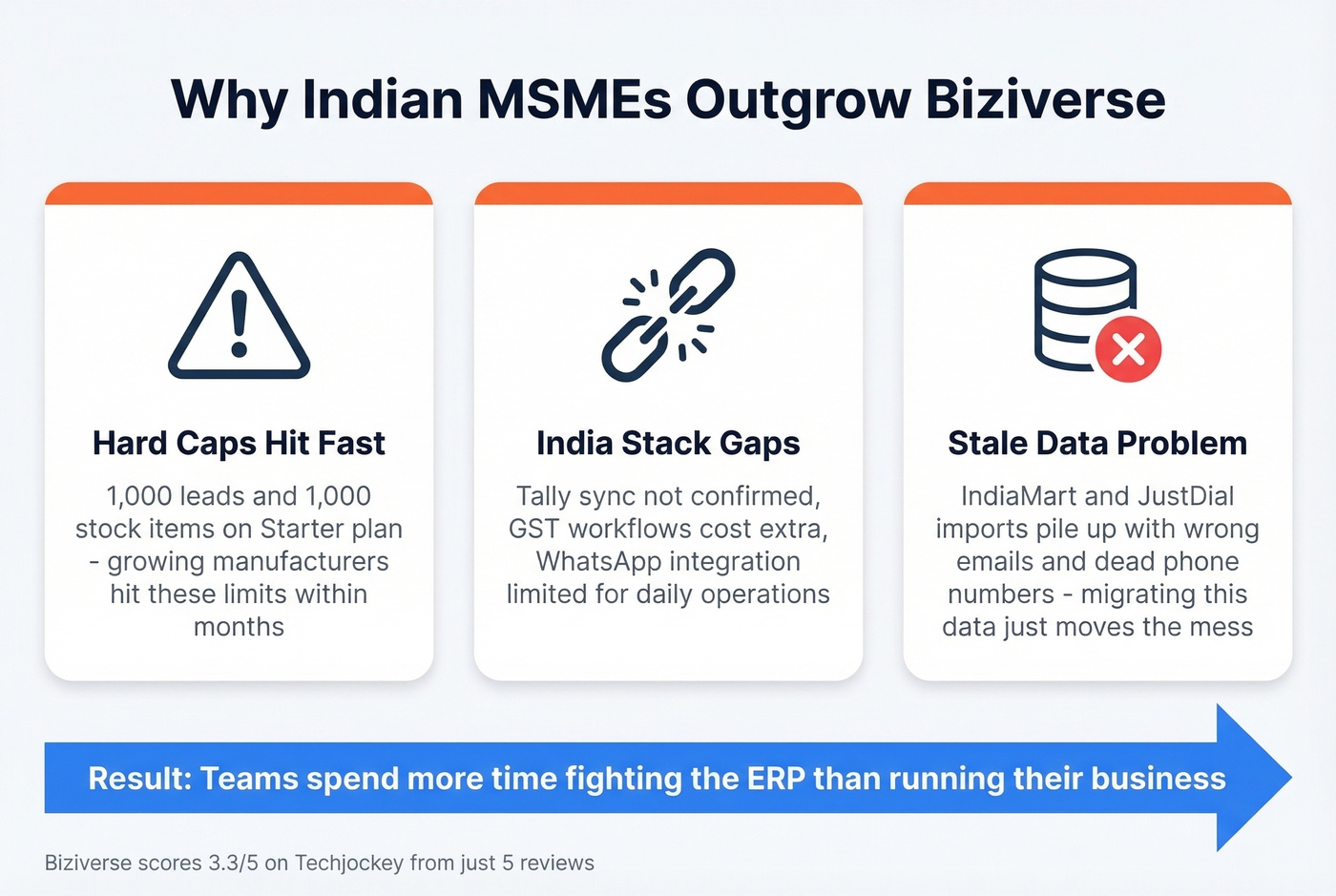
The Starter plan's hard caps (1,000 leads, 1,000 stock items) hit fast for any growing manufacturer or trader. And if your workflow depends on the India stack - Tally, GST processes, WhatsApp updates - you'll quickly feel whether your ERP's connectors are enough for day-to-day operations. There's also a related problem most teams ignore: if you've been importing leads from IndiaMart or JustDial into Biziverse's CRM, a chunk of those emails and phone numbers are stale or wrong. Migrating garbage data into a new ERP just moves the problem somewhere more expensive to fix.
Our Picks (TL;DR)
- Best for manufacturers: TranZact (~₹11K-₹12K/year, Tally + GST workflows)
- Best for flexibility: ERPNext (free software, budget ₹50K-₹7L first year with implementation)
- Best all-in-one suite: Zoho One (~ $37/user/month on annual billing, 50+ apps)

Importing stale IndiaMart and JustDial leads into your new ERP is the most expensive mistake MSMEs make during migration. Prospeo verifies and enriches your entire contact database - 98% email accuracy, 92% match rate, 50+ data points per record - so your new system starts clean on day one.
Export from Biziverse, enrich with Prospeo, import data you can trust.
Pricing Comparison
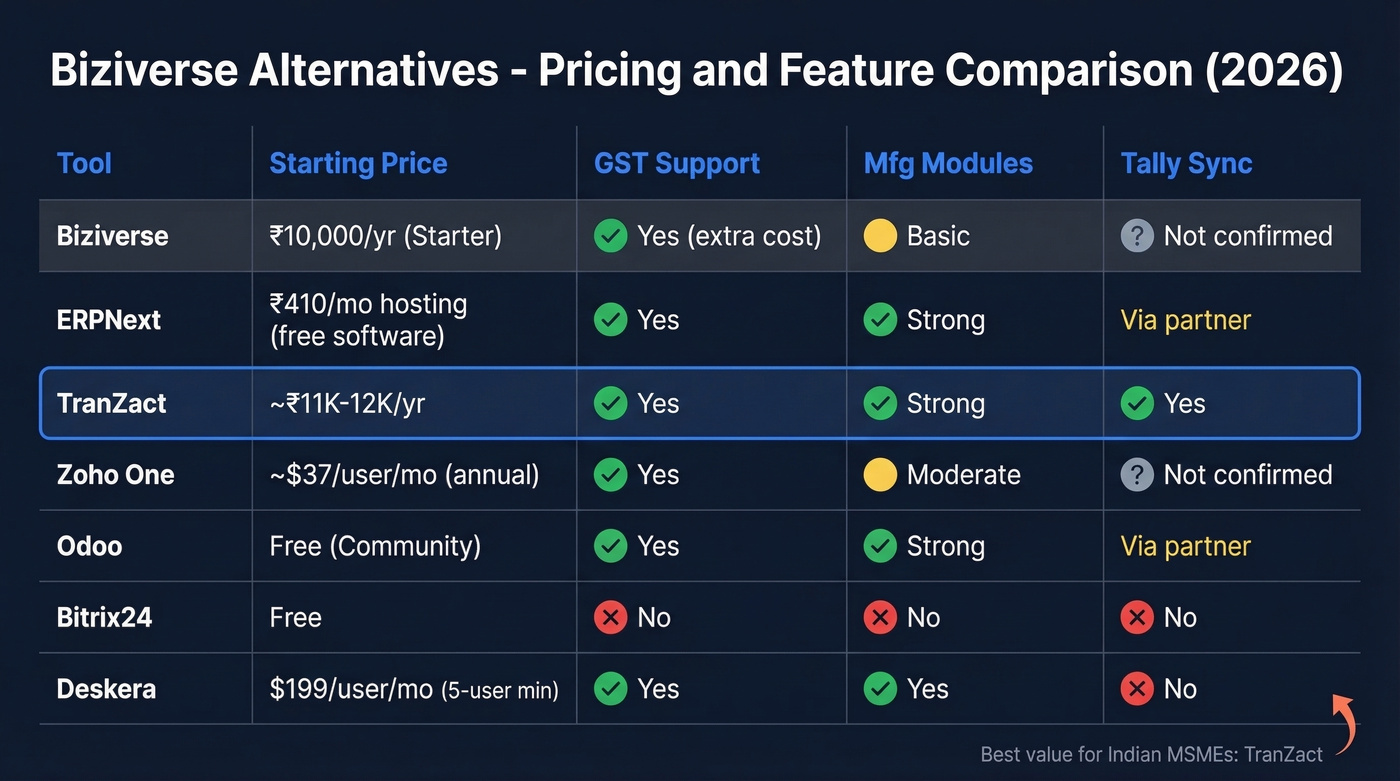
| Tool | Starting Price | GST Support | Mfg Modules | Tally Sync |
|---|---|---|---|---|
| Biziverse | ₹10,000/year (Starter; GST extra) | Yes | Basic | Not confirmed |
| ERPNext | ₹410/month onwards (hosting) | Yes | Strong | Via partner |
| TranZact | ~₹11K-₹12K/year | Yes | Strong | Yes |
| Zoho One | ~$37/user/month (annual) | Yes | Moderate | Not confirmed |
| Odoo | Free (Community) | Yes | Strong | Via partner |
| Bitrix24 | Free | No | No | No |
| Deskera | $199/user/month (annual; 5-user min) | Yes | Yes | No |
The Best Biziverse Alternatives for 2026
ERPNext
Use this if you want full manufacturing depth - BOM management, job cards, WIP tracking, quality inspection - and you're comfortable investing in implementation upfront. ERPNext is free and open-source with 200+ implementation partners globally.
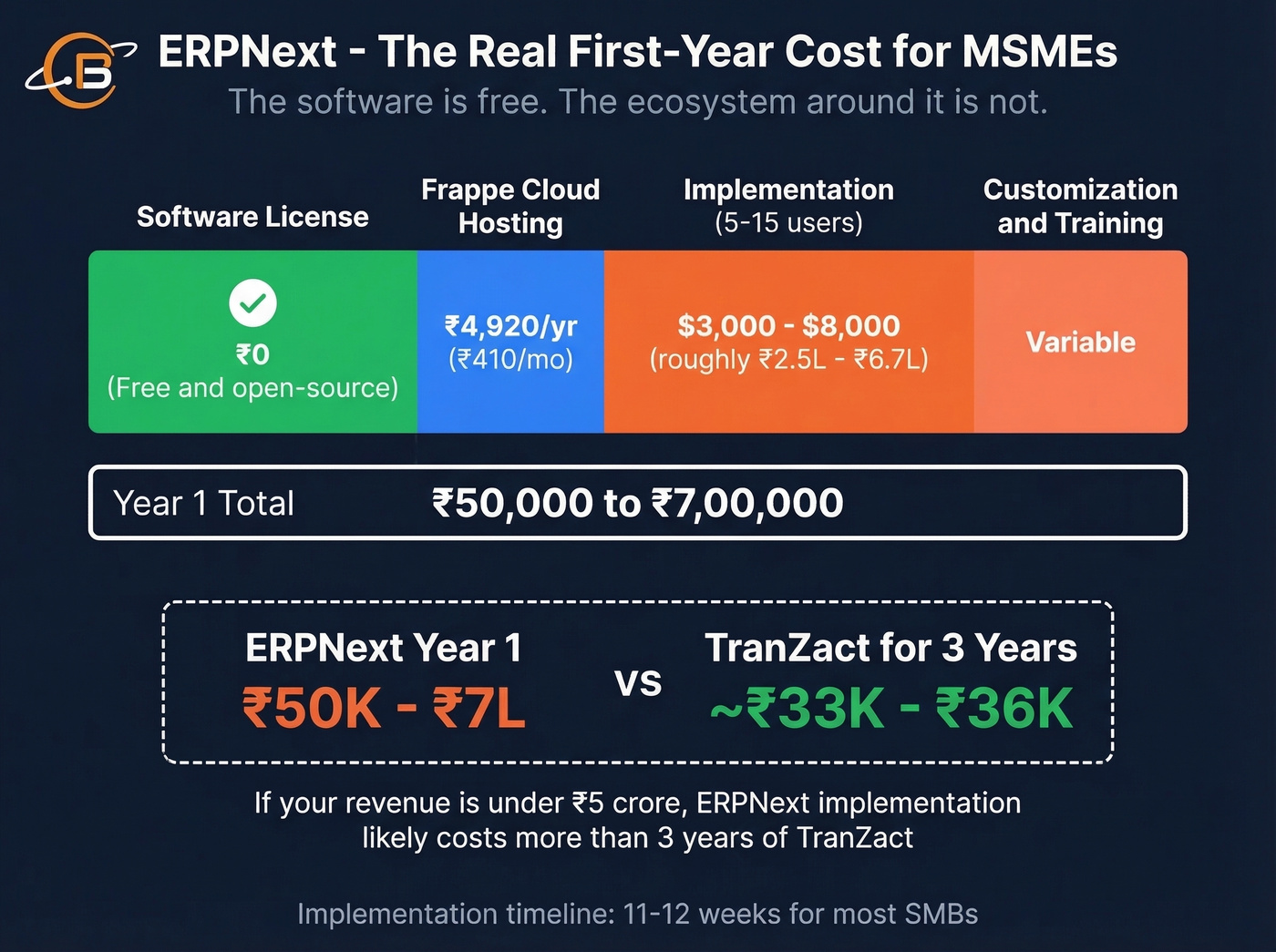
Skip this if you need something working by next Monday. Implementation runs 11-12 weeks for most SMBs, and you'll spend $3,000-$8,000 on setup for a 5-15 user team. Frappe Cloud hosting starts at ₹410/month, but realistic first-year budgets land between ₹50,000 and ₹7,00,000 depending on complexity. The software is genuinely free. The ecosystem around it isn't.
Here's the thing: if your annual revenue is under ₹5 crore, ERPNext's implementation cost probably exceeds what you'd pay for three years of TranZact. The "free" label is seductive but misleading for most MSMEs.
TranZact
TranZact is built for Indian SME manufacturers who live in Tally and need GST invoicing, dispatch tracking, and order management without a six-figure implementation budget. Pricing sits around ₹11K-₹12K/year, and it covers the inquiry-to-dispatch workflow that many MSME teams care about most.
The positioning - "as simple as Excel but impactful as SAP" - is accurate in both directions. It's focused and lightweight, which is a strength until you need CRM automation or advanced reporting. We've recommended TranZact to three manufacturing clients under 30 employees, and all three were operational within a week. That kind of time-to-value is rare in this space.
Zoho One
Fifty-plus apps under one subscription at $37/user/month on annual billing. If you need CRM, helpdesk, accounting, and inventory from one vendor, Zoho's bundle economics are hard to beat. Zoho CRM Standard is often priced around ₹800/user/month on annual billing if you don't need the full suite.
For GST workflows, Zoho's finance stack includes GST tracking, returns filing, e-way bills, and e-invoicing - useful if compliance is a deciding factor. The downside: that many apps creates setup paralysis. Manufacturing modules exist but aren't as deep as ERPNext or Odoo, and per-user pricing adds up fast past 10 seats.
Odoo
Community edition is free and open-source with strong manufacturing modules. Enterprise runs ~$31/user/month. Implementation in India often starts at $5,000-$15,000 for small businesses with a 4-6 week timeline - faster than many ERPNext rollouts.
The gap between Community and Enterprise features is wider than you'd expect. Hosting on Odoo.sh starts around $58/month. Like ERPNext, the "free" label hides real implementation costs, so budget accordingly.
Bitrix24
Bitrix24 offers a free plan capped at 5 GB storage, and key features like sales automation aren't available on that tier. There's also a 50-day inactivity deletion policy: if no user logs in for 50 days, the free account gets automatically deleted with only a 1-week window to restore via support.
It's a CRM with project management bolted on - not a real ERP alternative for manufacturers. Skip it unless your needs are purely CRM-shaped.
Deskera
Deskera scores 4.5/5 on Capterra from 205 reviews, but at $199/user/month with a 5-user minimum, you're looking at $995/month before implementation. Their pricing page explicitly notes that pricing excludes required one-time implementation and setup fees.
That's enterprise pricing for a tool targeting SMEs, and it's wildly overpriced for most Indian MSMEs when ERPNext and TranZact exist.
Clean Your Data Before You Migrate
Your new ERP is only as good as the data feeding it. We've seen teams spend weeks setting up ERPNext or Zoho, import their old contact lists, and immediately pollute the system with bounced emails, disconnected numbers, and duplicate records from years of IndiaMart and JustDial imports.

The workflow is simple: export contacts from Biziverse as CSV, upload for verification and enrichment, then import the clean file into your new ERP. You'll start with data you can actually trust instead of inheriting years of decay.
If you're comparing tools for cleaning and enriching records, start with a quick scan of data enrichment services and contact management software so you don't rebuild the same mess in a new system.
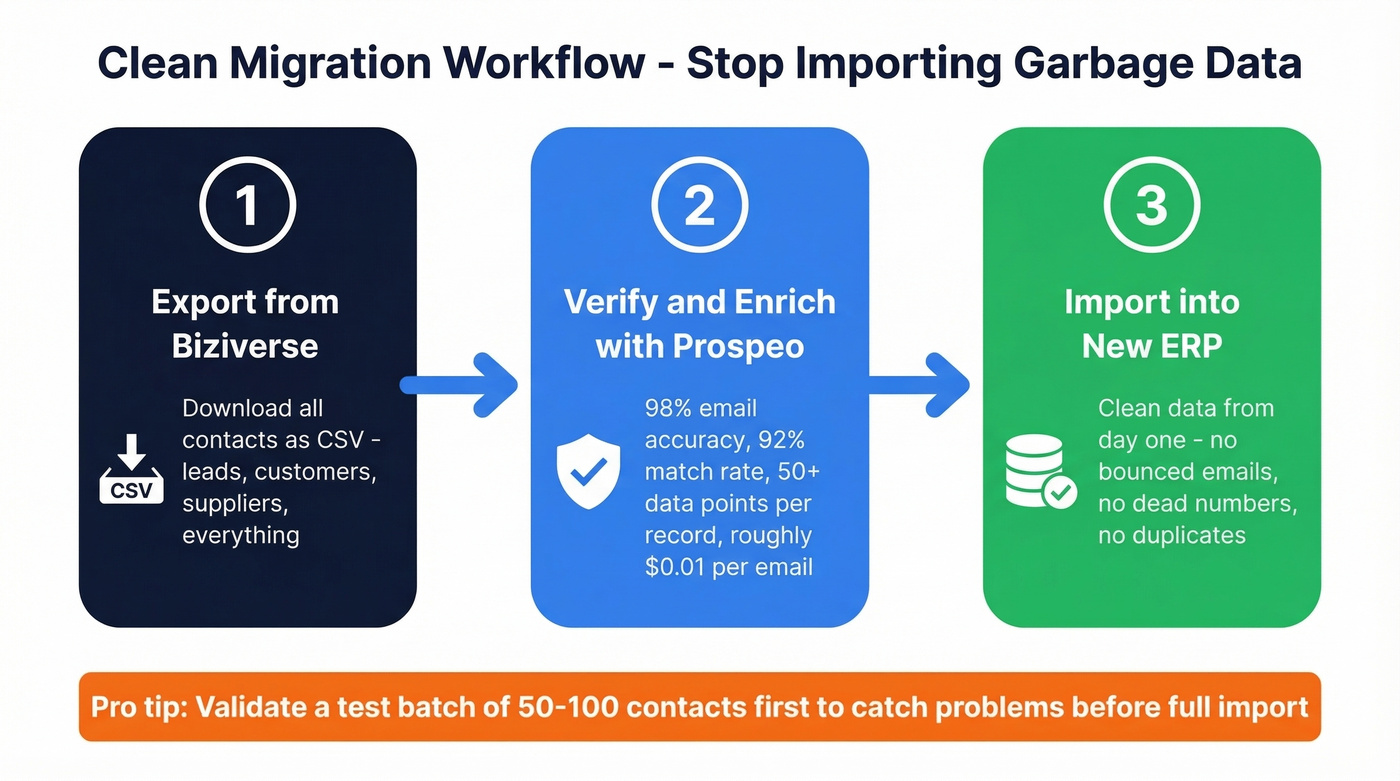
You're about to spend weeks evaluating ERPs, migrating workflows, and training your team. Don't waste that effort by importing dead emails and disconnected numbers. Prospeo's CSV enrichment returns verified contacts at ~$0.01 per email - less than a single wasted follow-up call.
Stop migrating garbage data into your new ERP.
FAQ
Is ERPNext really free?
The software is free - no license fees ever. But hosting starts at ₹410/month, and implementation runs $3,000-$8,000 for a 5-15 user team. Budget ₹50,000-₹7,00,000 for year one depending on customization complexity.
Which option has the best GST support?
Zoho's finance stack includes GST tracking, returns filing, e-way bills, and e-invoicing. TranZact handles GST invoicing with direct Tally integration - the better pick if Tally is already your accounting backbone.
How do I migrate leads from Biziverse without losing data?
Export contacts as CSV, run them through an enrichment tool like Prospeo to verify emails and phone numbers, then import into your new ERP. Validating a test batch first catches bad data before it contaminates your system.
What's the cheapest Biziverse alternative for manufacturers?
TranZact at ~₹11K-₹12K/year is the lowest total cost for Indian manufacturers who need GST invoicing and Tally sync. Odoo Community is free software, but implementation adds $5,000-$15,000 - so TranZact wins on year-one spend for teams under 30 people.