

Cold Calling Software for Sales: What to Know Before You Buy
Your reps made 80 dials yesterday. Four people picked up. Three conversations went nowhere because the "verified" numbers were actually mainlines routed to a receptionist who doesn't transfer cold calls. The problem isn't your dialer - it's everything upstream of it.
Most teams shopping for cold calling software for sales fixate on dialer features when the real leverage sits in data quality, number reputation, and dialer-type fit. Whether you're selling SaaS or any B2B product, here's what actually moves connect rates - before you spend a dollar on software.
What You Need (Quick Version)
- Clean your data first. Prospeo verifies emails and mobile numbers so more dials reach real people.
- Pick the right dialer type. Power dialer for targeted lists. Parallel dialer only if you're working very large lists (e.g., 10,000+ contacts) and can absorb conversion drops.
- Budget pick: Close from $9/seat/mo (annual billing). Best all-around: Kixie from $35/mo. Scale play: Aircall from $30/license/mo.
Cold Calling Benchmarks That Matter
Most benchmark articles throw numbers around without context. These are the ones that actually inform buying decisions:
| Metric | Number | Why It Matters |
|---|---|---|
| Voicemail rate | 80% | 4 out of 5 dials never reach a human |
| Connect rate (quality data) | 16.6% | Clean data nearly doubles the baseline |
| Successful call duration | 5:50 vs 3:14 | Longer calls convert; short calls trigger spam flags |
| Attempts to reach a prospect | 8 | Most reps give up after 2-3 |

The average cold calling success rate sits around 2-3%, but teams running verified mobile numbers and proper cadences push well above that. In our experience, the gap between 2-3% and 6-7% almost always comes down to data quality, not dialer features.
Power vs Parallel vs AI Dialer
Power dialer calls one number at a time and auto-advances after disposition. It's the right choice for most teams. You touch every account, reps stay in context, and you don't burn leads.
Parallel dialer fires 3-5 simultaneous lines and connects the rep to whoever picks up first. The math looks great on paper - more dials per hour, less dead air. But a Reddit thread on r/sales flags the tradeoff: one team trialing Orum described it as a "bull in a China shop" for limited contact pools, with conversion rates dropping noticeably. Parallel only makes sense when you have a massive TAM and burning through some leads is acceptable.
AI dialer isn't a separate category - it's an intelligence layer on top of power or parallel modes. Think prioritization, spam protection via number rotation, and in-call context cards. Useful, but not a reason to switch dialers on its own.
For teams that live in Salesloft or Outreach, CallCloud ($480/year per rep) adds power dialing without changing your workflow - a fraction of Orum's cost.
Real talk: if you have fewer than 15 SDRs with a targeted ICP, power dialing converts better. Period.

Stop paying for bounced emails. Prospeo verifies every contact with 98% accuracy, refreshed every 7 days.
Start free and only pay for verified contacts
Why Calls Get Flagged as Spam
Carrier analytics engines score every outbound number based on behavior patterns. Hiya powers AT&T's spam detection, TNS handles Verizon, and First Orion covers T-Mobile. More than 95% of calls labeled "Spam Likely" never get answered. If your numbers are flagged, your dialer is irrelevant.
The triggers:
- Volume spikes from a single number
- Average call duration under 30 seconds
- Low answer rates
- Neighbor spoofing patterns
- B or C level STIR/SHAKEN attestation instead of A-level
Practical fixes: keep dials under 100 per number per day, register at Free Caller Registry, use a dialer with number rotation, scrub against DNC lists before every campaign, and call real numbers so conversations last longer than 30 seconds.
Fix Your Data Before Buying a Dialer
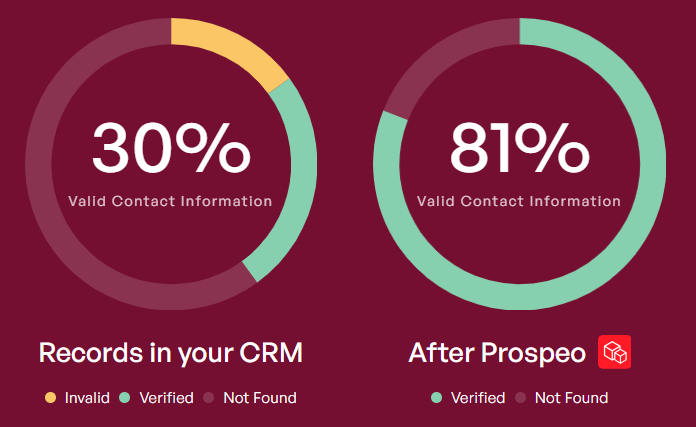
B2B contact data decays at roughly 2.1% per month - that's 22.5% of your list going stale every year. Reps lose about 27.3% of their productive time to bad contact data. A dialer bumps average talk time from 11 minutes to 26 minutes per hour, but that math only works if the numbers are valid. This is especially painful when prospecting technology companies, where job titles change frequently and org charts shift after every funding round.
Best Software for Sales Teams
| Tool | Starting Price | Best For | G2 Rating |
|---|---|---|---|
| Close | $9/seat/mo | Budget / solo reps | 4.7/5 |
| Dialpad | $15/user/mo | Existing Dialpad users | 4.4/5 |
| CloudTalk | $19/user/mo | International teams | 4.4/5 |
| Aircall | $30/license/mo | Scaling SDR teams | 4.4/5 |
| Kixie | $35/mo | SMB sales teams | 4.4/5 |
| PhoneBurner | $140/user/mo | High-volume outbound | 4.0/5 |
| Orum | ~$8,000/year per user (~$650-$700/mo) | Large SDR floors | 4.5/5 |
For most teams: start with Kixie. On a budget: Close. Scaling past 10 reps: Aircall.
Kixie
Use this if you're an SMB team running 30-80 dials per day and need local presence dialing out of the box. Local presence boosts pickup rates by 15-40%, and number rotation helps keep your caller ID clean. Voicemail drop can cut voicemail time from ~30 seconds to ~1 second, and CRM auto-sync can eliminate manual logging time. At $35/mo, it's the best value for teams that want a dialer that just works.
Skip this if you need parallel dialing or you're running a 20+ SDR floor.
Close
Use this if you're a solo rep or small team that doesn't want separate CRM and dialer subscriptions. Close bundles both starting at $9/seat/mo - zero integration headaches, power dialer included on paid plans.
Skip this if you need advanced call coaching, parallel dialing, or a Salesforce-native workflow with deep CTI/call-center style controls. Close is its own ecosystem, which is a strength for small teams and a limitation for enterprise workflows.
Aircall
Aircall is the dialer you graduate to when your team outgrows Kixie or Close. Starting at $30/license/mo with a 3-seat minimum, it integrates cleanly with Salesforce, HubSpot, and Salesloft. The real draw is call coaching - live monitoring, whisper mode, and call recording make it the best option for managers actively developing reps. We've seen teams cut new-hire ramp time significantly once managers can listen in and coach live. Not worth it for solo reps paying $90/mo for the minimum seats, but hard to beat once you have 10+ SDRs.
Quick Mentions
CloudTalk ($19/user/mo) is a strong pick for internationally distributed prospect bases thanks to broad international coverage. PhoneBurner ($140/user/mo) is a straightforward high-volume power dialer - no frills, just speed. Dialpad ($15/user/mo) makes sense if you're already in the Dialpad ecosystem; otherwise, there are better dedicated outbound tools. Orum (~$650-$700/user/mo) is a well-executed parallel dialer best for SDR floors with 15+ reps and a massive TAM.
Hot take: Most teams closing deals under $20K don't need a dialer costing more than $35/mo. The money you'd spend on Orum is almost always better invested in cleaner data and tighter targeting.
Your outbound is only as good as your data. With 300M+ profiles and verified emails at ~$0.01 each, Prospeo keeps your pipeline full.
Try it free - no credit card required
Cold Calling Tips for SaaS Teams
If you're selling SaaS, a few adjustments make a measurable difference beyond just picking the right dialer. Lead with the prospect's tech stack or a trigger event - mentioning a recent integration, funding round, or competitor switch gets you past the first ten seconds. Time your calls between 10-11 AM and 4-5 PM in the prospect's local time zone; these windows consistently outperform early morning and lunch-hour dials. And always have a specific next step ready - "Can I send a 2-minute demo video?" converts better than "Would you be open to a call next week?" when selling to technical buyers.
FAQ
Power or Parallel Dialer - Which Converts Better?
Power dialers convert better for most sales teams. Parallel dialers fire 3-5 lines simultaneously but only pay off when you have 10,000+ contacts and can afford to burn some leads. Below that threshold, power dialing gives reps more context per call and higher conversion rates.
How Many Cold Calls Should Reps Make Daily?
The industry average is 33 calls per day with about 6.6 conversations. A dialer pushes that to 60-80 dials, but 40 verified-number dials will outperform 80 calls to a stale list every time. Prioritize data quality over raw volume.
Is Cold Calling Still Effective for Software Sales?
Yes - cold calling remains one of the highest-converting outbound channels for software sales in 2026 when paired with clean data and a multi-touch cadence. SaaS buyers expect you to know their stack and pain points before you dial; generic pitches get hung up on faster than in other verticals.
How Do I Fix "Spam Likely" on Outbound Calls?
Keep dials under 100 per number per day, register at Free Caller Registry, and use a dialer with number rotation plus STIR/SHAKEN A-level attestation. Calling verified mobiles from a platform like Prospeo also helps - real conversations last longer, signaling legitimate behavior to carriers.
What's the Best Free Tool to Clean Call Lists?
Prospeo offers 75 free email verifications and 100 Chrome extension credits per month with no credit card required. For teams testing cold calling software for sales workflows, running your list through verification first typically doubles connect rates compared to unverified data.