

How to Build a Cold Outreach Campaign That Gets Replies in 2026
A cold outreach campaign lives or dies on infrastructure - and a sender on r/b2bmarketing proved it. After pushing 217,000 cold emails, their reply rates cratered from 2.1% to 0.7% as domains burned faster than they could warm new ones. Cold email outreach still works in 2026, but only if you treat the infrastructure as the campaign itself.
What You Need Before Anything Else
- A verified prospect list with a <2% bounce rate. Bad data burns domains.
- 7+ secondary domains sending 30 or fewer cold emails per mailbox per day. Spread volume thin.
- Emails under 60 words with a soft CTA. "Worth a conversation?" beats "Let's book 30 minutes" every time.
Build a Verified Prospect List
List quality is the single biggest lever in your outreach results. One practitioner on Reddit rebuilt their list process - stopped buying third-party lists entirely - and watched bounce rates drop from 11% to under 2%. Reply rates doubled from 3% to 6%. Meritt, an outbound agency, saw similar results: bounce rate fell from 35% to under 4% after switching to Prospeo.
We've seen this pattern across dozens of campaigns. Prospeo draws from 143M+ verified emails with 98% accuracy, running catch-all handling, spam-trap removal, and honeypot filtering before you send a single message. The 7-day data refresh cycle closes a gap most teams don't notice - the industry average is six weeks, which means most databases serve you contacts who've already changed jobs.

Set Up Deliverability Infrastructure
This is where most campaigns die. Here's the thing: you can write the best cold email ever crafted, and it won't matter if it lands in spam.
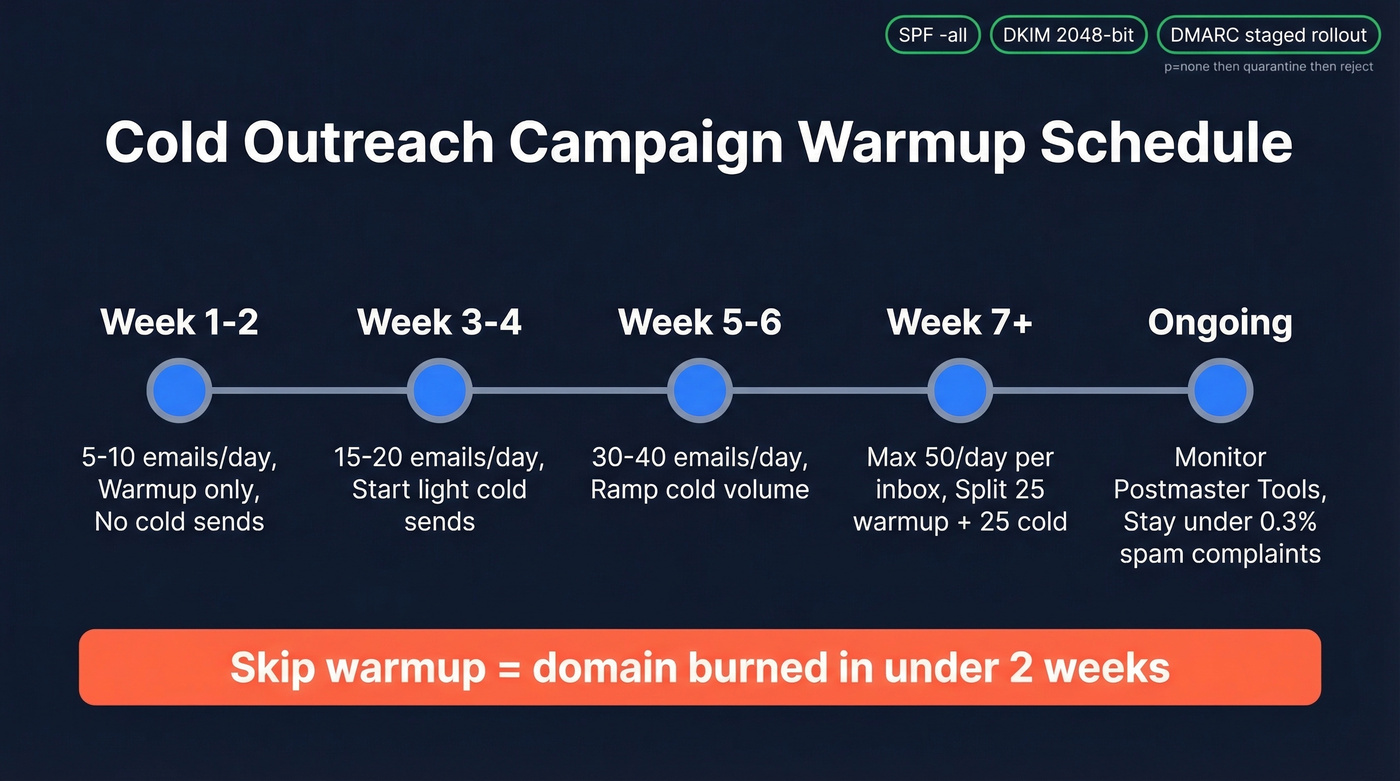
Domain and mailbox setup: Buy 7+ secondary domains. Never send cold email from your main domain. Create 2-3 mailboxes per domain, cap each at roughly 30 cold emails per day, and never exceed 50 emails/day from a single inbox. Space sends 2-5 minutes apart.
Authentication: SPF set to -all - watch the 10 DNS lookup limit. DKIM with 2048-bit keys for every sending service. DMARC staged: p=none (weeks 1-4), then p=quarantine (weeks 5-8), then p=reject (week 9+). Monitor with Google Postmaster Tools and Microsoft SNDS.
Warmup: Start at 5-10 emails/day, ramp to 15-20 by weeks 3-4, hit 30-40 by weeks 5-6, and max at 50/day per inbox in week 7+ (split 25 warmup + 25 cold). We've seen teams lose domains in under two weeks when they skip this stage entirely, thinking they can "just start sending."
Since May 2025 bulk sender enforcement, you need spam complaints under 0.3%, bounces under 2%, and RFC 8058 one-click unsubscribe. These aren't suggestions. They're thresholds that'll get you blocked.

Bad data is the #1 domain killer in cold outreach. Prospeo's 143M+ verified emails hit 98% accuracy with catch-all handling, spam-trap removal, and a 7-day refresh cycle - so your list never goes stale mid-campaign.
Stop burning domains. Start with data that keeps you under 2% bounce.
Write Emails That Get Replies
Best-performing cold emails in 2026 run under 80 words. Practitioners on Reddit push even shorter - one cut from 141 words to under 56 and saw reply rates jump.
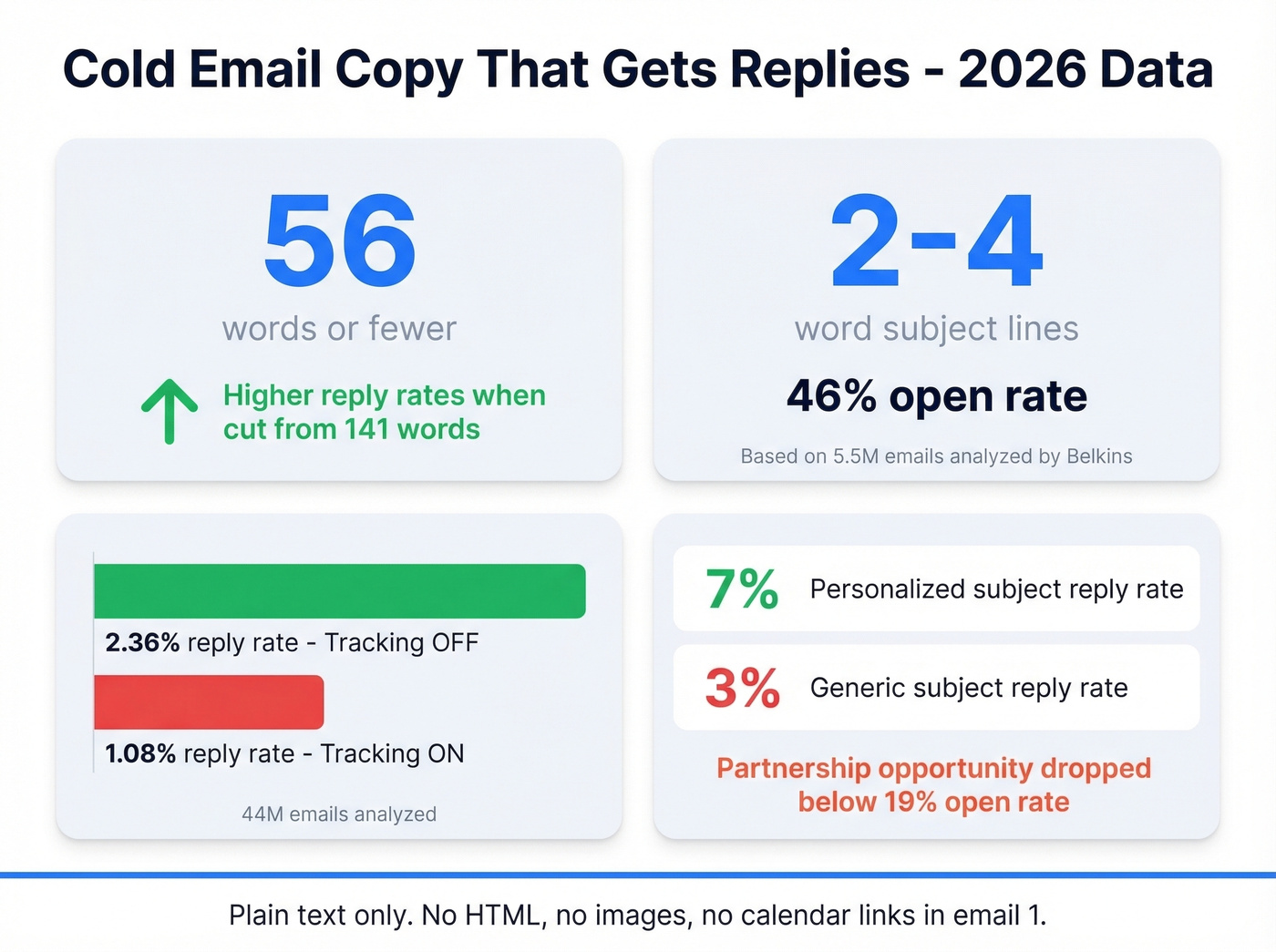
Send plain text. No HTML formatting, no images, no calendar links in your first email. Turn off open tracking. A Snov.io analysis of 44M emails found reply rates more than doubled - 2.36% vs 1.08% - when tracking was disabled. The pixel hurts deliverability more than the data helps you.
For subject lines, a Belkins study of 5.5M emails found 2-4 word subject lines hit 46% open rates. Personalized subjects doubled reply rates (7% vs 3%), and question formats performed best. "Partnership opportunity" dropped below 19%. A/B test one variable per week - subject line, CTA, or opening line.
Here's a template that works:
Hi {{firstName}},
Noticed {{company}} is scaling the SDR team. Most teams at your stage lose 15-20% of sends to bad data.
We helped [similar company] cut bounce rates from 35% to under 4% - happy to share the playbook.
Worth a look?
That's 47 words. Soft CTA. Specific enough to feel relevant, short enough to get read.
Build Your Follow-Up Sequence
58% of replies come from step 1. The remaining 42% still matters - the sweet spot is 4-7 touchpoints.
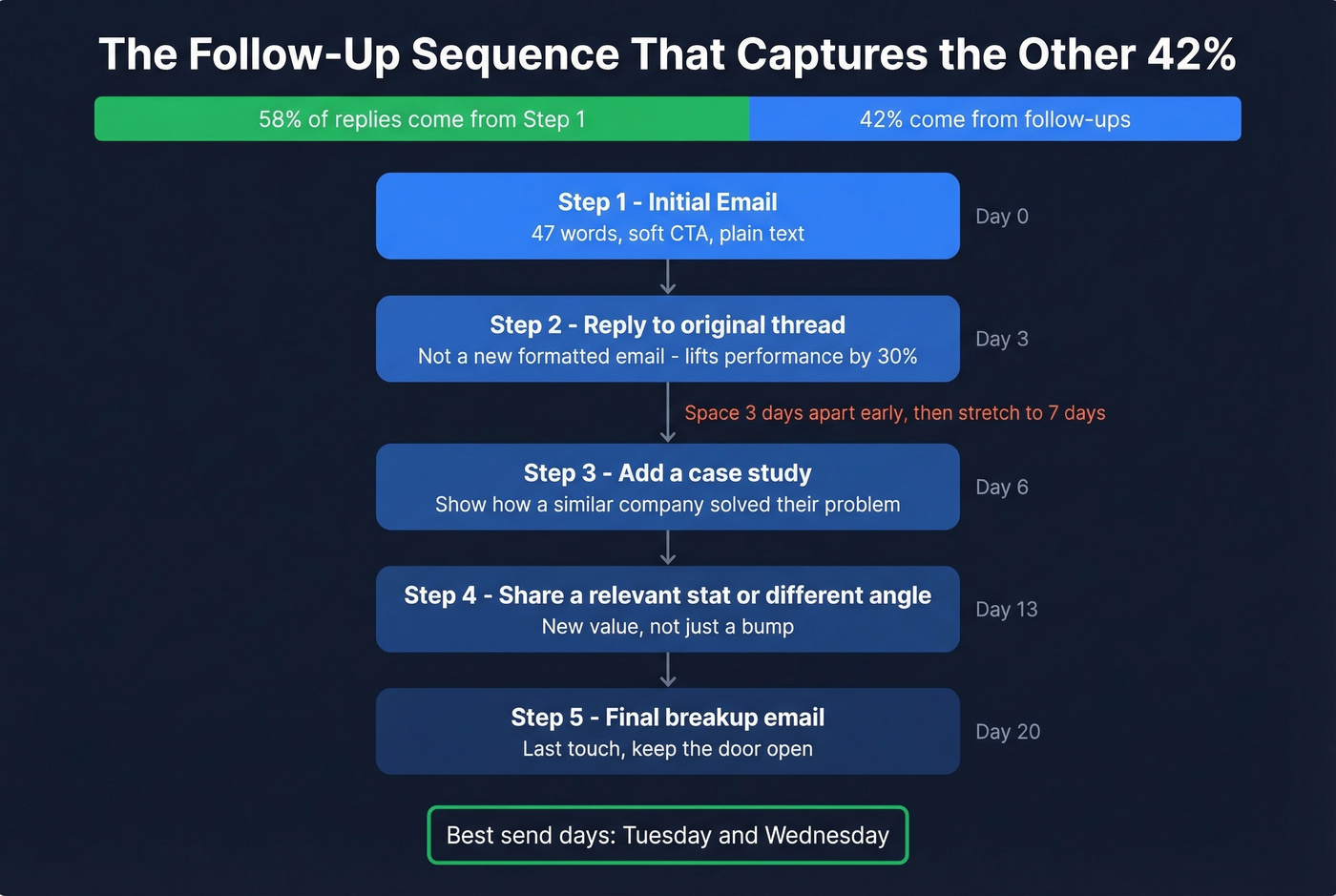
Write step 2 as a reply to your original thread, not a new formatted email. This lifts performance by roughly 30%. Each follow-up should add new value: a case study, a relevant stat, a different angle. One approach that works well for deals above $25k is reverse case study outreach - instead of leading with your product, you lead with a detailed breakdown of how a similar company solved the exact problem your prospect faces, then position your solution as the mechanism.
Don't just bump the thread. Space follow-ups 3 days apart initially, then stretch to 7. Tuesday and Wednesday are peak send days.
Go Multichannel
If you're closing deals under $10k, you probably don't need a sophisticated multichannel stack. Skip this section. But if you're selling $30k+ deals, email alone won't cut it anymore.
The 217K email sender's pivot tells the story. After watching domains burn for months, they shifted to social engagement first - monitoring buying signals, engaging with prospects' content, then reaching out warm. The result: 12% reply rate and 34 meetings in 90 days.
The playbook is simple. Connect on social first, engage genuinely for 2-3 days, then start your email sequence. Don't automate the social touches. Manual engagement is what makes this work. For enterprise deals where you need buy-in from multiple stakeholders, pairing your email sequence with a concise pitch deck - a visually driven document the champion can forward internally - dramatically increases the chance your message survives the committee.
Benchmarks and Compliance
| Metric | Average | Good | Elite |
|---|---|---|---|
| Reply rate | 3.43% | 5.5%+ | 10.7%+ |
| Bounce rate | <2% | <1% | <0.5% |
| Spam complaints | <0.3% | <0.1% | <0.05% |
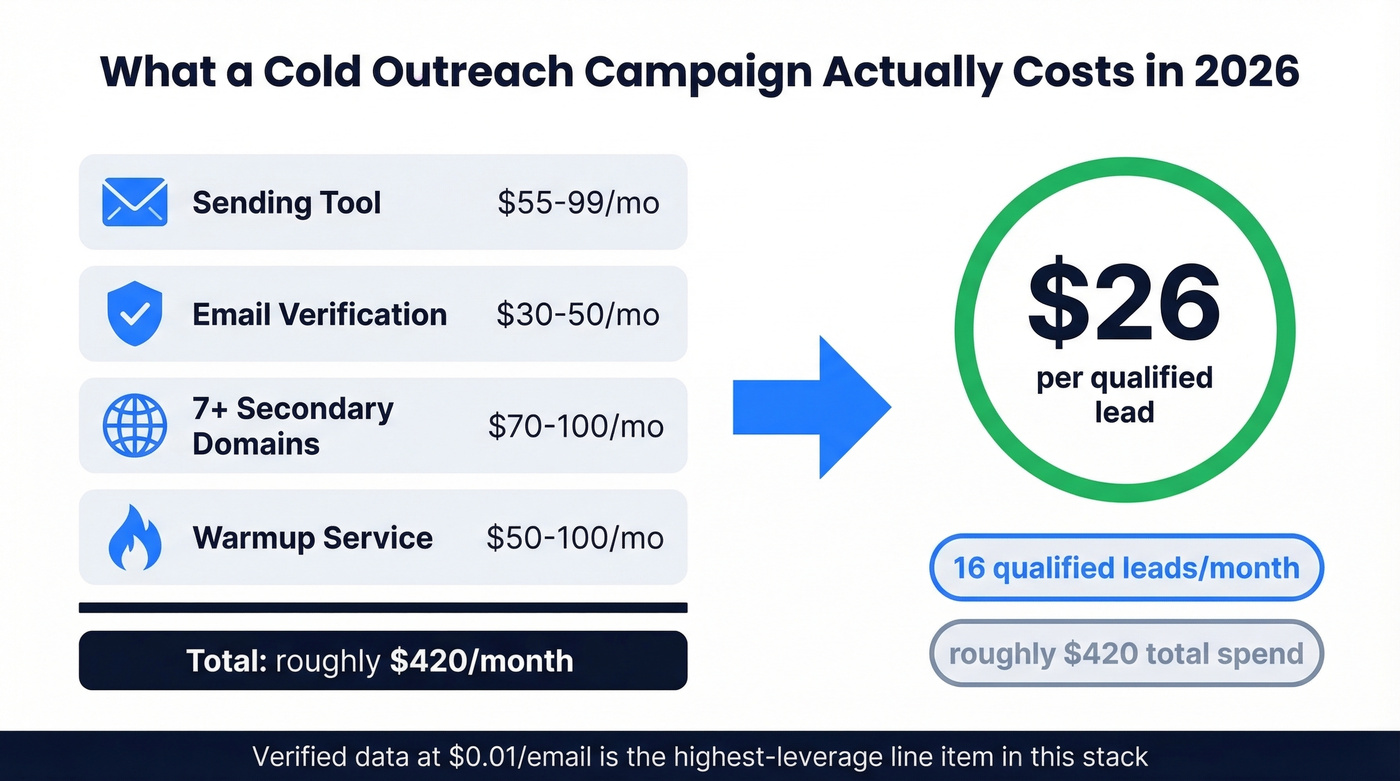
A typical cold outreach campaign stack - sending tool ($55-99/mo), verification ($30-50/mo), 7+ domains ($70-100/mo), warmup ($50-100/mo) - runs around $420/month and generates about 16 qualified leads at roughly $26/lead.
On compliance: CAN-SPAM requires a physical address, honest subject lines, and working unsubscribe - no prior consent needed. GDPR allows cold B2B email under legitimate interest, but document your balancing test. CASL is the strictest - you generally need express or implied consent, with penalties in the millions of CAD. If you're targeting Canadian prospects, get legal advice before sending.
Meritt tripled pipeline from $100K to $300K/week and crushed bounce rates from 35% to under 4% - all by switching to verified data. Your cold outreach campaign deserves the same foundation at $0.01/email.
Same team, 3x the pipeline. The only variable was the data.
FAQ
How many cold emails should I send per day?
Cap at 30 cold emails per mailbox per day, never exceeding 50 total from a single inbox. Use 2-3 mailboxes per secondary domain and rotate across 7+ domains to scale safely. This keeps you well under spam-complaint thresholds.
What's a good reply rate for cold outreach?
The 2026 industry average is 3.43%. Top-quartile campaigns hit 5.5%+, and elite campaigns reach 10.7%+. If you're below 2%, fix your list quality and deliverability before touching copy.
How do I keep my bounce rate under 2%?
Verify every email before sending using multi-step verification that includes catch-all handling and spam-trap removal. Re-verify older lists before every send - contacts go stale faster than most teams realize, especially if your data provider refreshes on a 4-6 week cycle instead of weekly.