

Best Contact Extensions in 2026 (12 Tools Tested)
You just installed a shiny new contact extension, pulled 200 "verified" emails, loaded them into your sequencer - and 47 bounced. That's not a hypothetical. 8 out of 10 email finder tools charge full price for emails that bounce. The difference between a good contact extension and a bad one isn't features or UI polish. It's whether the data actually works when you hit send.
B2B contact data decays at roughly 2.1% per month. Phone numbers go stale at about 18% per year. Here's what actually works in 2026 - and what's burning your credits.
Our Picks (TL;DR)
| Use Case | Pick | Why |
|---|---|---|
| Best for email accuracy & data freshness | Prospeo | 98% email accuracy, 7-day data refresh, free tier with 75 emails/month |
| Best free tier for getting started | Apollo.io | Generous free plan with 5 cell phone credits/month + email access |
| Best for quick phone lookups | Lusha | Simple UI, 5 free phone credits, fast results |
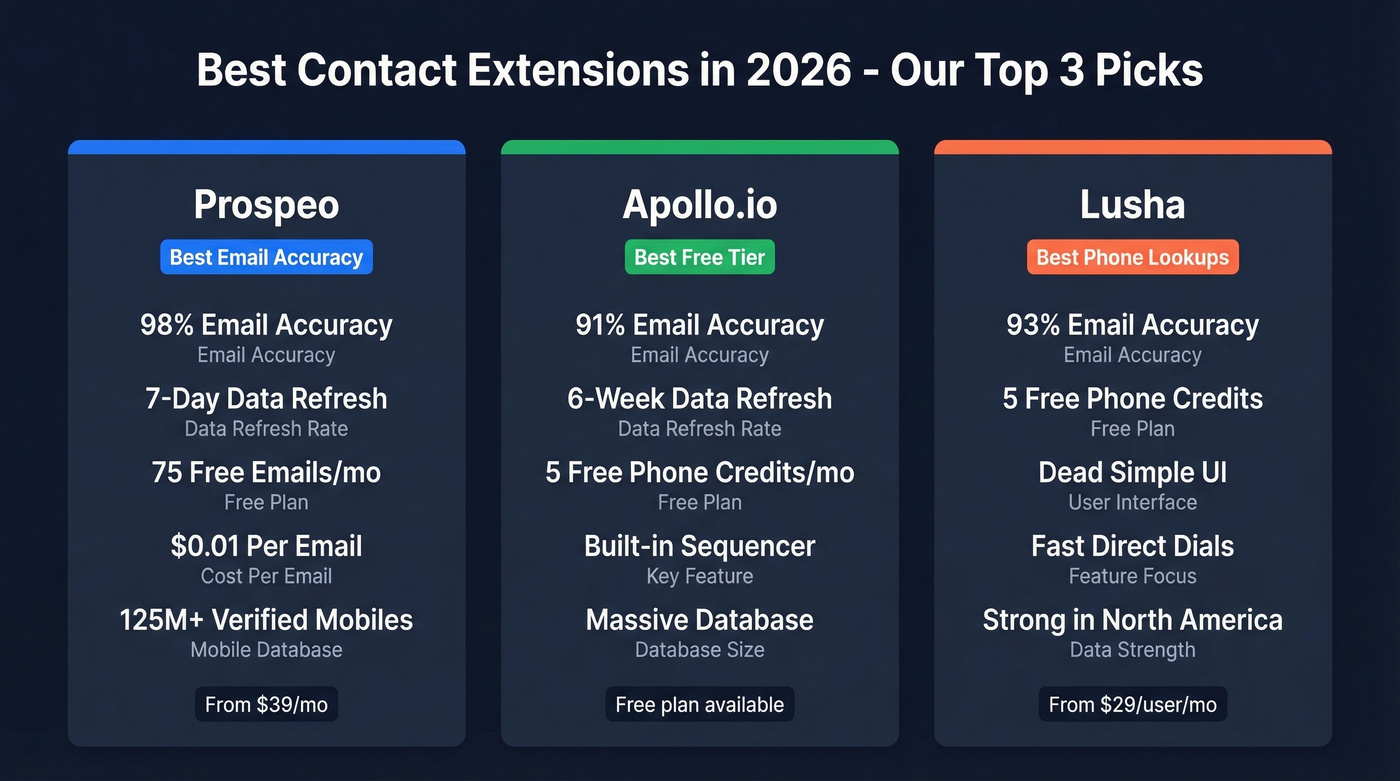
If you're running outbound sequences and deliverability matters (it always does), Prospeo's accuracy gap over the field is significant. Bootstrapping and need volume? Apollo's free tier is hard to beat. For sales teams that live on the phone, Lusha gets you direct dials fast.
Why Your Extension Choice Matters
Most teams treat their contact finder extension like a commodity. Pick one, install it, move on. That's a mistake.
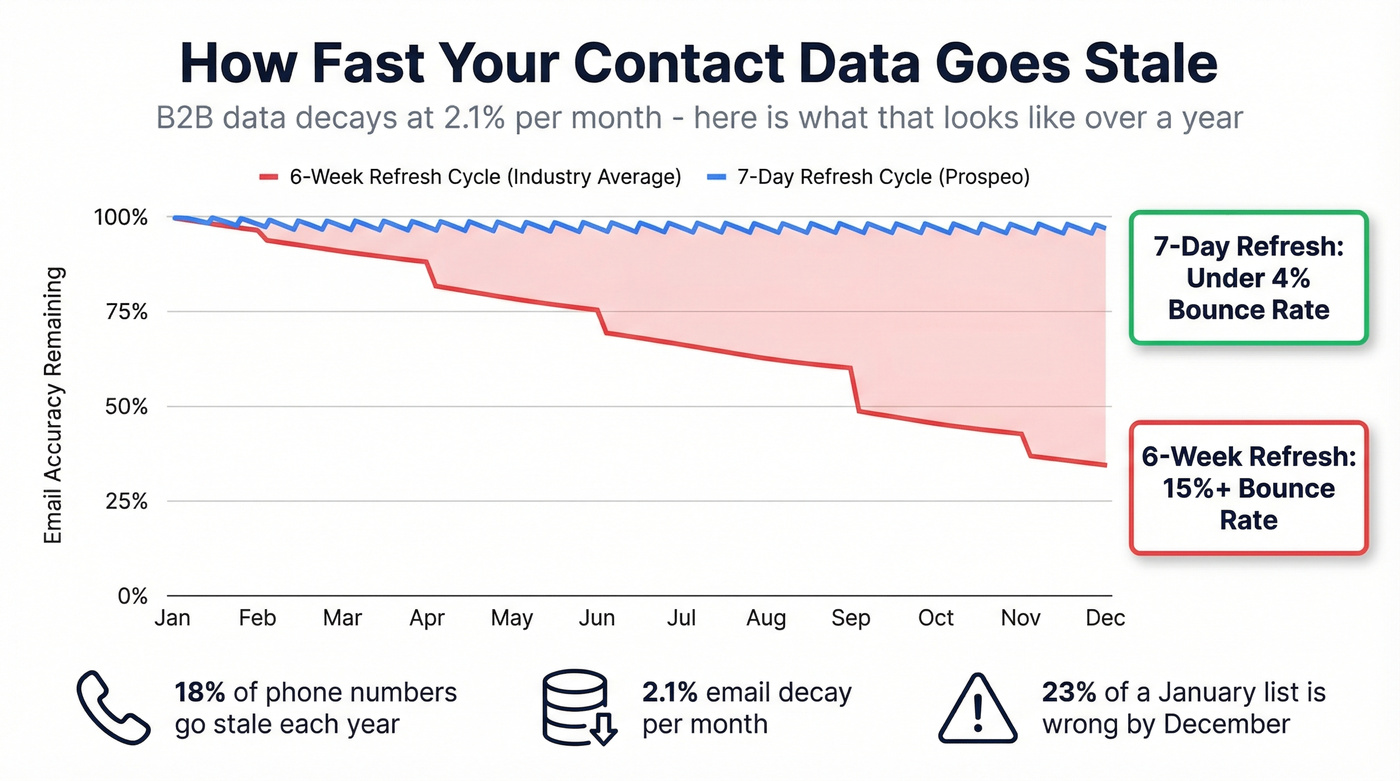
Poor data quality reduces productivity by up to 30% across go-to-market teams, per Gartner research. The compounding is brutal - a list you built in January is missing roughly 23% of its accuracy by December. Phone numbers are worse: 18% annual churn means nearly one in five direct dials you pulled last year now ring someone else's desk. And those phone numbers matter more than ever, because SMS messages hit a 90% open rate within three minutes, making a valid mobile number one of the highest-value data points in your CRM.

The refresh cycle is the metric nobody talks about. Most data providers update their records around every 6 weeks. A 7-day refresh cycle keeps the gap between "data pulled" and "data decayed" narrow - that's the difference between a 4% bounce rate and a 15% bounce rate, and the difference between your domain staying healthy or landing in spam folders.
We've tested dozens of these extensions across client campaigns, and the pattern is always the same: the tool with the best accuracy on paper delivers the best results in practice. Whether you're evaluating a prospect Chrome extension for individual reps or rolling out a contact enrichment tool across your entire team, the extension you choose determines your cost-per-valid-contact, your bounce rate, your domain reputation, and ultimately how many meetings you book.
Hot take: If your average deal size is under $10K, you probably don't need ZoomInfo-level data. A self-serve tool with high accuracy will outperform an enterprise platform you're only using at 20% capacity.
The 12 Best Contact Extensions in 2026
Prospeo
Prospeo's Chrome extension (40,000+ users) works across company websites, professional profiles, and CRM interfaces - pulling from a database of 300M+ profiles with 143M+ verified emails and 125M+ verified mobile numbers. The 98% email accuracy comes from a 5-step verification process that includes catch-all handling, spam-trap removal, and honeypot filtering. This isn't pattern-matching against a stale database. It's proprietary infrastructure that verifies in real time.
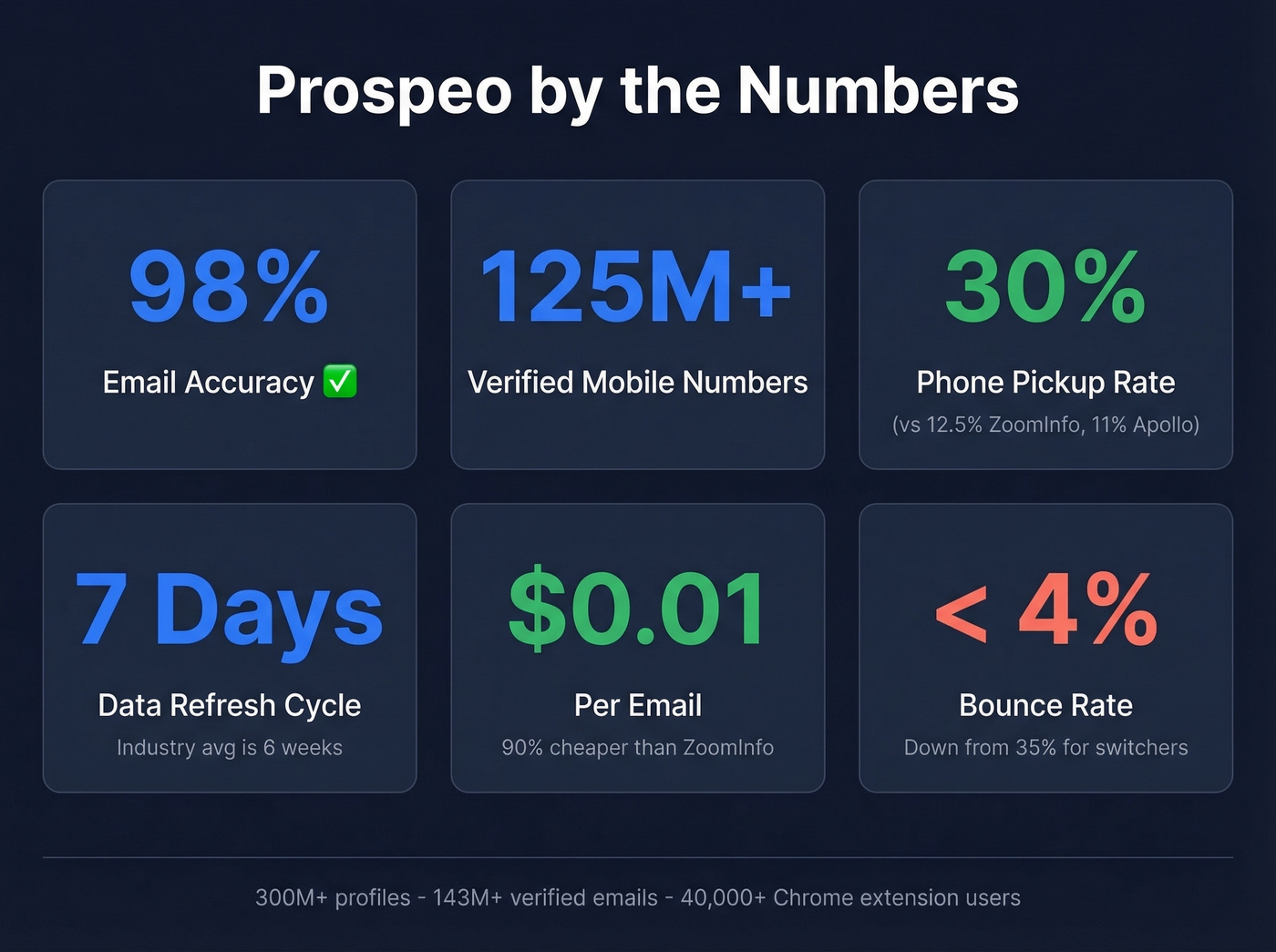
Mobile coverage is equally strong: 125M+ verified numbers with a 30% pickup rate across all regions. For comparison, ZoomInfo sits at 12.5% and Apollo at 11%. That pickup gap translates directly into meetings - teams using Prospeo book 26% more meetings than ZoomInfo users and 35% more than Apollo users. Meritt tripled their pipeline from $100K to $300K per week after switching, with bounce rates dropping from 35% to under 4%.
Beyond contact data, Prospeo layers in buyer intent signals tracking 15,000 topics via Bombora, so you can prioritize contacts at companies actively researching your category. CRM and CSV enrichment returns 50+ data points per contact at a 92% API match rate.
Pricing is credit-based and transparent. Emails run about $0.01 each - 90% cheaper than ZoomInfo's roughly $1 per lead. Mobile numbers cost 10 credits per lookup. The free tier gives you 75 emails plus 100 Chrome extension credits per month. Paid plans scale from ~$39/mo with no annual contracts. Integrations cover Salesforce, HubSpot, Smartlead, Instantly, Lemlist, Clay, Zapier, and Make.

You just read that B2B data decays at 2.1% per month. Prospeo's 7-day refresh cycle keeps your contact data current while other extensions let it rot for 6 weeks. That's why teams using Prospeo's Chrome extension see bounce rates under 4% - not the 15%+ you get from stale databases.
Install the extension 40,000+ sales teams already trust.
Apollo.io
Use this if you're a solo founder or early-stage team that needs a free prospecting tool yesterday. Apollo's free plan includes 5 cell phone credits per month plus email access, and the Basic plan at $49/month bumps you to 900 cell phone credits annually. The database is massive, and the built-in sequencer means you can prospect and send from one tool.
Skip this if you care deeply about accuracy or account safety. Apollo scored 91% in independent benchmark testing - solid but not top-tier. More concerning: PhantomBuster rates Apollo's extension as "High" risk for triggering account restrictions due to background scraping behavior. There's also a compliance angle - Apollo doesn't currently apply GDPR safeguard controls to EU/UK contacts pulled via the Chrome extension.
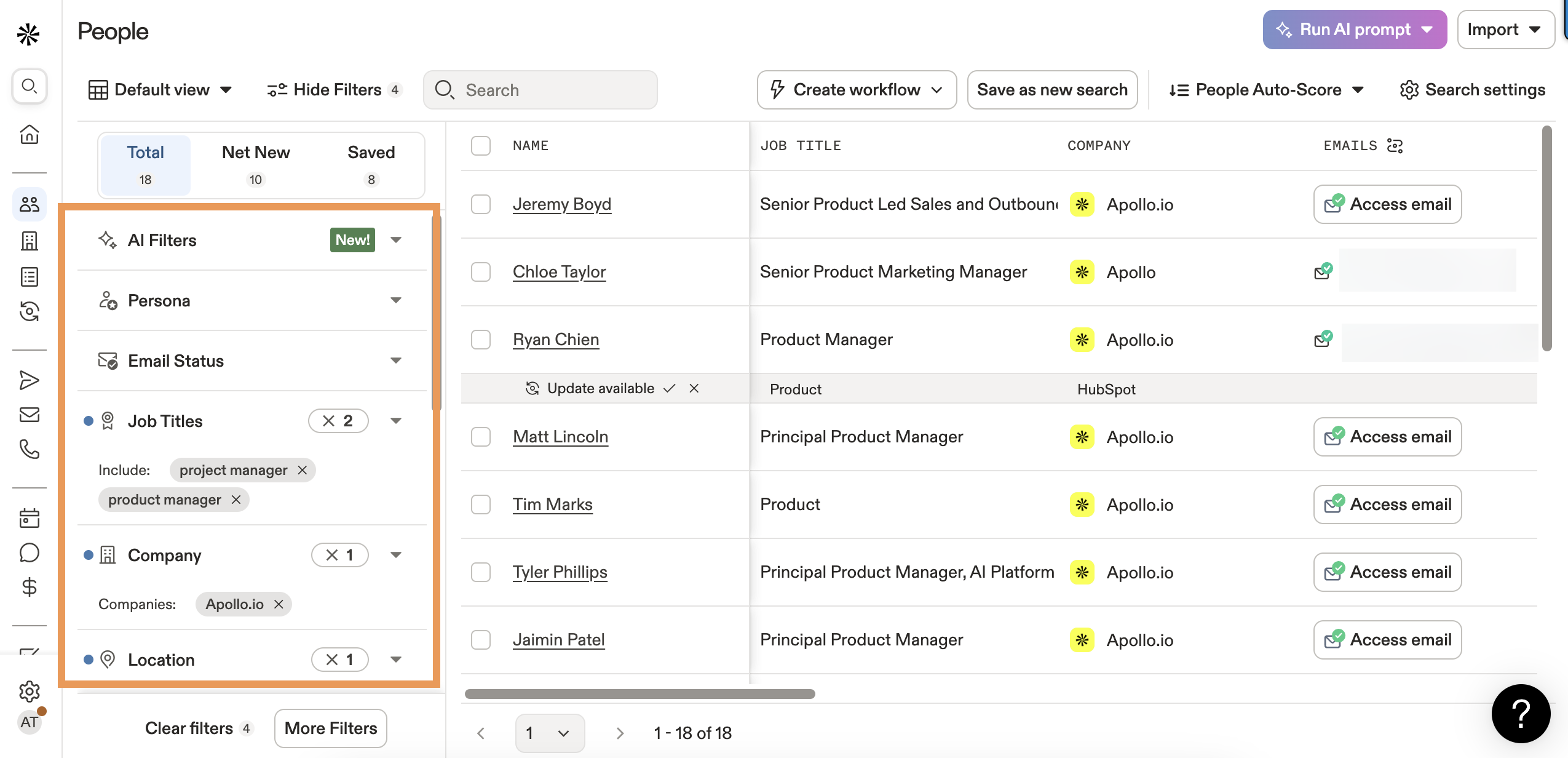
For US-focused teams doing moderate volume, Apollo is a great starting point. For teams sending 1,000+ cold emails per week where every bounce hurts, the accuracy gap matters.
ContactOut
ContactOut is the recruiter's favorite. The extension works well on professional networking sites and company pages, and the tool frequently shows up in recruiting-focused Reddit threads when people ask about sourcing tools.
The free tier gives you 2 phone numbers per day and 5 email credits per day. The Sales plan runs $79/month with 600 phone numbers per year. ContactOut markets "99% confidence" on their data, though we haven't seen independent verification of that claim.

Where ContactOut wins over ZoomInfo: price and simplicity for individual contributors. Where ZoomInfo still wins: database depth, intent data, and workflow automation. Solid for recruiting workflows and individual sales reps, especially for North American contacts.
Lusha
Lusha is the extension you recommend to the sales rep who just wants a phone number and doesn't want to learn a new platform. The UI is dead simple. Install, click, get a direct dial.
Five free phone credits to start, and the Pro plan at $29/user/month includes 480 phone credits per year. Accuracy is strong - 93% in independent testing, which puts it near the top of the field for email. Phone data quality is harder to benchmark, but Lusha's strength has always been direct dials in North America. The tradeoff: PhantomBuster rates Lusha's extension as "High" risk for account restrictions. If you're running the extension heavily on professional profiles, factor that into your decision.
Compared to ZoomInfo, Lusha is dramatically cheaper and faster to deploy, but you're getting a contact lookup tool - not a GTM platform with intent data and workflow automation. Quick and simple for phone lookups, but watch the account safety angle if you're a power user.
Kaspr
Kaspr sits in the mid-range: more credits than Lusha's free tier, less expensive than RocketReach, but the add-on credit economics can sneak up on you. The free plan includes 5 phone and 5 email credits per month. Starter runs $49/user/month on annual billing or $65/month billed monthly, with 100 phone credits per month. Business is $79/user/month with 200 phone credits.
Here's where it gets tricky. Add-on phone credits range from $0.21 to $0.36 per credit depending on volume. A team burning through 500 extra phone credits per month is adding $155/month on top of their plan. Model your actual usage before committing - the sticker price and the real price can diverge fast.
PhantomBuster rates Kaspr's risk level as "Medium" - better than Apollo or Lusha, but not zero. One quirk: Kaspr requires at least 20 connections on your professional profile to function, which means brand-new accounts won't work. A decent mid-range option with transparent pricing, but do the credit math first.
RocketReach
RocketReach is the tool that quietly does well in bake-offs. Essentials starts at $80/month for email only with 125 lookups. Pro jumps to $150/month for email plus phone with 375 lookups. Additional credits run $0.30-$0.45 per lookup.
Accuracy landed at 83% in independent testing - below average for email. But a Reddit user in r/coldemail praised RocketReach as "most accurate so far" after testing multiple tools, noting their bounce rate "dropped a lot" when targeting mid-size SaaS companies. Benchmark averages don't always predict your specific use case. Reliable for mid-size SaaS targeting, but phone access is expensive compared to alternatives.
Cognism
Enterprise-grade data at enterprise-grade prices. Cognism typically starts around $16,500/year for a single Platinum user. A 5-user Grow plan benchmarks around $22,513/year; Elevate benchmarks around $37,498/year for five seats. You're getting phone-verified mobiles that claim to connect with 87% of your list, DNC scrubbing across 13 countries, and Bombora intent data.
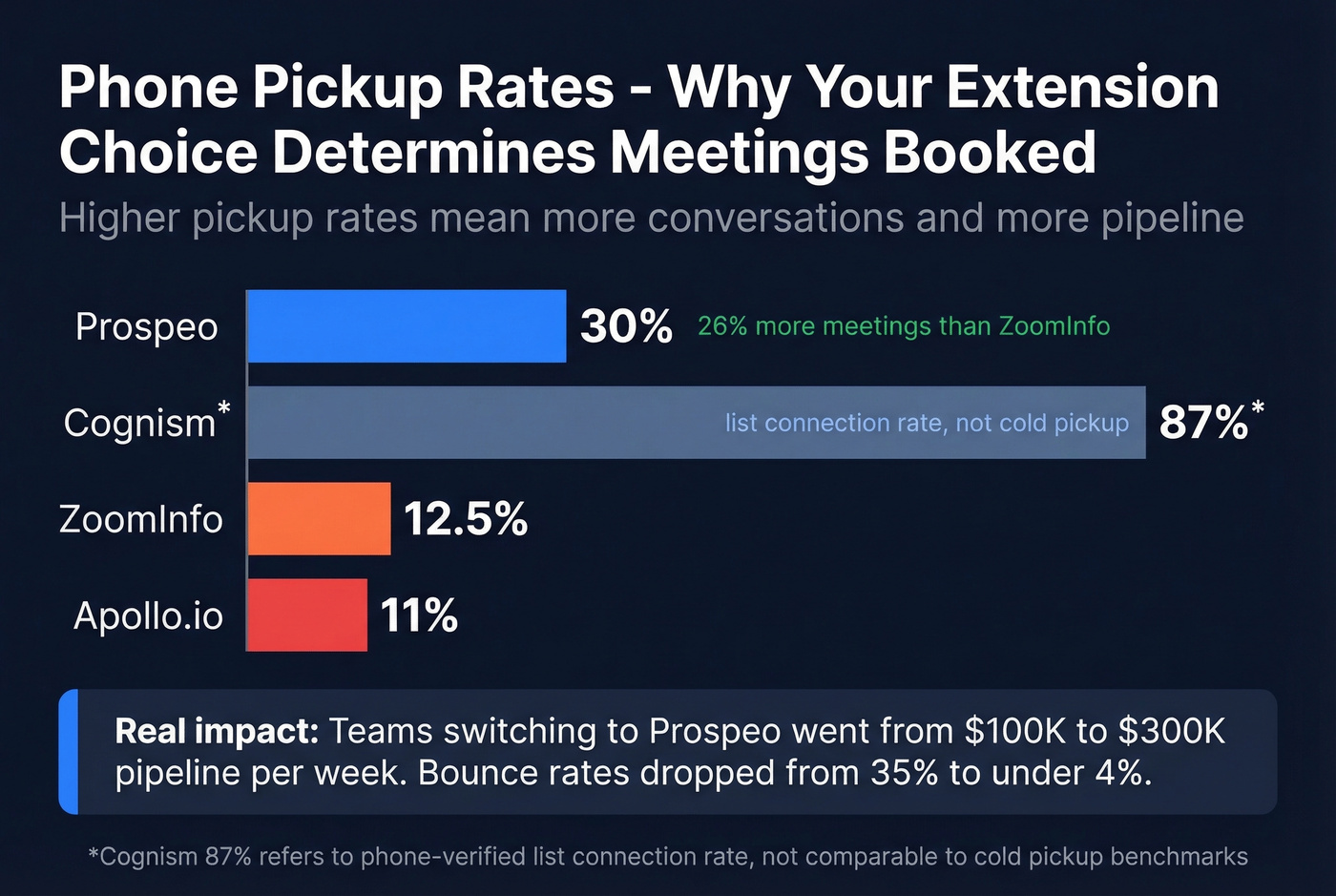
Accuracy hit 90% in independent testing. Where Cognism wins over ZoomInfo: EMEA compliance and mobile verification quality. Where ZoomInfo still wins: US database depth and platform breadth. Overkill for most teams - but if you're selling into regulated European markets and need DNC compliance baked in, it's worth the conversation.
Seamless.AI
The free tier is generous - 50 credits per month. Paid plans run $100-$200/month, though you'll need to talk to sales for exact pricing. Look, the Reddit sentiment on Seamless.AI is brutal. A recruiter in r/recruiting called it "dogshit" and suspected cancellation is "impossible." Try the free tier if you're curious, but read the cancellation terms carefully before entering payment info.
SignalHire
Five free credits per month, paid plans from $49/month. SignalHire's database runs 800M+ contacts, but G2 reviews paint a mixed picture: 3.7/5 with 56 reviews, and recurring complaints about limited credits, high prices, and incomplete data. Decent for occasional lookups, but power users will hit credit walls fast.
Swordfish.AI
Niche phone-number specialist focused on cell phones and direct dials. Pricing isn't public - expect $79-$199/month based on market positioning. The extension works well for sales teams that prioritize phone outreach over email, but the lack of transparent pricing is a red flag in 2026.
UpLead
Essentials at $99/month gets you 170 credits covering both email and phone. Accuracy scored 95% in independent testing - one of the highest in the field. Strong data with a clean interface, but limited credits for the price make it better suited for targeted prospecting than high-volume outbound.
Hunter.io
The OG domain-level B2B email finder extension. Scored 90% accuracy in independent testing and remains the go-to for finding emails by company domain. Starter at $49/month includes 500 searches and 10 verifications. No phone numbers - it's email-only. A great complement to a phone-focused tool, but not a standalone solution for full-funnel prospecting.
Every bounced email from a bad contact extension costs you more than a credit - it costs domain reputation. Prospeo's 5-step verification with spam-trap and honeypot filtering delivers 98% email accuracy at ~$0.01 per email. That's 90% cheaper than ZoomInfo with higher accuracy than every tool on this list.
Start with 75 free verified emails. No credit card, no contracts.
Side-by-Side Comparison
Here's how all 12 tools stack up on the metrics that actually drive your decision.
| Tool | Starting Price | Free Credits | Email Accuracy | Best For |
|---|---|---|---|---|
| Prospeo | ~$39/mo | 75 emails + 100 ext | 98% | Best accuracy & data freshness |
| Apollo.io | Free / $49/mo | 5 phone/mo | 91% | Best free all-in-one |
| ContactOut | Free / $79/mo | 7/day total | Not independently tested | Recruiters |
| Lusha | Free / $29/mo | 5 phone | 93% | Quick phone lookups |
| Kaspr | Free / $49/mo | 5 phone + 5 email/mo | Not independently tested | Mid-range phone + email |
| RocketReach | $80/mo | None | 83% | Mid-size SaaS targeting |
| Cognism | ~$16,500/yr | None | 90% | EMEA compliance |
| Seamless.AI | Free / ~$100/mo | 50/mo | Not independently tested | Skip - cancellation issues |
| SignalHire | Free / $49/mo | 5/mo | Not independently tested | Occasional lookups only |
| Swordfish.AI | ~$79/mo | None | Not independently tested | Phone-only prospecting |
| UpLead | $99/mo | None | 95% | High accuracy, low volume |
| Hunter.io | Free / $49/mo | 25 searches/mo | 90% | Domain-level email search |
Are Contact Finder Extensions Safe?
Not all extensions carry the same risk. The key distinction is between user-triggered actions and background scraping.
User-triggered extensions only fetch data when you explicitly click a button. Background-scraping extensions run passively while you browse, pulling data from profiles you visit - even if you didn't ask. The second category is what triggers account warnings and restrictions.
PhantomBuster's analysis rates Apollo and Lusha as "High" risk due to background scraping behavior. Kaspr lands at "Medium." There's also a compliance angle: Apollo doesn't currently apply GDPR safeguard controls to EU/UK contacts pulled via its Chrome extension, which is a real liability if you're prospecting in Europe. In our experience, user-triggered extensions are the only architecture worth trusting if you depend on your professional accounts for pipeline.
How to Pick the Right One
Solo reps and small teams under 5 people - start with a tool that offers a generous free tier and high accuracy. You need to evaluate without a sales call. Apollo works for volume; for accuracy, the comparison table above tells the story.
Mid-market teams of 5-20 reps should look at Lusha or Kaspr for phone-heavy workflows. Model your monthly credit usage before committing - the per-credit economics vary wildly between tools, and Kaspr's add-on costs can double your effective spend. When your workflow is email-first, a dedicated enrichment extension that layers in verified data points will deliver more value than a phone-focused tool.
Enterprise teams with 20+ reps and EMEA compliance requirements should evaluate Cognism or ZoomInfo. Everyone else at that scale is probably overpaying for features they don't use.
Let's break down the deciding factors in order of importance: accuracy first (bounces kill your domain), data freshness second (stale data wastes rep time), credit economics third (what's your real cost-per-valid-contact), and account safety last but not least (background scraping isn't worth the risk). If you want to go deeper on bounce prevention, see our email bounce rate benchmarks and fixes.
FAQ
Are contact extensions free?
Most offer a free tier, but credits are extremely limited - typically 2-5 phone lookups per month. Prospeo's free plan is the most generous at 75 emails plus 100 Chrome extension credits monthly. To properly evaluate any tool, you need at least 50-100 credits, so plan accordingly.
Which contact extension has the highest accuracy?
In independent testing, email accuracy ranges from 79% to 98% across major tools, with Prospeo at 98% and UpLead at 95% leading the field. Phone pickup rates vary from 11% (Apollo) to 30% (Prospeo) depending on the provider and how frequently they refresh their database.
Can extensions get my account restricted?
Yes. Extensions that auto-scrape in the background - like Apollo and Lusha - carry higher risk of triggering account restrictions on professional platforms. User-triggered extensions, where you click to fetch data, are significantly safer. Check the extension's architecture before installing.
What's the difference between a contact extension and a phone extension?
A contact extension is a Chrome browser tool that finds email addresses and phone numbers for sales prospecting. A phone extension (e.g., ext. 1234) is a telephony feature for routing calls within a business phone system. Completely different things - this guide covers the Chrome browser category.