

Best Email List Building Services for 2026
Over 50 tools call themselves an email list building service. The problem? That phrase means three completely different things, and most roundups lump them all together. You end up comparing a $15,000/year B2B database to a $7/month popup plugin.
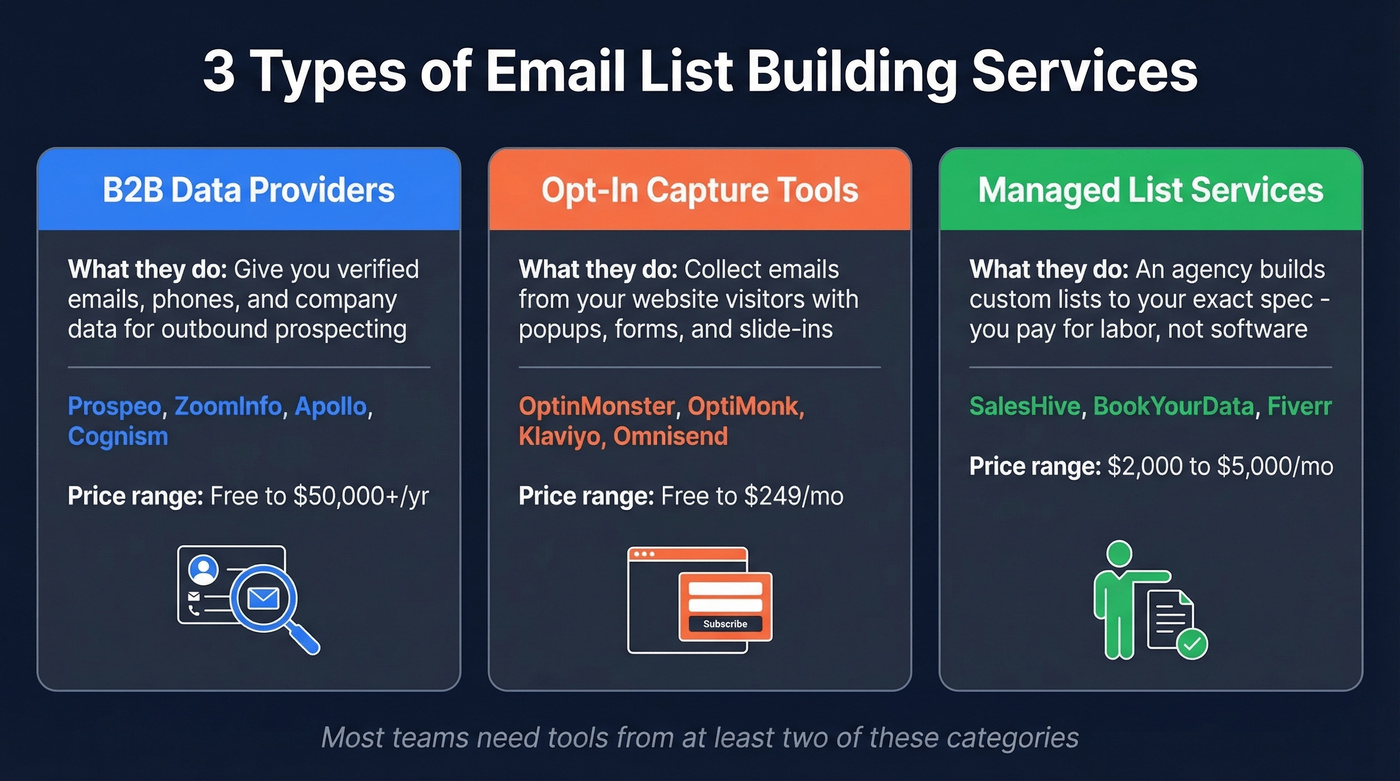
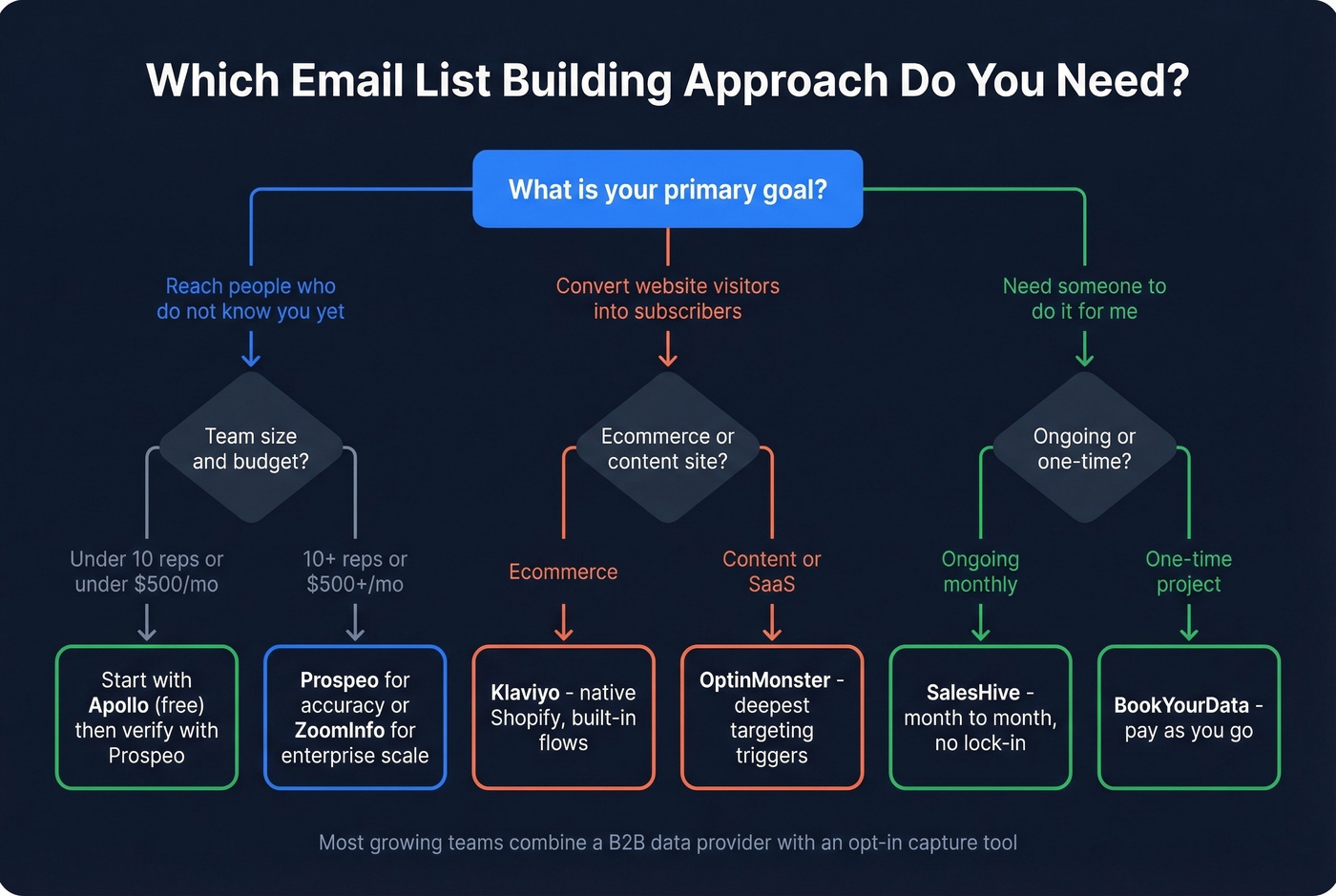
These services fall into three distinct categories, and you probably need tools from at least two of them:
B2B data providers give you contact information - verified emails, phone numbers, company data - for outbound prospecting. Think ZoomInfo, Apollo, Prospeo. You're building lists of people to reach out to.
Opt-in capture tools collect emails from people who visit your website. Popups, slide-ins, embedded forms. OptinMonster, OptiMonk, Klaviyo. You're building lists of people who come to you.
Managed list building services do the work for you. An agency or freelancer builds custom lists to your spec. SalesHive, BookYourData, Fiverr freelancers. You're paying for labor, not software.
Our Picks (TL;DR)
| Category | Top Pick | Why |
|---|---|---|
| B2B email accuracy | Prospeo | 98% accuracy, 7-day refresh |
| Enterprise intent data | ZoomInfo | 500M+ contacts, deep intent |
| Free B2B starting point | Apollo | Free tier, 275M+ contacts |
| Opt-in popup tool | OptinMonster | Flexible triggers, from $7/mo |
| Ecommerce opt-ins | Klaviyo | Native Shopify, free to 250 |
| Managed service | SalesHive | Month-to-month, done-for-you |
If we had to pick three to trial this week: Prospeo for B2B data, OptinMonster for website capture, and Apollo as a free-tier backup for broader prospecting.
Best B2B Email List Providers
These are the tools you use when you know who you want to reach and need their contact information. The differences come down to data accuracy, database size, pricing model, and how quickly the data goes stale.
Prospeo
Prospeo's database covers 300M+ professional profiles, 143M+ verified emails, and 125M+ verified mobile numbers. The standout number: 98% email accuracy, driven by a proprietary 5-step verification process that catches catch-all domains, spam traps, and honeypots before you ever hit "export."

The data refreshes every 7 days. The industry average is around 6 weeks, and B2B data decays at roughly 30% per year, so that gap matters more than it sounds. Stale data means bounced emails, burned domains, and wasted sequences. The 30+ search filters include buyer intent powered by 15,000 Bombora topics, technographics, job changes, and funding signals, so you're getting emails for people who are actually in-market. The Chrome extension, with 40,000+ users, pulls verified contacts from any website or CRM in one click.
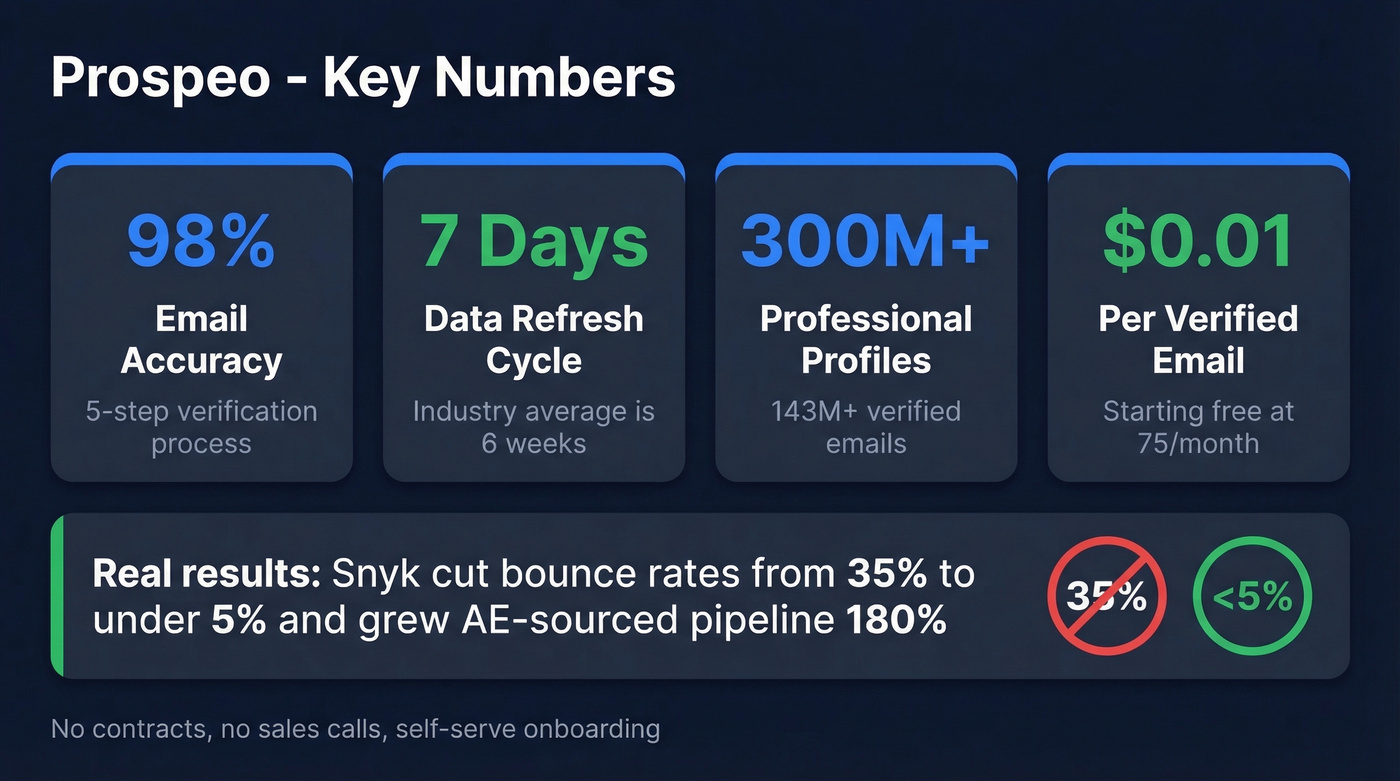
Real-world proof: Snyk's 50-person AE team cut bounce rates from 35% to under 5% after switching, and AE-sourced pipeline jumped 180%. Pricing starts free at 75 emails/month and scales to roughly $0.01 per verified email. No contracts, no sales calls, self-serve onboarding.
ZoomInfo
ZoomInfo is the enterprise default - 500M+ contacts, 100M+ companies, deep intent data, org charts, and technographic layers that nobody else matches at scale. If you're running a 200-person sales org with ABM motions and need everything in one platform, it makes sense.
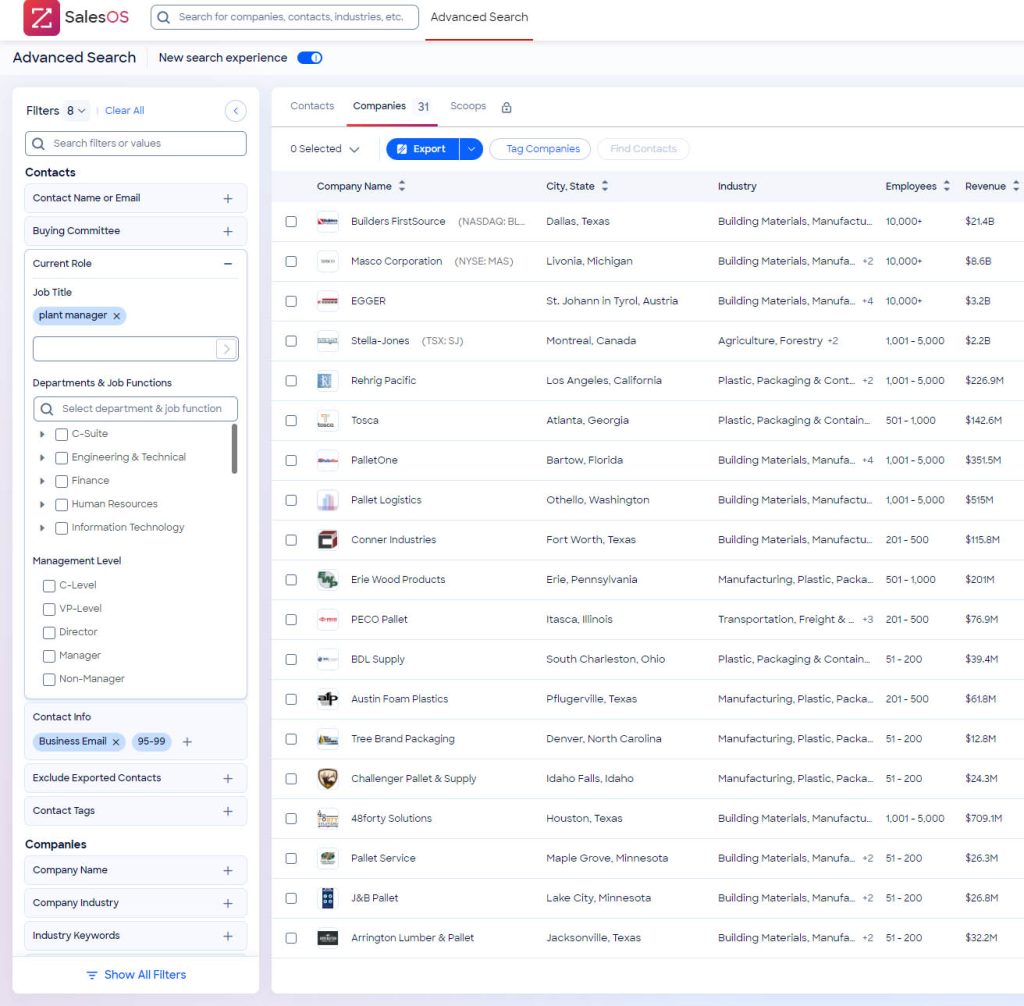
Most teams aren't that. As of early 2026, ZoomInfo pricing starts at $15,000-$18,000/year for Professional, jumps to $22,000-$28,000 for Advanced with intent data, and hits $35,000-$45,000+ for Elite. Add extra credits at ~$3,000 per 5,000, NeverBounce verification at ~$3,000, and Global Data at ~$9,995, and teams regularly end up close to $50,000/year. Multi-year contracts are standard, auto-renewal windows run 60-90 days, and renewal terms often rise 10-20%.
Here's the thing: ZoomInfo is wildly overpriced for teams under 50 reps. If your average deal size sits below $10K, that $40K annual contract could fund two SDRs who'd generate more pipeline than any database.
Apollo
Apollo's the obvious starting point for most SMB teams - 275M+ contacts, a useful free tier with 50 AI credits and 2 sequences, and paid plans from $49/month per user. The database is massive, the UI is intuitive, and you can go from zero to sending sequences in an afternoon.
The catch is well-documented. The consensus on r/sales is that Apollo is a "jack of all trades, master of none." The data is partially crowd-sourced, deliverability through Apollo's infrastructure is questionable - practitioners recommend turning off open/click tracking entirely - and the dialer runs on Twilio VoIP numbers that frequently get flagged as spam. Credits don't roll over between billing cycles. We've seen teams get great results exporting Apollo contacts and verifying them through a separate tool before loading into their sequencer.
Use this if you're just getting started with outbound and need a free or low-cost way to build lists fast. Skip this if you're running high-volume campaigns where double-digit bounce rates would torch your domain reputation.
Cognism
Cognism covers 400M+ profiles and is the strongest option for teams selling into Europe. GDPR compliance is baked into the product - they maintain Do Not Call lists, consent records, and Diamond Verified mobile numbers that are human-checked. Custom pricing runs ~$1,000-$3,000/month, and annual contracts are common. Cognism wins over ZoomInfo on EMEA data quality and compliance confidence; ZoomInfo still wins on US database depth and workflow breadth.
Lusha
Lusha's database of 45M+ contacts is smaller than competitors, but the data quality on those contacts is solid for quick lookups. Free tier available, paid plans from around $49/user/month, credit-based. Keep it in your back pocket for grabbing a direct dial when your primary database comes up empty.
UpLead
UpLead covers 180M+ contacts with a 95% accuracy guarantee - if a contact bounces, you get the credit back. Plans from around $99/month, no long-term contracts. A solid mid-market option that doesn't get enough attention. UpLead's site has full pricing details.
RocketReach
RocketReach indexes 700M+ profiles, one of the largest databases by raw count. Plans from around $50/month, credit-based. Better for one-off lookups than systematic list building.
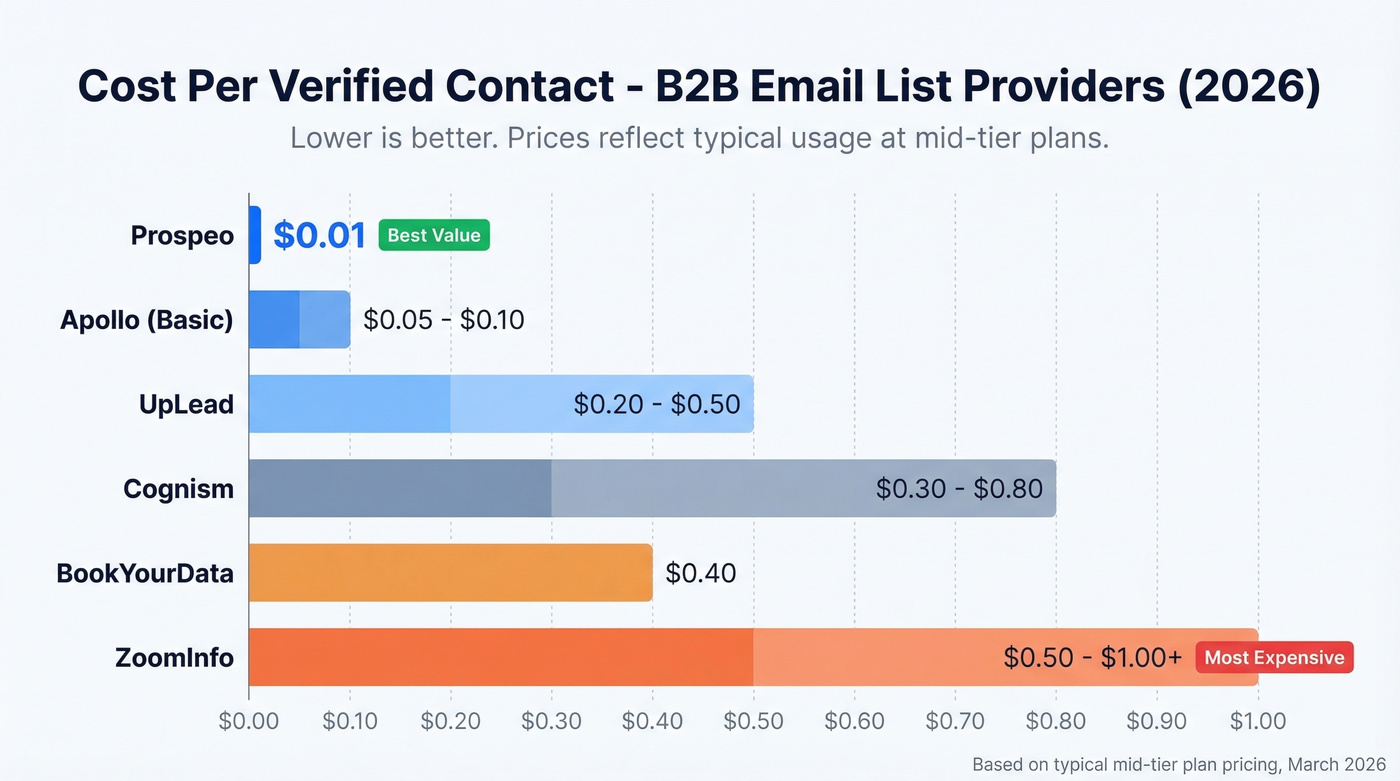
The cost per verified contact varies significantly across these providers:
| Provider | ~Cost Per Verified Contact |
|---|---|
| Prospeo | ~$0.01 |
| Apollo (Basic) | ~$0.05-$0.10 |
| UpLead | ~$0.20-$0.50 |
| Cognism | ~$0.30-$0.80 |
| BookYourData | ~$0.40 |
| ZoomInfo | ~$0.50-$1.00+ |

Most email list building services charge $0.50-$1.00 per contact and still deliver 15-20% bounce rates. Prospeo's 5-step verification and 7-day data refresh give you 98% email accuracy at ~$0.01/email - so you build lists that actually convert instead of burning your domain.
Build verified B2B lists in minutes, not days - start with 75 free emails.
Best Opt-In List Building Tools
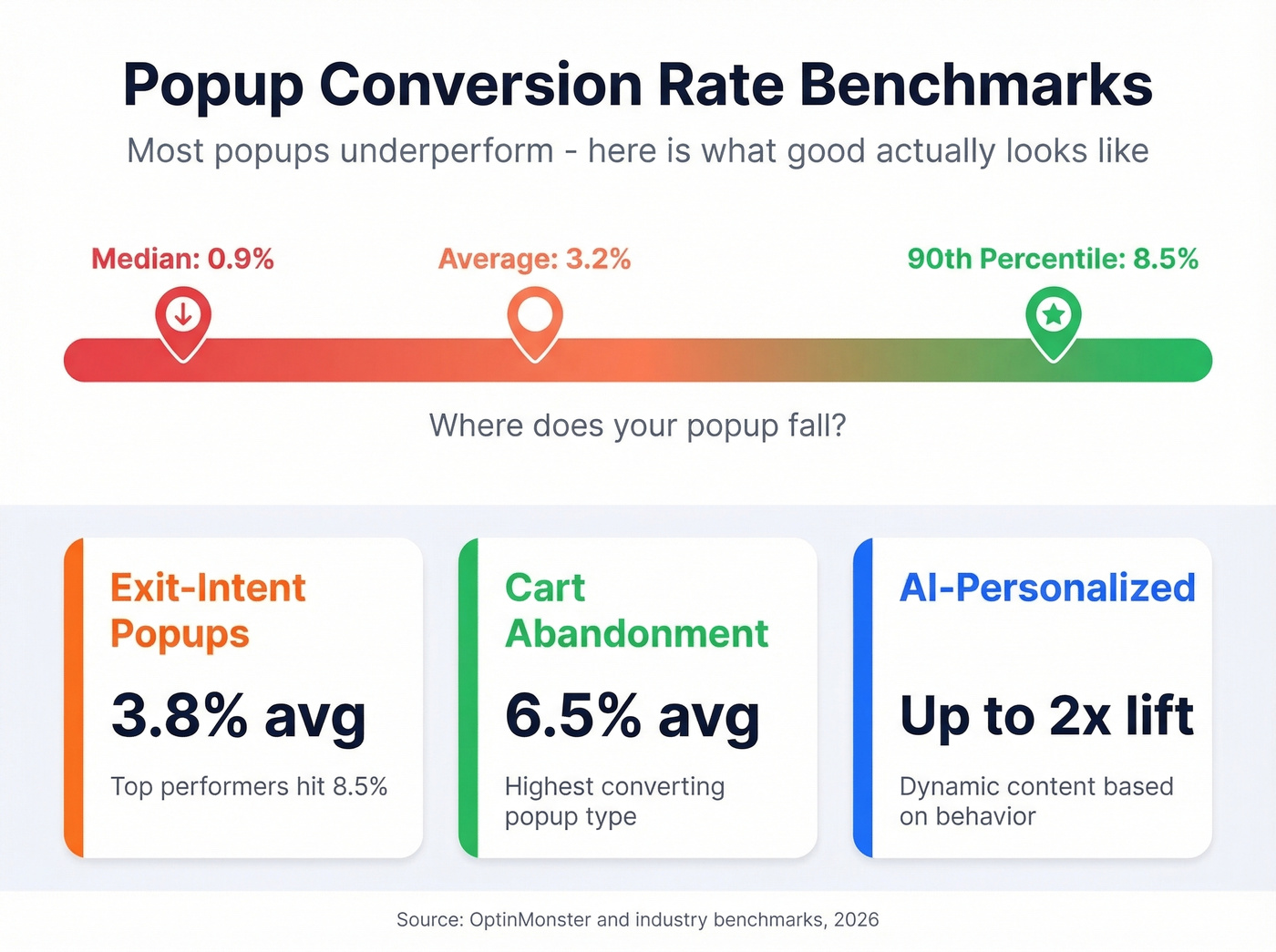
These tools capture emails from people who visit your website. Different problem, different economics entirely. The benchmark to know: the average popup converts at 3.2%, but the median is just 0.9%. Most popups are poorly configured, and a well-optimized one dramatically outperforms. Emerging formats like AI-personalized popups and on-site notification feeds are pushing conversion rates even higher for teams willing to experiment.
OptinMonster
OptinMonster is the most battle-tested popup tool on the market. Basic starts at $7/month, Plus at $19, Pro at $29, and Growth at $49, all billed annually. The trigger library is what sets it apart: exit-intent, scroll-depth, time-delay, click-triggered, page-level targeting, and device-specific rules.
Exit-intent popups average 3.8% conversion, and the 90th percentile hits 8.5%. Cart abandoner targeting averages 6.5%. OptinMonster's built-in A/B testing lets you iterate toward those numbers without guessing. If you're running any kind of content site, SaaS blog, or ecommerce store and don't have exit-intent popups, you're leaving email signups on the table.
Use this if you want the deepest trigger and targeting options available. Skip this if you need native ecommerce flows - Klaviyo handles that better.
OptiMonk
OptiMonk's free tier covers 10,000 pageviews/month, which is workable for smaller sites. Paid plans run $29/month for Essential, $99 for Growth, and $249 for Premium. The AI-powered personalization engine automatically adjusts popup content based on visitor behavior - headline copy, offer framing, even imagery shift based on what a visitor has browsed. That kind of dynamic personalization used to require enterprise-grade tools. Strong alternative to OptinMonster if you want more automation out of the box.
Klaviyo
Here's a stat worth knowing: Klaviyo-powered stores generate an average of $5.81 per recipient from email campaigns, per Klaviyo's own benchmarks. It's not just a popup tool - it's the email/SMS platform that ecommerce teams build their entire retention stack around. Free up to 250 contacts. Email plans start at $45/month for 1,001-1,500 contacts, and Email+SMS starts at $60/month. The native Shopify and WooCommerce integrations mean your signup forms feed directly into segmented flows, abandoned cart sequences, and post-purchase upsells without any middleware.
Omnisend
Ecommerce-focused like Klaviyo but simpler and cheaper. Free tier handles 500 emails/month to 250 contacts, paid plans from $16/month. Good for smaller stores that don't need Klaviyo's full automation depth.
Wisepops
From $49/month with a 14-day free trial. Clean popup and on-site notification builder. Worth testing if OptinMonster feels too complex for your needs.
Snyk's 50 AEs dropped bounce rates from 35% to under 5% and grew pipeline 180% after switching their list building to Prospeo. 300M+ profiles, 30+ filters including buyer intent and technographics, and no annual contracts standing in your way.
Your list is only as good as its data. Verify that with a free trial.
Managed List Building Services
Sometimes you don't want software - you want someone to hand you a finished list. Managed services make sense when you're entering a new market, don't have internal ops capacity, or need a one-time list for a specific campaign. At $2,000-$5,000/month, they cost more than self-serve tools but can save dozens of hours of internal ops work. The math works when your team's time is worth more than the service fee.
SalesHive
SalesHive offers done-for-you prospecting and list building on month-to-month contracts - no annual lock-in, which is rare in this space. Expect to pay $2,000-$5,000/month depending on volume and targeting complexity. They handle the research and list building, and can run outbound outreach on top of it. Best for teams that need pipeline now and don't have the headcount to build it internally.
BookYourData
BookYourData runs a pay-as-you-go model: roughly $99 for 250 contacts, with a free pack of 10 credits to test. Simple, transactional, no subscription required. Useful for one-off campaigns or market tests.
LeadsPlease
LeadsPlease offers pre-built consumer and B2B lists starting at $299.75 for 500 B2B records. No software to learn - you select your targeting criteria, pay, and download a list. Straightforward for teams that need a quick, one-time pull.
Freelance Marketplaces
Fiverr freelancers handle a surprising volume of list-building projects, which tells you something about demand. Quality varies wildly - you might get a carefully researched list or a scraped mess full of spam traps. Best for one-off projects with clear specs. For ongoing list building, invest in a proper tool or managed service.
Opt-In Conversion Benchmarks
If you're running opt-in forms, here's what "good" looks like. This data comes from a dataset of 875 widgets across 214 sites covering 14.7M impressions:
| Metric | Rate |
|---|---|
| Mean CR | 3.2% |
| Median CR | 0.9% |
| P75 | 3.6% |
| P90 | 8.5% |
| P99 | 16.7% |
By trigger type:
| Trigger | Avg CR |
|---|---|
| Click-triggered | 4.1% |
| Exit-intent | 3.8% |
| Time-delay (5-10s) | 2.9% |
| Scroll-depth (50%) | 2.4% |
By layout:
| Layout | Avg CR |
|---|---|
| Fullscreen overlay | 4.7% |
| Centered popup | 4.3% |
| Slide-in | 1.8% |
By targeting:
| Audience | Avg CR |
|---|---|
| Returning visitors | 3.9% |
| Product page viewers | 3.3% |
| All visitors | 2.1% |
Mobile converts slightly higher than desktop at 3.6% vs 2.9%, largely because fullscreen takeovers work better on small screens. Industry matters too - fashion averages 4.8%, while SaaS sits at 1.8%. Seasonality is dramatic: BFCM lifts opt-in rates by 65%, Christmas by 42%.
If you're below 1%, your popup needs work. Above 3.6% puts you in the top 25%.
Compliance and Legal Risks
Buying or building email lists without understanding the legal side is how companies end up paying six-figure fines. Let's be honest - most teams don't think about this until something goes wrong.
CAN-SPAM carries penalties up to $53,088 per email violation. Every commercial email requires truthful headers, a physical address, and a functioning unsubscribe link. You must honor opt-outs within 10 business days. There's no "I didn't know" defense.
CASL (Canada) goes further with fines up to $10M for businesses and $1M for individuals. GDPR reaches up to EUR10M, and pre-ticked consent boxes are explicitly invalid - you need documented, affirmative consent. The FTC's CAN-SPAM guide is worth bookmarking if you're running any outbound email.
Responsibility rests with the sender, even if you purchased the list from a third party. Purchased lists carry spam traps and outdated addresses that tank your sender reputation. If you're buying lists, verify every contact before sending. No exceptions.
How to Verify Before You Send
The practitioner consensus on Reddit is clear: verify with at least two tools before launching any campaign. Basic SMTP checks miss catch-all domains, which accept everything but may never deliver, and spam traps that silently destroy your sender reputation.
B2B data decays at roughly 30% per year. Even a list you built last quarter has contacts who've changed jobs, companies that have closed, and domains that have expired. A multi-step verification process that catches catch-all domains, spam traps, and honeypots isn't optional - basic SMTP checks alone won't cut it.
Before every campaign: upload your list, run verification, remove invalids and risky addresses, then send. It takes minutes and saves your domain reputation. Once your list is clean, teams typically feed it into a sending tool like Instantly at ~$30/month, Lemlist at ~$55-79/month, or Smartreach at ~$29/month.
FAQ
What's the difference between a B2B data provider and an opt-in tool?
B2B data providers supply contact information for outbound outreach - you're reaching out to prospects. Opt-in tools capture emails from website visitors who come to you. Most teams need both: a data provider for proactive prospecting and a capture tool for inbound leads.
Is it legal to buy an email list?
Under CAN-SPAM, you can send commercial email without prior consent if you include opt-out mechanisms and truthful headers - fines reach $53,088 per violation. Under GDPR and CASL, purchased lists require documented consent, with penalties up to EUR10M. Always verify purchased contacts through a multi-step process before sending.
How much does an email list building service cost?
Free tiers exist at Apollo (275M+ contacts) and Prospeo (75 emails/month). Paid B2B data plans start around $49/month per user and scale to $50,000+/year for enterprise platforms like ZoomInfo. Managed services run $2,000-$5,000/month. Cost per verified contact ranges from $0.01 to over $1.00 depending on the provider.
What's a good popup conversion rate?
The average popup converts at 3.2%, but the median is just 0.9% - most popups underperform badly. Above 3.6% puts you in the top 25%. Exit-intent popups average 3.8%, and cart abandoner targeting averages 6.5%. Anything below 1% needs immediate optimization of triggers, copy, and targeting.
How often should I verify my email list?
Verify before every major campaign. B2B data decays at roughly 30% per year as people change jobs, companies close, and domains expire. Weekly-refresh data sources reduce stale-data risk, but always run a final verification pass before hitting send.