Firmographic and Technographic Data: The 2026 Operational Playbook
The average company now runs 100+ software applications, and 86% plan to add more. The technographic data market hit $1.17B in 2025 - a 26.1% CAGR from $367M in 2020. Every serious B2B team already uses firmographic and technographic data. The gap isn't access. It's execution.
Quick Version
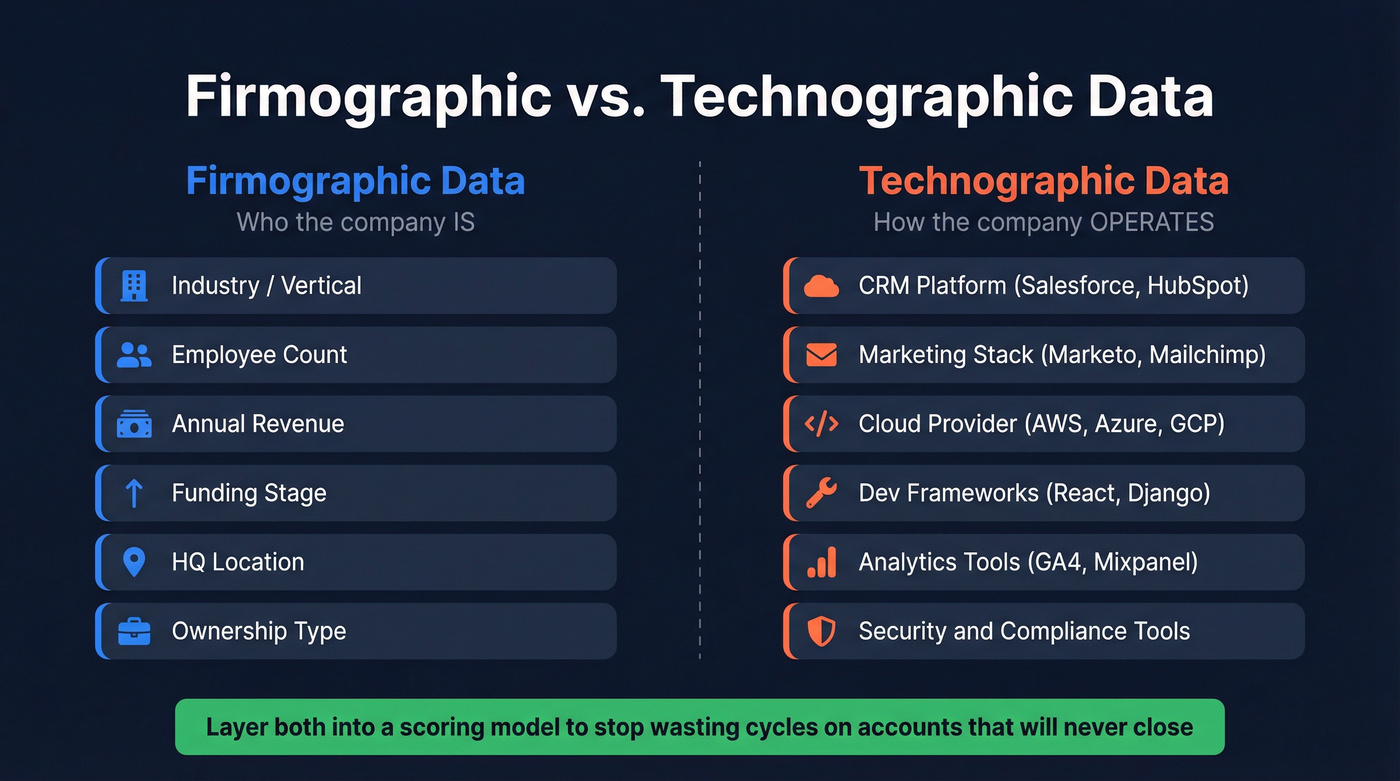
Firmographic data tells you who a company is - industry, headcount, revenue, funding stage. Technographic data tells you how they operate - which CRM, what marketing stack, AWS or Azure. Layer both into a scoring model and you stop wasting cycles on accounts that'll never close.
What Is Firmographic Data?
Firmographics are the demographic profile of a company - structural attributes that determine whether an account belongs in your pipeline before you look at a single contact name. Here are the core attributes worth tracking:
- Industry / vertical (NAICS, SIC, or custom taxonomy)
- Employee count (total and by department)
- Annual revenue and funding stage
- Headquarters and office locations
- Ownership type (public, private, PE-backed, subsidiary)
- Hiring and layoff signals (see hiring signals)
Collection runs through third-party providers like ZoomInfo or Apollo, CRM enrichment workflows, or lead capture forms that ask the right qualifying questions upfront. The key is getting these attributes populated before reps start outreach, not after they've already burned three touches on a bad-fit account.
What Is Technographic Data?
Technographic data maps a company's technology stack - every SaaS tool, infrastructure platform, and development framework they've adopted. Detection methodology matters more than most buyers realize.
Web crawling, the method BuiltWith and Wappalyzer use, catches frontend technologies like JavaScript libraries, analytics tags, and CMS platforms with high reliability. Job-posting inference - TheirStack's specialty - catches backend and internal tools by parsing what companies are hiring for. Accuracy across providers typically runs 70-90%, with frontend detection on the higher end and backend tools much lower.
Here's the thing: the most common complaint we hear from practitioners isn't about coverage. It's about staleness. Stale tech signals mislead reps into pitching against tools a prospect already ripped out months ago. Since 60% of software purchases are replacements, data freshness isn't optional - it's the difference between a relevant pitch and an embarrassing one. (If you want the deeper scoring angle, see technographic data for lead scoring.)
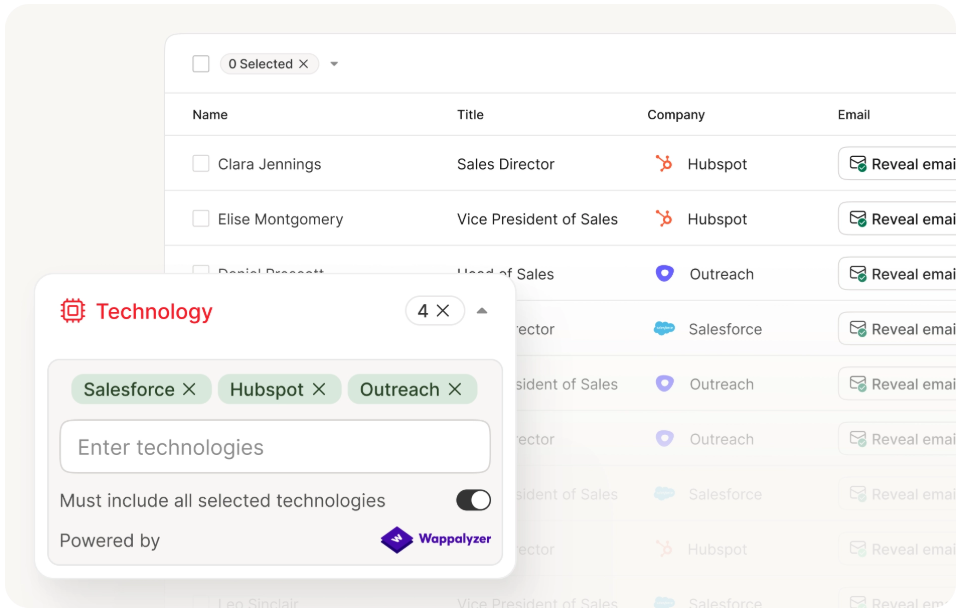

Stale technographic data ruins outreach. Prospeo refreshes every 7 days - not every 6 weeks - so your firmographic and tech stack signals stay current. 98% email accuracy, 30+ filters spanning technographics, headcount growth, funding, and buyer intent.
Stop pitching against tools your prospects already ripped out.
How to Score Accounts Using Both Data Types
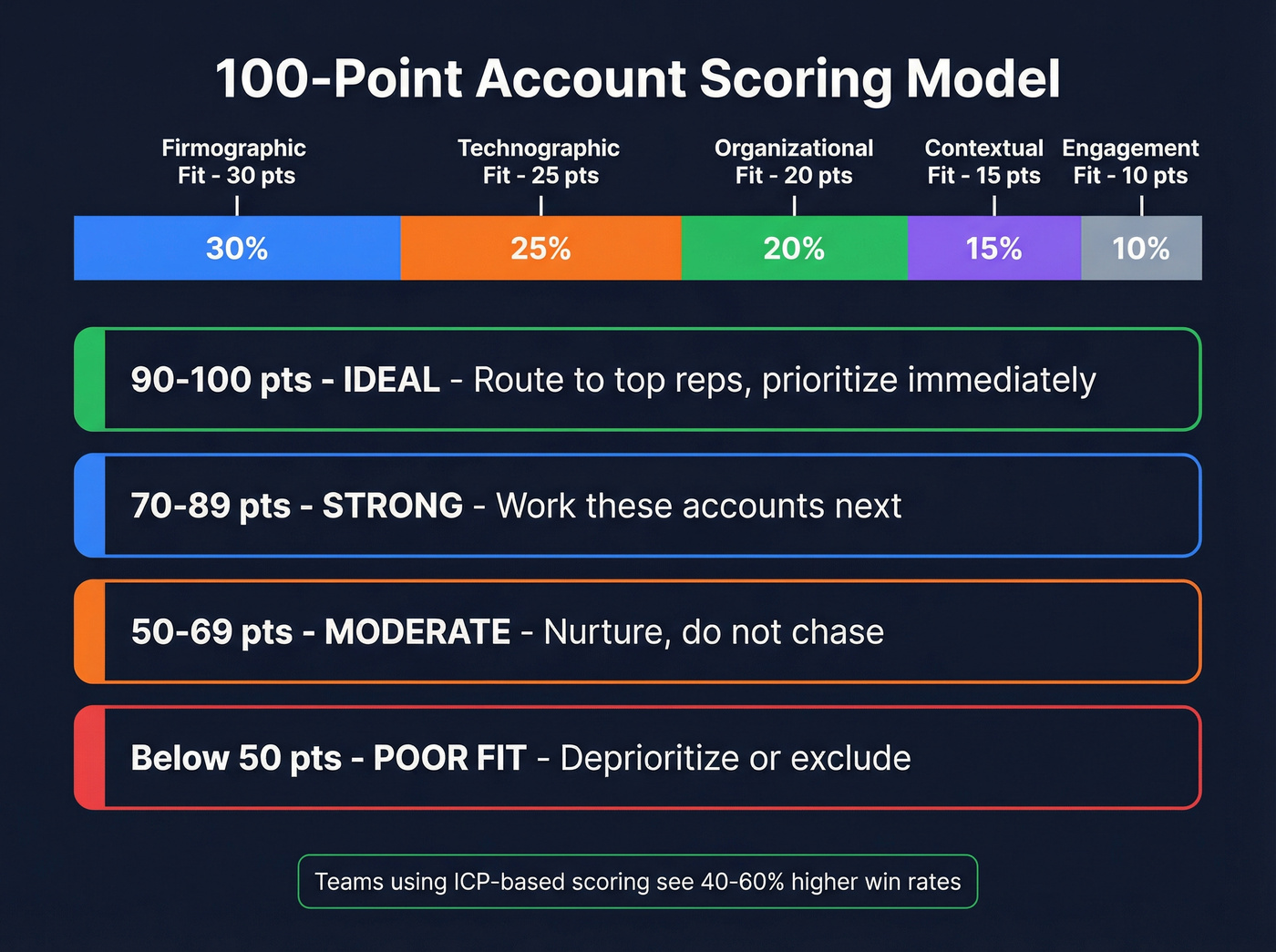
We've seen teams with great data still waste pipeline because they never built a scoring model to prioritize it. Here's a 100-point framework that works. (For a full operational build, use this lead scoring system.)
| Category | Max Points | What You're Scoring |
|---|---|---|
| Firmographic Fit | 30 | Headcount, revenue, industry, geo |
| Technographic Fit | 25 | CRM, marketing stack, tech maturity |
| Organizational Fit | 20 | Dept size, buying committee structure |
| Contextual Fit | 15 | Funding, hiring trends, news signals |
| Engagement Fit | 10 | Website visits, content downloads, intent |
For firmographic fit, give 10 points for 200-1,000 employees (your sweet spot), 5 for 50-199 or 1,001-5,000, and 0 for anything outside that range. Technographic fit works the same way: 10 points if they run Salesforce and your integration is strongest there, 5 for HubSpot, 0 for a CRM you don't support. The numbers are illustrative - calibrate to your own close data.
| Score | Tier | Action |
|---|---|---|
| 90-100 | Ideal | Route to top reps, prioritize immediately |
| 70-89 | Strong | Work these accounts next |
| 50-69 | Moderate | Nurture, don't chase |
| Below 50 | Poor fit | Deprioritize or exclude |
Companies using ICP-based scoring see 40-60% higher win rates. That tracks with what our team has observed across dozens of outbound campaigns. (Related: ABM account prioritization.)
Where to Source the Data
| Tool | Starting Price | Coverage | Methodology | Best For |
|---|---|---|---|---|
| Prospeo | Free / ~$0.01/email | 300M+ profiles | Web + job signals | Filtering + verified contacts |
| BuiltWith | $295/mo | 58,000+ web technologies | Web crawl | Pure tech lookups |
| TheirStack | $59/mo | 32K+ technologies | Job-posting inference | Backend tool detection |
| Wappalyzer | $250/mo | 7,400 technologies | Daily web crawl | Quick, lightweight scans |
| ZoomInfo | ~$15-40K/yr | Enterprise-scale | Multi-source | Large sales orgs (50+ reps) |
| Demandbase | ~$30-100K+/yr | 82M+ domains | Multi-source | Enterprise ABM orchestration |
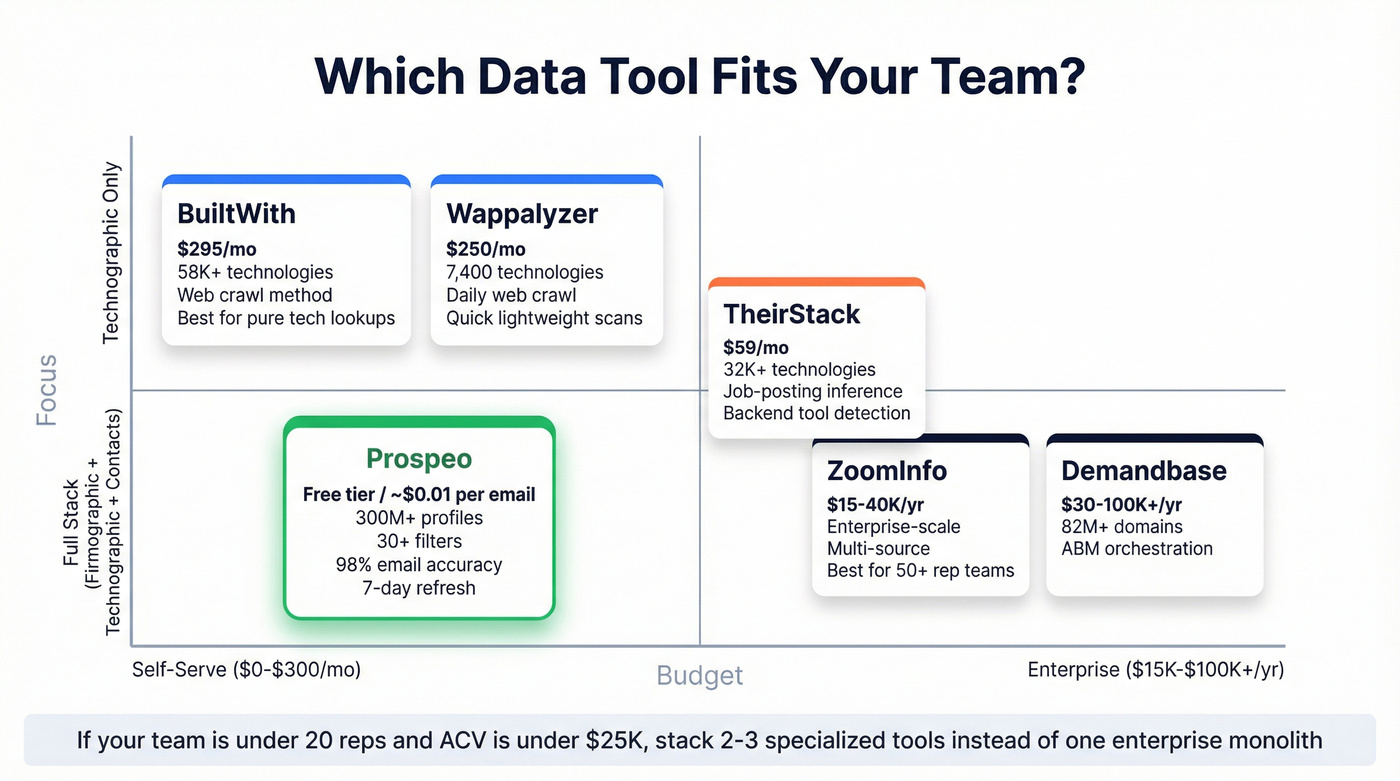
BuiltWith is the gold standard for pure technographic lookups - 670M+ websites indexed, 58,000+ technologies tracked. But it gives you tech data, not contacts. For teams that need both firmographic and technographic filtering and verified contacts in one workflow, Prospeo covers both: 98% email accuracy, a 7-day data refresh cycle, and 30+ search filters spanning technographics, buyer intent, headcount growth, funding, and more. The free tier includes 75 emails per month so you can test quality before committing. (If you're comparing stacks, start with these sales prospecting platforms.)
TheirStack fills a different gap. Its job-posting inference catches technologies like Snowflake and Kubernetes that web crawlers miss entirely. At $59/mo, it's the cheapest way to get backend tech intelligence.
Let's be honest about enterprise platforms: if your average deal size is under $15K, you almost certainly don't need a $30K+ ZoomInfo or Demandbase contract. Those platforms earn their cost with intent data at scale and ABM orchestration across 50+ reps. For everyone else, self-serve tools deliver the same targeting precision at a fraction of the cost. The consensus on r/sales leans the same way - most reps at sub-enterprise companies find they're overpaying for data they barely use. (More on this approach: signal-based outbound.)
Skip enterprise platforms if your team is under 20 reps and your ACV is under $25K. You'll get more value stacking two or three specialized tools than paying for one monolith.
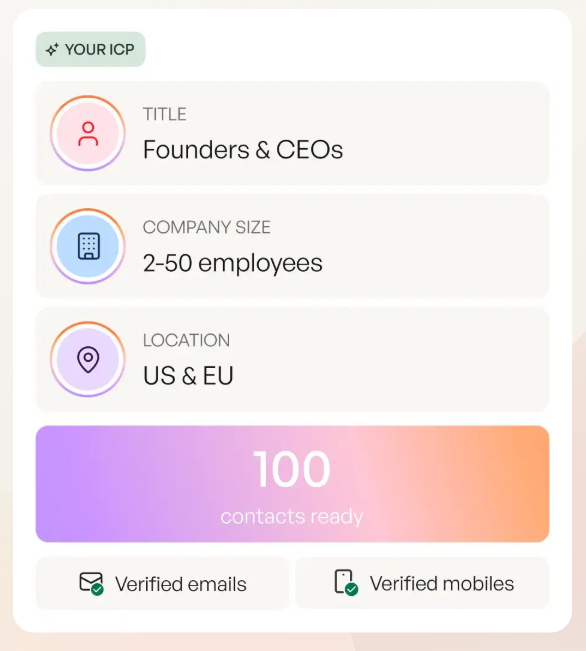
You don't need a $30K platform to layer firmographic and technographic data into your scoring model. Prospeo gives you 300M+ profiles with 30+ filters - technographics via Wappalyzer, department headcount, funding stage, revenue - plus verified emails at $0.01 each. Free tier included, no contract.
Enterprise-grade targeting at 90% less than ZoomInfo. Test it now.
Data Privacy and Compliance
The compliance picture keeps tightening. Eight US states enacted comprehensive privacy laws effective January 1, 2025, with Indiana, Kentucky, and Rhode Island following on January 1, 2026. Layer in ongoing GDPR enforcement and FTC scrutiny around AI-driven data uses, and your provider choice has real legal implications. (For outbound-specific requirements, see GDPR for sales and marketing.)
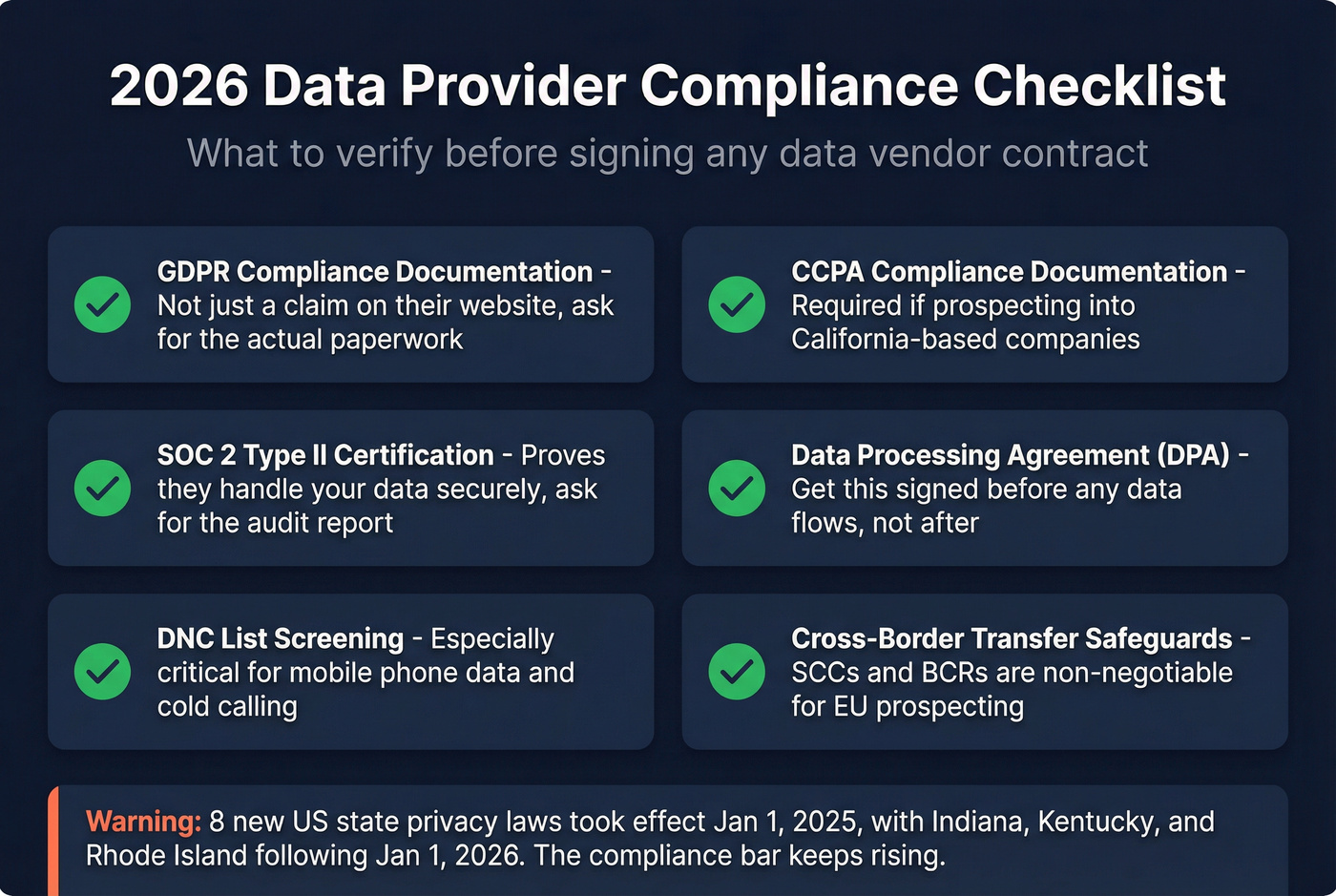
When evaluating any data provider, confirm they carry GDPR and CCPA compliance documentation alongside SOC 2 Type II certification. Ask for their DPA and audit reports - don't just take a vendor's word for it. DNC list screening matters especially for mobile data, and cross-border transfer safeguards like SCCs and BCRs are non-negotiable if you're prospecting into the EU. We've seen teams get burned by providers who claim compliance but can't produce documentation when legal asks for it.
FAQ
Technographic vs. Intent Data?
Technographic data shows what tools a company uses right now. Intent data shows what they're actively researching. Layering both tells you who runs a competitor's product and is shopping for a replacement - that's your highest-priority target list.
How Often Should You Refresh This Data?
Firmographic attributes shift quarterly with revenue updates, headcount changes, and funding rounds. Technographic signals decay faster - web-crawled data can go stale in weeks. The industry average refresh cycle sits around 6 weeks, though some providers run weekly or daily. Prioritize freshness over raw database size when choosing a provider.
Do I Need an Enterprise Platform?
No. Self-serve tools like BuiltWith ($295/mo) and Prospeo (free tier available) cover technographic and firmographic filtering for most teams under 50 reps. Enterprise platforms in the $15K-$50K/year range add orchestration at scale, but they aren't required to operationalize ICP-based targeting. Start small, prove the model works, then upgrade if the math justifies it.