

Best Free Email Search Tools in 2026
You signed up for three free email search tools last Tuesday. By Wednesday morning, you'd burned through every credit and had maybe 40 usable addresses to show for it. The "free" in these tools is doing a lot of heavy lifting, and most are banking on you hitting that paywall before you've built a single sequence. If you've spent any time on r/agency or r/sales, you've seen the same frustration: "free" tools that are really just gated demos designed to harvest your signup data.
Some free tiers are genuinely useful for light prospecting. Others aren't worth the time it takes to create an account. We tested the tools that matter, tracked accuracy across multiple benchmarks, and sorted out which ones deserve your time.
Our Picks
| Use case | Pick | Why |
|---|---|---|
| Best accuracy | Prospeo | 98% email accuracy, 75 free/mo, 7-day refresh |
| Largest free tier | Apollo.io | 100 free credits/mo, 250M+ database |
| Best international | Snov.io | Strong outside US, 50 credits/mo, built-in automation |
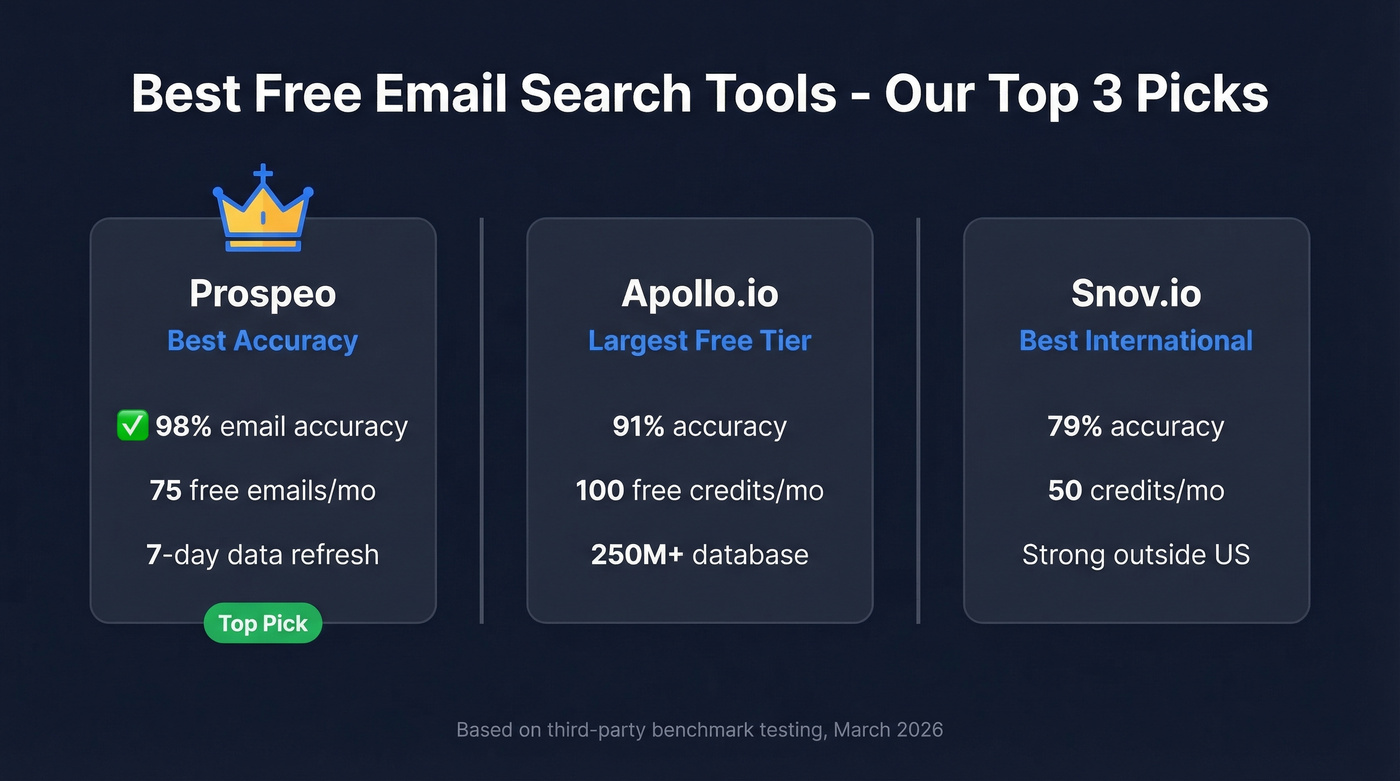
Prospeo wins on accuracy - 98% verified emails with a 7-day data refresh cycle, and 75 free emails per month. Apollo gives you the most free searches against the biggest database. Snov.io is the pick if your prospects aren't primarily US-based.
How We Ranked These Tools
Most "best email finder" articles rank tools by find rate - how many emails the tool returns out of a given list. That number is almost meaningless on its own. A tool can "find" 90% of your list and still bounce 15% of those emails because it's pulling stale data or guessing formats on catch-all domains.
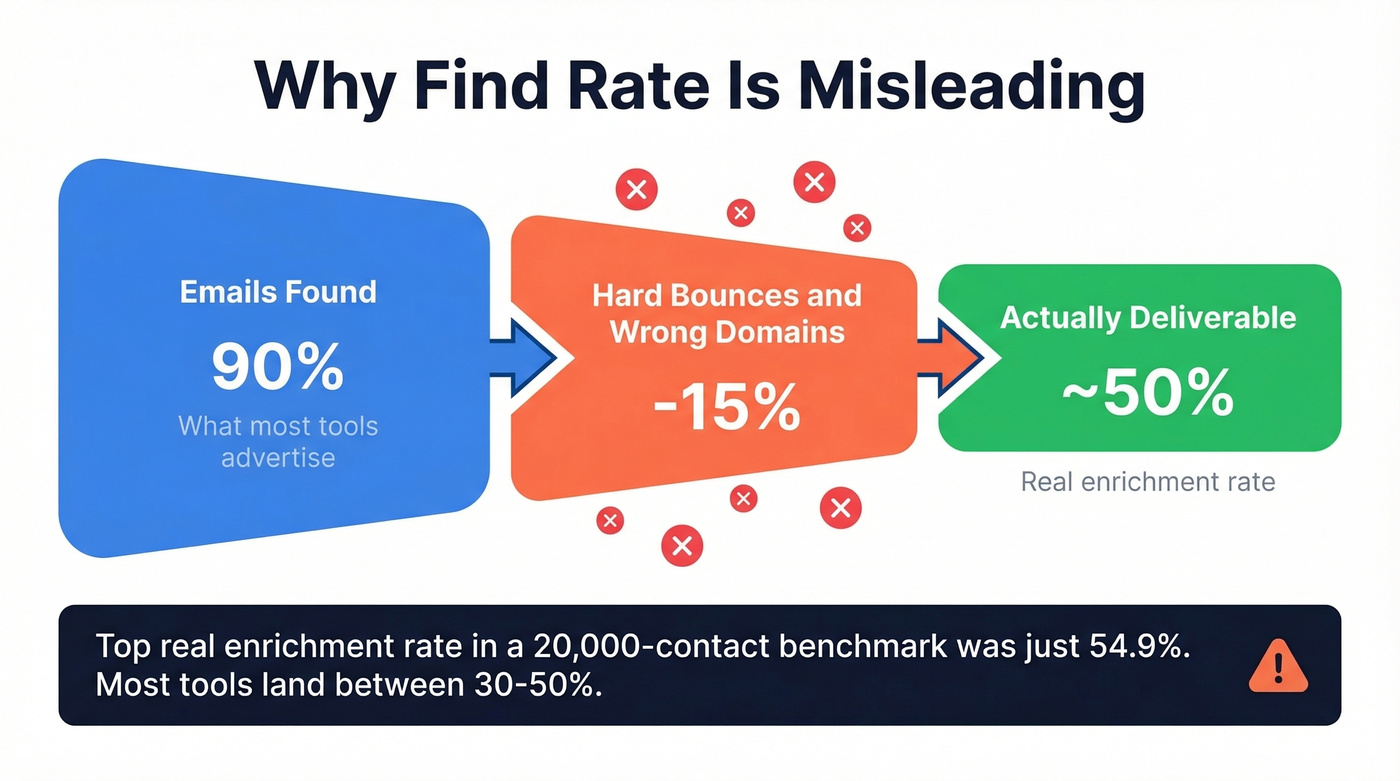
The better metric is what Dropcontact calls real enrichment rate: emails found, minus hard bounces, minus wrong-domain matches. In their 20,000-contact benchmark updated February 2026, the top real enrichment rate was 54.9%. Most tools clustered between 30-50%. That gap between "found" and "actually deliverable" is where your domain reputation lives.

We triangulated three benchmarks to build our rankings: Dropcontact's 20,000-contact live-send test, Saleshandy's 100-contact accuracy comparison, and Emailchaser's 100-contact head-to-head. Each has vendor bias - Dropcontact ranks itself #1, Saleshandy ranks itself #1, Emailchaser ranks itself #1. By layering all three, the patterns become clear.
One tool you'll see recommended on Reddit that we didn't include in the main list: Instantly Lead Finder. It's a strong option, but it's tightly bundled with Instantly's sending platform - more of an integrated suite than a standalone lookup tool. If you're already running Instantly for outbound, their finder is a natural add-on.
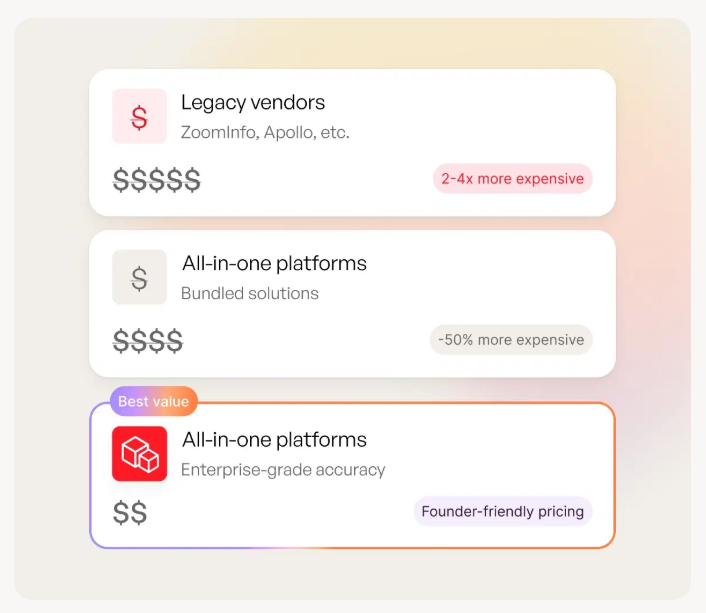
Hot take: If your average deal size is under $5k, you probably don't need a $200/month data platform. A well-chosen free tier plus a verification pass will get you 80% of the way there.
Best Free Email Search Tools
Prospeo - Best for Accuracy
Use this if: You need emails that actually land. You're running outbound sequences and can't afford bounces killing your sender reputation. 75 verified emails beat 500 unverified ones every time.
Prospeo's 98% email accuracy comes from a 5-step verification process that includes catch-all handling, spam-trap removal, and honeypot filtering. The database covers 300M+ professional profiles with 143M+ verified emails, refreshed on a 7-day cycle. For context, the industry average refresh is six weeks - that's the difference between reaching someone at their current company and bouncing off a job they left in January.
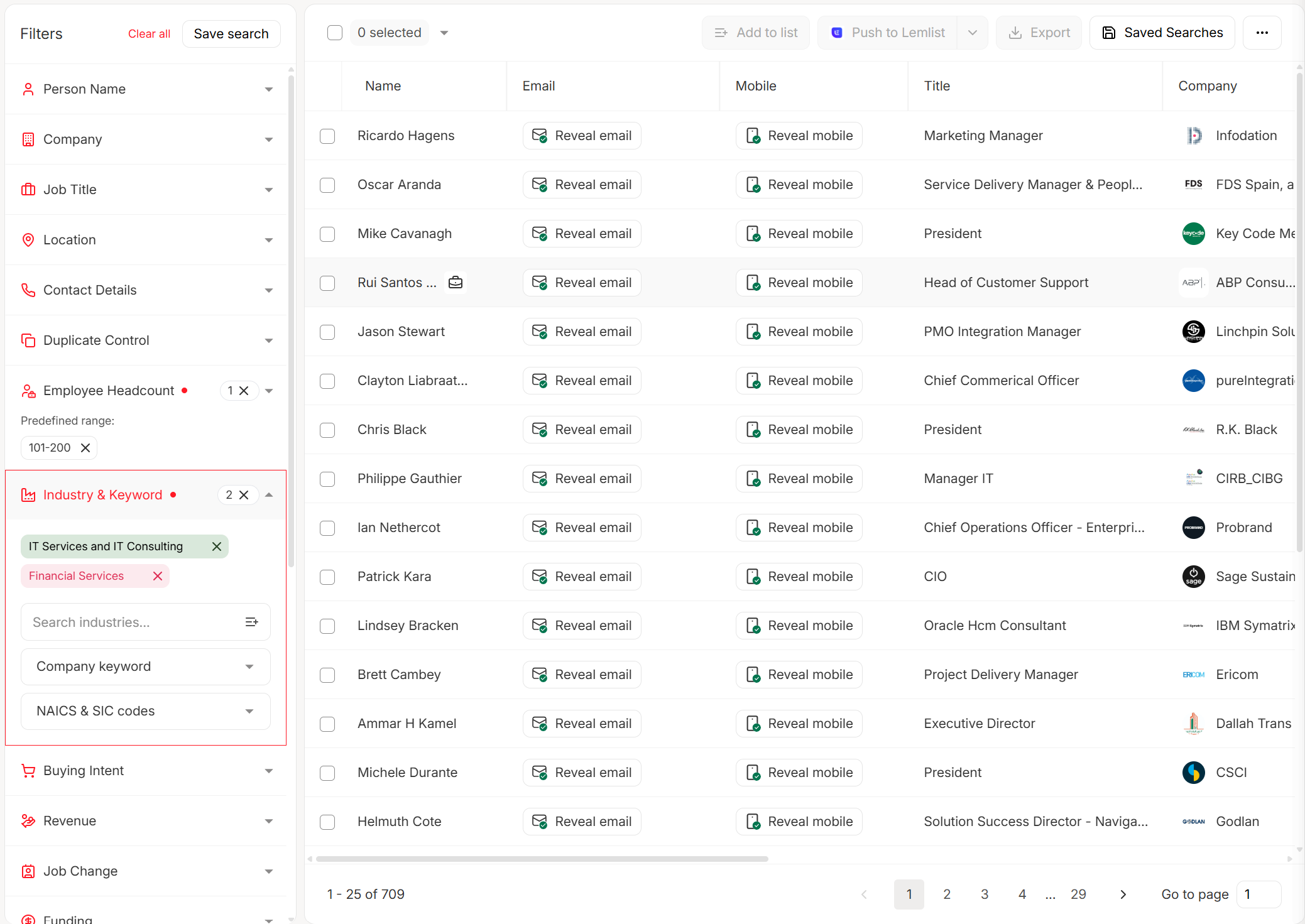
The free tier gives you 75 verified emails per month plus 100 Chrome extension credits. On paid plans starting around $39/mo, that works out to roughly $0.01 per email, and you only get charged when an email is found and verified. The Chrome extension with 40,000+ users pulls data from professional profiles and company websites, and integrations with Salesforce, HubSpot, Instantly, Lemlist, Clay, and Zapier mean the data flows straight into your existing stack.
Hunter.io - Most Recognized Name
Pros:
- 50 free credits per month (searches + verifications share the pool)
- Strong brand recognition
- Chrome extension is clean and fast
- Verification at 0.5 credits per email keeps costs predictable
Cons:
- Database is noticeably smaller than Apollo's - agency operators call this out often
- 83-90% accuracy in third-party tests, meaning 1 in 10 emails might bounce
- Starter plan at $34/mo (annual) only gets you 2,000 credits, and verification eats into that pool

Hunter works better as a verification layer than a primary email source. If you're pulling emails from another tool and want a second check, Hunter's verification is solid. As your only finder, though, the database gaps will frustrate you - especially outside the US. The consensus on r/agency is that Hunter is "very popular" but the database is "pretty small."
Worth noting: a search costs 1 credit only when it returns an email. No result, no charge.
Apollo.io - Largest Free Tier
Apollo is the obvious starting point if you're bootstrapping outbound and need volume. 100 free monthly searches against a 250M+ database give you real room to prospect. Built-in sequencing means you can find and email from one tool, and the Saleshandy benchmark clocked Apollo at 91% accuracy.
The catch? Data quality degrades on older contacts. "Lots of bounces on older contacts" is the consistent Reddit complaint, and we've seen it ourselves. Per-seat pricing from ~$49/mo adds up fast for teams, and the free tier locks you into basic filters - advanced intent and enrichment features require paid plans.
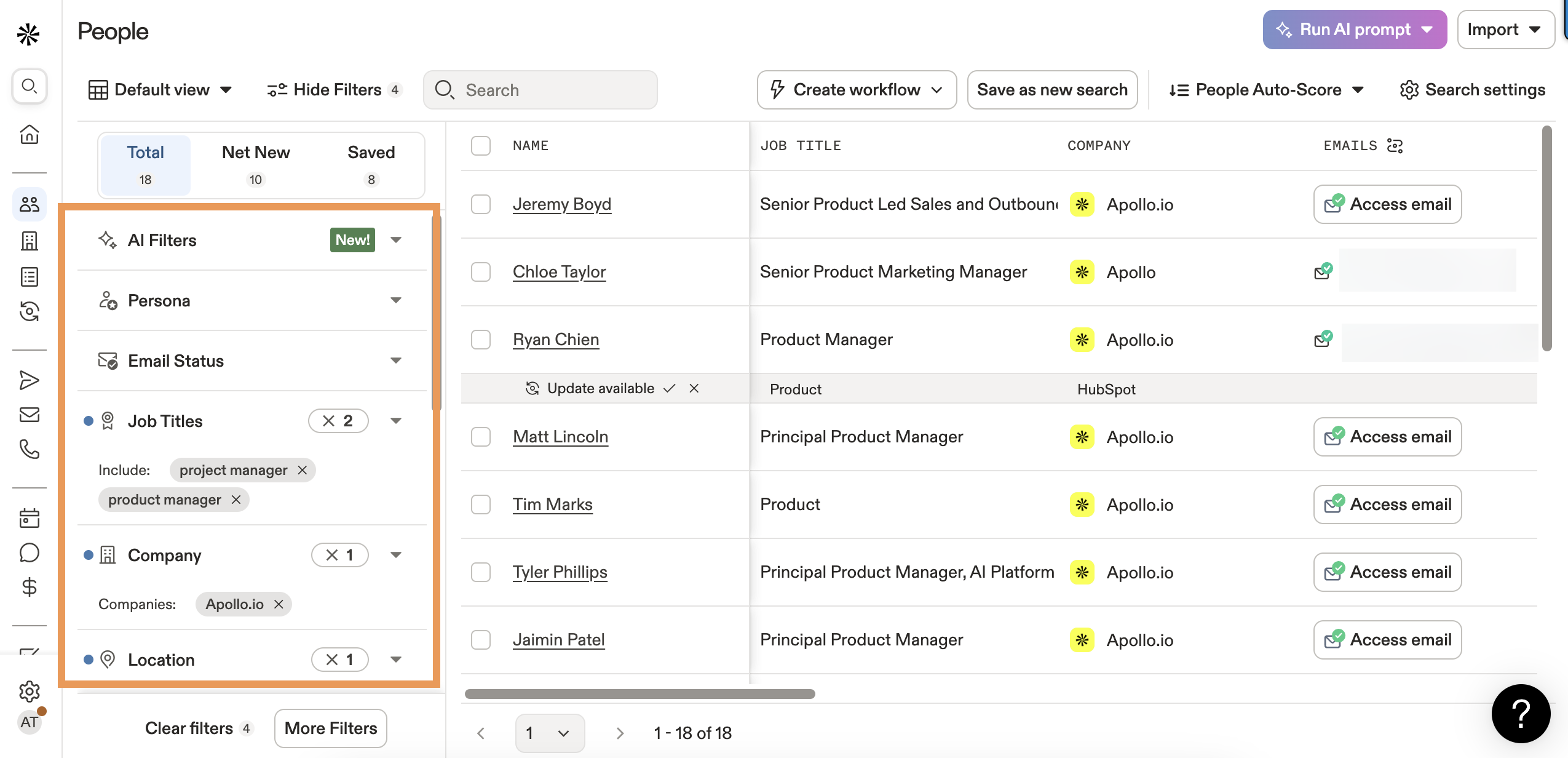
Don't trust every email Apollo returns. Run a verification pass before loading contacts into your sequences. We've watched teams skip that step and torch their domain reputation inside a week.
Snov.io - Best for International
Use this if: Your prospects are spread across Europe, LATAM, or APAC. You want email finding and automation in one platform.
Skip this if: You need deep US-only coverage or high accuracy is non-negotiable - Snov.io tested at 79% in both the Saleshandy and Emailchaser benchmarks, the lowest among our top picks.
The Trial plan gives you 50 credits per month and 100 email recipients. Starter runs $29.25/mo on annual billing for 1,000 credits, with each email find and each verification costing one credit. Where Snov.io genuinely shines is international lead coverage - it's the tool agency operators on Reddit consistently recommend for non-US prospecting. The automation add-on at $69/mo per slot is worth considering if social selling is part of your workflow. For enterprise budgets focused on EU/UK data specifically, Cognism is the go-to, but expect pricing north of $1,000/mo.
GetProspect
GetProspect positions itself around a simple promise: you only pay for verified contacts. The free tier includes 50 valid emails and 100 verifications, with Starter at $49/mo for 1,000 valid emails. Accuracy results split across benchmarks - 95% in the Saleshandy test, 85% in the Emailchaser test - suggesting performance varies by list composition. The reverse email lookup feature is a nice bonus for working inbound leads with minimal context: paste a business email and get back name, role, and company data.
Voila Norbert
Voila Norbert gives you 50 free credits once you create an account - a one-time allotment, not monthly. After that, the Valet plan runs $39/mo on annual billing for up to 1,000 leads. The model only charges for successful finds, which helps when you're prospecting into harder-to-reach segments. Verification is available pay-as-you-go at $0.003 per email. In the Emailchaser benchmark, Voila Norbert hit 89% accuracy - solid middle-of-the-pack. It's a reliable secondary tool, though it lacks the database depth to be your primary source.
Emailchaser
Emailchaser has a genuinely unique model: unlimited free searches, with verification credits sold separately at $0.0017 per email. That separation means you can search freely and only pay when you're ready to verify and send. Their own 100-contact test showed 91% accuracy, though the founder built the tool and ran the benchmark - take that with appropriate skepticism.
Reply.io
Reply.io offers 200 free lookups per month - the most generous free tier on this list by raw volume. Paid plans start at $49/mo for 2,000 searches. The database covers 85M+ professionals with filters for job title, location, department, and seniority. If you're already running sequences through Reply, the email finder keeps your workflow in one platform. As a standalone finder, the 85M database is smaller than the 250M+ you'd get from Apollo.
EXPERTE.com
Completely free, no signup required, instant results. Zero friction for a quick one-off lookup, but don't expect CRM integrations, bulk search, or any workflow beyond copy-pasting an email address. This is the tool you use when you need one email in the next 30 seconds.
Reverse Contact
Twenty free lookups for the opposite use case - you have an email and need to know who it belongs to. OSINT-based reverse lookup that returns identity and company data. Useful for enriching inbound leads or investigating unknown contacts, not for building outbound lists.

Most free email search tools give you volume. Prospeo gives you 75 emails/month that actually land - 98% accuracy, 7-day refresh, catch-all handling included. At $0.01/email on paid plans, you never pay for a bounce.
Stop guessing formats. Start sending to verified inboxes.
Accuracy Benchmarks Compared
Three independent-ish benchmarks, three different methodologies, one clear takeaway: "found" doesn't mean "deliverable."
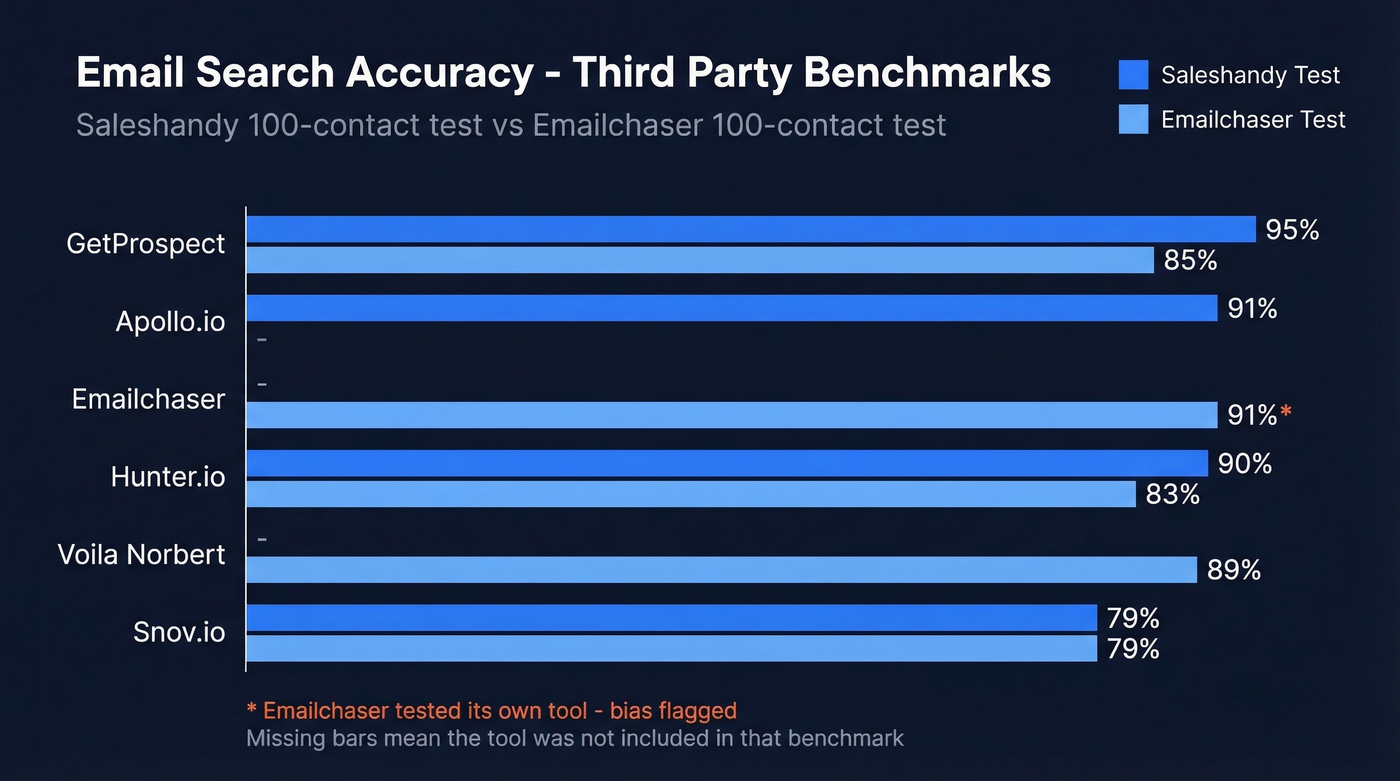
| Tool | Saleshandy (100 contacts) | Emailchaser (100 contacts) |
|---|---|---|
| Apollo | 91% | - |
| Hunter | 90% | 83% |
| GetProspect | 95% | 85% |
| Snov.io | 79% | 79% |
| Voila Norbert | - | 89% |
| Emailchaser | - | 91%* |
*Emailchaser tested its own tool - bias flagged.
The Dropcontact benchmark is the most rigorous test available: 20,000 contacts with live email delivery. It tested a different tool set, but the key finding applies universally. The top real enrichment rate was just 54.9%. Most tools land between 30-50% when you subtract bounces and wrong-domain matches. That gap is why verification matters more than finding.
Free Tier and Pricing Breakdown
| Tool | Free tier | Failed = credit? | First paid tier |
|---|---|---|---|
| Prospeo | 75 emails/mo + 100 ext | No charge | ~$39/mo |
| Hunter | 50 credits/mo | Yes (shared pool) | $34/mo (annual) |
| Apollo | 100 searches/mo | Yes | ~$49/mo/user |
| Snov.io | 50 credits/mo | Yes (1 credit each) | $29.25/mo (annual) |
| GetProspect | 50 emails + 100 verif | No (verified only) | $49/mo |
| Voila Norbert | 50 one-time | No (found only) | $39/mo (annual) |
| Emailchaser | Unlimited searches | N/A (verify separate) | $0.0017/verif |
| Reply.io | 200 searches/mo | Yes | $49/mo |
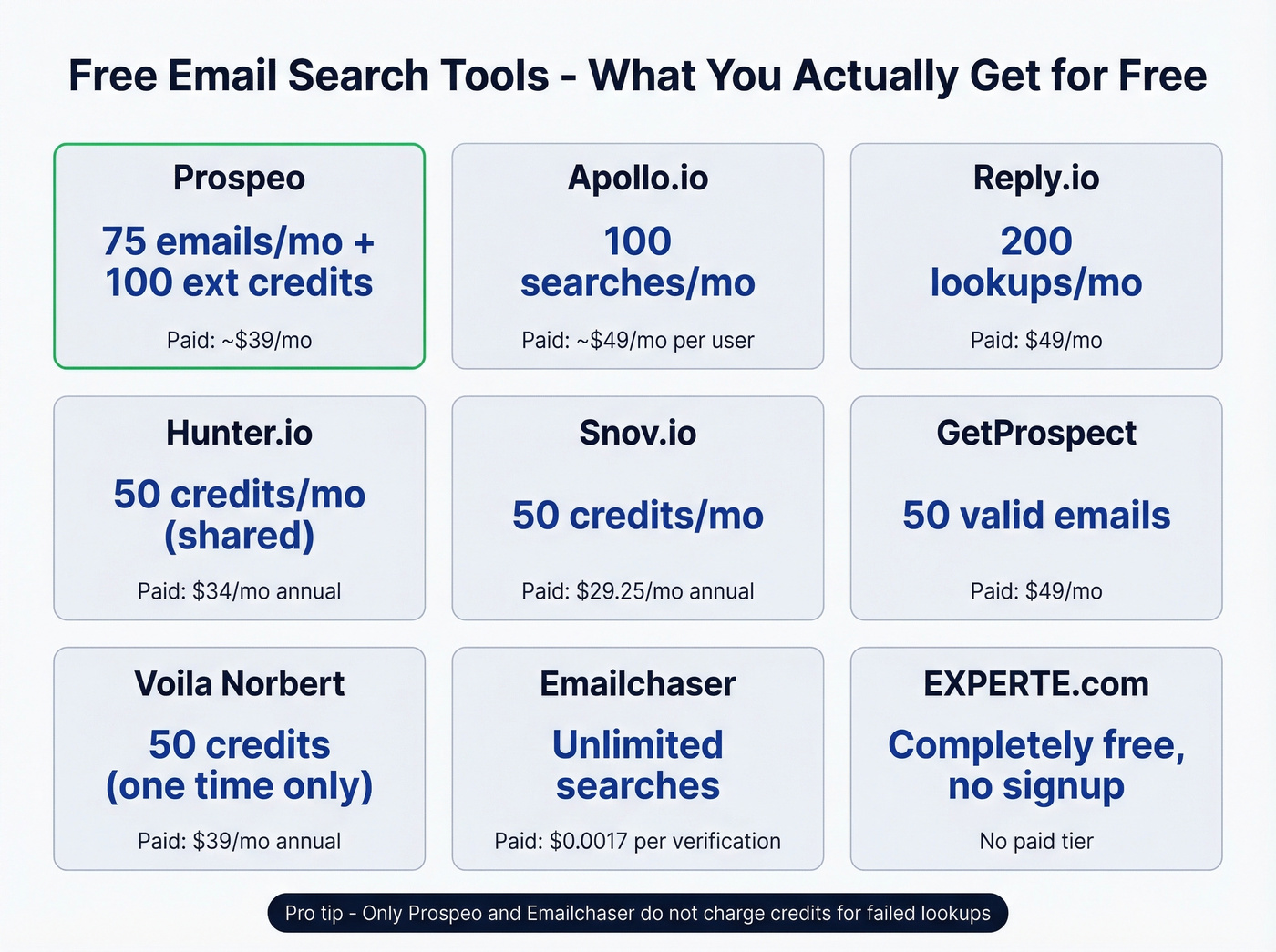
The critical column is "Failed = credit?" Some tools charge you a credit even when they can't find an email. Prospeo, GetProspect, and Voila Norbert only charge for successful, verified results. Over thousands of searches, that difference compounds fast.
Standalone verification services like Bouncer alternatives and ListClean alternatives typically run around $1-$3 per 1,000 emails if you want an independent check on top of your finder's built-in verification.
That gap between 'found' and 'deliverable' is where domain reputations die. Prospeo's 5-step verification - spam-trap removal, honeypot filtering, catch-all handling - closes it. 143M+ verified emails refreshed every 7 days, not every 6 weeks.
Your sender reputation is worth more than free credits.
Why Verification Matters More Than Finding
Here's the scenario that plays out every week: an SDR loads 500 "found" emails into a sequence. Forty bounce. That's an 8% bounce rate - four times above the 2% threshold that email providers use to flag your domain. Two more campaigns like that and your deliverability is wrecked for months.
Email lists decay fast. Per Hunter's own verification guide, 2% of a verified list becomes invalid after just four weeks. People change jobs, companies restructure, domains expire. A list you verified in January is already degrading by February.
Let's be honest about the practical checklist here - it's short:
- Re-verify before every campaign, even if the list is "fresh"
- Treat catch-all domains with suspicion - a "valid" response from a catch-all domain doesn't mean the mailbox exists
- Target under 2% total bounce rate; under 1% if you're sending at volume
- Never skip verification to save credits - the domain reputation damage costs more than any email finder subscription
Even the best free email search tool in the world is useless if you're not verifying before you send. "Found" and "deliverable" are two completely different things.
FAQ
Are free email search tools accurate?
Accuracy ranges from 79% to 98% across the tools we tested. Free tiers use the same engine as paid plans - the limitation is volume, not quality. Prospeo hits 98% with its 5-step verification; Snov.io sits at 79%. Always verify before sending regardless of which tool you choose.
Is it legal to look up someone's email?
Yes, when using publicly available business data. GDPR and CCPA require legitimate interest for outreach and easy opt-out compliance. Reputable tools handle data sourcing within these frameworks, but you're still responsible for how you use the addresses you find.
How many free lookups do I actually get?
It ranges from 50 one-time credits (Voila Norbert) to 200 monthly searches (Reply.io). Most tools land between 50-100 monthly credits - enough for light prospecting, not enough for scaled outbound. Emailchaser's unlimited search model is the closest to a truly uncapped option.
What's the difference between finding and verification?
Finding discovers the email address; verification confirms it's deliverable and won't bounce. Some tools bundle both, others charge separately. Emailchaser charges $0.0017 per verification, Voila Norbert charges $0.003 per email - small numbers that add up at scale.
Can I stack multiple free tiers together?
Yes - the "waterfall" approach works well. Use one tool as your primary source, then run unfound contacts through a second. If your primary tool delivers 98%+ accuracy, the marginal value of a second tool drops significantly. Start with the most accurate option and add layers only if coverage gaps justify the extra workflow.