

Funnel Gauge: Pricing, Reviews, Pros and Cons for 2026
Your VP of Sales just dropped a spreadsheet with 2,000 accounts and asked you to rank them by fit. You could spend a week building Salesforce flows that'll break next quarter, or you could install an app purpose-built for this. If you've been researching Funnel Gauge, you've probably noticed honest information is weirdly hard to find - and half the search results cover Funnel.io, a completely different product. Here's what you actually need to know.
30-Second Verdict
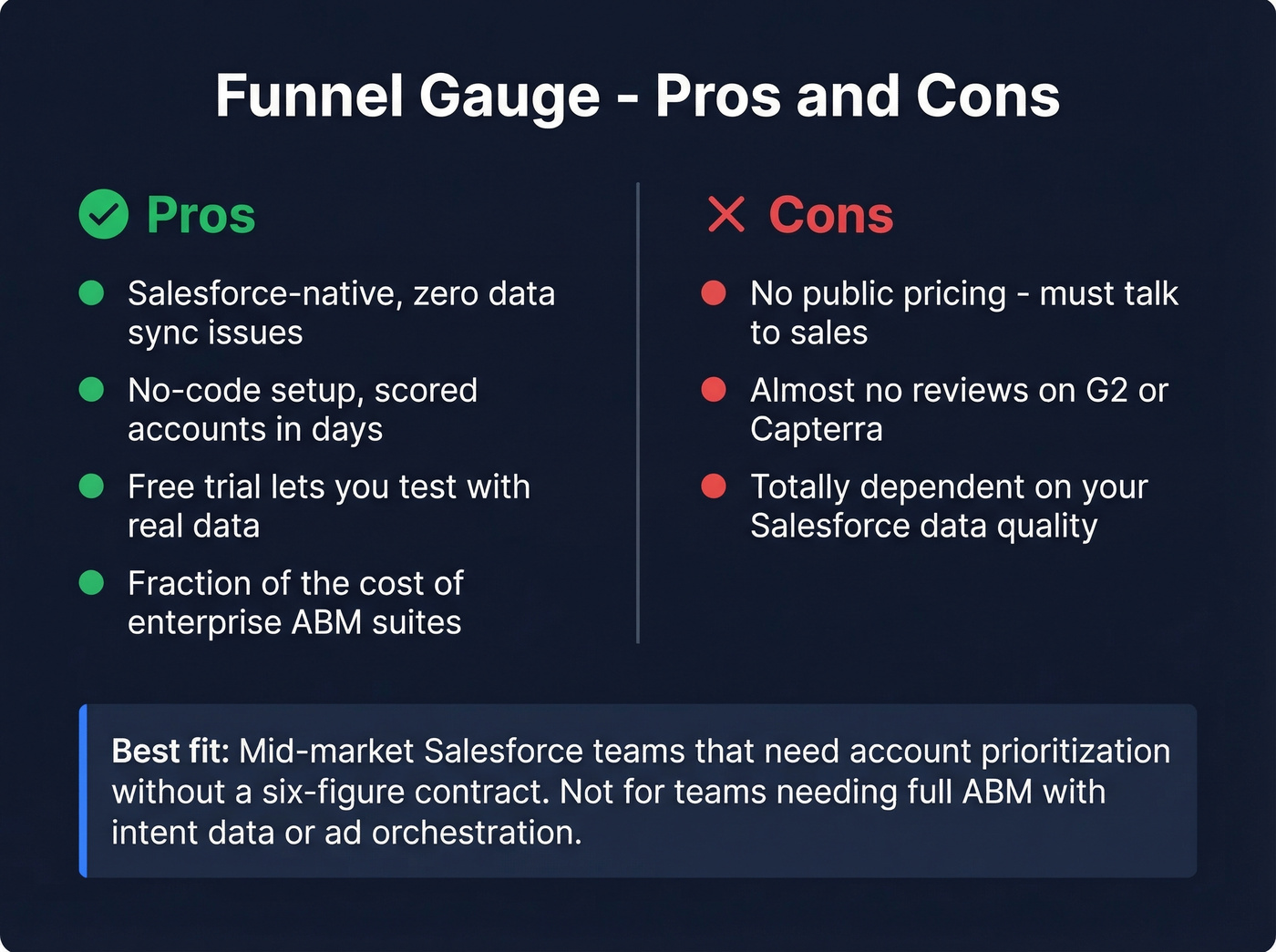
Funnel Gauge is a focused Salesforce-native account scoring and tiering tool on AppExchange. It does one thing - score and tier accounts inside Salesforce - and it does it without code. Estimated pricing lands in the $2K-$10K/year range, a fraction of enterprise ABM suites. Best for mid-market Salesforce teams that need account prioritization without a six-figure contract.
The biggest caveat: we couldn't find Funnel Gauge reviews on G2 or Capterra, and your scoring output is only as good as the CRM data feeding it. If your Salesforce records are a mess, fix that before you install anything.
What Is Funnel Gauge?
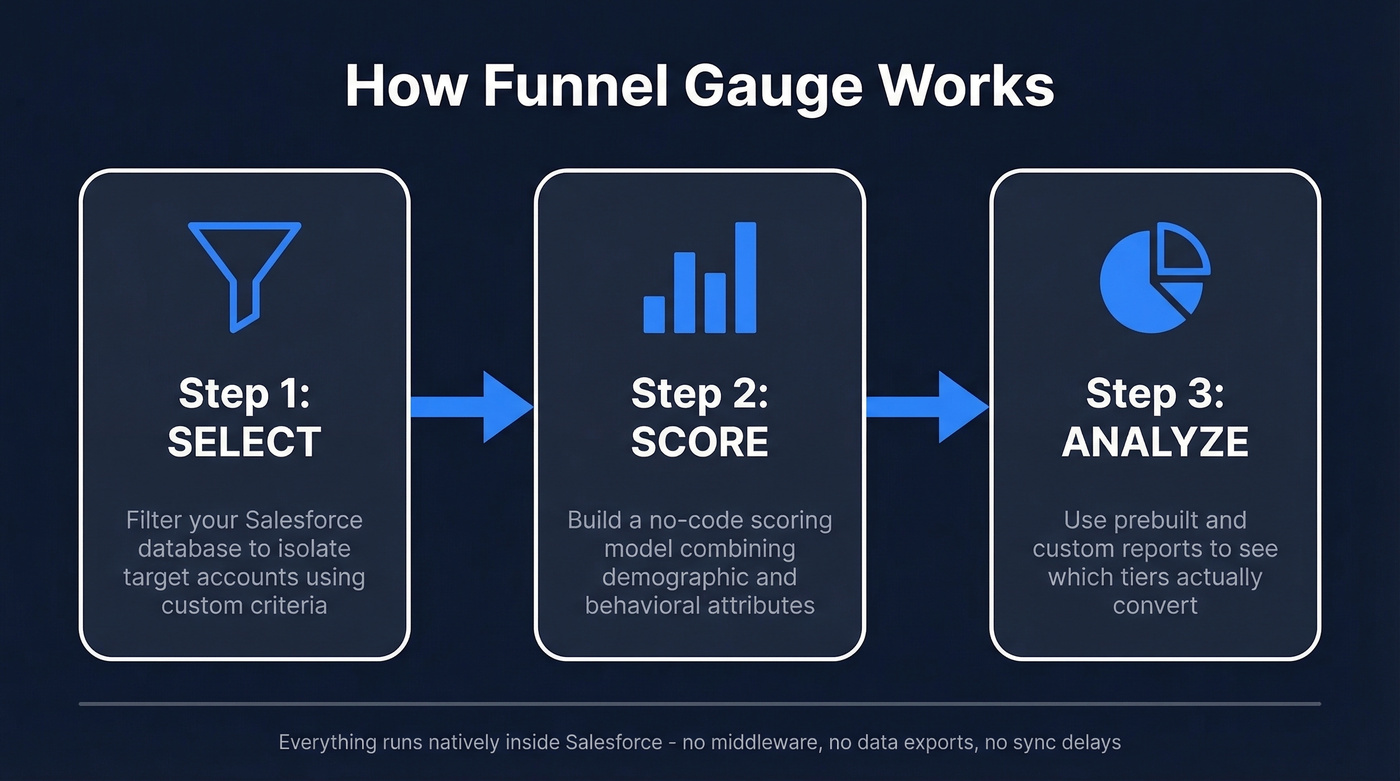
Funnel Gauge is a Salesforce AppExchange application built around a three-step workflow: Select, Score, Analyze. You define filter criteria to identify target accounts, build a no-code scoring model using demographic and behavioral attributes, then analyze results through prebuilt and custom reports. Everything lives inside Salesforce - no data syncing, no external platform.
It addresses a pain point most sales ops teams know well: defining ICP attributes and labeling accounts in Salesforce often requires modeling expertise that nobody on the team has. Funnel Gauge removes that barrier. We've seen plenty of teams burn weeks trying to replicate this with native Salesforce tools, only to end up with something brittle and impossible to maintain.
Key Features
- Custom account selection using filter criteria to isolate target accounts from your full Salesforce database
- No-code scoring model builder combining demographic and behavioral data into a single account score
- Account tiering to segment scored accounts into ranked priority buckets
- prebuilt and custom reports for analyzing which tiers actually convert
- Native Salesforce architecture - no middleware, no data exports, no sync delays
Pricing Breakdown
Funnel Gauge doesn't publish pricing. The site directs you to start a free trial via AppExchange, with no listed plan tiers or per-seat costs. Based on comparable Salesforce-native scoring apps, expect the $2K-$10K/year range depending on org size and feature scope. The free trial runs an estimated 14-30 days.
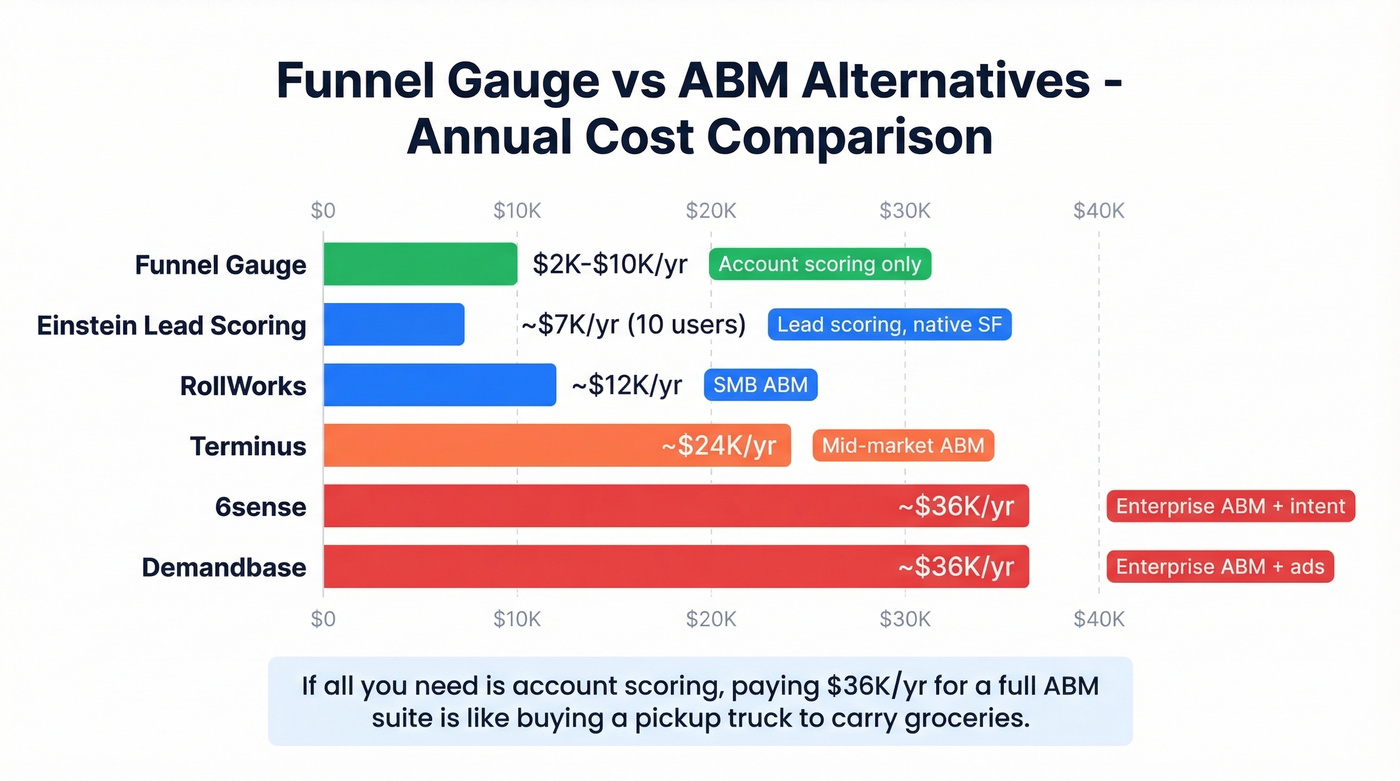
| Tool | Est. Annual Cost | Setup Time | Best For |
|---|---|---|---|
| Funnel Gauge | $2K-$10K/yr | Days | Account scoring only |
| Einstein Lead Scoring | ~$50/user/mo | Minimal (native) | Lead scoring inside Salesforce |
| RollWorks | ~$12K/yr | 2-4 weeks | SMB ABM |
| Terminus | ~$24K/yr | 4-8 weeks | Mid-market ABM |
| 6sense | ~$36K/yr | 6-12 weeks | Enterprise ABM with intent |
| Demandbase | ~$36K/yr | 6-12 weeks | Enterprise ABM with advertising |
If all you need is account scoring, paying $36K/year for an ABM suite is like buying a pickup truck to carry groceries.

Funnel Gauge scores accounts using your Salesforce data - but 83% of CRM records are incomplete or outdated. Prospeo's CRM enrichment fills in verified emails, direct dials, and 50+ data points per contact with a 92% match rate. At $0.01 per email, cleaning your data costs less than one month of most scoring tools.
Fix the data before you score it. Start enriching free.
Pros and Cons
Pros:
- Salesforce-native means zero data sync issues - scores update in real time against your live CRM data
- No-code setup gets you from install to scored accounts in days, not weeks
- You can test against your actual data before committing - free trial available through AppExchange
- Costs a fraction of enterprise ABM platforms that bundle scoring with features you'll never use
Cons:
- No public pricing makes budgeting impossible without talking to their team
- Limited public review footprint across major directories
- Entirely dependent on Salesforce data quality - scoring garbage records produces garbage tiers
What Users Are Saying
Funnel Gauge has a thin public review footprint outside AppExchange. That's not unusual for niche Salesforce apps - many smaller tools never accumulate enough reviews to show up on G2 or Capterra.
At the category level, the broader sentiment around scoring tools is consistent: teams don't want "black box" scoring that gets expensive fast. They want no-code scoring that's actionable for outbound, which is exactly Funnel Gauge's lane.
Here's the thing: 84% of buyers go with the first vendor that engages them. That means scoring and prioritizing accounts fast isn't optional - it's the whole game. A $5K scoring tool that gets you moving in days beats a $36K platform that takes three months to implement, even if the expensive one has better features on paper.
Who Should (and Shouldn't) Use It
Use Funnel Gauge if you're a mid-market Salesforce team that needs account tiering without enterprise ABM spend. Your VP just asked you to prioritize 2,000 accounts and you don't have $36K for 6sense? This is the move.
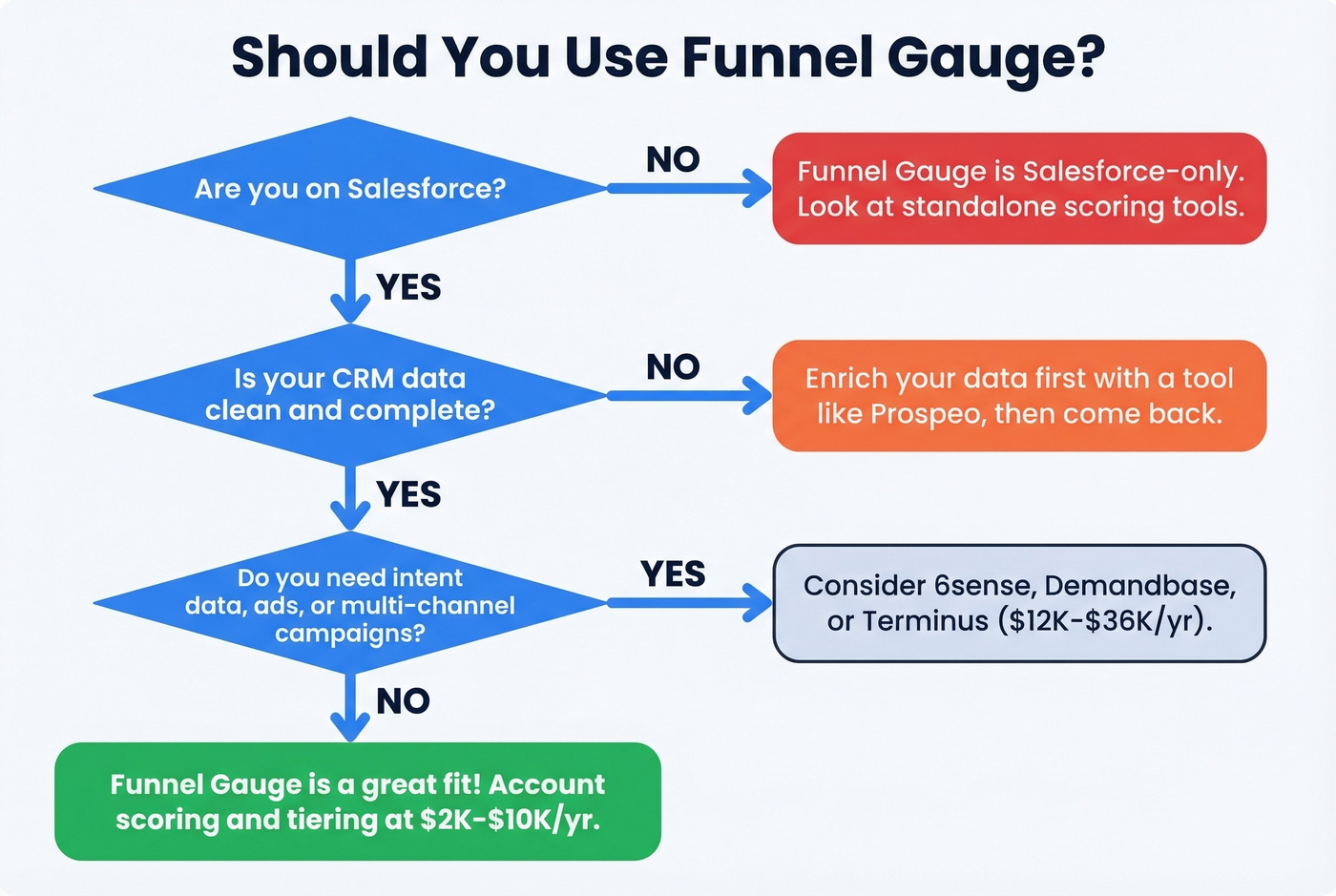
Skip it if you need full ABM with intent data, advertising orchestration, and multi-channel campaigns. Skip it if you're not on Salesforce - it's native-only. And skip it if your CRM data is incomplete. Scoring accounts with missing firmographic details produces tiers that look precise but mean nothing. Fix the data first with an enrichment tool like Prospeo, then layer scoring on top.
Alternatives to Consider
Einstein Lead Scoring
Einstein Lead Scoring is a native Salesforce option and typically runs around $50/user/month as an add-on. If you already have access, test it before buying anything else. The limitation: it scores leads, not accounts, and customization is more limited than Funnel Gauge's model builder. Salesforce's own docs walk through the setup, which is minimal if you're already on the platform.
Enterprise ABM Suites
Full-stack ABM platforms like 6sense, Demandbase, and RollWorks offer intent signals, advertising orchestration, and account-level analytics. Pricing runs ~$12K-$36K/year with 2-12 weeks of implementation. Let's be honest though - only about 21% of marketing teams use intent data consistently. Most teams buying these suites pay for capabilities they'll never activate.
DIY Salesforce Flows
Free but fragile. Works for simple two-attribute models, breaks down fast when you need multi-attribute scoring with reporting. You'll hit Salesforce's 3,000-rule cap sooner than you think.
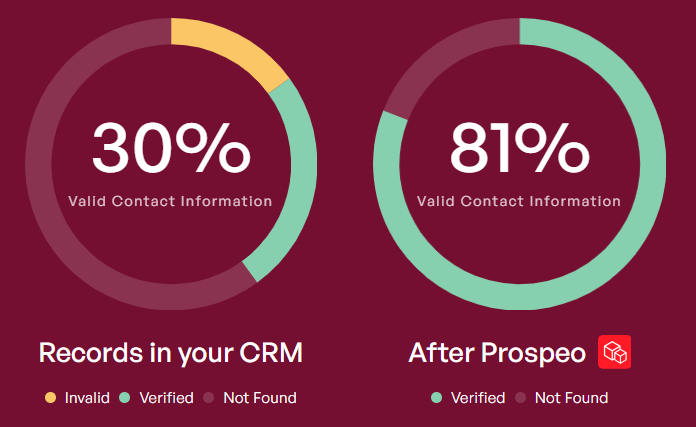
You're evaluating a $2K-$10K scoring tool to prioritize 2,000 accounts. But scoring accounts with missing contacts means your reps still can't reach decision-makers. Prospeo adds verified emails (98% accuracy) and direct dials (125M+ numbers) to every account - so your tiers actually convert into booked meetings.
Scored accounts without contact data are just a ranked list of companies you can't reach.
FAQ
Does Funnel Gauge have a free plan?
No free plan, but a free trial is available through Salesforce AppExchange - estimated at 14-30 days. You'll need to install the app in your Salesforce org to start testing against your live data.
How is it different from lead scoring?
Lead scoring ranks individual leads. Funnel Gauge scores and tiers entire accounts by combining data at the account level. If you're selling to buying committees of 5-10 stakeholders, account-level scoring is what you actually need.
What if my Salesforce data is incomplete?
Account scoring is only as reliable as the underlying data. If your records are missing key fields like emails, direct dials, or firmographic details, enrich them first. Prospeo's CRM enrichment returns 50+ verified data points per contact with a 92% API match rate, and its 7-day data refresh cycle means you're not scoring against stale records.
Can Funnel Gauge replace a full ABM platform?
No. It handles account scoring and tiering only. For intent data, ad orchestration, or multi-channel campaign management, you'll still need a dedicated ABM suite. For teams that only need prioritization, though, it covers 80% of the value at 10% of the cost.