


Harmonic vs ZoomInfo: Which Data Tool Fits? (2026)
Most people comparing Harmonic and ZoomInfo are comparing two tools that were never built to compete. Harmonic.ai is a startup discovery engine for investors chasing early-stage deal flow. ZoomInfo is an enterprise GTM platform for outbound, ABM, and intent-driven sales. The overlap is surprisingly thin.
The market explains why this split exists: the VC software market hit $0.93B in 2025 and is projected to reach $1.58B by 2030 at an 11.4% CAGR. Specialized tools win when the workflow is specialized.
Quick clarification: we're talking about Harmonic.ai (startup database), not Harmonic Inc. (NASDAQ: HLIT) or Harmonic Security.
30-Second Verdict
VC or investor sourcing early-stage deals: Pick Harmonic. It's purpose-built for startup discovery and market mapping.
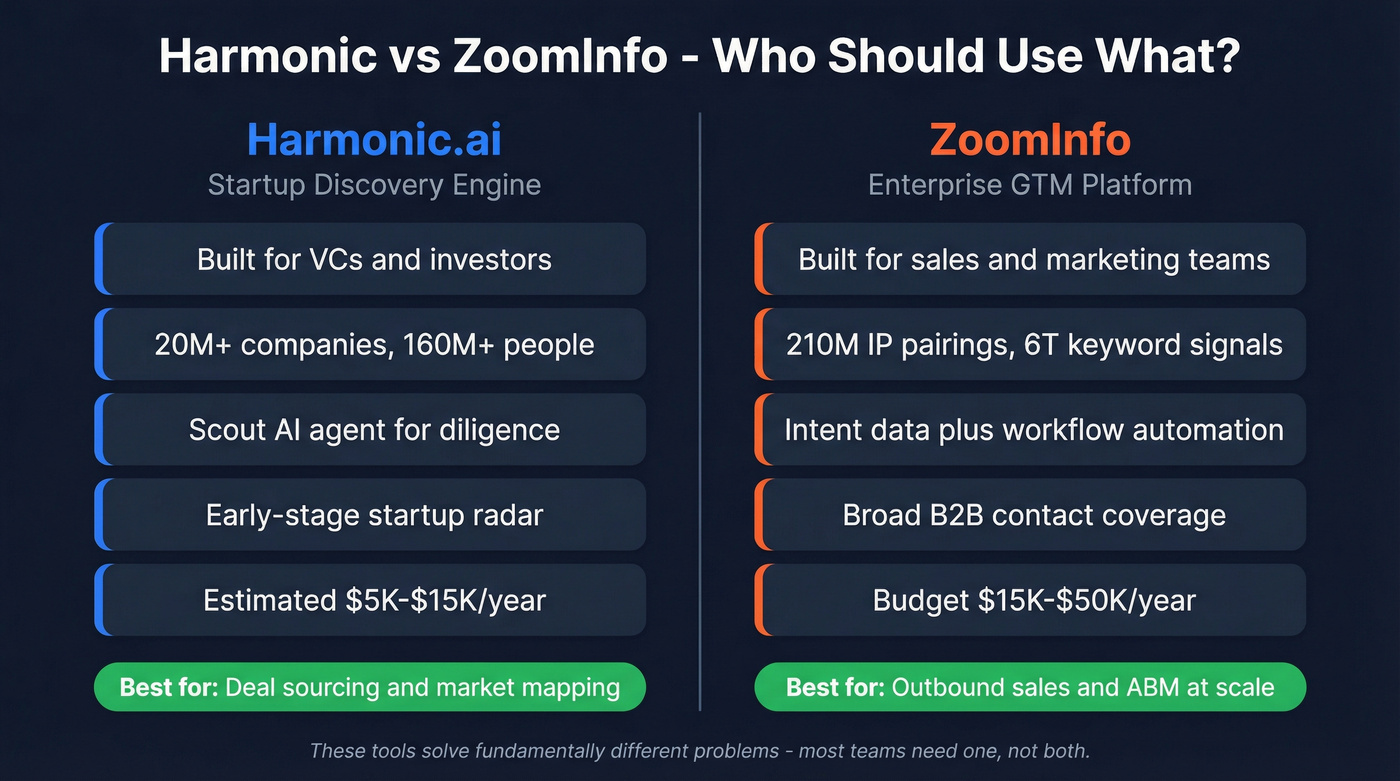
Sales or marketing running outbound at scale: Pick ZoomInfo. It's the heavyweight for intent plus workflow automation, but plan on $15K-$50K/year.
Here's the thing: if your average deal size is under five figures and you don't have a dedicated RevOps owner, ZoomInfo is usually overkill. You'll pay for a platform you won't fully use.
What Harmonic.ai Is (and Isn't)
Harmonic.ai surfaces early-stage companies before they show up in mainstream databases. It's built for sourcing, market maps, and fast diligence - not for running outbound sequences or enriching CRM records at scale.

The core value is speed-to-signal. Harmonic continuously indexes public web sources, filings, and records, then lets you query with its Scout agent. The platform tracks 20M+ companies and 160M+ people, with higher record counts depending on the package. One investor testimonial captures the use case well: "We found 4 out of our last 9 deals on Harmonic."
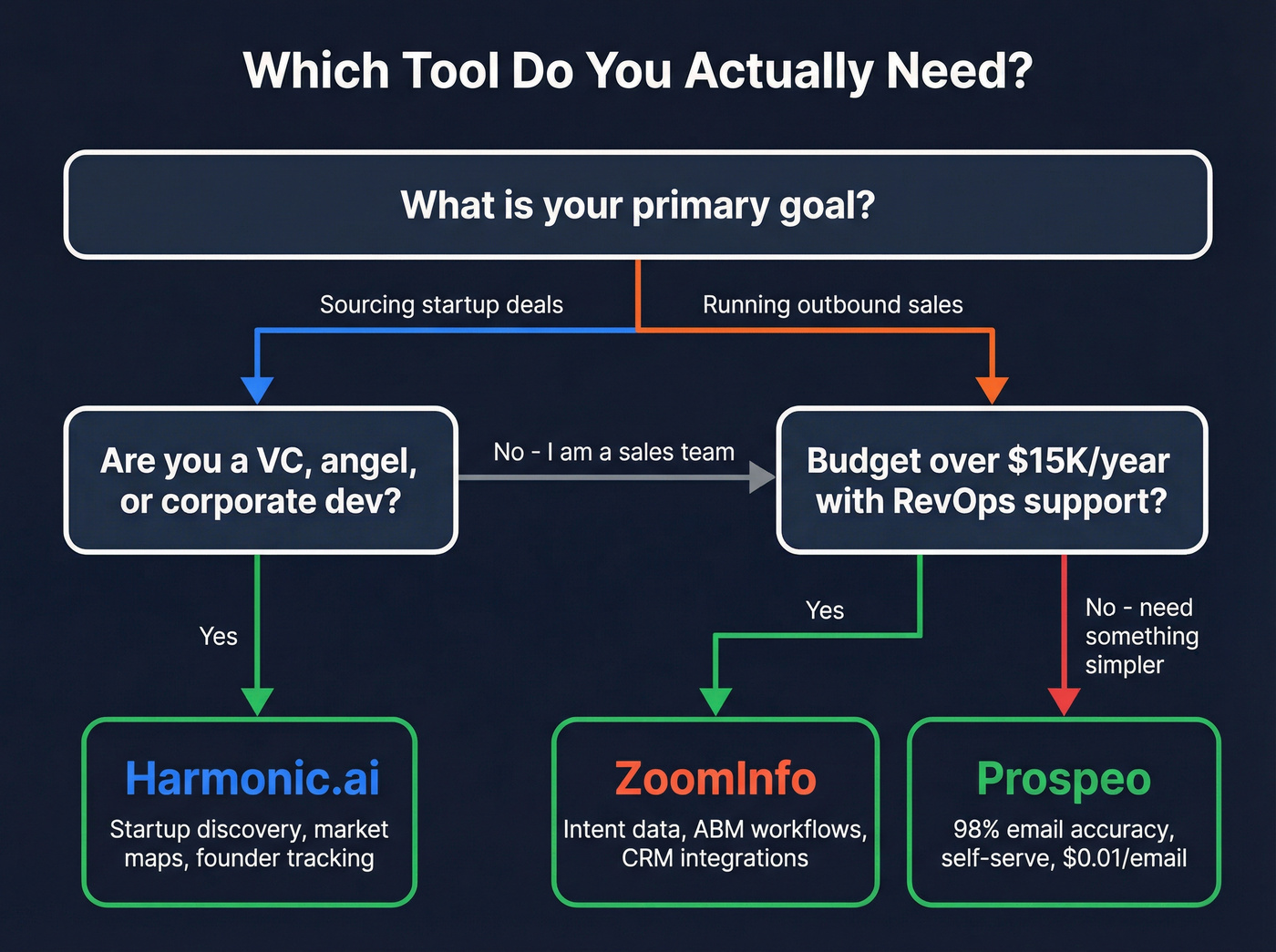
One caveat worth flagging: Harmonic's public review footprint is thin - 3.5/5 on G2 with a single review - so you're buying based on product fit more than crowd consensus. We've seen VC teams love Harmonic when they treat it like an always-on radar, and get frustrated when they expect it to behave like a traditional sales database. If you're a growth-stage sales team, this isn't your tool.
ZoomInfo in Plain English
ZoomInfo is the dominant enterprise B2B data platform for GTM teams that need coverage, integrations, and workflow tooling in one place.
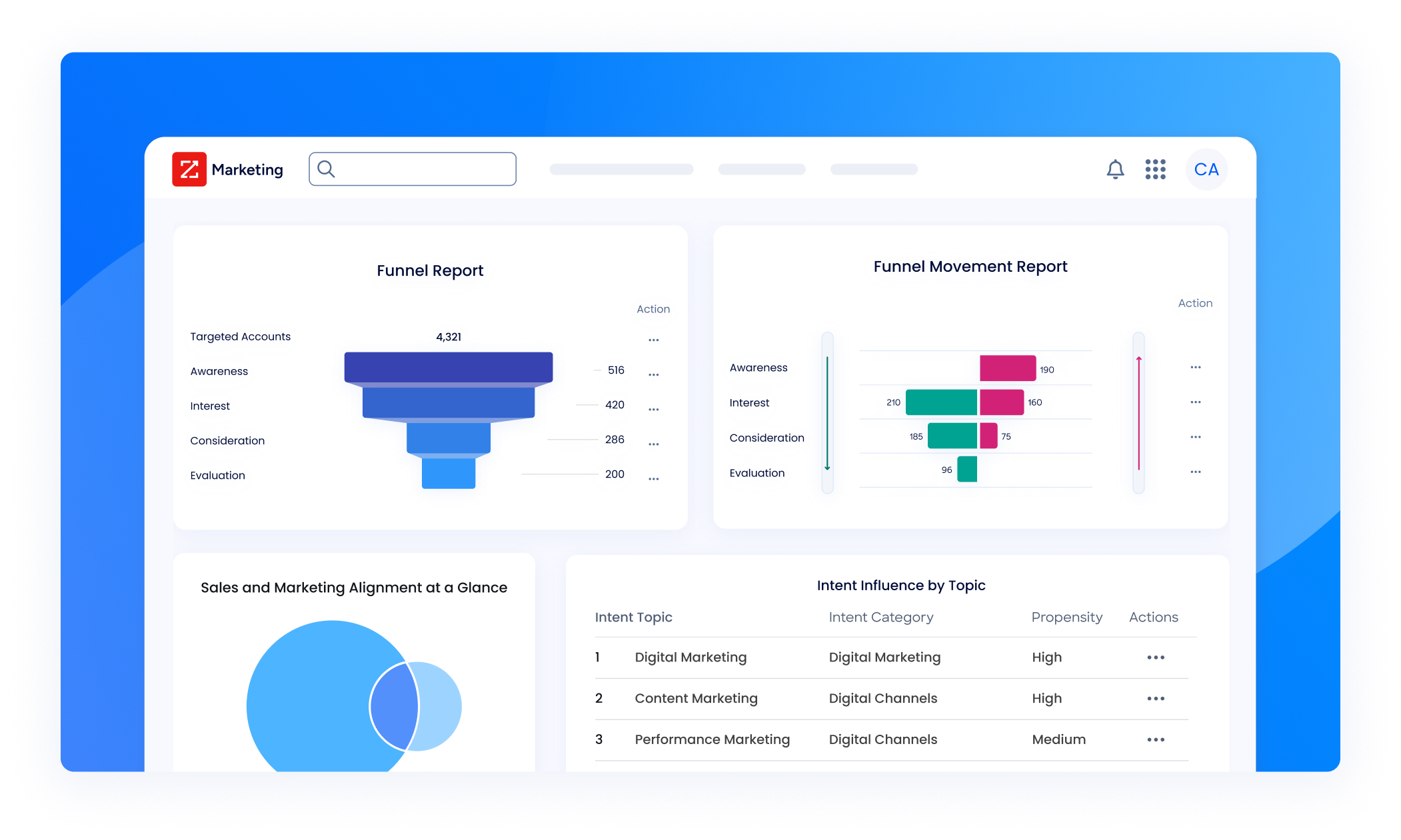
Its real differentiator isn't the contact count - it's intent plus activation. ZoomInfo pairs contact and company data with an intent engine that processes 210M IP-to-organization pairings and 6T keyword-to-device signals monthly, then pushes that data into CRMs and sales tools. ZoomInfo also markets 95%+ accuracy, though in practice you still need to filter aggressively, especially on intent signals.
In our experience, ZoomInfo intent is useful for prioritization but noisy enough that you need clear rules - ICP filters, recency thresholds, and "ignore" lists - to avoid chasing ghosts. That lines up with broader sentiment: 52% of sales professionals report frequent false positives, and 29% call out misattributed IP data as a key issue as remote work and VPNs scramble attribution. The platform is powerful, but it rewards teams that invest time configuring it. Smaller teams without RevOps support often underuse it badly.

ZoomInfo's intent engine is powerful but starts at $15K/year - and Harmonic wasn't built for outbound. If you need verified contact data without the enterprise price tag, Prospeo delivers 98% email accuracy, 125M+ direct dials, and 15,000 intent topics at roughly $0.01 per email.
Skip the $50K contract. Start prospecting in under two minutes.
Feature-by-Feature Comparison
| Dimension | Harmonic.ai | ZoomInfo |
|---|---|---|
| Best for | VC sourcing, startup discovery | GTM outbound, ABM, intent-led sales |
| Data focus | Early-stage startups, founders | Broad B2B contacts and companies |
| Company/people coverage | 20M+ companies, 160M+ people | Broad B2B (total not cleanly disclosed) |
| Intent signals | None | IP + keyword intent engine |
| AI workflows | Scout agent for diligence-style outputs | Sales workflow copilots |
| Delivery options | API + bulk delivery | APIs, webhooks, batch delivery via DaaS |
| G2 rating | 3.5/5 (1 review) | 4.5/5 (8,738 reviews) |
If you're building a seed-stage landscape, Harmonic is the right tool. An SDR team pushing volume outbound has zero use for a deal-sourcing radar.
Let's be honest about the comparison itself: Reddit threads about VC tooling mention Harmonic alongside Crunchbase and PitchBook, but direct Harmonic-vs-ZoomInfo comparisons are rare because most people quickly realize they're solving different problems.
Pricing: What You'll Actually Pay
ZoomInfo: Budget $15K-$50K/year depending on tier, seats, and add-ons. Professional commonly lands around $15,000+/year, Advanced around $24,000-$25,000+/year, and Elite can hit $40,000+/year. Extra seats often add $1,500-$2,500 per user per year, and intent add-ons frequently tack on another $5,000-$15,000/year - which is how teams end up near $50K all-in.
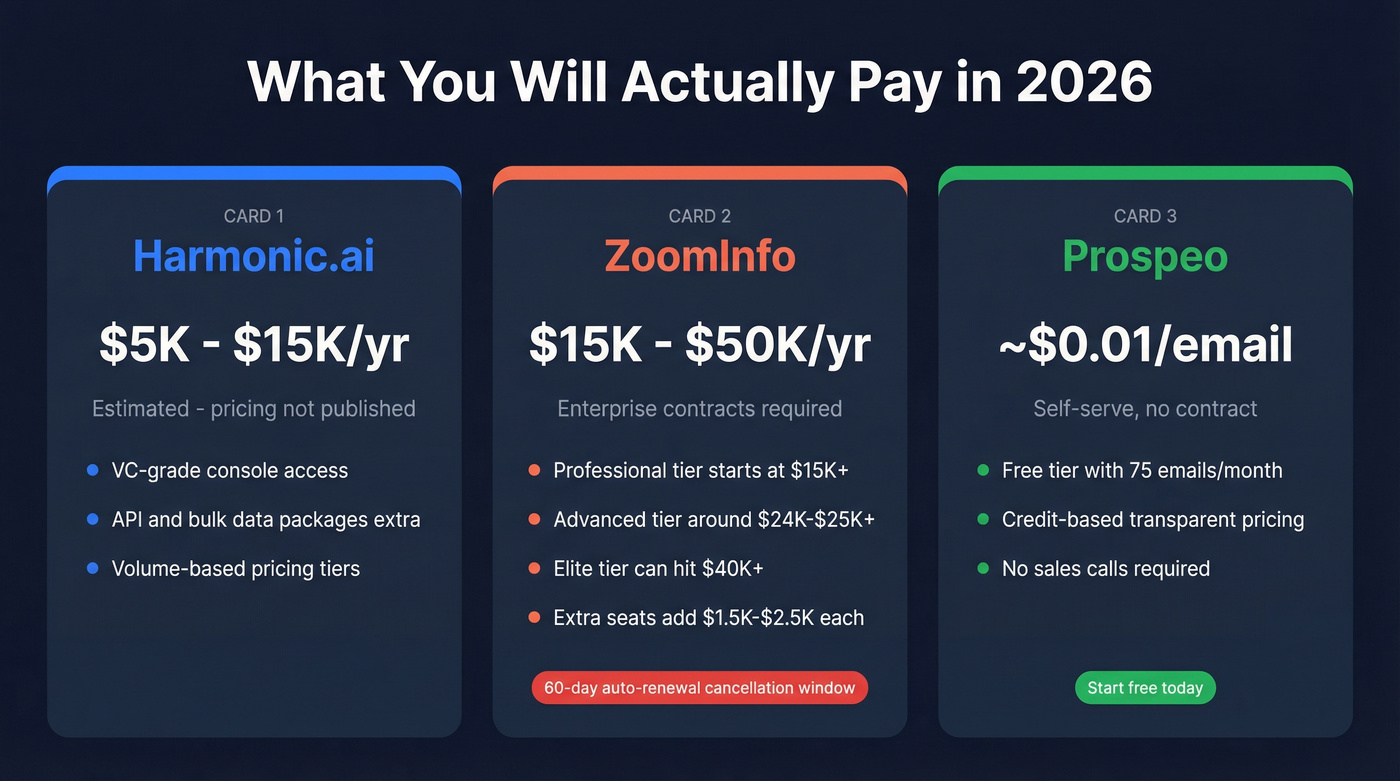
One non-negotiable process item: mark the 60-day auto-renewal cancellation window the day you sign. Miss it and you're locked in for another year. I've watched teams burn five figures because someone forgot a calendar reminder.
Harmonic: Pricing isn't published. For a VC-grade console, a realistic range is $5K-$15K/year, with API and bulk data packages pushing higher depending on volume and delivery needs.
For adjacent options, VC teams usually shortlist Crunchbase or PitchBook alongside Harmonic, while sales teams cross-shop Apollo or Lusha against ZoomInfo.
When You Just Need Contact Data
Sometimes the real need is simpler than either of these platforms: you want accurate emails and direct dials, fast, without a procurement cycle.

Prospeo covers 300M+ professional profiles, 143M+ verified emails, and 125M+ verified mobile numbers. Email accuracy sits at 98%, mobile pickup rate at 30%, and records refresh every 7 days - the industry average is about 6 weeks. It's self-serve, GDPR compliant, and built for day-to-day prospecting and enrichment with 30+ filters, 15,000 intent topics, Chrome extension workflows, and API access at a 92% match rate.
Pricing is transparent and credit-based: a free tier gives you 75 emails plus 100 extension credits per month, then it's roughly $0.01 per email with 10 credits per mobile. No contracts, no sales calls required.
Most teams comparing Harmonic and ZoomInfo actually just need reliable emails and direct dials, fast. Prospeo refreshes 300M+ profiles every 7 days - 6x faster than the industry average - with a 92% API match rate and 30+ search filters including buyer intent and technographics.
Enterprise-grade data, self-serve pricing. No sales calls required.
FAQ
Are Harmonic and ZoomInfo direct competitors?
Not really. Harmonic is for investor-grade startup discovery and diligence workflows. ZoomInfo is for GTM teams that need broad B2B data, intent signals, and CRM integrations to run outbound at scale. Picking between them depends entirely on whether you're sourcing deals or running sales campaigns.
How much does ZoomInfo cost in 2026?
Most teams land between $15,000 and $50,000 per year once you factor in seats and intent add-ons. You can often negotiate meaningful discounts at renewal, but you still need to budget like it's an enterprise tool.
What's a cheaper option if I only need verified contact data?
Prospeo gives you 98% verified email accuracy, a 7-day data refresh cycle, and self-serve pricing at roughly $0.01 per email - plus a free tier with 75 emails per month. No annual contract, no sales calls required.