

How to Collect Intent Data and Actually Act on It
Most intent data articles spend 2,000 words explaining what it is and never tell you how to actually collect it. You already know intent data matters. You're here for the mechanics - the tracking setup, the tool choices, and the part everyone forgets: turning a surging account into a person you can actually call.
What You Need (Quick Version)
- First-party intent: Track behavior on your own site with GA4, HubSpot, or your MAP. It's free, reliable, and increasingly important as cookies disappear.
- Third-party intent: Buy aggregated research signals from a co-op like Bombora or a platform that bundles intent into its contact database.
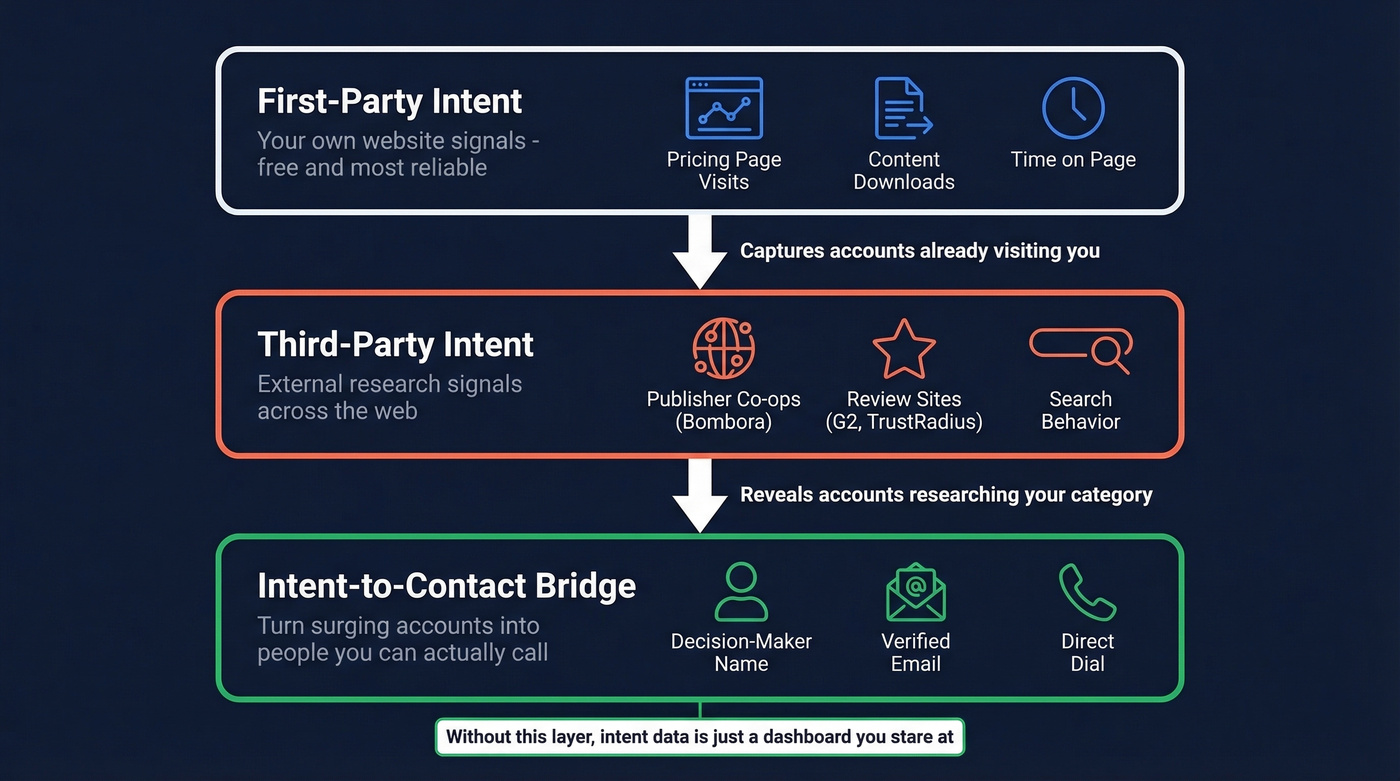
- The intent-to-contact bridge: Intent data tells you which accounts are surging. It doesn't tell you who to call. You need a tool that gives you the decision-maker's verified email and direct dial at those surging accounts.
What Intent Data Is (30-Second Version)
Intent data captures digital signals suggesting a company is actively researching a topic related to what you sell. First-party intent comes from your own properties - website visits, content downloads, pricing page views. Third-party intent comes from external publisher networks, review sites, and search behavior aggregated across the web.
Second-party intent is someone else's first-party data shared directly with you. G2 and TrustRadius buyer intent reports are the most common examples.
Collecting First-Party Intent Signals
First-party signals are the most reliable buyer intent you'll ever get. Someone visiting your pricing page three times in a week is a stronger buying signal than any third-party topic surge. And it's all free.
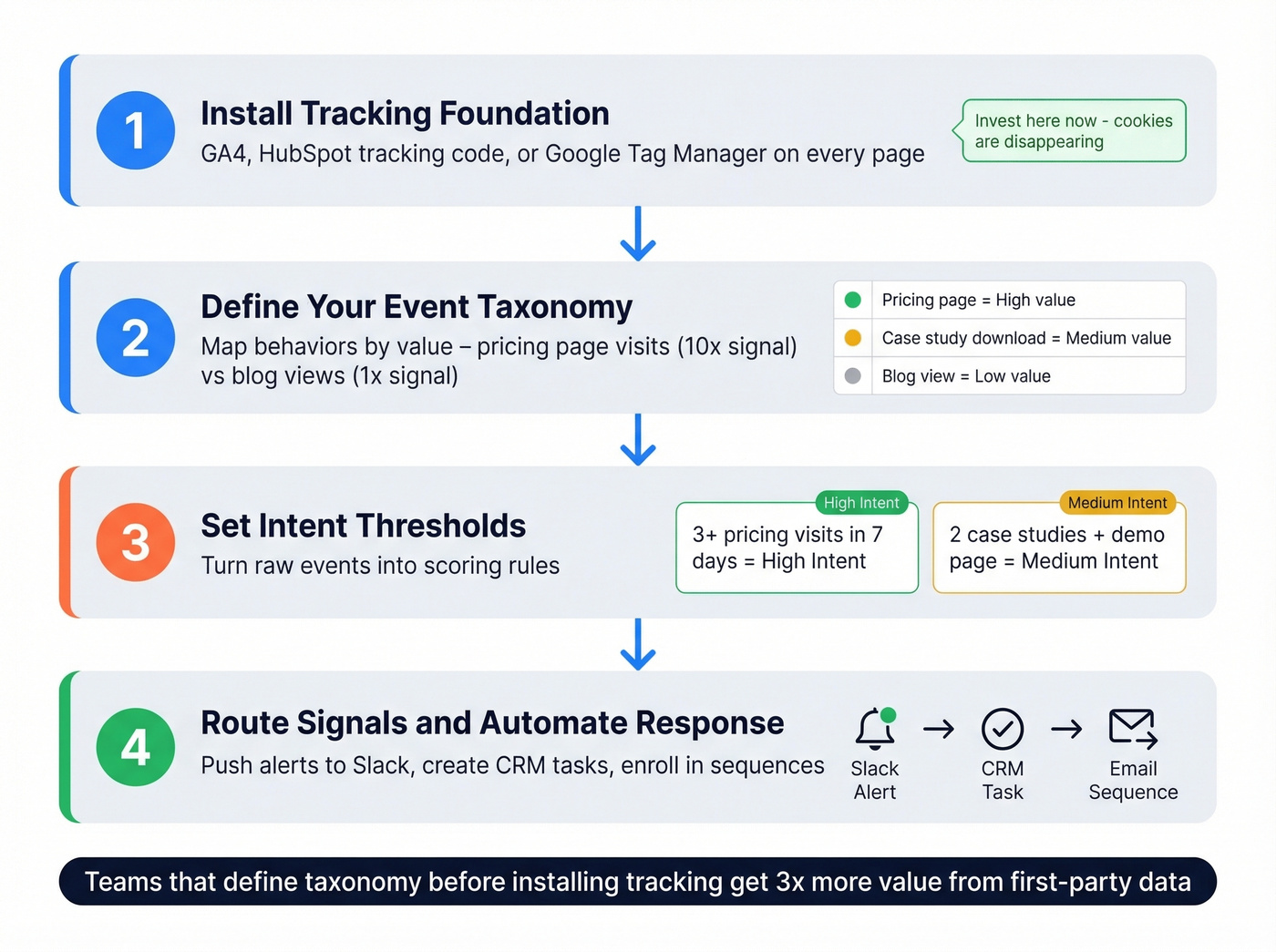
1. Install your tracking foundation. GA4, HubSpot tracking code, or Google Tag Manager - pick your stack and get it on every page. With third-party cookie deprecation accelerating, every dollar you invest in first-party tracking infrastructure pays compounding returns over the next two to three years.
2. Define your event taxonomy. A pricing page visit signals 10x more intent than a blog view. Map out the behaviors that matter: pricing page visits, case study downloads, integration docs, demo page views, and time-on-page thresholds like 90+ seconds on a product page. Tag each as a trackable event.
In our experience, teams that define their event taxonomy before installing any tracking get 3x more value from their first-party data than those who retrofit it later. The difference is huge - you're measuring what matters from day one instead of drowning in noise and trying to reverse-engineer meaning from a pile of generic pageview events six months down the road.
3. Set intent thresholds. Raw events are noise. Intent scoring turns them into signal. A simple rule: 3+ visits to your pricing page within 7 days = high intent. Two case study downloads plus a demo page view = medium intent. Define these thresholds in your MAP or build them in HubSpot's lead scoring.
4. Route signals and automate the response. Intent data that sits in a dashboard doesn't close deals. Push high-intent alerts to Slack or directly into your CRM so reps act within hours.
Better yet, build the full workflow: when a target account hits your pricing page 3+ times in 7 days, auto-create a Salesforce task, push a Slack alert to the account owner, and enroll the contact in a 3-touch email sequence. HubSpot workflows, Salesforce flow triggers, or Zapier all work here.

You're tracking first-party signals and routing them to your CRM. But when an anonymous account hits your pricing page three times, you still need a name, a verified email, and a direct dial. Prospeo layers 15,000 Bombora intent topics into 300M+ profiles with 98% email accuracy - so you go from surge alert to outreach in seconds, not days.
Stop watching intent signals decay while you hunt for contact data.
Gathering Third-Party Intent Data
First-party data only captures people who already found you. Third-party intent reveals companies researching your category across the broader web - before they ever hit your site.
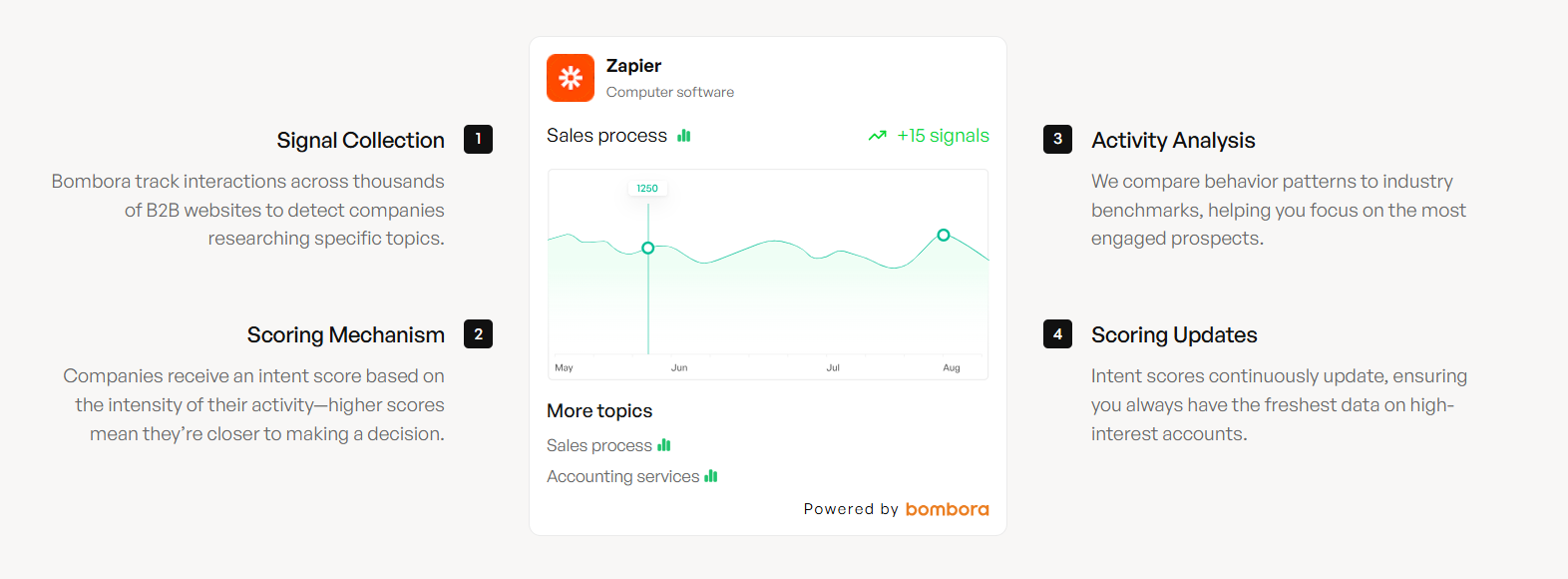
The dominant collection model is the publisher co-op. Bombora, the largest, aggregates consent-based research activity across 5,000+ B2B publisher sites. When a company's employees read significantly more content about "cloud security" or "sales engagement" than their historical baseline, that gets flagged as a topic surge.
Within third-party data, signals break down further. Search intent tracks what companies are Googling. Engagement intent captures what content they're consuming. Technographic signals reveal what tools they're evaluating. Bidstream data scrapes ad-exchange bid requests to infer browsing behavior - it's cheaper but carries real GDPR risk and lower accuracy. Review-site signals from G2 and TrustRadius capture companies actively comparing products in your category.
Here's the thing: standalone third-party intent platforms aren't cheap. Bombora direct contracts run $25K-$50K+/year. Enterprise ABM suites like 6sense or Demandbase that layer intent into workflows cost $30K-$100K+/year. For most teams, the smarter move is accessing intent data through a platform that bundles it with the contact data you actually need to act on the signals.
If your average deal size is under $15K, you almost certainly don't need a standalone intent platform. First-party signals plus a contact database with bundled intent will get you 80% of the value at 5% of the cost. Skip the six-figure contract.
From Signal to Outreach - The Step Everyone Skips
Your team sees 200 accounts surging on your category topic. Now who do you call?
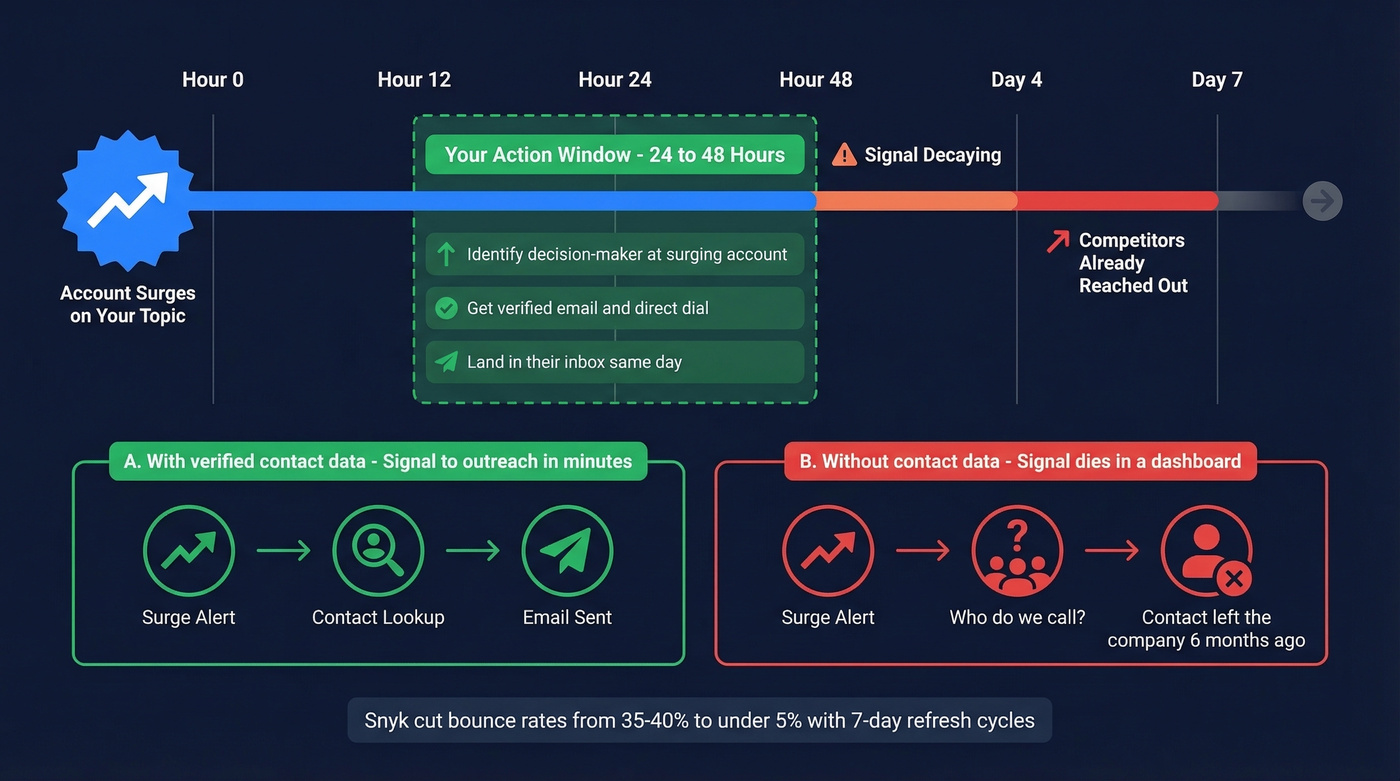
The only contact in your CRM left the company six months ago. This is where most intent data investments die. A common complaint on r/sales is that intent platforms tell you which accounts are surging but leave you scrambling to find the right person - which is exactly the gap a contact-layer tool fills.
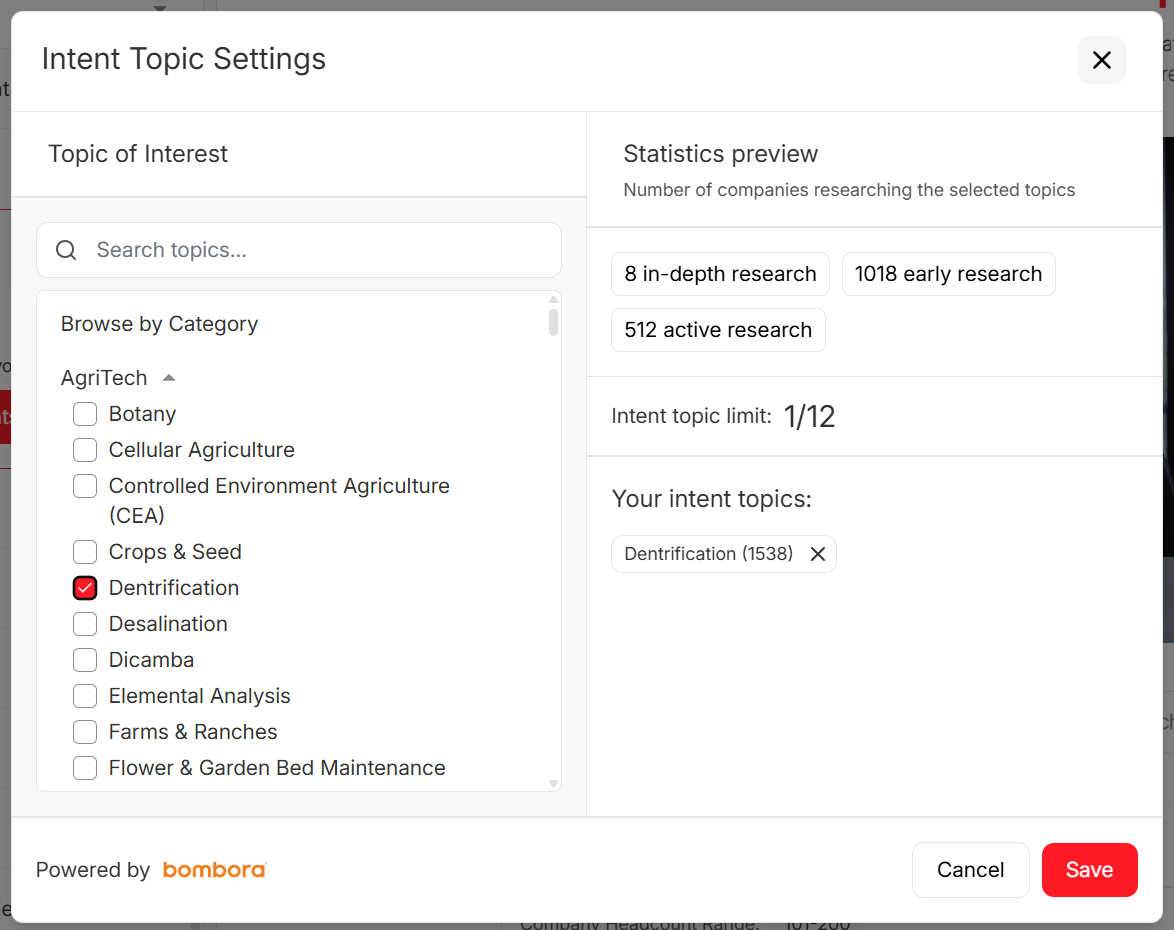
In practice, you've got 24-48 hours before signals decay and competitors reach out first. Prospeo closes this gap by layering 15,000 intent topics directly into a database of 300M+ professional profiles with 98% email accuracy and 125M+ verified mobile numbers. You identify the surging account, filter by job title and seniority, and get verified contact data in seconds - not days.
We've seen the difference a 7-day data refresh cycle makes firsthand. It means you're not reaching out to someone who changed roles six weeks ago, which is what happens with platforms refreshing on the industry-average 6-week cycle. Snyk's 50-person AE team cut bounce rates from 35-40% to under 5% and added 200+ new opportunities per month after switching to fresher, verified data.
Intent Data Tools Compared
| Tool | Data Type | Topics/Signals | Approx. Pricing | Best For |
|---|---|---|---|---|
| Prospeo | Intent + contacts | 15,000 topics | Free tier / ~$0.01/email | Signals + verified contacts |
| Bombora | Third-party co-op | 12,000+ topics | $25K-$50K+/yr | Raw intent data at scale |
| 6sense | ABM + intent | Proprietary | $30K-$100K+/yr | Enterprise ABM |
| G2 Buyer Intent | Review-site signals | Category-level | $10K-$30K+/yr | Companies with G2 profiles |
| ZoomInfo Intent | Bundled intent | Bombora-powered | $15K-$40K+/yr | Teams already on ZoomInfo |
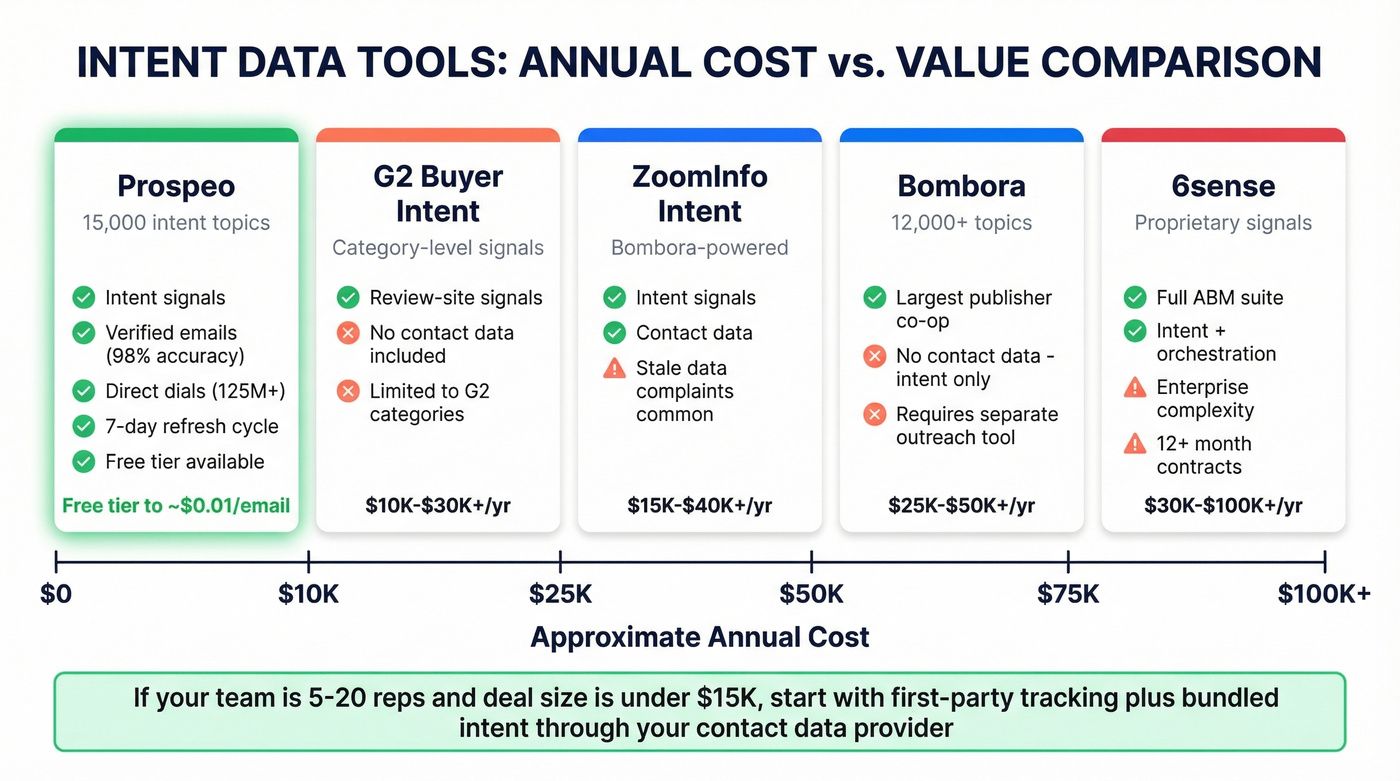
You don't need a $50K platform to start. Your website analytics already capture buyer intent for free. For third-party signals paired with verified contacts, Prospeo starts with a free tier and scales at roughly $0.01 per email - a fraction of what standalone intent platforms charge before you even add a phone or data layer.
Let's be honest: if you're a team of 5-20 reps, the enterprise ABM suite is overkill. Start with first-party tracking, layer in bundled intent through your contact data provider, and save the six-figure platform for when you've proven the workflow works.
Standalone intent platforms cost $25K-$100K/year and still don't give you the person to call. Prospeo bundles intent data with 143M+ verified emails and 125M+ verified mobiles at ~$0.01 per email - refreshed every 7 days, not 6 weeks. Snyk's 50 AEs added 200+ opportunities per month after making the switch.
Get 80% of the value at 5% of the cost. No six-figure contract required.
FAQ
How much does intent data cost?
Free to $100K+/year depending on the source. First-party intent via GA4 costs nothing. Standalone platforms like Bombora run $25K-$50K+/year, and enterprise ABM suites go higher. Bundled options that pair intent with verified contact data start with free tiers and scale from there.
What's the best approach to buyer intent data collection?
Start with first-party signals - they're free, high-quality, and fully within your control. Layer in third-party sources once you've maxed out what your own site traffic reveals. The key is pairing signals with verified contact data so your team can act on surges within 24-48 hours, not just report on them.
Can you collect intent data for free?
Yes. First-party intent from your own website via GA4 or HubSpot is completely free and often the highest-quality signal available. Some contact data platforms also offer free tiers that include intent signals - enough to test the workflow before committing budget.
How fast should you act on intent signals?
Within 24-48 hours. Intent signals decay quickly, and your competitors are likely seeing the same surges from the same data co-ops. The teams that win go from "this account is researching our category" to "we're in the decision-maker's inbox" the same day.