

HubSpot vs Odoo in 2026: Pricing, TCO & Verdict
Comparing HubSpot and Odoo is like comparing a scalpel to a Swiss Army knife. Both cut, but they're built for fundamentally different jobs. HubSpot is a marketing and sales platform that happens to include a CRM. Odoo is an ERP system that happens to include a CRM module. The overlap is real but narrow - and picking the wrong one costs you years of migration pain, not just a bad quarter.
30-Second Verdict
Choose HubSpot if you're a marketing-led B2B team that wants fast time-to-value, strong automation, and a massive integrations ecosystem. HubSpot Sales Hub carries a 4.4/5 on G2 from 13,564 reviews - that kind of trust signal is built on volume.
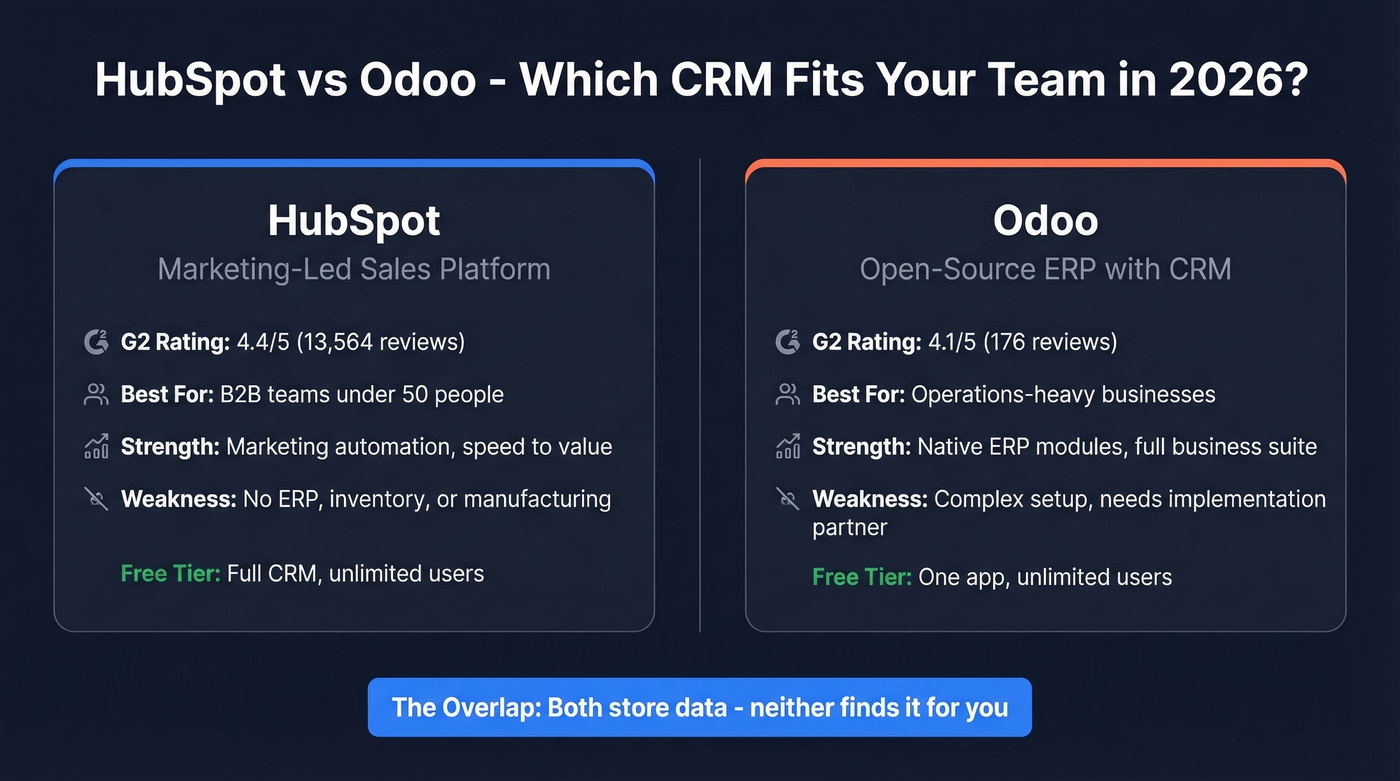
Choose Odoo if you're an operations-heavy business - manufacturing, distribution, retail - that needs ERP and CRM under one roof. Odoo CRM sits at 4.1/5 on G2 from 176 reviews. Fewer reviews, but the users who love it are deep in the platform.
Here's the thing: if your average deal size is under $15k and you don't need ERP, HubSpot's free CRM plus a solid data enrichment tool will outperform either paid plan for the first 12 months.
HubSpot at a Glance
HubSpot's strength is speed to value. You can have a rep running sequences within a day of signing up. The free CRM tier - unlimited users, contact management, basic reporting - is the best free CRM on the market. We've tested a lot of onboarding flows, and no other platform gets a 5-person team operational faster.
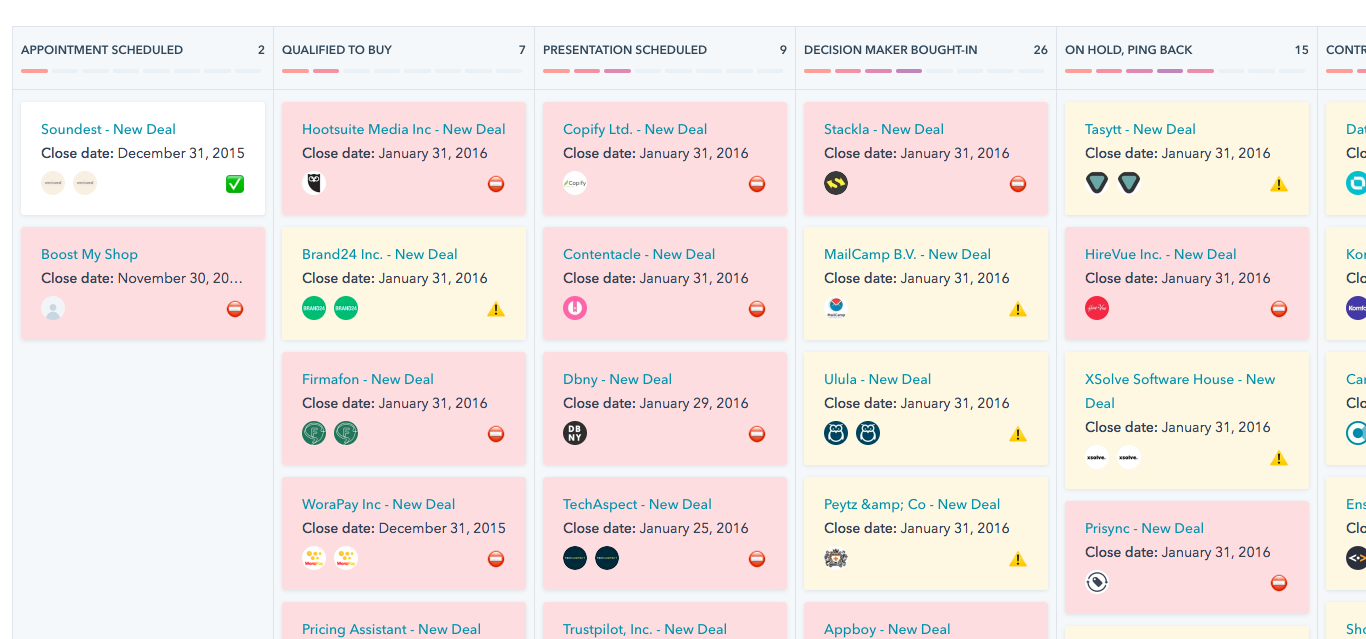
Costs escalate once you scale, though. HubSpot's seat-based pricing splits users into Core Seats (paid) and View-only Seats (free). Sales Hub Starter runs around $9-$15/seat/mo depending on commitment, Pro jumps to $90/seat/mo, and Enterprise hits $150/seat/mo. Stack Marketing Hub Pro at $800/mo on top and you're looking at real money. Paid onboarding is common once you move upmarket and need hands-on implementation help. The results can justify the spend - when marketing automation drives pipeline, HubSpot earns its price tag.
Best for: Marketing-led B2B teams under 50 people who prioritize ease of use over operational breadth.
Skip if: You need inventory, manufacturing, or accounting anywhere near your CRM.
Odoo: A Different Animal
Forget mirroring HubSpot's playbook. Odoo starts from a completely different premise: it's an open-source ERP with dozens of native modules covering CRM, invoicing, manufacturing, inventory, and accounting. If you need operations and sales in one system, Odoo's native module integration is its killer feature. HubSpot has no equivalent.

We've seen Odoo implementations run 2x over budget when teams skip the implementation partner step. The platform rewards patience and planning - rushing it is the most expensive mistake you can make.
Three pricing tiers: One App Free (genuinely free, one app, unlimited users), Standard at $24.90/user/mo for all apps on Odoo Online, and Custom at $37.40/user/mo adding Studio, multi-company, external API, and on-premise deployment. Odoo.sh hosting runs an additional $72.25/mo. Grameen Danone Foods deployed Odoo across manufacturing and distribution in Bangladesh, replacing fragmented spreadsheets with a unified ERP - the kind of operational transformation HubSpot simply can't deliver.
Best for: Operations-heavy businesses that need ERP + CRM under one roof.
Skip if: You want plug-and-play simplicity or best-in-class marketing automation.
Feature-by-Feature Comparison
| Feature | HubSpot | Odoo | Edge |
|---|---|---|---|
| CRM / Pipeline | Polished, intuitive | Solid, less refined | HubSpot |
| Marketing Automation | Best-in-class | Email campaigns, basic workflows | HubSpot |
| ERP / Operations | None | Native, dozens of modules | Odoo |
| Integrations | 1,000+ marketplace | Growing, fewer options | HubSpot |
| AI Features | Breeze AI suite | Odoo AI (newer, limited) | HubSpot |
| Customization | Custom objects | Studio (Custom/Enterprise) | Odoo |
| Free Tier | Full CRM, unlimited users | One app, unlimited users | Tie |
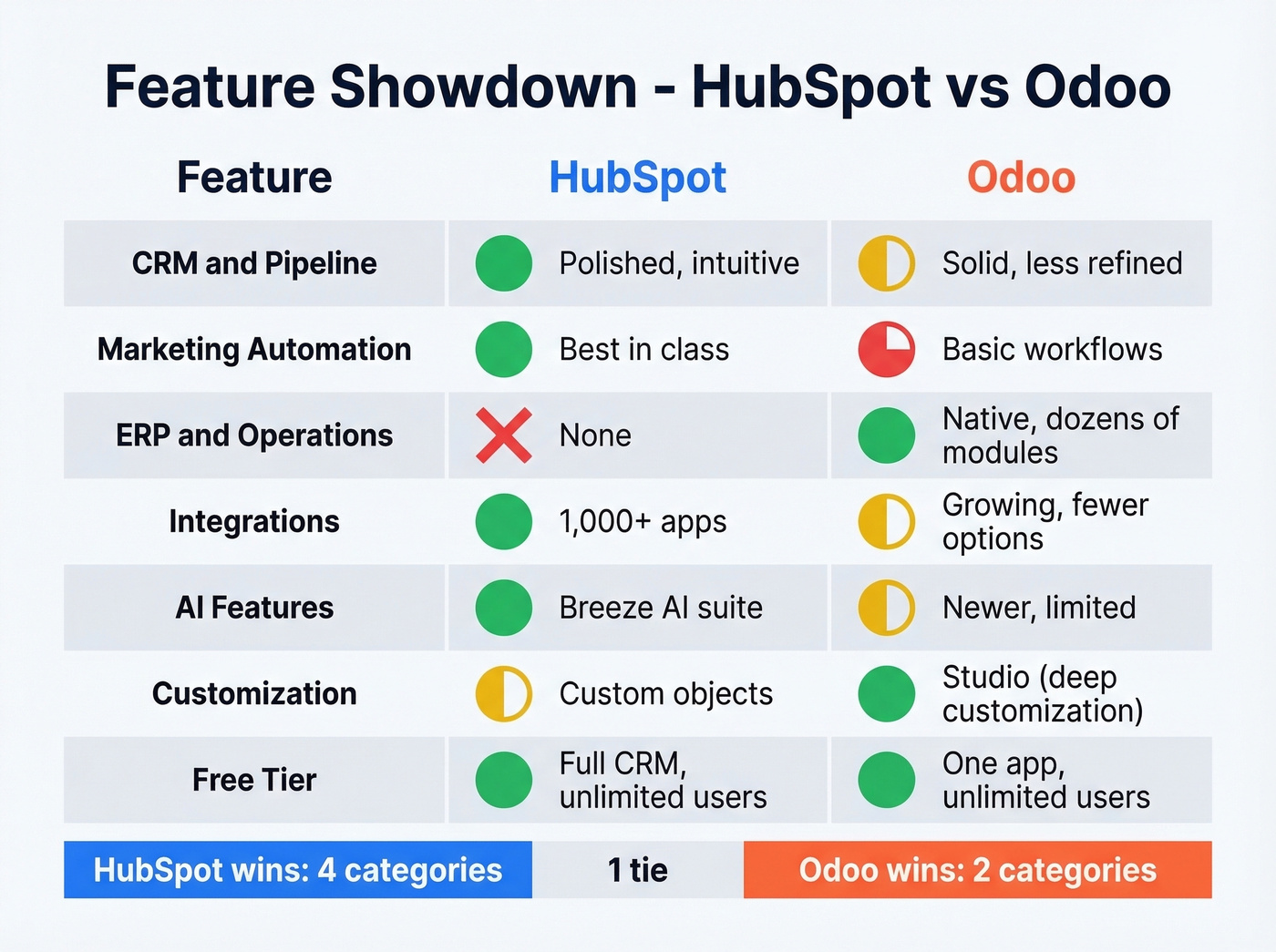
The real differentiator is simpler than this table suggests. If you need inventory, manufacturing, or accounting natively connected to your CRM, Odoo is the only option. Period. If you need marketing automation that actually drives pipeline, HubSpot wins by a wide margin - Odoo's marketing tools are functional but they aren't in the same league.

HubSpot or Odoo - neither finds you verified contact data. Prospeo enriches your CRM with 98% accurate emails, 125M+ verified mobiles, and 50+ data points per contact. Native HubSpot integration means your pipeline stays clean automatically.
Stop debating CRMs and start filling them with data that converts.
Real Pricing: 10-User Team
| HubSpot Sales Pro | Odoo Standard | Odoo Custom | |
|---|---|---|---|
| Monthly | $900 | $249 | $374 |
| Annual | $10,800 | $2,988 | $4,488 |
Add HubSpot Marketing Hub Pro and the monthly jumps to $1,700 ($20,400/yr). The licensing gap is massive. But licensing isn't the whole story.
5-Year TCO for 20 Users
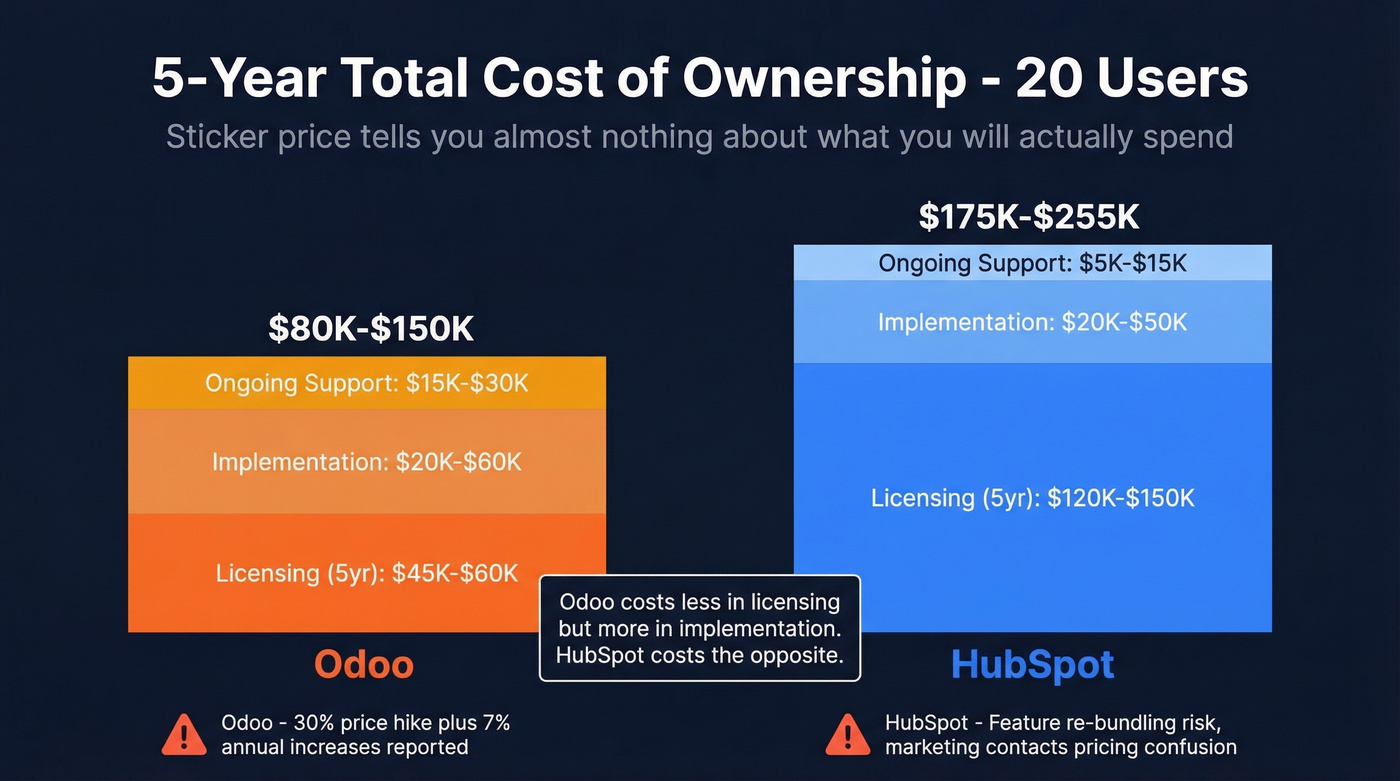
This is where the HubSpot vs Odoo decision gets interesting, because the sticker price tells you almost nothing about what you'll actually spend over five years.
| Cost Category | Odoo | HubSpot |
|---|---|---|
| Licensing (5yr) | $45K-$60K | $120K-$150K |
| Implementation | $20K-$60K | $20K-$50K |
| Ongoing Support/Dev | $15K-$30K | $5K-$15K |
| 5-Year TCO | $80K-$150K | $175K-$255K |
Odoo costs less in licensing but more in implementation. HubSpot costs the opposite. ERP implementation services often cost one to two times the software licensing cost, and Odoo is no exception. Factor in Odoo's reported 30% price hike plus roughly 7% annual increases going forward, and the licensing gap narrows over time.
HubSpot carries its own risk: feature re-bundling. Landing pages moved from Marketing Hub to Content Hub. The marketing contacts pricing model confuses teams and inflates costs when you aren't watching closely.
What Real Users Say
Neither platform escapes frustration. One HubSpot user on Reddit called it the "absolute worst" SaaS experience, citing a revolving door of reps and unhelpful support. On the Odoo side, users flagged the 30% price hike and the reality that you need an Odoo engineer on standby. One user migrating to Odoo.sh discovered that support hours don't cover custom code - a painful surprise mid-migration.
Let's put the review volume in perspective: HubSpot has about 77x more reviews than Odoo on G2. That gap is itself a data point. HubSpot's complaints come from a massive user base with high expectations, while Odoo's come from a smaller, more technical audience dealing with implementation complexity. The consensus on r/smallbusiness tends to be that HubSpot is easier to live with day-to-day, but Odoo is harder to leave once you're all-in because it touches so many business functions.
The Data Gap Neither CRM Solves
Here's something that doesn't come up enough in these comparisons: a CRM is only as good as the data inside it. Neither HubSpot nor Odoo finds you accurate contact data - they store and organize what you give them. Garbage in, garbage out, regardless of which platform you pick.
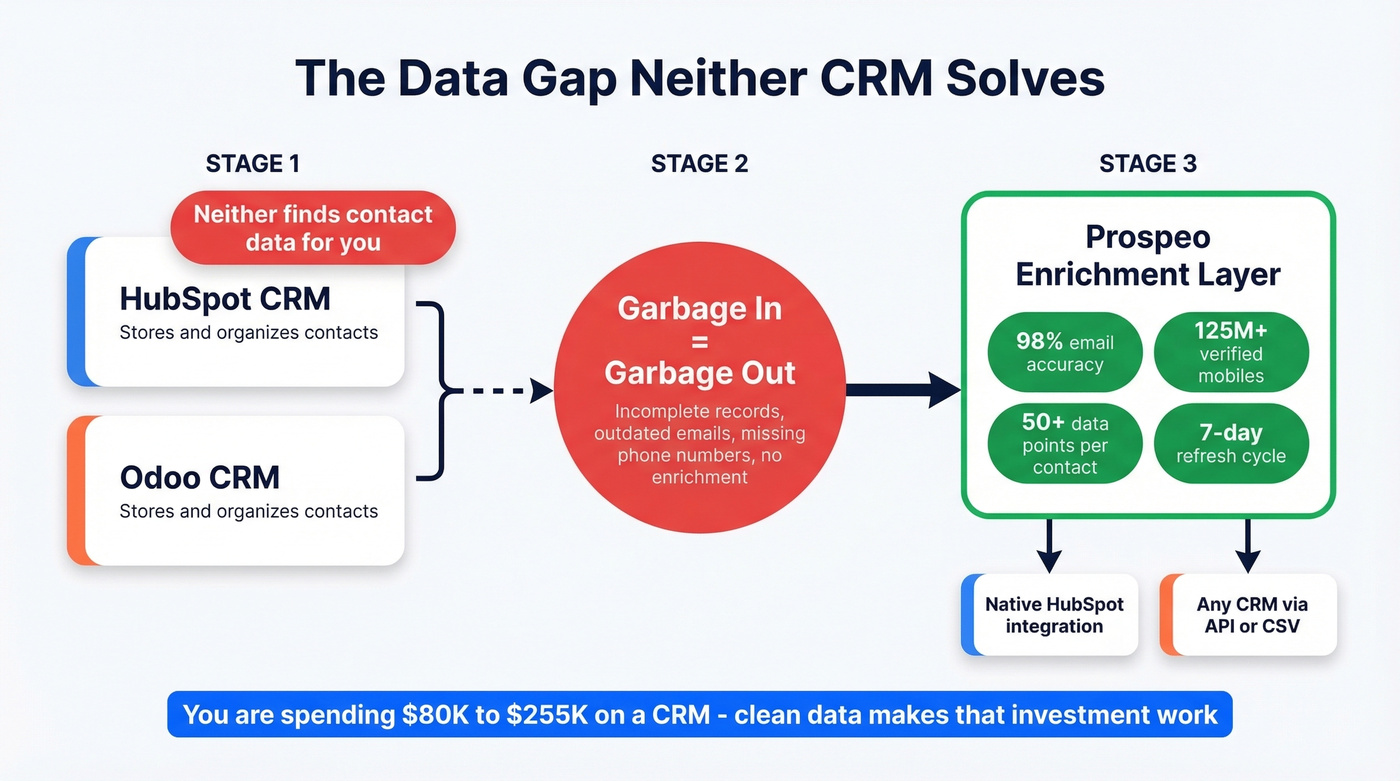
Prospeo fills that gap with 98% verified email accuracy and a 7-day data refresh cycle. It integrates natively with HubSpot and connects to any CRM via API or CSV enrichment, returning 50+ data points per contact. Whichever platform you choose, your pipeline needs clean data underneath it.
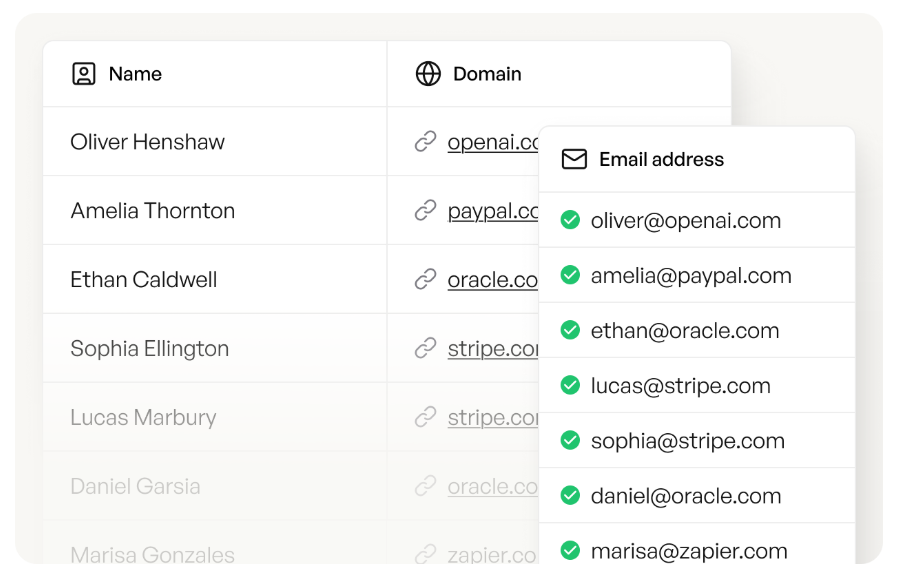
You're spending $80K-$255K on a CRM over five years. Don't let bad data waste that investment. Prospeo's CRM enrichment returns contact data on 83% of leads at $0.01/email - with a 7-day refresh cycle that keeps your HubSpot or Odoo records current.
Your CRM budget deserves data that actually connects reps to buyers.
FAQ
Is Odoo really free?
One App Free is genuinely free - one app, unlimited users on Odoo Online. But most businesses need multiple apps, which pushes you to Standard ($24.90/user/mo) or Custom ($37.40/user/mo). Add implementation costs and "free" disappears fast.
Can HubSpot replace an ERP?
No. HubSpot handles CRM, marketing, sales, and service but has no native inventory, manufacturing, or accounting modules. You'd need Odoo, NetSuite, or a dedicated ERP alongside HubSpot - not instead of it.
How do I keep CRM data accurate?
Use a B2B data platform like Prospeo to enrich contacts with verified emails and direct dials before they enter your pipeline. With a 92% API match rate and 50+ data points per contact, it works with both HubSpot and Odoo via native integrations or CSV import.
Which CRM is better for small teams?
HubSpot's free CRM is the fastest path to a working pipeline for teams under 10 reps - no implementation partner needed. Odoo's One App Free tier works if you only need CRM, but the moment you add invoicing or inventory, you're on a paid plan with real setup complexity.