

Hunter vs Gatherer Sales: The Practitioner's Guide to Role Specialization
Every quarter, someone in leadership says "we need a hunter." What they usually mean is they want an AE who'll do cold outbound, run full-cycle deals, and somehow also nurture existing accounts on the side. That's not a hunter - that's a burnout machine.
The reality is that most reps fall on a spectrum between hunter and farmer, not in a neat box. And the performance gap between the two modes is brutal. In one practitioner thread, a candidate benchmarked marketing-sourced leads closing at 50-60%, while cold-generated pipeline hovered around 5%. Knowing which role you're actually hiring for - or selling in - changes everything about comp, territory design, and quota.
Quick Summary: Hunters vs Gatherers
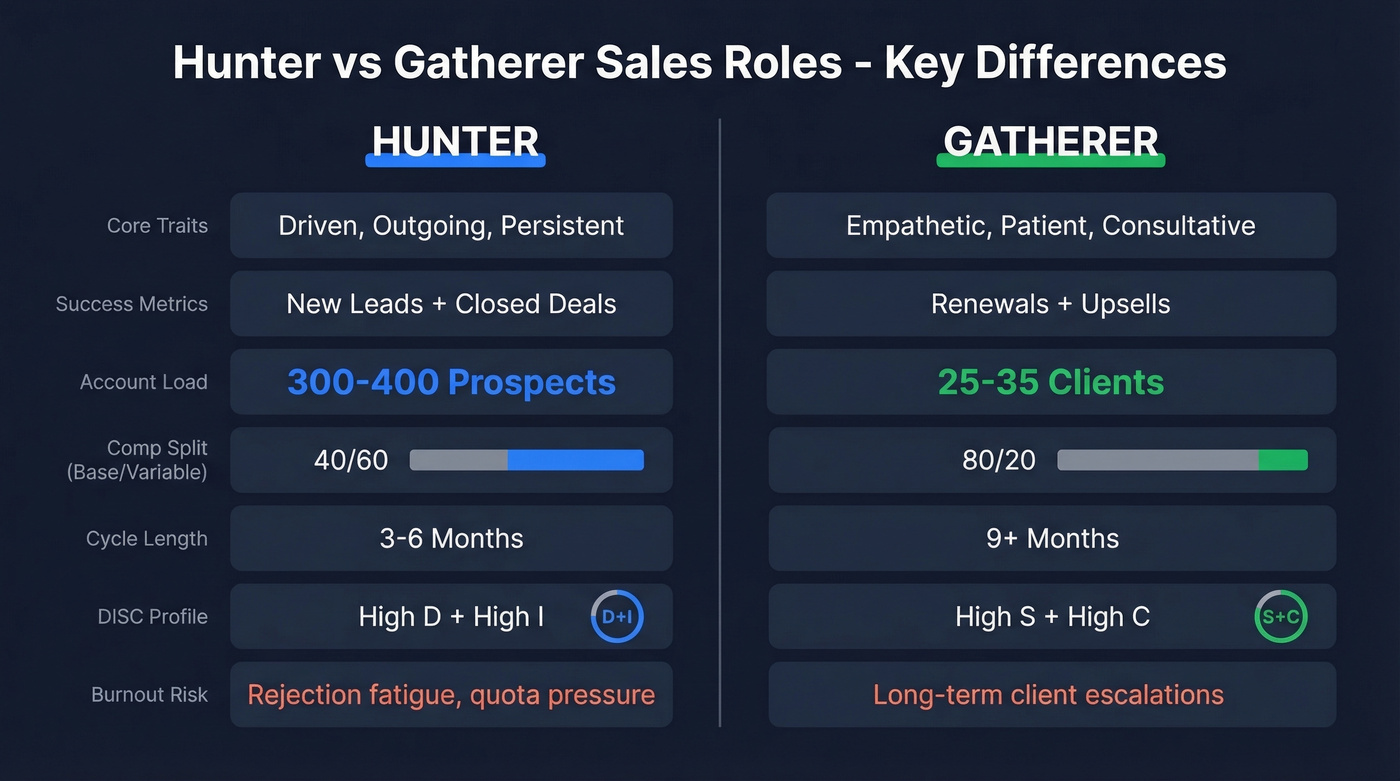
Hunters prospect cold, often manage 300-400 accounts per territory, and commonly sit on 40/60 base/incentive comp splits. Gatherers (account managers) nurture 25-35 existing accounts and commonly sit on 80/20 splits.
Acquiring a new customer costs 5-25x more than retaining one - which is why gatherers protect the largest revenue base. Once you have enough coverage to split responsibilities cleanly, specialize. Hybrids dilute both roles.
Core Differences at a Glance
The traits, workloads, and risk profiles diverge sharply:
| Dimension | Hunter | Gatherer (Farmer) |
|---|---|---|
| Core traits | Driven, outgoing, persistent | Empathetic, patient, consultative |
| Success metrics | New leads + closed deals | Renewals + upsells |
| Account load | 300-400 prospects | 25-35 clients |
| Deal size | Varies; volume-driven | Often larger; $500K-$1M+ in strategic expansion books |
| Cycle length | 3-6 months | 9+ months for expansion cycles |
| DISC profile | Higher D + higher I | Higher S, frequently higher C |
| Burnout risk | Rejection fatigue, quota pressure | Long-term client escalations |
The DISC mapping is a useful shorthand. Hunters skew toward dominance and influence - they're wired to push forward and persuade. Gatherers lean into steadiness (and often conscientiousness), building trust over time and sweating the details. Neither profile is "better." They're optimized for different jobs.
Compensation by Role
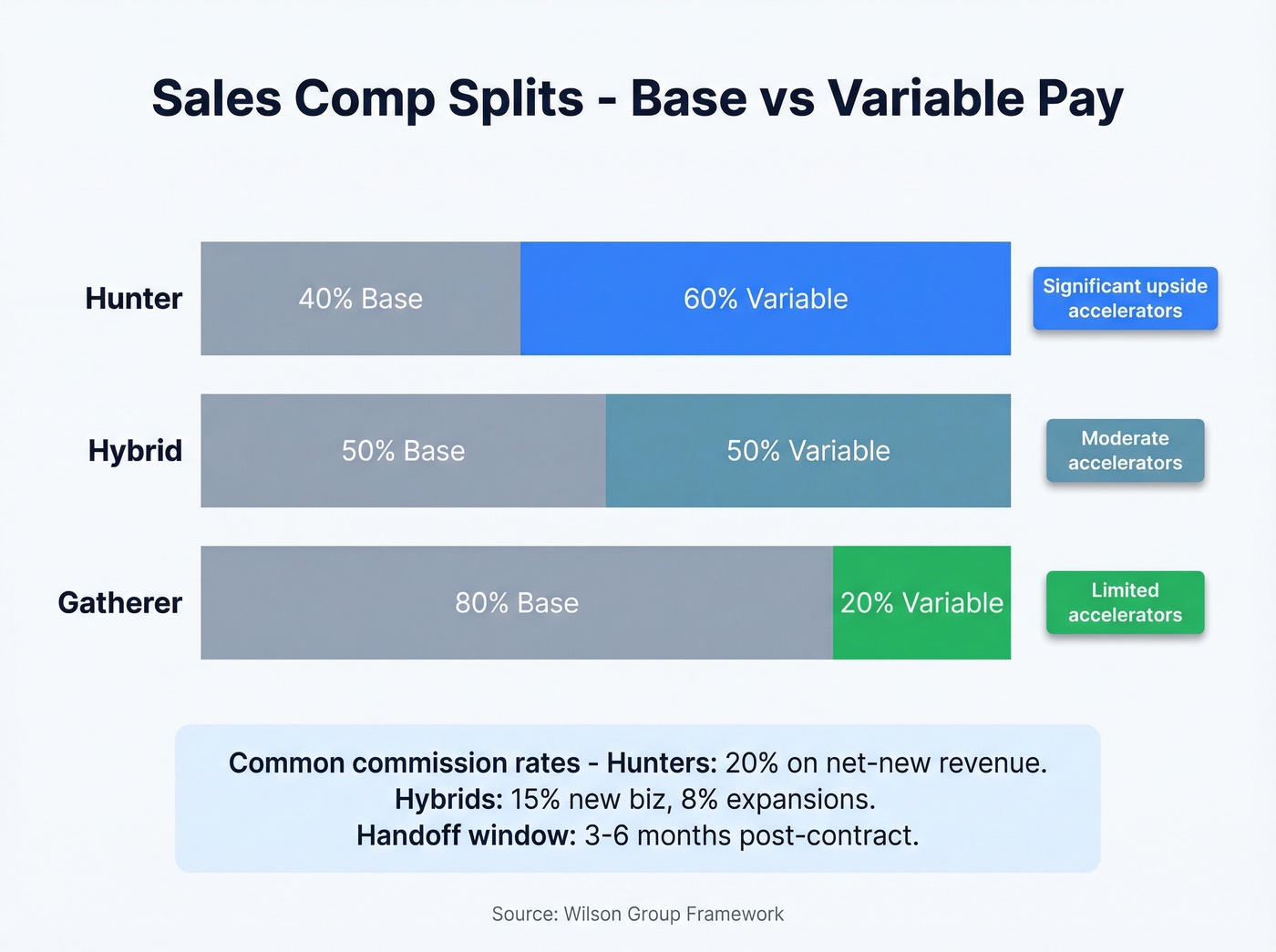
Comp design is where role specialization gets real. The Wilson Group's framework lays out the standard splits:
| Role | Base/Incentive | Accelerators |
|---|---|---|
| Hunter | 40/60 | Significant upside |
| Gatherer | 80/20 | Limited |
| Hybrid | 50/50 or 30/70 | Moderate |
In practice, hunter comp plans often include 20% commission on net-new revenue. Hybrid teams might run a split structure - 15% on new business, 8% on expansions.
The handoff timing matters too. Hunters typically transition accounts 3-6 months post-contract. When the first deal is small and expansion is expected, hunter and gatherer may share the account for 12-24 months, with the hunter paid at the higher rate while expansion is still valued like new business. We've seen orgs botch this handoff more than almost any other operational detail - get it wrong and you'll lose both the rep and the customer.

Hunter comp plans mean nothing if reps waste half their week on dead contacts. Prospeo refreshes 300M+ profiles every 7 days - not every 6 weeks - so your hunters reach real buyers across their 300-400 account territories. 98% email accuracy. 125M+ verified mobiles with a 30% pickup rate.
Stop burning hunter quota hours on bad data.
The Hybrid Debate
Look, the "hybrid rep" is mostly a myth. Assessment experts at salesassessmenttesting.com argue that forcing both roles onto one person "confuses and dilutes results." We've seen this play out repeatedly - hybrids default to whichever activity they prefer and neglect the other. A rep who loves closing will let renewals slide. A natural gatherer will avoid cold outreach like it's radioactive.
That said, there's a third archetype worth knowing: the "rancher." This is the hybrid who actually works - someone who allocates roughly 60% of their time to hunting and 40% to farming, typically in mid-market roles where account bases are manageable. Sean O'Shaughnessey, CRO at Agile Stacks, put it well: "The strongest salespeople are trappers in a gatherer position" - selling strategically to high-quality targets and maximizing revenue from them. If you've got a rep who genuinely thrives doing both, don't force a split. But don't build your org around the assumption that you'll find ten more of them.
How to Identify Your Type
Start with DISC. Higher D + higher I patterns point toward hunting. Higher S patterns point toward farming. But don't stop at a single assessment.
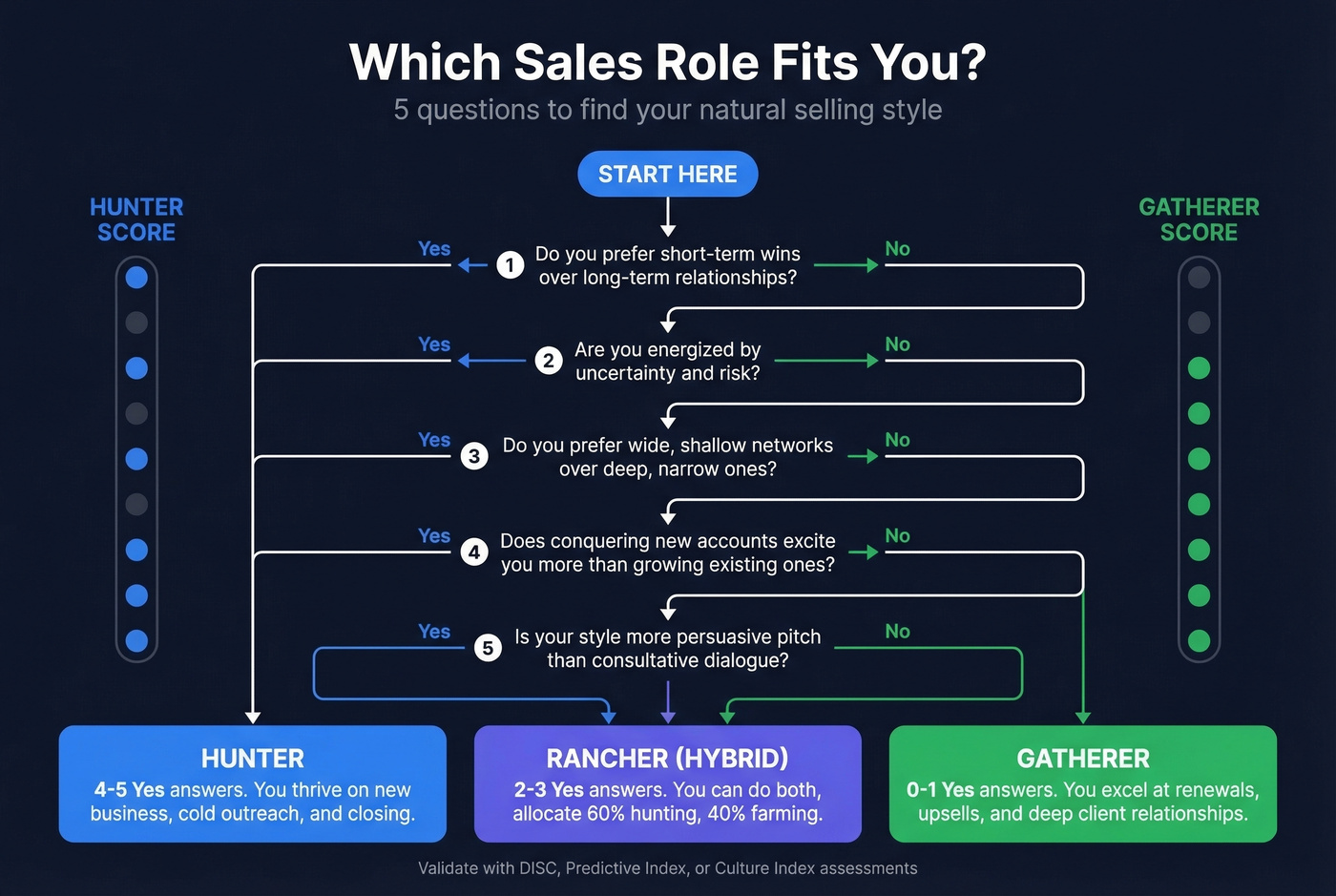
RevenuArc's differentiator framework gives you a more complete picture. Ask yourself - or your reps - about these dimensions:
- Time orientation - short-term wins or long-term relationships?
- Risk tolerance - energized by uncertainty or stabilized by predictability?
- Relationship approach - wide and shallow or deep and narrow?
- Motivational drivers - new conquest or account growth?
- Communication style - persuasive pitch or consultative dialogue?
Tools like Predictive Index and Culture Index can formalize this. When Ryder (a Fortune 500 with nearly $9B in annual revenue) implemented a hunter/farmer structure, they re-slotted existing sellers using assessments plus manager input rather than mass-hiring. Some hunters had their account bases cut from 13 down to 5 - painful, but necessary for focus. The lesson: you probably already have the right people, just in the wrong seats.
How Hunters Actually Build Pipeline
The operational reality of hunting is unglamorous. You've got 300-400 prospect accounts. Each one needs callable, emailable contacts. Bad data means bounced sequences, burned sender domains, and wasted rep hours.
This is where most hunting operations quietly fail - not on strategy, but on data quality. A hunter can have the perfect ICP, the sharpest messaging, and the right cadence, and still waste 40% of their week chasing dead emails and disconnected numbers. In our experience, the single highest-ROI fix for underperforming outbound teams isn't coaching or new sequences - it's cleaner data. Prospeo's 7-day refresh cycle and 98% email accuracy exist specifically because stale contact data is the silent killer of hunter productivity.
If you're tightening the top of funnel, start with sales prospecting techniques and a repeatable lead generation workflow before you touch comp.
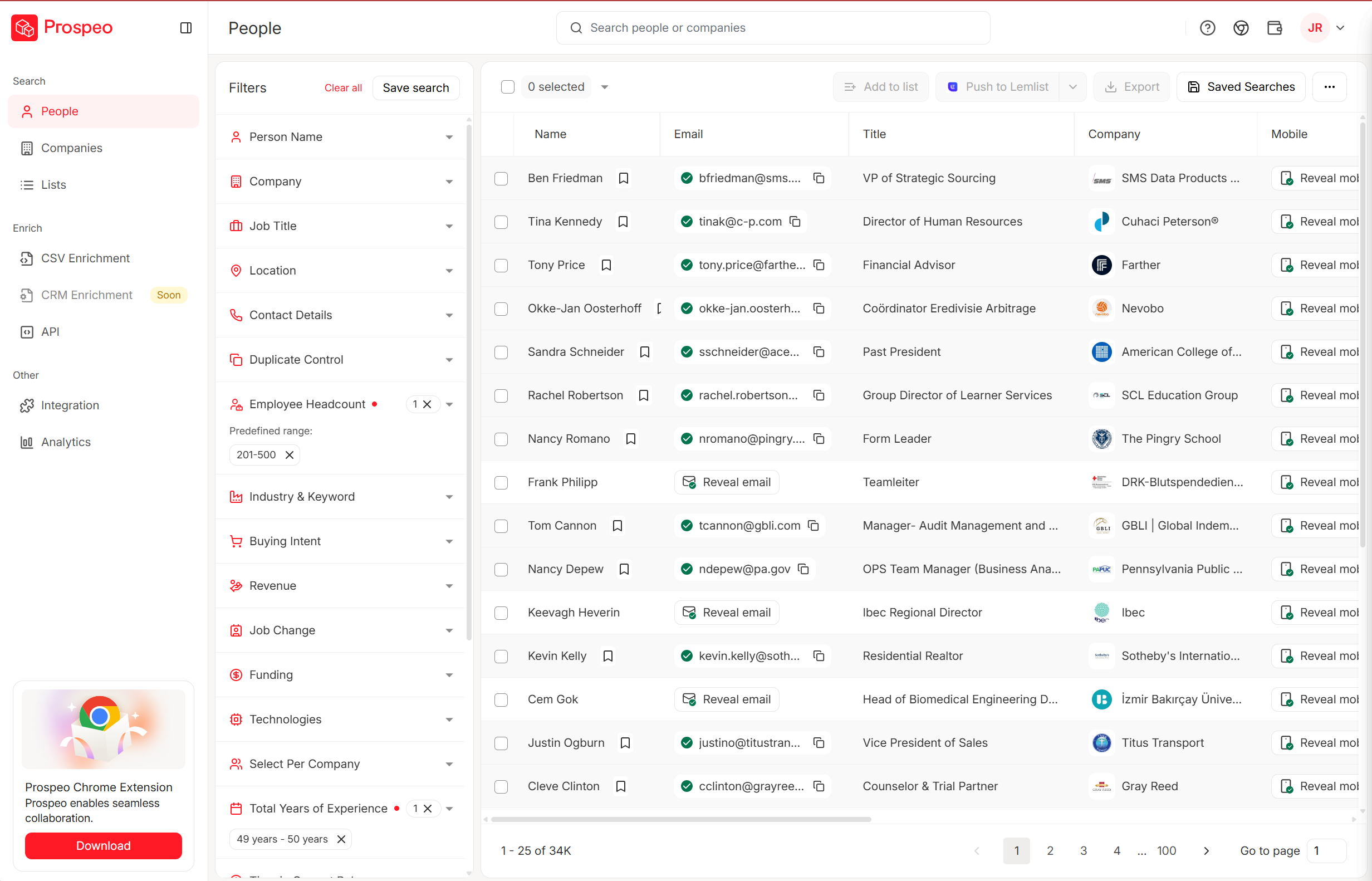
Whether you're building a specialized hunter team or running hybrid reps, the math is the same: cold outbound only works when contacts are real. Prospeo delivers verified emails at ~$0.01 each with 98% accuracy - so your hunters spend time selling, not troubleshooting bounces.
Give every hunter a territory full of verified, reachable prospects.
FAQ
Are gatherers less valuable than hunters?
Not even close. The 80/20 revenue heuristic shows most annual revenue comes from existing customers. Gatherers protect and grow the largest revenue base in the business. Hunters open doors; gatherers keep the lights on. Undervaluing account managers is one of the most expensive mistakes in sales org design.
Can you switch from hunter to gatherer?
Yes, but it requires deliberate skill-building. Use a DISC assessment to understand your natural tendencies, then seek stretch assignments. Most successful switches happen gradually - taking on a few expansion accounts while still hunting, or picking up cold outreach alongside an existing book. Overnight role changes rarely stick.
What's the right hunter-to-gatherer ratio?
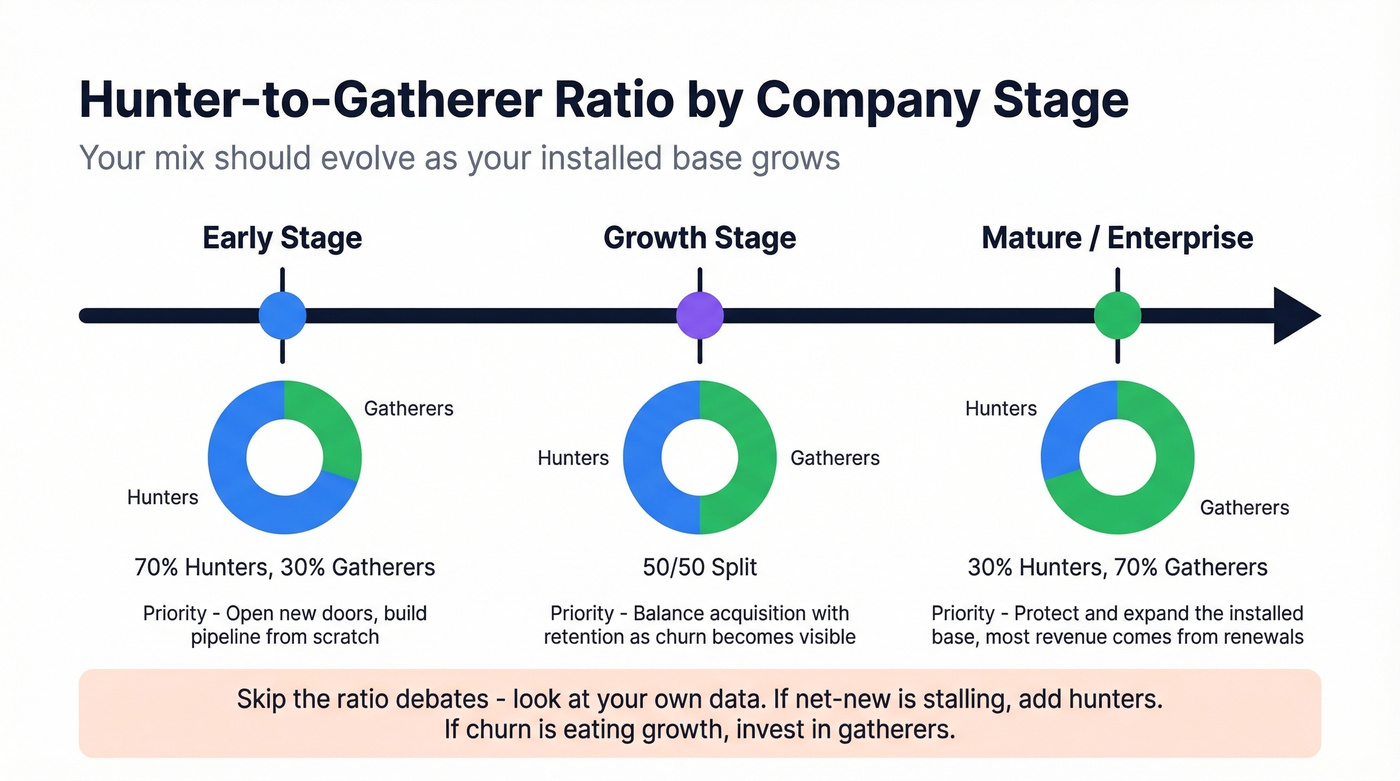
Early-stage companies skew heavily toward hunters - around 70/30. Mature companies with large installed bases often flip to 30/70 favoring gatherers. Start with the customer and design roles around how they buy. Skip the ratio debates on Reddit and look at your own pipeline data: if net-new is stalling, you need more hunters. If churn is eating growth, invest in gatherers.
What tools do sales hunters need in 2026?
Hunters need a sequencer (Smartlead, Instantly), a CRM (HubSpot, Salesforce), and a verified data source. The data layer is non-negotiable - reps should spend time selling, not cleaning spreadsheets or guessing whether a phone number still works.