

Leadberry vs Leadfeeder: The Honest Truth in 2026
You're comparing a product with an estimated 9 customers to one backed by EUR180M in funding and 10,000+ customers. This Leadberry vs Leadfeeder matchup isn't a competitive comparison - it's a public service announcement.
Let's break this down like you'd do in a real buying meeting: product health first, then features, then whether the category even solves your problem.
30-second verdict
Leadfeeder wins by default. Leadberry's G2 profile is flagged as inactive for over a year, 6sense pegs it at roughly 9 customers, and the most recent "real" feedback you can find is about billing and support going dark. That's not a risk worth taking.
One more thing: skip both if what you actually need is verified contact data. Visitor ID tools tell you which companies visited your site. They don't reliably give you verified emails or phone numbers for the specific people you need to reach.
What happened to Leadfeeder?
Leadfeeder merged with Echobot in 2022 after a EUR180M investment from Great Hill Partners, forming Dealfront - an EU-native go-to-market platform. The combined company reports 330+ employees across six offices and 10,000+ customers.

The rebrand matters because Leadfeeder's now one module inside a bigger GTM suite. If you're selling into Europe, Dealfront's GDPR posture and EU-first data approach isn't fluff; it changes how comfortable legal and security teams feel during procurement, and it usually shortens the back-and-forth.
The product itself still does the core job: identify companies visiting your website via IP-to-company matching and first-party tracking, segment that traffic, and push it into your workflow through integrations and an API. Reviews regularly mention gaps for smaller companies and the occasional "that's not who it was" mismatch, but for mid-market and enterprise traffic it's steady. The real question is whether that narrow job is worth $99-$1,199/month for your team.
Is Leadberry still active?
We checked Leadberry in early 2026. The pricing page loads and you can still start a trial, but the product feels frozen and the public footprint is thin.
6sense estimates Leadberry has about 9 customers and 0.00% market share in the lead generation category. Its G2 profile has 17 total reviews and is flagged as inactive for over a year. One reviewer describes continued billing after cancellation and no response from support.
Look, billing problems happen. The part that makes us nervous is silence. A tool you can't get support from isn't a tool you should pay for.
Reddit's also basically quiet on this matchup. On r/sales and r/marketingops, visitor ID tools get debated all the time, but Leadberry rarely comes up anymore, which lines up with the "fallen off the radar" vibe.
Features that actually matter
Most feature checklists for visitor ID tools are noise. In practice, teams care about five things:
- How many companies it identifies
- How fast you can route the signal to a rep
- Whether the filters match your ICP
- Whether the data stays usable as remote work grows
- Whether the vendor's still investing in the product
Here's the straight comparison.
Leadfeeder (Dealfront): strengths and tradeoffs
Leadfeeder's edge is maturity: integrations, filtering, and a product that's clearly maintained.
- Integrations: HubSpot, Salesforce, Pipedrive, plus API options.
- Filtering: Behavior-based filtering (pages, recency, source), plus firmographic segmentation.
- Team workflow: Built for "send this to the right owner now" more than "export a CSV and figure it out later."
The tradeoff is price. Once you want more than a small cap of identified companies, you're paying real money for company names, not contacts.
Leadberry: why we wouldn't buy it
Leadberry's pitch is simple and cheap. The problem is confidence.
Even if the feature list looks fine on paper, the signals around product health (tiny customer base, inactive review profile, support complaints) make it hard to justify putting it into a revenue workflow. If your SDR team depends on this data and it breaks, "we emailed support" isn't a plan.
This is one of those cases where "cheaper" can get expensive fast.

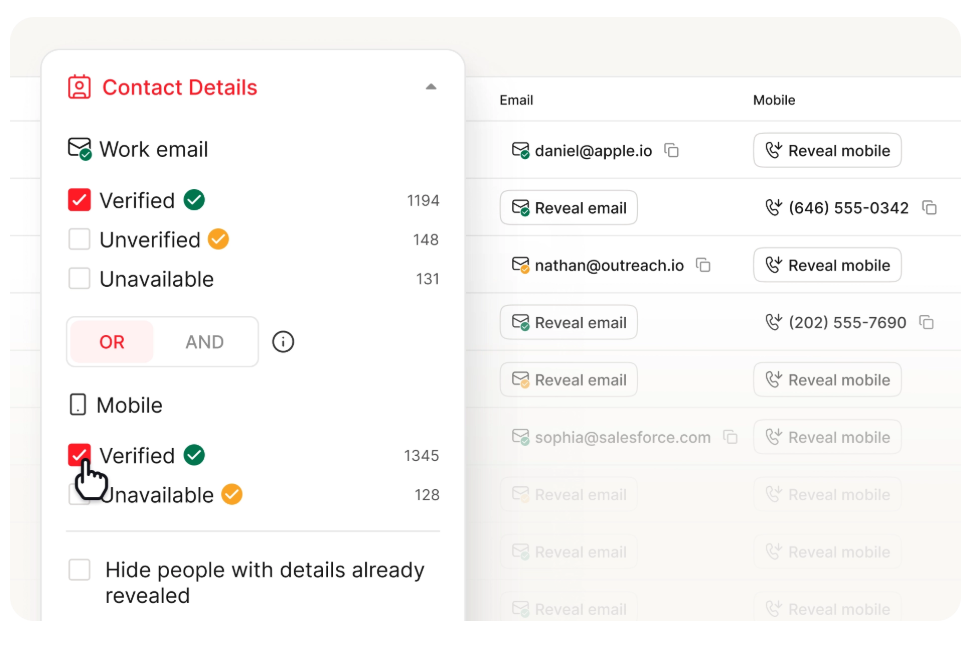
Knowing a company hit your pricing page is useless without a contact to reach. Prospeo gives you 143M+ verified emails and 125M+ mobile numbers - not company names, actual people. 98% email accuracy, 30% mobile pickup rate, at $0.01 per email.
Stop paying for company names. Start reaching the decision-maker directly.
Pricing and plan reality (2026)
Even though this comparison's lopsided, here are the numbers people ask for.
Snapshot table
| Feature | Leadfeeder (Dealfront) | Leadberry |
|---|---|---|
| G2 rating | 4.3/5 (860 reviews) | 4.1/5 (17 reviews) |
| Estimated customers | 29,374 | ~9 |
| Free plan | $0, last 7 days of data, 100 identified companies, unlimited users | Free, 10 days historical data, 25 unique leads/month, 1 user |
| CRM integrations | HubSpot, Salesforce, Pipedrive | Paid plans only; free plan has no CRM integration |
| Identification method | IP + additional signals (including first-party tracking) | Primarily IP-based |
| Support signal | Active company (330+ employees) | Billing complaints + non-response in reviews |
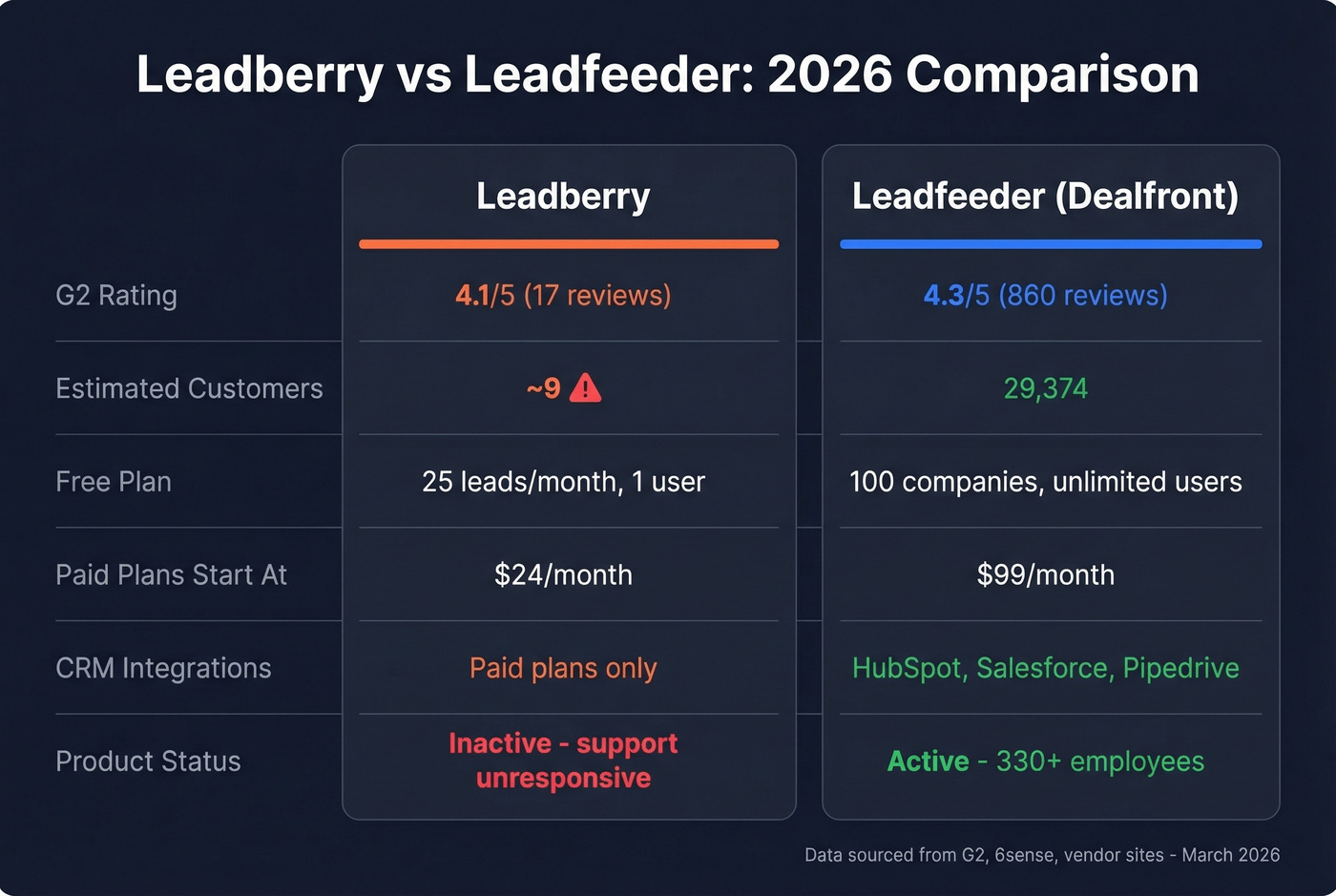
Plan pricing
| Tier | Leadfeeder (annual billing) | Leadberry (annual billing) |
|---|---|---|
| Free | $0 (100 company cap) | $0 (25 leads/month) |
| Entry | $99/month (up to 50 companies) | $24/month |
| Mid | $215/month (201-400 companies) | $34/month |
| High | $509/month (3,001-5,000 companies) | $44/month |
| Enterprise | $1,199/month (20,000-40,000 companies) | $299/month |
Leadberry's pricing looks great at first glance. But "cheap" doesn't help if the product isn't being maintained and support isn't responsive. Also, their plans advertise unlimited leads but still sit under a Fair Usage Policy, which is exactly where surprises tend to show up.
The real problem with visitor ID tools
Here's the thing: even if Leadfeeder works perfectly, a lot of teams still overpay for company names they can't act on.
IP-based identification typically lands in the 30-65% company-level match rate range, while person-level identification is far lower. One reason is obvious: remote and hybrid work. If someone visits from a home network, IP-to-company matching doesn't resolve cleanly, and you end up with "unknown" or a generic ISP.
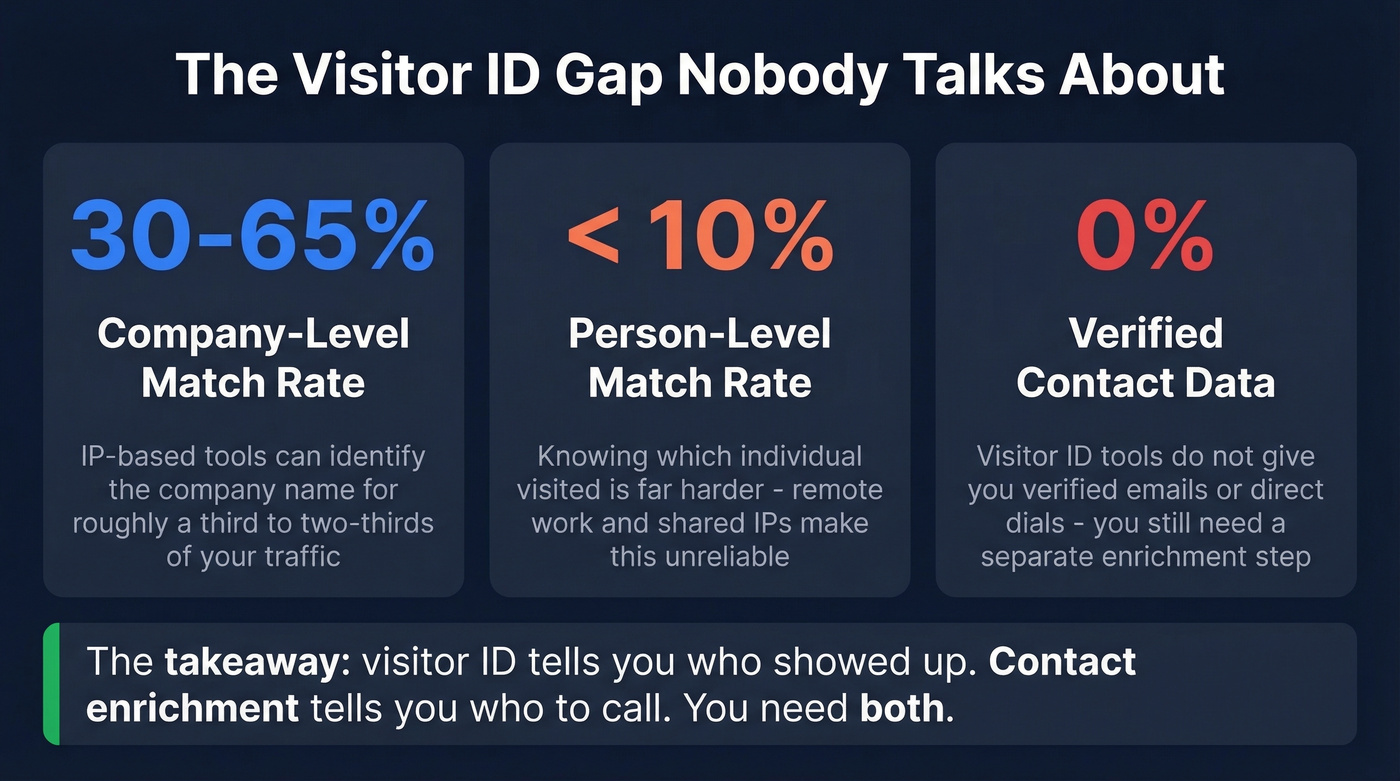
And even when you do get a company name, you still have to answer the only question your SDR cares about: "Who do I email or call today?"
A quick scenario we see a lot: a rep gets an alert that "a large manufacturing company" hit the pricing page twice. Great. Then they open the account in the CRM and realize they don't have a single verified email for procurement, IT, or the business owner. The alert becomes a tab that stays open for three days, then dies quietly.
That's the workflow gap.
If you want more background on how these tools compare, these roundups are useful for cross-checking options and match-rate expectations:
- MarketBetter's overview of visitor identification tools: https://www.marketbetter.ai/blog/best-website-visitor-identification-tools-2026/
- Leadinfo's 2026 update list (good for EU context): https://www.leadinfo.com/en/blog/the-10-best-tools-to-identify-website-visitors-2026-update/
- Dealfront's official launch post (context on the merger and positioning): https://www.leadfeeder.com/blog/dealfront-launch/
What we'd do instead (a practical workflow)
If you're set on visitor identification, use it as a trigger, not the whole system:
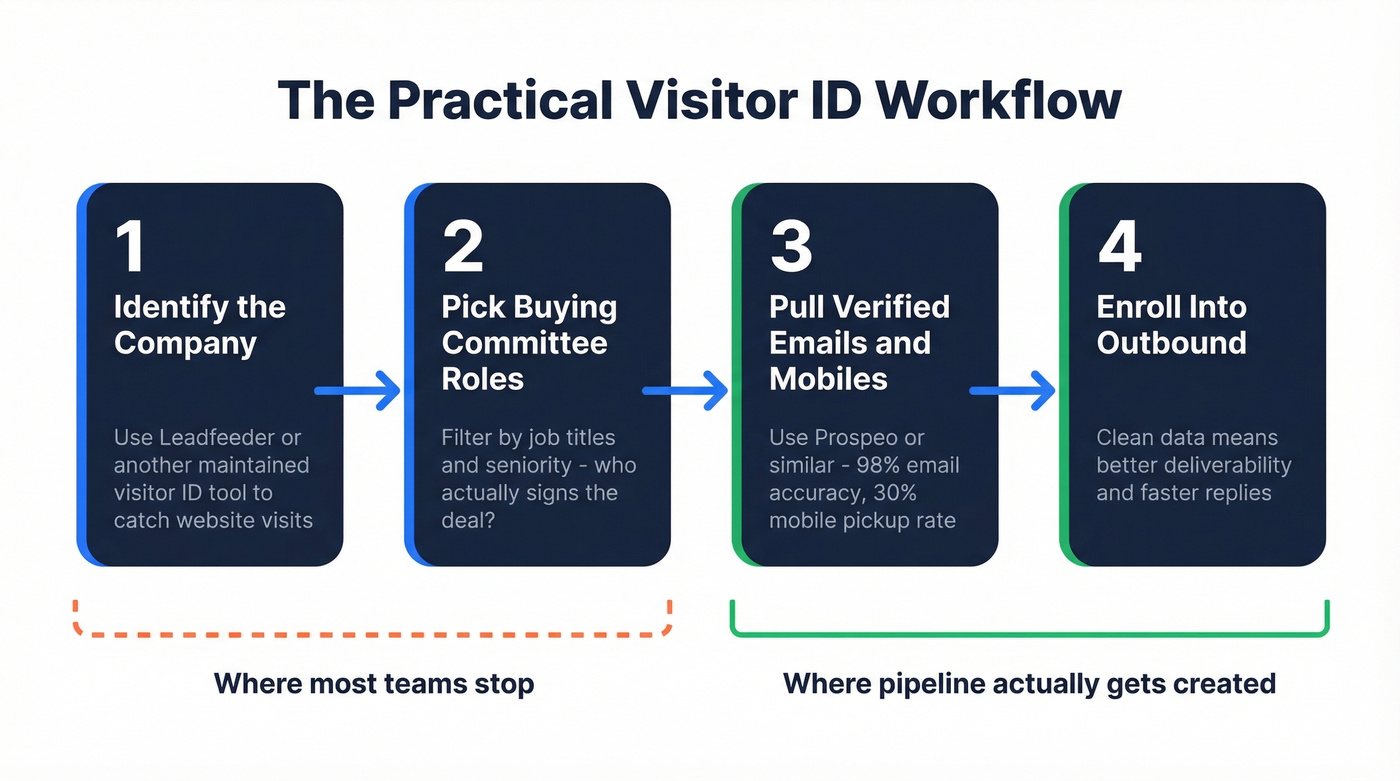
- Identify the company (Leadfeeder, or another maintained visitor ID tool)
- Pick the right buying committee roles (job titles + seniority)
- Pull verified emails and mobiles
- Enroll into outbound (with clean data so deliverability doesn't get wrecked)
This is where a contact data platform earns its keep. Prospeo, for example, is built for the "step 3" problem: it covers 300M+ professional profiles with 143M+ verified emails and 125M+ verified mobile numbers, refreshed every 7 days. Email accuracy is 98%, and mobile pickup rate sits at 30% across regions.
In our experience, the teams that win with visitor ID are the ones that treat it like intent-lite and then move fast with verified contacts. The teams that lose are the ones that celebrate "Siemens visited" and stop there.
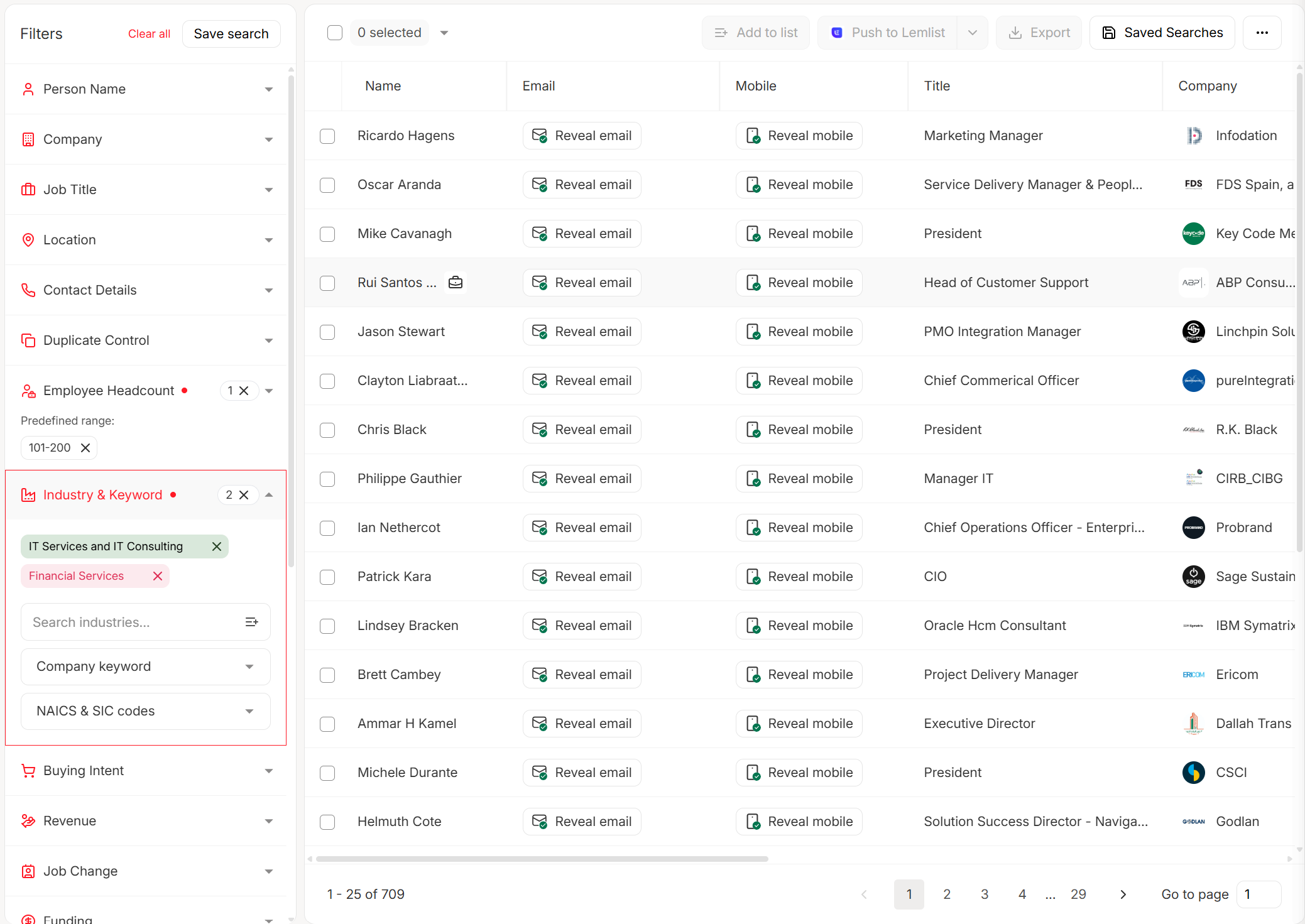
The workflow gap between 'a manufacturing company visited your site' and 'here's the procurement director's verified email and direct dial' is where deals die. Prospeo closes that gap with 300M+ profiles, 30+ ICP filters, and intent data tracking 15,000 topics.
Skip the visitor ID middleman. Build a list of verified buyers in minutes.
Verdict: what to buy (and what to skip)
Choosing between Leadberry and Leadfeeder in 2026 isn't really a choice.
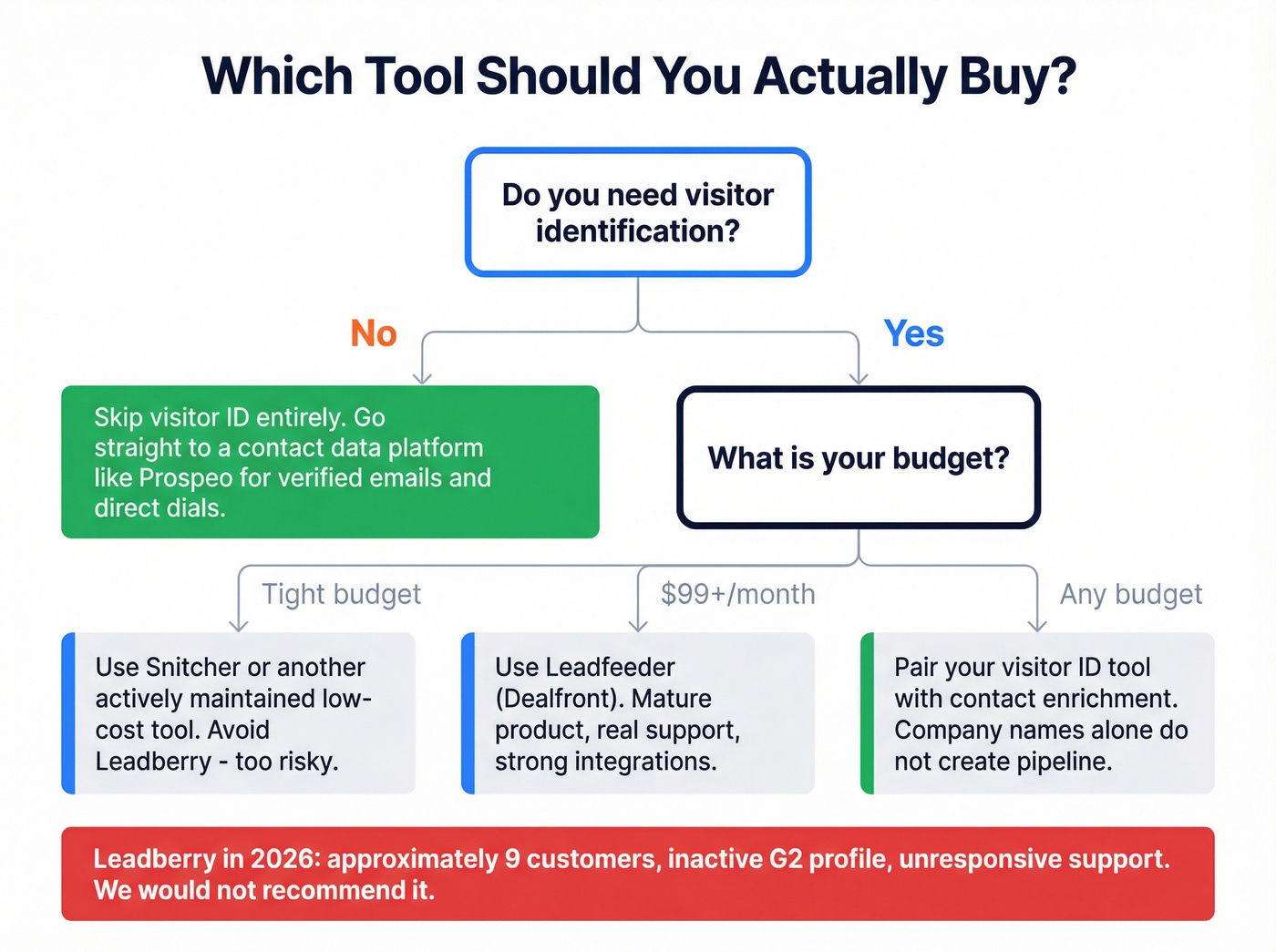
- If you need visitor identification: Leadfeeder's the only viable option between these two. It's supported, integrated, and backed by a real org.
- If budget's tight: skip Leadberry and look at an actively maintained low-cost option like Snitcher. This comparison page is a decent starting point: https://slashdot.org/software/comparison/Leadberry-vs-Leadfeeder-vs-Snitcher/
- If your goal is meetings, not dashboards: pair any visitor ID tool with contact enrichment. Company names are step one. Reaching the right person is the step that creates pipeline.
And yes, we'd actively avoid Leadberry right now. That's not a dunk, it's just risk management.
FAQ
Is Leadberry still active in 2026?
Barely. 6sense estimates about 9 customers remain, its G2 profile is flagged as inactive for over a year with only 17 total reviews, and at least one reviewer reports billing issues with no support response. The website loads, but the product doesn't look actively maintained.
How much does Leadfeeder cost?
Paid plans start at $99/month (billed annually) for up to 50 identified companies and scale to $1,199/month for 20,000-40,000 companies. There's also a free plan with 7-day data retention and a 100-company cap.
Can visitor ID tools give you email addresses?
Not in a reliable, "rep can use this today" way. Tools like Leadfeeder focus on identifying companies, not specific people and their verified contact details. For person-level outreach, you need a contact data and verification platform.
What's a better alternative to Leadberry?
For visitor identification, Leadfeeder or an actively maintained budget tool like Snitcher. For contact-level data, Prospeo's free tier (75 emails plus 100 Chrome extension credits per month) gives you something you can actually use: names, verified emails, and mobile numbers tied to the accounts you're targeting.