

New Sales Simplified by Mike Weinberg: What It Teaches, What It Misses, and How to Use It in 2026
You're two months into a new sales role. The CRM is empty, your manager's asking about pipeline, and the "leads" marketing sent over are recycled webinar attendees from 2023. You don't need motivation - you need a system.
That's exactly what Mike Weinberg wrote New Sales. Simplified. to solve. Published in 2012 by AMACOM (240 pages), it's a blunt, practical playbook for building pipeline from scratch. Nearly fourteen years later, the strategy still holds. The execution needs an upgrade.
The Short Version
Read this if you're an SDR, AE, or founder who needs a repeatable framework for prospecting and new business development. You'll get a clear three-part system - targets, weapons, attack - plus the best chapter on crafting a sales narrative you'll find in any book.
One caveat: Weinberg wrote this before today's B2B data platforms existed, so the "how do I actually find these people" step requires tooling he doesn't cover.
The book carries a 4.31/5 on Goodreads from 2,819 ratings, has earned 2,000 five-star Amazon reviews, and was named a Top 20 Sales Book of All Time by HubSpot. If you only read one chapter, read the Sales Story chapter.
Who Is Mike Weinberg?
Weinberg isn't an academic who studied sales from a distance. He was the #1 salesperson in three organizations before becoming a consultant and coach. He's since led workshops on five continents and authored four #1 Amazon bestsellers: New Sales. Simplified., Sales Management. Simplified., Sales Truth., and The First-Time Manager: Sales.
His speaking fees run $30,000-$50,000 for live events - that's the market telling you his material works. He also hosts a podcast with 100+ episodes where he continues reinforcing and updating the same core frameworks. The guy practices what he preaches.
The Core Framework: Targets, Weapons, Attack
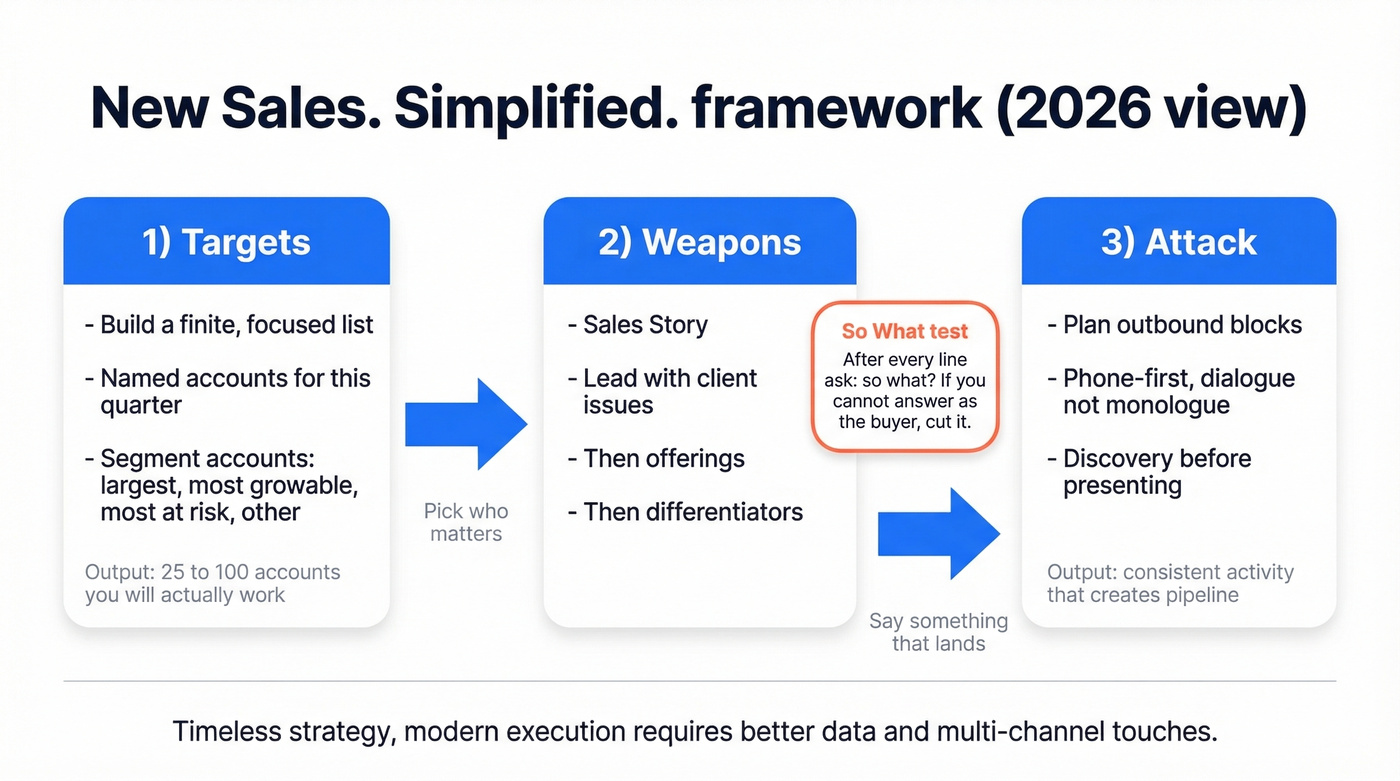
Weinberg's entire system boils down to three moves. Select your targets. Build your weapons. Execute the attack.
Targets - Build a Finite, Focused List
The target list is everything. Weinberg's rule: it must be finite, focused, written, and workable. Not a vague ICP document. Not a 10,000-row spreadsheet you'll never touch. A real list of named accounts you're going to pursue this quarter.
He segments accounts into four buckets: largest by dollars spent, most growable, most at risk, and other. Repeatedly calling on similar companies in the same vertical makes you an expert in their language and pain points - and that specialization beats spray-and-pray every single time, because buyers can tell within thirty seconds whether you understand their world or you're just reading a script.
Weapons - The Sales Story
This is the best chapter in the book.
Weinberg breaks the sales story into three building blocks, and the sequence matters: client issues addressed, your offerings, your differentiators. Lead with the problems you solve, not with what you sell.
The "So What" test is brutally effective. After every statement in your pitch, ask "so what?" If you can't answer from the buyer's perspective, cut it. Weinberg's Power Statement flips the typical pitch: lead with the issues your best clients face, then connect those to what you deliver. No issues, no sale.
Attack - Plan and Execute Outbound
Weinberg is phone-first. The phone is the most powerful prospecting weapon, and he's not shy about saying so. His philosophy: dialogue, not monologue. You're calling to start a conversation, not deliver a pitch.
Two tactical points stand out beyond the call itself. First, protect your calendar - block prospecting time like it's a meeting with your CEO, because pipeline generation is the job, not an afterthought. Second, discovery before presenting. Don't show up and throw up. Understand the prospect's situation before you ever open a deck.
The Not-So-Sweet 16
Weinberg identifies 16 reasons salespeople fail at new business development. Rather than listing all sixteen, here are the clusters that hit hardest.
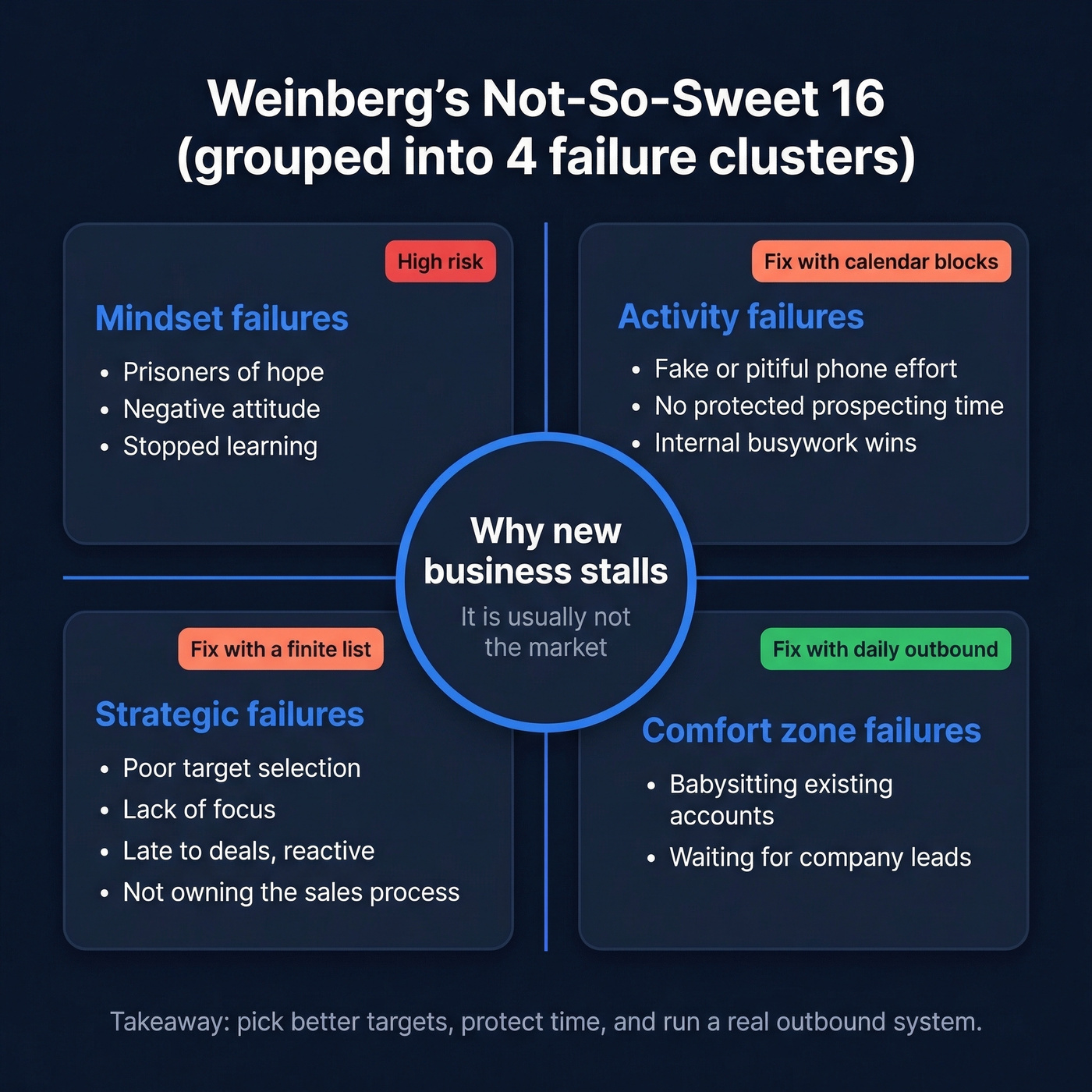
Mindset failures. Being "prisoners of hope" - sitting on stale opportunities and hoping they close. Negative attitude. Stopped learning and growing.
Activity failures. Fake or pitiful phone effort. Not protecting calendar time for prospecting. Being "good corporate citizens" who fill their days with internal busywork instead of selling.
Strategic failures. Poor target account selection. Lack of focus. Being late to the party on deals, reactive instead of proactive. Not owning the sales process.
Comfort zone failures. Babysitting existing accounts instead of hunting new ones. Waiting for company-generated leads instead of creating your own pipeline.
In Podcast Episode 99, Weinberg revisited these failures and titled it "Still the Same Not-So-Sweet 16." Over a decade later, nothing's changed. Salespeople still fail for the same reasons.

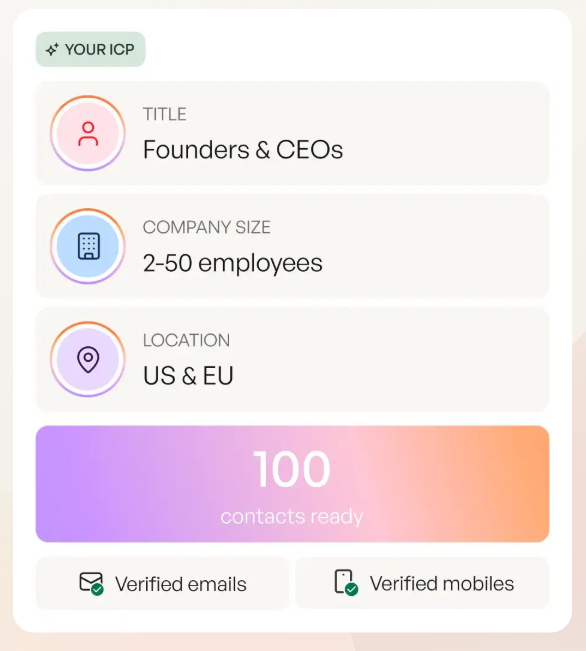
Weinberg's "Not-So-Sweet 16" includes poor target selection and fake phone effort. Both problems start with bad data. Prospeo gives you 98% verified emails, 125M+ direct dials with a 30% pickup rate, and intent data across 15,000 topics - so every name on your finite target list has a real number behind it.
Stop hoping your list is accurate. Know it is.
What the Book Gets Right - and Wrong
What it nails. The sales story framework is genuinely best-in-class. We've seen teams completely rework their messaging in a single workshop using Weinberg's three building blocks, and the before-and-after is night and day. The tone is blunt and practical. And the insistence that leadership must provide clarity on what's sold, why it wins, which markets to pursue, and how comp plans align to new business activity is a point most sales books ignore entirely.
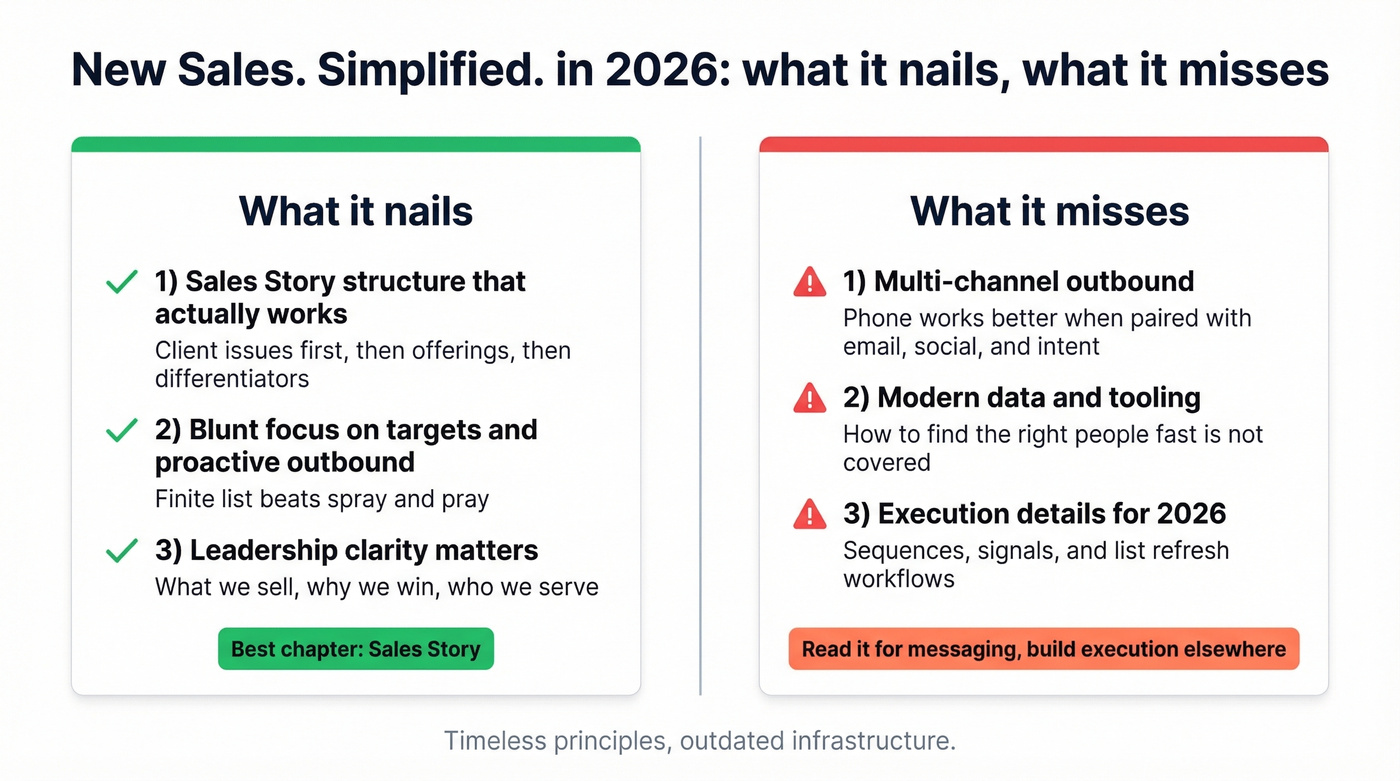
Where it falls short. If you've read Sales Management. Simplified., you'll notice significant overlap - some sections feel like retreads. The bigger gap: Weinberg's phone-heavy tactics don't address multi-channel outbound. In 2026, cold calling still works, but it works best layered with email sequences, social touches, and intent signals. The book also offers limited guidance on modern tooling, which makes sense for 2012 but leaves a real execution gap today.
Here's the thing: New Sales. Simplified. is the best book on sales messaging ever written. It's a mediocre book on prospecting execution. Read it for the sales story. Build your outbound system from other sources.
Executing Weinberg's Playbook in 2026
Weinberg tells you what to do. Build a finite target list. Call high - VP and C-level. Lead with client issues. But the "Targets" step now requires verified contact data and fast list-building workflows that weren't accessible when the book was published.
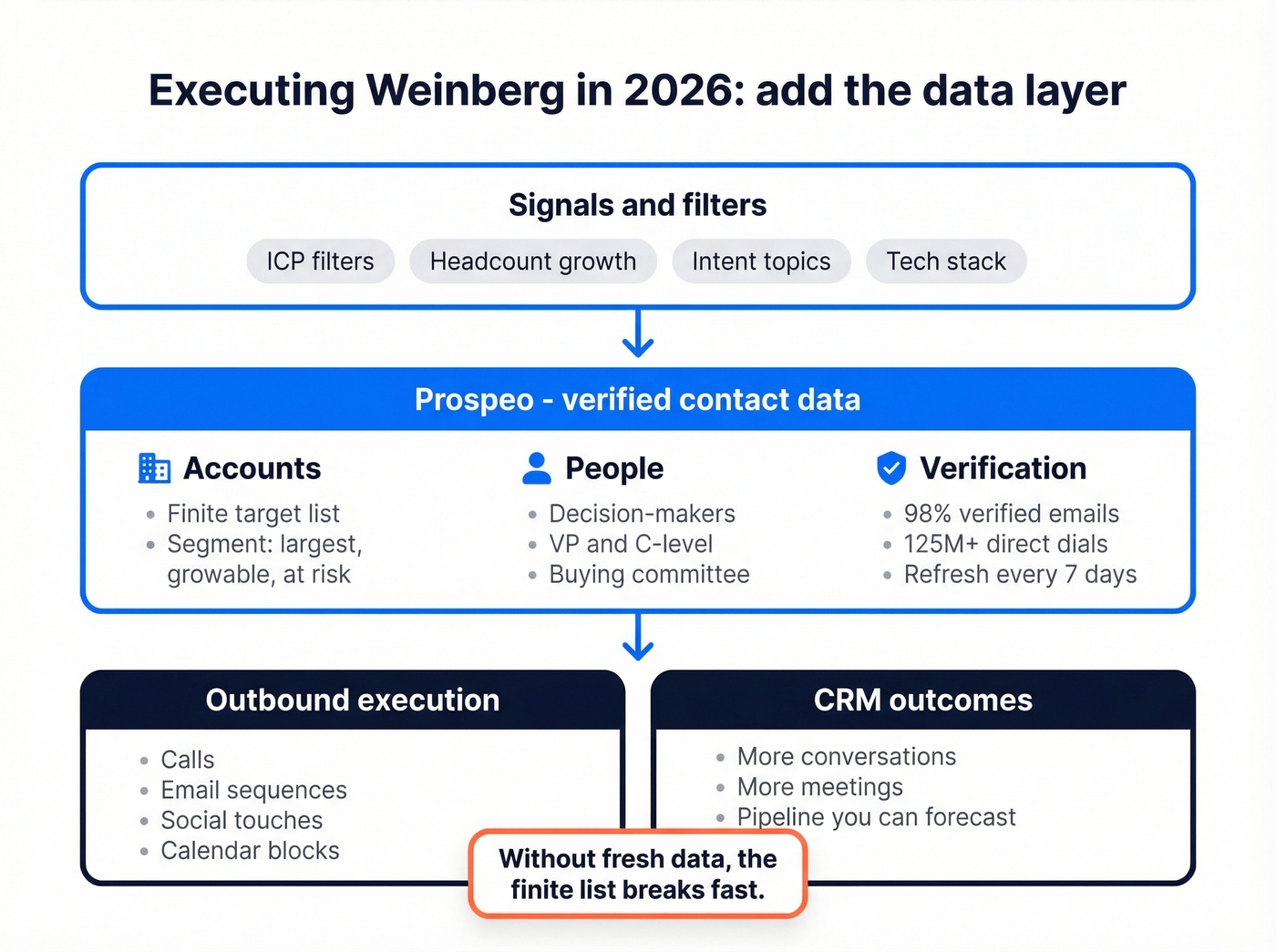
His account segmentation model maps directly to this kind of filtering: layer in headcount growth signals and intent data to identify "most growable" accounts, then pull verified contacts for every decision-maker on the list. Data refreshes every 7 days, so you're not calling numbers that went stale three months ago.
The playbook hasn't changed. The infrastructure to execute it has.
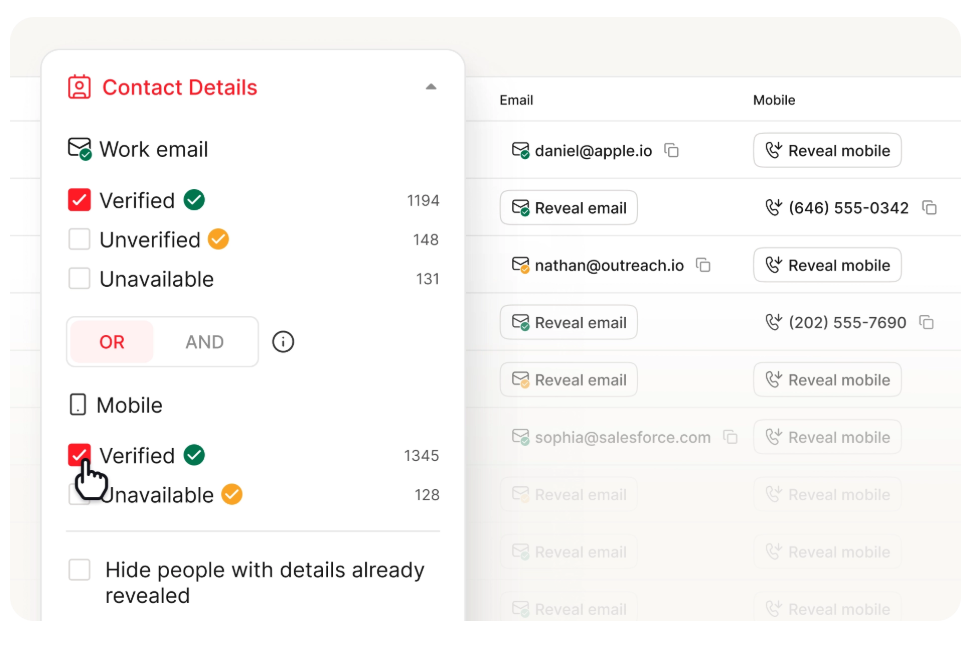
The Targets → Weapons → Attack framework needs one thing Weinberg couldn't give you in 2012: a data platform that refreshes every 7 days, filters by headcount growth and buyer intent, and delivers verified decision-maker contacts at $0.01 per email. That's Prospeo. Build the finite, focused list Weinberg demands - in minutes, not weeks.
Execute the playbook with data that actually connects you to buyers.
How It Compares to Other Sales Books
| Book | Best For | Core Focus | Read First If... |
|---|---|---|---|
| New Sales. Simplified. | SDRs, AEs, SMB | Messaging + targeting | You need a sales story |
| Fanatical Prospecting | SDRs, beginners | Activity discipline | You lack consistency |
| SPIN Selling | Enterprise AEs | Discovery questions | You run complex deals |
| The Challenger Sale | Experienced AEs | Teaching-based selling | You sell to committees |
| Gap Selling | Mid-market AEs | Problem-centric discovery | You need modern discovery |
Let's be honest about reading order. SDRs who read Fanatical Prospecting first and then layer Weinberg's messaging framework on top get results faster - we've watched it happen across dozens of teams. AEs should start with New Sales. Simplified. and move to Gap Selling or SPIN Selling. The contrarian take: you need three sales books, max. Pick the ones that match your current gap, apply them for six months, then move on. Reading ten sales books and executing zero frameworks is its own version of the Not-So-Sweet 16.
Should You Read It?
Read this if you're early in your sales career, struggling to build pipeline, or your messaging feels generic and self-focused. The sales story framework alone is worth the price.
Skip this if you've already read Sales Management. Simplified. cover to cover and want net-new material - there's meaningful overlap. Also skip if you're looking for a modern multi-channel playbook; Weinberg's tactics are phone-first with limited coverage of email sequences and social selling. For those who want to go deeper after reading, Weinberg offers a video coaching series on his site.
Format recommendation: Go with Audible. Weinberg's blunt, direct delivery works better spoken than read - you can almost hear him pointing at you through the headphones. Expect to pay around $22.99 for the paperback, $13.49 for Kindle, or one Audible credit.
FAQ
Is New Sales Simplified still relevant in 2026?
Yes. The core frameworks on targeting, the sales story, and proactive outbound are timeless principles, not tactics tied to a specific era. The strategy hasn't aged. You just need modern data tools to execute the "Targets" step at the speed today's market demands.
What's the best format to buy?
Audible. Weinberg's direct, no-nonsense coaching style translates better as audio - it feels like getting mentored by a veteran sales leader. Kindle works for highlighting passages. Paperback runs $22.99 if you prefer physical books on your desk.
Where do I get the contact data Weinberg says I need?
The book predates today's B2B data platforms. Tools like Prospeo let you build the finite, verified target list Weinberg describes - 30+ filters map directly to his account segmentation approach, with 98% email accuracy and 125M+ verified mobile numbers. Free tier included, so you can start executing without a budget conversation.