

PLG Go-to-Market: The Operating Model Most Teams Get Wrong
You launched a free trial six months ago. Signups look great - hundreds a week. Revenue didn't move. The board's asking what went wrong, and the honest answer is that you built a free product, not a PLG go-to-market motion. Only 34% of PLG companies even track activation. Most teams skip the one metric that separates product-led growth from a leaky funnel.
Here's what you actually need before anything else:
- An activation definition with a time-to-value target under 30 minutes. If you can't define activation in one sentence, you don't have PLG - you have a free product.
- Condition-based PQL triggers with routing rules to sales. Binary triggers beat ML models until you have volume.
- A pricing ladder with usage caps and clear upgrade moments. Product-led growth doesn't mean unlimited free. It means users can start without talking to sales.
What Product-Led Go-to-Market Actually Means
PLG is a go-to-market model where the product drives acquisition, conversion, and expansion. The product replaces the SDR for the first touch, replaces the demo for the first experience, and creates the upgrade moment through usage - not a sales call.
The correction most teams need: PLG doesn't mean free. Across 474 Series A startups analyzed by Extruct, 39% enable self-serve motions, but only 25% offer a free tier. Many product-led companies charge from day one with usage caps or paid trials. The difference from sales-led isn't price - it's that users can start without talking to anyone. Sales-led requires a conversation before value. A product-led motion delivers value first, then monetizes it.
PLG Benchmarks in 2026
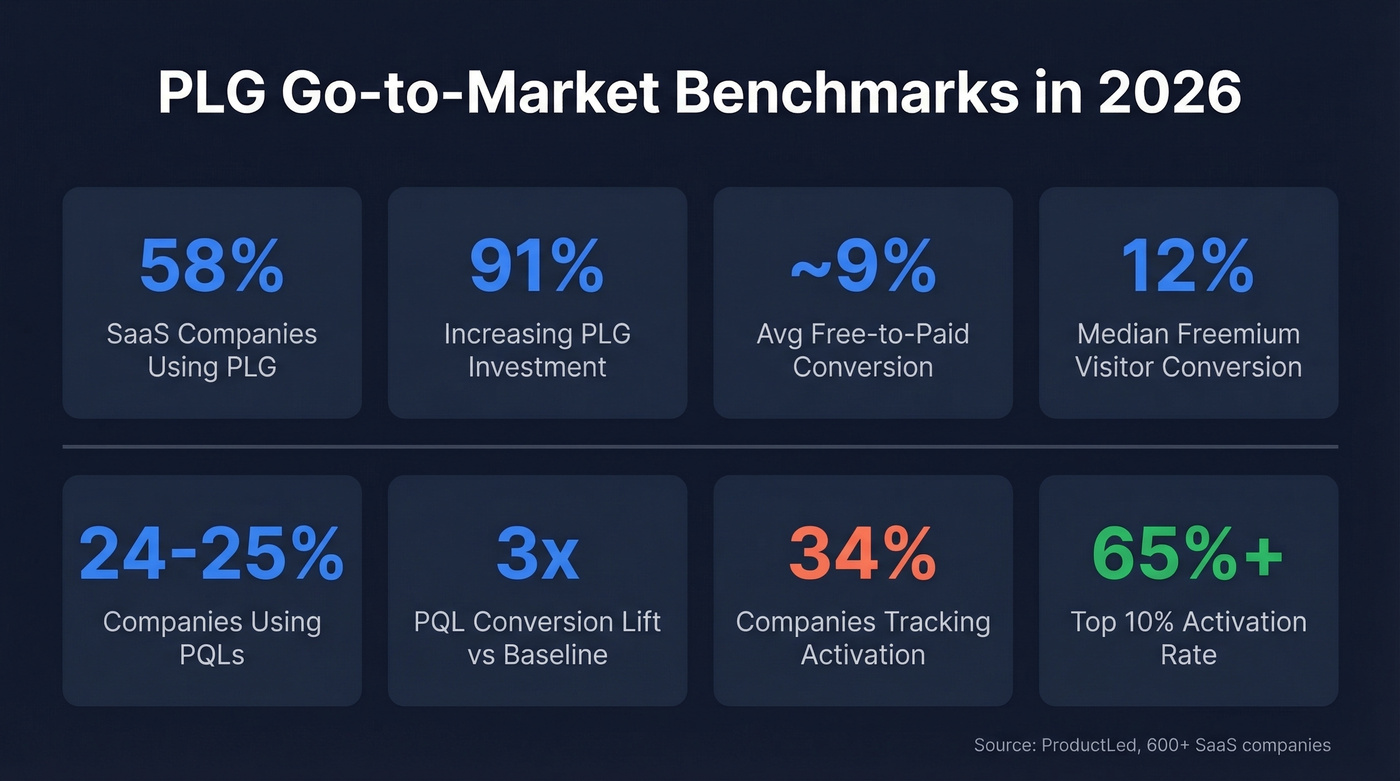
The benchmarks have matured enough to set real targets. Here's where product-led growth stands across 600+ SaaS companies surveyed by ProductLed:
| Metric | Benchmark |
|---|---|
| PLG adoption | 58% of SaaS companies |
| Increasing PLG investment | 91% |
| Free-to-paid conversion | ~9% average |
| Freemium visitor conversion | 12% median |
| PQL adoption | ~24-25% |
| PQL conversion lift | ~3x vs baseline |
| Activation tracked | Only 34% |
| Top 10% activation rate | 65%+ vs 33% average |
The gap between 33% average activation and 65% top-decile activation is where most of the revenue difference lives. Everything else - PQL models, pricing tiers, sales-assist - compounds on top of activation. If activation is broken, nothing downstream works.
Is This Model Right for You?
Four diagnostic questions before you commit:
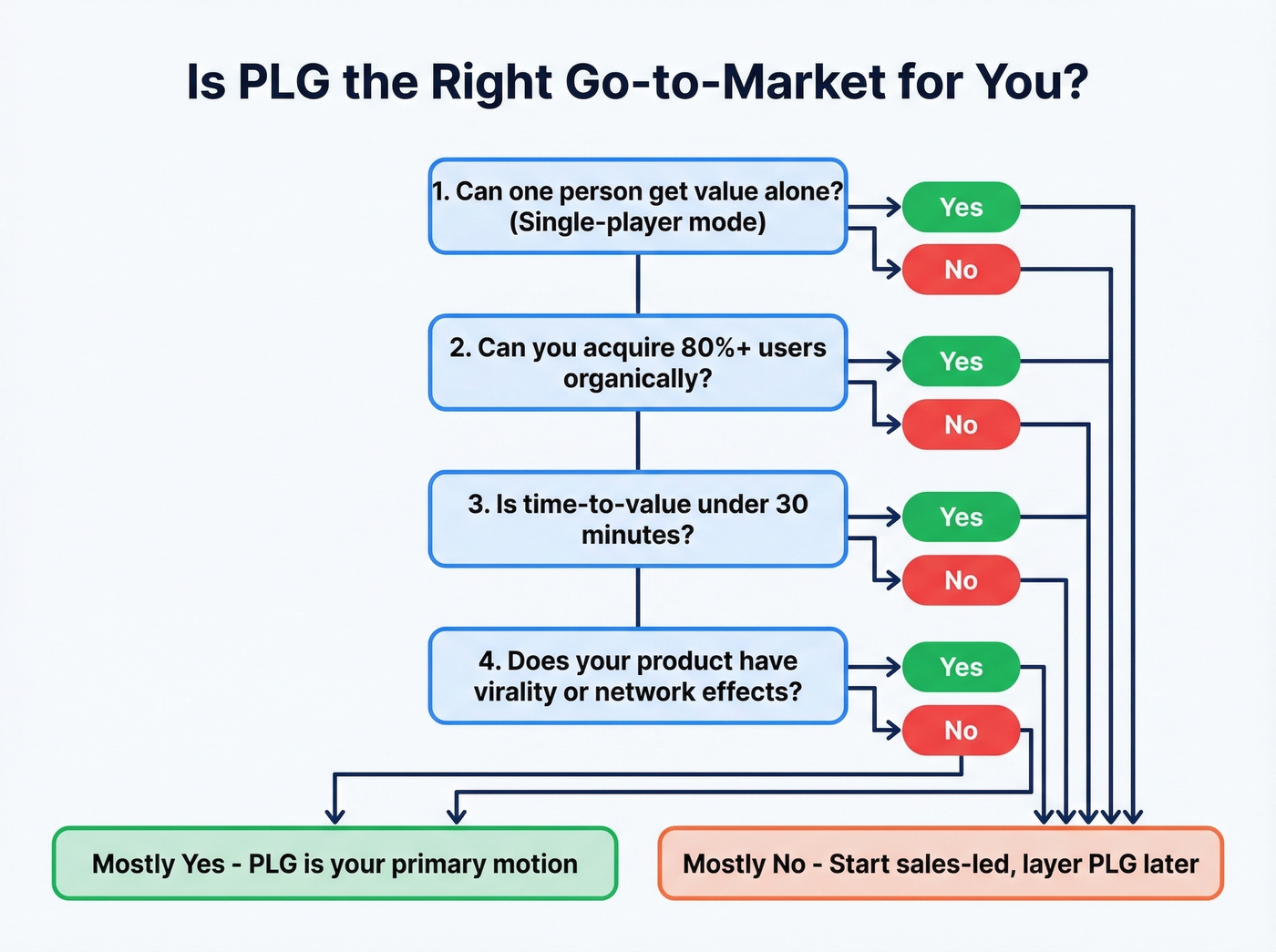
- Single-player mode. Can one person get value without org-wide adoption? Dropbox passes - one user stores and shares files immediately. Box often requires multi-team rollout.
- Organic acquisition viability. Best-in-class PLG companies acquire 80%+ of users via organic or direct traffic. If you depend on paid channels for signups, the unit economics won't hold.
- Time-to-value under 30 minutes. If your core job-to-be-done takes days of configuration or migrations, self-serve onboarding will stall.
- Virality or network effects. Collaboration features, shared workspaces, invite loops - these create organic expansion without sales involvement.
If your product requires complex implementations, multiple stakeholders for value, and heavy compliance environments, sales-led with a self-serve layer is the better bet. Skip PLG as your primary motion and layer it in later.
The PLG Operating System
Activation - The Only Metric That Compounds
Target 65%+ activation rate. The average sits at 33%, which means most product-led companies lose two-thirds of signups before they experience value.
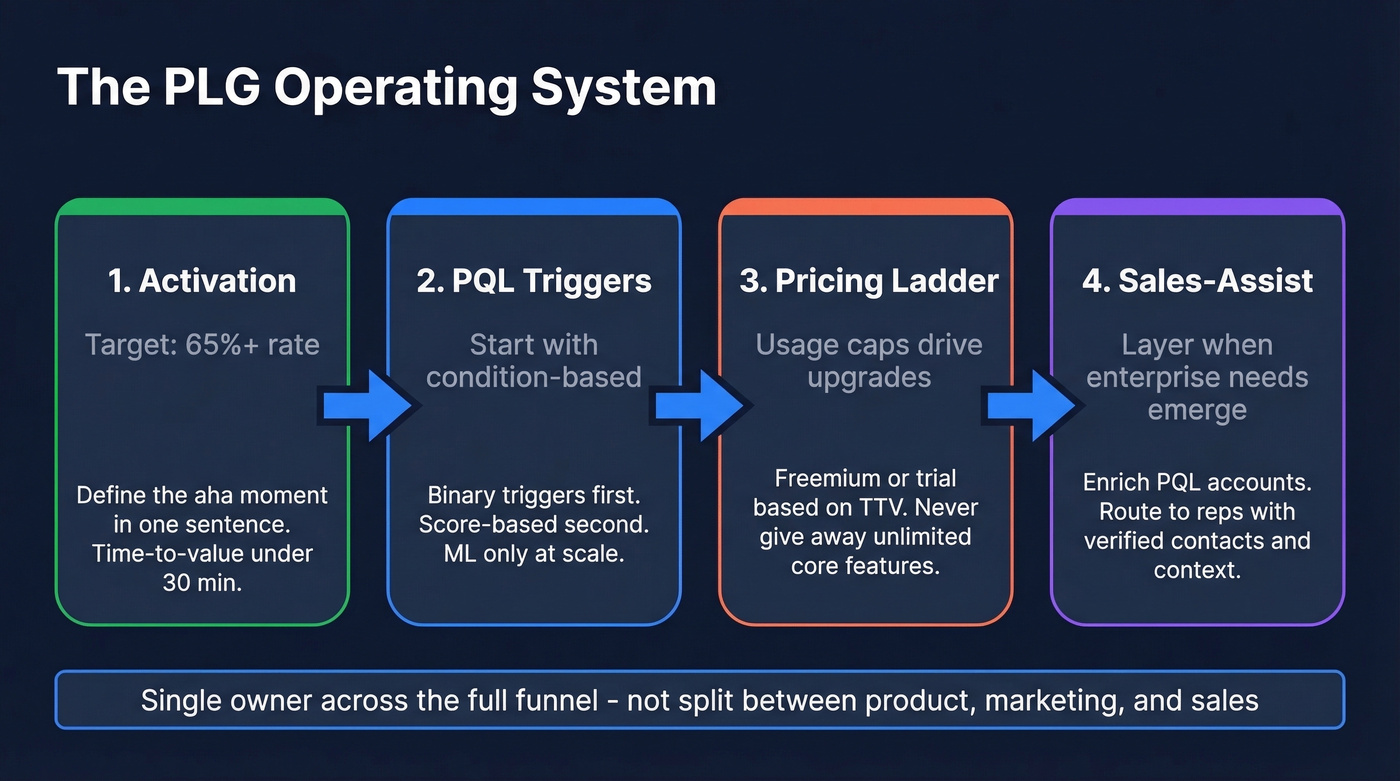
The most common failure mode we see: teams optimize for signups while ignoring activation, then wonder why free-to-paid conversion stays low. Define activation in one sentence. For a project management tool, activation might be "user creates a project, adds one task, and invites a teammate - all within the first session." If your definition takes a paragraph, you haven't found the moment yet.
PQL Triggers That Work
Three models, in order of complexity:
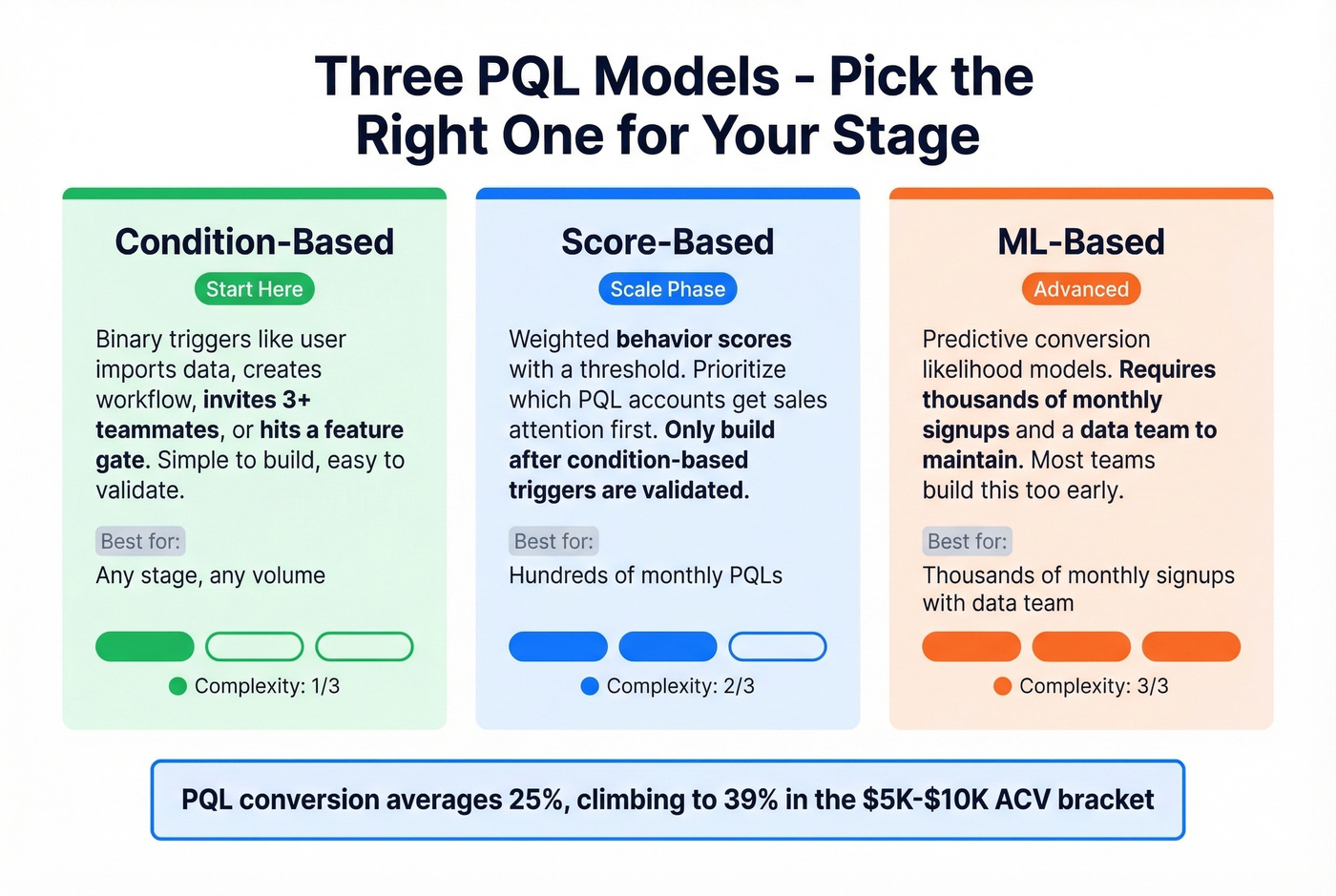
Condition-based - binary triggers. User imports data, creates a workflow, invites teammates, or visits a gated feature. Start here. Always.
Score-based - weighted behaviors with a threshold. Good for prioritizing which product-qualified accounts get sales attention first, but only worth building once you've validated your condition-based triggers actually predict conversion.
ML-based - predictive conversion likelihood. Skip this until you have thousands of monthly signups and a data team to maintain the model. We've watched too many teams burn a quarter building an ML scoring system when a simple "user invited 3+ teammates" trigger would've outperformed it.
PQL conversion runs ~25% on average, climbing to 39% in the $5K-$10K ACV bracket. That's real pipeline from product signals alone.
Pricing and Packaging
The freemium vs. trial decision comes down to time-to-value. TTV under 15 minutes is associated with 30% higher trial-to-paid conversion. Trials yield 18% higher ARPU than freemium. Requiring a credit card upfront cuts signups by roughly 50% but lifts conversion by about 25%.
Let's be honest: most product-led companies give away too much. Slack converts roughly 12% of free users to paid; Dropbox hits ~15%. Those are strong numbers. Giving away core functionality for unlimited usage tanks conversion. Usage caps are the most effective pricing lever - frictionless start, clear upgrade moments tied to usage growth.
When to Add Sales-Assist
Enterprise friction kills pure self-serve. Zapier started product-led and layered sales as enterprise needs emerged - legal, procurement, compliance. Temporal went the other direction: SLG first, then PLG so developers could start small.
Hybrid is the default at scale. The question isn't whether to add sales. It's when.

PQL triggers only work when your outreach actually reaches the buyer. Prospeo delivers 98% email accuracy with a 7-day refresh cycle, so when a product-qualified account hits your threshold, sales connects - not bounces.
Stop losing PQL conversions to bad contact data.
Who Owns What
Product leads PLG strategy at 49% of companies. Marketing's close behind at 42%. Sales most commonly owns free-to-paid conversion itself at 23%. We've seen teams where marketing optimizes for signups, product optimizes for activation, and sales optimizes for expansion revenue, with nobody owning the full funnel. That's a recipe for finger-pointing.
You need a single system of record for pricing, usage, and entitlements. Without it, coordination costs explode and incentive conflicts around packaging and discounting will design your pricing ladder for you - badly.
Benefits When the Model Works
When the operating system clicks - activation above 65%, PQL triggers routing high-intent accounts, pricing that converts usage into revenue - the benefits compound fast. Lower CAC from organic acquisition. Faster sales cycles because users already understand the product. Net revenue retention driven by usage expansion rather than upsell calls.
For B2B product-led growth specifically, the compounding effect is even sharper: individual users adopt the tool, pull in teammates, and create internal champions before a sales conversation ever happens. That's the flywheel everyone talks about but few actually build.
Turning PQLs Into Pipeline
A PQL trigger fires - great. But the sales-assist rep needs identity resolution, account mapping, and verified contact data for the economic buyer, not just the free-tier user. The workflow looks like this: PQL trigger fires, enrich the account, route to sales-assist with verified contacts and context.
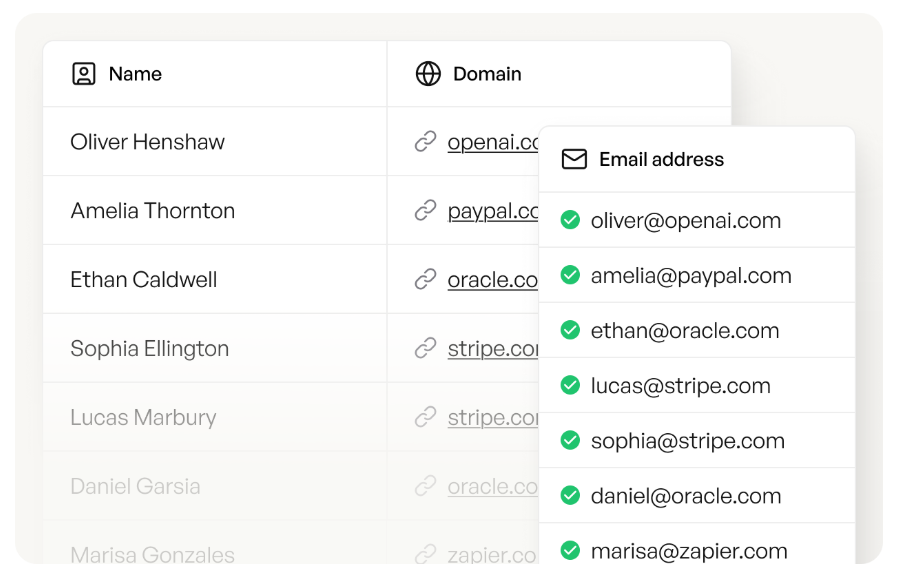
This is where contact data accuracy matters most. When a PQL fires, sales-assist needs verified emails and direct dials immediately - before the intent goes cold. Prospeo's 92% API match rate means enrichment workflows return actionable data on nearly every account that hits a PQL threshold, and the 7-day data refresh cycle keeps that data current rather than stale.
Three Metrics That Matter
You don't need ten dashboards. You need these three, tracked by cohort.
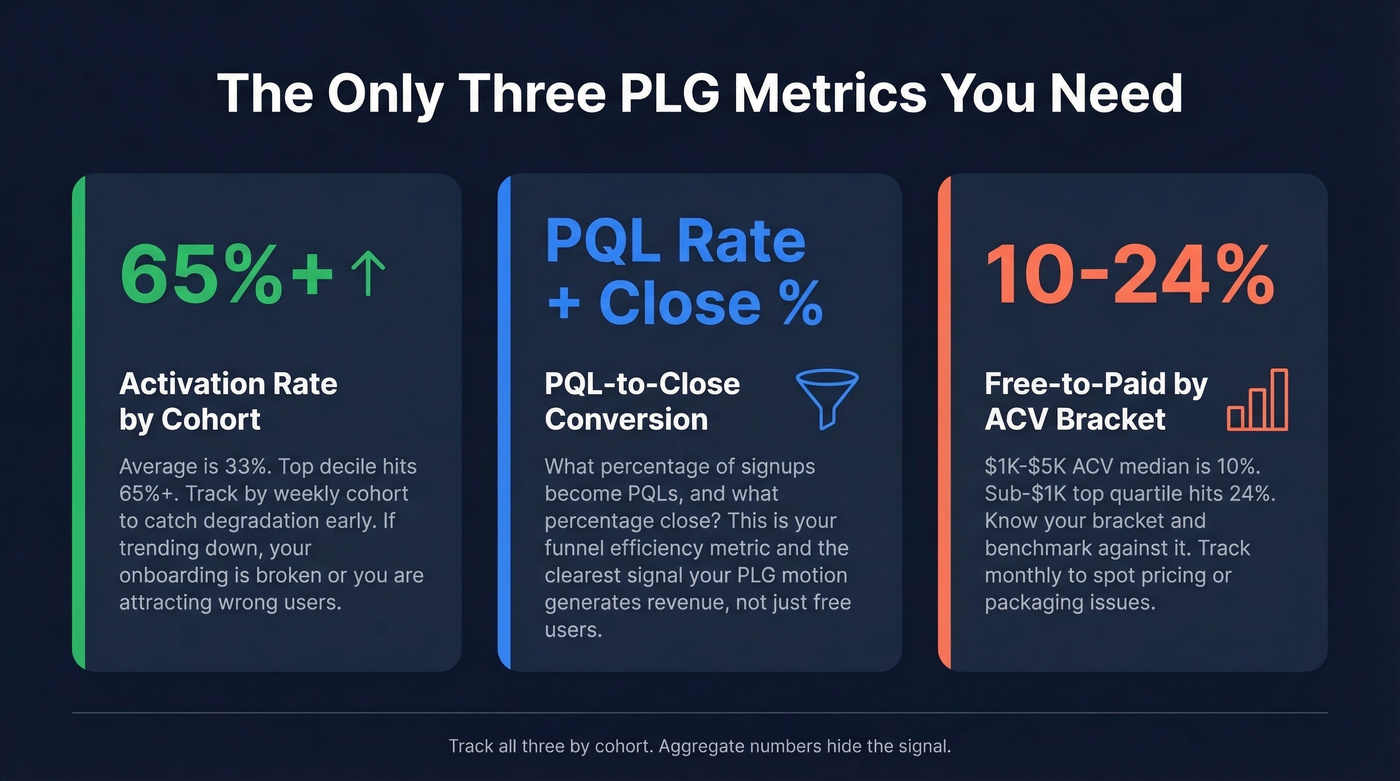
Activation rate by cohort. Target 65%+. If it's trending down, your onboarding is degrading or you're attracting the wrong users. In our experience, teams that track activation by cohort from day one catch degradation 2-3 months earlier than those using aggregate numbers.
PQL rate + PQL-to-close conversion. What percentage of signups become PQLs, and what percentage of PQLs close? This is your funnel efficiency metric - and the clearest signal of whether your product-led motion generates expansion revenue or just free users.
Free-to-paid conversion by ACV bracket. $1K-$5K ACV median is 10%. Sub-$1K top quartile hits 24%. Know your bracket and benchmark against it.
Adding a sales-assist layer to your PLG motion? Your reps need direct dials and verified emails the moment a high-intent account surfaces. Prospeo's 125M+ verified mobiles and 30+ intent filters let you route PQLs to reps with real contact data - no enrichment delays.
Arm your sales-assist team with data that actually connects.
FAQ
Does a PLG go-to-market strategy mean giving the product away for free?
No. It means users can start without talking to sales. Across 474 Series A startups, only 25% offer a free tier. Many charge from day one with usage caps or paid trials - the defining trait is self-serve access to value, not zero price.
What's the difference between a PQL and an MQL?
An MQL signals marketing engagement - downloads, webinars, form fills. A PQL signals product engagement: the user has experienced value inside the product. PQLs convert roughly 3x higher than baseline leads because intent is demonstrated through actual usage, not content consumption.
How do you add outbound to a PLG motion without breaking self-serve?
Use product signals - PQL triggers, account-level usage spikes, feature-gating hits - to identify high-intent accounts. Then enrich contacts and route to sales-assist. Outbound complements PLG when it follows product intent rather than cold lists. The key is timing: reach out while the usage signal is fresh, not three weeks later when the trial's already expired.