

Best Sales Prospecting Tools in 2026: Real Pricing, Real Data, Real Opinions
There are 50+ sales prospecting tools that want your money. Half are engagement platforms pretending to be data providers. A quarter are data providers pretending to be engagement platforms. Sales reps already spend 60% of their time on non-selling tasks - the last thing you need is a month-long tool evaluation that leads nowhere.
Here's the uncomfortable truth: 73% of B2B buyers actively avoid sellers who send irrelevant outreach, and 96% of prospects research your company before they'll talk to you. Bad data doesn't just waste credits. It burns your domain reputation, tanks deliverability, and makes your entire outbound motion look amateur while prospects are Googling you.
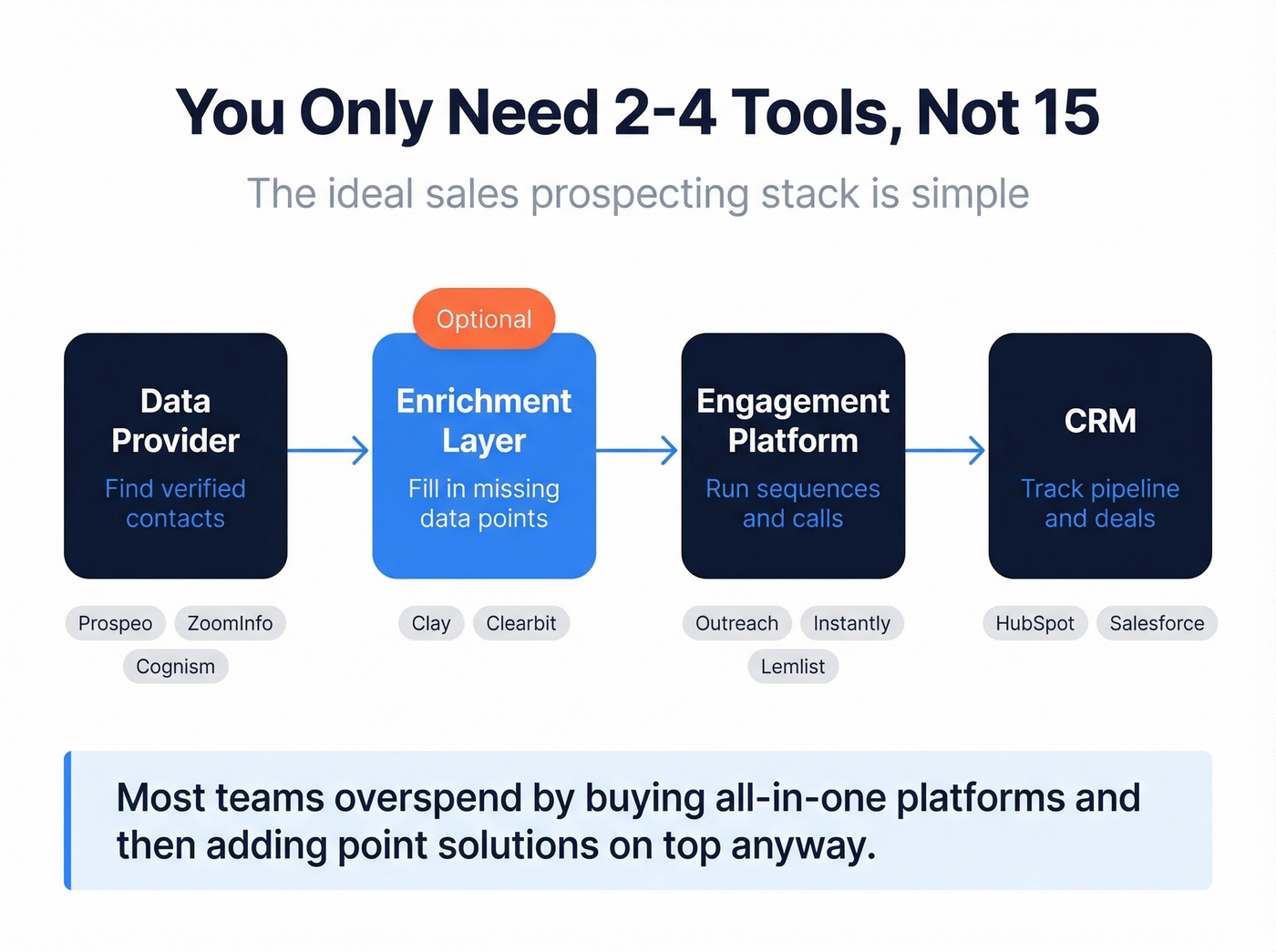
You need two to four tools, not fifteen. A data provider, an engagement platform, a CRM, maybe an enrichment layer. That's it. Let's talk about which ones are actually worth your money.
Why Most Tool Lists Miss the Point
Most "best of" lists ranking sales prospecting tools were written by the tools themselves - or by affiliates collecting referral fees. They won't publish real pricing because half the vendors demand "talk to sales." They won't compare accuracy because most providers know they'll lose. And they won't tell you that sellers who pair their prospecting with AI tools are 3.7x more likely to hit quota - because that insight doesn't help sell a specific product.
We're doing this differently. Every tool below has real pricing, honest tradeoffs, and a clear opinion on who should use it.
Our Top Picks (TL;DR)
| Tool | Best For | Starting Price | G2 Rating |
|---|---|---|---|
| Prospeo | Data accuracy and freshness | ~$0.01/email (free tier) | 4.8/5 |
| Apollo.io | Budget all-in-one | $49/user/mo (annual) | 4.8/5 |
| ZoomInfo | Enterprise with budget | $15,000+/yr | 4.5/5 |
| Cognism | EMEA prospecting | ~$22,500/yr (5 users) | 4.6/5 |
| Clay | Enrichment workflows | $134/mo | 4.9/5 |
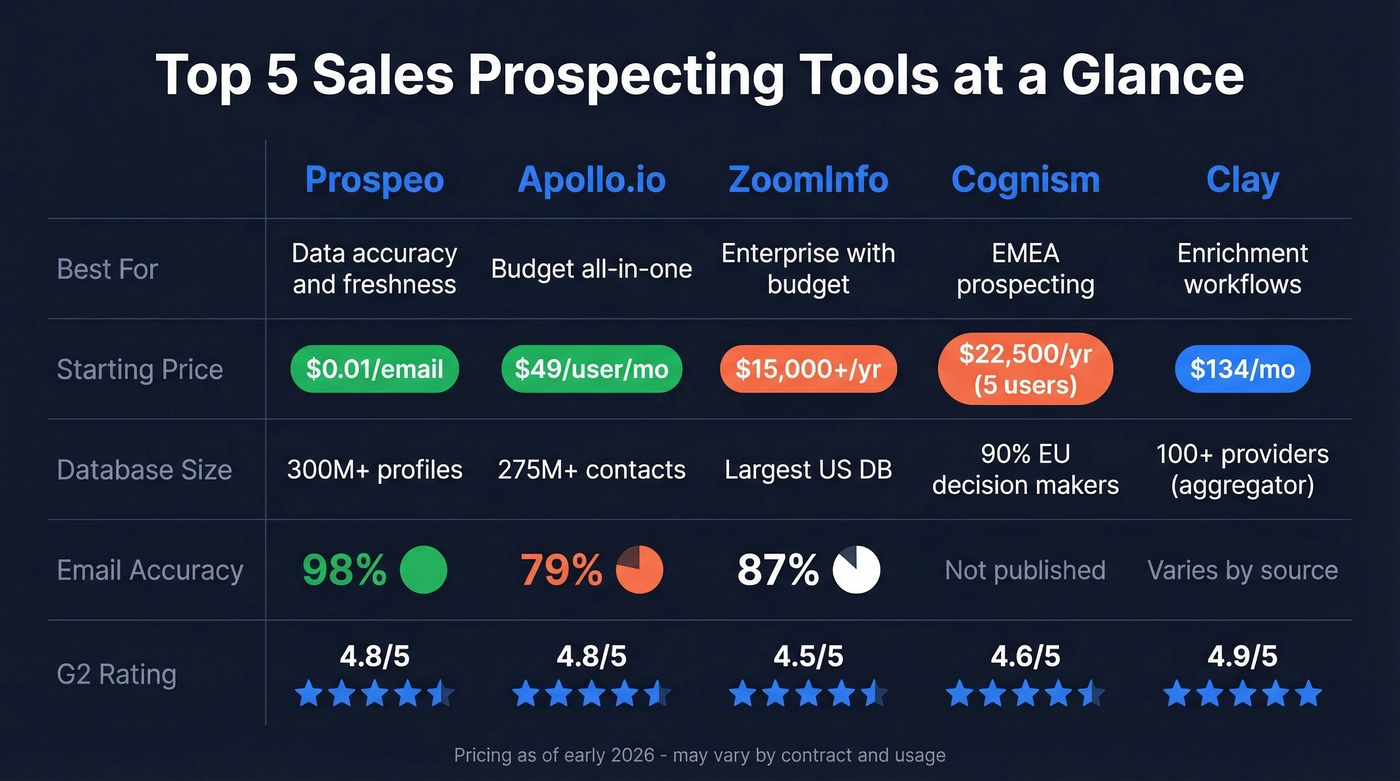
Prospeo leads on verified data quality, refresh speed, and meeting conversion. Apollo wins on affordability and breadth. ZoomInfo is the enterprise default if you can stomach the contract. Cognism owns EMEA compliance. Clay is the power-user's enrichment layer.
Your stack probably includes one data provider from this list plus an engagement tool and a CRM.
15 Best Sales Prospecting Tools Compared
Prospeo - Best for Data Accuracy
Use this if: You need the highest email accuracy on the market and a data refresh cycle measured in days, not weeks. Ideal for outbound teams, agencies managing multiple client domains, and anyone who's been burned by bounces from other providers.
Skip this if: You want an all-in-one platform with built-in email sequencing - Prospeo is a data layer, not an engagement tool. Pair it with Instantly, Lemlist, or Outreach for sequences.

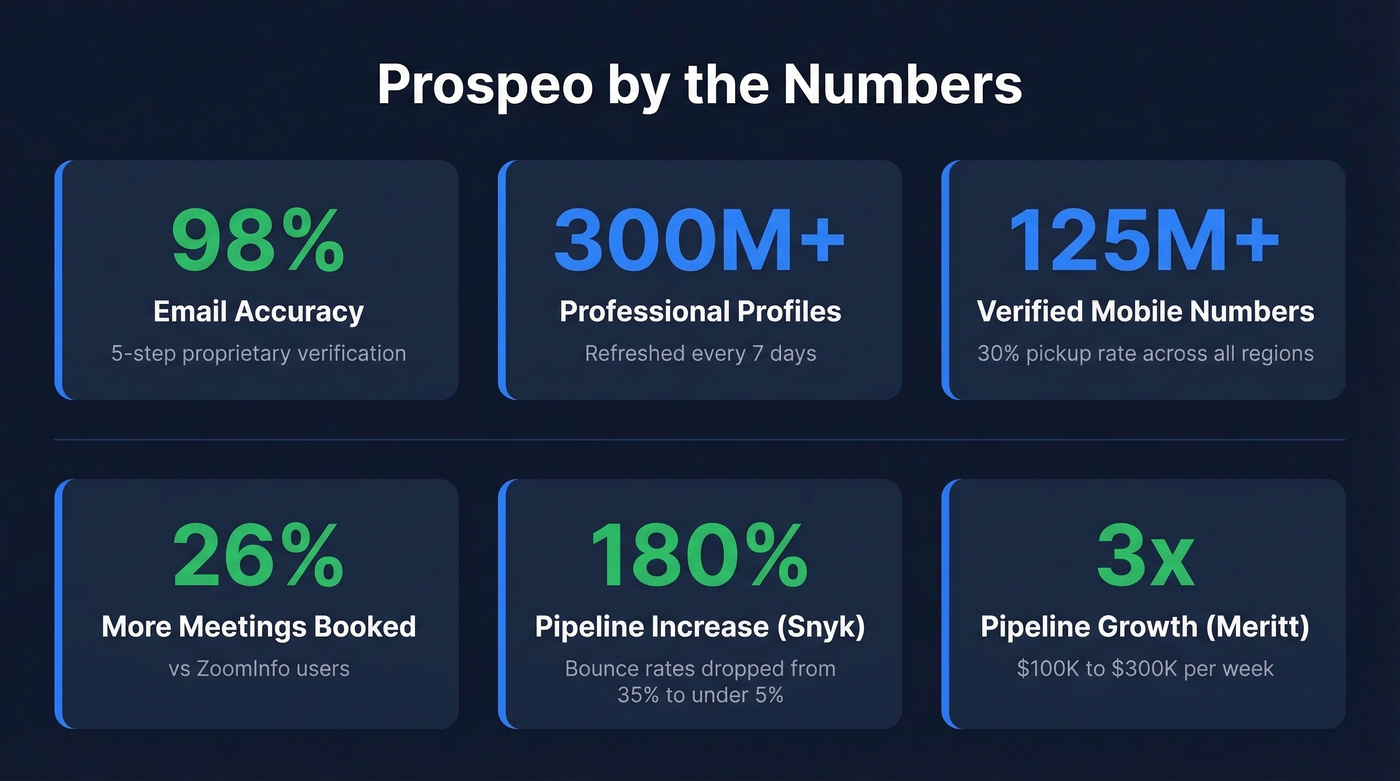
Prospeo's database covers 300M+ professional profiles, 143M+ verified emails, and 125M+ verified mobile numbers - all refreshed on a 7-day cycle. That refresh cadence is the real differentiator. The industry average sits around 6 weeks, which means by the time you email a contact from most databases, there's a real chance they've changed roles.
The accuracy numbers back this up: 98% email accuracy and a 30% mobile pickup rate across all regions. Prospeo runs a proprietary 5-step verification process - no third-party email providers - which is why the accuracy holds up at scale. Teams using Prospeo book 26% more meetings than ZoomInfo users and 35% more than Apollo users. Snyk's 50-person AE team saw bounce rates drop from 35-40% to under 5% after switching, with AE-sourced pipeline up 180%. Meritt tripled pipeline from $100K to $300K per week while cutting bounce rates from 35% to under 4%.
The platform includes 30+ search filters - buyer intent powered by 15,000 Bombora topics, technographics, job changes, funding signals, headcount growth. The Chrome extension has 40,000+ users and works across company websites, professional profiles, and CRMs. API enrichment returns a 92% match rate with 50+ data points per contact. Native integrations push directly into Salesforce, HubSpot, Smartlead, Instantly, Lemlist, Clay, Zapier, and Make.
Pricing is transparent and self-serve: roughly $0.01 per email, 10 credits per mobile number. The free tier gives you 75 verified emails and 100 Chrome extension credits per month. No contracts, no sales calls required, cancel anytime. G2: 4.8/5.
Apollo.io - Best Budget All-in-One
Use this if: You're a startup or SMB that needs a prospecting database, email sequences, and a dialer in one platform for under $100/user/month.
Skip this if: You need reliable international dialing, or you're sending more than 10K emails per month on the free plan and think "unlimited" actually means unlimited.
Apollo's 275M+ contact database is impressive for the price. The free plan is one of the best in the space - but it comes with a catch most people miss. Those "unlimited email credits" are capped at 10,000 per account per month on a verified corporate domain, and just 100 per month without one. Paid plans calculate your email credit ceiling as your subscription dollars divided by $0.025, capped at 1M per year.
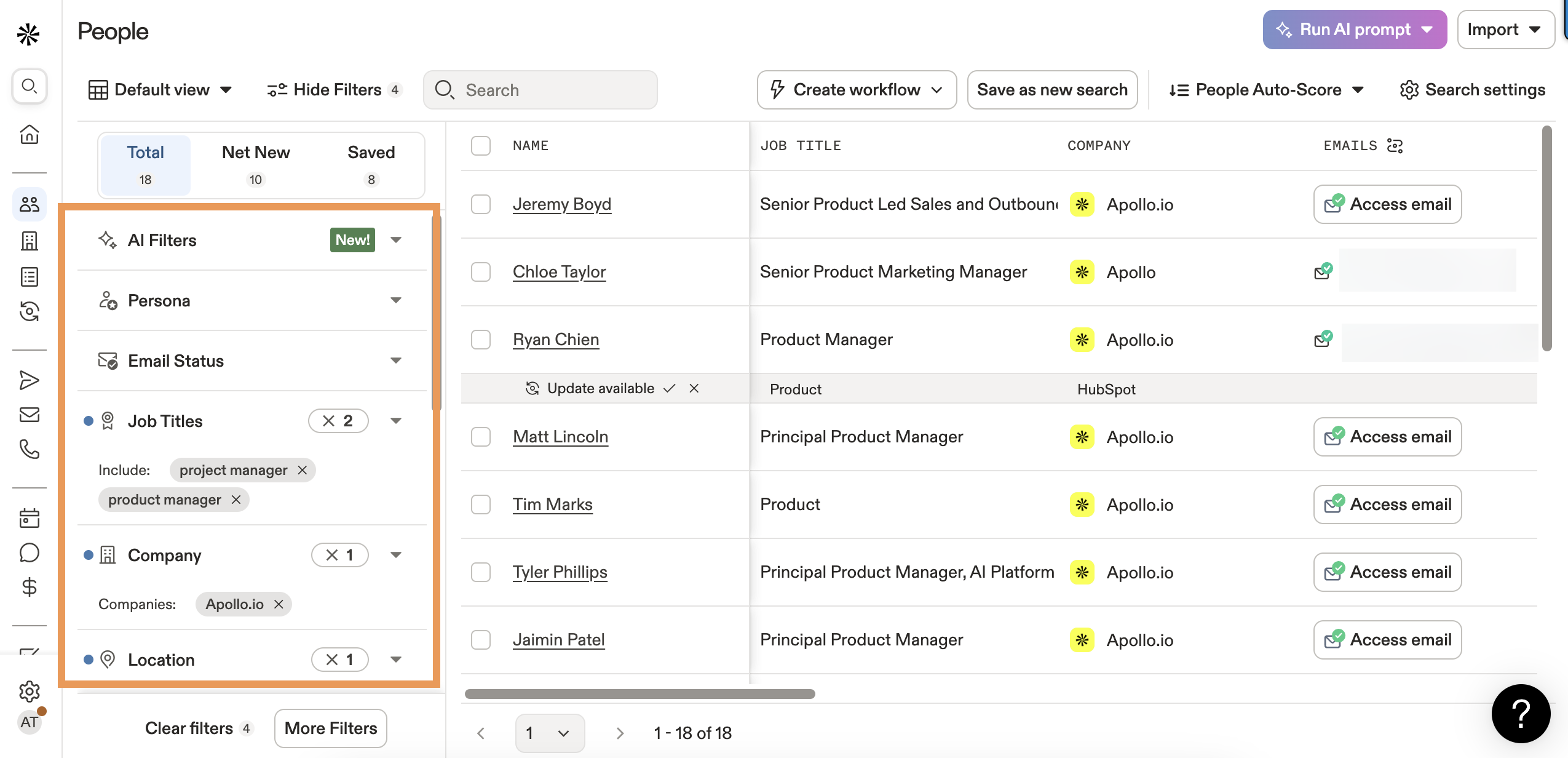
Paid tiers run $49/user/month (Basic), $79 (Professional), and $119 (Organization) on annual billing. The international dialer only unlocks at Organization tier, which also requires a minimum of three users. That's $357/month minimum for international calling - a detail buried in the fine print.
Apollo's accuracy benchmarks around 79%. It's fine for volume plays. It's not fine if your domain reputation is on the line. G2: 4.8/5. Capterra: 4.6/5.
ZoomInfo - The Enterprise Default
Hot take: ZoomInfo is still the most complete all-in-one prospecting platform. But most teams don't need all-in-one - and they're paying $40K+ for features they never turn on.
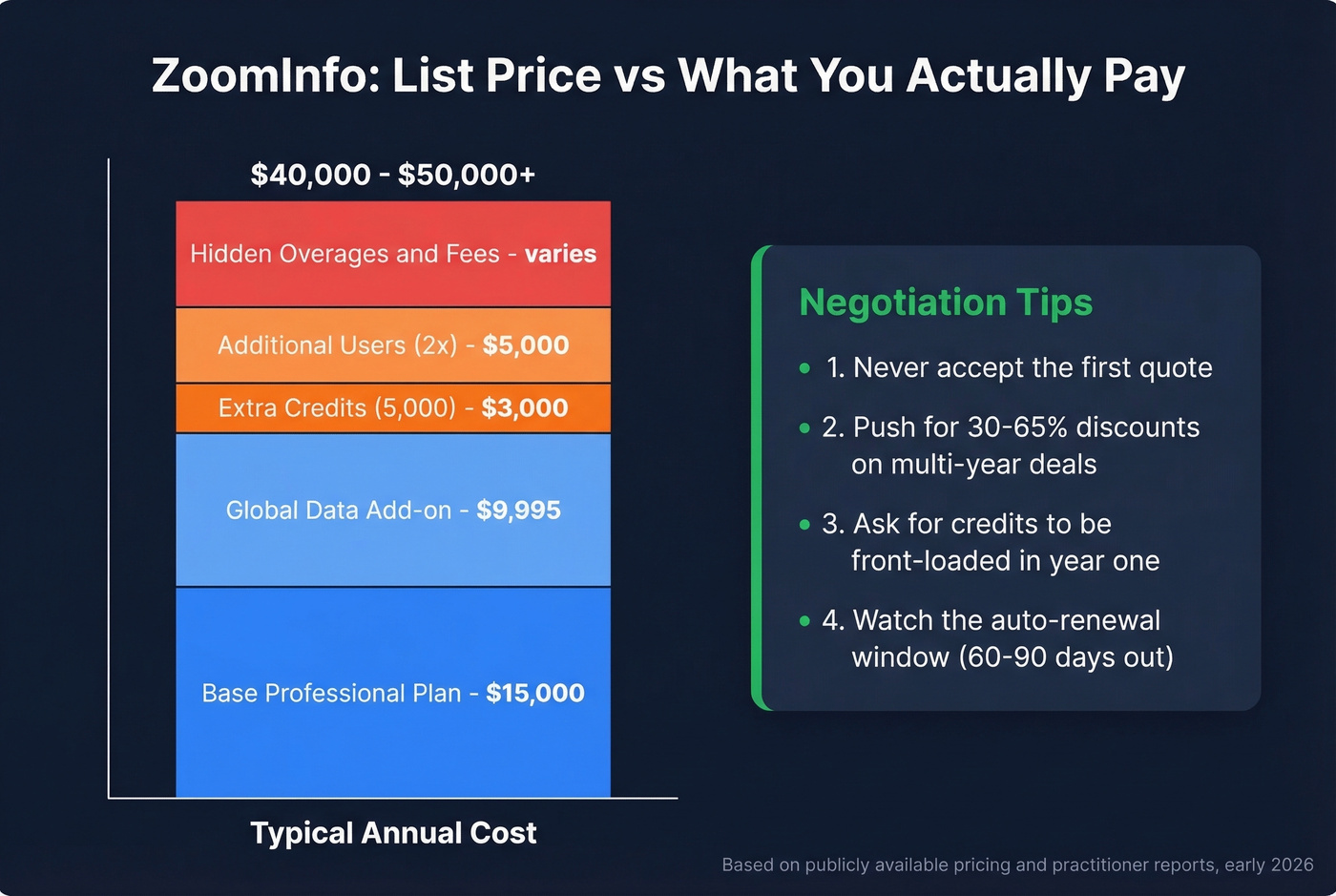
ZoomInfo is the tool everyone benchmarks against and the tool most teams eventually question whether they can afford. Professional starts at $15,000+/year. Advanced runs $24,000+. Elite hits $40,000+. But those are list prices - the real number, once you add Global Data ($9,995), extra credits (~$3,000 per 5,000), and additional users ($2,500 each), often lands closer to $50,000 annually.
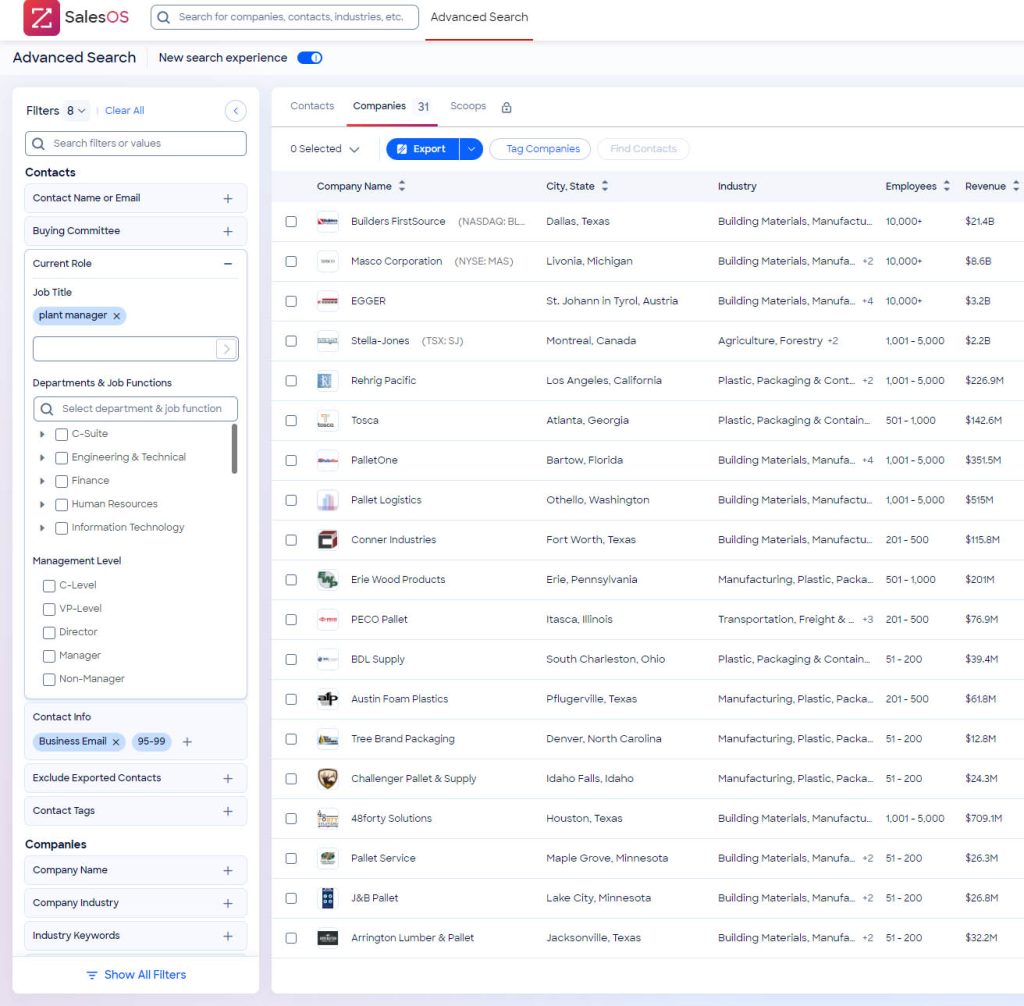
Discounts of 30-65% are standard if you negotiate. Never accept the first quote. Push for multi-year discounts, ask for credits to be front-loaded, and watch the auto-renewal window - it's typically 60-90 days, and missing it locks you in.
Where ZoomInfo still wins: US database depth, intent data maturity, and workflow breadth. Where it loses: price-to-value for teams under 20 reps, data freshness measured in weeks rather than days, and email accuracy that benchmarks around 87%. A practitioner on r/sales put it well - ZoomInfo is "crazy expensive, but worth it if the data is 10-20% better." The question is whether 87% accuracy justifies 100x the per-lead cost. G2: 4.5/5. Capterra: 4.1/5.
Cognism - EMEA Compliance Leader
Cognism is the tool you buy when your legal team has veto power over your sales stack. It sits on more DNC lists than any other provider (15 and counting) and covers 90% of EU decision-makers. If you're selling into the UK, Germany, or France, this is the tool that keeps compliance officers from losing sleep.
The tradeoff is price. A 5-user Grow plan benchmarks around $22,513/year. Elevate - which includes Diamond Data verified mobiles - runs roughly $37,498 for the same headcount. That's a 67% premium for phone-verified numbers, but those verified mobiles deliver a 3x connect rate. Intent data topics cost $200-$400 per topic at list price, though bundling brings that down to $75-$150.
One thing competitors don't match: Cognism's support team averages a 20-second response time with a 99% satisfaction score. For teams navigating EMEA compliance questions, that responsiveness matters. Cognism also owns Kaspr (starting at EUR 45/user/month), a lighter-weight alternative for smaller teams that need European data without the full platform.
Compared to ZoomInfo, Cognism wins on EMEA data and compliance. ZoomInfo still has deeper US coverage and a broader feature set. For teams prospecting primarily in North America, Cognism is harder to justify. G2: 4.6/5. Capterra: 4.7/5.
Clay - The Enrichment Power Tool
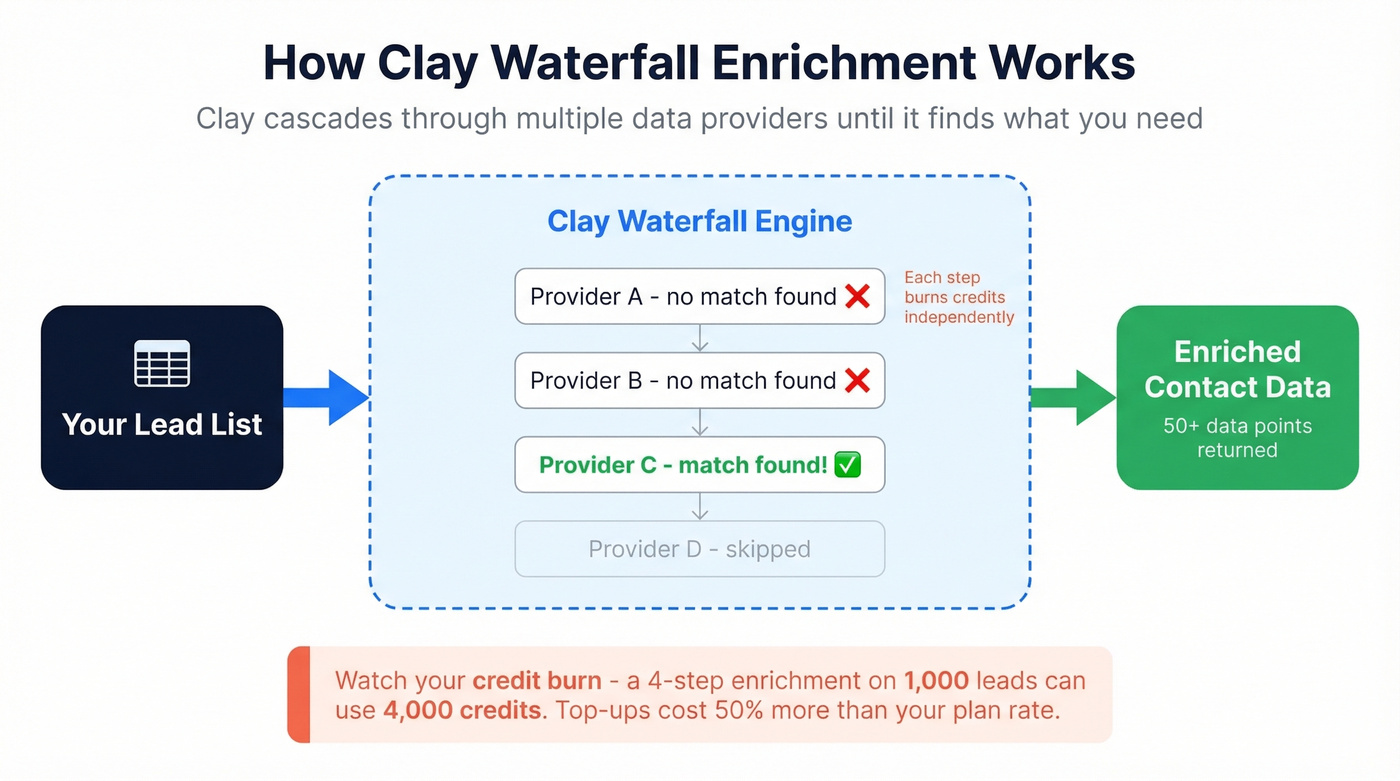
Clay is brilliant and dangerous. It's not a database - it's a workflow engine that chains together 100+ data providers through "waterfall enrichment." You build a table, define your enrichment steps, and Clay cascades through providers until it finds the data you need. Think of it as a super-powered spreadsheet that pulls from Apollo, Hunter, Clearbit, and dozens of others simultaneously.
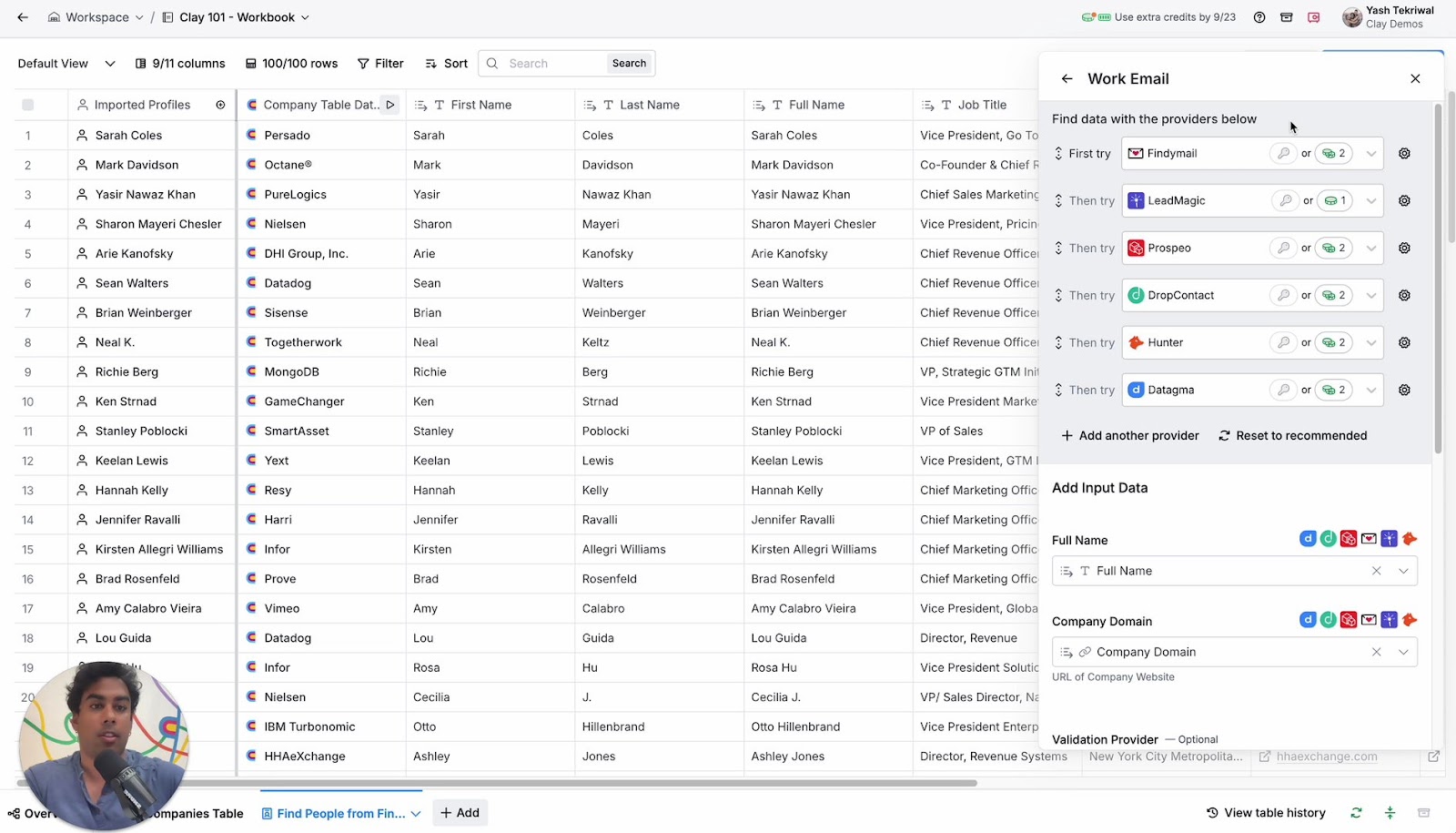
Starter runs $134/month for 24,000 credits per year. Explorer is $314/month for 120,000 credits. Pro hits $720/month for 600,000 credits. The trap? Credit top-ups cost a 50% premium, and unused credits only roll over up to 2x your monthly limit. Teams routinely underestimate their credit burn, especially when running multi-step enrichment workflows where each step consumes credits independently.
Clay has real momentum in lead gen circles. But the learning curve is steep - if you don't have someone on your team who thinks in workflows and automations, Clay will frustrate more than it helps. G2: 4.9/5.
LinkedIn Sales Navigator
Sales Navigator is the social selling standard for B2B SaaS teams. Core runs $119.99/month (or $1,079.88/year). Advanced runs $179.99/month (or $1,679.88/year). Advanced Plus is custom pricing. The advanced search filters and lead recommendations are useful for identifying prospects and warming them up before outreach. The catch: you can't export contacts natively. You'll need a third-party tool to pull data out, which adds cost and complexity. Essential for account-based selling, but it's a research layer - not a data provider. G2: 4.3/5.
HubSpot Sales Hub
HubSpot's free CRM is genuinely free, and it's a strong no-cost option for getting a pipeline up fast. Starter is $20/seat/month. Professional starts at $1,450/month (includes 5 seats) with a $1,500 onboarding fee. HubSpot isn't a prospecting database - it's a pipeline management tool with sequences, templates, and meeting scheduling baked in. Best for teams already in the HubSpot ecosystem who want prospecting workflows without adding another vendor. Don't buy it expecting contact data. G2: 4.4/5. Capterra: 4.5/5.
Outreach
Outreach is quote-only, typically $100+/user/month. It's an engagement platform, not a data source - you feed it contacts from your data provider and it handles multi-channel sequences, call tasks, and analytics. Their own data shows that deals closed within 50 days carry a 47% win rate; after that, win rates drop to 20% or lower. Practitioners on r/sales give it a clear edge over Salesloft for customizability. If you're running a 10+ person SDR team, Outreach is the sequencing layer worth evaluating first. G2: 4.3/5.
Other B2B Prospecting Tools Worth Knowing
Instantly - Growth plan at $37/month, Hypergrowth at $97/month. Core value is cold email infrastructure: unlimited email accounts, warmup, and rotation. Their SuperSearch lead database starts at $9/month as an add-on. Best for high-volume cold email operators and agencies managing dozens of sending accounts.
Lusha - Free plan available, paid from $37.45/user/month. Credit-based: 1 credit per email, 10 per phone. The Chrome extension is dead simple for quick lookups. Limited for high-volume outbound because credits burn fast. G2: 4.3/5.
Seamless.AI - Free tier with 50 credits. Pro and Enterprise are quote-only, starting around $147/user/month. Real-time search model that finds contacts on demand. Accuracy reviews are mixed - worth a trial, but not a tool to build a stack around.
LeadIQ - Free tier available, paid from $36/user/month. Strong Salesforce integration for capturing leads during live prospecting sessions. Best for reps who prospect in-browser and want one-click CRM capture.
Reply.io - Email Volume at $59/user/month, Multichannel at $89-$99/user/month. Their AI SDR "Jason" add-on runs $500/month. A solid mid-tier engagement platform for teams that find Outreach too expensive.
Lemlist - Email Outreach at $39/month, Multichannel at $69/month. 14-day free trial. Known for personalization features - custom images, dynamic videos, and landing pages in cold emails. A strong choice for creative outbound teams.
Hunter.io - Free plan available. Starter at $49/month, Growth at $149/month. Domain search and email verification in a lightweight, no-frills package. If all you need is "find emails at this company and verify them," Hunter does that well.

Most sales prospecting tools refresh data every 6 weeks. By then, your contacts have changed jobs and your emails are bouncing. Prospeo refreshes every 7 days, delivers 98% email accuracy, and costs roughly $0.01 per verified email - no contracts, no sales calls.
Stop paying enterprise prices for stale data that tanks your deliverability.
What You'll Actually Pay
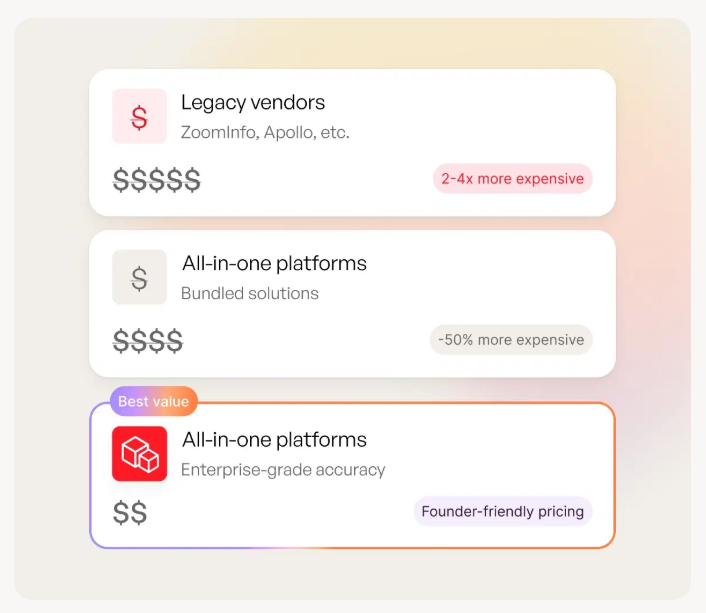
This is the table most "best of" lists won't publish because half these vendors don't want you comparing prices side by side.
| Tool | Free Tier | Starting Paid | Credit Model | Hidden Costs |
|---|---|---|---|---|
| Prospeo | 75 emails/mo | ~$0.01/email | Pay per lead | None - no contracts |
| Apollo.io | 10K emails/mo* | $49/user/mo | Credit-capped | *100/mo w/o corp email |
| ZoomInfo | No | ~$15,000/yr | 5,000 annual credits | Add-ons push to $50K+ |
| Cognism | No | ~$22,500/yr | Seat-based | Intent topics $75-400/ea |
| Clay | 12,000 credits/yr | $134/mo | Credit-based | Top-ups at 50% premium |
| Sales Nav | No | $119.99/mo | Seat-based | No native export |
| HubSpot | Yes (CRM) | $20/seat/mo | Seat-based | $1,500 onboarding (Pro) |
| Outreach | No | ~$100/user/mo | Seat-based | Quote-only pricing |
| Instantly | No | $37/mo | Account-based | Lead DB is separate |
| Lusha | Yes | $37.45/user/mo | Credit-based | Credits burn fast |
| Seamless.AI | 50 credits | ~$147/user/mo | Credit-based | Quote-only for Pro+ |
| LeadIQ | Yes | ~$36/user/mo | Credit-based | Limited free credits |
| Reply.io | No | $59/user/mo | Seat-based | AI SDR add-on $500/mo |
| Lemlist | 14-day trial | $39/mo | Seat-based | Multichannel costs more |
| Hunter.io | Free plan | $49/mo | Credit-based | Low caps on free tier |
The ZoomInfo add-on math deserves its own callout. A Professional plan at $15,000/year includes 5,000 annual credits. Need more? That's ~$3,000 per 5,000 additional credits. Want Global Data? Add $9,995. Extra users? $2,500 each at list price. A 10-seat ZoomInfo contract with intent data and mobile numbers can realistically run $40-60K/year. That's real money for a Series A company.
Data Accuracy: The Metric That Matters Most
Here's the number that actually determines whether your outbound works: how many of those "verified" contacts reach a real person?
48% of email senders report bounce rates between 2-5%, and 15% exceed 6%. If your data provider is feeding you stale emails, you're burning sender reputation with every sequence. When we evaluate any prospecting tool, accuracy is the first benchmark we check - not database size.
| Tool | Email Accuracy | Mobile Pickup | Data Refresh |
|---|---|---|---|
| Prospeo | 98% | 30% | 7 days |
| ZoomInfo | ~87% | ~12.5% | ~6 weeks |
| Apollo.io | ~79% | ~11% | ~6 weeks |
| Cognism | Not published | ~3x avg (verified) | Not published |
The gap between 98% and 79% email accuracy isn't a rounding error - it's the difference between a healthy sending domain and one that's flagged by Google. On mobile pickup rates, 30% means roughly one in three dials connects to the right person. At 12.5%, you're looking at one in eight. That delta compounds across hundreds of dials per week.
Most vendors won't publish these numbers because they know they'll lose the comparison. A 7-day refresh cycle is the other differentiator that doesn't get enough attention - when someone changes jobs, you have a week-old record instead of a month-old one. That freshness is why teams switching from competitors consistently see bounce rates drop from 30-40% to under 5%.
Teams using Prospeo book 26% more meetings than ZoomInfo users and 35% more than Apollo users. Snyk's 50 AEs dropped bounce rates from 40% to under 5%. Meritt tripled weekly pipeline to $300K. The difference isn't effort - it's data quality.
Build your prospecting stack on data that actually connects you to buyers.
Recommended Stacks by Budget
You don't need fifteen tools. You need a stack that covers three jobs: find contacts, engage them, and track the pipeline. Here are three stacks we'd actually recommend based on what we've seen work.
Budget stack (~$200/month): Prospeo for verified contact data, Instantly or Lemlist for cold email sequences, and HubSpot's free CRM for pipeline tracking. This gets a solo founder or two-person SDR team running real outbound for less than most teams spend on a single ZoomInfo seat.
Mid-market stack ($1,000+/month, 5+ reps): Cognism if you're EMEA-heavy or a comparable data provider for global accuracy, Outreach or Salesloft for multi-channel sequences, Salesforce or HubSpot Pro for CRM, and Clay as an optional enrichment layer for complex workflows. This stack balances data quality with engagement sophistication - and it's where most growing teams land.
Enterprise stack (budget isn't the constraint): ZoomInfo plus Outreach plus Salesforce is the classic enterprise trio. It works. But negotiate - 30-65% discounts are standard on ZoomInfo contracts. One pattern we see repeatedly: teams buy ZoomInfo for the database, then realize they're paying for intent, chat, and workflow features they never turn on. If that's you, consider pairing a focused data provider with your engagement platform instead of paying for an all-in-one you only half-use.
How to Choose the Right Tool
Data accuracy over database size. A 300M-contact database with 98% accuracy beats a 600M-contact database at 79%. You're not emailing all 600 million people. You're emailing a few thousand - and every bounce hurts.
Model total cost of ownership. Calculate your actual usage before signing anything. How many contacts per month? How many mobile numbers? What happens when you exceed your credit cap? Apollo's "unlimited" emails, ZoomInfo's add-on creep, and Clay's top-up premiums all make the sticker price misleading.
Integration with your existing stack matters more than feature lists. If your CRM is Salesforce and your sequencer is Outreach, your data provider needs to push contacts into both without manual CSV exports. Native integrations save hours per week.
Compliance can't be an afterthought. Selling into the EU? You need GDPR compliance at minimum. Cognism leads on DNC list coverage. Make sure any provider you evaluate can produce a DPA on request.
Don't overlook event-triggered prospecting, either. The best tools let you filter by job changes, funding rounds, and headcount growth - signals that indicate a company is actively buying. A prospect who just raised a Series B and hired three SDRs is worth ten cold contacts from a static list.
Finally, know whether you're a self-serve or sales-led buyer. Some teams want to swipe a credit card and start prospecting in ten minutes. Others need enterprise procurement with security reviews and custom contracts. If you're the former, skip any tool that forces you through a demo-to-contract pipeline just to see pricing.
FAQ
What is a sales prospecting tool?
Software that helps sales teams find, verify, and contact potential buyers. The category spans data providers, engagement platforms, CRM enrichment tools, and hybrid platforms that try to do multiple jobs. Most effective stacks combine two to four specialized tools rather than relying on one all-in-one.
How much do B2B prospecting tools cost?
Costs range from free to $50,000+ per year for enterprise ZoomInfo contracts with add-ons. Most mid-market teams with 5-10 reps spend $200-$1,000 per month across their entire stack. The biggest cost variable is whether you're paying per seat, per credit, or per contact - and whether "unlimited" actually means unlimited.
Which tool has the most accurate contact data?
Prospeo leads with 98% verified email accuracy and a 7-day data refresh cycle. ZoomInfo benchmarks around 87%, and Apollo sits near 79%. Cognism doesn't publish accuracy percentages but offers Diamond Data phone-verified mobiles with a 3x connect rate. Accuracy matters more than database size for outbound deliverability.
Do I need more than one prospecting tool?
Yes. The most effective SDR stacks combine a data provider for contacts, an engagement platform for sequences, and a CRM for pipeline management. Three to four tools is the sweet spot - trying to do everything in one platform usually means compromising on data quality, sequencing power, or pipeline visibility.
What's the biggest hidden cost in these tools?
Credit overages and add-ons. Apollo caps "unlimited" emails at 10,000/month on the free plan. ZoomInfo charges ~$3,000 per 5,000 extra credits. Clay top-ups cost a 50% premium. Always model your actual monthly usage - contacts needed, mobiles required, enrichment volume - before committing to any annual contract.