

Sales Technology Training: What Actually Works in 2026
You spent $30,000 on a sales training program last quarter. Two months later, reps are back to winging discovery calls and ignoring the CRM fields they were taught to fill out. The VP of Sales calls it a "great team-building exercise." That's not sales technology training - that's an expensive offsite with a certificate.
Here's the uncomfortable truth: 62% of sales leaders say outdated training is their biggest barrier to an effective sales force, and 72% say training fails because it's one-size-fits-all. Even with more budget going into enablement, methodology decay is still rampant if you don't build reinforcement into the workflow.
What You Need (Quick Version)
Short on time? This is the framework that consistently produces results:
- Pick a methodology that matches your team's motion. SPICED for product-led, Sandler for complex enterprise, Challenger for insight-led GTM. The comparison table below breaks down the best programs by audience.
- Pair it with an AI roleplay tool for daily reinforcement. This is the single biggest lever most teams ignore. Tools like Yoodli ($11/mo) or Kendo AI ($55/mo) give reps practice time between coaching sessions.
- Fix your prospect data before rollout. Trained reps working bad lists still fail. If your bounce rate is above 5%, clean your data first with a tool like Prospeo, which verifies emails and phones in real time so reps actually reach the people they're trained to sell to.
Three Types of Tech Sales Training
The phrase "sales technology training" means three different things depending on who's saying it, and conflating them is how teams end up buying the wrong program.
Type 1: Training to sell technology products. This is what bootcamps like CourseCareers and SV Academy teach - how to be an SDR or AE at a SaaS company. The curriculum covers discovery frameworks, demo skills, and the mechanics of a tech sales cycle.
Type 2: Training on sales technology tools. CRM fluency, sequencing platforms, conversation intelligence dashboards. Can your reps actually use Salesforce, Outreach, or Gong without hand-holding? 48% of sales leaders say digital selling skills are the least addressed area in their training programs. That's a massive gap.
Type 3: Technology-enhanced training methods. AI roleplay, microlearning platforms, video coaching tools. This is training delivered through technology rather than training about technology - and it's the category most likely to change how your team actually retains skills.
Most teams need a combination of all three. The mistake is buying a Type 1 program when you actually have a Type 2 problem, or investing in Type 3 delivery without any coherent methodology underneath it.
Why 2026 Demands Better Training
AI has disrupted traditional prospecting workflows. Reps who can't use AI-assisted tools are already falling behind. Sales cycles are longer, buying committees are bigger, and companies are hiring more selectively - which means every rep on your team needs to produce more with less ramp time.
The teams that get the best results build a feedback loop, not just a content library. Lepaya's "State of Skills 2026" report points to a 27% increase in commercial sensitivity training investment hours from 2024 to 2025, based on an analysis of 196 companies. The question isn't whether to invest. It's whether your investment will survive past week six.
What Makes Training Stick
The data points in one direction: training alone doesn't work. Training plus coaching does.
CSO Insights found that combining formal training with ongoing coaching yields a 54.4% win rate and 56.0% quota attainment - 28% revenue growth over baseline. The problem? Salesforce's State of Sales data shows managers spend just 9% of their time coaching. Nine percent. For the single highest-leverage activity a frontline manager can do, that's borderline negligent.
Scenario-based training improves retention by up to 70% compared to lecture-based formats. Reps remember what they practice, not what they watch. And 90% of sales leaders already use blended in-person and virtual delivery, so the infrastructure for practice-heavy formats exists.
The formula that works: methodology training (one-to-many, foundational) → coaching cadence (one-to-one, deal-specific) → AI roleplay (daily practice, self-serve) → measurement loop. Skip any step and the whole thing degrades. We've seen teams nail the first two and still fail because nobody measured whether reps were actually applying the methodology 60 days later.

Training doesn't fix a bad list. If reps nail discovery in roleplay but bounce 35% of their emails in production, your $30K training investment is leaking pipeline. Prospeo verifies emails and phones in real time with 98% accuracy - so every rep trained on SPICED or Sandler actually reaches the buyer they're selling to.
Stop training reps to sell to inboxes that don't exist.
Best Programs in 2026
We evaluated each program on curriculum depth, coaching access, community support, proven outcomes, and 2026 relevance.
| Program | Best For | Format / Duration | Price | Notable Feature |
|---|---|---|---|---|
| Winning by Design | SDR/AE teams | Live + async, 3-6 mo | $1,500-$2,500/person | SPICED methodology |
| CourseCareers | Career switchers | Self-paced, ~4-12 weeks | $499 one-time | Career Launchpad + AI mock interviews |
| Sandler | Enterprise orgs | Live + AI roleplay, ongoing | $1K-$3K/seat | AI Roleplay Coach (powered by Yoodli) |
| SV Academy | Career switchers | Cohort-based, 4-8 weeks | ~$3K-$5K | Job placement focus |
| JBarrows | SDR/AE teams | On-demand, self-paced | ~$500-$1K/yr | Tactical frameworks |
| Salesforce Trailhead | Everyone | Self-paced, flexible | Free | CRM fluency |
For Career Switchers
CourseCareers charges $499 for its Technology Sales Course. It covers tools like Salesforce, HubSpot, SalesLoft, Outreach, Vidyard, and prospecting tools like ZoomInfo and Apollo, plus frameworks like BANT and SPIN. The Career Launchpad includes unlimited AI mock interviews. For someone breaking into tech sales, it's the best value-to-depth ratio on the market.
SV Academy runs a 4-week full-time or 8-week part-time cohort program with a 4.8/5 rating across 226 reviews on Course Report. Strong job placement focus.
Elevate offers a 10-week online SDR bootcamp rated 4.75/5 across 163 reviews, typically priced in the $2,000-$5,000 range. Good for structured learners who want a longer runway.
For SDR/AE Teams
Winning by Design is the program we recommend most often for scaling revenue teams. At $1,500-$2,500 per person, it's not cheap, but the 4.8/5 rating across 757 G2 reviews reflects genuine quality. The SPICED methodology gives reps a shared language for discovery, and the live sessions emphasize roleplays and practical examples over slides.
The honest tradeoff: sessions can run long. G2 reviewers consistently flag time management as a weakness, and users have asked for practice quizzes before certification. Implementation timelines run 3-6 months, which means you need leadership buy-in and a reinforcement plan before you start writing checks.
Use JBarrows if you need tactical execution frameworks without a multi-month rollout. Individual subscriptions run ~$500-$1,000/year, and the content is built for reps who want to get better at the mechanics - email writing, cold calling, objection handling. Skip it if you need a full organizational methodology overhaul.
PClub.io is Chris Orlob's platform, priced around $500-$2,000/year, leaning heavily into AI-forward positioning and data-driven selling. Worth watching if your team sells to technical buyers.
For Enterprise Sales Orgs
Sandler has trained enterprise sales teams for 50+ years, but the interesting development is their AI Roleplay Coach powered by Yoodli. It's the clearest signal that legacy methodology providers see AI practice as table stakes, not a gimmick. Certifications often land in the $1,000-$3,000/seat range; enterprise-wide rollouts with consulting typically land in the $20K-$100K+ range. The methodology is proven for complex, consultative sales - just make sure you budget for the reinforcement layer, not just the initial training.
Richardson operates at the enterprise consulting level - $25K-$250K+ engagements for large-scale sales transformation. Overkill for most mid-market teams. RAIN Group is worth considering alongside Richardson; they have a strong case study with Hitachi Solutions and offer an AI suite for sales enablement. Similar price tier.
Challenger teaches insight-led selling and works best for teams where reps need to teach buyers something new. Workshops run $1,500-$3,000/seat.
Free Starting Point
If your reps can't navigate your CRM, no methodology will save them. Salesforce Trailhead is free, self-paced, and teaches the operational fluency that every other training program assumes reps already have. It's the most underrated resource in the enablement stack. Before you spend $2,000/seat on SPICED, make sure your team can actually log activities, update pipeline stages, and run a basic report.
AI-Powered Roleplay Tools
AI roleplay is the biggest shift in sales training since video coaching - because it solves the volume problem that coaching alone can't. Organizations using AI in sales training see 2.6x ROI versus laggards, per McKinsey. Reps need hundreds of practice reps to internalize a methodology, and managers don't have the bandwidth to provide them.
| Tool | Starting Price | Best For | Key Feature |
|---|---|---|---|
| Yoodli | $11/mo | Budget-conscious teams | Sandler integration |
| Kendo AI | $55/mo | Mid-market teams | Deep customization |
| Hyperbound | ~$40/user/mo | Persona-specific practice | Custom buyer sims |
| Mindtickle | $30-$50/user/mo | Enterprise enablement | Full platform |
| Quantified | $100K+/yr | Fortune 500 | Enterprise analytics |
Yoodli at $11/month is the entry point - it's what Sandler chose for their AI Roleplay Coach integration, which tells you something about the quality. Kendo AI at $55/month offers deeper customization for teams that want to build scenarios around their specific product and buyer personas. Hyperbound at roughly $40/user/month sits in the middle and excels at building realistic buyer simulations tailored to your ICP. Mindtickle and Quantified play at the enterprise level where AI roleplay is one feature inside a broader enablement platform.
Let's be honest about the pricing gap here: $132/year for Yoodli versus $100,000+/year for Quantified is absurd for most teams. For orgs under 50 reps, the sub-$100/month tools deliver 80% of the value. If your average deal size is under $25K, you almost certainly don't need an enterprise AI coaching platform. Start with Yoodli or Kendo, measure whether reps actually use it for 90 days, then upgrade if the data justifies it.
Why Training Fails After Week One
73% of organizations experience methodology decay within 90 days without technology enforcement. That's not a training problem - it's a reinforcement problem.
Reps abandon 60-70% of CRM field completion under quota pressure. Manual adoption auditing takes 8-12 hours per manager per week. The methodology you paid $50,000 to implement quietly dies while everyone's busy closing deals.
The five training killers we see over and over:
- Information overload - cramming a quarter's worth of methodology into a two-day workshop
- Lecture-only delivery - slides without practice
- Neglecting soft skills - teaching process but not empathy, tone, or active listening
- Assuming the same skill level - the 72% one-size-fits-all problem
- Skipping follow-up - no coaching cadence, no measurement, no accountability
One overlooked implementation step: audit your prospect data before rollout. If bounce rates exceed 5%, fix the data first. Prospeo verifies emails and phones with 98% accuracy so reps actually reach the people they're trained to sell to - because a perfectly executed SPICED discovery call means nothing if the email never lands.
Measuring Training ROI
An Accenture analysis found that training delivers 353% ROI - $4.53 returned per dollar invested. But only 25% of sales organizations actually measure leading-indicator sales behaviors. The rest wait for revenue to move, which takes 90-180 days and makes attribution nearly impossible.
Track these KPIs in order of signal speed: discovery call quality scores by week 2, pipeline velocity by month 2, win rate by month 3, average deal size by month 4, and quota attainment at quarter-end. Leading indicators first, lagging indicators to confirm.
Here's a contrarian take: you don't need a $50K program. Methodology training plus AI roleplay plus clean prospect data can run under $5K total for a 10-person team. The expensive part isn't the tools - it's the discipline to reinforce.
The Data Problem Nobody Talks About
Picture this: your new SDR just finished two weeks of onboarding. She's practiced SPICED discovery, nailed her roleplay scores, and built her first outbound sequence. She hits send on 200 emails. Forty-seven bounce. Her domain reputation takes a hit before she's booked a single meeting.
Buyers complete 70% of their buying journey independently before they ever talk to a rep. By the time your team gets a shot at the conversation, the data has to be right. Bad contact data doesn't just waste time - it actively undermines the training investment you just made.
This is where clean data fits into the training stack. Meritt, a Prospeo customer, saw their bounce rate drop from 35% to under 4% - and their pipeline tripled from $100K to $300K per week. That kind of result doesn't come from better training. It comes from making sure trained reps can actually reach people.
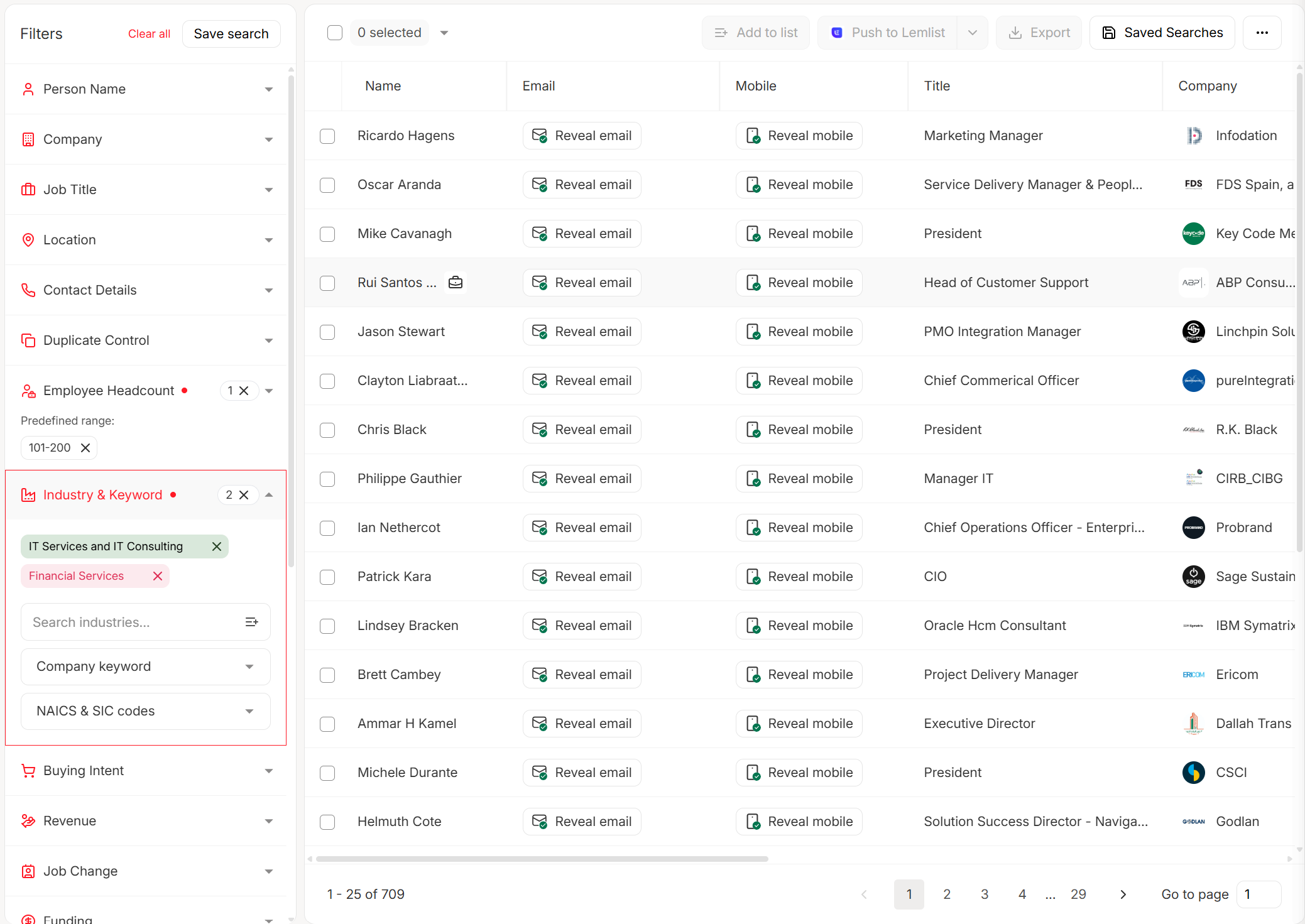
You just invested in methodology, coaching cadences, and AI roleplay. The last mile is data. Prospeo's 7-day refresh cycle means your reps never work stale contacts - 300M+ profiles, 125M+ verified mobiles, 98% email accuracy at $0.01/email. That's the reinforcement loop most enablement teams forget to close.
Complete your training stack with data reps can actually dial.
FAQ
How much does sales technology training cost?
Most teams spend $500-$3,000 per seat for methodology training plus $11-$55/month per rep for AI roleplay tools. Salesforce Trailhead is free for CRM fluency. Enterprise consulting engagements from Richardson or RAIN Group run $25K-$250K+.
Is AI sales roleplay effective?
Organizations using AI in sales training achieve 2.6x ROI versus those that don't. Tools start at $11/month with Yoodli, and the key advantage is unlimited practice volume without consuming manager time.
How long until training shows results?
Leading indicators like discovery call quality shift within 30-60 days. Revenue impact shows up in 90-180 days, but only with consistent reinforcement through coaching cadences and AI practice tools.
What's a good free alternative to expensive training platforms?
Salesforce Trailhead covers CRM fluency at no cost. Pair it with Prospeo's free tier (75 email credits/month) for verified prospect data and Yoodli's free plan for AI roleplay - that's a functional training stack for $0.
How do I prevent methodology decay?
Build three reinforcement layers: AI roleplay for daily practice, a weekly coaching cadence tied to live deals, and clean prospect data so reps immediately apply skills on real conversations. Without all three, 73% of organizations see methodology decay within 90 days.