

Competitive Sales Training: Frameworks, Tools, and Metrics That Win Deals
A rep on r/sales posted about a $15K consultant their VP hired for six hours of "consultative selling" training. First call after, the rep used the scripted discovery question - "What's keeping you up at night?" - and the prospect called it out as a script and hung up.
That's not competitive sales training. That's expensive theater.
Competitive sales training arms reps with specific intelligence about named competitors - battlecards, tested rebuttals, win/loss patterns, and metrics that track whether any of it's working. Generic sales skills won't tell a rep what to say when a prospect drops "we're also looking at [Competitor X]" mid-call. Here's where to start: build battlecards for your top five competitors, run quarterly win/loss interviews (your reps are wrong about why they lose 60% of the time), and track win-rate by competitor every quarter. If the number isn't moving, your training isn't working.
Why Competitive Enablement Matters
38% of complex B2B purchases end in no decision. The biggest competitor isn't another vendor - it's the status quo.
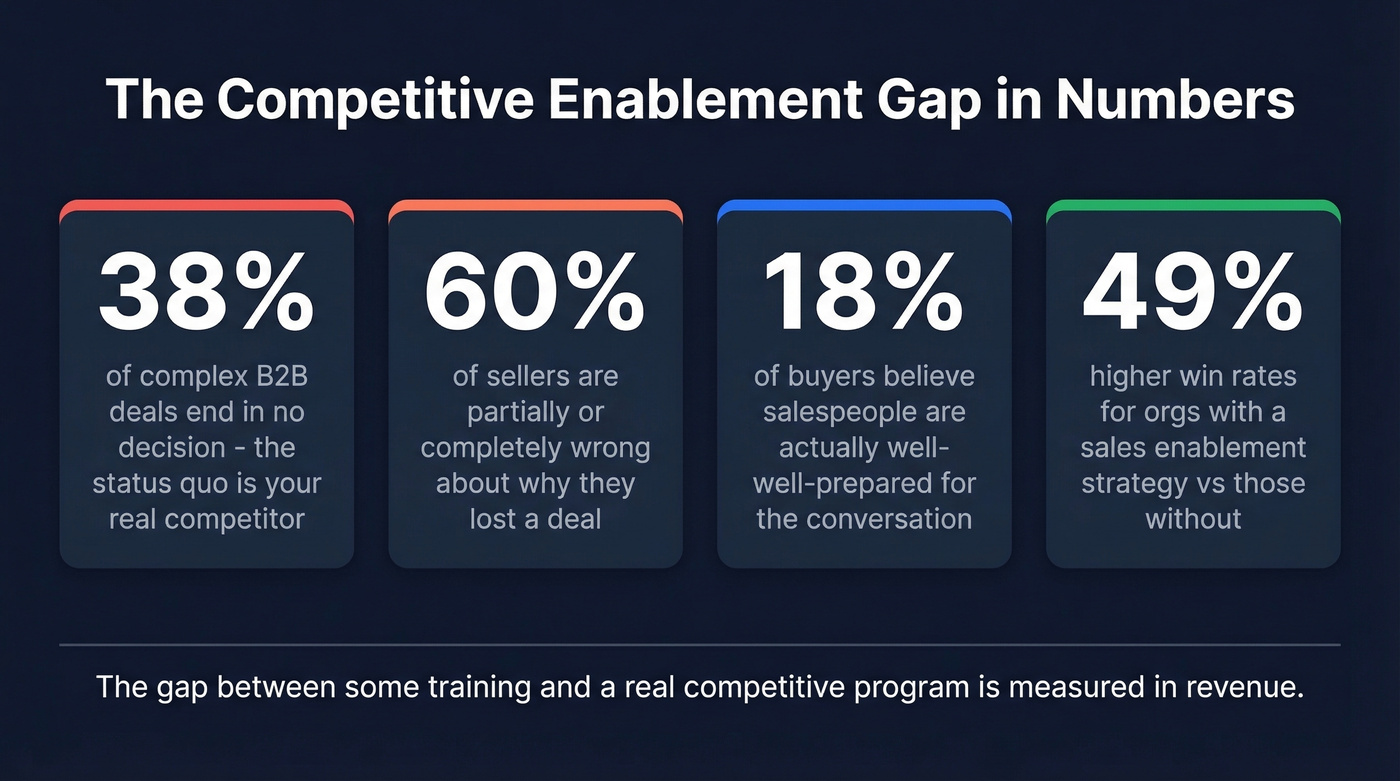
And when deals do go competitive, reps are flying blind more often than they think. Anova Consulting found that 60% of sellers are partially or completely wrong about why they lost a deal. They blame price. They blame timing. The buyer says it was something else entirely. Meanwhile, RAIN Group research shows only 18% of buyers believe salespeople are well-prepared for the conversation, while organizations with a sales enablement strategy achieve 49% higher win rates on forecasted deals. The gap between "we do some training" and "we run a competitive enablement program" is measurable in revenue.
Four Pillars of Competitive Training
Competitive Battlecards
Battlecards bridge competitive intelligence and what a rep actually says on a call. You need five types:
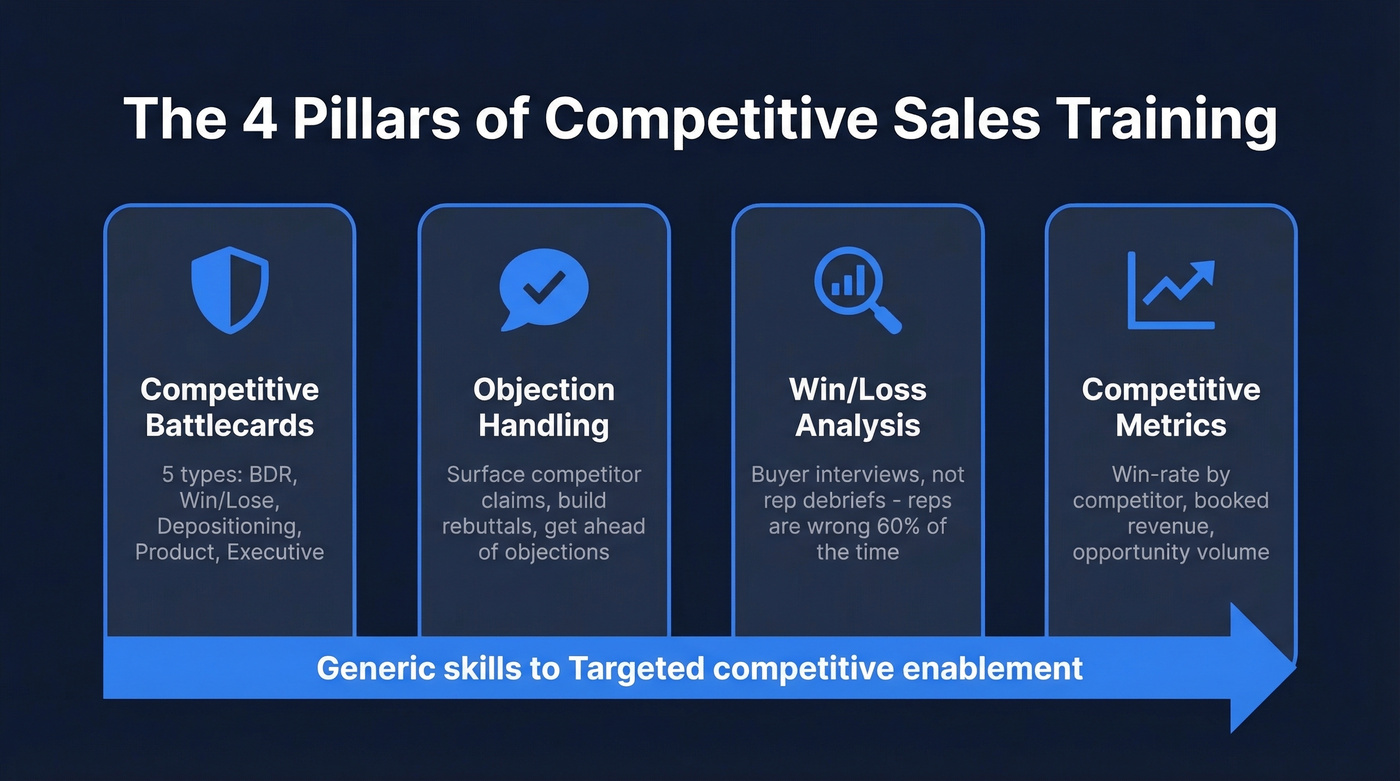
- BDR battlecards - discovery questions and early "us vs. them" framing
- Why We Win / Why We Lose - patterns from closed deals, organized by competitor
- Depositioning battlecards - trap-setting questions and objection handling for late-stage deals
- Product battlecards - feature comparisons and pricing context
- Executive battlecards - high-level competitor snapshots for C-suite conversations
In our experience, depositioning battlecards get the most use in competitive deals - they're what reps reach for when a prospect says "but [Competitor] told us you can't do X." Keep all of them current. A battlecard with last quarter's pricing is worse than no battlecard at all, because it gives reps false confidence right when accuracy matters most.
Competitive Objection Handling
Start by identifying what competitors actually claim about you. Pull from rep interviews, call recordings, G2 and Capterra reviews where competitors weaponize your negatives, competitor marketing collateral, and win/loss interviews.
Once you've surfaced the themes, build confident rebuttals. Test them with your best reps. Iterate. Then distribute through battlecards and training sessions.
The most underrated move is getting ahead of the objection - if price always comes up against Competitor X, address it in discovery before the prospect raises it. One rule above all others: never trash competitors. Buyers can fact-check any claim instantly, and speaking negatively about a competitor damages your credibility faster than it damages theirs.
Win/Loss Analysis
This is where most teams have the biggest gap. Real win/loss analysis means buyer interviews - not rep debriefs. The "reason lost" dropdown in your CRM is fiction.
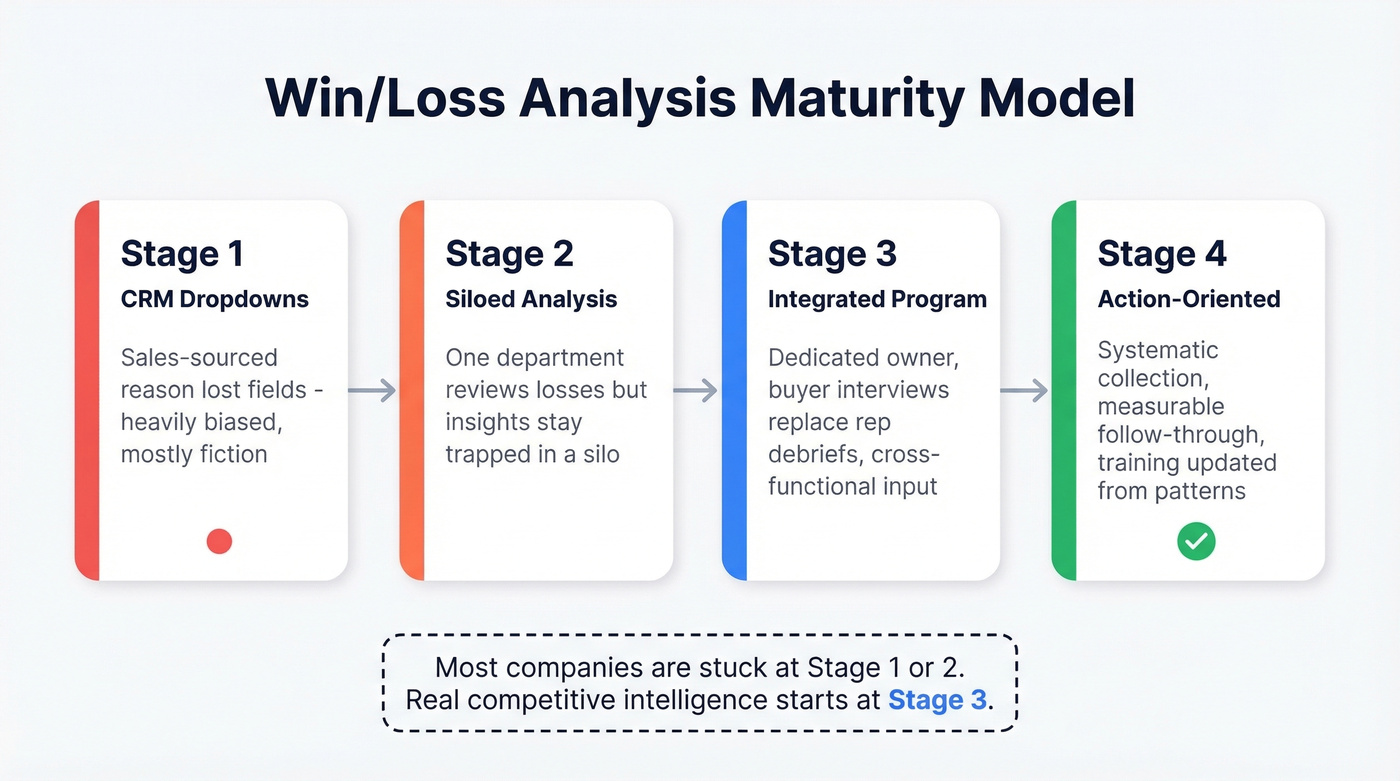
Programs mature through four stages: sales-sourced CRM dropdowns (biased), siloed analysis in one department, integrated with a dedicated owner, and finally action-oriented with systematic collection and measurable follow-through. Most companies are stuck at stage one or two. Win/loss patterns reveal which objections reps consistently fumble, which competitors they lose to disproportionately, and which messaging actually resonates. That's targeted coaching, not generic roleplay.
Competitive Metrics
| Metric | What It Tells You | Frequency |
|---|---|---|
| Win-rate by competitor | Are you improving against specific rivals? | Quarterly minimum |
| Booked revenue by competitor | Which competitors cost you the most ARR? | Quarterly |
| Total opportunities by competitor | Who's showing up more in your deals? | Quarterly |
Win-rate trend by competitor is the clearest signal of whether your enablement efforts are working. If you launched new battlecards against Competitor X in Q1 and your win-rate against them hasn't moved by Q3, something's broken - either the content, the coaching, or the adoption.
Building Your Program
Start with your top three to five competitors. Use conversation intelligence tools or CRM data to identify which competitors get mentioned most. If you don't have that data, ask your reps - they know.
Make it cross-functional from day one. Enablement owns the project, but PMM brings positioning, product brings roadmap context, and sales brings what actually happens on calls. Enable managers first. If frontline managers can't coach to the battlecards, reps won't use them.
Create safe practice environments. A common complaint on r/sales is that training focuses on frameworks and roleplay while ignoring the basics - fast response times, follow-up discipline, and actually listening. Here's the thing: reps won't try new competitive talk tracks on live deals unless they've practiced somewhere low-stakes first. Use real competitor objections from actual deal recordings, not scripted scenarios. And refresh everything quarterly - competitors change pricing, launch features, and shift messaging constantly.

Your competitive training won't matter if reps can't reach decision-makers. Prospeo gives your team 98% accurate emails and 125M+ verified mobile numbers with a 30% pickup rate - so every battlecard, rebuttal, and talk track gets used on a live conversation, not wasted on a bounced email.
Win the deals you trained for. Start with data that connects.
Methodologies That Fit Competitive Selling
Use Challenger if your biggest competitor is the status quo. It's built for reframing - teaching buyers something new that makes inaction feel risky. Xerox reported a 17% sales increase and $65M in contract value after implementing it. For the 38% of deals that end in no decision, we've seen Challenger work best.
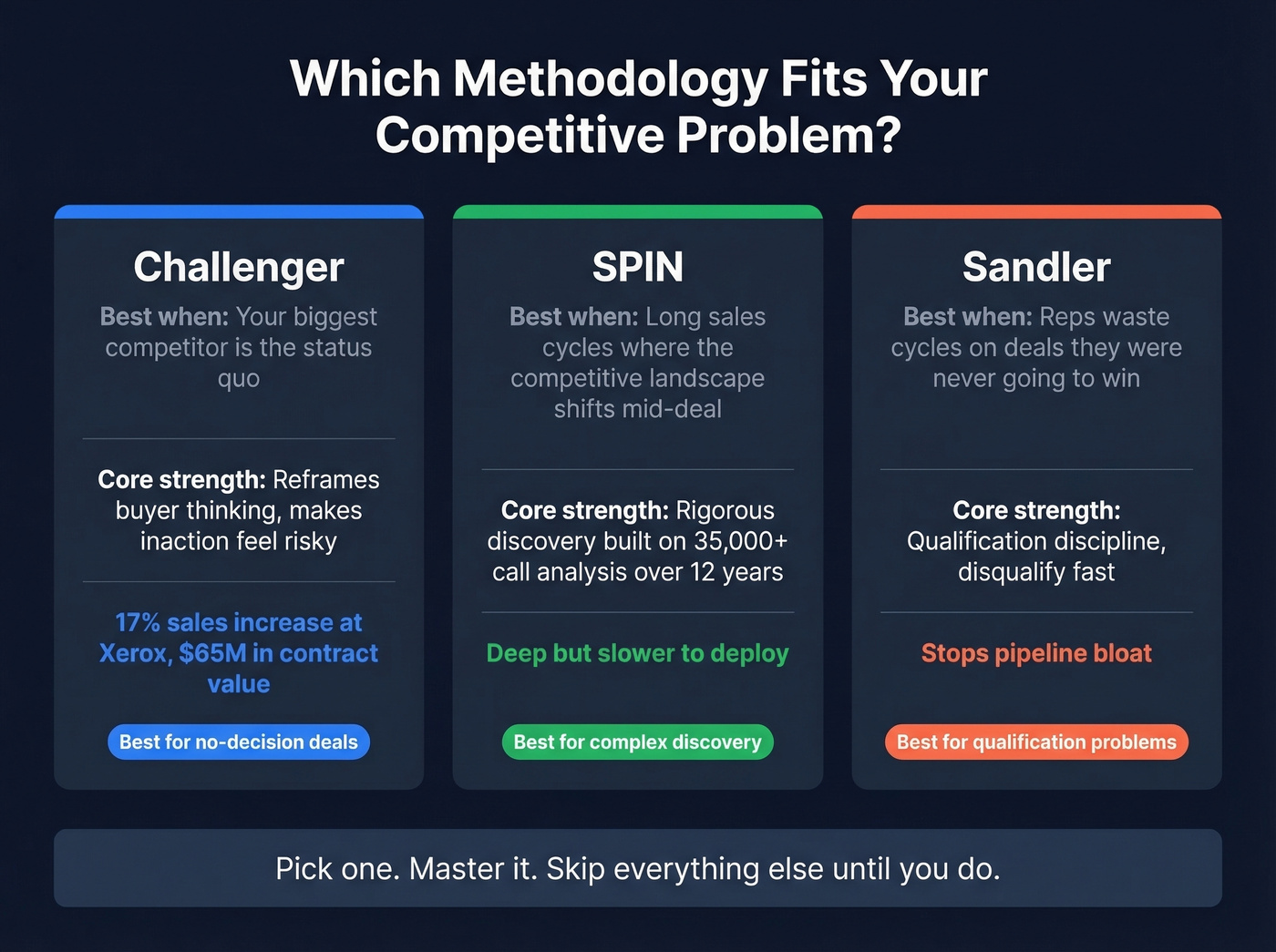
Use SPIN if you're in a discovery-heavy, long-cycle sale where the competitive landscape shifts during the deal. Built on analysis of 35,000+ calls over 12 years, it's rigorous but slower to deploy.
Use Sandler if your problem is qualification discipline - reps spending cycles on deals they were never going to win.
Skip everything else until you've mastered one of these three. Methodologies like MEDDIC and Gap Selling have merit, but they don't address competitive positioning as directly.
What It Costs in 2026
| Category | Estimated Range |
|---|---|
| Vendor-led competitive workshops | $5K-$25K per engagement |
| Per-rep cohort training (Challenger, Sandler) | $1K-$3K per rep |
| CI platforms (Klue, Crayon) | $15K-$60K/yr mid-market |
| Win/loss programs (Clozd, in-house) | $20K-$100K/yr |
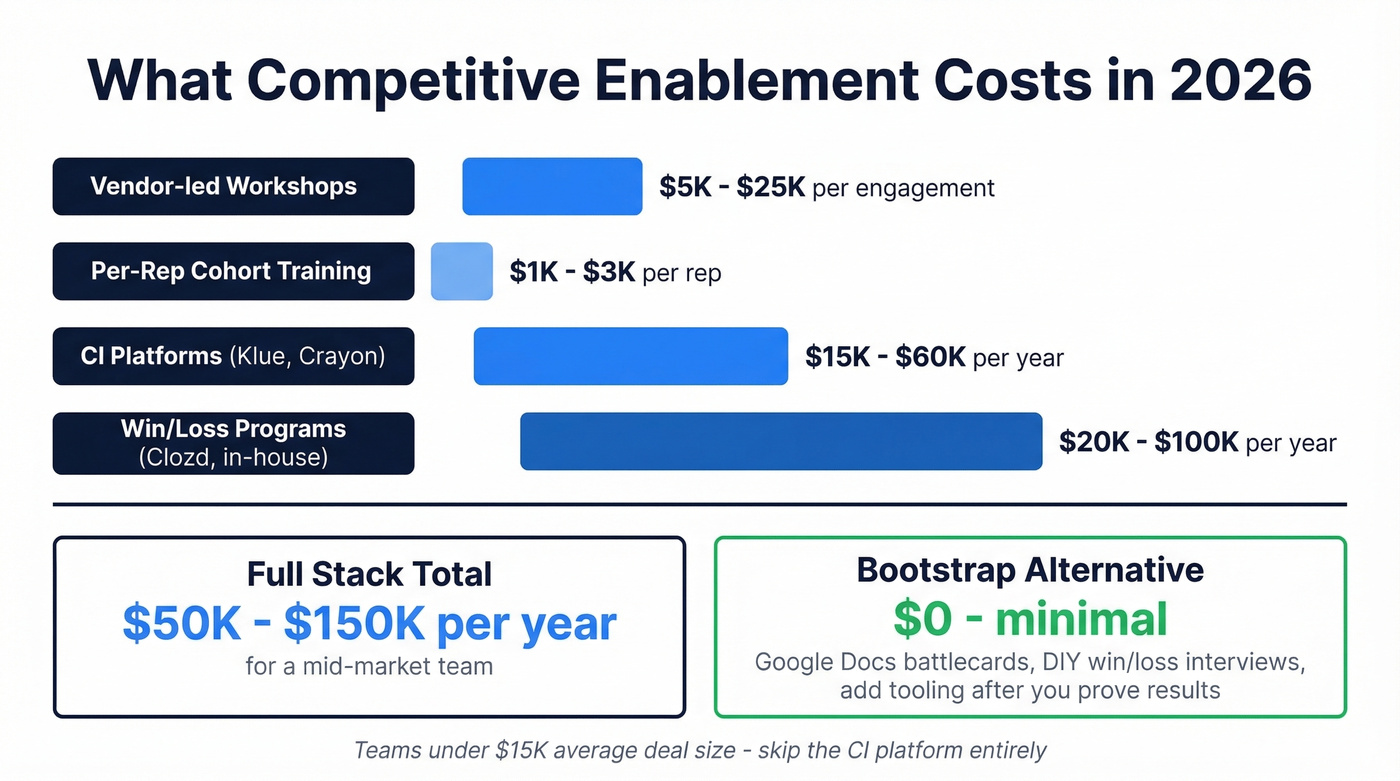
A full competitive enablement stack can run $50K-$150K/year for a mid-market team. That's real money, but compare it to the revenue you're leaving on the table in competitive losses.
For teams under ~$15K in average deal size, I'd skip a CI platform entirely. Build battlecards in Google Docs, run win/loss interviews yourself, and invest in tooling once you've proven the program moves win rates. Don't buy software to solve a process problem.
The Data Problem Nobody Mentions
You can build perfect battlecards, train flawless objection handling, and run quarterly win/loss reviews. None of it matters if your reps can't reach the decision-maker before the competitor does.
Let's be honest: 91% of CRM data is incomplete, and 70% of it degrades annually. A battlecard-armed rep calling a dead number or emailing a bounced address is just a well-prepared person talking to nobody. This is where tools like Prospeo close the gap at the execution layer - 98% email accuracy on a 7-day data refresh cycle keeps contact data current while most providers refresh every six weeks. The free tier covers 75 verified emails per month plus 100 Chrome extension credits, enough to pressure-test the data quality before committing budget.

You're tracking win-rate by competitor quarterly. Good. Now make sure bad contact data isn't skewing your numbers. Prospeo refreshes 300M+ profiles every 7 days - not every 6 weeks - so your reps engage real buyers, not dead leads. At $0.01 per email, it costs less than one hour of that $15K consultant.
Stop losing competitive deals to bounced emails and wrong numbers.
FAQ
What separates competitive sales training from general sales training?
General training covers universal skills like discovery and closing. Competitive sales training is specific to named rivals - battlecards, tested rebuttals, win/loss data by competitor, and metrics tracking your win-rate against each one. It turns "sell better" into "beat Competitor X more often."
How long before competitive training shows results?
Track win-rate by competitor quarterly. Most teams see measurable improvement within two quarters if battlecards stay updated and reps practice with real competitor objections. Below two quarters, you're likely measuring noise rather than signal.
What tools do I need to start?
At minimum: a CRM with competitor fields, battlecard templates (even Google Docs), and accurate contact data so reps actually reach prospects. CI platforms like Klue or Crayon add scale but aren't required on day one.
Can small teams run competitive enablement without a big budget?
Yes. Start with three competitors, build battlecards from rep interviews and review-site intel, and run five win/loss buyer interviews per quarter. Total cost: your time. Add paid tooling only after you've proven the program moves win rates - most teams under 10 reps don't need a dedicated CI platform.