

Tips for Door-to-Door Sales: Scripts, Body Language, and Benchmarks That Work
It's 4pm on a Tuesday. You've knocked 40 doors, gotten three answers, two rejections, and one "call me later" from someone whose name you didn't catch. That's not a bad day - that's a normal day without a system. D2D sits inside a $167.7B global direct selling industry, converting at 2-5% versus roughly 1% for digital outbound. You don't need 25 generic tips. You need five things with the exact words to use.
What You Actually Need
- 2-3 plug-and-play scripts - opener, qualifier, close
- A body language checklist for the first 10 seconds
- Timing windows - when to knock, when to skip
- Your numbers - 50-70 doors/day, 2-5% conversion is normal
- Legal compliance - permits, cooling-off rules, "no soliciting" signs
Everything below gives you copy-paste language for each one.
Scripts That Close Doors
Reps spend roughly 28% of their week actually selling. The rest is admin, driving, and standing on porches fumbling for words. Scripts fix the fumbling part, and they're the foundation of reliable D2D techniques you can drill until they become muscle memory.
The 10-Second Opener:
"Hi, quick one - I'm the [role], helping neighbors reduce [specific pain] this month. If I'm interrupting dinner, I can be gone in ten seconds - fair?"
This names the pain, respects their time, and gives them an easy out - which paradoxically keeps them listening.
The Neighborhood Cred Opener:
"Hey, I'm [Name] with [Company]. We're helping a few neighbors on [Street] with [benefit]. Quick question - who handles [service] for your place?"
The qualifier at the end is critical. You need the decision-maker, not their teenager.
The Micro-Commitment Ask:
"Two minutes to check [bill/model/issue] and see if you qualify - if not, I'll be out of your hair."
Once they say yes to two minutes, you're inside the conversation. And when they're not ready today, don't leave empty-handed. Use a two-option close: "Should I pop back tomorrow at 6:30 or Saturday at 10?" Never ask "when works for you?" That's a question with no answer.
Body Language That Keeps Doors Open
Most doors close in the first five seconds, and it's rarely about what you said. It's how you stood.
- Stand two steps back from the door. Crowding the threshold triggers a threat response.
- Angle your stance. Don't square up face-to-face. A slight turn reads as casual, not confrontational.
- Keep hands visible. Clipboard, tablet, flyer - anything that says "professional," not "stranger."
- Smile through your voice. Even before the door opens, your tone sets the frame. A genuine smile changes your vocal pitch in ways people register instantly.
- Use the curiosity pattern interrupt. Step back, look up at the roof or siding, and point. This pulls their gaze with yours and often draws them outside. The Roof Strategist calls this the look-point-step sequence - it works for any product with a visible exterior component.
In our experience, reps who drill these five habits for a week see noticeably better contact rates. The body language stuff feels silly in training. Then you watch your numbers move.
When to Knock
| Day | Best Window | Notes |
|---|---|---|
| Mon-Thu | 3:00-5:00 PM | People arriving home |
| Friday | Morning only | Afternoons are dead |
| Sat-Sun | 9:00-10:00 AM | Before errands start |
| B2B | 10 AM or 2-3 PM | Avoid the lunch hour |
Weekends are generally better for residential - more people are home, and they're in a less guarded headspace. Friday afternoons? Don't waste the gas.

Most D2D reps lose 60%+ of their knocks to empty houses. Prospeo turns those missed doors into follow-up opportunities - pull verified emails (98% accuracy) and direct dials for any territory before you canvass. At $0.01 per email, it costs less than the gas you burn re-knocking.
Stop knocking twice when one email gets you the conversation.
Mistakes That Kill Your Close Rate
Opening with a question. "Hi, do you have a minute?" hands them control immediately. Start with a statement: "Hey there, I'm just the..." You lead the conversation, not them.
Closing with yes/no. "Does that sound good?" is a coin flip. Use a choice close: "Would you rather have us service the inside or just the outside?" Two yeses, no easy no.
Pitching non-decision-makers. If the person at the door can't sign, you'll repeat the entire pitch later. Qualify fast: "Are you the person who handles [service] for the home?"
Skipping qualification entirely. A qualified prospect asks about pricing, admits a problem, or already has what you sell. If none of those signals appear after 60 seconds, move on. There are 49 more doors today. Time spent on unqualified leads is time stolen from qualified ones - and that's one of the most overlooked door-knocking tips in any channel.
Know Your Numbers
Top D2D performers knock 50-70 doors per day and convert at 2-5%. In solar, that's roughly one qualified lead per 50 knocks, and you'll canvass the same area three times to reach about 90% of homeowners. Those numbers aren't discouraging. They're the game.
Track four KPIs: contact rate, conversion rate, average deal size, and pipeline velocity. We've seen reps double their close rate just by knowing which neighborhoods and time slots produce the best contact rates, then reallocating hours accordingly. And 73% of customers say product knowledge is what they need most from a rep - know your product cold before you knock.
Here's the thing: if your average deal is under $500, obsess over contact rate and speed, not pitch perfection. Volume wins at low price points. Save the consultative selling for the $5K+ contracts.
Tools That Make D2D Easier
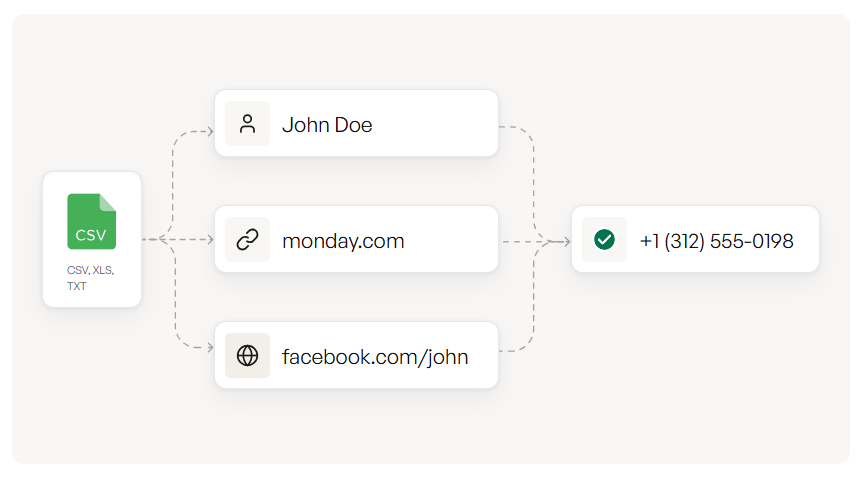
The missing layer - pre-canvass data. When someone's not home (often the majority of your knocks), you need their email or direct dial to follow up instead of hoping they answer next time. Prospeo fills this gap - pull verified emails and direct dials for your territory before you knock, with 98% email accuracy and a free tier to test without a credit card.
Route optimization. Badger Maps (~$50-$70/user/mo) plans your driving route so you're not zigzagging across a territory burning daylight.
GPS and time tracking. Timeero ($4-$8/user/mo) handles geofencing, mileage, and route replay for managers tracking field activity.
Team management. SPOTIO and SalesRabbit handle territory mapping, leaderboards, and lead assignment. Expect ~$30-$80/user/mo depending on plan and team size. Skip these if you're a solo rep or a team under five - the overhead isn't worth it until you need territory-level coordination.
If you want a tighter follow-up system, steal a few sales follow-up templates and turn missed doors into booked callbacks.
You track contact rate, conversion rate, and pipeline velocity - but what about the doors that never open? Layer Prospeo's 300M+ verified contacts into your D2D workflow so every unanswered knock becomes a personalized email or direct dial follow-up. Free tier included, no credit card required.
Turn 50 unanswered doors into 50 outbound touches tonight.
Legal Compliance Before You Knock
Let's be honest - compliance isn't the exciting part. But reps who carry permits and respect posted signs don't get cops called on them. That means more doors knocked per day, not fewer.
The FTC Cooling-Off Rule gives buyers a 3-business-day right to cancel any at-home sale over $25. You must provide written notice. Carry the form - it builds trust and keeps you legal. Many cities also require a solicitor permit or badge, enforce daylight-hour limits, and treat "no soliciting" signs as legally binding. Before you canvass a new area, check the city clerk or police department website. Five minutes saves you a citation or a territory you can't work.
If you're building a repeatable system, borrow a few sales prospecting techniques and standardize what happens before and after each knock.
FAQ
How many doors should I knock per day?
Top D2D reps knock 50-70 doors per day and convert at 2-5%. That means 1-3 closes on a strong day. Track contact rate alongside raw knocks - 70 doors in a dead neighborhood loses to 40 doors in a high-contact zone every time.
What's the best time to knock on doors?
For residential, 3:00-5:00 PM Monday through Thursday catches people arriving home. Saturday mornings (9:00-10:00 AM) work well before errands start. Avoid Friday afternoons entirely.
How do I handle "no soliciting" signs?
Skip the door. In many municipalities, ignoring a "no soliciting" sign is a citable offense that can cost you $50-$200 per violation. More importantly, knocking anyway poisons your reputation in the neighborhood. Respect the sign and move to the next house.
How do I follow up when nobody's home?
Use a pre-canvass data tool to pull verified emails and direct dials for your territory before you knock. When a door goes unanswered, trigger a follow-up email or call the same day while your door hanger is still fresh. This turns a wasted knock into a warm touchpoint.
What's the biggest mistake new D2D reps make?
Talking too much. New reps pitch for five minutes before qualifying. Instead, ask one question within the first 15 seconds to identify the decision-maker and confirm a real need. If neither exists, politely move on - your next close is two doors away.