

What Is Strategic Account Management? The Practitioner's Guide for 2026
It's Monday morning. You just inherited 8 "strategic" accounts from a rep who left. The CRM has last-touch dates from 6 months ago, the org charts are wrong, and your manager wants a 90-day growth plan by Friday. Welcome to strategic account management - or at least, the messy version most companies actually practice.
So what is strategic account management? SAM is a business management discipline - not a sales role - focused on growing your highest-potential accounts through cross-functional coordination, deep relationship building, and multi-year planning. Done right, it's the highest-leverage activity in B2B. Done wrong, it's a fancy title on a business card with no process behind it.
SAM isn't about managing your biggest accounts. It's about managing your most strategic ones - the accounts with the highest growth potential, the deepest relationship capital, and the best fit for where your business is heading. This guide covers how to select those accounts, build a living account plan, ramp in 90 days, and avoid the pitfalls that kill most programs.
SAM Defined: More Than a Sales Role
Strategic account management is the practice of identifying a small number of high-potential accounts and dedicating cross-functional resources - sales, customer success, product, executive leadership - to growing those relationships over a multi-year horizon. The goal isn't just retention. It's expansion, co-creation, and mutual strategic value.
The discipline sits at the intersection of sales, account planning, and business strategy. A strategic account manager doesn't just carry a quota. They orchestrate an entire team around the account's success.
SAM vs. KAM
These terms describe the same discipline. SAM is the dominant term in North America; KAM is more common in Europe and APAC. As Janek's guide puts it directly: strategic account management "is also called Key Account Management." Don't let the terminology trip you up - the frameworks, roles, and failure modes are identical.
SAM vs. Traditional Account Management
Traditional customer account management is reactive and transactional. The AM handles renewals, fields support escalations, and occasionally surfaces an upsell. SAM is proactive, cross-functional, and operates on a multi-year horizon.
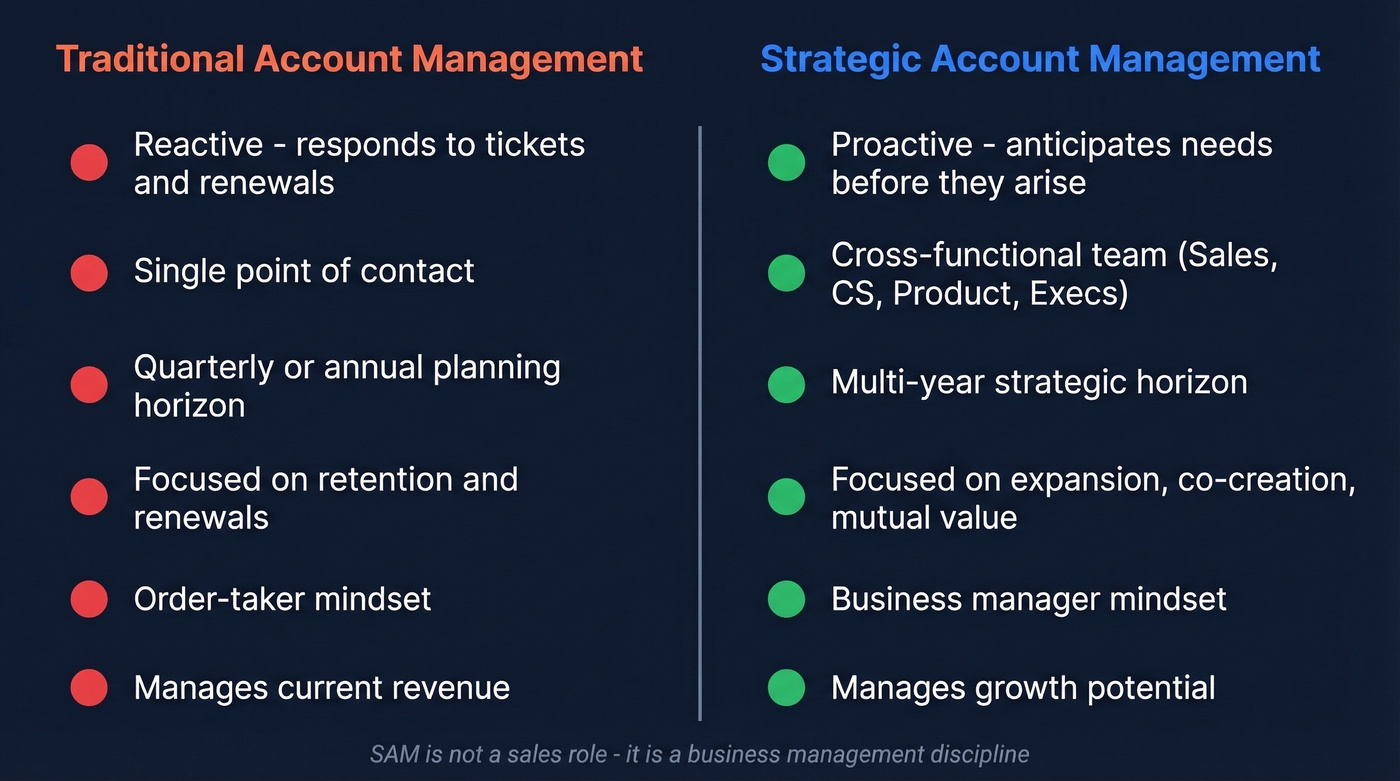
Traditional AMs are order-takers. Strategic account managers are business managers who happen to work for a vendor. The hunter vs. nurturer framing matters here - sales is about acquiring new logos, SAM is about maximizing the value of the logos you already have.
Why It Matters for Revenue Growth
The numbers make the case better than any framework deck. RAIN Group's research across 472 sales leaders studying 72 factors found that top performers are 3.1x more likely to grow revenue by 20%+ in existing accounts. That's not a marginal improvement - it's a completely different growth trajectory.
Gartner data reinforces the urgency: 70% of CSOs say higher returns from key accounts is a priority, but only 28% of sales leaders agree their current channels meet cross-sell and account growth targets. There's a massive gap between ambition and execution.
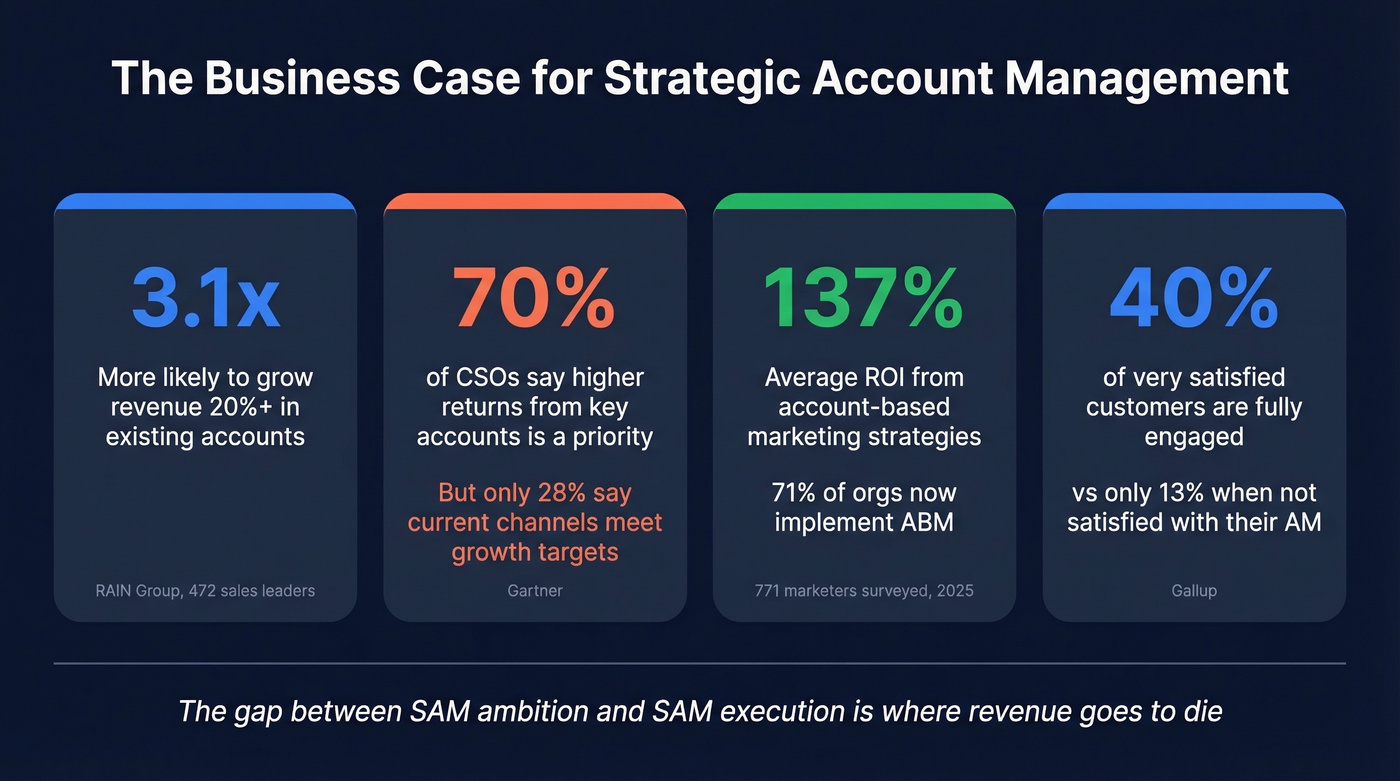
Gallup found that 40% of B2B customers who are "very satisfied" with their account manager are fully engaged - compared to just 13% when they're not. Engagement isn't a soft metric. It's the difference between an account that expands and one that churns. Responsiveness - how quickly and thoughtfully you respond to a key stakeholder's request - is one of the strongest predictors of that satisfaction score.
The overlap with ABM makes this even more relevant. A survey of 771 marketers found that 71.2% of organizations now implement ABM strategies, with an estimated average ROI of 137%. Nearly 79% incorporate AI into their ABM workflows, and roughly half plan to increase ABM budgets in 2026. SAM and ABM are merging - both are account-based growth motions, just approached from different sides of the revenue team. One ABM pilot across 21 target accounts generated a 76% response rate and $375K in pipeline within three months.
Here's the thing: the 80/20 rule is lazy thinking for SAM. Revenue concentration tells you money is concentrated - it doesn't tell you which accounts are strategic. A $2M account with zero growth potential isn't strategic. A $200K account in a fast-growing vertical with executive champions and whitespace across four business units? That's strategic. Selection criteria matter more than revenue rank.
The Trade-offs Are Real
SAM isn't free. It demands significant resource investment - dedicated headcount, executive time, cross-functional coordination overhead. It concentrates risk in a small number of relationships. And it creates organizational complexity that most companies underestimate.
We've watched teams launch SAM programs without understanding these costs, and the result is always the same: a half-funded initiative that disappoints everyone. Go in with eyes open.
How to Select Strategic Accounts
Fewer than 20% of companies have fully embedded account planning into their business operations, per Momentum ITSMA research. That means 80%+ are winging it - picking "strategic" accounts based on revenue size, gut feel, or whoever the CEO golfs with.
You need a system.
The Weighted Scoring Model
Score every candidate account across six dimensions. Weight them based on what actually predicts growth in your business.
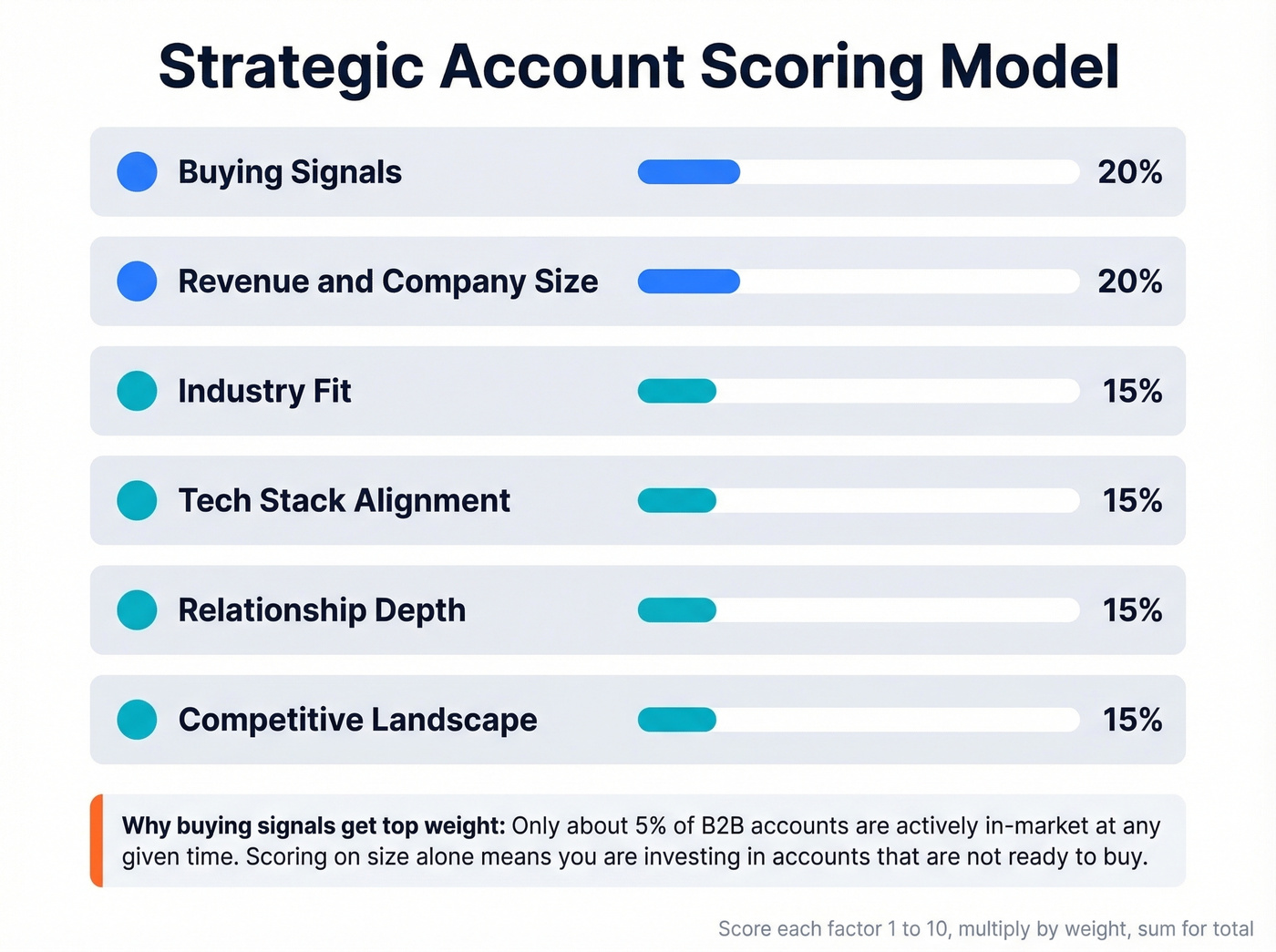
| Factor | Weight | Score (1-10) |
|---|---|---|
| Revenue / company size | 20% | - |
| Industry fit | 15% | - |
| Tech stack alignment | 15% | - |
| Buying signals | 20% | - |
| Relationship depth | 15% | - |
| Competitive landscape | 15% | - |
Buying signals get the highest weight alongside revenue because only about 5% of B2B accounts are actively looking to buy at any given time. You need to know who's in-market, not just who's big.
Account Tiering Framework
Not every strategic account gets the same investment. Tier them:
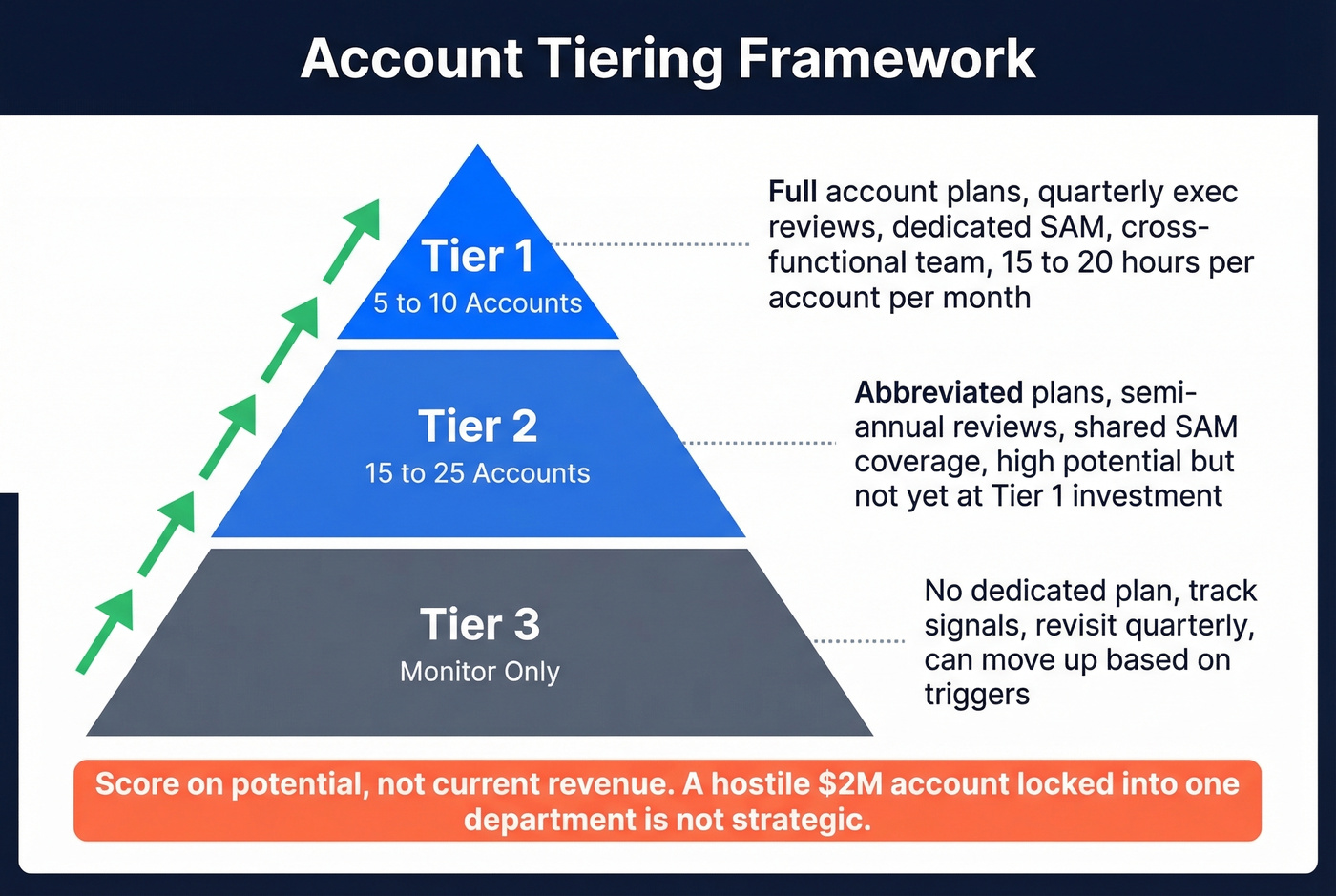
- Tier 1 (5-10 accounts): Full account plans, quarterly executive reviews, dedicated SAM, cross-functional team assigned. Expect 15-20 hours per account per month across your team.
- Tier 2 (15-25 accounts): Abbreviated plans, semi-annual reviews, shared SAM coverage. High potential but not yet at the investment threshold of Tier 1.
- Tier 3 (monitor only): No dedicated plan. Track signals, revisit quarterly. These accounts can move up based on triggers.
Score on potential, not on current revenue. A hostile $2M account where you're locked into a single department with a procurement team that squeezes margins every renewal isn't strategic - no matter what the revenue says.
The Strategic Account Manager Role
Skills and Mindset
The best strategic account managers are cross-functional orchestrators with commercial acumen and patience. They coordinate product, CS, engineering, and executive teams around a single account's success. They think in quarters and years, not weeks. They understand their customer's P&L, competitive pressures, and strategic priorities well enough to have business-level conversations - not just product demos.
SAMA's 2023 compensation research across 74 companies and 156 respondents shows the experience bar is high: median SAM experience is 6 years for Account Managers and 10 years for VP/Directors. These aren't entry-level roles. The CSAM credential from SAMA is the gold standard for formal training and peer-validated expertise.
In our experience, the best SAMs spend 60% of their time on internal coordination - aligning product, CS, and executive teams - and only 40% on direct customer interaction. That ratio surprises people, but it's the internal orchestration that unlocks the external growth.
Why Promoting Your Best Closer Is a Mistake
Hunters and nurturers are different people. Promoting your top closer into a SAM role is one of the most expensive mistakes in B2B.
Closers thrive on urgency, competition, and new-logo adrenaline. SAMs thrive on patience, relationship depth, and long-term value creation. The skills don't transfer. You lose your best closer and get a mediocre SAM. Hire for the role - don't repurpose.

Your account scoring model is only as good as the data behind it. Prospeo tracks buying signals across 15,000 intent topics, so you can identify which accounts are actually in-market - not just which ones are big. Layer intent data with technographics, headcount growth, and funding signals using 30+ filters.
Stop guessing which accounts are strategic. Let intent data tell you.
How to Build a Strategic Account Plan
The 8-Section Template
Based on DemandFarm's account planning framework, here's the structure that works:
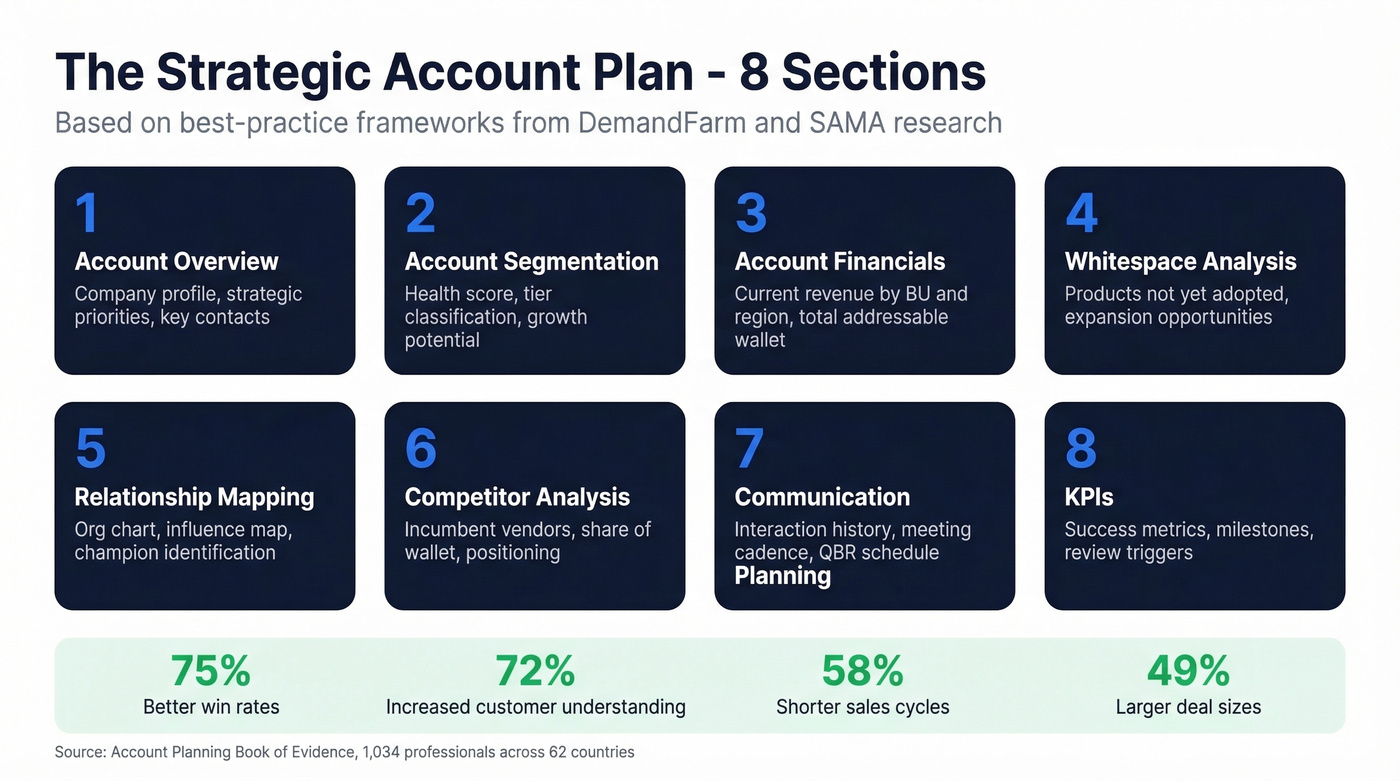
- Account overview - company profile, strategic priorities, key contacts
- Account segmentation - health score, tier classification, growth potential
- Account financials - current revenue by business unit/region, total addressable wallet
- Whitespace analysis - products/services not yet adopted, expansion opportunities
- Relationship mapping - org chart, influence map, champion identification
- Competitor analysis - incumbent vendors, share of wallet, competitive positioning
- Communication planning - interaction history, meeting cadence, QBR schedule
- KPIs - success metrics, milestones, review triggers
The "Account Planning Book of Evidence" study - covering 1,034 professionals across 62 countries - found that organizations with formal account planning see 75% better win rates, 72% increased customer understanding, 58% shorter sales cycles, and 49% larger deal sizes.
From Static Deck to Living Document
The best account plans aren't annual PowerPoint decks that collect dust after the QBR. They're living documents updated weekly. Consider a 5-tab operating system:
- Shadow Org Chart & Political Risk Map - who has power, who's a blocker, who's rising
- P&L Impact Ledger - quantified value you've delivered and projected value ahead
- Relationship Capital Matrix - each stakeholder scored 0-10 on budget authority, political air cover, and referral power
- Trigger & Signal Calendar - contract renewals, budget cycles, leadership changes, earnings calls
- Expansion & Defense Playbook - specific plays for growth and competitive defense
Anyone scoring below 6 on air cover is a landmine. Track it.
Stakeholder Mapping and the Buying Committee
B2B decisions involve roughly 7 decision-makers on average. Your account plan needs contact-level detail for every person who can say yes, no, or "let's delay." Score each stakeholder on influence, access, and sentiment. Update it monthly - org charts shift faster than most teams realize.
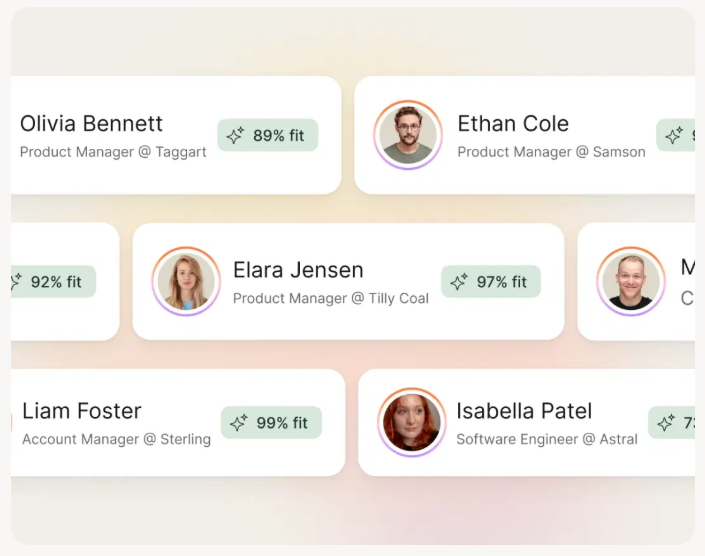
Multi-threading into a strategic account requires verified contact data for every stakeholder - not the generic info@ address your CRM imported two years ago. Prospeo lets you paste a company URL and pull verified emails and direct dials for the entire buying committee, with records refreshed every 7 days at 98% email accuracy. When you're mapping a 7-person committee, stale data isn't just inconvenient. It's a deal risk.
Your First 90 Days as a SAM
Remember that Monday morning scenario? Here's how to turn inherited chaos into a credible plan.
Days 1-30: Discovery and Mapping
Dig into everything: pipeline, renewals, install base, whitespace. Map internal stakeholders - your CSM, SE, exec sponsor, and anyone who's touched the account. Map the external org chart. Get a predecessor handover if one exists.
Audit CRM data freshness. If the last meaningful update is more than 90 days old, assume everything is wrong and start verifying from scratch.
Days 31-60: Customer Engagement
Get in front of customers for discovery, not pitching. Run stakeholder interviews. Ask about their strategic priorities, not your product roadmap. Coordinate cross-functional teams internally - make sure CS, product, and your exec sponsor are aligned on the account narrative. Identify quick wins you can deliver to build credibility.
Here's a stakeholder outreach template that works for initial discovery meetings:
Subject: [Their Company] + [Your Company] - strategic alignment check
Hi [Name], I've recently taken over the [Your Company] relationship with [Their Company] and I'm spending my first 60 days understanding your team's priorities before proposing anything. Would you have 20 minutes this week or next for a quick alignment conversation? I'd love to hear what's working, what's not, and where you see the biggest opportunities ahead.
Short, no pitch, focused on them. That's the tone for every interaction in this phase.
Days 61-90: Plan, Present, Execute
Draft your initial account plans using the 8-section template. Establish a communication cadence with both internal and external stakeholders. Present your first QBR - even if it's informal, it sets the rhythm.
Identify one beachhead expansion opportunity you can pursue in Q2. The goal by day 90 isn't a closed deal - it's a plan everyone believes in and a relationship foundation you can build on.
Why SAM Programs Fail
The Tooling Gap
Account managers routinely manage $5M accounts using Excel, PowerPoint, and a CRM that's static and outdated - while SDRs on the same team get dedicated sequencing tools, intent data platforms, and enrichment APIs. The budget imbalance is real: organizations fund new-logo acquisition heavily while assuming that $1M renewals and expansion will "just happen."
The consensus on r/SalesOperations is blunt - AMs "hardly own anything" in the sales tool stack. That's frustrating, and it's a fixable problem if leadership actually prioritizes it.
The Data Quality Problem
Your CRM says the VP of Operations is Sarah Chen. Sarah left 4 months ago. You find out on a cold call. Poor data quality costs mid-to-large enterprises an estimated $15M per year, and that number compounds when it's your strategic accounts with wrong contacts.
Pitfalls That Kill SAM Programs
These are synthesized from Cranfield School of Management's research and practitioner experience:
- Treating SAM as a new way of selling instead of a fundamentally different business model
- No board-level sponsorship - SAM dies without executive air cover
- "Captain Super-KAM" mindset - one hero rep instead of a cross-functional team
- Quarterly sales targets vs. multi-year SAM horizons - the incentive structures clash
- Plans built for the vendor, not the customer - account plans that focus on your revenue targets instead of the customer's strategic priorities
- Boiling the ocean - trying to implement everything at once instead of picking 3-4 priorities
- No quick wins - failing to demonstrate early value that builds internal momentum
Let's be honest: most of these aren't execution problems. They're design problems. We've watched teams pour effort into a SAM program that was structurally broken from day one - wrong incentive model, no exec sponsor, hero-rep dependency. If your SAM program is designed wrong, no amount of hustle fixes it. Fix the architecture first.
Essential Tools for SAM Teams
CRM Layer
Your CRM is the backbone, not the brain. Salesforce runs $25-$330/user/month depending on edition and add-ons. HubSpot Sales Hub starts around $15-$20 for Starter, $90-$100 for Professional, and $120-$150 for Enterprise. Pipedrive is the budget option at $14-$79/user/month. All three work as the foundation - none of them are purpose-built for strategic account planning.
Account Planning Platforms
DemandFarm and Kapta are two widely used platforms for SAM-specific workflows: org maps, whitespace analytics, health scoring, and relationship tracking. Expect custom pricing in the $15K-$50K/year range for mid-market teams. These tools sit on top of your CRM and turn it from a contact database into an actual account planning system.
Data Quality and Enrichment
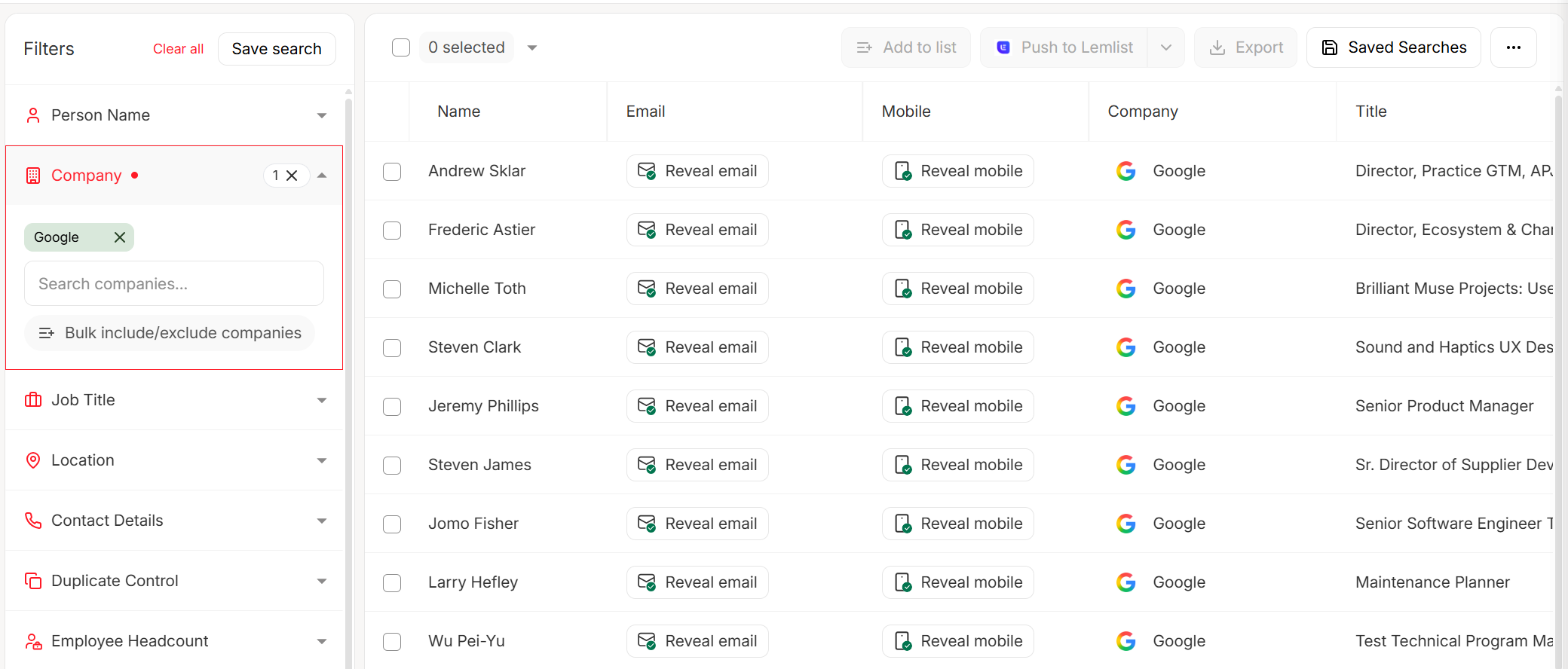
This is the third layer most SAM teams skip - and the one that causes the most quiet damage. When you're multi-threading into a strategic account, you need verified emails and direct dials for every stakeholder. Prospeo covers this gap well: paste a company URL, get verified contacts with 50+ data points each, and enrich your CRM in bulk via API. The free tier covers 75 emails/month plus 100 Chrome extension credits/month, enough to keep one or two strategic accounts current. Paid plans scale at roughly $0.01 per verified email with no contracts, making it practical even for teams without a dedicated data budget.
Best Practices and KPIs
RAIN Group's research found that top performers are 2.5x more likely to have effective processes for building strategic account plans. The difference isn't talent - it's measurement discipline. The best account management strategies combine rigorous KPI tracking with the qualitative judgment that comes from deep customer knowledge.
| KPI | What It Measures | Target |
|---|---|---|
| Net Revenue Retention | Expansion vs. churn | >110% |
| Account Health Score | Composite engagement | >7/10 |
| Stakeholder Coverage | % of buying committee mapped | >80% |
| Whitespace Penetration | Products adopted vs. available | >40% |
| QBR Completion Rate | Reviews held on schedule | 100% |
| Exec Engagement | C-level meetings per quarter | >=2 |
SAMA surveyed 200+ strategic accounts professionals on KPI selection and found that roughly half of companies make a critical measurement mistake: tracking activity metrics instead of outcome metrics. Don't measure how many emails your SAM sent. Measure whether the account grew.
FAQ
How many accounts should a SAM handle?
Three to five high-complexity Tier 1 accounts, or 10-15 if accounts are less complex. Never more than 15. Depth beats breadth - a SAM spread across 20 accounts is just a glorified account executive with no time for real planning.
How long before a SAM program shows ROI?
Expect 6-12 months for early wins and 18-24 months for measurable program-level impact. Cranfield research confirms SAM is a multi-year change initiative, not a quarterly fix. Skip this if you're looking for a 90-day miracle - you'll only set the program up to fail.
What is CSAM certification?
The Certified Strategic Account Manager credential from SAMA. It signals formal training, peer-validated expertise, and commitment to the discipline. Worth pursuing if you're building a career in strategic accounts.
How do I keep account data current?
Use a data enrichment tool with a short refresh cycle and high email accuracy. The industry average refresh is 6 weeks - look for something significantly faster. Stale data is the silent killer of account plans, and manual research doesn't scale past two or three accounts.
What's the difference between SAM and KAM?
Same discipline, different geography. SAM is standard in North America; KAM is standard in Europe and APAC. The frameworks, competencies, and failure modes are identical regardless of which acronym your organization uses.
Strategic account management lives or dies on relationship depth. But 80% of org charts in your CRM are wrong. Prospeo's 300M+ verified profiles and 125M+ mobile numbers - refreshed every 7 days - let you map every stakeholder, find direct dials with a 30% pickup rate, and keep contact data current as champions change roles.
Build org charts that actually connect you to decision-makers.