

How to Build an ABX Campaign That Actually Drives Pipeline
80% of marketers running account-based strategies say it delivers better ROI than any other program. One-third of ABM accounts see 11-20% deal-size uplift, and another third see 21-50% increases, according to Forrester. The gap between teams that get these results and teams that don't isn't awareness - it's an ABX campaign plan nobody bothered to build.
Here's yours: five steps, a minimum viable tech stack under $200/mo, and the metrics that prove it's working.
ABM vs ABX in 30 Seconds
| ABM | ABX | |
|---|---|---|
| Led by | Marketing | Cross-functional |
| Focus | Campaigns | Experiences |
| Scope | Acquisition | Full lifecycle |
| Measures | Pipeline influence | Relationship health |
ABM is marketing running campaigns at target accounts. ABX is marketing, sales, and CS orchestrating a consistent experience across the entire buyer journey - including post-sale. The distinction matters because 6-10 decision-makers touch a typical B2B deal, and 75% of B2B buyers prefer a rep-free experience for most of the journey. You can't coordinate that from a single team.
Build Your ABX Campaign in 5 Steps
Set Up Your Signal Stack
One signal rarely means much. Two or three aligned signals - an intent surge plus a website visit plus content engagement - that's when you act. The operational discipline is speed: route signals to sellers within 24 hours. Waiting a week kills momentum.
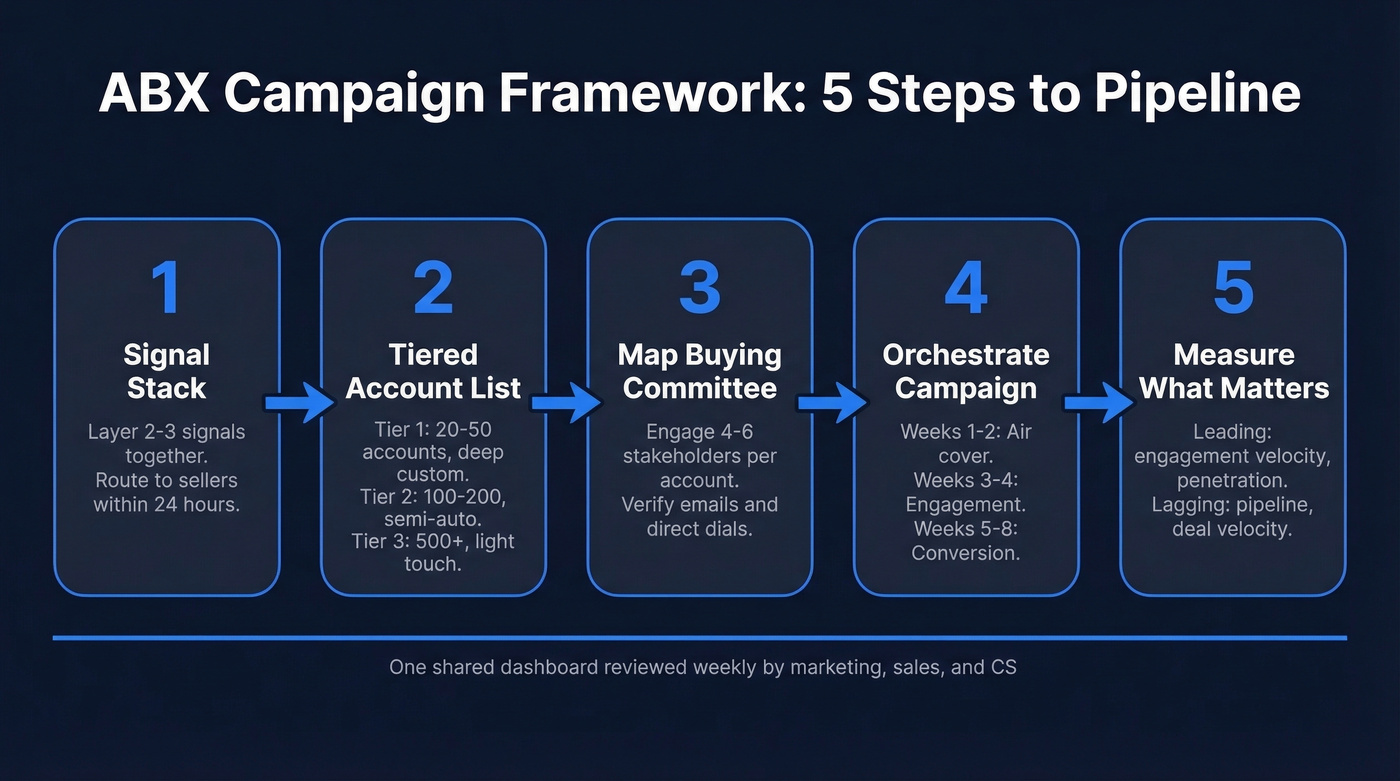
Healthy account-based programs match 90%+ of accounts to signal data within 24 hours and have fewer than 5% unknown touches after 90 days. If your team isn't hitting those benchmarks, fix signal routing before you spend another dollar on ads.
Build a Tiered Account List
Not every account deserves the same investment.
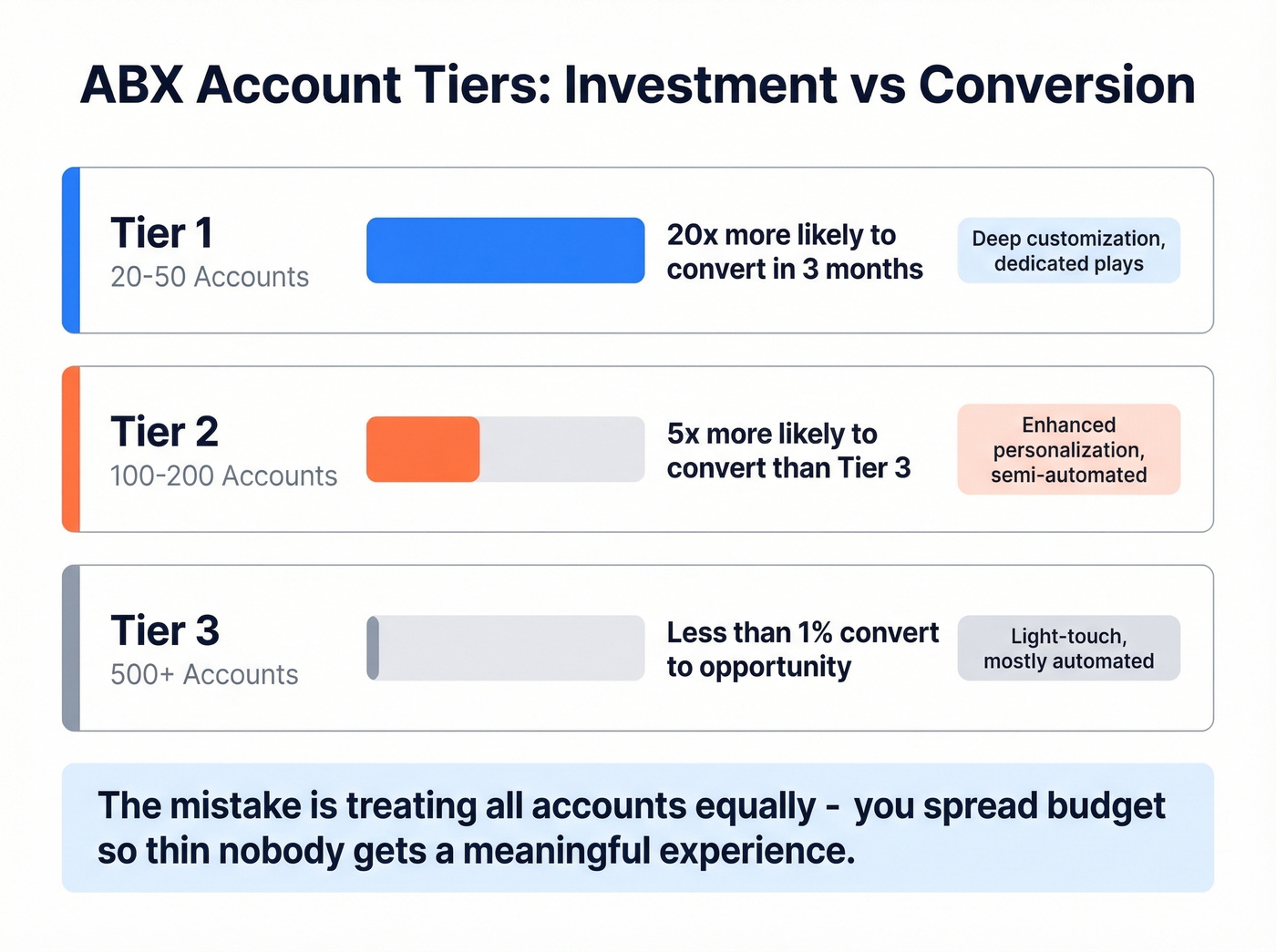
- Tier 1 (20-50 accounts): Deep customization, dedicated plays. 20x more likely to convert within three months.
- Tier 2 (100-200 accounts): Enhanced personalization, semi-automated. 5x more likely to convert than Tier 3.
- Tier 3 (500+ accounts): Light-touch, mostly automated. Expect less than 1% to convert to opportunity.
The mistake is treating all accounts equally. You spread budget so thin that nobody gets a meaningful experience.
Map the Buying Committee
Here's where most ABX campaigns quietly die. You've identified accounts, built tiers, designed plays - and then reps can't reach anyone because half the emails bounce.
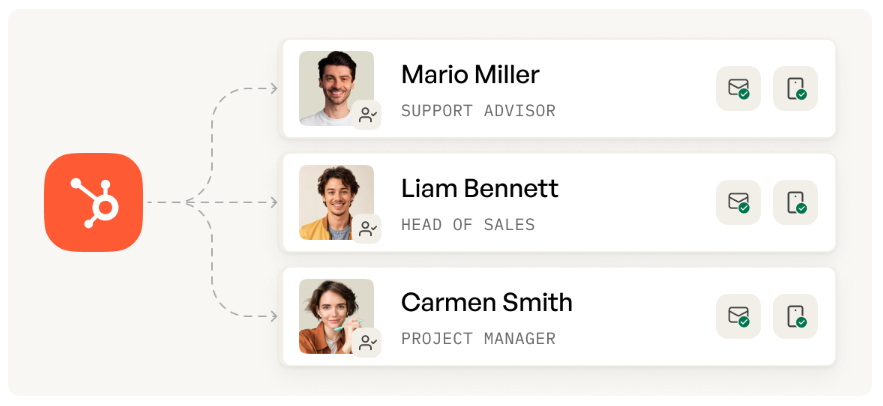
The benchmark is engaging 4-6 stakeholders per account: the economic buyer, the champion, the technical evaluator, and at least one or two influencers. We've found that Prospeo's leads database makes this step fast - search by company, filter by role and seniority, and export verified emails and direct dials across the entire buying committee. With 98% email accuracy and a 7-day data refresh cycle, you're not wasting the first two weeks of your campaign cleaning bad data.
Orchestrate the Campaign
Email is the top-performing ABX channel - 92% of practitioners use it - followed by in-person events at 72%. Build your sequencing around those anchors.
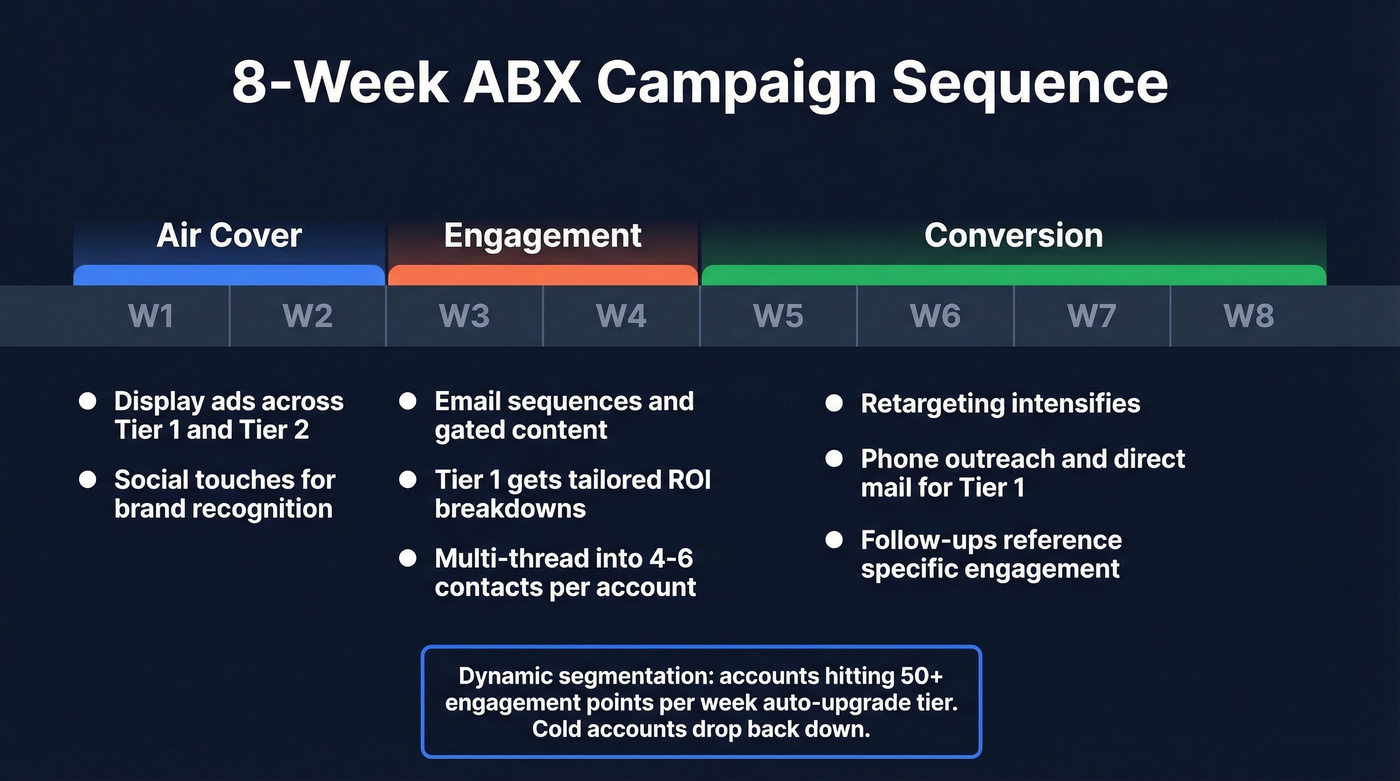
Weeks 1-2 (Air Cover): Display ads and social touches across Tier 1 and Tier 2. The goal is recognition, not conversion. When your SDR's emails land, the prospect should've already seen your brand.
Weeks 3-4 (Engagement): Email sequences, gated content, personalized outreach. For Tier 1, the AE sends a tailored ROI breakdown or relevant case study. This is where personalized outreach and multi-threading matters - if you're only emailing one person per account, you're gambling on a single thread that can snap at any moment.
Weeks 5-8 (Conversion + Intensive): Retargeting intensifies. Follow-ups reference specific engagement. Phone outreach and direct mail for Tier 1 accounts that are engaged but haven't converted.
Dynamic segmentation keeps this from going stale. When an account hits 50+ engagement points per week, automatically upgrade their tier and treatment level. Accounts that go cold drop back down.
Measure What Matters
Separate leading indicators from lagging ones. Leading metrics tell you if the campaign is working now: engagement velocity, intent momentum, account penetration depth. Lagging metrics tell you if it worked: pipeline value, deal velocity, expansion revenue.
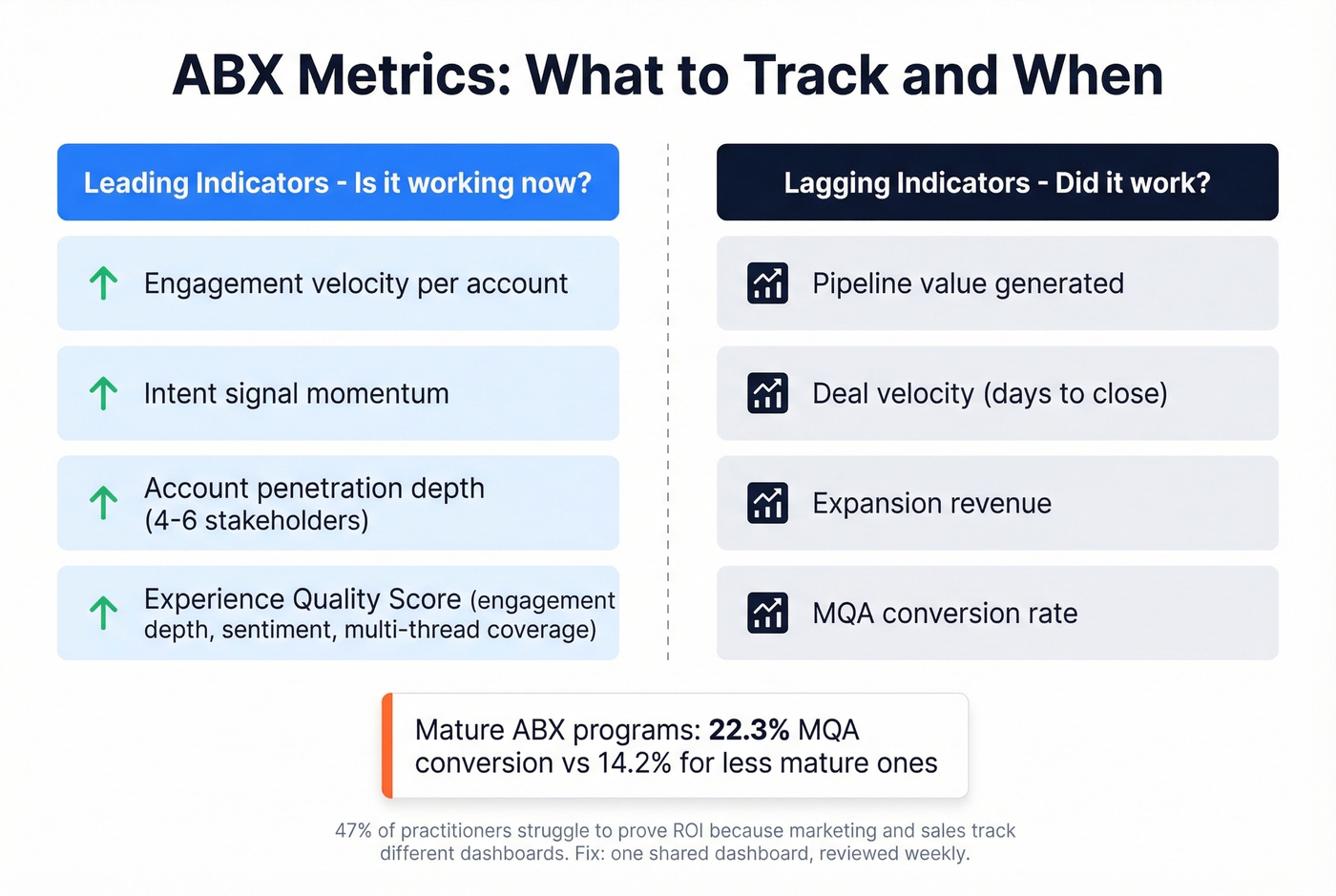
Track account penetration against that 4-6 stakeholder benchmark. If you're only reaching one person per account, you're running outbound, not an ABX campaign. Consider adding an Experience Quality Score - a composite of engagement depth, response sentiment, and multi-thread coverage - to capture what pipeline metrics miss.
Mature ABX programs see 22.33% MQA conversion rates versus 14.19% for less mature ones. That gap comes down to measuring account progression instead of clicks. Yet 47% of practitioners still struggle to prove ROI, almost always because marketing and sales track different dashboards. One shared dashboard, reviewed weekly. That's the fix.

Your ABX campaign needs 4-6 verified contacts per account. Prospeo's database covers 300M+ profiles with 98% email accuracy and 125M+ verified mobiles - refreshed every 7 days. Search by company, filter by role and seniority, and export the entire buying committee in minutes.
Stop losing week one to bad data. Start reaching the committee.
Mistakes That Waste Your Budget
We've seen every version of these failures. The pattern is depressingly consistent.
Sales doesn't work the accounts. One team we spoke with launched an ABX program and discovered sales only engaged half the target list - 50% of the marketing budget generating signals nobody acted on. Weekly alignment meetings with assigned account owners aren't optional. They're the whole point.
You're running demand gen with an ABX label. If you're measuring clicks and MQLs instead of account progression and buying committee coverage, you've just rebranded your old playbook. The consensus on r/sales is blunt about this: slapping "ABX" on a lead-gen motion doesn't change the outcome.
Conflicting funnels. Layering account-based experience on top of a lead-based funnel creates reporting chaos. Pick a model. Your MQA definitions need to replace - not coexist with - legacy lead scoring.
Giving up too early. Even the best campaigns need time to compound. Pausing paid after six weeks because pipeline hasn't materialized misunderstands the buying cycle entirely. If your average deal takes 90 days, judging an ABX campaign at 45 days is like pulling a cake out of the oven halfway through and complaining it's raw.
ABX Campaign Tech Stack
You don't need a $100K platform to run account-based experience programs. You need the right layers.
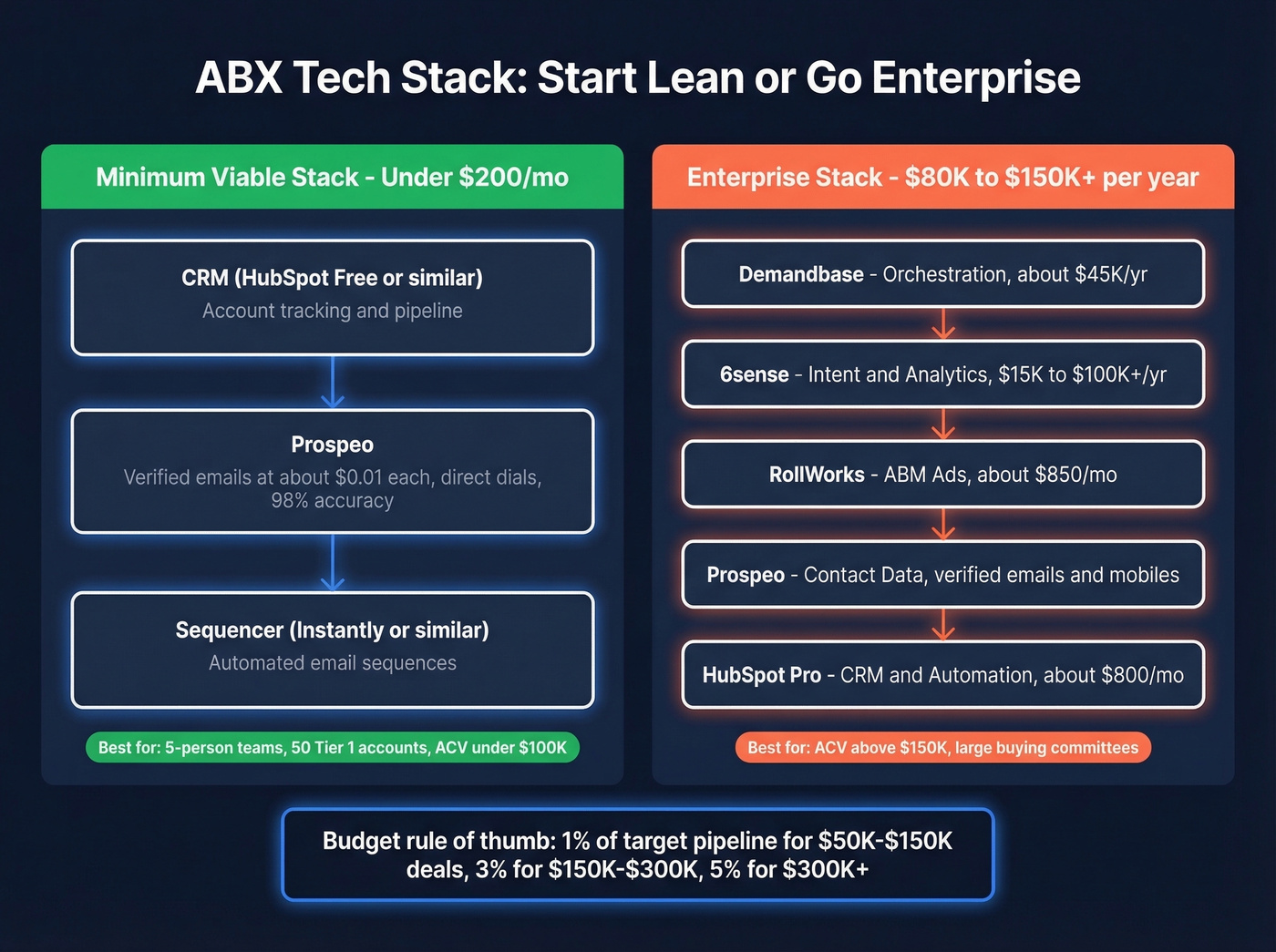
| Category | Tool | Starting Price | Best For |
|---|---|---|---|
| Contact Data | Prospeo | Free tier; ~$0.01/email | Verified emails + mobiles |
| Orchestration | Demandbase | ~$45K/yr | Enterprise full-suite |
| Intent & Analytics | 6sense | $15K-$100K+/yr | Intent signals at scale |
| ABM Ads | RollWorks | ~$850/mo | Mid-market ad targeting |
| CRM + Automation | HubSpot Pro | ~$800/mo | All-in-one CRM |
The minimum viable stack - a CRM, Prospeo for contact data, and a sequencer like Instantly - runs under $200/mo. That's enough for a 5-person team targeting 50 Tier 1 accounts. Enterprise stacks with Demandbase or 6sense run $80K-$150K+/yr.
Let's be honest: most teams with deal sizes under $100K don't need enterprise ABX platforms. A CRM, verified contact data, and disciplined weekly account reviews will outperform a $150K Demandbase deployment that sales never logs into. Skip the enterprise stack until your ACV justifies it.
Budget rule of thumb by ACV: allocate ~1% of target pipeline value for $50K-$150K deals, ~3% for $150K-$300K, and ~5% for $300K+.
The minimum viable ABX stack starts at under $200/mo. Prospeo gives you verified emails at ~$0.01 each and direct dials with a 30% pickup rate - so your reps actually multi-thread into Tier 1 accounts instead of chasing bounces.
Multi-thread every target account with contacts that connect.
FAQ
What's the difference between ABM and ABX?
ABM is marketing-led and focused on acquisition campaigns. ABX extends across marketing, sales, and CS to orchestrate consistent experiences through the full customer lifecycle - including post-sale expansion and renewal. The shift means measuring relationship health, not just pipeline influence.
How much does an ABX campaign cost?
A minimum viable stack runs under $200/mo using a CRM, a contact data tool at ~$0.01/email, and a sequencer. Enterprise platforms like Demandbase range from $45K-$300K/yr. Budget ~1% of target pipeline value for mid-market deals, scaling to ~5% for $300K+ deals.
What's the most common reason ABX campaigns fail?
Sales doesn't work the accounts. Without weekly alignment meetings, shared KPIs, and assigned account owners, marketing spends budget generating intent signals that nobody acts on. The fix is operational - not technological - and starts with a single shared dashboard both teams review weekly. Forrester's ABM research consistently backs this up.