Avaya vs RingCentral: You Might Be Comparing the Same Product
Avaya Cloud Office runs on RingCentral's platform. Same infrastructure, the same Core/Advanced/Ultra tier structure, and a feature set designed for near-parity - often with roughly a one-release lag. So when you're weighing Avaya vs RingCentral, you're mostly comparing packaging and support channels, not fundamentally different products.
That distinction matters more than most comparison articles let on.
30-Second Verdict
- Greenfield or SMB with no Avaya gear? Go RingCentral RingEX. You'll get features first and avoid the middleman.
- Existing Avaya Aura infrastructure? The hybrid Aura + RingCentral path is the only compelling reason to stay. Keep on-prem telephony while layering in cloud collaboration.
- Not locked into either? Skip both and evaluate Microsoft Teams Phone or Zoom Phone. They'll cover 90% of what most teams need at a lower price point.
The Partnership Reality
ACO isn't a competitor to RingCentral. It is RingCentral, sold through Avaya's channel with Avaya branding. The expanded partnership lets enterprises retain Avaya Aura for telephony while using RingCentral for messaging, video, and AI features like RingSense for live transcription and meeting summaries.
The hybrid deployment model works well for large organizations: HQ runs full ACO, satellite offices keep on-prem Aura systems, and everything consolidates under a single corporate directory. A Microsoft Teams integration eliminates the need for a separate Teams Phone license - a real cost saver if you're already in the Microsoft ecosystem.
In our experience, the hybrid path only makes sense for organizations with 500+ Aura seats. Below that threshold, the migration complexity isn't worth it.
Pricing Compared
UCaaS Tiers
Because ACO runs on RingCentral's platform, it's typically sold in the same tier structure and price bands as RingEX:
| Tier | RingCentral (Annual) | RingCentral (Monthly) | Avaya ACO | SMS Cap | Toll-Free Min |
|---|---|---|---|---|---|
| Core | $20/user/mo | $30/user/mo | $20/user/mo | 25/user | 100 pooled |
| Advanced | $25/user/mo | $35/user/mo | $25/user/mo | 100/user | 1,000 |
| Ultra | $35/user/mo | $45/user/mo | $35/user/mo | 200/user | 10,000 |
Monthly billing runs 33-50% higher than annual. Once you cross 50-100 seats, teams commonly negotiate 10-20% off list price on multi-year contracts. Those SMS caps matter: at 25 texts per user on Core, any team doing outbound prospecting via SMS will hit the ceiling fast - especially if you’re running a broader outbound prospecting motion.
Add-Ons Worth Knowing
| Add-On | Price | Notes |
|---|---|---|
| AI Receptionist | Starts at $39 | Virtual receptionist |
| SMS Booster | $25 | Lifts SMS caps |
| Call Queues Booster | $35 | Extra queue capacity |
| Avaya Cloud Office Rooms | $49/room/mo | $468/yr annual |
SSO is gated to the Ultra tier or custom enterprise contracts. That's a frustrating upsell for security-conscious teams and, frankly, the kind of nickel-and-diming that pushes mid-market buyers toward Microsoft Teams Phone.
Contact Center Pricing
Here's where the platforms actually diverge. RingCentral sells RingCX; Avaya sells AXP in both cloud and on-prem flavors.
| Tier | RingCX (Annual) | AXP Cloud | AXP On-Prem |
|---|---|---|---|
| Entry | $65/agent/mo | $35 (Digital) | $119 (Essentials) |
| Mid | $95/agent/mo | $60 (Voice) | $169 (Advanced) |
| Top | $145/agent/mo | $89 (All Media) | - |
AXP pricing assumes a three-year contract for 200-399 users. Smaller deployments pay more per seat. RingCX is more straightforward - standard per-agent pricing without the seat-count gymnastics.

Paying $20-35/user/month for a phone platform means nothing if reps are dialing dead numbers. Prospeo gives you 125M+ verified mobile numbers with a 30% pickup rate - 3x the industry average. At $0.01 per email and 10 credits per mobile, cleaning your database costs less than a single unused UCaaS seat.
Fix your contact data before you migrate - not after.
Vendor Stability - The Overlooked Risk
Let's be honest about this one. Avaya has gone through two bankruptcies in seven years, emerging from its most recent Chapter 11 in 2023. The company reduced debt from $3.4B to $800M due in 2028 and reports 97% enterprise logo retention.
But the signals point in one direction. In 2025, Avaya offered voluntary exit packages to its entire workforce. Channel partner C1 filed for bankruptcy, partially blaming Avaya's financial distress for depressed sales. Institutions like Cornell have formally retired their Avaya PBX systems in favor of RingCentral.
Our position: For contracts extending past 2028, we'd recommend against Avaya unless you have a documented migration fallback plan. We've seen teams commit to three-year Avaya deals only to spend year two planning a migration anyway. That's not a hypothetical - it happened to a 400-seat financial services firm we worked with last year, and the sunk cost was painful.
RingCentral doesn't carry the same viability questions. Publicly traded, profitable, no bankruptcy history.
Features & Reliability Head-to-Head
| Category | RingCentral | Avaya | Winner |
|---|---|---|---|
| G2 Rating | 4.3/5 (2,940 reviews) | 4.2/5 (257 reviews) | RingCentral (10x review volume) |
| Uptime SLA | 99.999% | 99.999% | Tie |
| Integrations | 330+ | Via ACO/RC | Tie |
| SSO | Ultra only (or enterprise) | Ultra only (or enterprise) | Tie (both gated) |
| AI Features | RingSense | RingSense via ACO | RingCentral (gets updates first) |
RingCentral's 99.999% uptime translates to less than 78 seconds of downtime per quarter, maintained across twenty consecutive quarters. Since ACO runs on the same infrastructure, both products benefit from the same reliability - but RingCentral wins on everything else because it's the source product. The r/sysadmin consensus largely echoes this: if you don't have legacy Avaya hardware, there's no reason to add a layer between you and the actual platform.
Who Should Choose Which
Use Avaya's hybrid path if you've got significant Aura infrastructure, your enterprise needs on-prem telephony in certain locations, and you're comfortable with the financial stability risk.
Use RingCentral RingEX if you're starting fresh, running an SMB, or simply want the original product without the rebrand tax. Features arrive first, and you deal with one vendor instead of two.
Skip both if you're not locked into Avaya hardware and RingCentral's SMS caps feel restrictive. Microsoft Teams Phone makes sense if you're already paying for Microsoft 365. Zoom Phone is worth evaluating if your team lives in Zoom meetings.
Here's the thing: most companies agonizing over this decision don't actually need either platform. If your average deal size is under $25k and you're not running a contact center, Teams Phone or Zoom Phone will do 90% of what you need at half the cost.
Before You Switch - Fix Your Data
Migrating phone systems is the perfect moment to clean your prospect database. CRM data decays roughly 30% annually, and stale numbers mean wasted seats on day one - reps dialing disconnected lines while you're paying per-user licensing on a new platform.
We ran an audit for a 200-seat team migrating off Avaya last quarter. Nearly a third of their contact records had dead phone numbers or bouncing emails. That's 60+ seats generating zero pipeline on launch day. Prospeo refreshes data every 7 days versus the six-week industry average, so you're not importing contacts that were accurate six months ago. The free tier covers 75 emails per month - enough to audit data quality before committing to a full migration cleanup. If you want the underlying benchmarks and what “30% annually” really means in practice, see our breakdown on B2B contact data decay.
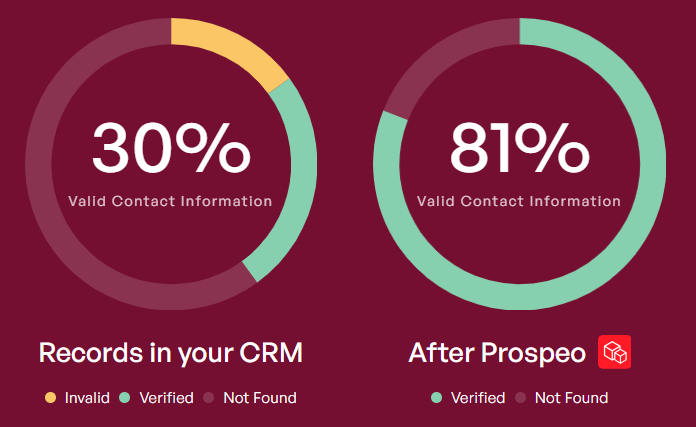
CRM data decays 30% per year. That means for every 200 seats on your new RingCentral or Avaya deployment, 60+ reps could be dialing disconnected lines on launch day. Prospeo refreshes data every 7 days - not every 6 weeks - so your numbers stay live and your per-seat investment actually generates pipeline.
Stop paying per-user for reps who can't reach anyone.
FAQ
Is Avaya Cloud Office the same as RingCentral?
Yes - ACO runs on RingCentral's infrastructure with identical Core/Advanced/Ultra tiers and near-identical features, typically one release behind. The only differentiator is Avaya's hybrid Aura path for enterprises keeping on-prem telephony. No Avaya hardware? No reason to choose ACO over RingEX.
Is Avaya stable enough for a multi-year contract?
Avaya emerged from its second bankruptcy in 2023 and cut debt to $800M due in 2028, but workforce exit packages and partner bankruptcies signal ongoing risk. For contracts extending past 2028, build a documented migration fallback plan before signing.
How do I clean prospect data before switching phone systems?
Upload your prospect CSV to a verification tool that checks emails and phone numbers in bulk. Prospeo verifies emails at 98% accuracy and checks mobile numbers against 125M+ verified records. The free tier covers 75 emails/month - enough to gauge how much of your database has gone stale before you commit to a full cleanup.