

The 12 Best Email Extractors for 2026 (Accuracy-Tested)
Your SDR just burned through 500 credits on a "verified" list and 47% of the emails bounced. The sequence is paused, your domain reputation took a hit, and you're back to square one.
Finding the best email extractor isn't about features or flashy dashboards - it's about deliverability. Across 17 tools tested by SignalHire, accuracy ranged from 51% to 95%, meaning the tool you pick could be the difference between a pipeline-building quarter and a domain-warming nightmare. Quick clarification: this guide covers B2B email extraction tools for finding professional addresses, not .msg/.pst metadata parsers or Outlook utilities for migrating mailbox data.
Our Picks at a Glance
| Tool | Best For | Starting Price | Why We Picked It |
|---|---|---|---|
| Prospeo | Accuracy + value | Free (75 emails/mo) | 98% email accuracy, ~$0.01/verified email, 7-day data refresh |
| Hunter.io | Free tier | Free (50 credits/mo) | Most recognized brand, verification included, domain search |
| Snov.io | All-in-one stack | Trial (50 credits/mo) | Extraction + verification + outreach + CRM, credits roll over |
Why Accuracy Is the Only Metric That Matters
Most roundups compare features and pricing. Almost none compare the metric that actually determines ROI: what percentage of extracted emails are verified and deliverable.

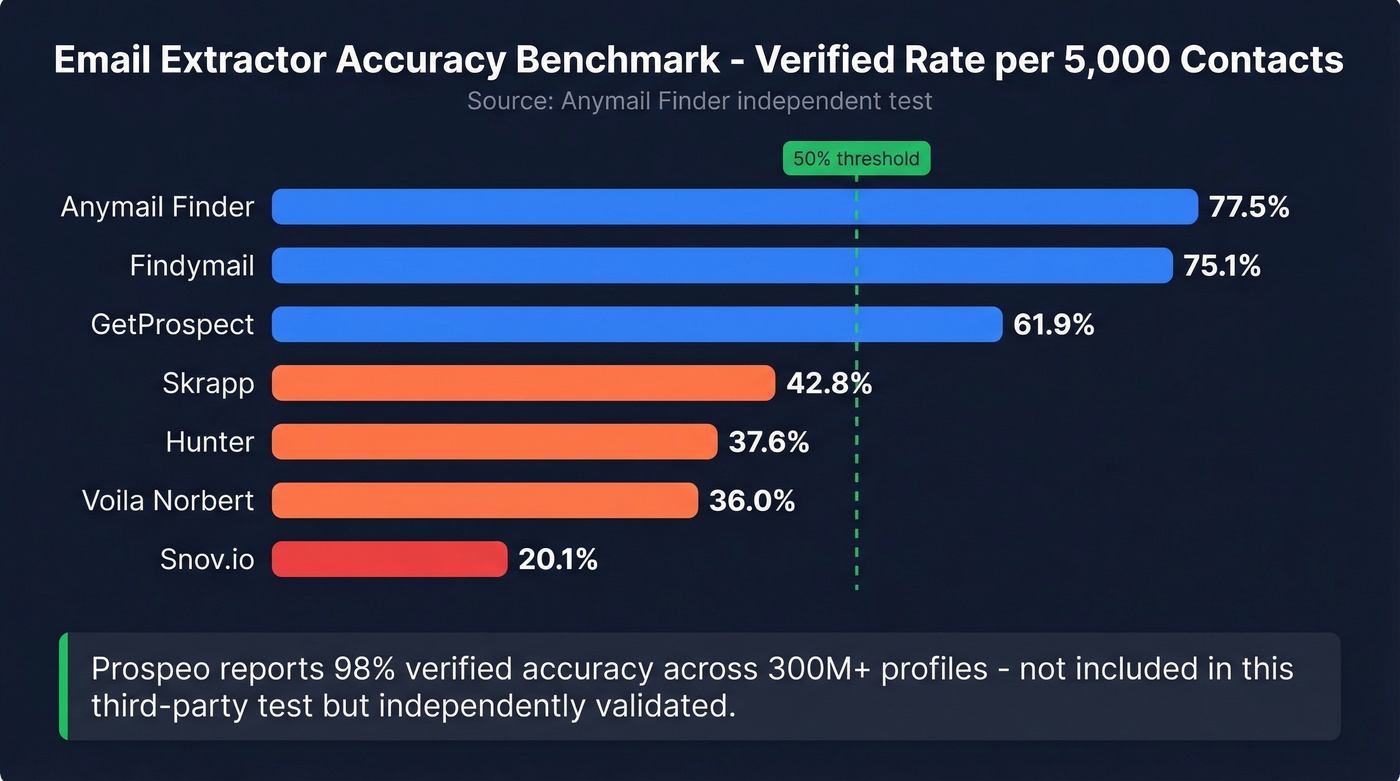
Anymail Finder ran one of the most transparent benchmarks available - 5,000 fresh contacts tested across multiple tools. The verified-rate results tell a brutal story:
| Tool | Verified Rate |
|---|---|
| Anymail Finder | 77.5% |
| Findymail | 75.1% |
| GetProspect | 61.9% |
| Skrapp | 42.8% |
| Hunter | 37.6% |
| Voila Norbert | 36.0% |
| Snov.io | 20.1% |
Results reflect one test methodology - tools with different verification architectures may perform differently depending on data sources and catch-all handling.
We've run extraction campaigns across most of these tools, and the gap between top and bottom is even more painful in practice than it looks on paper. If you're paying $39/mo for 1,000 credits and only 20% come back verified, your effective cost per usable email is 5x what you thought.
Here's why this matters operationally: the industry standard is to keep total bounces below 2%, with hard bounces under 1%. Go above 5% and ESPs start throttling your domain. Software companies average a 0.93% bounce rate; e-commerce runs just 0.29%.
One more wrinkle worth understanding: catch-all domains. These accept any email address, so verification tools can't definitively confirm whether a specific mailbox exists. Some tools mark catch-all results as "verified" to inflate their numbers. Others flag them separately. In our experience, catch-all handling is where most tools quietly fall apart - always ask whether catch-all addresses are included in a tool's "verified" count.
You'll notice several competitor guides cite an Ahrefs benchmark study as the gold standard for email finder accuracy. That page now returns a 404. The data is gone.
12 Top Email Extractor Tools for Sales Teams
Prospeo
Use this if you need the highest verified-email rate and freshest data without enterprise pricing.
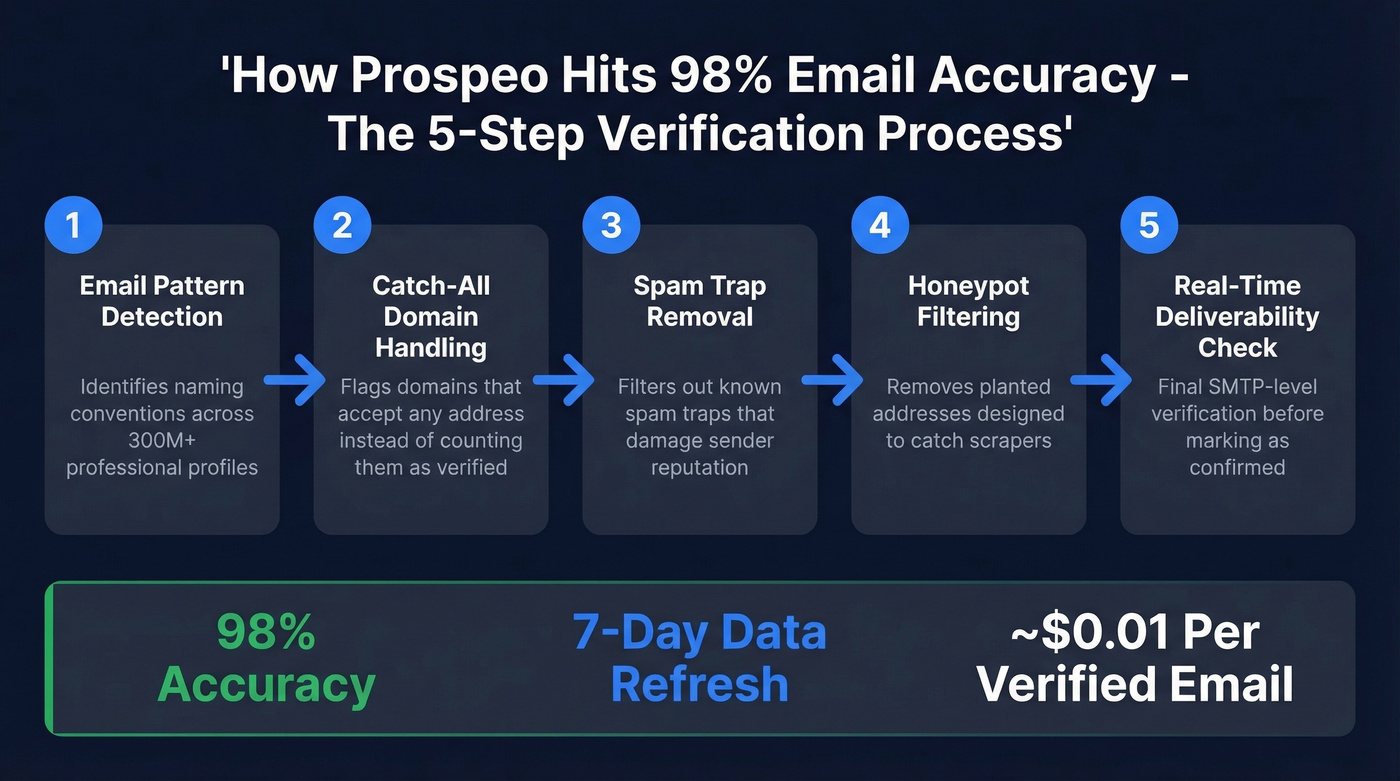
Prospeo's 5-step verification process covers catch-all handling, spam-trap removal, and honeypot filtering through proprietary infrastructure - delivering 98% email accuracy across 300M+ professional profiles. That number holds up because of a 7-day data refresh cycle when the industry average sits around six weeks. For teams that need structured data output alongside real-time verification, the combination is hard to beat.
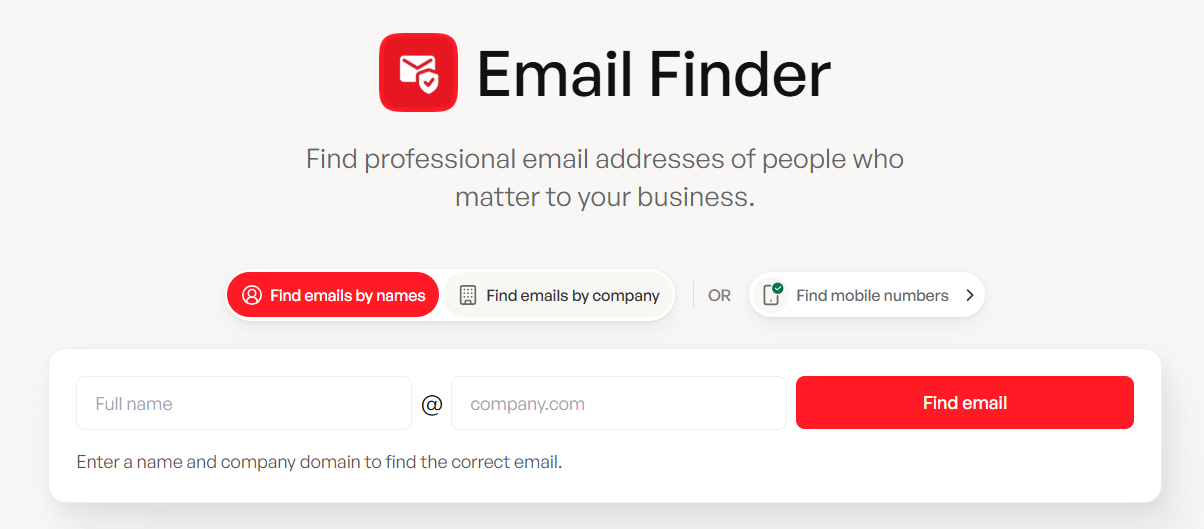
The Chrome extension with 40,000+ users lets you pull verified emails from any website or professional profile in one click. For bulk work, upload a CSV or use 30+ filters for buyer intent, technographics, and job changes. Native integrations push contacts straight into Salesforce, HubSpot, Instantly, Lemlist, Clay, Zapier, or Make.
Meritt, a B2B agency, dropped their bounce rate from 35% to under 4% after switching - and their pipeline tripled from $100K to $300K per week. That's not a hypothetical ROI calculation. That's a real team with real numbers.
Pricing runs on credits at roughly $0.01 per verified email. The free tier gives you 75 emails plus 100 Chrome extension credits per month - no credit card, no contract.
Hunter.io
Hunter is the tool most people try first, and for good reason: the free tier is genuinely useful, the brand is trusted, and domain search is best-in-class. Plug in a company domain and Hunter surfaces every email pattern and address it's found. The Chrome extension is clean and fast. Verification costs just 0.5 credits, which smartly encourages you to verify before sending.
The tradeoff? In the 5,000-contact benchmark, Hunter hit 37.6% verified - roughly two-thirds of credits produced unverified results. For domain-level research on a handful of companies, that's fine. For large-scale extraction campaigns, you'll burn through credits faster than expected.
Pricing: Free at $0/50 credits, Starter at $34/mo (annual) for 2,000 credits, Growth at $104/mo for 10,000 credits, Scale at $209/mo for 25,000 credits.

Snov.io
The pitch: extraction, verification, outreach, and a lightweight CRM in one platform with credit rollover.
The reality: the benchmark put Snov.io at 20.1% verified on 5,000 contacts - the lowest in the test. We've seen teams work around this by running a second verification pass, but that defeats the purpose of an all-in-one tool.
Snov.io's real appeal is the stack. You find emails, verify them, build drip campaigns, and manage deals without leaving the platform. A July 2025 update bumped the Pro S plan to 25,000 recipients at $99/mo. Credits roll over with auto-renewal on any premium plan - a genuine differentiator when most tools force use-it-or-lose-it.
Pricing: Trial is free with 50 credits. Starter is $39/mo for 1,000 credits and 5,000 recipients. Pro tiers scale from there.
Apollo.io
A startup founder on Reddit described switching away from Apollo specifically because email verification credits depleted before the subscription ended. When you're targeting ~1,500 contacts per month on a tight budget, that's a dealbreaker.
Apollo's database is enormous - 275M+ contacts - and the free plan gives you 100 searches to test it. The built-in sequencer is solid, handling prospecting through engagement in a single workflow. But the credit system bundles search and verification together, which makes budgeting unpredictable. Paid plans run ~$49-$119/user/mo. For a 5-person team, you're looking at $250-$600/mo before hitting credit limits.
Voila Norbert
Voila Norbert positions itself as "the most accurate email finder," but the Ahrefs study they cite is a dead link. The benchmark put Norbert at 36.0% verified - mid-pack. Bulk verification runs $0.003/email, which is genuinely cheap. Plans range from $49/mo to $499/mo. Worth testing if you already use their API.
GetProspect
61.9% verified in the benchmark - third highest, ahead of tools costing twice as much. The free tier offers 600 credits per month, generous enough for early-stage prospecting. Paid plans start at $25/mo (annual) and scale to $50/mo at the next tier. If you're spending under $50/mo, GetProspect punches above its weight.
Skrapp.io
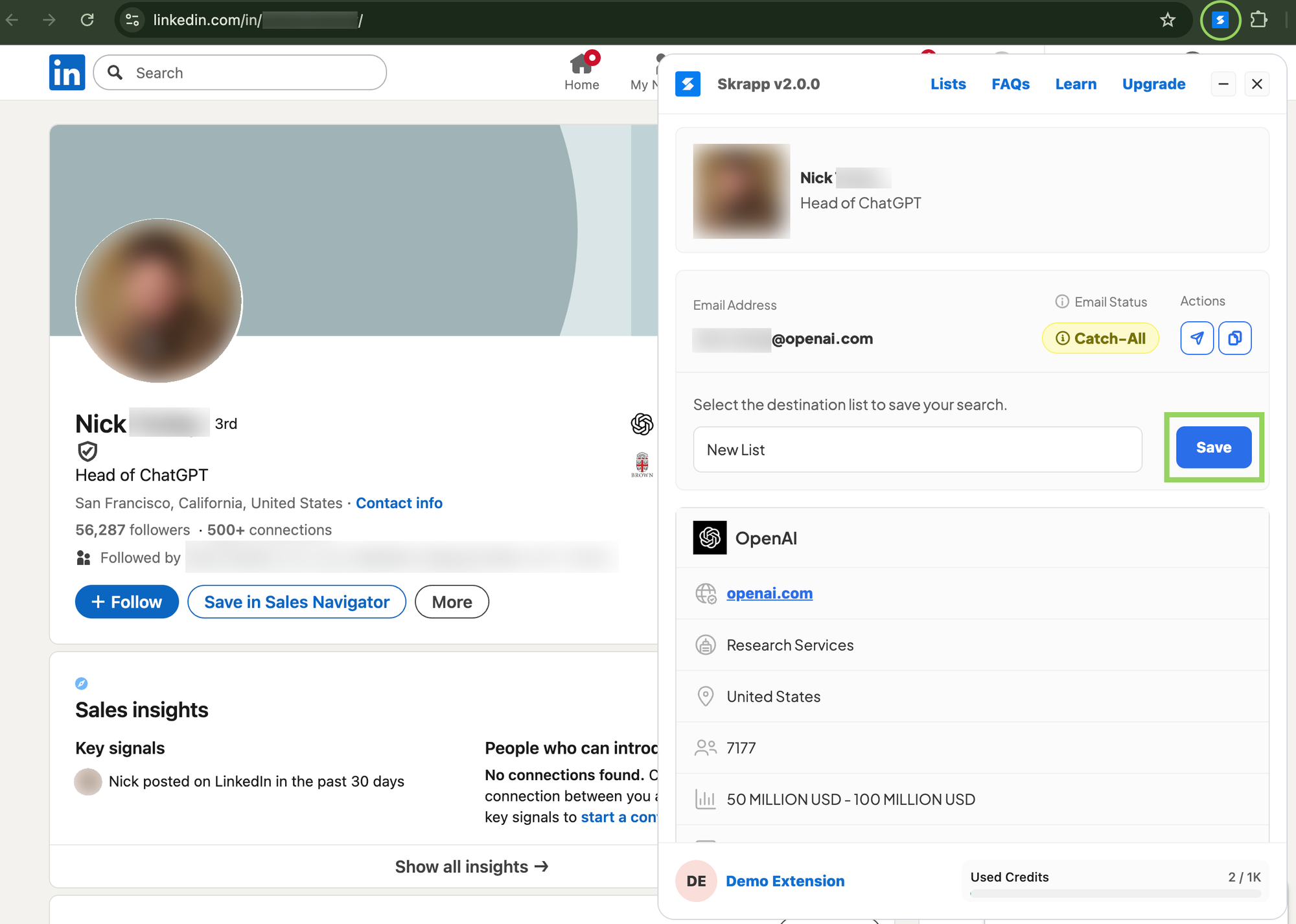
Skrapp focuses on finding professional emails from company domains. The benchmark result - 42.8% verified - puts it mid-pack. Pricing: Free at 100 credits/mo, Professional at $39/mo (annual), Growth at $99/mo, Enterprise at $349/mo. Clean and focused without feature bloat.
ContactOut
ContactOut's niche is finding personal emails alongside professional ones - useful for recruiting or reaching people who've changed jobs. It also pulls contact details from professional profiles and other web sources. Free plan gives you 5 searches per day. Paid plans start around $25/mo.
Wiza
Wiza verifies emails in real time as it finds them rather than pulling from a cached database. Paid pricing is per-seat: Email at $83/user/mo (unlimited emails), Email+Phone at $166/user/mo. Expensive for teams, but solo operators who need high-confidence data on every contact may find the tradeoff worthwhile.
Findymail
75.1% verified in the benchmark - second highest in the entire test. Pricing runs ~$49-$99/mo depending on volume. Skip this if you need a built-in sequencer, but if accuracy is your primary criterion, Findymail deserves a trial.
Anymail Finder
Scored highest in their own benchmark at 77.5% verified, and to their credit, they published the full methodology. Their model charges only for verified emails - you don't pay for unverified results. Plans run ~$49-$99/mo. The "pay only for verified" approach makes cost-per-usable-email predictable.
Saleshandy Lead Finder
Saleshandy bundles email extraction into its outreach platform. The Lead Starter plan runs $49/mo (annual) with 30,000 credits per year. If you're already using Saleshandy for cold email, the built-in lead finder saves you from juggling a separate tool. As a standalone extraction solution, it's not where the value is.

You just saw the benchmarks - most extractors verify under 40% of contacts. Prospeo's 5-step verification delivers 98% email accuracy across 300M+ profiles, refreshed every 7 days. At ~$0.01 per verified email, your effective cost stays exactly what you planned.
Stop paying 5x per usable email. Start extracting ones that land.
Cost per Verified Email Compared
Plan price is meaningless without knowing what you actually get. Here's the math that matters - the column no competitor will show you:
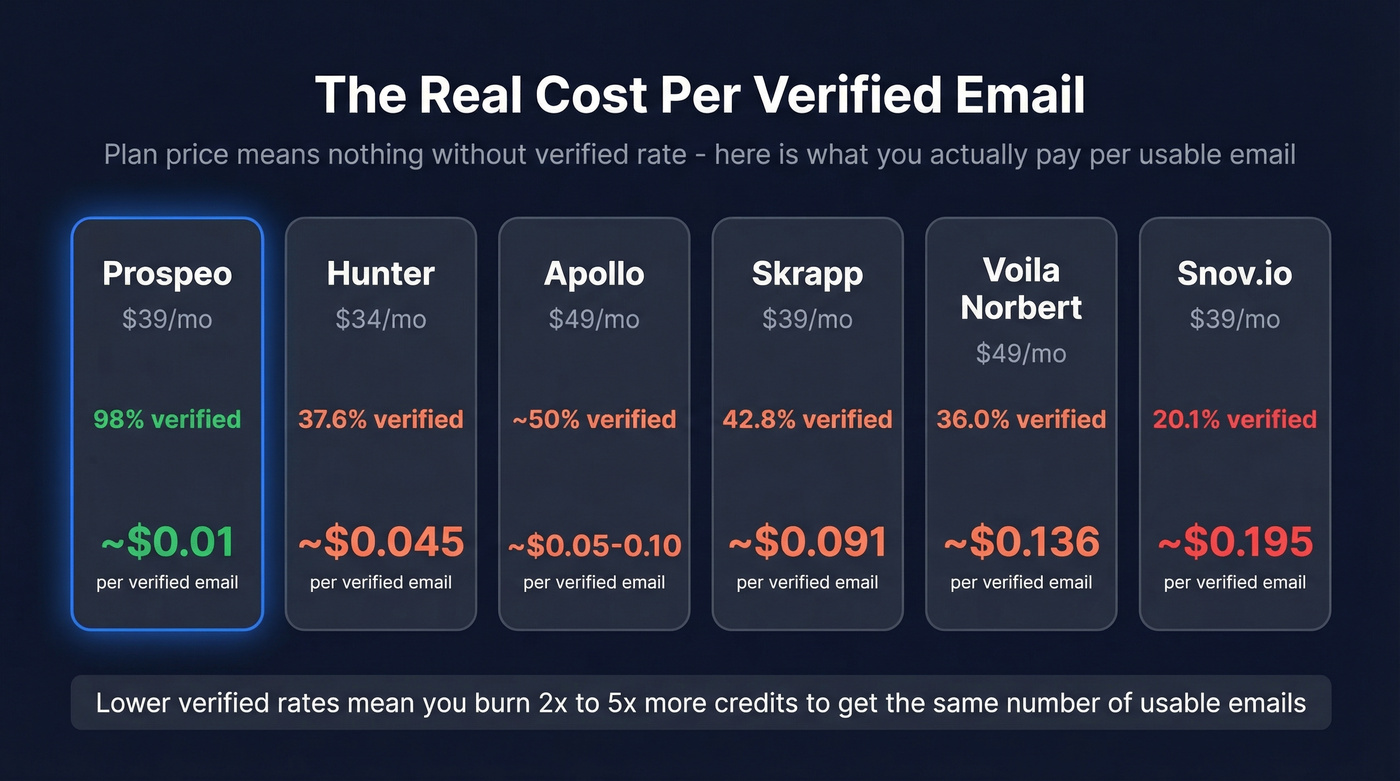
| Tool | Monthly Plan | Credits/Mo | Verified Rate | Credits per Verified Email | Effective Cost/Verified Email |
|---|---|---|---|---|---|
| Prospeo | From $39/mo | Varies by plan | 98% | ~1.02 | ~$0.01 |
| Hunter Starter | $34/mo (annual) | 2,000 | 37.6% | ~2.66 | ~$0.045 |
| Snov.io Starter | $39/mo | 1,000 | 20.1% | ~4.98 | ~$0.195 |
| Apollo Basic | ~$49/user/mo | Shared pool | ~50%* | ~2.0 | ~$0.05-0.10 |
| Voila Norbert | $49/mo | 1,000 | 36.0% | ~2.78 | ~$0.136 |
| Skrapp Pro | $39/mo (annual) | 1,000 | 42.8% | ~2.34 | ~$0.091 |
Apollo's verified rate is estimated from community reports; it wasn't included in the benchmark test.
Credits don't equal verified emails. That's the whole point of this table. A tool returning 20% verified results means your effective cost per usable email is 5x the sticker price.
Let's be honest: if your average deal size is under five figures, you probably don't need a $100+/seat platform. A credit-based extractor with high accuracy will outperform an expensive all-in-one with mediocre deliverability every single time.
Meritt cut their bounce rate from 35% to under 4% and tripled pipeline to $300K/week. The difference wasn't effort - it was switching to an email extractor with proprietary verification, catch-all handling, and spam-trap removal built in. 75 free emails, no credit card.
Extract 75 verified emails this month - zero risk, zero contract.
How to Choose the Right Tool in 5 Minutes
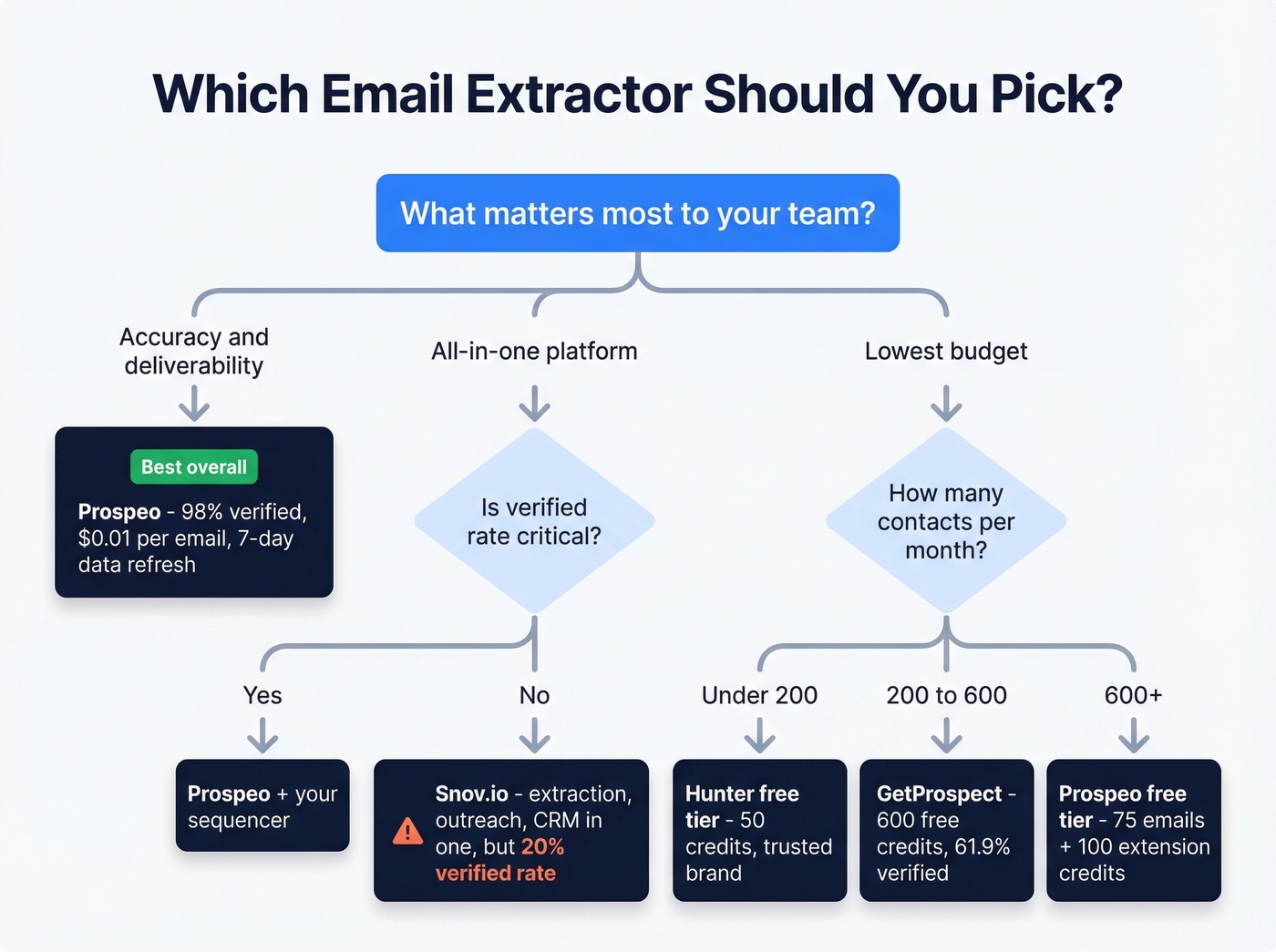
Don't overthink this. Match your top priority to a tool:
- Accuracy above all else - Prospeo. 98% verified emails, 7-day refresh, and the cost-per-verified-email math speaks for itself.
- Free tier to test the waters - Hunter. 50 credits/mo with verification included. The most frictionless way to start.
- All-in-one outreach stack - Snov.io. Extraction, verification, sequences, and CRM in one platform. Credits roll over.
- Massive database + sequencing - Apollo. 275M+ contacts with built-in engagement tools. Watch the per-seat costs.
- Budget under $50/mo - GetProspect or Skrapp. Both offer solid free tiers and competitive paid plans without per-seat pricing.
- Webmail or Outlook-based workflows - Check whether your chosen tool offers a browser extension or add-in that integrates directly with your mail client.
One warning on pricing models: per-seat tools like Apollo and Wiza scale linearly with headcount. Credit-based tools scale with usage. For a 3-person team doing moderate volume, credit-based pricing almost always wins.
The consensus on r/LeadGeneration is a recurring complaint: verification credits run out mid-campaign. The fix is simple - pick a tool where you can calculate your true cost per verified email before committing, and run a small test batch before loading your full list.
Compliance Checklist
Email extraction is legal. How you use the data determines whether you stay that way. GDPR violations carry fines up to EUR20M or 4% of global annual turnover. Australia's ACMA collected AU$14M+ in spam-related penalties between 2023 and 2025.
- GDPR - Establish legitimate interest before emailing. Personalize outreach and disclose where you got their data.
- CAN-SPAM - Include a physical address and clear opt-out. Honor unsubscribes within 10 business days.
- CASL - Get express or implied consent before sending commercial emails. Implied consent has a limited window.
Clean your lists regularly, remove bounces immediately, and include an unsubscribe link in every message. For a deeper dive on deliverability best practices, Email deliverability best practices, Mailgun's guide is worth bookmarking.
After Extraction: The Full Workflow
Extracting emails is step one, not the finish line. The full pipeline runs from extraction to verification to enrichment - appending job title, company size, intent signals - to sequencing in tools like Instantly, Lemlist, or Outreach.
Some tools handle multiple steps natively. Snov.io bundles extraction through sequencing. If you're using a standalone extractor like Hunter or Findymail, you'll need a separate verifier like ZeroBounce or NeverBounce and an enrichment layer before anything hits your sequencer.
Here's the thing we keep coming back to after years of running outbound: the integration stack matters more than any single tool. A cheap extractor paired with solid verification and a good sequencer will outperform an expensive all-in-one with mediocre accuracy every time.
FAQ
What's the difference between an email extractor and an email finder?
Functionally, the same - both locate professional email addresses from public sources. "Extractor" implies scraping from websites; "finder" implies database lookup. Most modern tools do both. Focus on verified-email rates, not labels.
Are email extractors legal to use?
Yes, provided you follow applicable privacy laws. GDPR requires legitimate interest, CAN-SPAM mandates opt-out mechanisms, and CASL requires consent. Legality depends entirely on how you use the extracted data, not the extraction itself.
How many emails should I expect to bounce?
Keep total bounces under 2% and hard bounces under 1%. Above 5%, ESPs start throttling your domain. Always verify before sending - tools with built-in verification minimize this risk significantly.
What's a reasonable cost per verified email?
Budget-tier tools run $0.01-$0.03 per verified email. Mid-tier costs $0.03-$0.08. Enterprise platforms can exceed $1.00 per contact - overkill unless you need intent data, org charts, and dedicated support bundled in.
Do I need a separate verification tool?
It depends on your extractor's built-in accuracy. Tools with 98%+ verified rates don't need a second pass. For extractors with sub-50% verified rates, running results through ZeroBounce or NeverBounce before sequencing is strongly recommended.