

Buying Signals in Sales: Which Ones Actually Predict Purchases?
91% of B2B marketers use intent data. Only 24% report exceptional ROI. The problem isn't the data - it's which buying signals in sales they're prioritizing.
We dug into a 2026 analysis of 1 million B2B software purchases and the results are counterintuitive. Funding rounds? Overrated. Job postings? Nearly worthless. SOC compliance certifications? Zero correlation with buying. Meanwhile, 94% of buying groups rank their preferred vendors before talking to sales - so the signals you act on before that conversation are everything.
The Short Version
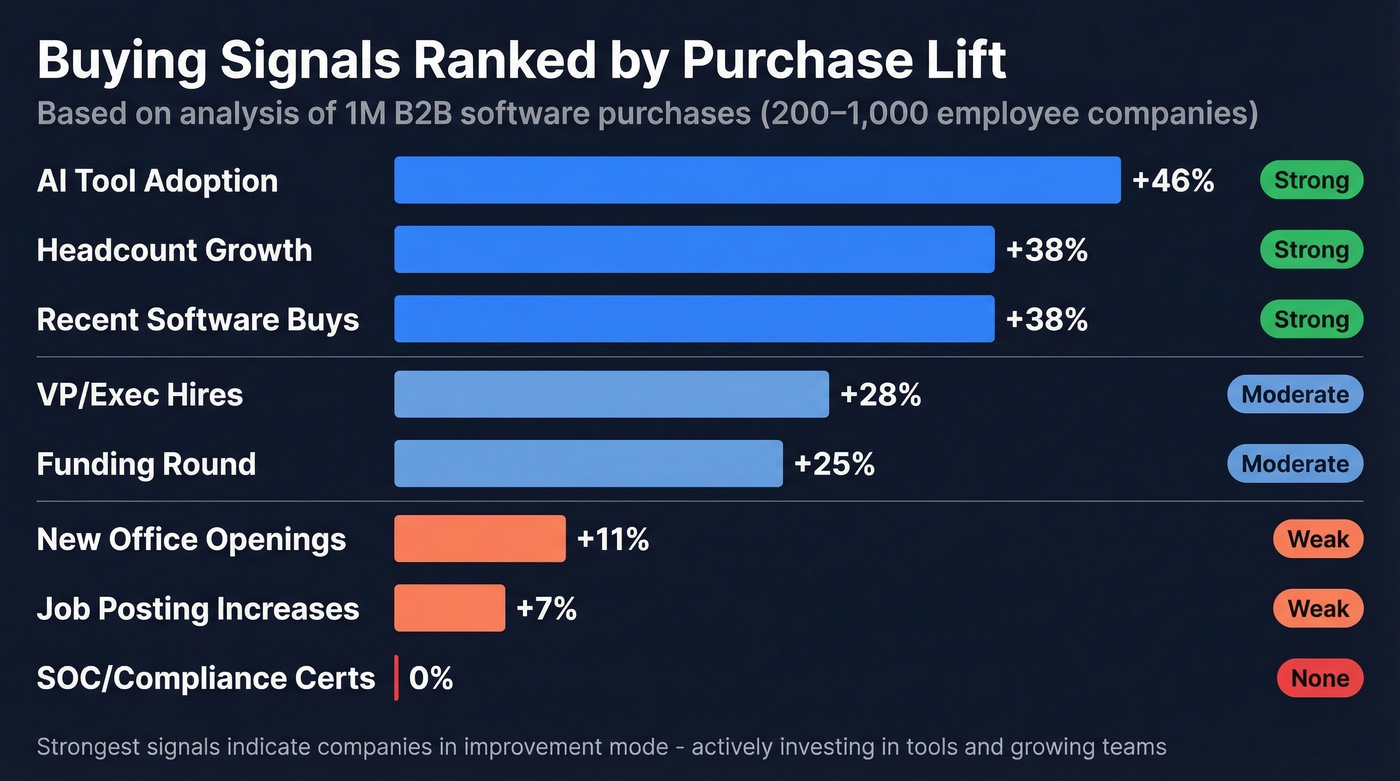
- The signals that predict purchases aren't the ones you'd guess. AI tool adoption (+46% lift), headcount growth (+38%), and recent software purchases (+38%) crush funding rounds (+25%) and job postings (+7%).
- You have about 5 minutes. Responding to a signal within that window makes you 21x more likely to qualify the lead](https://greetnow.com/blog/speed-to-lead-statistics-2024). After 10 minutes, qualification drops 80%.
- None of it matters if your contact data bounces. B2B email addresses decay 37.3% annually. Verify before you send, or your signal workflow dies at the last mile.
What Are Buying Signals?
About 70% of the B2B buyer journey happens in the dark funnel - channels you can't directly track. Buyers research quietly and avoid forms early, so the signals you can detect carry disproportionate weight.
They fall into three categories. Verbal: budget questions, timeline discussions, stakeholder introductions during calls. Digital/behavioral: pricing page visits, content downloads, demo requests. Trigger/firmographic: leadership changes, funding rounds, headcount growth, technology adoption.
In our experience, that third category is where the real predictive power lives. The 1M-purchase analysis backs this up hard. And here's something most teams miss: a prospect going dark after active engagement is itself a signal. Route those accounts to re-engagement, not more of the same cadence.
Signals Ranked by Predictive Power
Not all purchase intent indicators are created equal. The gap between the best and worst is enormous - we're talking a 46-point spread. Here's how signals stacked up when measured by actual purchase lift versus control groups, across companies with 200-1,000 employees:
| Signal | Purchase Lift | Strength |
|---|---|---|
| AI tool adoption | +46% | Strong |
| Headcount growth | +38% | Strong |
| Recent software buys | +38% | Strong |
| VP/exec hires | +28% | Moderate |
| Funding round | +25% | Moderate |
| New office openings | +11% | Weak |
| Job posting increases | +7% | Weak |
| SOC/compliance certs | 0% | None |
The strongest signals indicate a company is in "improvement mode" - actively investing in tools, growing the team, buying software. The weakest are either too early (job postings signal intent that's months from action) or backward-looking (SOC compliance means they already bought and are now securing what they have).
Headcount growth is especially telling at the category level: +65% more likely to purchase knowledge base tools, +54% for IT help desk, +47% for project management. When a company hires, it buys the infrastructure to support those hires.
Let's be honest: if your SDR team is prioritizing accounts based on funding rounds over AI adoption or headcount growth, they're leaving money on the table. Funding is a vanity signal - it tells you a company could buy, not that it will.

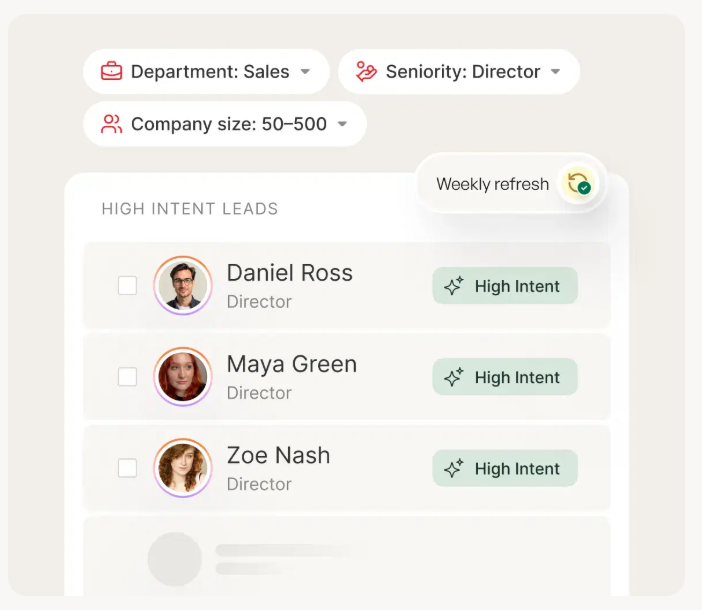
AI adoption, headcount growth, and recent software purchases are the strongest buying signals - but only if you can reach the right person instantly. Prospeo tracks intent across 15,000 Bombora topics and pairs it with 98% accurate emails refreshed every 7 days, so your reps act on signals before they decay.
Stop losing deals to bounced emails and stale data.
How to Score and Prioritize Signals
Detecting trigger events is step one. Scoring them so reps know what to act on first is where most teams fall apart. Buying committees now average 10.1 stakeholders, so you can't chase every ping.
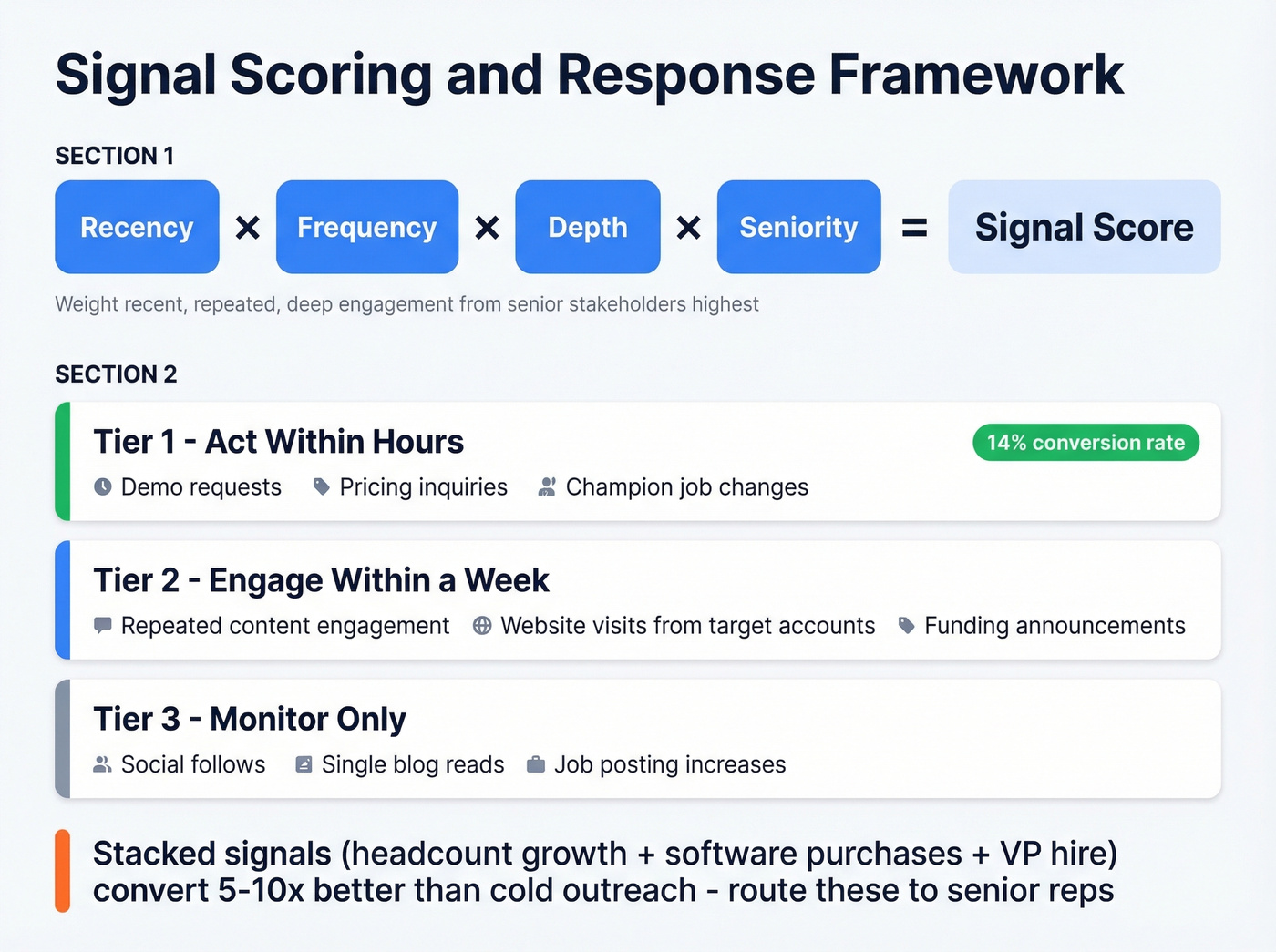
Score with four factors: Recency x Frequency x Depth x Seniority. An exec visiting your pricing page twice this week scores higher than a manager downloading a whitepaper last month. Multiple actions in a short window suggest a live project, not casual browsing.
Then tier your response SLAs:
- Tier 1 - act within hours: Demo requests, pricing inquiries, champion job changes. Newly hired exec outreach converts at 14% vs. 1.2% for standard cold calls, and newly hired leaders spend 70% of their budget in the first 100 days. These people are buying, not browsing.
- Tier 2 - engage within a week: Repeated content engagement, website visits from target accounts, funding announcements.
- Tier 3 - monitor only: Social follows, single blog reads, job posting increases.
Route accounts showing stacked signals - headcount growth plus recent software purchases plus a VP hire - to your most senior reps. Stacked signals convert 5-10x better than cold outreach.
Here's the pipeline math: 10 reps handling 50 target accounts each, flagging 3 stacked signals per week, yields 30+ qualified conversations. That typically turns into 6 new opportunities. That's signal-based selling versus spray-and-pray, and the difference compounds fast.
Signal Decay: Why Speed Kills Deals
Signals have a shelf life, and it's shorter than you think.
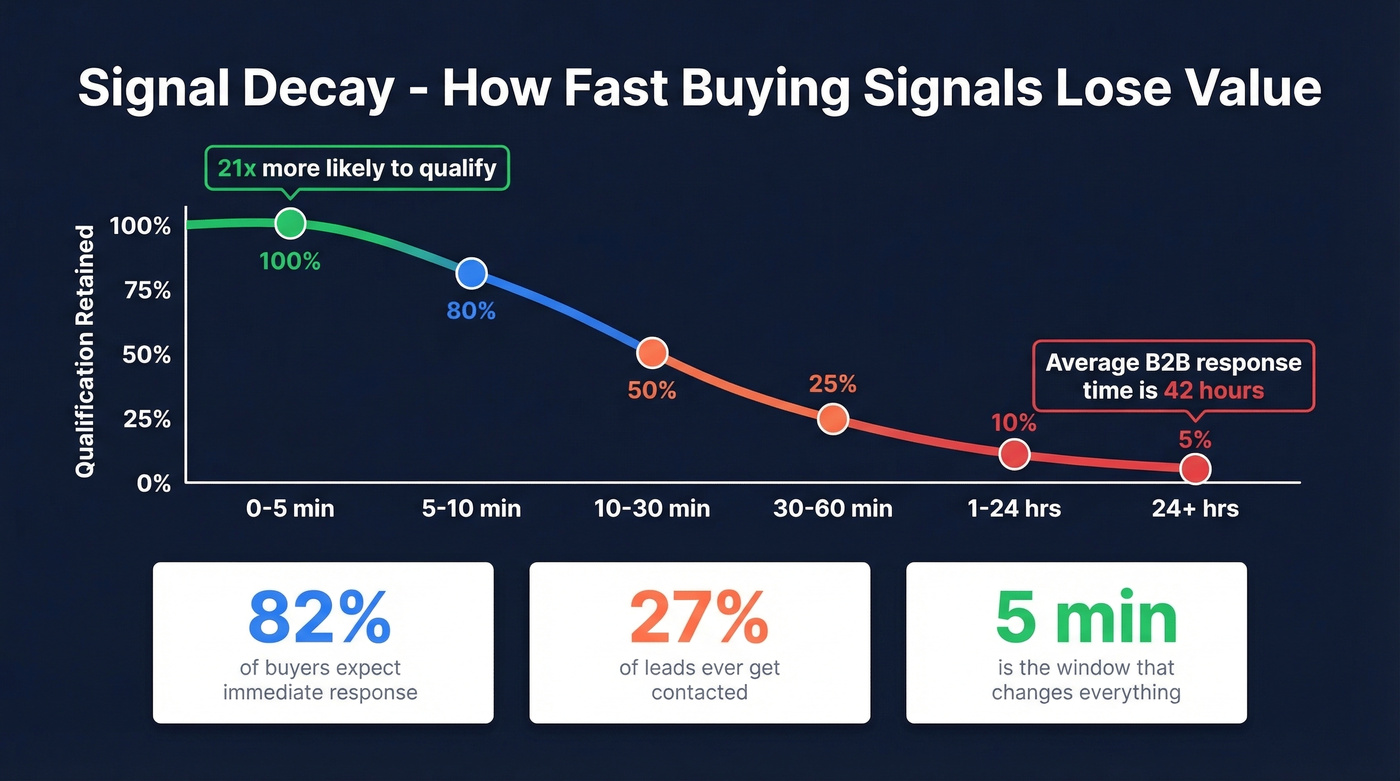
The average B2B company takes over 42 hours to respond to an inbound lead. Only 27% of leads ever get contacted at all. Meanwhile, 82% of buyers expect an immediate response. The disconnect is staggering.
| Time After Signal | Qualification Retained |
|---|---|
| Under 5 minutes | 100% (peak) |
| 5-10 minutes | 80% of peak |
| 10-30 minutes | 50% of peak |
| 30-60 minutes | 25% of peak |
| 1-24 hours | 10% of peak |
| 24+ hours | 5% of peak |
That 5-minute window isn't aspirational. It's the difference between qualifying a lead and losing it entirely. First contact is happening earlier in the journey - at 61% completion vs. 69% a year ago - which means the window to influence is shrinking. If you're late, you're not even on the shortlist.
The Last Mile: Contact Data
Here's the scenario we've watched play out dozens of times. Your intent platform flags a surging account - headcount growth, AI adoption, multiple content downloads. Your SDR pulls the contact. The email bounces. The phone number is disconnected.
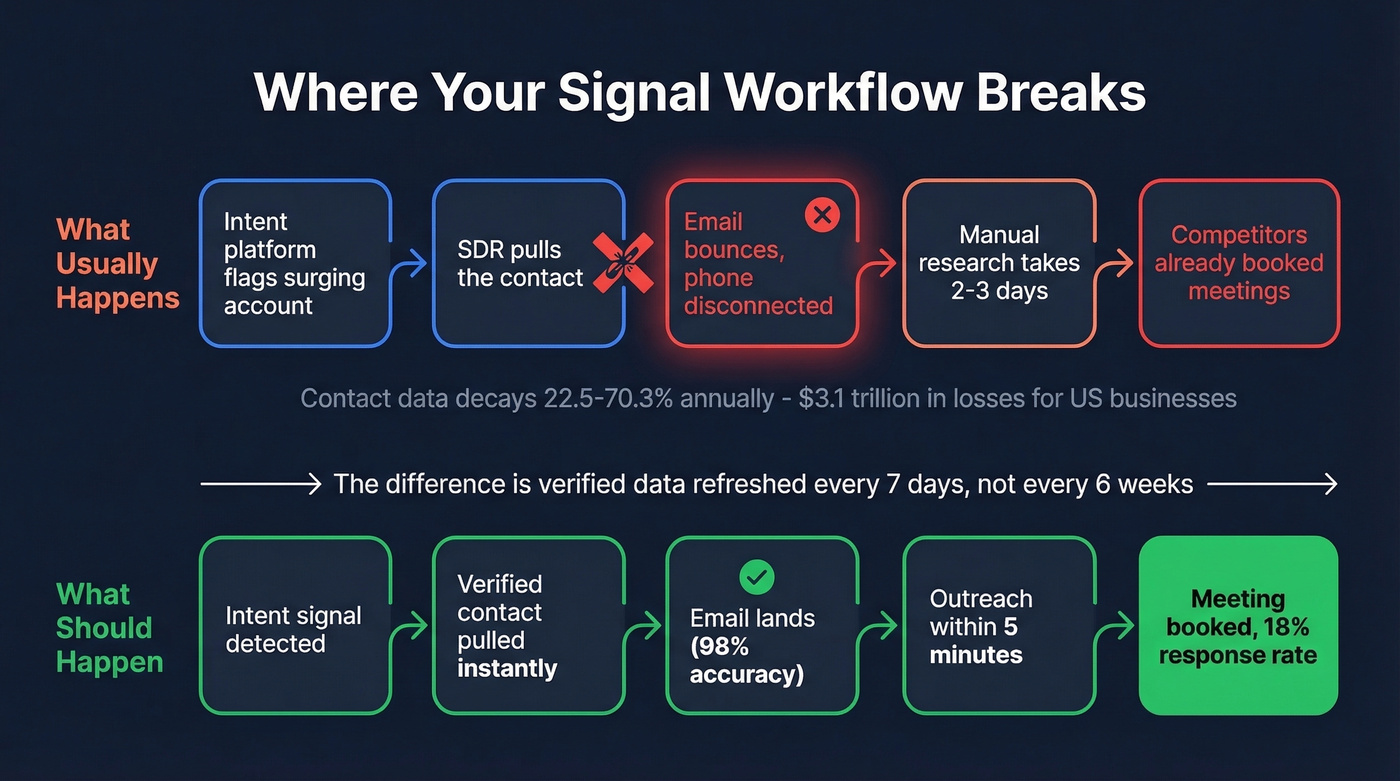
By the time they find the right person through manual research, two competitors have already booked meetings.
B2B contact data decays 22.5-70.3% annually - an estimated $3.1 trillion in annual losses for US businesses. Signal-based selling delivers 18% response rates versus 3.4% for standard cold outreach, but only if the email actually lands. We've seen teams build beautiful signal workflows that break completely because their data provider refreshes contacts every six weeks instead of every seven days. It's frustrating to watch, and it's entirely preventable.
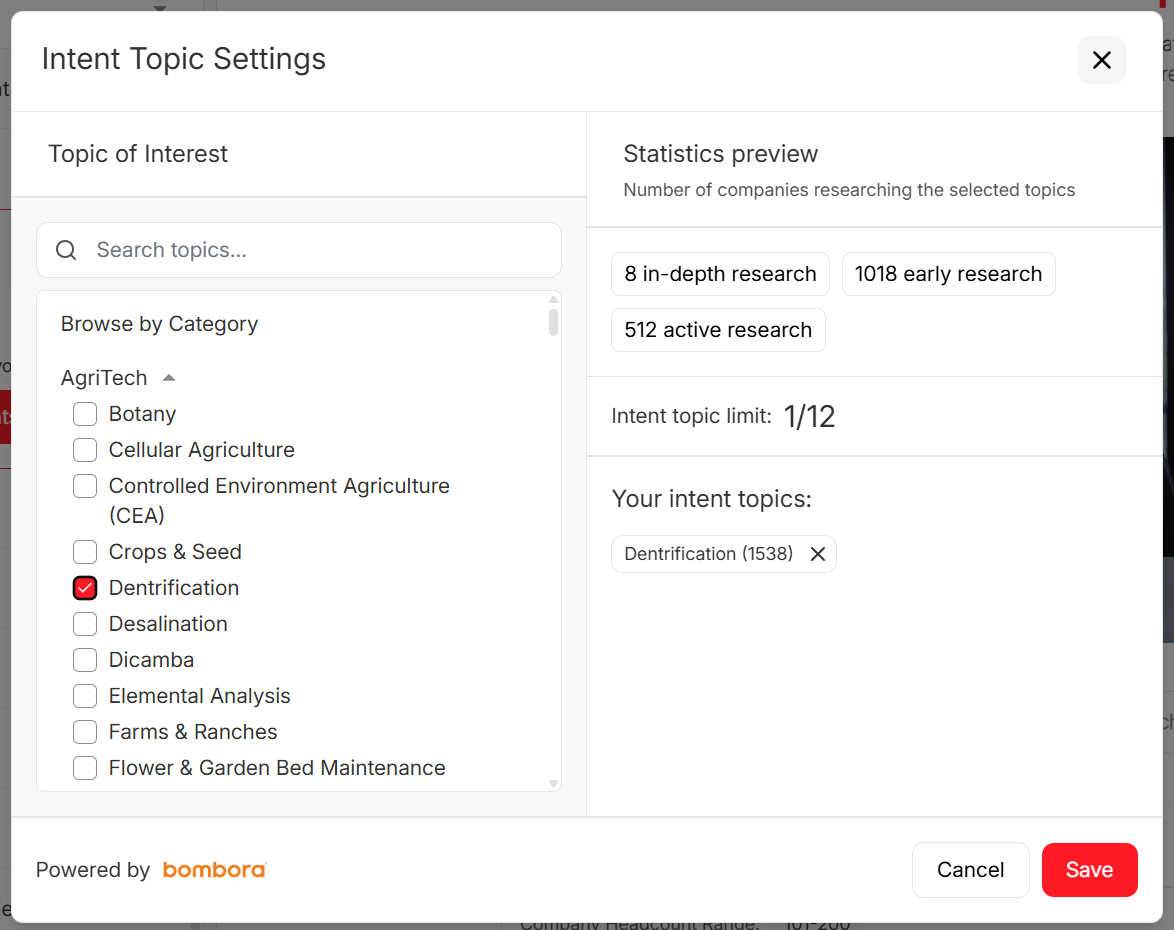
Prospeo refreshes 300M+ profiles on a 7-day cycle, verifies emails at 98% accuracy, and tracks 15,000 intent topics via Bombora - so you detect the signal and reach the right person in one workflow.
Operational Checklist
- Filter by "improvement mode" indicators - AI adoption, headcount growth, recent software purchases - not vanity milestones like compliance certs.
- Score using Recency x Frequency x Depth x Seniority. Weight recent, repeated, deep engagement from senior stakeholders highest.
- Set response SLAs by signal tier. Tier 1 within hours. Tier 2 within a week. Tier 3 is monitoring only.
- Verify contact data before every outreach sequence. Run your list through a provider with real-time email verification and weekly refresh cycles. Skip this step and your domain reputation pays the price.
- Track bounce rate and response rate per signal type. This tells you which buying signals in sales are converting for your ICP, not just in aggregate.
- Route multi-signal accounts to senior reps. Stacked signals deserve your best closers, not your newest SDR.
For teams that don't have a signal scoring system yet, start simple: pick the top three signals from the table above, set up alerts, and measure response time. You can get sophisticated later. The biggest wins come from just acting faster than your competitors on the right signals.
Your signal workflow dies at the last mile when contact data bounces. Prospeo's 5-step verification and proprietary email infrastructure deliver 98% accuracy at $0.01 per email - so stacked signals like headcount growth plus VP hires actually convert into booked meetings, not wasted cadences.
Turn every buying signal into a real conversation for a penny per contact.
FAQ
What's the strongest buying signal in B2B?
AI tool adoption delivers +46% purchase lift, followed by headcount growth and recent software purchases at +38% each. Funding rounds (+25%) and job postings (+7%) are far weaker predictors, based on analysis of 1M B2B software transactions.
How fast should you respond to a buying signal?
Within 5 minutes. That window makes you 21x more likely to qualify the lead. After 10 minutes, qualification drops 80%. The average B2B company takes over 42 hours - by then, competitors have already booked meetings.
How do you act on intent signals without emails bouncing?
Use a data provider with weekly refresh cycles and real-time verification. B2B contact data decays up to 70% annually, so a 6-week refresh cycle means you're working with stale records. Keep bounce rate under 2% to protect domain reputation and future deliverability.