

C-Level Positions: Every Role, Salary, and What's Changing in 2026
The CEO-to-worker pay ratio at top U.S. firms hit 281:1 in 2024. In 1978, it was 31:1. That single stat tells you more about c-level positions than most 3,000-word guides ever will.
Here's a sharper take - the roles that actually matter, what they pay, and the one emerging title reshaping every org chart.
- 8 core roles drive real companies: CEO, COO, CFO, CTO, CIO, CMO, CHRO, and CRO. Everything else is situational.
- Compensation splits dramatically between private and public companies - $323,500 base vs. $18.9M total comp tell completely different stories.
- The Chief AI Officer is the fastest-growing C-suite title in 2026, with 26% of global enterprises now employing one.
Every C-Suite Role That Matters
Most "complete lists" of executive titles are useless noise. Wikipedia catalogs 50+ chief titles. What matters is the 8-10 that exist at real companies with real budgets and real reporting lines.
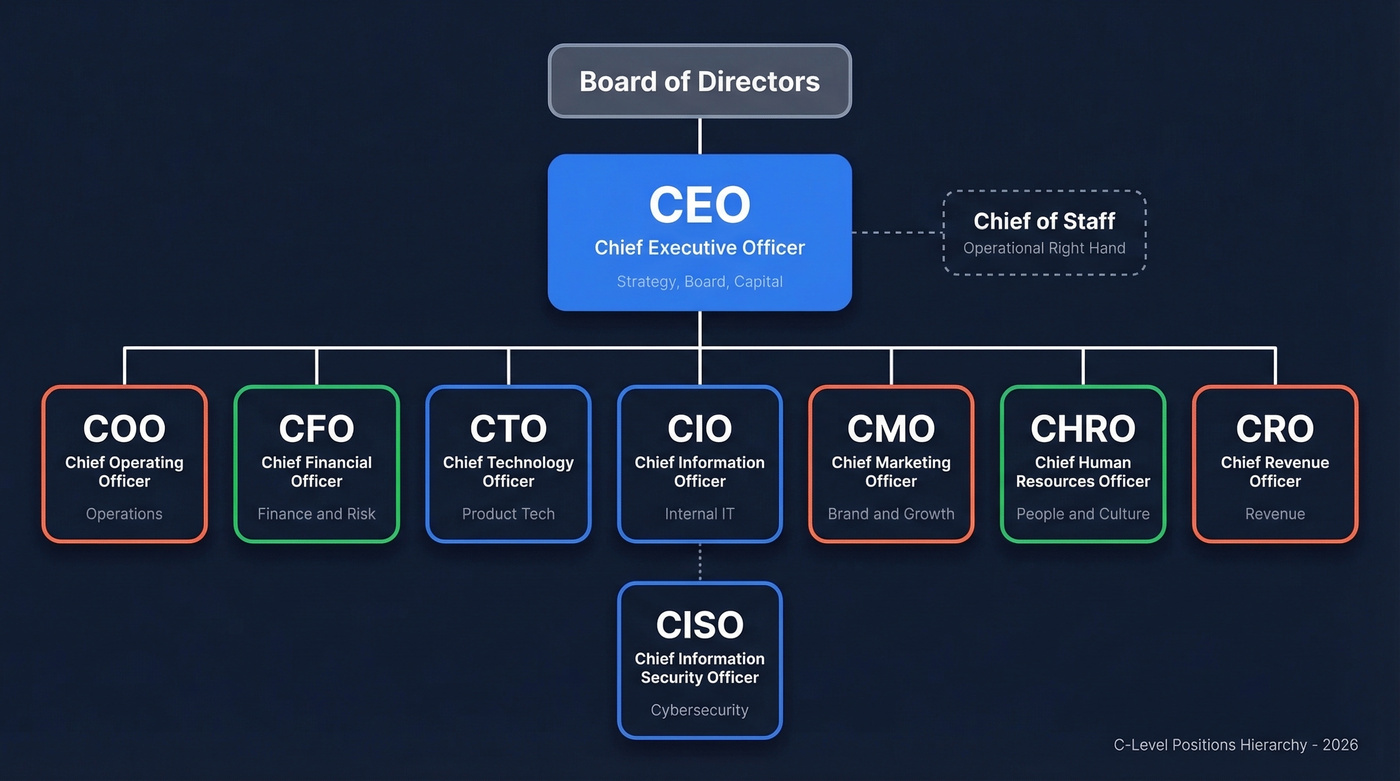
The structure is straightforward: the board of directors oversees the CEO, and every other C-level executive reports to the CEO. The COO serves as second-in-command, handling day-to-day operations while the CEO focuses on strategy, capital allocation, and board relations.
| Role | Full Title | Core Responsibility |
|---|---|---|
| CEO | Chief Executive Officer | Strategy, board, capital |
| COO | Chief Operating Officer | Day-to-day operations |
| CFO | Chief Financial Officer | Finance, reporting, risk |
| CTO | Chief Technology Officer | Product tech, innovation |
| CIO | Chief Information Officer | Internal IT, systems |
| CMO | Chief Marketing Officer | Brand, demand gen, growth |
| CHRO | Chief Human Resources Officer | People, culture, talent |
| CRO | Chief Revenue Officer | Sales + marketing alignment |
Core Roles: CEO, COO, CFO
The CEO decides which markets to enter, approves the annual budget, and hires and fires the leadership team. Day-to-day? Meetings. Lots of meetings - with the board, investors, direct reports, and key customers. A Reddit thread on r/careerguidance captures the vibe: C-suite work is meeting-heavy, with a lot of time spent preparing presentations and aligning people around major initiatives.
The COO translates the CEO's strategy into operational reality - aligning departments, managing execution, and putting out fires. One commenter in a r/WorkReform thread, drawing on 16 years of consulting experience, estimated that roughly 65% of C-level decisions never get implemented by employees. That gap between strategy and execution is exactly why the COO role exists.
The CFO owns financial reporting, treasury, risk management, and investor relations. At smaller companies, the CFO often absorbs legal and compliance responsibilities too.
Technology & Data: CTO, CIO, CISO
Here's a distinction most articles botch: the CTO and CIO used to be interchangeable. Not anymore.
The CTO owns product technology and innovation - what you're building and selling. The CIO owns internal systems and infrastructure - what your employees use to work. A CISO (Chief Information Security Officer) sits underneath or alongside the CIO, focused entirely on cybersecurity and data protection. Many software companies end up with both a CTO and a CIO, but plenty still run with one senior technology leader depending on complexity and stage.
Growth & People: CMO, CHRO, CRO, CLO
The CMO drives brand positioning, demand generation, and market positioning. The CHRO owns talent acquisition, culture, compensation, and organizational design. The CRO aligns sales and marketing under one revenue number - a relatively recent role compared to older C-suite titles, and one that's especially common in SaaS.
We've seen too many companies add the CRO role two years too late, after sales and marketing have already built competing pipelines and metrics. By then, the damage is done.
One note on CRO: in financial services, it often means Chief Risk Officer. Context matters.
The CLO handles corporate governance, contracts, IP, and regulatory compliance. In smaller companies, these responsibilities fall to a General Counsel, a part-time hire, or external counsel.
What C-Level Executives Earn in 2026
Compensation at the C-level splits into two completely different universes depending on whether you're looking at private or public companies.
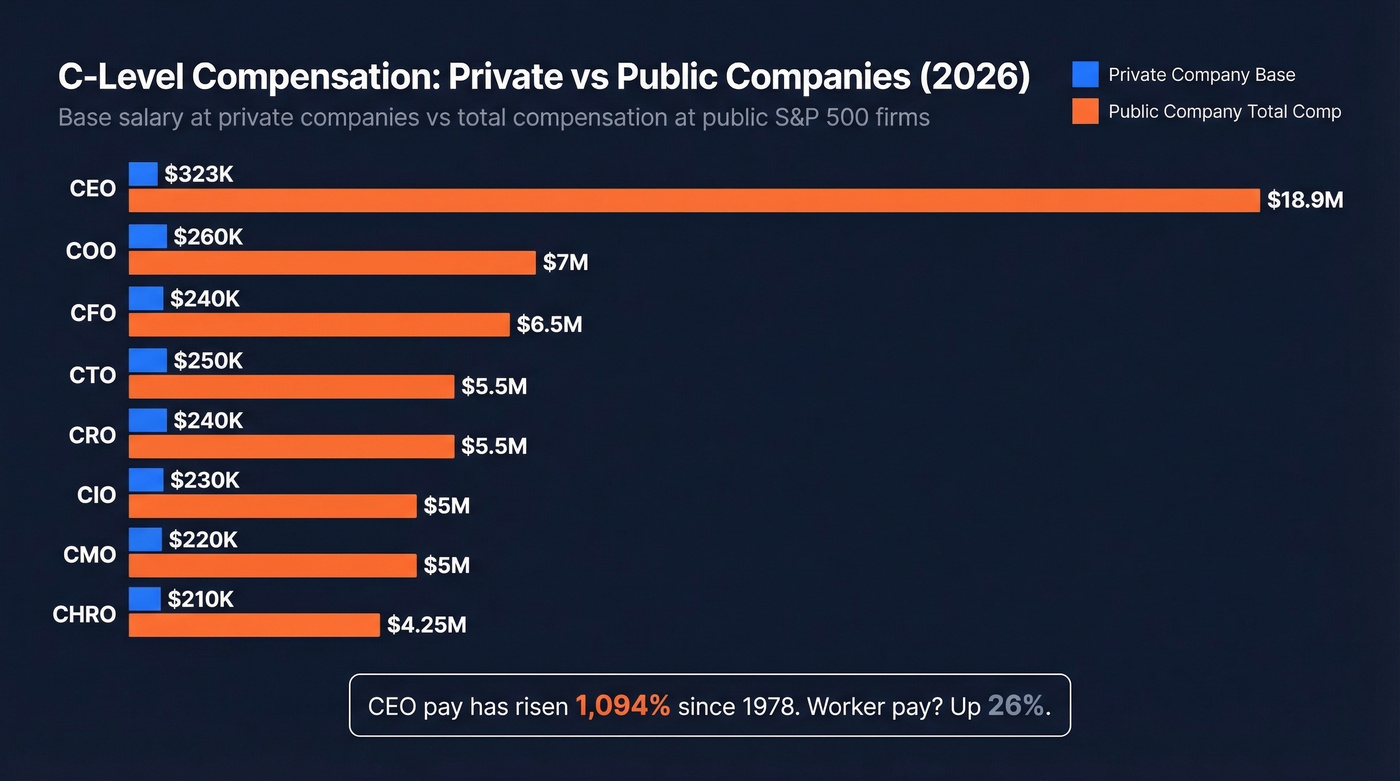
Private-company CEO median base salary sits at $323,500, up 2% from the prior year. That's base only - no equity, no bonus. Looking ahead, 68% of private-company CEOs expect a raise in 2026, with 21% projecting increases above 5%. Meanwhile, S&P 500 CEO average total compensation hit $18.9M, a 7% jump. The gap is staggering, and it keeps widening.
| Role | Private Base (est.) | Public Total Comp (est.) |
|---|---|---|
| CEO | $300K-$400K | $10M-$25M+ |
| CFO | $200K-$280K | $4M-$9M |
| COO | $220K-$300K | $4M-$10M |
| CTO | $200K-$300K | $3M-$8M |
| CMO | $180K-$260K | $3M-$7M |
| CIO | $190K-$270K | $3M-$7M |
| CHRO | $170K-$250K | $2.5M-$6M |
| CRO | $200K-$280K | $3M-$8M |
CFOs typically earn 34-39% of CEO compensation. CMOs, CHROs, and CLOs fall in the 22-33% range. The equity mix at public companies tells the real story: a common structure looks like roughly 27% salary, 4% cash bonus, 30% stock awards, 12% options, with the rest in other long-term incentives. Base salary is almost a rounding error at the top.
CEO pay has risen 1,094% since 1978. Typical worker pay? Up 26% over the same period. That's not a typo.
Emerging Roles Reshaping the C-Suite
The biggest shift in 2026 isn't a new strategy framework. It's a new job title.
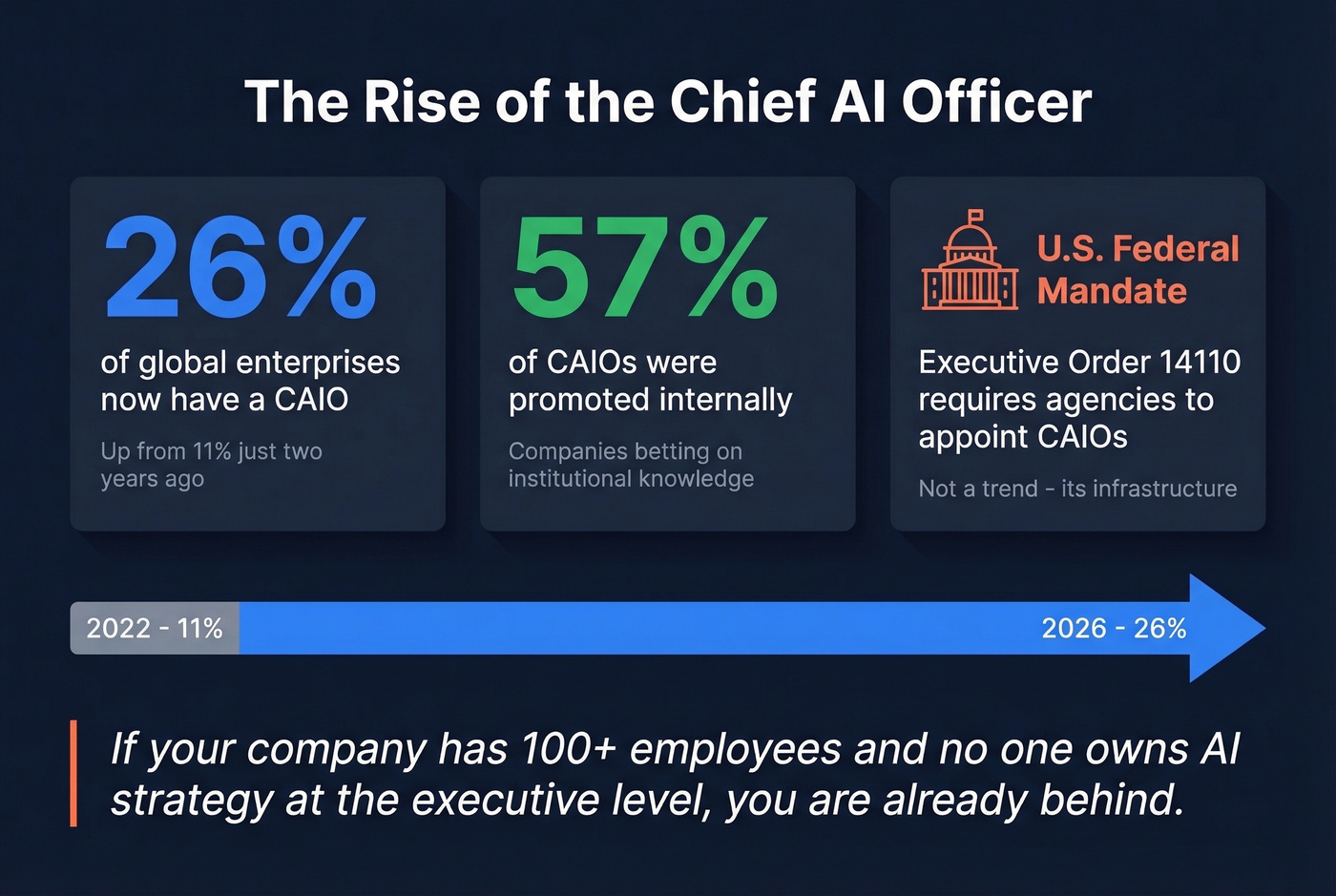
26% of global enterprises now have a Chief AI Officer, up from just 11% two years prior. 57% of those CAIOs were promoted internally, which tells you companies are betting on institutional knowledge over outside hires for this role. The U.S. federal government now requires agencies to appoint CAIOs under Executive Order 14110 - signaling that this isn't a trend, it's infrastructure.
Beyond the CAIO, you'll see CSOs (Chief Sustainability Officers) at public companies facing ESG reporting mandates and CXOs (Chief Experience Officers) at consumer-facing brands. Deloitte research suggests formalizing specialized C-suite ownership improves governance agility by up to 30%.
Let's be honest: if your company has more than 100 employees and no one owns AI strategy at the executive level, you're already behind. The CAIO isn't a luxury hire - it's the 2026 equivalent of hiring your first CFO.

Knowing every C-level title is step one. Reaching them is step two. Prospeo's database covers 300M+ professionals with 30+ filters - search by job title, seniority, company size, and buyer intent to surface the exact executives you need. 98% email accuracy means your outreach actually lands.
Build a verified C-suite prospect list in under five minutes.
How Many Executives Does a Company Need?
This scales predictably with company size.
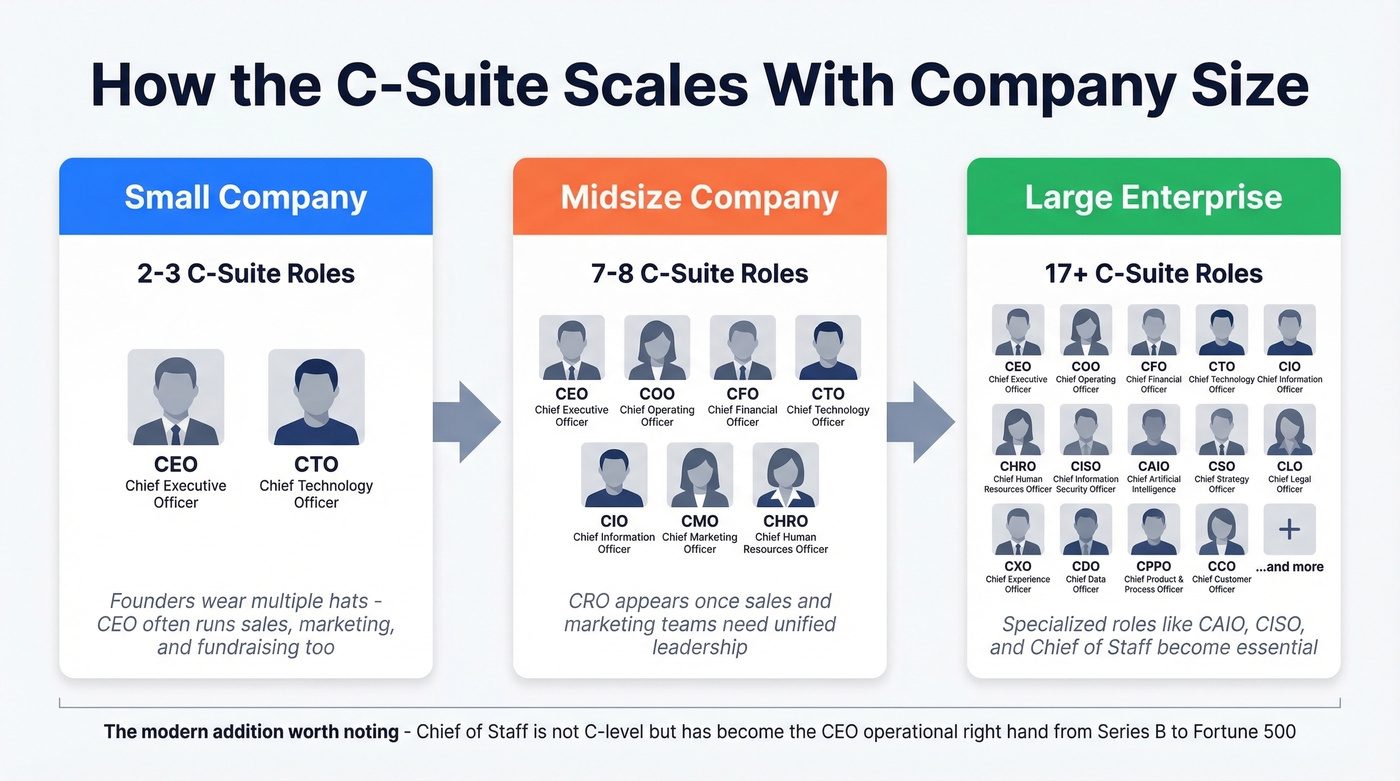
Small companies need 2-3 C-suite roles. Often it's CEO plus a technical leader like a CTO. Founders wear multiple hats - the CEO is often the de facto head of sales, marketing, and fundraising. We've watched companies at this stage try to fill all eight roles and it never works. You end up with expensive titles and no one doing the actual work.
Midsize companies typically carry 7-8 executives. This is where you add a dedicated CFO, CMO, and CHRO. The CRO usually shows up once sales and marketing teams are large enough to need unified leadership.
Large enterprises run 17 or more C-suite members, including specialized roles like CISO, CRO, and increasingly CAIO. Hierarchical structures still dominate, though matrix reporting - where a CTO reports to both the CEO and a divisional president - is common in complex organizations. The modern addition worth noting: Chief of Staff. It's not a C-level title, but it's become the CEO's operational right hand at companies from Series B startups to the Fortune 500.
The Title Inflation Problem
92% of workers believe companies use inflated titles to create the illusion of career growth while withholding actual raises. And 15% of employees have accepted a lower salary in exchange for a more senior-sounding title. That's not career development - that's a magic trick.
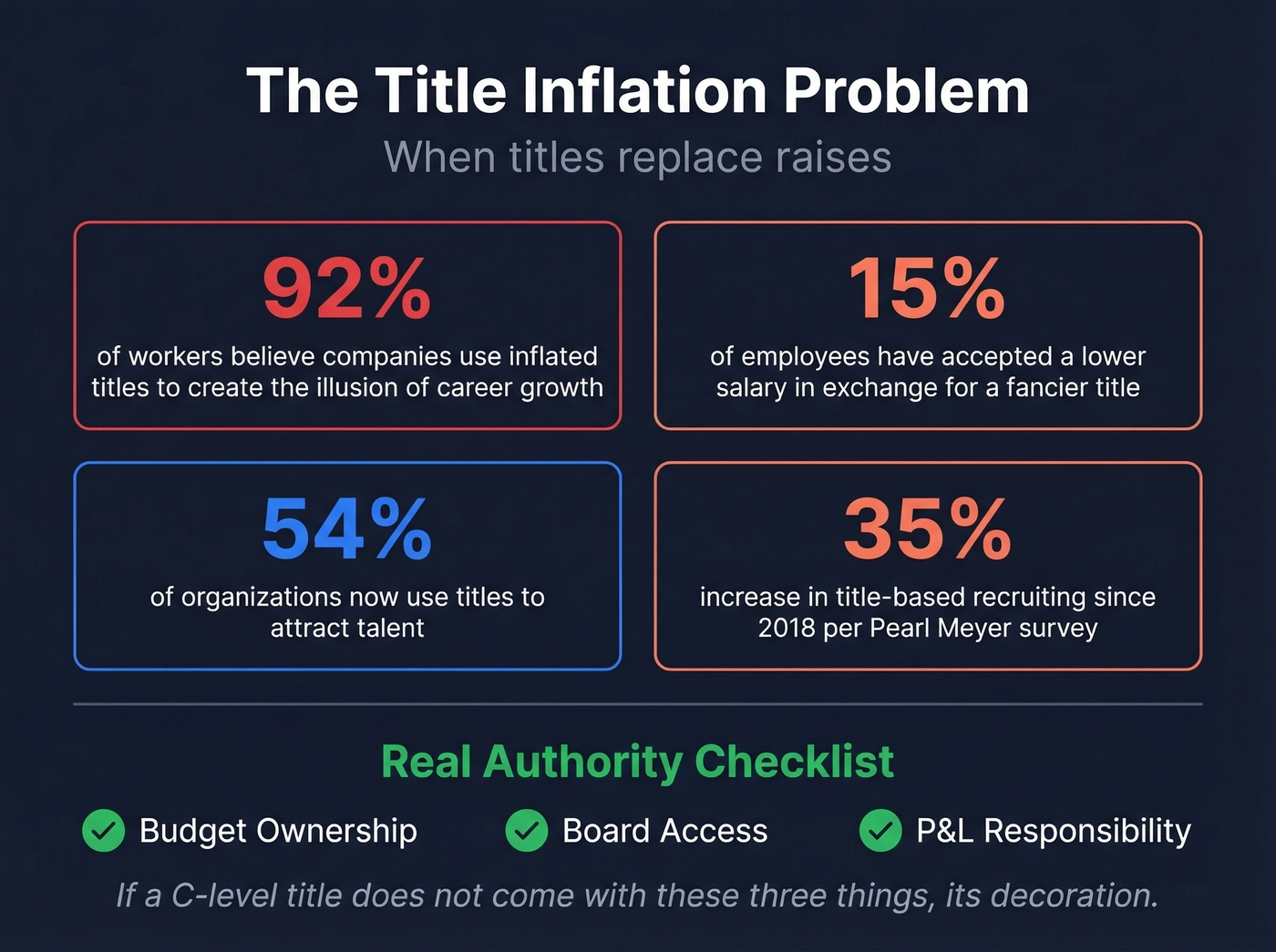
The trend is accelerating. 54% of organizations now use titles to attract talent, a 35% jump from 2018 per Pearl Meyer's survey of 400+ companies. So when you see a "Chief Growth Hacker" or "Chief Evangelist" on someone's card, apply healthy skepticism. The c-level positions that carry real authority are the ones with budget ownership, board access, and P&L responsibility. Everything else is decoration.
How to Reach C-Level Decision-Makers
Understanding executive roles is step one. Actually reaching these decision-makers is the hard part - and it's where most sales, recruiting, and partnership efforts stall completely. You've identified that the CTO is your buyer. Now you need a verified email that won't bounce.
Prospeo's B2B database covers 300M+ professional profiles with 30+ search filters including job title, seniority level, and company size. You can filter specifically for C-level executives, export verified contacts, and push them directly into Salesforce, HubSpot, or Lemlist. Every email is verified in real time at 98% accuracy - critical when your sender reputation can't afford a bounce.
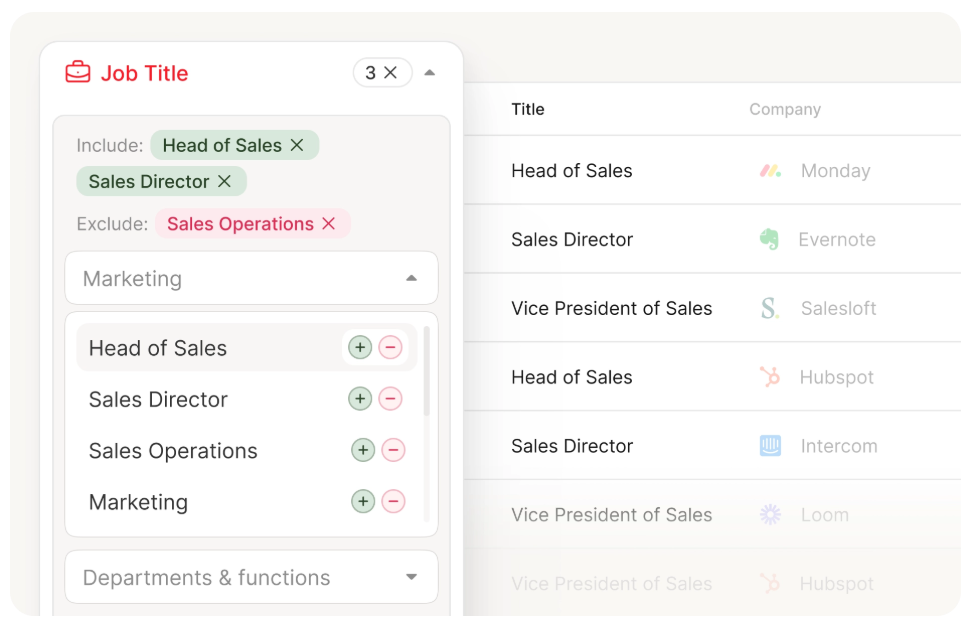
CAIOs, CROs, CTOs - new titles mean new decision-makers to find. Prospeo refreshes data every 7 days, so you're reaching executives in their current roles, not where they worked six months ago. At $0.01 per verified email, targeting the entire C-suite costs less than a coffee.
Get direct emails and mobile numbers for any executive, verified today.
FAQ
What does C-level mean?
C-level refers to the highest-ranking executive officers in a company, where the "C" stands for "Chief." These leaders - CEO, CFO, CTO, and others - set company strategy, own major budgets, and report directly to the board of directors.
What's the highest C-level position?
The CEO is the highest-ranking executive position, reporting directly to the board of directors and overseeing all other officers. The COO is typically second-in-command, managing day-to-day operations while the CEO focuses on strategy and capital allocation.
How many C-level positions does a typical company have?
Small companies run 2-3, midsize companies carry 7-8, and large enterprises average 17 or more. The right number depends on revenue, headcount, and operational complexity - not a template.
How do you find contact information for C-level executives?
B2B data platforms let you search by job title, seniority, and company size across millions of professionals. The key is real-time email verification and fresh data - stale records mean bounced emails and burned domains. Look for platforms that refresh data weekly rather than monthly.