

B2B Brand Positioning: What Actually Works (and What Kills It)
Open five competitor websites in your market. Swap the logos. If the copy still makes sense on any of them, your positioning is broken.
You're not alone. B2B buyers spend only 17% of their purchase journey meeting with potential suppliers. The other 83% happens before your sales team gets a word in - which means your positioning has to do the heavy lifting in that gap, across every page, every ad, every cold email a prospect skims for three seconds before deciding whether you're worth their time.
The Quick Version
- Positioning isn't a workshop output - it's what your homepage says and your sales team repeats without a cheat sheet.
- Start with competitive alternatives, not your own features.
- If your messaging could belong to any competitor, you don't have positioning. You have filler.
What It Actually Means
"Positioning" means two different things depending on who's in the room. There's the perception side - where your brand sits relative to competitors in a buyer's mind. And there's the strategic act: deliberately defining who you serve, what you're great at, and why it matters more than the alternative. Only the second one is actionable.
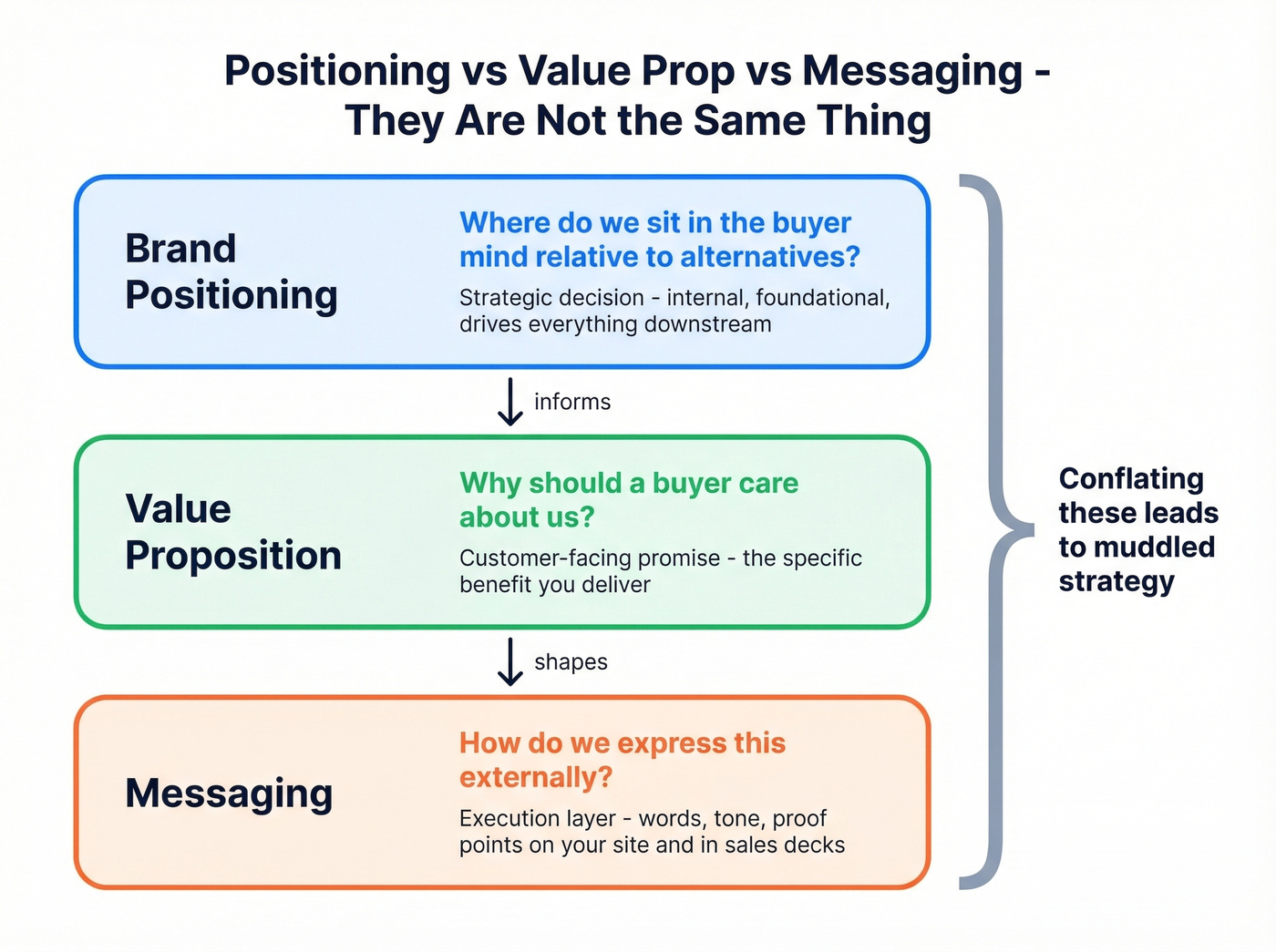
It's also worth separating value prop from positioning. Your value proposition answers "why should a buyer care?" Positioning answers "where do we sit in the buyer's mind relative to alternatives?" They inform each other, but conflating them leads to muddled strategy. As Walker Sands puts it, positioning is what you stand for; messaging is how you express it.
Why Positioning Drives Revenue
Consistent brand presentation drives revenue increases up to 33%, and customers with strong brand loyalty are 14x more likely to repurchase. B2B buyers aren't robots. Ignoring emotion in favor of feature lists makes your brand read like a spec sheet nobody remembers.
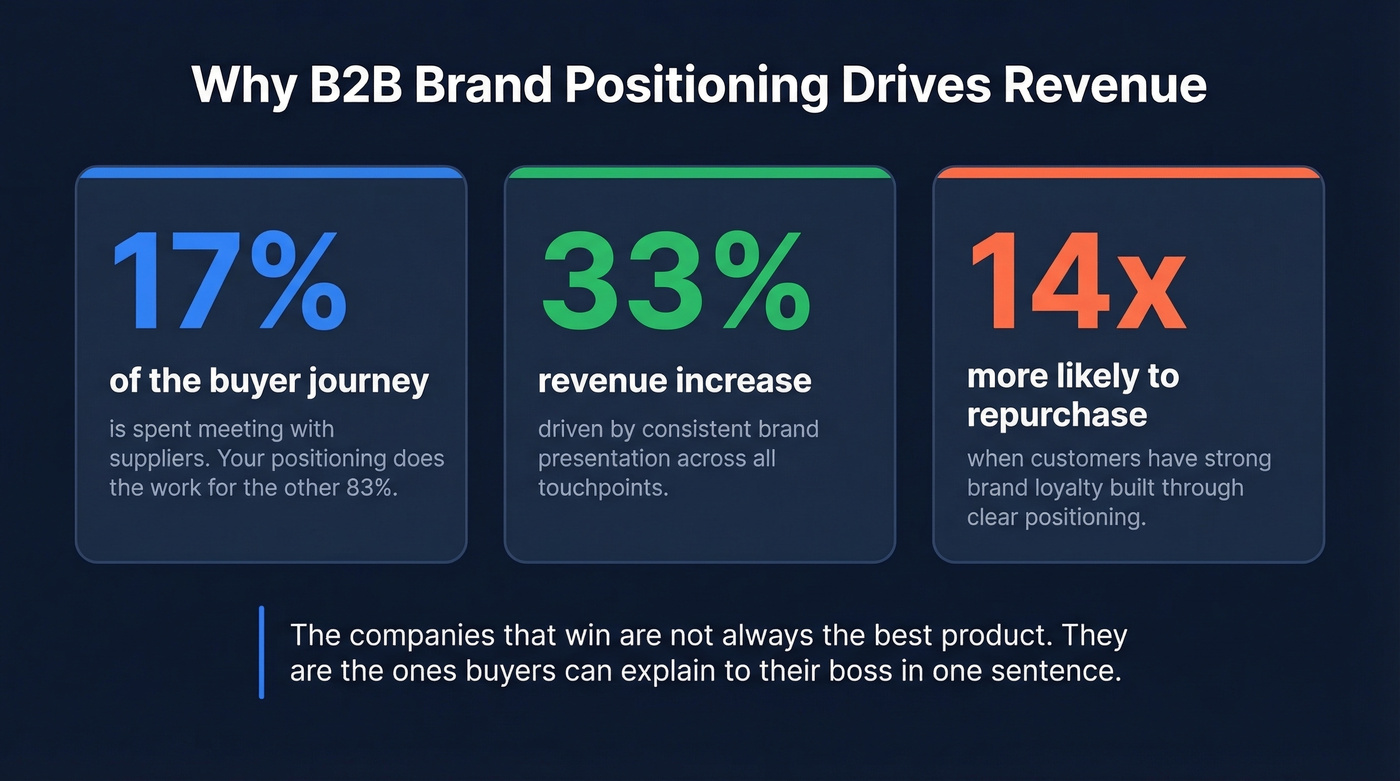
The companies that achieve market leadership aren't always the ones with the best product. They're the ones buyers can explain to their boss in one sentence.

Positioning tells buyers why you matter. But if your outbound can't reach the right people, even perfect positioning dies in a vacuum. Prospeo gives you 300M+ profiles with 30+ filters - buyer intent, technographics, headcount growth - so your positioning lands in front of the exact ICP you defined.
Turn your best-fit customer profile into a live prospect list in minutes.
Five Positioning Mistakes That Kill Growth
1. Inventing a category nobody asked for. DocuSign rebranded e-signature into "Agreement Cloud," then pushed "Intelligent Agreement Management," then walked it back after confusion and backlash. We've watched this pattern play out repeatedly - teams spend months on category creation that confuses their own customers. If your existing buyers can't explain your new category to a colleague, you've created a marketing problem, not a market.
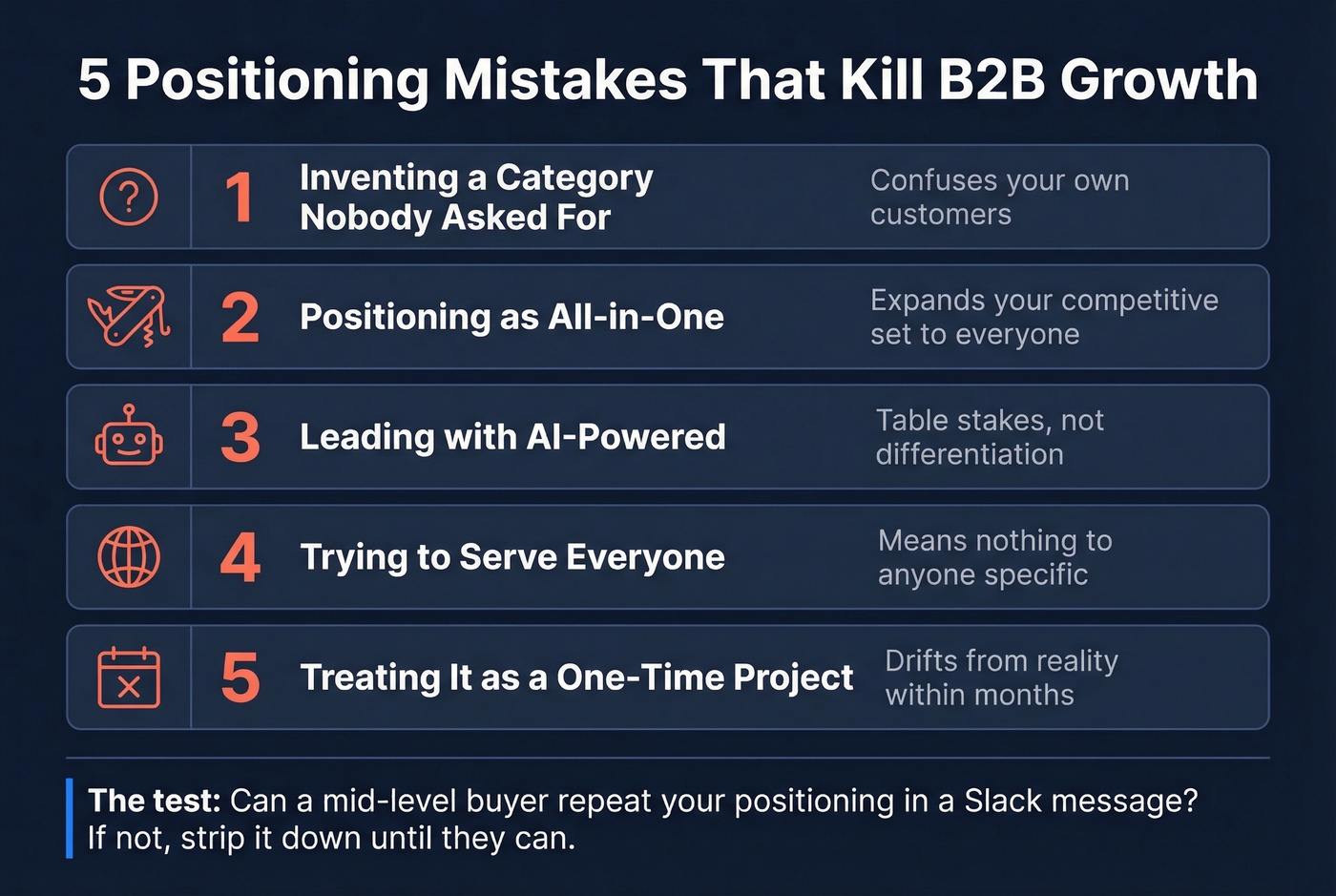
2. Positioning as "all-in-one." The consensus on r/ProductMarketing is blunt:
"All-in-one" signals you haven't decided what you're great at.
Worse, it expands your competitive set to include every specialist in every category you claim to cover - the opposite of meaningful differentiation.
3. Leading with "AI-powered." This is table stakes now. Saying "AI-powered" as your differentiator is like saying "cloud-based" in 2015. In the US, the FTC is cracking down on deceptive AI hype, so the risk isn't just irrelevance - it's credibility.
Here's the thing most positioning consultants won't say out loud: if your differentiation requires a footnote to explain, it's not differentiation. The best positioning fits in a single sentence a mid-level buyer can repeat in a Slack message. If it doesn't pass that test, strip it down until it does.
4. Trying to serve everyone. "Empowering businesses to grow" means nothing. Pick a segment. Lose some prospects. Win the ones that matter.
5. Treating positioning as a one-time project. Markets shift. Competitors reposition. Your product evolves. If you haven't revisited your strategy in over a year, it's drifted from reality, and your sales team has probably already invented their own version of your positioning anyway.
A Competitive Framework That Works
April Dunford has worked with 300+ B2B companies on positioning. She identifies four advanced roadblocks: disagreement about competitive alternatives, product pessimism, poorly defined differentiated value, and not knowing what you're actually positioning. Anthony Pierri has done similar work with 300+ B2B startups. Their approaches converge on the same starting point.
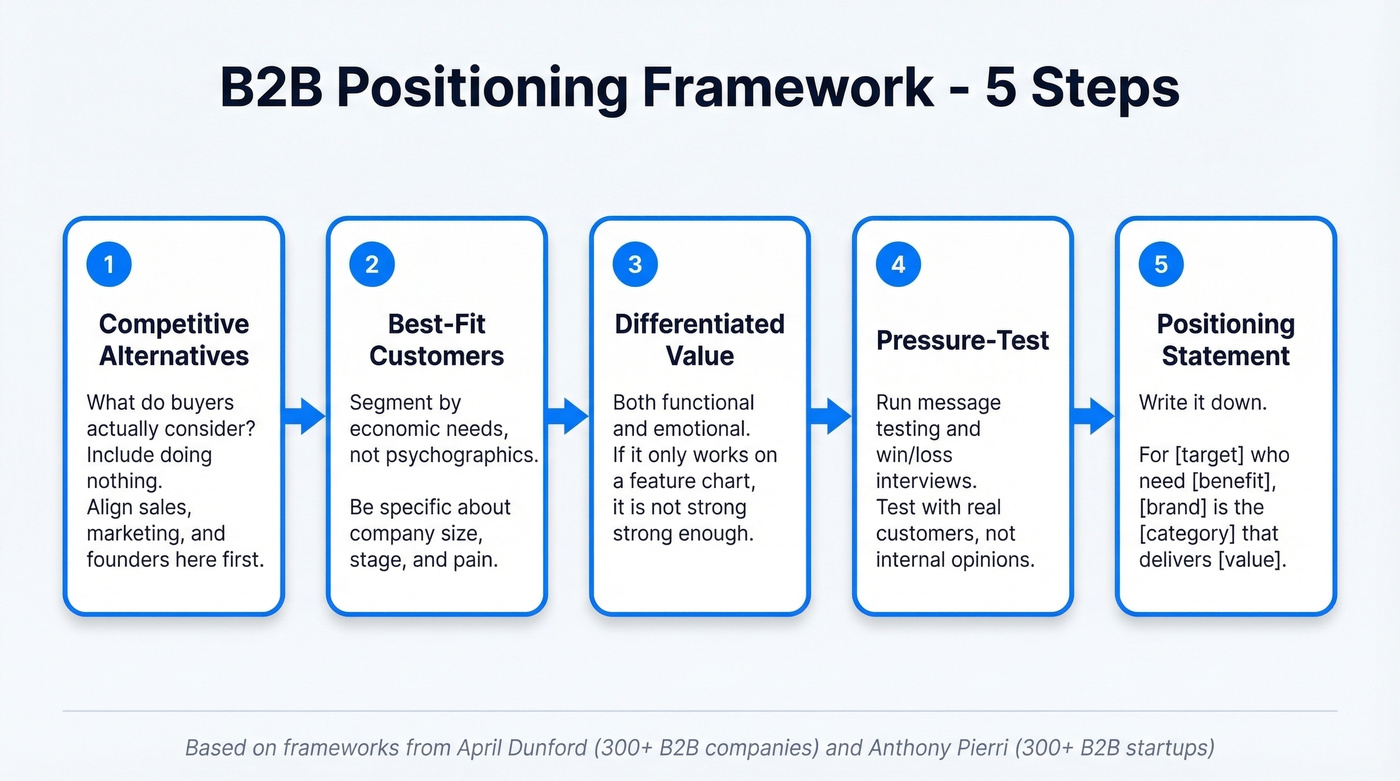
Start with competitive alternatives. Not your features - the alternatives your buyers actually consider, including doing nothing. Dunford calls disagreement here "the root of most weak positioning." Marketing sees one set of competitors, sales sees another, founders see a third. Align here first or everything downstream is wrong.
Identify your best-fit customers. Segment by economic needs - business model, cost structures, buying triggers - not psychographics. "Innovative thinkers" is useless. "Mid-market SaaS companies scaling past 50 reps who've outgrown spreadsheet-based forecasting" is actionable. The more specific you get, the easier every downstream decision becomes.
Define differentiated value, both functional and emotional. If your differentiation only works on a feature comparison chart, it's not strong enough. What does your buyer feel when they choose you? Confident? Safe? In control?
Pressure-test with customers. Run message testing. Do win/loss interviews. Walker Sands documented a repositioning that beat media coverage goals by 420% - because they tested the angle with customers first, not after.
Write the positioning statement. This bridges strategy to execution:
For [target customer - include vertical] who need [functional benefit], [brand] is the [category] that delivers [emotional benefit] because [reasons to believe] - unlike [1-3 named competitors].
A worked example:
For mid-market e-commerce teams who need real-time inventory accuracy across 50+ warehouses, ShipSync is the warehouse orchestration platform that gives ops leaders confidence their numbers are right - because we reconcile inventory every 60 seconds with 99.7% accuracy, unlike NetSuite and Cin7 which batch-update hourly.
This is an internal document. Clarity over creativity.
Make Positioning Stick
Most positioning work dies in a slide deck. Pierri's core insight is that if your positioning isn't on your homepage, it's not real. The homepage is the anchor - the one artifact every team member, prospect, and partner will actually see.
In our experience, the positioning that sticks is the one a sales rep can say out loud without looking at notes. If reps are rewriting your positioning in every deck, you don't have a positioning problem - you have an execution problem. Track whether it's working by monitoring win rates and sales cycle length quarter over quarter.
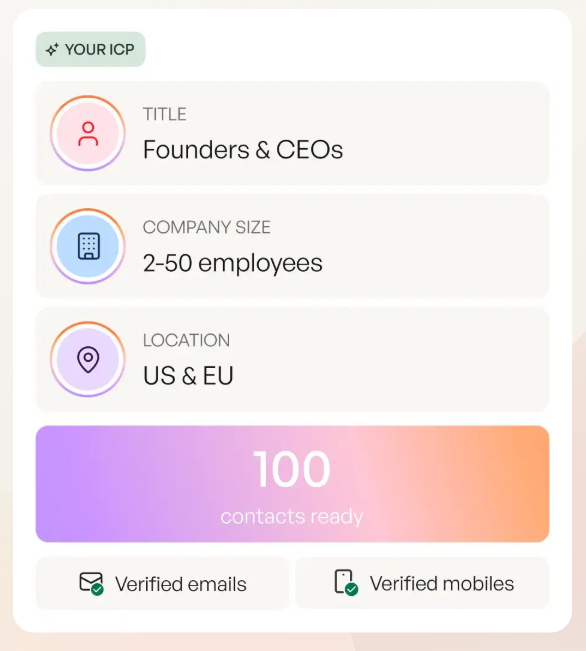
Let's be honest about the gap most teams hit next: you've nailed your ICP, your positioning statement is tight, and then outreach goes to the wrong people because your contact data is stale. Once your positioning is locked and your ICP is defined, tools like Prospeo close that gap with verified emails and direct dials filtered by buyer intent, technographics, job changes, and headcount growth - so your positioning actually lands in the right inboxes.
You just defined your differentiated value and best-fit segment. Now execute. Prospeo's 98% email accuracy and 7-day data refresh mean your carefully positioned message actually reaches decision-makers - not dead inboxes. At $0.01 per email, testing positioning angles across segments costs almost nothing.
Stop letting bad data waste positioning that took months to build.
FAQ
How often should you revisit positioning?
At least annually, or immediately after major market shifts - new competitors entering your space, significant product pivots, or changes in buyer behavior. Companies that revisit quarterly outperform those that set-and-forget, because markets don't wait for your annual planning cycle.
What's the difference between positioning and messaging?
Positioning is the strategic decision about where you stand relative to alternatives in a buyer's mind. Messaging is how you express that positioning externally - the words, tone, and proof points on your website, ads, and sales decks. Get positioning wrong and no amount of clever copy fixes it.
Can small teams build strong positioning without an agency?
Absolutely. Dunford's and Pierri's frameworks are designed for founder-led and lean marketing teams. Start with five win/loss interviews, align on competitive alternatives, and write a single positioning statement. The cost is time, not budget - and the payoff is a sharper pipeline from day one.
How do you reach the right buyers after defining your ICP?
Use a B2B data platform with filters that match your ICP criteria - job title, industry, company size, technographics, and intent signals. The goal is to make sure your carefully crafted positioning reaches the exact segment it was built for, not a spray-and-pray list of poor-fit accounts.