

Clay vs 6sense: They Don't Actually Compete
The Clay vs 6sense debate comes up constantly in RevOps Slack channels, and it's almost always framed wrong. Your VP wants to evaluate 6sense, but your total GTM budget is $30K. Meanwhile, the RevOps lead swears Clay can do "basically the same thing" for a tenth of the price. They're both wrong. These tools solve fundamentally different problems, and comparing them head-to-head is like comparing a weather radar to a fishing rod.
30-Second Verdict
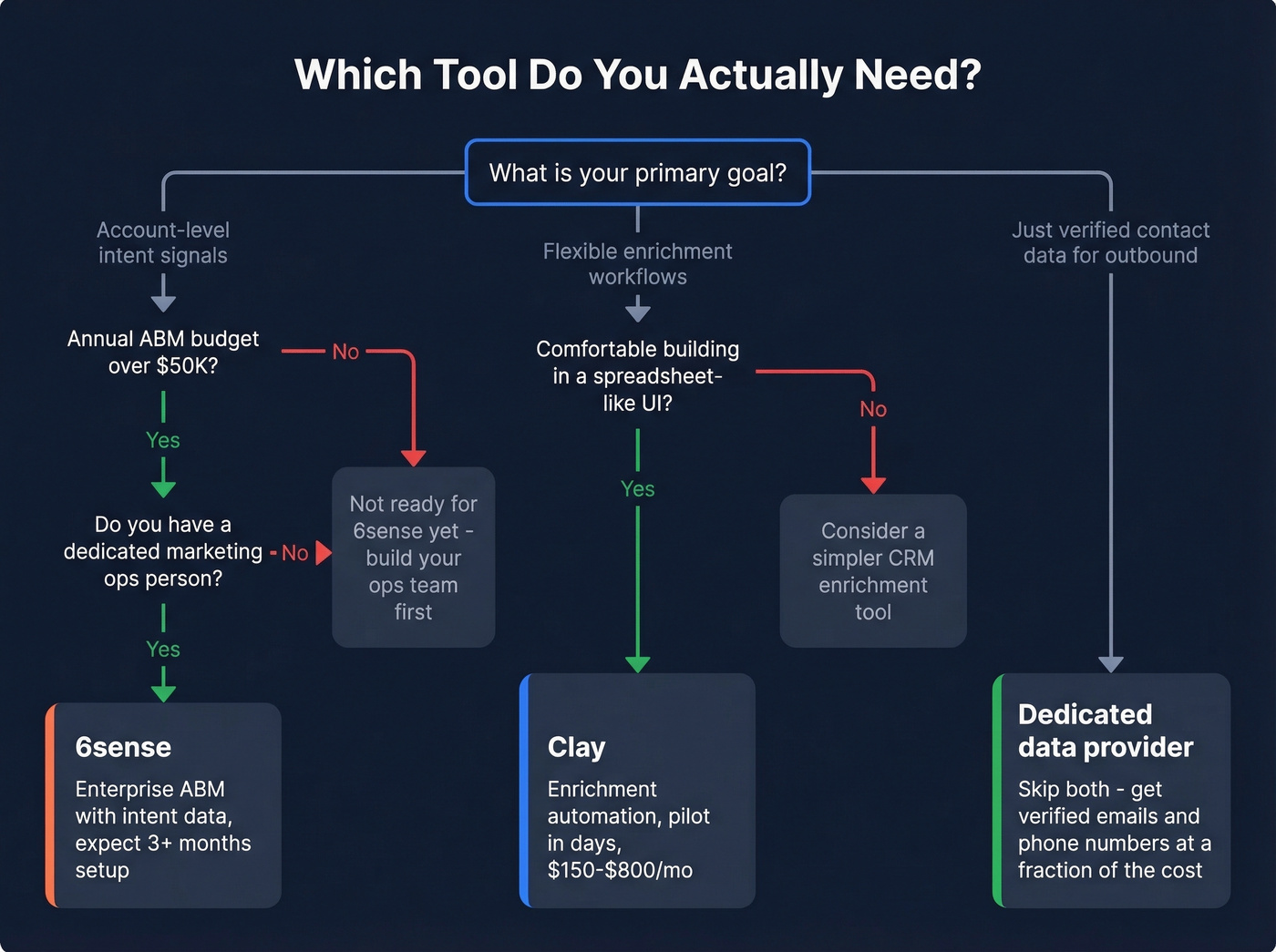
Pick 6sense if you're an enterprise ABM team with a $50K+ annual budget, a dedicated ops team, and a Salesforce/Marketo stack that needs account-level intent signals at scale. Expect 3+ months to implement.
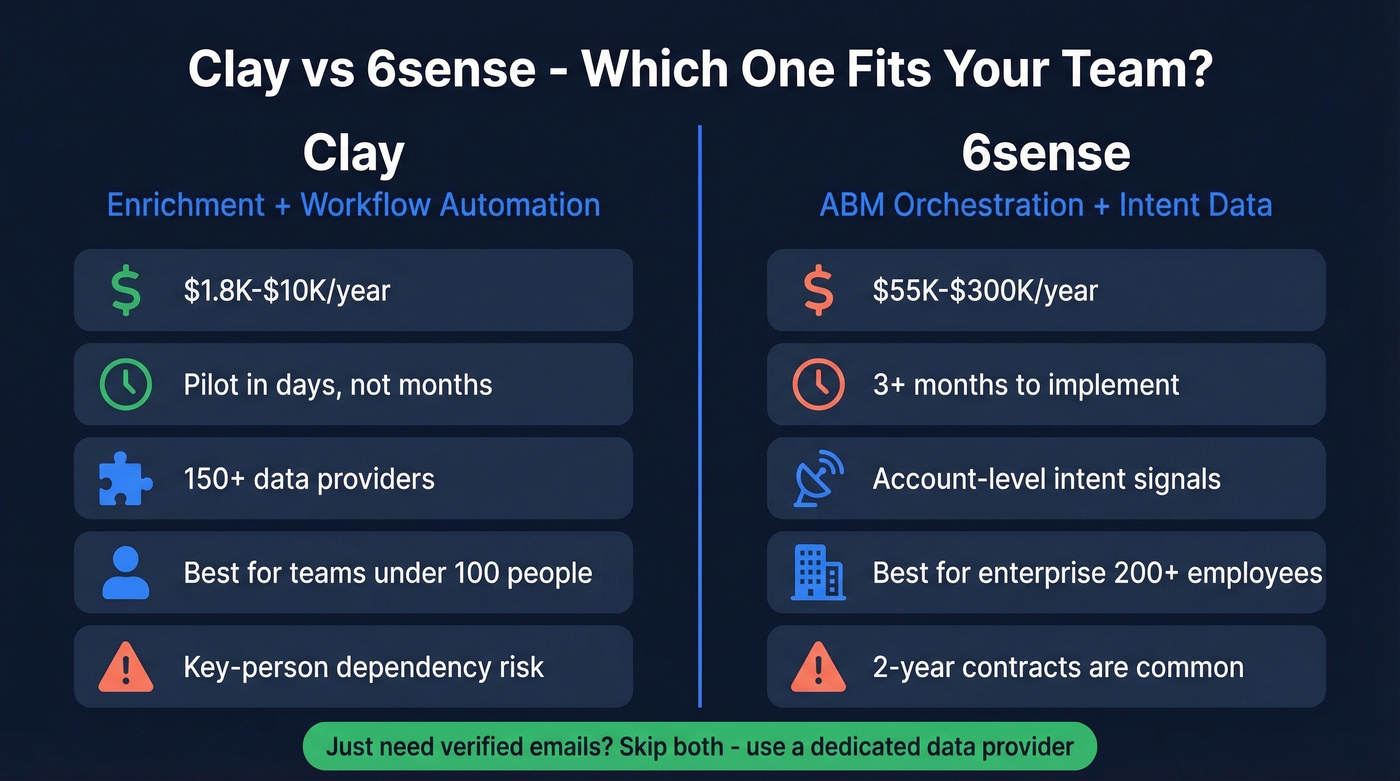
Pick Clay if you're a scrappy RevOps team that wants flexible enrichment workflows, API-first automation, and a pilot running in days - not quarters. Clay's self-serve plans typically land around ~$1.6K-$8.6K/year, with Enterprise pricing on request.
Skip both if you just need verified contact data to fuel outbound. Prospeo handles that at ~$0.01/email with 98% accuracy, no contract, and a free tier.
What Each Tool Actually Does
6sense is an ABM orchestration platform. It combines first-party and third-party intent data - sourced from partners like Bombora, G2, TrustRadius, and PeerSpot - to identify which accounts are "in-market" for your product. The output is account-level buying stage predictions, not individual contact details. Think of it as a radar system that tells you which companies to target, then layers on predictive AI to prioritize them.
Clay is an enrichment and workflow automation platform. It aggregates data from 150+ providers into a spreadsheet-like interface where you build conditional logic, run AI research agents, and push enriched contacts into your CRM or sequencer. Clay can track and operationalize signals you connect - job changes, news, website changes, and more - but it doesn't replace an enterprise intent network like 6sense. Every step is transparent and user-defined, which is both its strength and its biggest operational risk: if the person who built your workflows leaves, institutional knowledge walks out the door. Document everything from day one.
Pricing Breakdown
Here's where the conversation gets uncomfortable - and where most teams make their decision.
| Clay | 6sense | |
|---|---|---|
| Free tier | Yes (1,200 credits/year) | Yes (50 data credits per month) |
| Entry paid plan | Starter $149/mo | Quote-only (not publicly priced) |
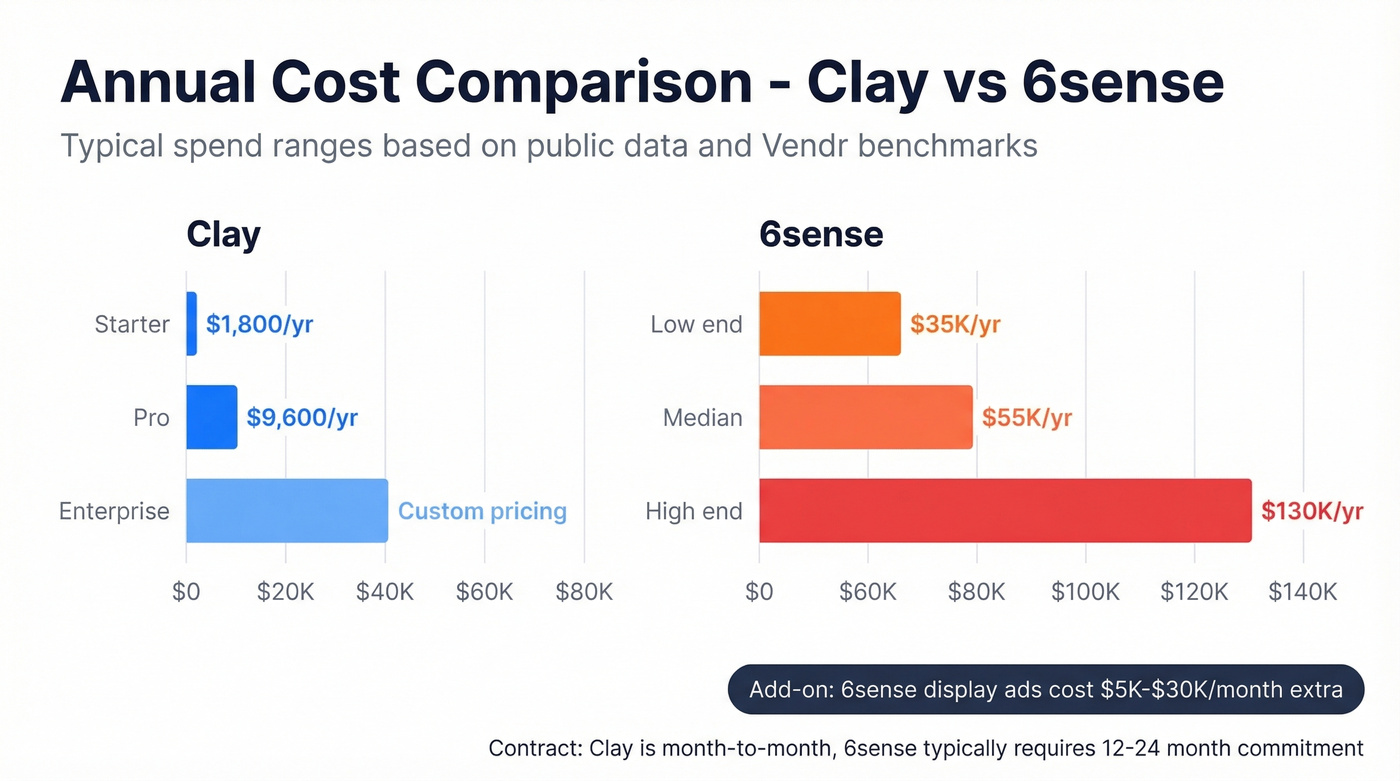
| Typical annual spend | $1,800-$9,600 | ~$55K median; low ~$35K, high ~$130K |
| All-in range | $1,800-$10K+ | $60K-$300K |
| Credit model | 2-3 credits/basic lookup, 15-25/comprehensive waterfall | Credits unlock emails, phone numbers, enriched records |
| Contract | Monthly, cancel anytime | 12-24 months typical (2-year is common) |
| Display ads | N/A | $5K-$30K/month add-on (tiered by account volume) |
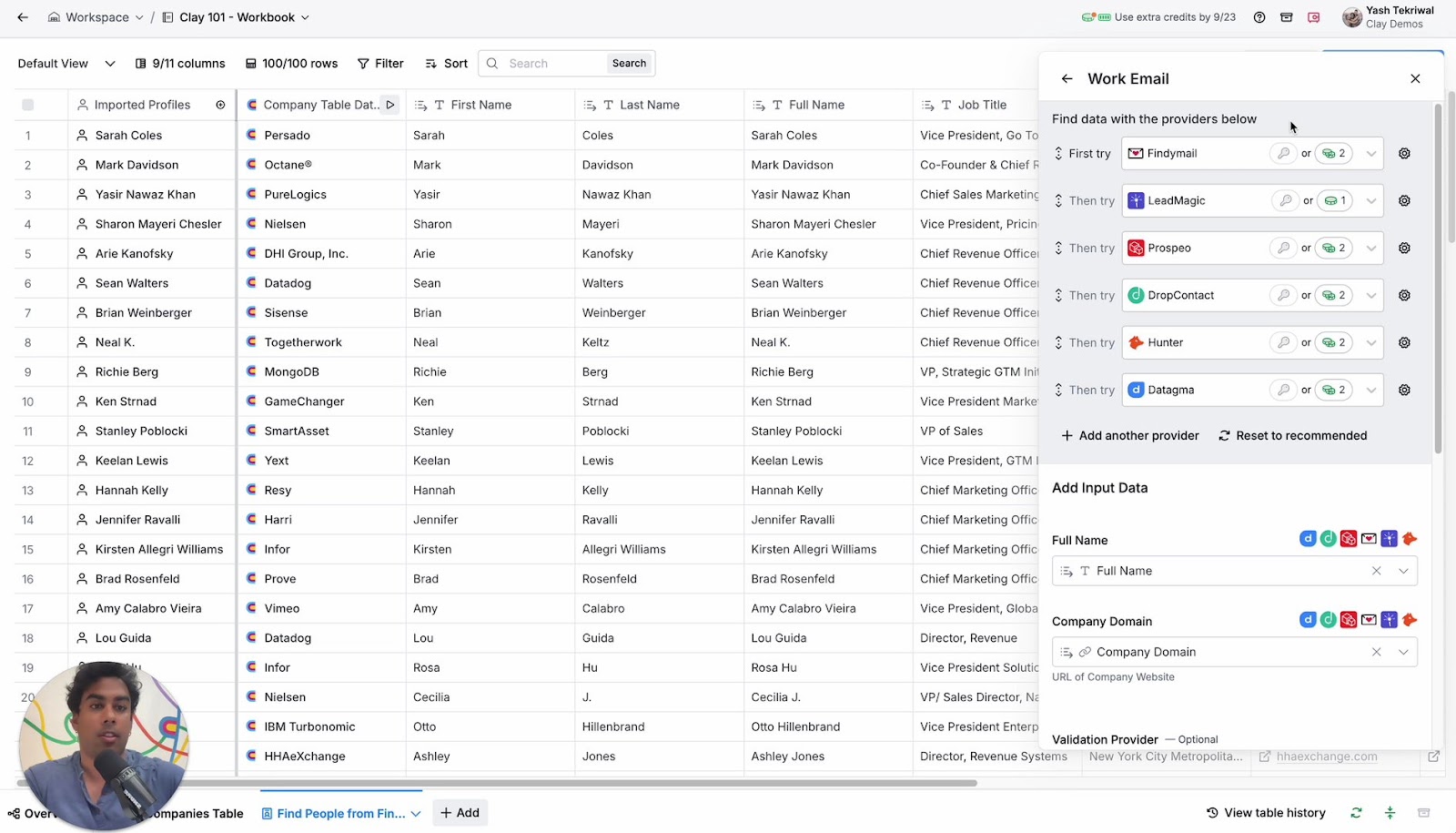
Watch the credit burn on Clay. A basic enrichment costs 2-3 credits per prospect, but a comprehensive waterfall with multiple providers eats 15-25 credits each. That Pro plan at $800/month sounds generous with 50,000 credits - until you're enriching 5,000 contacts through a multi-step waterfall. We've seen teams burn through Pro in two weeks when they don't scope their waterfall logic upfront.
6sense's free tier gives you 50 data credits per month, including Company & People Search, Sales Alerts, List Builder, and a Chrome extension - enough to kick the tires. Paid plans aren't published publicly. The median contract runs ~$55K/year per Vendr benchmarks. One Reddit buyer reported being quoted $120K for the first year with a mandatory 2-year commitment. Display ad add-ons are commonly priced in tiers - $5K/month for 1,000 accounts, $20K for 5,000, $30K for 10,000 - and implementation fees add several thousand to tens of thousands on top. The silver lining: negotiation typically yields 15-37% off list price, especially at renewal.
The fact that 6sense doesn't publish paid pricing is genuinely frustrating for teams trying to build a business case. You can't even ballpark it for your CFO without getting on a call first.
Hot take: If your average deal size is under $20K ACV, 6sense's cost-per-insight rarely pencils out. You'll spend more on the tool than you'll recover in pipeline lift.

Clay burns credits on waterfall enrichment. 6sense locks you into $55K+ contracts. If your real bottleneck is verified contact data - not workflow logic or account scoring - Prospeo delivers 98% accurate emails at ~$0.01 each with a 7-day refresh cycle. No annual commitment, no sales call required.
Stop overpaying for enrichment when you just need emails that land.
Feature-by-Feature Comparison
| Clay | 6sense | |
|---|---|---|
| Intent data | No native intent network (import/connect signals) | Yes (account-level) |
| Enrichment | 150+ providers, waterfall logic | Own data + partner sources |
| Integrations | API-first, CRM, sequencers | Salesforce, Marketo, HubSpot |
| Implementation | Days to pilot | ~3 months |
| G2 rating | 4.7/5 | 4.3/5 |
| TrustRadius | 9.3/10 | 8.5/10 |
| Learning curve | Moderate | Steep |
Clay scores higher on satisfaction across review platforms. 6sense has roughly 7x the review volume - 1,317 reviews to Clay's 188 - because it serves a bigger enterprise base. But the "would buy again" numbers tell the real story: Clay hits 100% across 101 responses, while 6sense lands at 94% across 280. That 6% gap matters when you're signing a two-year contract.
Here's the thing about 6sense's intent data: it's account-level, not contact-level. An account can jump to "purchase stage" after a single landing page visit. Intent signals are directional, not a crystal ball - expect meaningful tuning and validation against actual pipeline outcomes before you trust the predictions. Users on G2 also flag slow load times as a recurring frustration, and one Reddit commenter called the platform "completely useless" after a full year of implementation. That's an extreme take, but it reflects a real pattern: 6sense delivers value only when you have the ops muscle to configure and maintain it.
When to Pick Which
Pick 6sense if...
You're an enterprise team with 200+ employees, a $50K+ ABM budget, a dedicated marketing ops person, and an existing Salesforce/Marketo stack. You need account-level intent signals to prioritize which companies your SDRs should target, and you have the patience for a multi-month implementation requiring a primary administrator, marketing administrator, and potentially a sales intelligence administrator. If you don't have at least one full-time person who can own the platform, don't sign the contract.
Pick Clay if...
You're an agile team spending under $10K/year on data, you want to pilot in days rather than quarters, and your RevOps person or founder wants to build enrichment workflows without engineering support. Clay shines when you already have a list and need to make it better - fast. Just make sure you document every workflow from day one. Key-person dependency is Clay's biggest operational risk.
Skip both when...
All you need is verified contact data for outbound. Neither Clay nor 6sense is primarily a contact data provider, and paying for orchestration or enrichment infrastructure when you just need emails and phone numbers is overkill.
Using Both Together
There's no native integration between Clay and 6sense, but the combo works well in practice. Export 6sense intent data via CSV or API into Clay, then use buying stage to filter which accounts get enriched. Only enrich high-intent accounts instead of blasting credits on your entire TAM. We've seen this approach cut Clay credit spend by 40-70% - a meaningful savings when credits are your biggest variable cost.
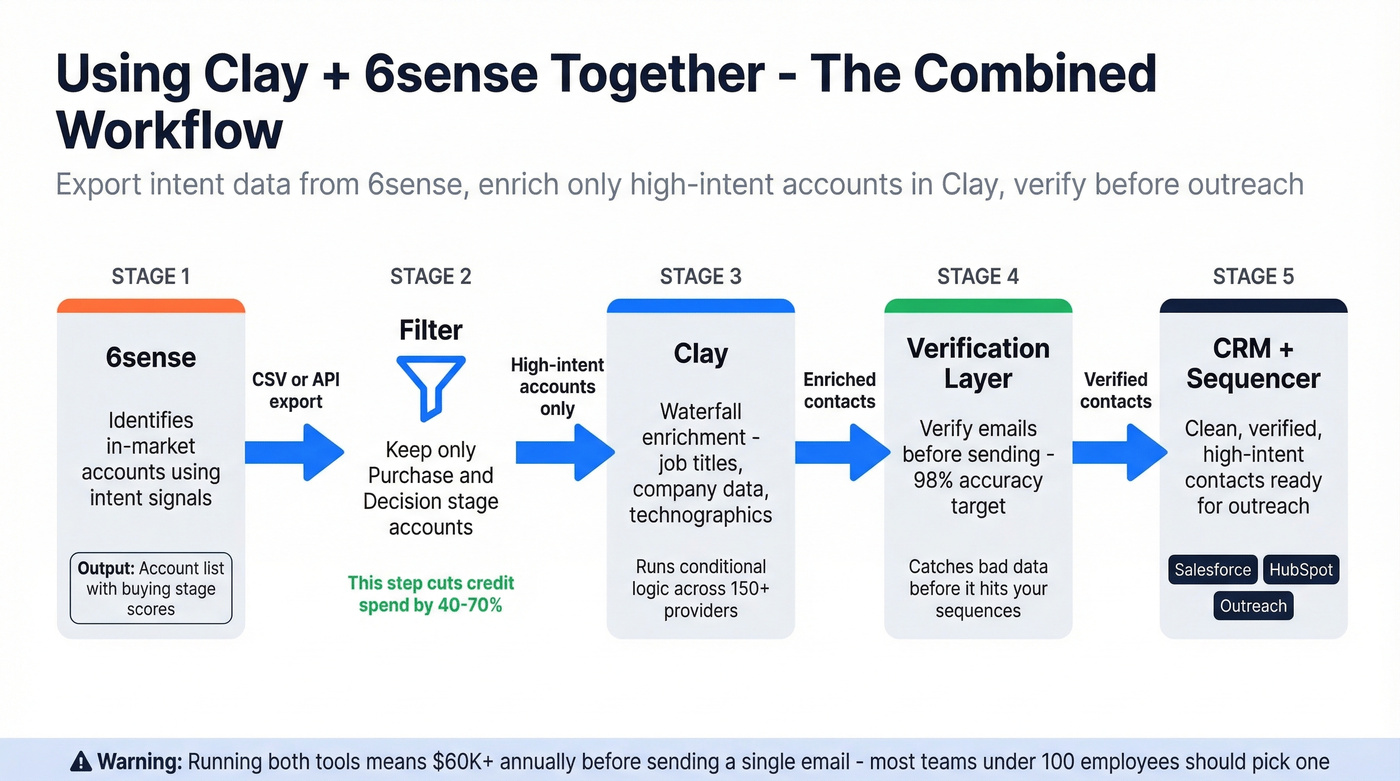
Let's be honest, though: running both tools means you're already spending $60K+ annually before you've sent a single email. For most teams under 100 employees, that's hard to justify.
The Gap Neither Tool Fills
6sense tells you which accounts are showing intent. Clay enriches and operationalizes the lists and signals you feed it. Neither one is a dedicated deliverability layer - you can build a beautiful enrichment waterfall and still see bounces if you don't add verification.
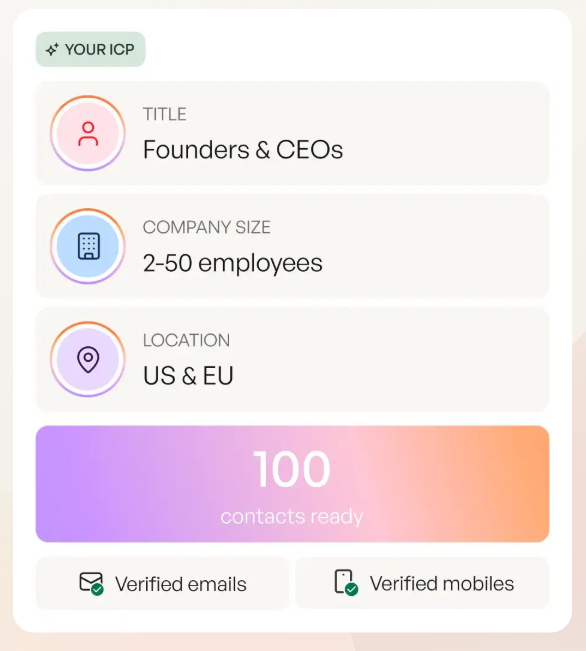
Prospeo fills this gap. With 300M+ professional profiles, 98% email accuracy, and a 7-day data refresh cycle, it's the verified data layer that sits underneath either tool. It plugs directly into Clay waterfalls via native integration or works standalone. At ~$0.01/email with a free tier of 75 emails per month, it's the cheapest insurance policy against bounced sequences and burned sender domains. Teams like Snyk cut bounce rates from 35-40% to under 5% after adding a verification step like this - that's the difference between a healthy domain and a blacklisted one.
If you're trying to protect deliverability while scaling outbound, pair verification with a real email deliverability guide and track your email bounce rate as a first-class metric.

Neither Clay nor 6sense solves the contact data problem on its own - Clay aggregates third-party providers, and 6sense gives you accounts without direct dials. Prospeo's proprietary infrastructure delivers 143M+ verified emails and 125M+ mobile numbers with 30% pickup rates, refreshed every 7 days.
Get the contact layer both Clay and 6sense are missing.
FAQ
Does 6sense have a free plan?
Yes - 50 data credits per month, including Company & People Search, Sales Alerts, List Builder, and a Chrome extension. Paid plans are quote-only; typical annual spend starts around ~$35K/year with 12-24 month contracts standard.
Can you use Clay and 6sense together?
Yes, but there's no native integration. Import 6sense intent data via CSV or API into Clay, then enrich only high-intent accounts. Teams report this cuts Clay credit spend by 40-70% compared to enriching their full TAM.
What's a good free option for verified contact data?
Prospeo offers 75 free emails and 100 Chrome extension credits per month with 98% accuracy - no contract required. It integrates natively with Clay, so you can add it as a verification step in any enrichment waterfall. For teams that only need contact data and not intent or orchestration, it replaces the need for either platform's paid tier.