

CSVgo vs RampedUp: Different Tools, Different Jobs
One bad list can push your hard bounce rate past 2% and get your domain blacklisted. The tool you pick matters - but here's the thing: when you compare CSVgo vs RampedUp, these two don't even compete. CSVgo is an email verification tool that cleans lists you already have. RampedUp is a B2B data platform that sources contacts you don't have yet. So which problem are you actually solving?
30-Second Verdict
CSVgo wins if you've got lists that need cleaning before a cold email campaign. It verifies addresses, catches catch-alls, detects ESPs, and exports campaign-ready segments.
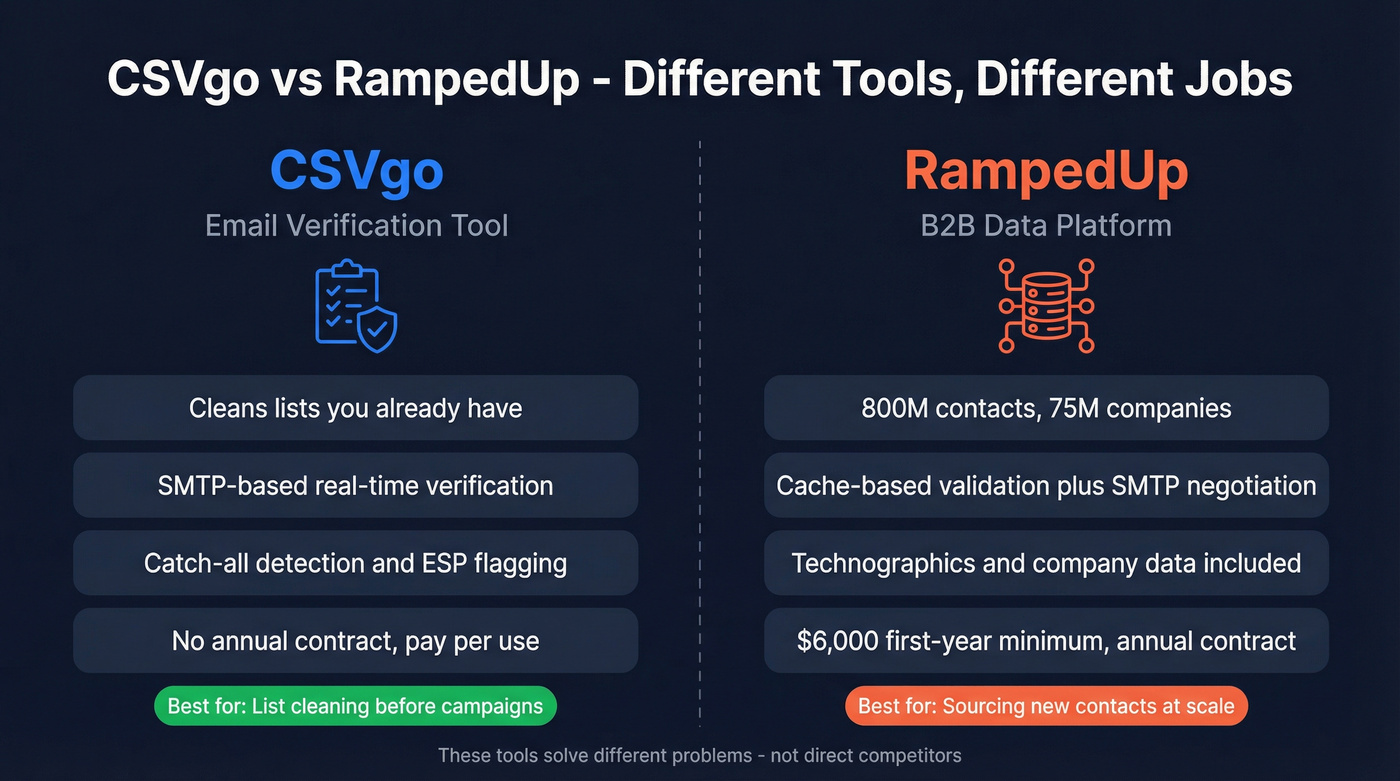
RampedUp wins if you need a massive contact database with built-in validation signals. It's a data platform, not a standalone verifier.
What Each Tool Does
CSVgo
CSVgo sits between your lead export and your sequencer. Upload a CSV, it verifies emails, flags catch-alls, detects ESPs, and outputs campaign-ready segments in multiple export formats. One Reddit user running a 1,000-call cold email operation said CSVgo "replaced four other tools" and usually finds more leads from catch-all domains than standard verifiers discard. No database, no prospecting, no frills - just verification with an API option for automation.
RampedUp
RampedUp is a credit-based data platform with 800M contacts, 75M companies, and 135M professional emails. Think ZoomInfo's category, not a verification utility. Its Email Intelligence layer applies validation statuses from a cache covering 175M addresses, using signals like Microsoft/Google authentication, web-source checks, and SMTP negotiation. On G2, it holds a 4.7/5 from 24 reviews, though users note coverage is thinner in certain verticals. RampedUp has minimal Reddit presence; most user feedback lives on G2.

Why juggle CSVgo for verification and RampedUp for sourcing when one platform does both? Prospeo's 300M+ profiles run through a 5-step verification process - including catch-all handling, spam-trap removal, and honeypot filtering - delivering 98% email accuracy on a 7-day refresh cycle.
Source, verify, and send from one platform at $0.01 per email.
Feature-by-Feature Breakdown
| Feature | CSVgo | RampedUp | Winner |
|---|---|---|---|
| Primary function | Email verification + list cleanup | B2B data platform | Depends on need |
| Verification method | SMTP-based verification | Validation cache + authentication + SMTP negotiation | CSVgo for real-time list cleaning |
| Catch-all handling | Yes | Yes (Active Directory auth + web-source signals) | Tie |
| Data sourcing | No | Yes (800M contacts) | RampedUp |
| Technographics | No | Yes | RampedUp |
| Company data | No | Yes (75M companies) | RampedUp |
| Chrome extension | No | Yes | RampedUp |
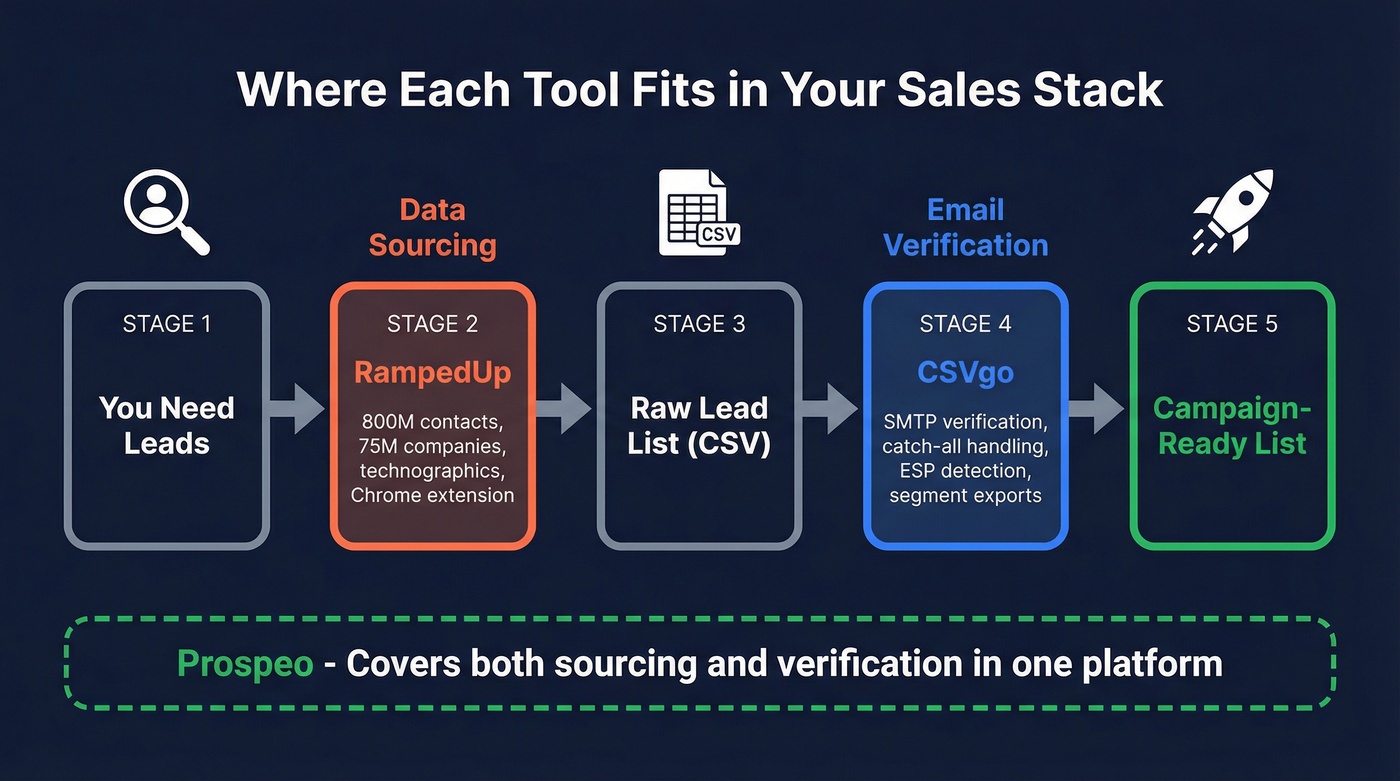
RampedUp claims over 50% of email addresses can't be validated through SMTP alone - that's their pitch for cache-based validation plus additional signals. CSVgo takes the opposite bet: SMTP verification on every address you upload. Professional emails decay at roughly 3% per month, which favors running fresh checks on older lists regardless of which approach you prefer.
Pricing Comparison
| CSVgo | RampedUp | Prospeo | |
|---|---|---|---|
| Starting price | ~$3-10/1K emails | Free 7-day trial (50 credits); $6,000 first-year minimum | Free (75 emails/mo) |
| Unit cost | ~$0.003-0.01 per email | $0.0122-$0.25 per credit | ~$0.01 per email |
| Annual contract | No | Yes | No |
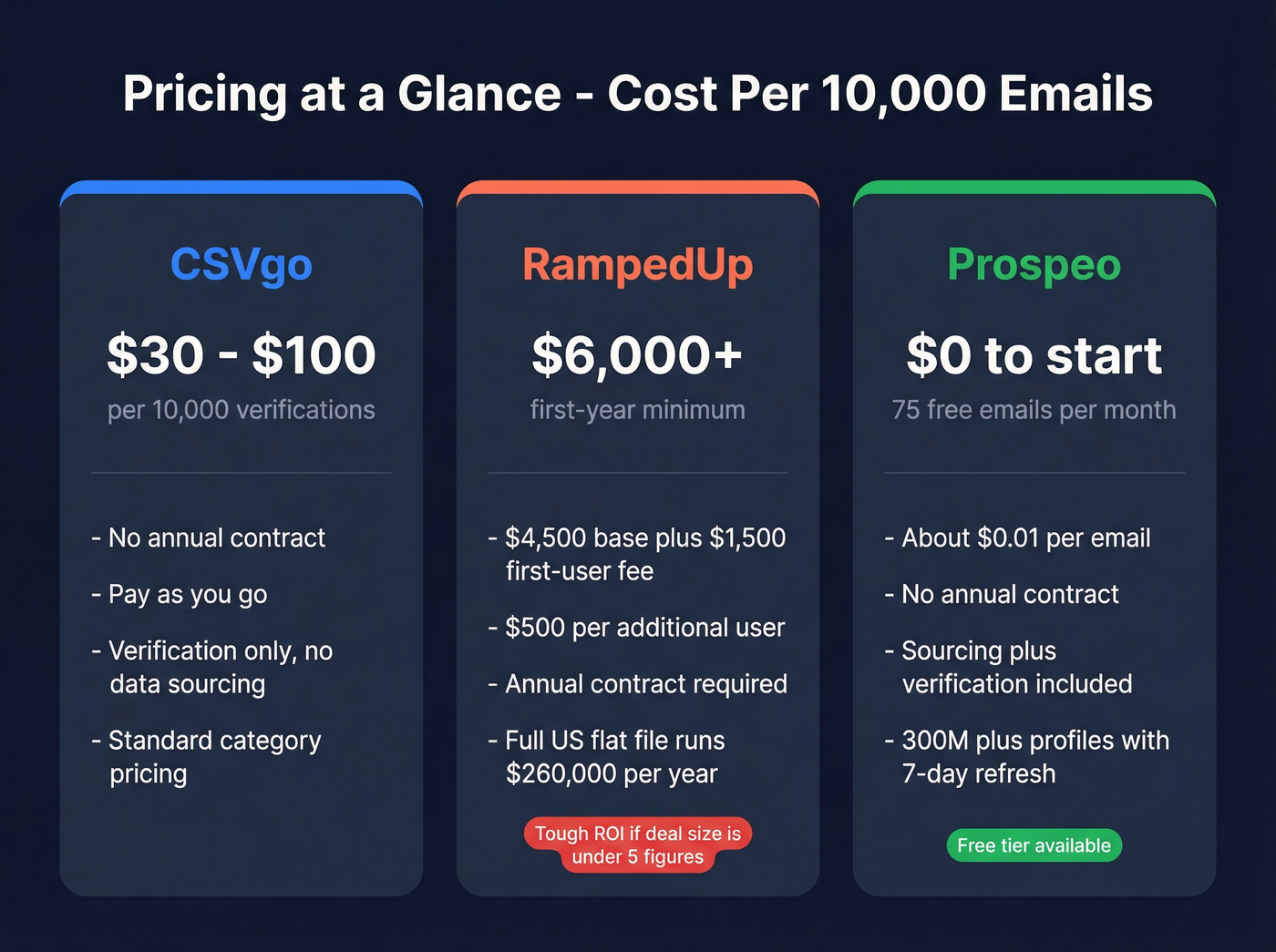
RampedUp's Entry Level runs $4,500 for 12,000 credits plus a mandatory $1,500 first-user fee and $500 per additional user. Scale up and per-credit costs drop at the Bulk tier - 12,000,000 credits for $145,500, or about $0.012 per credit. The full US contact flat file on an annual subscription with monthly updates runs $260,000/year. CSVgo doesn't publish pricing, but $3-10 per 1,000 verifications is standard for the category.
Let's be honest: if your average deal size sits below five figures, RampedUp's $6,000 first-year floor makes the math brutal. You'd need to close deals from your first month just to break even on the data spend alone.
Who Should Use Which
You have leads and need to clean them. CSVgo. Upload, verify, segment, export. Done. If you're also doing lead enrichment to fill missing fields, run enrichment first, then verify.
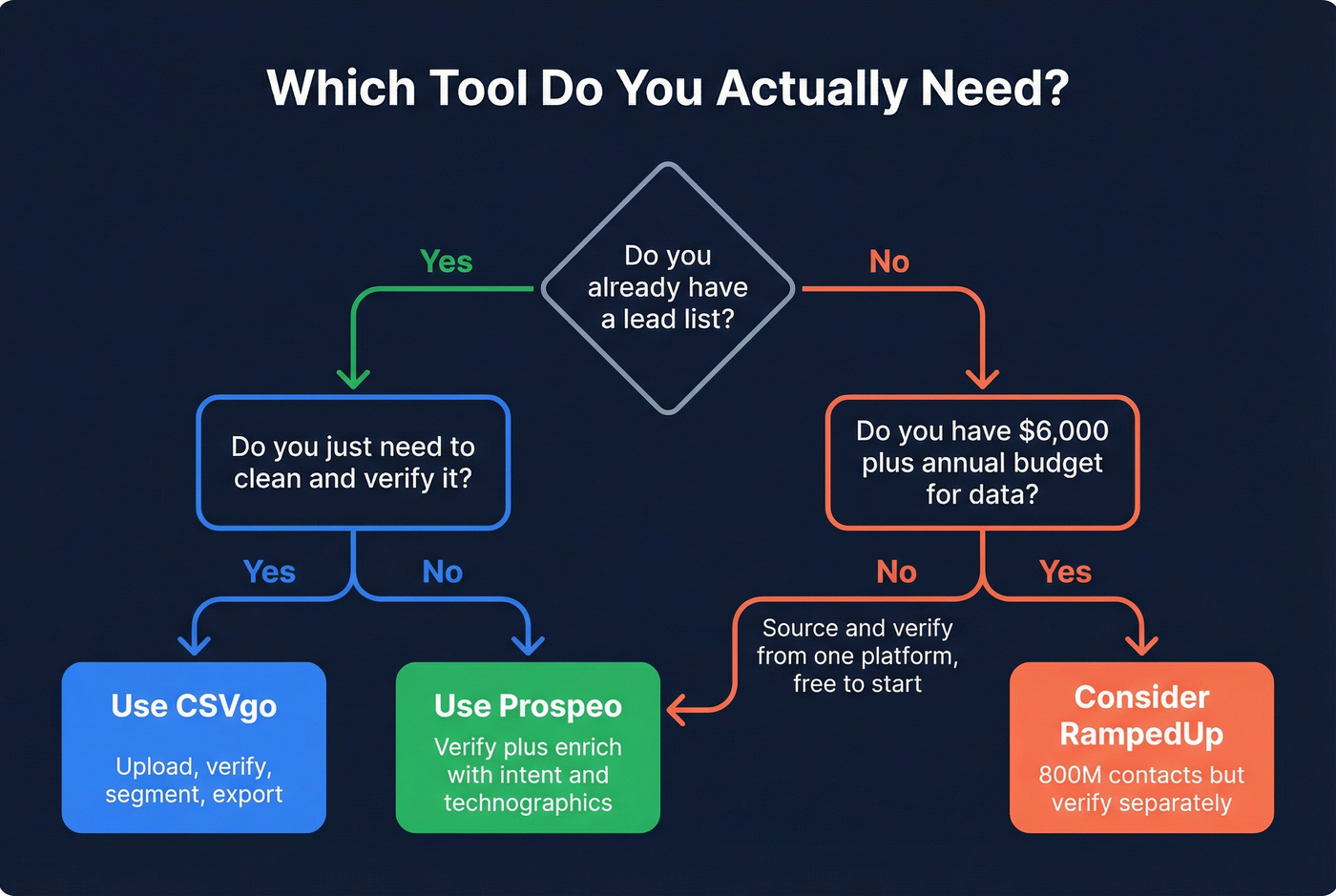
You need a massive contact database with validation baked in. RampedUp. Budget for the annual commitment and make sure your target verticals are well-covered before signing. If you're comparing options, start with a shortlist of B2B company data providers.
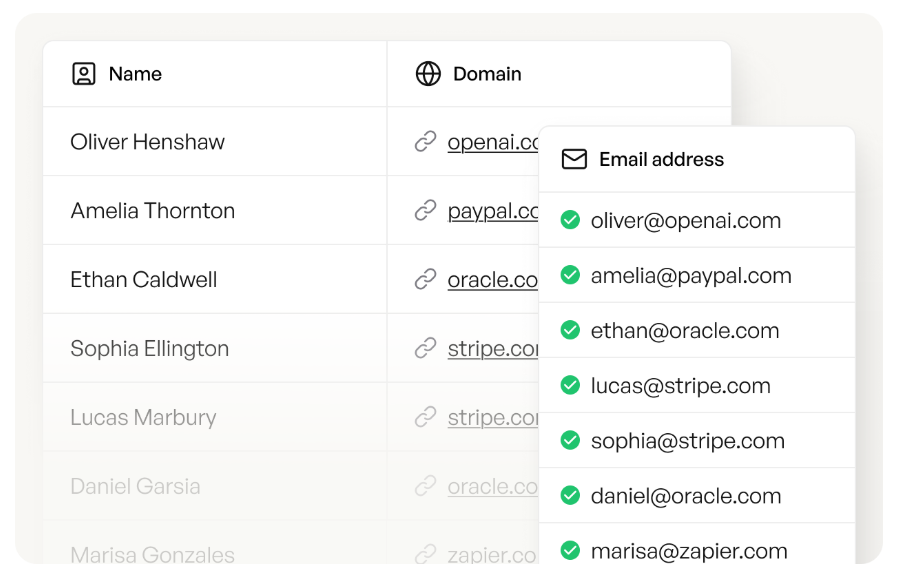
You want sourcing and verification without stacking two tools. We've tested this workflow ourselves, and the overhead of maintaining two separate platforms - exporting from one, importing to another, reconciling mismatched formats - adds up fast. Prospeo's 7-day data refresh cycle eliminates the quarterly re-verification grind that plagues teams using cached databases. With 300M+ professional profiles, 30+ search filters including buyer intent and technographics, and a 5-step verification process with catch-all handling, it covers both sides of the CSVgo vs RampedUp equation in one place. (If you're evaluating it directly, see Prospeo vs RampedUp.)
RampedUp's $6,000 first-year minimum buys you cached validation data. Prospeo gives you 30+ search filters, buyer intent signals, technographics, and real-time verified emails - with no annual contract and a free tier to prove it works before you spend a dollar.
Get enterprise-grade data without the enterprise contract.
FAQ
Can I use CSVgo and RampedUp together?
Yes. Export contacts from RampedUp, then run them through CSVgo for SMTP verification. RampedUp itself recommends additional validation for emails flagged as 90+ days old, since professional email addresses decay at roughly 3% per month.
Is RampedUp worth it for small teams?
Probably not. The $6,000 first-year minimum is steep if you only need verified emails for outbound. Self-serve tools with free tiers make more sense when your team runs fewer than 10,000 contacts per quarter.
Does CSVgo find new leads?
No. CSVgo only cleans and validates existing lists. For both prospecting and verification in one workflow, you need a separate data provider or an all-in-one platform that pairs a verified email database with real-time SMTP verification.