

D7 Lead Finder vs LeadGenius: Which One Do You Actually Need?
If you're weighing D7 Lead Finder against LeadGenius, the answer is probably neither. These tools serve completely different buyers at completely different price points, and most teams need something in the middle.
30-Second Verdict
D7 Lead Finder is a budget self-serve scraper for pulling local business lists at $44.99-$119.99/mo. LeadGenius is an enterprise managed data platform running $20,400-$81,000/year. D7 gives you raw, unverified business listings by keyword and city. LeadGenius assigns a human research pod to build custom datasets with URL-level auditability and compliance workflows.
They don't compete.
Why This Comparison Is Misleading
Comparing D7 to LeadGenius is like comparing a pocket knife to a catering company. D7 is a keyword-and-city scraper with a 65M+ lead database. LeadGenius runs native-language research teams active in 37 countries, with GDPR/LGPD compliance infrastructure and URL-level data auditability. LeadGenius's actual competitors are ZoomInfo, Cognism, and SalesIntel - not self-serve scrapers.
We've run data through both platforms, and the quality gap is exactly what the pricing gap suggests. If you're reading this comparison, you likely need something in the middle: self-serve, accurate, and affordable.
D7 Lead Finder at a Glance
D7 is a straightforward local lead scraper. Type a keyword like "plumber" and a city, and it returns up to 1,200 business listings with emails, websites, addresses, and social links. The database covers 65M+ leads globally. Pros:
- Results in under 3 minutes - dead simple interface
- Cheap entry at $44.99/mo, with 5 free daily searches for guests
- Exports to CSV, Excel, and PDF
- Detects whether leads run Facebook/Instagram ads or use tracking pixels, which is useful for agency prospecting
- Accepts Bitcoin and PerfectMoney, which matters for some international buyers
Cons:
- Rated 3.7/5 from just 5 reviews - one titled "Zero Customer Support"
- No built-in email verification, so expect high bounce rates without a third-party tool
- Accuracy degrades at scale and the database doesn't update frequently
- Only two core search filters: keyword and location. No firmographic or technographic data targeting
Here's the thing about D7 - it's fine for what it is. If you need a quick list of local businesses in a specific city and you're willing to clean the data yourself, it'll save you time over manual scraping. But the moment you need verified contact info for outbound campaigns, you're bolting on extra tools and extra cost.
LeadGenius at a Glance
LeadGenius isn't a tool you log into and click around. It's a managed data service. You get a dedicated pod - researchers, QA, engineers, and a program manager - who build custom datasets to your specifications. They've served 3B+ records across 400+ customers in 42 countries.
Pros:
- Rated 4.3/5 from 14 reviews, with users praising the human element and data accuracy
- Fully auditable with URL-level transparency for GDPR and LGPD compliance
- Global sourcing with in-region, native-language research teams
- Shifted to a cents-per-record campaign pricing model in late 2025
Cons:
- Starts at ~$20,400/year with no free tier and no self-serve signup
- Some users report outdated or irrelevant leads despite the human QA layer
- A HubSpot connector is a recurring request in user reviews
- Implementation fees range from $2,500 to $25,000
For raw accuracy, LeadGenius wins with human verification. But it's typically 40x-150x the annual cost of D7.

D7 gives you unverified data. LeadGenius charges $20K+ for human QA. Prospeo delivers 98% verified email accuracy across 300M+ profiles with a 7-day refresh cycle - self-serve, no contracts, starting at $0.01/email.
Get enterprise-grade data without the enterprise price tag.
Side-by-Side Feature Comparison
| Feature | D7 Lead Finder | LeadGenius |
|---|---|---|
| Pricing | $44.99-$119.99/mo | $20,400-$81,000/yr |
| Data model | Self-serve scraper | Managed service |
| Database | 65M+ leads | 40M+ websites |
| Rating | 3.7/5 (5 reviews) | 4.3/5 (14 reviews) |
| Verification | None built in | Human QA included |
| Compliance | None | GDPR/LGPD auditable |
| Support | Near-zero | Dedicated pods |
| Integrations | CSV/Excel/PDF export + API | CRM integrations; HubSpot connector commonly requested |
| Best for | SMB local leads | Enterprise global campaigns |
Pricing Breakdown
| Plan | D7 Lead Finder | LeadGenius |
|---|---|---|
| Entry | $44.99/mo (10 daily searches) | ~$20,400/yr |
| Mid | $54.99/mo (30 daily searches) | ~$50k-$80k/yr (Pro) |
| Top | $119.99/mo (100 searches, 5 sub-accounts) | $120k+/yr (Enterprise) |
| Implementation | None | $2,500-$25,000 |
Vendr's transaction data puts the average LeadGenius contract at $21,570/year, with deals reaching $81,000. Per-contact costs range from $3-$8 for basic records to $15-$25 for enriched custom contacts. Add implementation fees and API access charges of $3k-$8k, and total cost of ownership climbs fast.
Let's be honest: if a vendor won't publish pricing in 2026, that's a red flag. D7 at least puts its plans on the website. LeadGenius requires a sales conversation for everything. Transparency shouldn't be a premium feature.
Who Should Pick Which
D7 Lead Finder makes sense if you're a small agency pulling local business lists on a tight budget. You need plumber emails in Phoenix or restaurant contacts in London, and you're fine cleaning up messy data yourself. The most consistent theme across reviews is that D7 is simple and fast, but list quality gets messy without a separate verification step.
LeadGenius makes sense if you're an enterprise team running multi-country GTM campaigns with strict compliance requirements and a $20k+ annual data budget. You need human-verified, auditable records across regulated markets.
The scenario that breaks both: your agency client asks for verified email contacts of European enterprise decision-makers. D7 can't do it - wrong data model entirely. LeadGenius can, but requires an annual commitment starting around $20,400/year. That gap is where a self-serve platform with enterprise-grade data fits.
A Better Option If Neither Fits
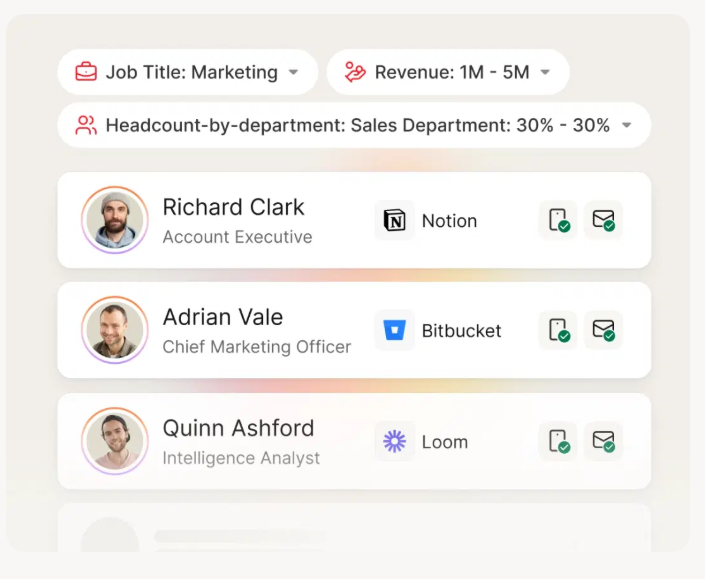
Prospeo fills the space between D7's cheap-but-unverified data and LeadGenius's accurate-but-unaffordable enterprise model. You get 300M+ professional profiles with 98% verified email accuracy on a 7-day data refresh cycle, 30+ search filters covering buyer intent, technographics, and funding signals - and it starts free with 75 verified emails per month. No contracts, no sales calls.
In our experience, teams that switch from unverified scrapers to Prospeo see bounce rates drop from 30%+ to under 5%. Stack Optimize, for example, built from $0 to $1M ARR while maintaining client deliverability above 94% and bounce rates under 3% across all their accounts.
Agencies that switch from unverified scrapers to Prospeo cut bounce rates from 30%+ to under 5%. Stack Optimize built a $1M agency on Prospeo data with zero domain flags. 30+ filters, buyer intent, technographics - no sales call required.
75 free verified emails per month. No credit card, no contract.
FAQ
Is D7 Lead Finder good for email outreach?
D7 provides raw business listings with no email verification, so loading those emails directly into a sequence will produce high bounce rates. You'll need a separate verification tool, which adds cost and friction to every campaign. If outbound deliverability matters to you - and it should - skip D7 for cold email and use a platform that verifies before delivery.
Does LeadGenius offer a free trial?
No. LeadGenius requires a sales conversation and an annual contract starting around $20,400/year. There's no self-serve signup and no way to test data quality before committing to a multi-thousand-dollar implementation.
Which tool is better for local business leads?
D7 Lead Finder is purpose-built for local business scraping - keyword plus city searches returning up to 1,200 results. For local SMB lists where you'll verify emails separately, D7 at $44.99/mo is the cheaper option. For verified professional contacts at named companies, a database with firmographic filters is more reliable.