

Best Data Vendors in 2026 (And What They Actually Cost)
A RevOps lead we know ran a bake-off across three data vendors recently. The most expensive platform still produced a painful number of bounces on "verified" emails in the first sequence. The cheapest one had better phone connect rates. The B2B data provider market is a $29.72B industry growing at 15.53% CAGR, and most of that money is being spent poorly.
Here's the core problem: 28% of B2B email addresses decay every year. A quarter of your database is rotting right now. The vendor you pick matters more than any sequencing tool, any dialer, any CRM workflow. Bad data poisons everything downstream.
Reddit threads about data vendors tend to revolve around two themes: stale records and opaque pricing. One r/b2bmarketing thread specifically raises freshness concerns about Apollo and Crunchbase. Those frustrations shaped how we evaluated the 15 providers below - what they actually cost, where they win, and how to run a bake-off that doesn't waste your quarter.
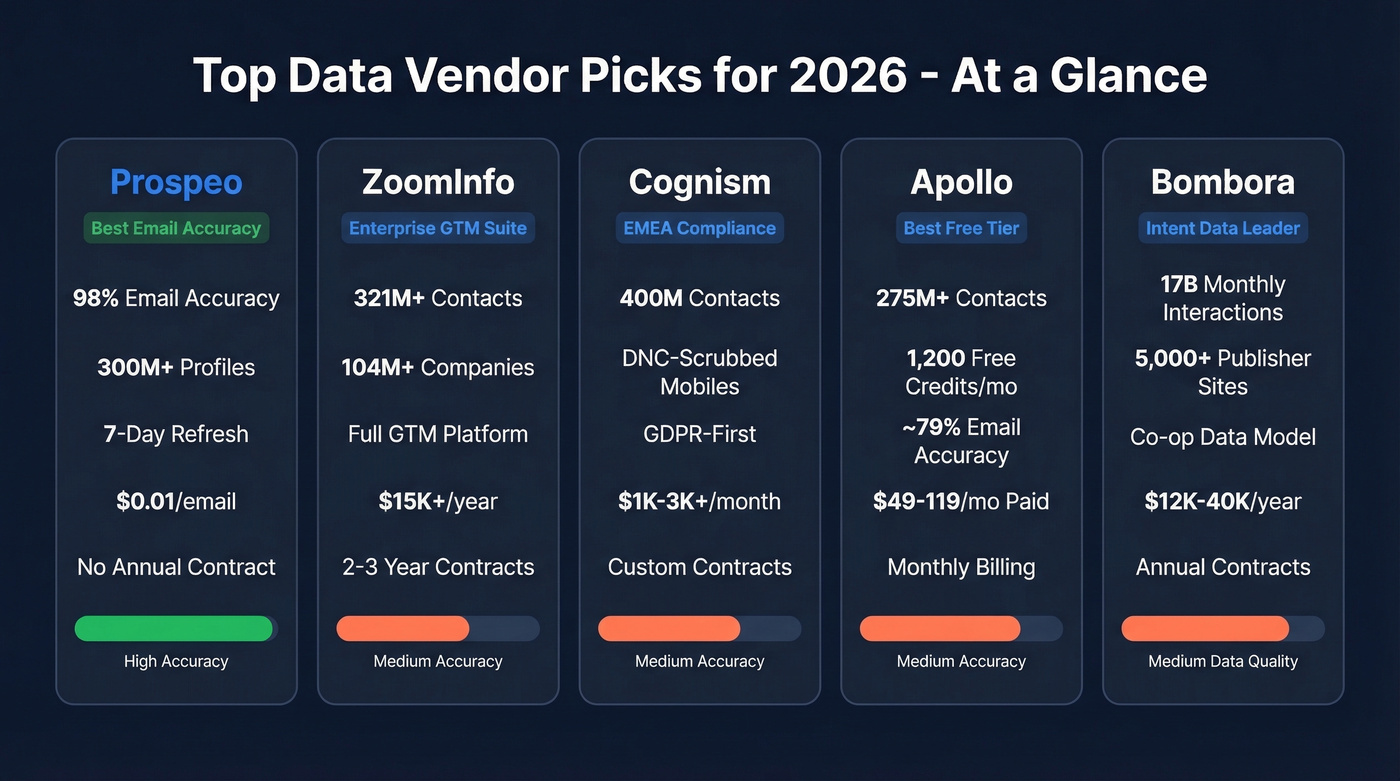
Our Top Picks at a Glance
| Use Case | Pick | Why |
|---|---|---|
| Email accuracy & freshness | Prospeo | 98% accuracy, 7-day refresh, $0.01/email |
| Enterprise GTM suite | ZoomInfo | 321M+ contacts, full GTM suite, $15K+/yr |
| EMEA compliance & mobiles | Cognism | DNC-scrubbed mobiles, GDPR-first |
| SMB / startup value | Apollo | Free tier with 1,200 credits/mo |
| Intent signals | Bombora | 17B monthly interactions, 5,000+ sites |
What Is a Data Vendor?
A data vendor is any company that sells or licenses data you don't generate yourself. "Vendor," "provider," and "supplier" are functionally interchangeable - don't overthink the terminology.
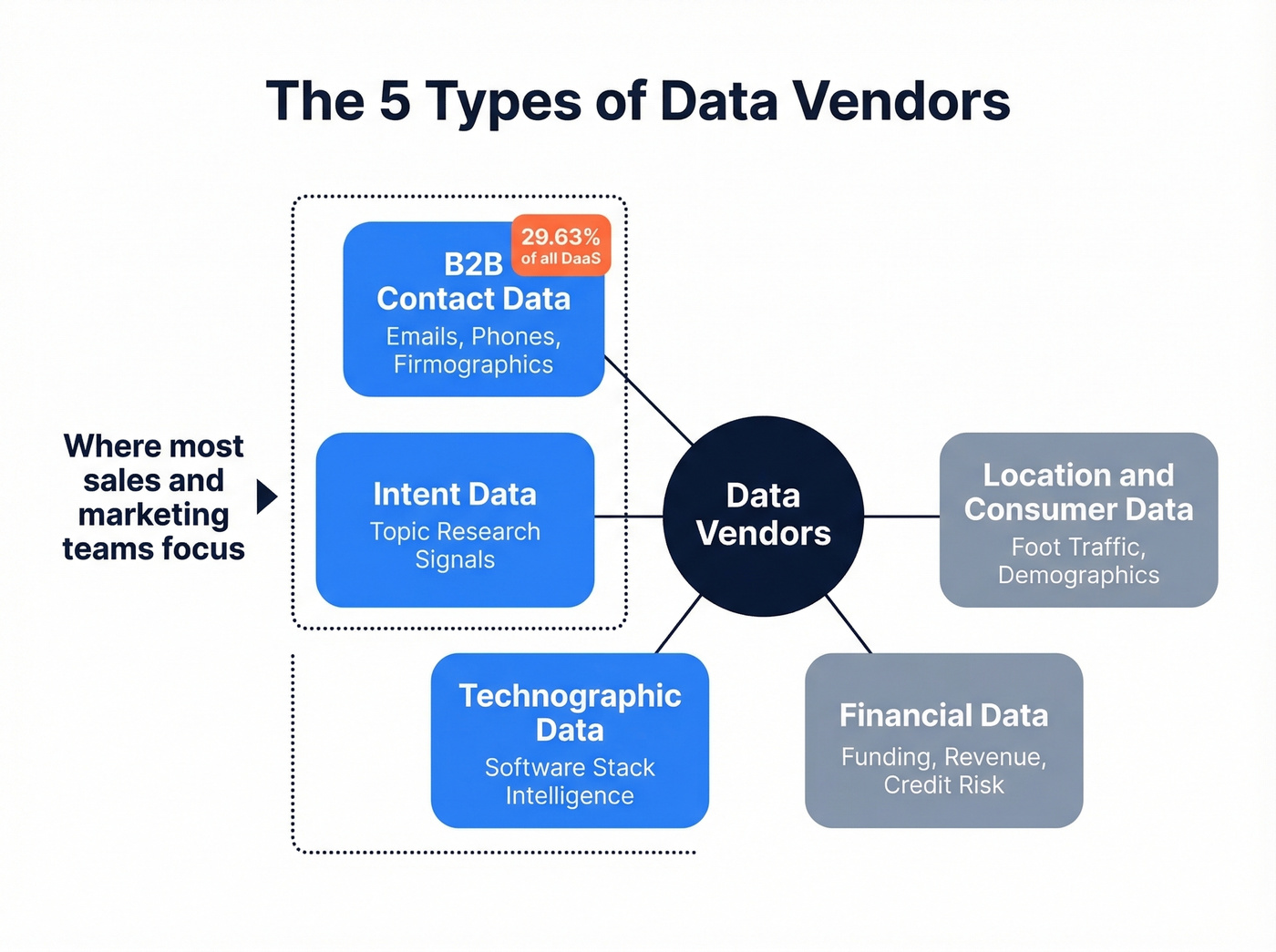
The category breaks into five buckets. B2B contact data - emails, phones, and firmographics - makes up the first. Intent data tracks who's researching what topics. Technographic data reveals what software companies run. Financial data covers funding, revenue, and credit risk. Location and consumer data handles foot traffic and demographics. Customer and marketing intelligence alone accounts for [29.63% of all DaaS applications](https://www.mordorintelligence.com/industry-reports/data-as-a-service-market), which tells you where the money is flowing.
Most sales and marketing teams care about the first two buckets. That's where we'll spend the most time.
15 Best B2B Data Vendors in 2026
B2B Contact & Sales Intelligence
Prospeo - Best for email accuracy and data freshness
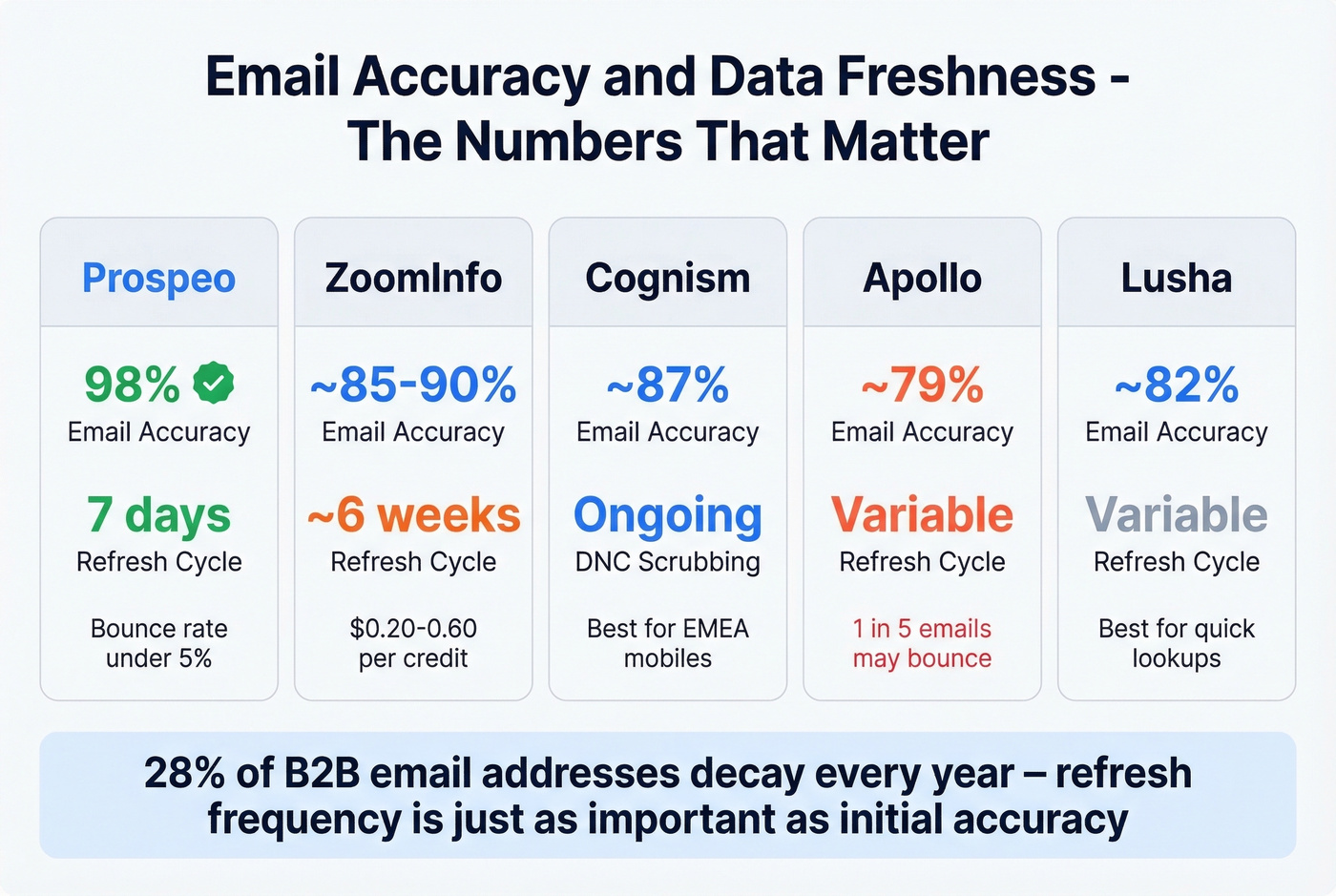
Prospeo's database covers 300M+ professional profiles, 143M+ verified emails, and 125M+ verified mobile numbers, delivering a 30% mobile pickup rate. The headline number is 98% email accuracy - backed by a proprietary email-finding infrastructure with 5-step verification that doesn't rely on third-party email providers. Snyk's 50-person AE team cut their bounce rate from 35-40% to under 5% after switching, generating 200+ new opportunities per month.

The 7-day data refresh cycle is the real differentiator - industry average is roughly six weeks. The database includes 30+ search filters spanning buyer intent, technographics, job change, headcount growth, and funding signals, plus intent data covering 15,000 Bombora topics. The Chrome extension (40K+ users) works across company websites and professional profiles, pulling 40+ data points per contact. CRM enrichment runs at a 92% API match rate with 50+ data points returned.
Pricing is transparent and self-serve: ~$0.01 per email, 10 credits per mobile number, free tier at 75 emails/month. No annual contracts, no "talk to sales" gates.
ZoomInfo - The enterprise default (with enterprise pricing to match)
ZoomInfo's database spans [321M+ contacts] across 104M+ companies. It's the most feature-complete GTM platform on the market - intent data, technographics, engagement tools, conversation intelligence, and web chat all live under one roof. If you're a 500-person sales org running outbound, ABM, and intent from a single platform, ZoomInfo makes sense.
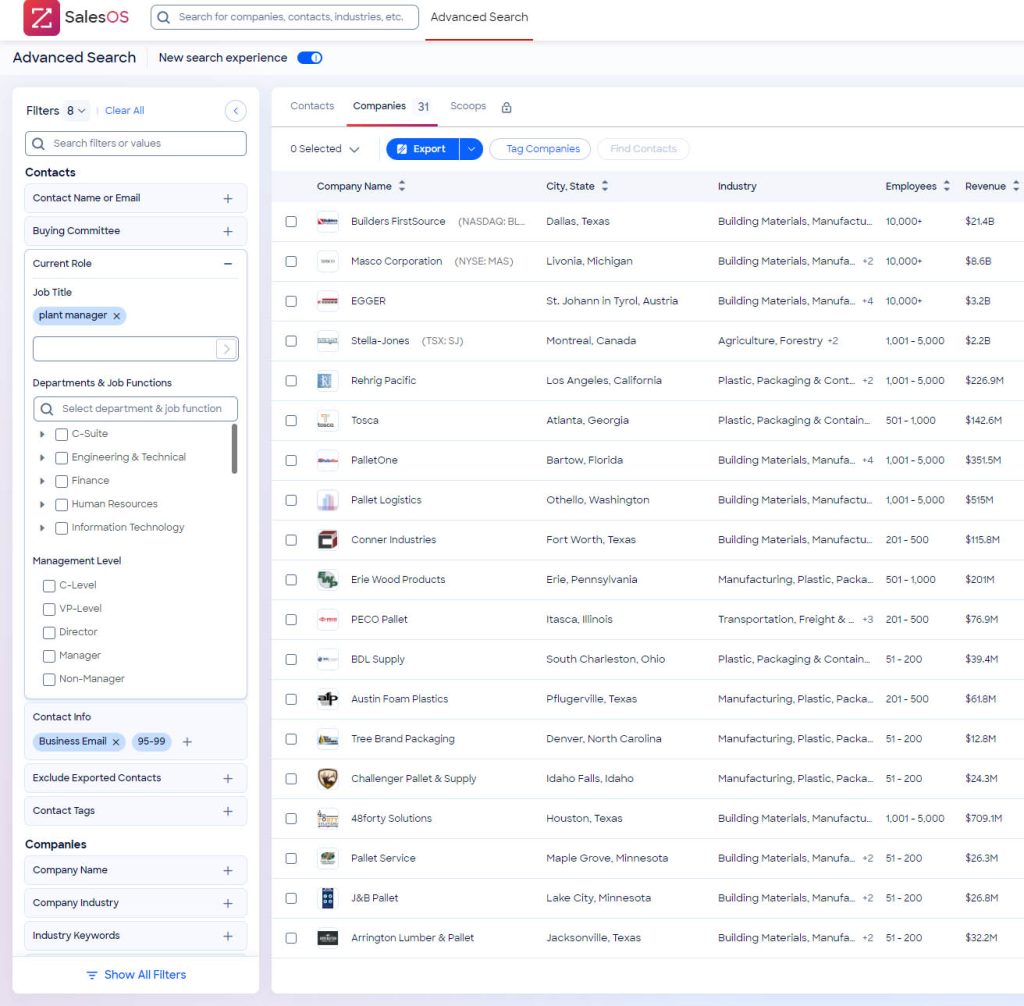
The problem is cost. Professional starts at ~$15K+/year, Advanced runs ~$25K, and Elite hits ~$40K. Add global data ($9,995), extra credits (~$3K per 5K), and additional seats ($1,500-$2,500 each), and all-in spend easily reaches $25K-$50K/year. Contracts are typically 2-3 years with auto-renewal windows of 60-90 days.
Where ZoomInfo wins: US database depth and workflow breadth. Where it loses: credit unit economics at ~$0.20-$0.60/credit and the sheer complexity of the platform. We've seen teams buy ZoomInfo for the database, then realize they're paying for intent, chat, and workflow features they never turn on.
Let's be honest: ZoomInfo is still the best all-in-one GTM platform. But most teams don't need all-in-one. If your average deal size sits below $15k, you're almost certainly overpaying for capabilities you'll never use.
Cognism - The EMEA compliance benchmark
Cognism covers 400M contacts across 70M companies, but the real value is DNC-scrubbed mobile numbers and GDPR-first compliance. If you're selling into the UK, Germany, or France, Cognism's mobile data is meaningfully better than ZoomInfo's for those markets. They've built compliance into the core product rather than bolting it on as an afterthought.
Pricing is custom. Mid-market teams typically land around $1,000-$3,000+/month depending on seats, regions, and add-ons.
Skip Cognism if you're US-only. The premium doesn't justify itself for North American-only prospecting.
Apollo - Best free tier in B2B data
Apollo's 275M+ contact database comes with the most generous free plan in the category: 1,200 credits/month, basic sequencing, and enough functionality to run real outbound. Paid tiers start at $49/mo (Basic), $79/mo (Professional), and $119/mo (Organization, minimum 3 seats).
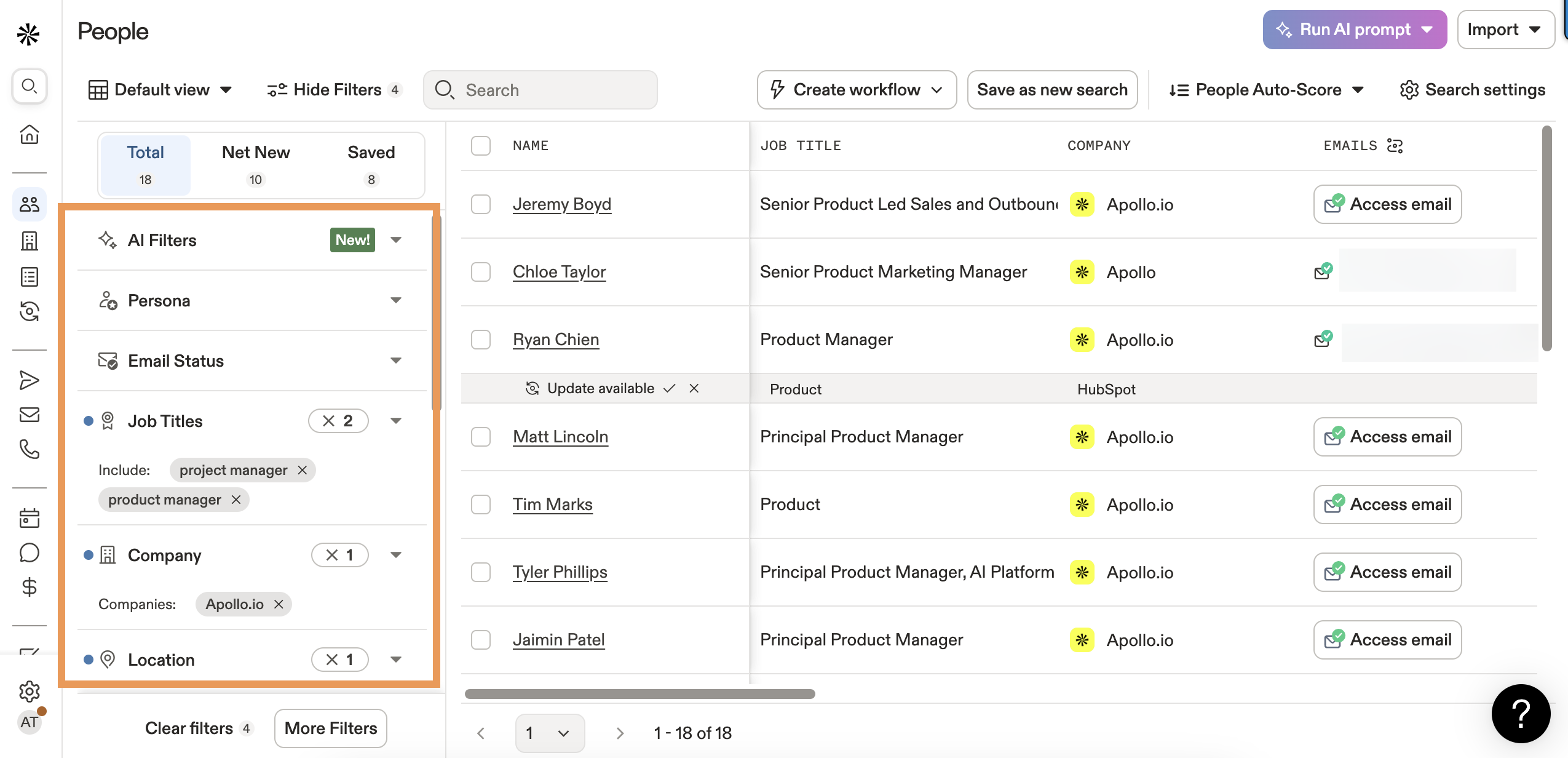
The catch: credits don't roll over, mobile and email reveals consume separate pools, and automatic overages can surprise you. The bigger concern is accuracy - independent tests put Apollo's email accuracy around 79%, meaning roughly 1 in 5 emails will bounce. For a free tool, that's acceptable. For paid plans, it's a real gap.
Use Apollo if you're a startup with more time than budget. Skip it if deliverability is critical to your outbound motion.
Lusha - Lightweight and fast for small teams
Lusha covers 245M+ contacts and 50M+ companies with a clean browser extension that individual sellers love. Free plan gives you 40 credits/month. Paid plans run ~$36-$59/user/month. It's not trying to be a platform - it's a lookup tool that does one thing well.
LeadIQ - Built for SDR workflows
LeadIQ focuses on 100M+ verified emails with tight CRM sync. Free tier available, paid plans ~$75-$150/user/month. The value proposition is speed: find contacts, push to Salesforce, start sequencing. If your SDRs are building lists from professional profiles and need one-click CRM push, LeadIQ fits that workflow cleanly.
Seamless.AI - High-volume prospecting engine
Seamless.AI runs a real-time search engine model rather than a static database. Free tier available, Pro and Enterprise plans ~$100-$200/user/month. Data quality is inconsistent - some teams report great results, others find significant gaps - but for high-volume prospecting where you're casting a wide net, the speed is hard to beat.
RocketReach - Solid for one-off lookups. Plans start at $53/month, with direct dials costing extra credits. Not a prospecting platform, but useful when you need a single contact fast.
Clearbit (Breeze Intelligence) - HubSpot's enrichment add-on under the Breeze Intelligence name. Credit packs run $30-$700/month. If you're already in HubSpot's ecosystem, it's the default enrichment option. Otherwise, skip it.
Intent Data Vendors
Bombora - The intent data backbone
Bombora tracks 17B interactions monthly across 5,000+ publisher sites using a co-op data model. It's the most widely integrated intent data source in B2B - chances are your existing tools already pipe in Bombora signals. The B2B intent data market hit $4.49B in 2026, and Bombora owns a significant chunk of it.
Pricing runs $12K-$40K/year depending on volume and integration scope. Here's the honest reality of intent data: 91% of B2B marketers use it, but only 24% report exceptional ROI. The signal is valuable, but only if your team actually acts on it. Budget 15-25% above the license cost for implementation and workflow integration.
6sense - AI-driven account identification with a free tier for smaller teams and enterprise packages running $30K-$100K+/year. Best for ABM-heavy organizations with dedicated ops resources. The platform is powerful but complex - expect a 3-6 month ramp to full value.
Demandbase - Enterprise ABM + intent + advertising in one platform. Pricing runs $30K-$100K+/year. Demandbase and 6sense compete head-to-head. Pick Demandbase if you need the advertising layer baked in; pick 6sense if you're pure ABM.
Technographic Data
BuiltWith - Technology stack profiling, starting at $295/month on annual billing. If you're targeting companies by their tech stack - say, all Salesforce + Marketo shops with 200+ employees - BuiltWith is the primary source. Pair it with a contact data provider to turn technographic lists into actionable outreach.
Crunchbase - Company intelligence and funding data starting at $49/month. Best for startup ecosystem research, VC deal flow, and firmographic filtering. Not a contact data tool - think of it as the company layer that sits above your contact vendor.
Financial & Consumer Data
Foursquare - Location and mobility data on custom enterprise pricing, typically $25K-$75K/year for mid-market contracts. Best for retail, CPG, and real estate analytics teams that need foot traffic patterns and point-of-interest data. Not a B2B sales tool.
Experian - Identity, credit, and consumer risk data on custom enterprise pricing, generally $20K-$100K+/year depending on data products and volume. Best for financial services, insurance, and risk assessment. A completely different category from B2B contact data, but included because buyers searching for data vendors often land on both.

You just read that 28% of B2B emails decay every year. Most data vendors refresh every 6 weeks - Prospeo refreshes every 7 days. That's why teams like Snyk cut bounce rates from 35% to under 5% and generate 200+ new opportunities per month.
Stop paying vendors for data that's already dead.
What Data Vendors Actually Cost
| Vendor | Starting Price | Model | Contract |
|---|---|---|---|
| Apollo | Free / $49/mo | Credits + seat | Monthly |
| Lusha | Free / ~$36/mo | Credits + seat | Monthly |
| Crunchbase | $49/mo | Subscription | Annual |
| RocketReach | $53/mo | Credits | Monthly |
| LeadIQ | Free / ~$75/mo | Seat-based | Monthly/Annual |
| Seamless.AI | Free / ~$100/mo | Seat-based | Annual |
| BuiltWith | $295/mo | Subscription | Annual |
| Cognism | ~$1K-$3K+/mo | Seat-based | Annual |
| Bombora | $12K-$40K/yr | Subscription | Annual |
| ZoomInfo | $15K-$40K+/yr | Seat + credits | 2-3 year |
| 6sense | Free / $30K-$100K+/yr | Platform | Annual |
| Demandbase | $30K-$100K+/yr | Platform | Annual |
| Foursquare | ~$25K-$75K/yr | Enterprise | Annual |
| Experian | ~$20K-$100K+/yr | Enterprise | Annual |
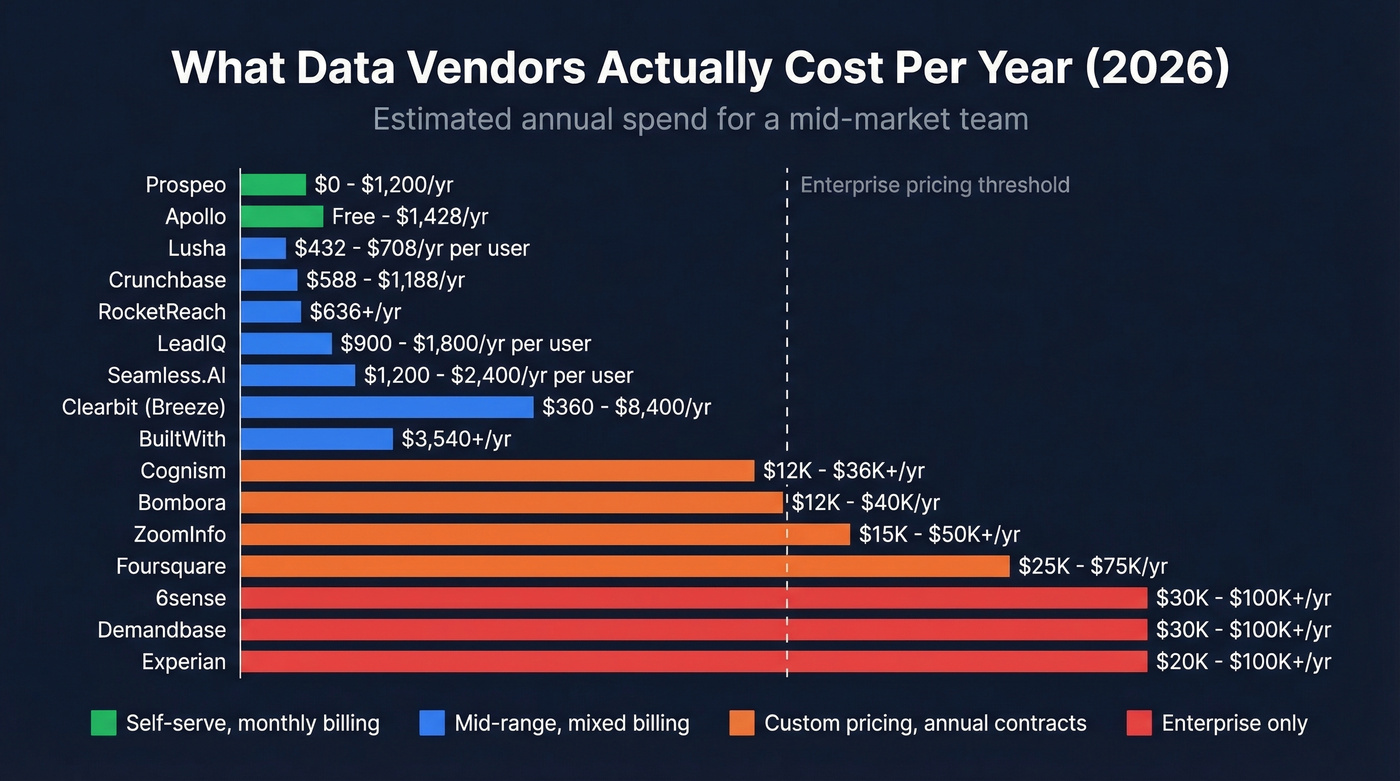
The gap between self-serve and enterprise pricing is staggering. A self-serve tool at $0.01/email versus ZoomInfo at $0.20-$0.60/credit is a 20-60x difference in unit economics. For a 5-person SDR team running 10,000 email lookups per month, that's the difference between ~$100/month and $2,000-$6,000/month on credits alone.
The "contact sales" vendors - ZoomInfo, Cognism, 6sense, Demandbase - all negotiate. Discounts of 30-65% off list price are common. Never accept the first quote.
Hidden Costs and Contract Traps
Five things that inflate your actual spend beyond the sticker price:
ZoomInfo auto-renewal windows. Contracts auto-renew 60-90 days before expiration. Miss that cancellation window and you're locked in for another year at the renewal rate. Put a calendar reminder the day you sign.
Apollo credit expiration. Unused credits vanish at the end of each billing cycle. Mobile reveals and email reveals consume separate credit pools. A team that budgets for 5,000 lookups can burn through credits in week three if they're pulling both emails and phones.
ZoomInfo add-on creep. Global data runs $9,995, extra credits ~$3K per 5K batch, NeverBounce verification ~$3K, and additional seats $1,500-$2,500 each. A $15K+ Professional contract can quietly become a $35K all-in commitment.
Implementation costs for intent/ABM platforms. Budget 15-25% above the license cost for 6sense, Demandbase, or Bombora. These tools require workflow configuration, CRM integration, and team training before they generate ROI.
Vendor lock-in and integration complexity. Multi-year contracts with proprietary data formats make switching painful. Teams that build workflows around a single vendor's API often find migration costs exceed a full year's license fee. The average cost of bad data quality is estimated at $12.9M per year per organization - a widely cited benchmark that underscores why getting the vendor decision right the first time matters more than saving 10% on the contract.
How to Run a Vendor Bake-Off
Here's a stat worth internalizing: 94% of buying groups have already ranked their preferred vendors before talking to sales. That means your data vendor's first impression is your data, not your demo. Don't pick a provider from a blog post - including this one. Run a bake-off.
Step 1: Define your data requirements. What do you actually need? Contact emails? Direct dials? Intent signals? Technographics? Most teams over-buy because they haven't answered this question clearly.
Step 2: Request sample data from 3+ vendors. Every serious provider will give you a sample. If they won't, that's a red flag.
Step 3: Run a pilot against your CRM. Upload sample data and measure three things: match rate against existing records (target 60-80%), email deliverability on a test sequence, and phone connect rate on a dial session. These three numbers tell you more than any demo.
Step 4: Compare using the same prospect list. Give every vendor the same 500-contact target list - same titles, same industries, same geographies. Compare coverage, accuracy, and freshness side by side. The major providers will all accommodate this request; smaller niche suppliers sometimes need a nudge.
Step 5: Negotiate hard. Enterprise vendors expect it. That first quote from ZoomInfo or Cognism has 30-65% of margin baked in. Push back on contract length, credit volumes, and add-on bundling. Always get multi-year pricing even if you plan to sign for one year - it gives you negotiating room.
Compliance Is Non-Negotiable
Cumulative GDPR fines have hit $6.17B since 2018, with $1.26B levied in 2024 alone. Europe now processes 363 breach notifications per day. In the US, 19 states have privacy laws on the books, and CPRA penalties run $7,988 per intentional violation.
Before signing with any provider, ask four questions: How do you source your data? What's your consent model? Do you provide Data Processing Agreements? Are you SOC 2 certified? If a vendor can't answer these clearly, walk away. The cheapest data in the world isn't cheap if it comes with a regulatory fine.
If you're building a GDPR-first outbound motion, treat compliance as a requirement, not a feature.
Running a bake-off across data vendors? Here's your baseline: 98% email accuracy, 30% mobile pickup rate, 92% API match rate, and $0.01 per email with no annual contract. Prospeo's free tier gives you 75 emails to validate before you spend a dollar.
Make every other vendor prove they can beat those numbers.
FAQ
What's the difference between a data vendor and a data provider?
Functionally, nothing. "Vendor" implies a transactional purchase while "provider" suggests ongoing service, but every modern platform operates as both - you buy access and receive continuously updated records. Don't overthink the terminology; focus on accuracy, freshness, and pricing model instead.
How much do data vendors typically cost?
Self-serve B2B contact tools range from free to $500/year for light usage, mid-market platforms run $5K-$30K/year, and enterprise intent or ABM suites like 6sense hit $30K-$100K+/year. Prospeo starts at $0.01/email with a free tier; ZoomInfo starts at $15K+/year.
How do I test data quality before committing?
Request sample data from at least three providers, upload it against your CRM, and measure email deliverability plus phone connect rate on the same 500-contact prospect list. Match rate, bounce rate, and connect rate - those three metrics reveal more than any sales demo.
How often should a vendor refresh its database?
Weekly is the gold standard - Prospeo refreshes every 7 days. The industry average sits around 6 weeks. Always ask for the specific refresh cycle, because 28% of B2B emails decay annually and stale records compound fast.
Can I use multiple data vendors together?
Yes, and most high-performing teams do. A focused contact data tool paired with an intent layer outperforms a single bloated suite in almost every scenario we've tested. Prospeo for verified contacts plus Bombora for intent signals is a common and effective stack.