


DiscoverOrg vs ListKit: One Is Dead, the Other Has Baggage
DiscoverOrg vs ListKit isn't a real comparison anymore - DiscoverOrg doesn't exist. ZoomInfo acquired it in 2019 for $735M, absorbed the brand entirely, and TrustRadius now labels it "(discontinued)". Most comparison pages on this topic still treat DiscoverOrg as a live product, which wastes your time. What you're actually weighing is ZoomInfo vs ListKit - and in our testing, the accuracy and cost gaps between these two are wider than most reviews suggest.
The 30-Second Verdict
Enterprise team with a $15K+ budget that needs org charts and intent data: ZoomInfo.
SMB outbound team wanting intent signals and credit-based flexibility: ListKit, starting at $83/mo.
Side-by-Side Comparison
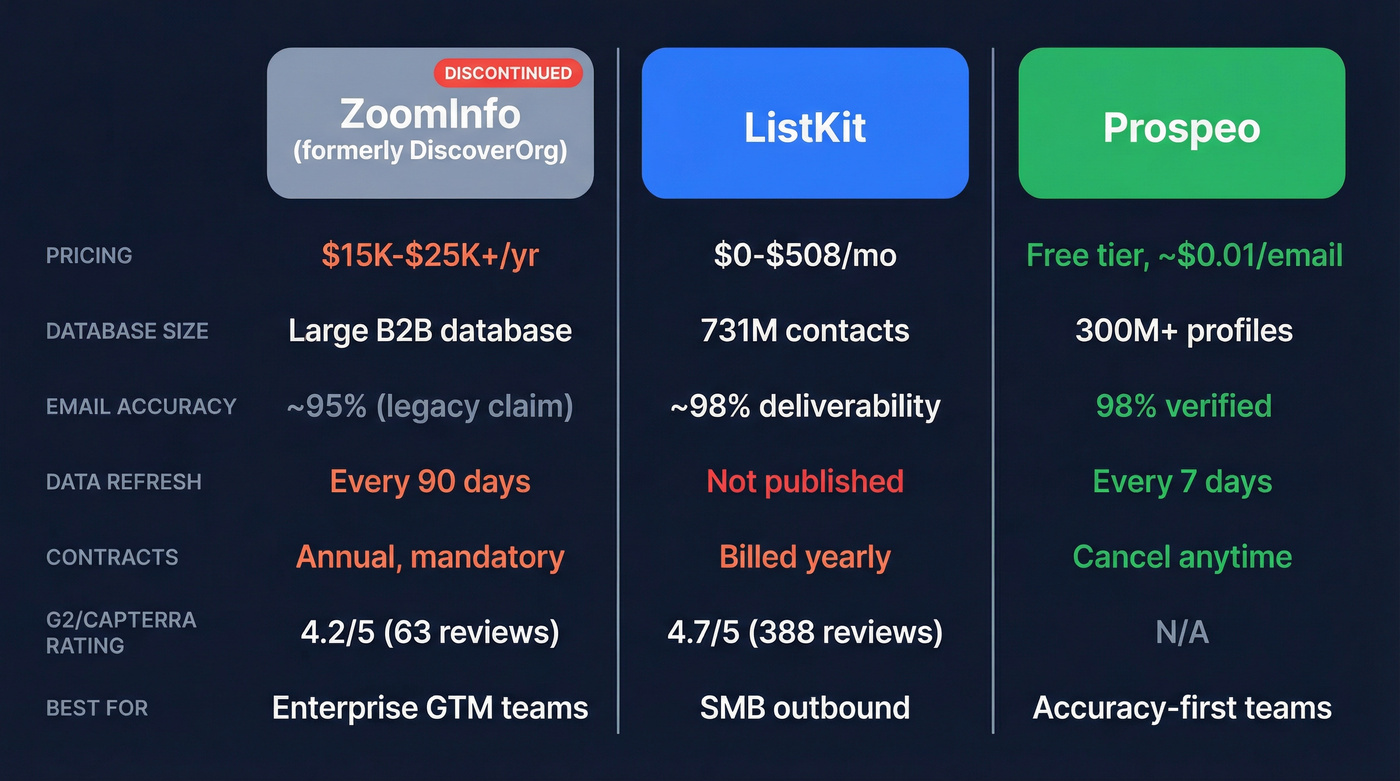
| Pricing | $15K-$25K+/yr | $0-$508/mo | Free tier; ~$0.01/email |
| Database | Large B2B database | 731M contacts | 300M+ professional profiles |
| Email accuracy | ~95% (legacy claim) | ~98% deliverability | 98% verified |
| Data refresh | Every 90 days or sooner | Not published | Every 7 days |
| Billing | Annual, mandatory | Billed yearly | Cancel anytime |
| Rating | 4.2/5 (Capterra, 63 reviews) | 4.7/5 (G2, 388 reviews) | N/A |
| Best for | Enterprise GTM teams | SMB outbound | Accuracy-first teams |
ZoomInfo (Formerly DiscoverOrg)
Going the "DiscoverOrg route" means buying ZoomInfo's full platform - org charts, intent data, technographics, and a massive US database backed by a $1.21B-revenue company with 3,508 employees. A 2017 GZ Consulting study found 99% name accuracy and 97% email deliverability on a 100-contact sample. Capterra review sentiment breaks down to 76% positive, 13% neutral, and 11% negative across 63 reviews.
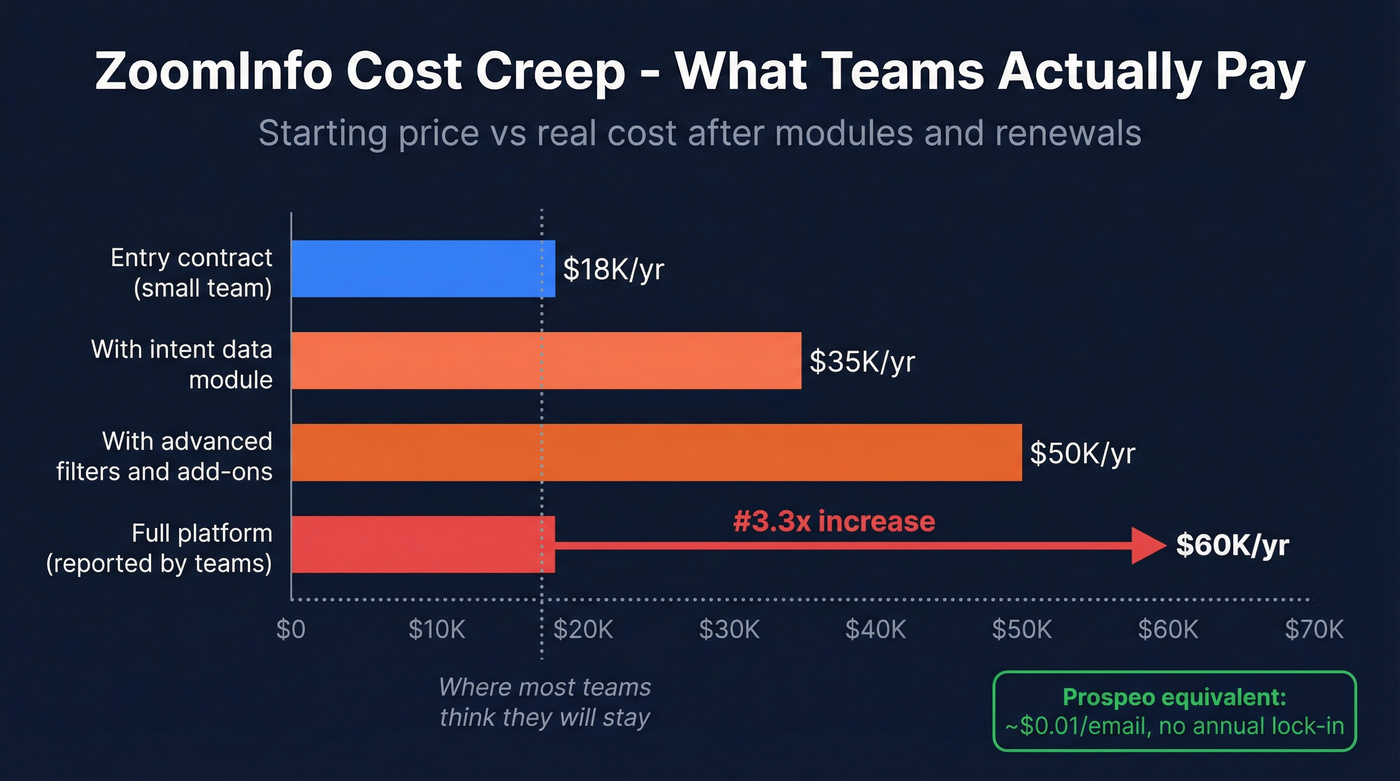
The problems are predictable. That old pricing page is now a ZoomInfo lead form - you can't see numbers without talking to sales. Annual contracts start at $15K-$25K/year for small teams and climb to $50K-$100K+ with intent modules. The #1 complaint on Reddit is price, with aggressive sales follow-up a close second.
Deep org-chart mapping was DiscoverOrg's original edge, and it's still ZoomInfo's strongest differentiator. But you're paying a premium for features most outbound teams never touch.
Where ZoomInfo wins
- Org structure and hierarchy mapping - genuinely useful if you sell into complex buying committees with 6+ stakeholders.
- Workflow depth - more "platform" than "list builder," with native sequencing, analytics, and territory management baked in.
- Enterprise governance - better fit when procurement, security review, and legal are part of every purchase decision.
Where it hurts
- Opaque pricing. You're negotiating, not shopping.
- Annual lock-in. Hard to "test for a month" and move on.
- Module creep. Intent, advanced filters, and add-ons stack up fast. We've talked to teams paying $60K who started at $18K.

ZoomInfo locks you into $15K+ annual contracts. ListKit's credit math inflates your real cost-per-contact. Prospeo gives you 98% verified emails at ~$0.01 each, 125M+ direct dials, and a 7-day data refresh - no negotiations, no cancellation games.
Skip the contracts and the cancellation headaches. Start free today.
ListKit
ListKit's G2 profile tells a split story. Reviewers love the customer support (64 mentions) and ease of use (54 mentions), and the 4.7/5 rating across 388 reviews is genuinely strong. Credit-based pricing from free to $508/mo gives real flexibility - but understand the credit math before you commit.
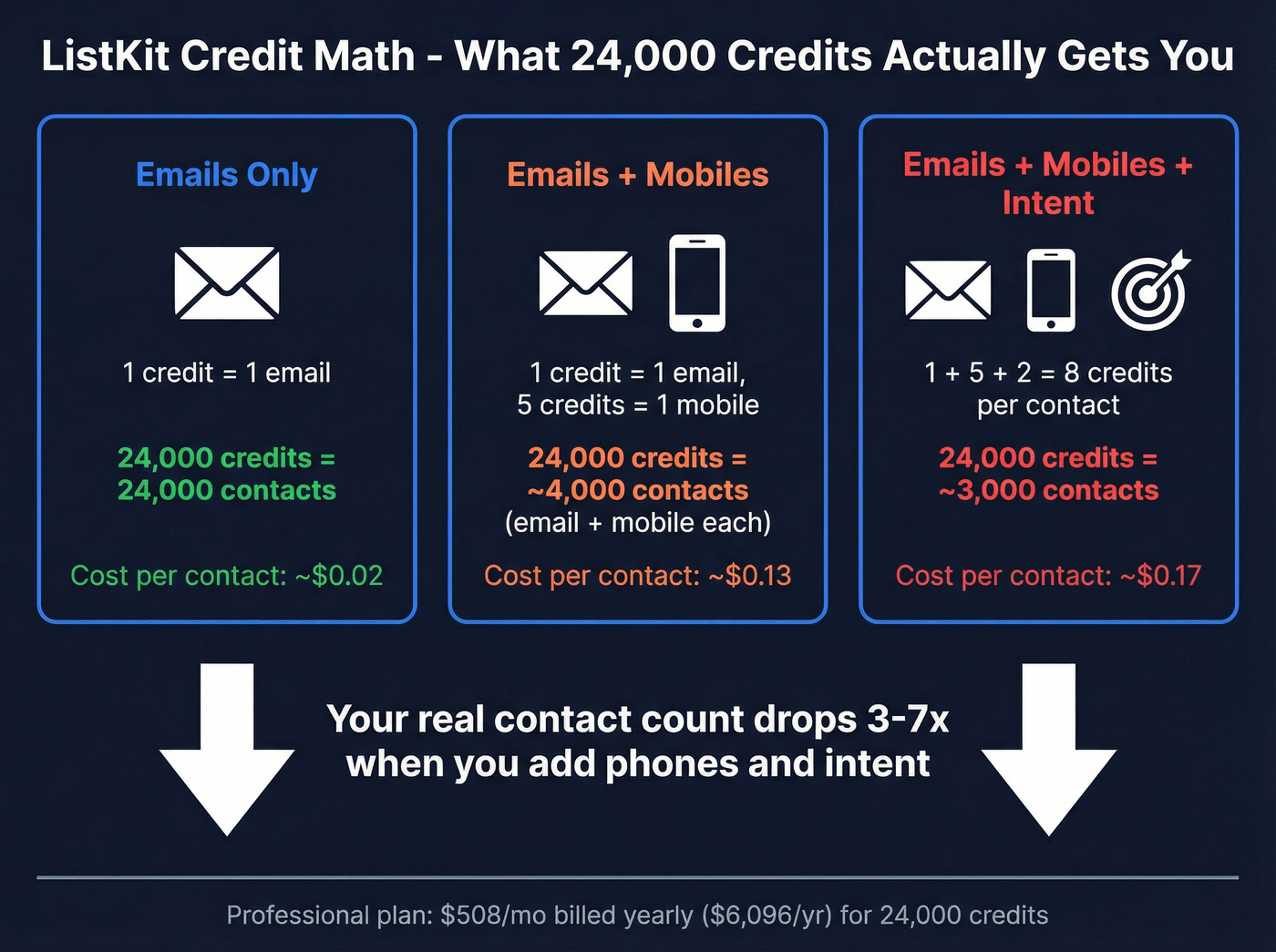
Here's the thing: a business email costs 1 credit, a mobile phone costs 5 credits, and intent signals from the last 24 hours cost 2 credits. So "24,000 credits" on the Professional plan doesn't mean 24,000 contacts if you need phones or intent. Not even close.
And then there's the cancellation issue. "Expensive" is the top negative on G2 with 16 mentions - ironic for a budget-positioned tool. Worse, Reddit threads flag serious cancellation friction: users report being required to attend an onboarding call before they could cancel, with rebilling after chargebacks. Some older directories still show a $150 one-off pricing model that doesn't match current plans, which adds confusion.
What ListKit does well
- Fast list building. Simple UI, quick time-to-first-list.
- Credit-based control. You can allocate spend across emails, mobiles, or intent depending on the campaign.
- Support experience. Consistently praised in reviews.
What to watch before you pay
- Credit economics. Phones + intent can 3-7x your "per-contact" cost.
- Billing terms. Yearly billing changes the risk profile.
- Cancellation process. Read the terms like you're trying to get out of a gym membership. Seriously.
Let's be honest: if your average deal size is modest, you don't need ZoomInfo-level platform complexity. But you also don't need cancellation headaches. The real question is whether you're paying for data quality or paying for the privilege of using a "platform."
Why Most Teams Should Skip Both
Most teams comparing these tools don't actually need org charts or 731M contacts. They need verified emails and direct dials that don't bounce, plus enough segmentation to keep targeting tight.
We've seen teams cut bounce rates from 35% to under 5% within the first month of switching to fresher data. Snyk's 50-person sales team did exactly that - AE-sourced pipeline jumped 180% once reps stopped wasting time on stale contacts. The difference comes down to refresh cycles: ZoomInfo updates every 90 days or sooner, ListKit doesn't publish a number, and Prospeo refreshes every 7 days against an industry average of 6 weeks.
The self-serve option
- 300M+ professional profiles with 143M+ verified emails at 98% accuracy
- 125M+ verified mobile numbers with a 30% pickup rate
- 30+ search filters including intent, technographics, job change, headcount growth, funding, and revenue
- Intent data across 15,000 topics powered by Bombora
- CRM/CSV enrichment returning 50+ data points per contact (83% enrichment match rate; 92% API match rate)
- 7-day refresh cycle plus real-time email/mobile verification
- No contracts. Transparent, credit-based pricing. Cancel anytime.
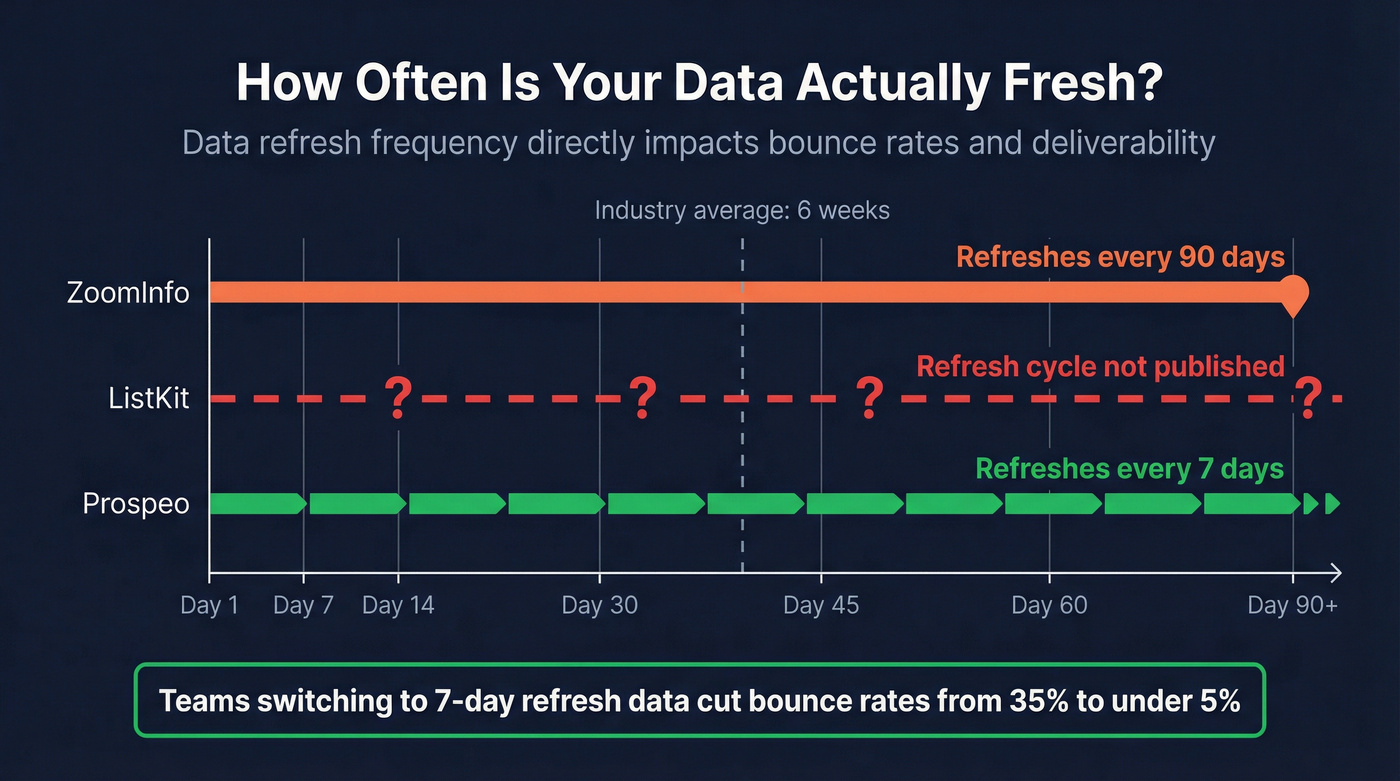
Teams switching to fresher data cut bounce rates from 35% to under 5%. Prospeo refreshes every 7 days - not 90 like ZoomInfo, not "unpublished" like ListKit. Layer in 15,000 intent topics, 30+ filters, and 300M+ profiles for the same targeting without the enterprise price tag.
Run your bake-off list through Prospeo and see what actually verifies.
Who Should Pick What
You need enterprise GTM with org charts, intent, and workflow automation: ZoomInfo. Budget $15K+ minimum and plan for a longer sales cycle just to buy the tool.
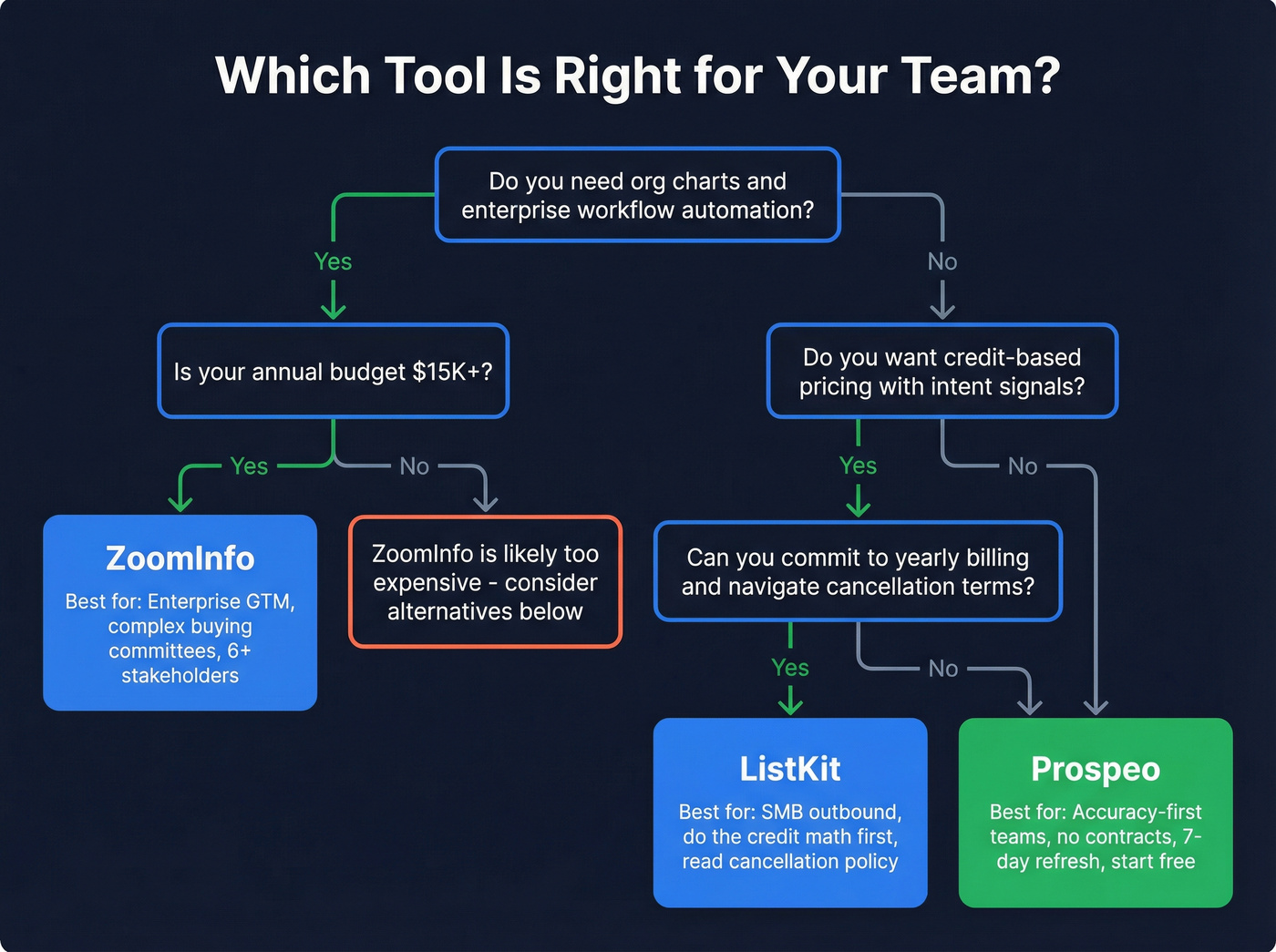
You want credit-based outbound data with intent signals and can live with yearly billing: ListKit. Do the credit math for your exact workflow - emails vs mobiles vs intent - and read the cancellation terms before you sign.
You prioritize email accuracy, data freshness, and flexibility without contracts: Prospeo. Start free, scale as needed, and keep your bounce rate under 4%.
FAQ
Is DiscoverOrg still available?
No. ZoomInfo acquired DiscoverOrg in 2019 and fully absorbed the brand. TrustRadius lists it as discontinued, and discoverorg.com redirects to a ZoomInfo quote form. If someone recommends DiscoverOrg today, they mean ZoomInfo.
How much does ZoomInfo cost?
ZoomInfo doesn't publish pricing. Most small-team entry contracts start around $15K-$25K/year. With intent data and add-on modules, it's common to see $50K-$100K+ per year. If you want month-to-month, this isn't that product.
What's a good alternative if I just need verified emails and mobiles?
Prospeo is the most direct fit for "get me accurate contacts fast" - 98% verified email accuracy, 143M+ verified emails, and 125M+ verified mobiles with a 7-day refresh cycle. Pricing is self-serve at ~$0.01/email, and the free tier includes 75 emails plus 100 Chrome extension credits per month.
What "DiscoverOrg vs ListKit" Really Means in 2026
DiscoverOrg vs ListKit is mostly a naming trap: DiscoverOrg is discontinued, so the real decision is ZoomInfo's enterprise platform and contract versus ListKit's credit model and billing/cancellation tradeoffs. For teams that mainly care about fresh, verified emails and mobiles without five-figure commitments, there's a cleaner, self-serve path available - and the numbers back it up.