Generect vs VerifiedEmail: Different Tools for Different Jobs
Comparing Generect to VerifiedEmail is like comparing a fishing rod to a fish scaler. One finds contacts and verifies them. The other only cleans what you already have. They aren't competitors - they're different categories of tool that happen to touch the same data type.
What Each Tool Actually Does
Generect
Generect is a lead search engine that bundles contact discovery, email verification, and data enrichment into one pay-as-you-go workflow. You search, find contacts with verified emails and direct phone numbers, and export. No subscription required.
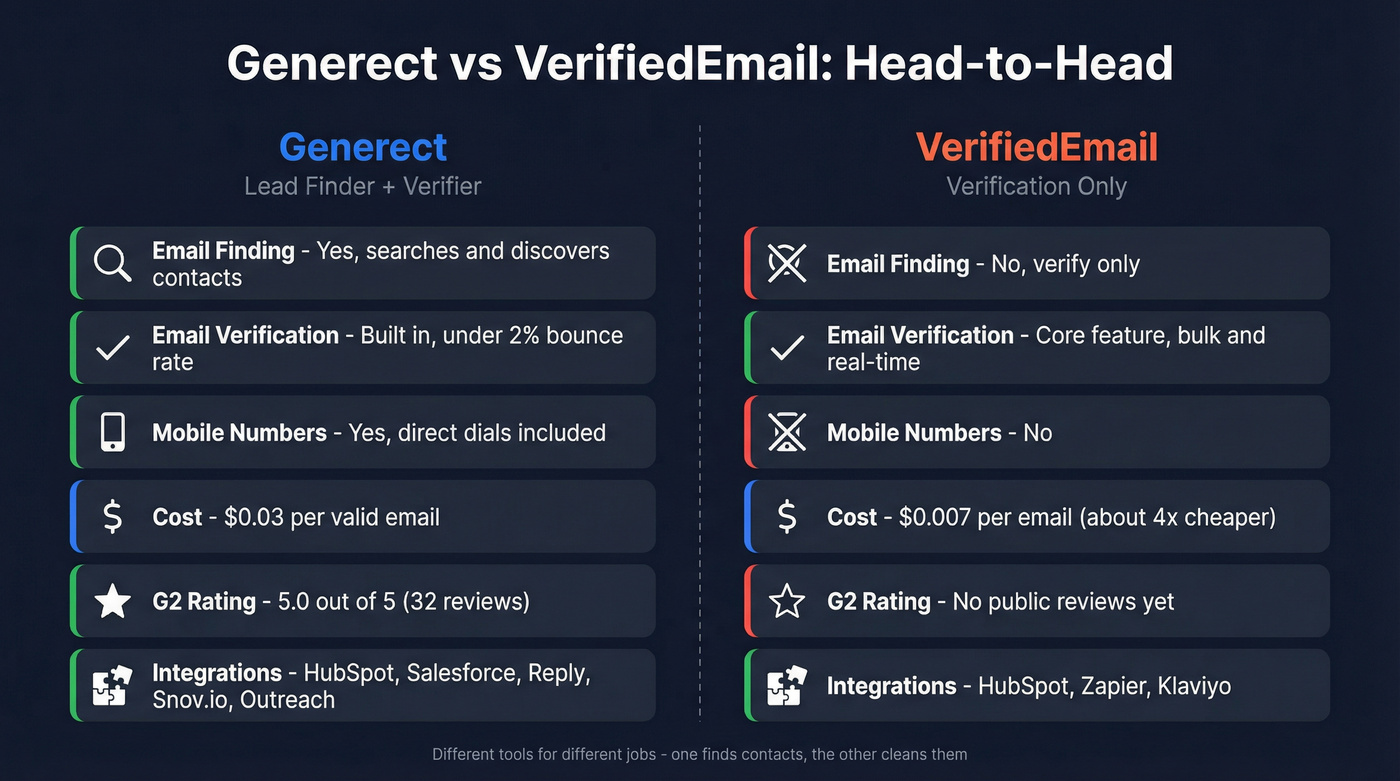
Use this if you're an SDR team building fresh prospect lists weekly. Generect claims a 70%+ find rate and under 2% bounce rate, even on catch-all domains. Searches are free; you pay $0.03 per valid email and $0.02 per export, with a $20 minimum deposit and a $5 onboarding grant to test first.
The platform also offers real-time data freshness and enterprise volume discounts for larger teams. It holds a 5.0/5 on G2 across 32 reviews, with users praising speed and accuracy. Integrations include HubSpot, Salesforce, Reply, Snov.io, and Outreach. Founded in 2021, it's still young, but those reviews and CRM integrations make it a reasonable bet for teams that value social proof.
Skip this if you already have your contacts and just need to clean them. At $0.03 per valid email, Generect runs roughly 4x more expensive than a dedicated verifier for pure list hygiene.
VerifiedEmail
VerifiedEmail is verification-only. No lead search, no enrichment - just real-time and bulk email cleaning with deliverability scoring.
Pricing breaks down three ways: $7 per 1,000 one-time verifications, $9 per 1,000 on a monthly plan, or $7.20/year for 1,000 credits on a yearly plan. You get 200 free credits on signup, credits never expire, and there's no charge for duplicates or malformed addresses. For teams processing 1M+ emails, VerifiedEmail offers a price-beat guarantee - worth asking about if you're at that scale.
The tool includes reCAPTCHA bot filtering, catch-all detection, and a continuous cleanup mode for ongoing list maintenance. Integrations cover HubSpot, Zapier, and Klaviyo. Here's the thing, though: VerifiedEmail has zero reviews on Capterra and GetApp, and it isn't widely reviewed on G2 yet. We couldn't find relevant Reddit or community threads about either tool, which is unusual for B2B software. The product works as described, but zero independent reviews means you're trusting marketing copy alone. Run a small test batch before committing.
Feature and Pricing Comparison
The cost gap between find-and-verify tools and pure verifiers is consistently 3-5x. That shows up clearly here:
| Feature | Generect | VerifiedEmail | Prospeo |
|---|---|---|---|
| Cost per 1K emails | ~$30 (find + verify) | ~$7 (verify only) | ~$10 |
| Free tier | $5 grant ($20 min deposit) | 200 credits | 75 emails/month (+100 Chrome extension credits/month) |
| Email finding | Yes | No | Yes |
| Mobile numbers | Yes | No | 125M+ verified |
| Intent data | No | No | 15,000 topics |
| Integrations | HubSpot, Salesforce, +3 | HubSpot, Zapier, Klaviyo | Salesforce, HubSpot, Smartlead, Instantly, Lemlist, Clay, Zapier, Make, and more |
| G2 rating | 5.0/5 (32 reviews) | No public reviews | 15,000+ companies |
| Annual contract | No | No | No |
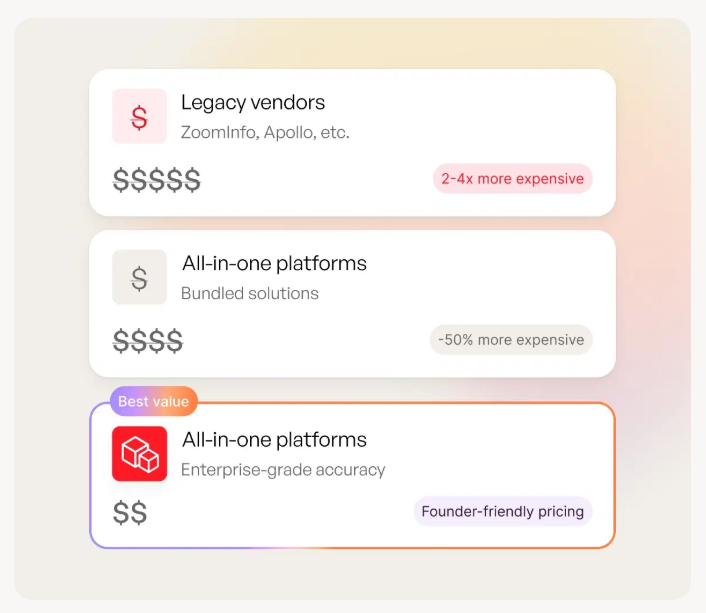

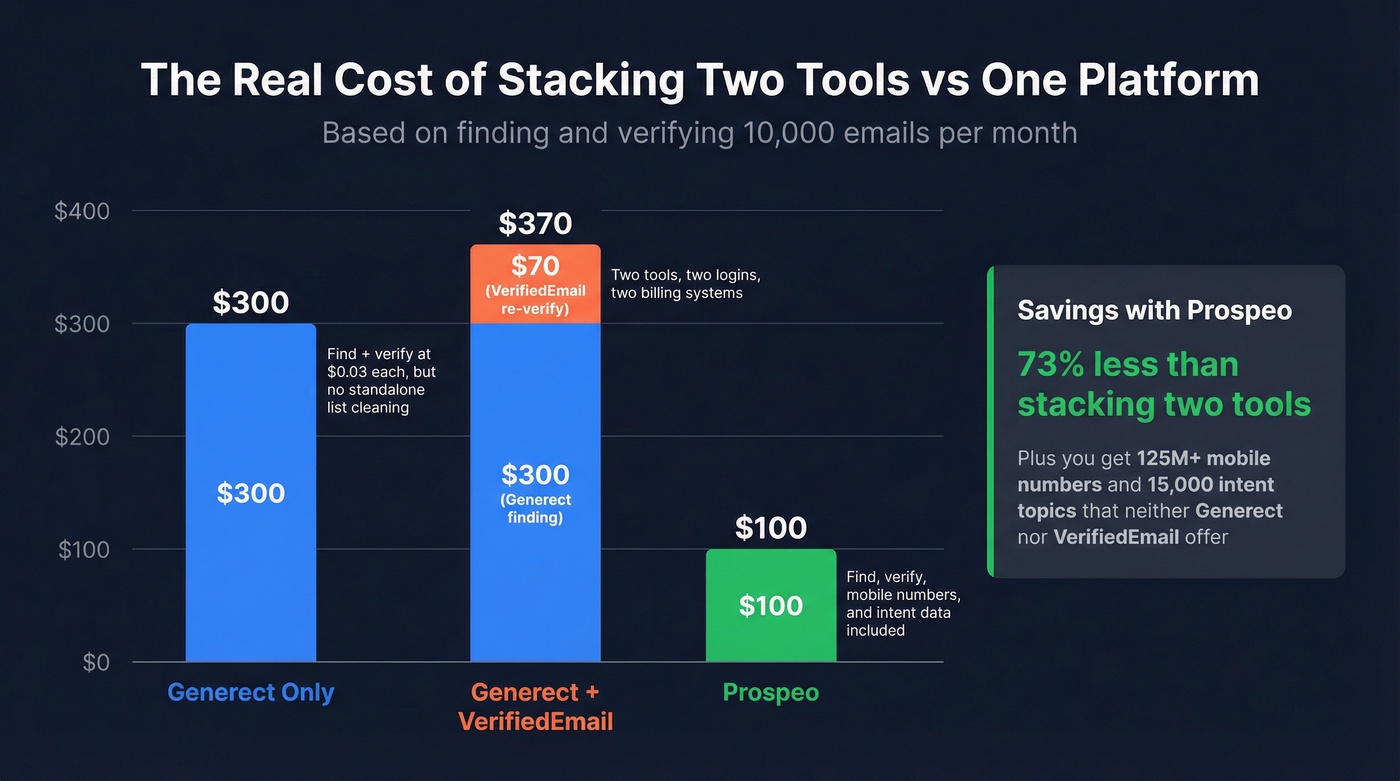
Generect charges $0.03/email to find and verify. VerifiedEmail charges $0.007 just to clean. Prospeo finds, verifies at 98% accuracy, and returns mobile numbers - all for ~$0.01/email with a 7-day data refresh cycle.
One platform replaces two tools and costs less than either.
When to Choose Each Tool
Go With Generect If...
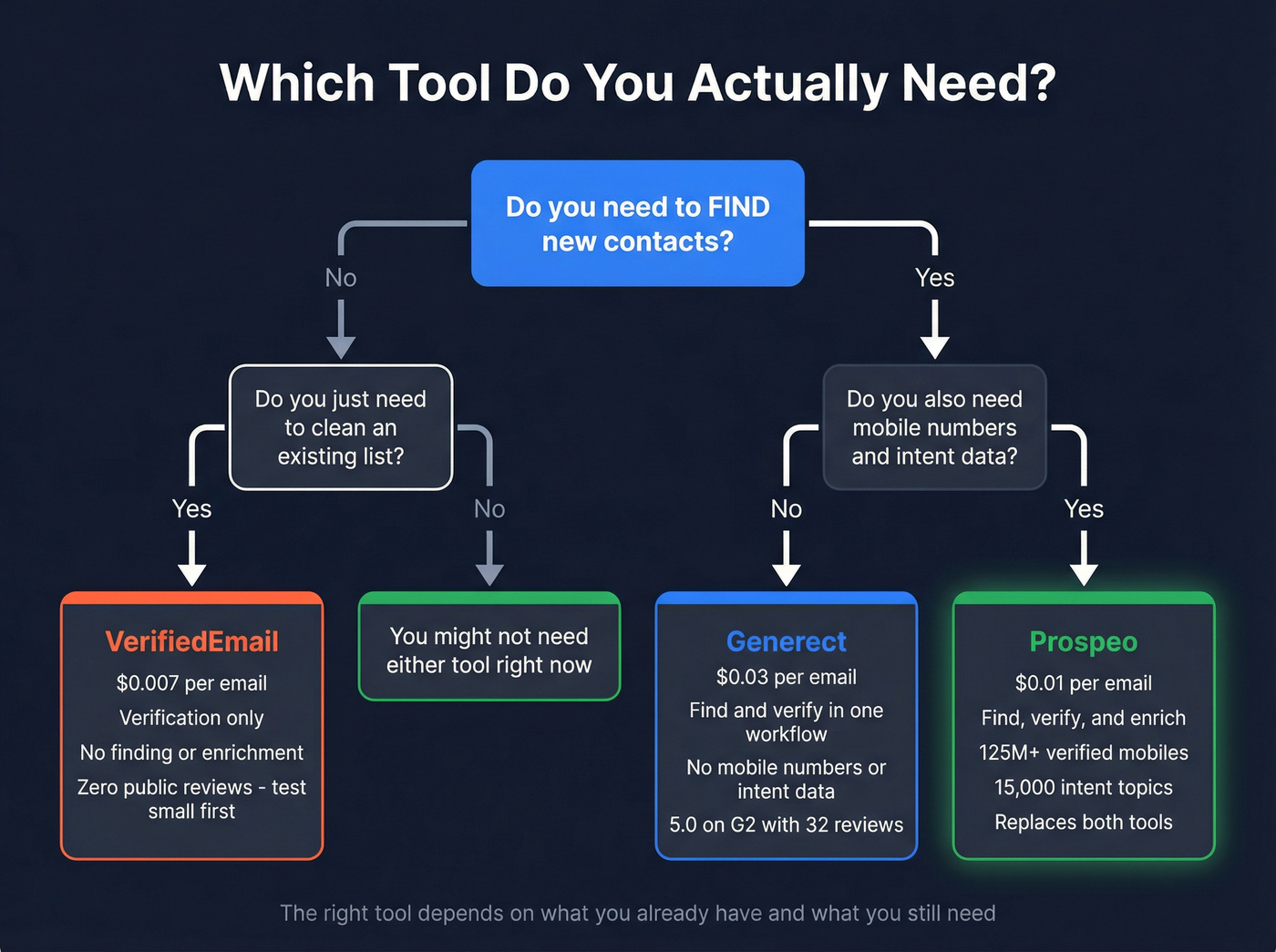
You need 500+ new prospects a week and don't have an existing database. Generect's combined search-and-verify workflow means you aren't stitching together two tools. The under-2% bounce rate claim is worth paying attention to - Instantly's deliverability guide uses 2% as the threshold where sender reputation starts degrading.
Go With VerifiedEmail If...
You exported 5,000 trade show contacts and half are bouncing. You don't need to find anyone new - you just need the cheapest way to clean what you have. At $7 per 1,000 verifications with credits that never expire, the math is hard to beat. Just know you're trusting a tool with zero public reviews on major directories, so start small.
Let's be honest: if your deal sizes sit below five figures, you probably don't need a $0.03/email lead finder or a standalone verifier. A single platform that does both at $0.01/email will save you more in workflow complexity than any per-email discount ever could.
What If You Need Both?
This is where the Generect vs VerifiedEmail comparison falls apart. If you need to find contacts, verify emails, grab mobile numbers, and see who's actively in-market, stacking two separate tools creates unnecessary friction and doubles your vendor management overhead.
Teams that switch see real results. Snyk cut bounce rates from 35-40% to under 5% and grew AE-sourced pipeline 180%. Stack Optimize built to $1M ARR while maintaining 94%+ deliverability and zero domain flags across all clients.
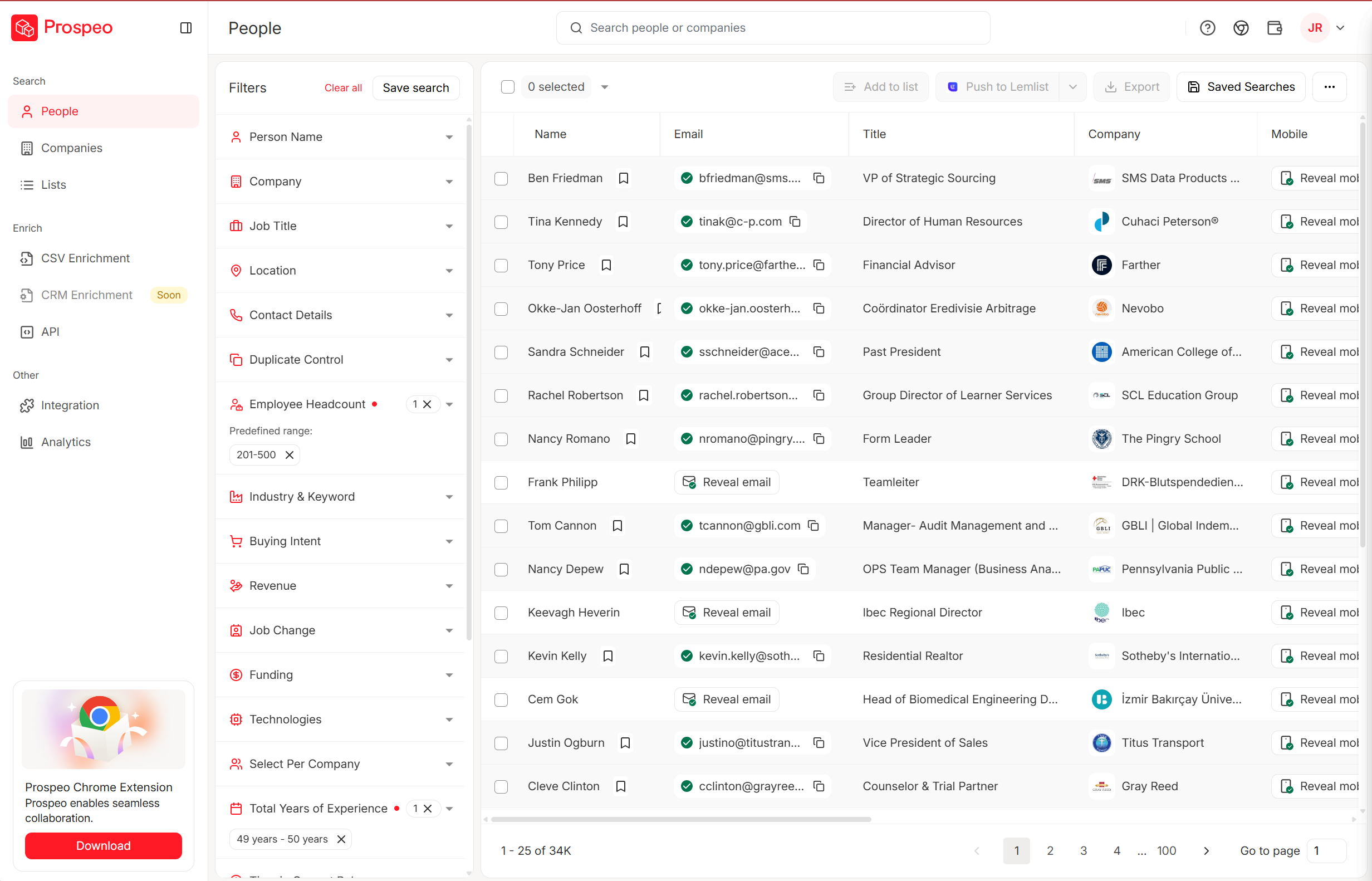
Snyk cut bounce rates from 35-40% to under 5% and grew pipeline 180% - without stacking a finder and a verifier. Prospeo's 300M+ profiles, 125M+ verified mobiles, and 15,000 intent topics replace the entire two-tool workflow.
Find, verify, and enrich contacts in one search - 75 free emails to prove it.
FAQ
Is Generect an email verification tool?
Not primarily. Generect is a lead generation platform that includes verification in its discovery workflow. If you only need to verify an existing list, you're overpaying - $0.03/email versus $0.007 at a dedicated verifier like VerifiedEmail or ~$0.01 at Prospeo, which also finds contacts and mobile numbers.
Does VerifiedEmail find email addresses?
No. VerifiedEmail only verifies emails you already have. You'll need a separate finder like Generect or Prospeo to discover contacts first, then pass them through for cleaning.
How accurate are email verification tools?
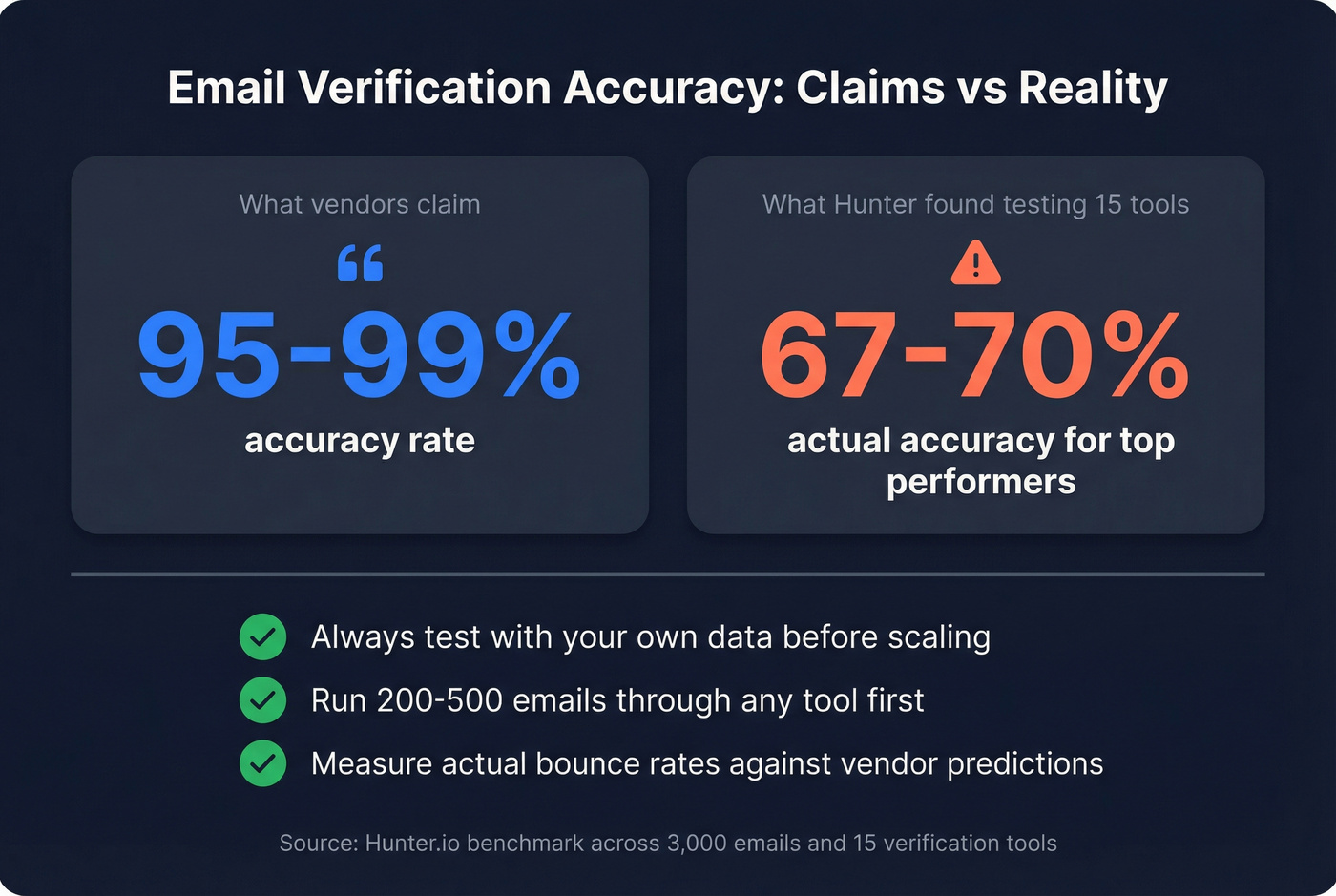
Most vendors claim 95-99%. Reality is harsher. A Hunter benchmark testing 15 tools across 3,000 emails found top performers reaching 67-70% overall accuracy. Always test with your own data before scaling - run 200-500 emails through any tool and measure actual bounce rates against the vendor's predictions. In our experience, that small test saves you from nasty surprises when you scale to tens of thousands.