

How to Get Past the Gatekeeper - Or Skip Them Entirely
It's 2pm on a Tuesday. You're 47 dials deep. Zero decision-makers. Every call has landed on a receptionist who asked "What is this regarding?" before routing you to voicemail. The problem isn't cold calling - it's that you can't get past the gatekeeper with the approach you're using.
Across a dataset of 300M+ cold calls, the average rep connects on just 5.4% of dials. That's roughly 19 calls to get one human conversation. Meanwhile, 80% of sales calls go to voicemail, and reps burn 15% of their day leaving messages nobody listens to. Yet 69% of buyers say they've picked up a call from a new vendor in the past year. The decision-makers are answering phones - just not yours.
The Short Version
- Get mobile numbers instead of calling switchboards. Switchboards take ~19 dials per connect. Work mobiles? Single-digit dials.
- When you do hit a gatekeeper, use the seniority-tone opener + silence. They decide whether to route or block you in 3-5 seconds. Tonality beats words.
- Call Tuesday or Wednesday, 11am-12pm or 4pm-5pm - or before 8:30am to dodge gatekeepers entirely.
Bypass the Gatekeeper Entirely
Here's the thing most "gatekeeper scripts" articles won't tell you: the best strategy is never talking to one. The entire framing of "getting past" assumes you need to engage. In 2026, the best reps go around.
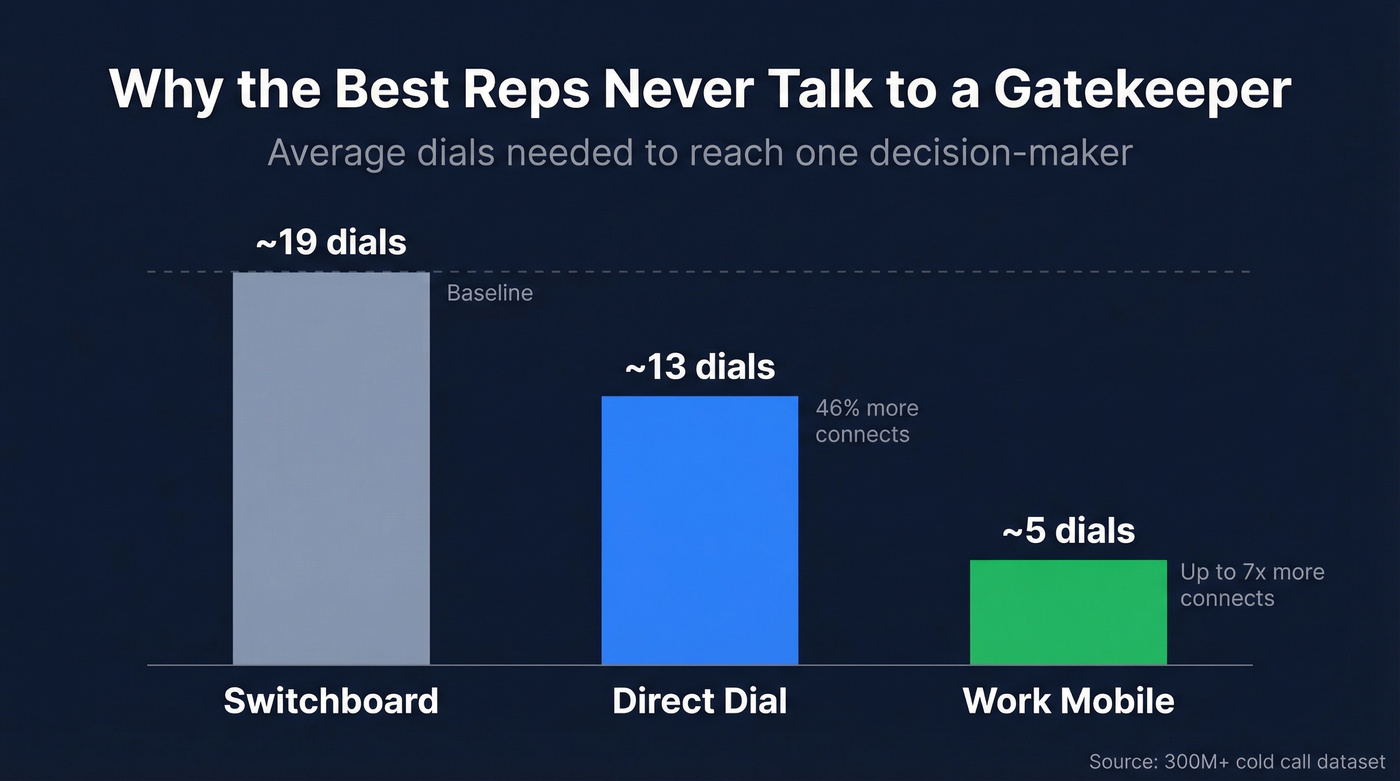
The math makes this obvious:
| Number Type | Dials per Connect | Relative Improvement |
|---|---|---|
| Switchboard | ~19 | Baseline |
| Direct dial | ~13 | ~46% higher connect rate |
| Work mobile | Single-digit | Up to 7x higher |
Mobile numbers deliver 45% higher connect rates than landlines, and those conversations convert to meetings 18% more often. Add local presence dialing - where your caller ID shows a local area code - and answer rates jump to 27.5% vs 7% for toll-free numbers.
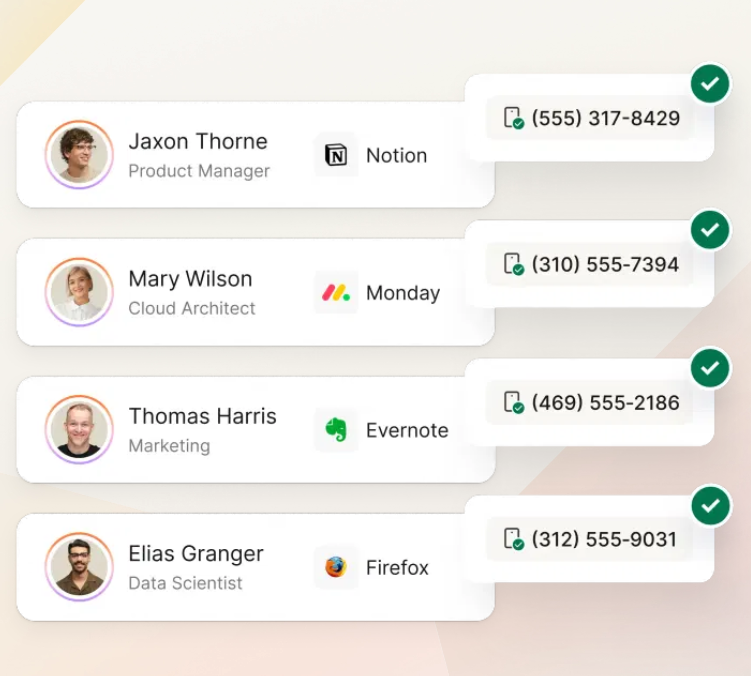
So where do you get these numbers? Three reliable methods: data platforms with verified mobiles, email signatures and out-of-office replies, and waterfall enrichment across multiple providers. Your data provider is the real bottleneck. If your current provider only gives you switchboard numbers, that's the single highest-leverage thing to change.
Cold Calling Gatekeeper Strategies
You don't have a mobile number. You call the main line. A gatekeeper picks up and asks, "What is this regarding?" Here's what we've learned from coaching dozens of SDR teams: what you say matters less than how you say it. Gatekeepers decide to route or block in 3-5 seconds - they're reading your tone, not evaluating your pitch.
Two types of gatekeepers require different approaches. Inquisitive gatekeepers ask questions - give them brief context. Transactional gatekeepers just want to route - give them a name and stop talking.
The Seniority Tone Opener
"Hi Sarah. It's Emily Bennett calling for John."
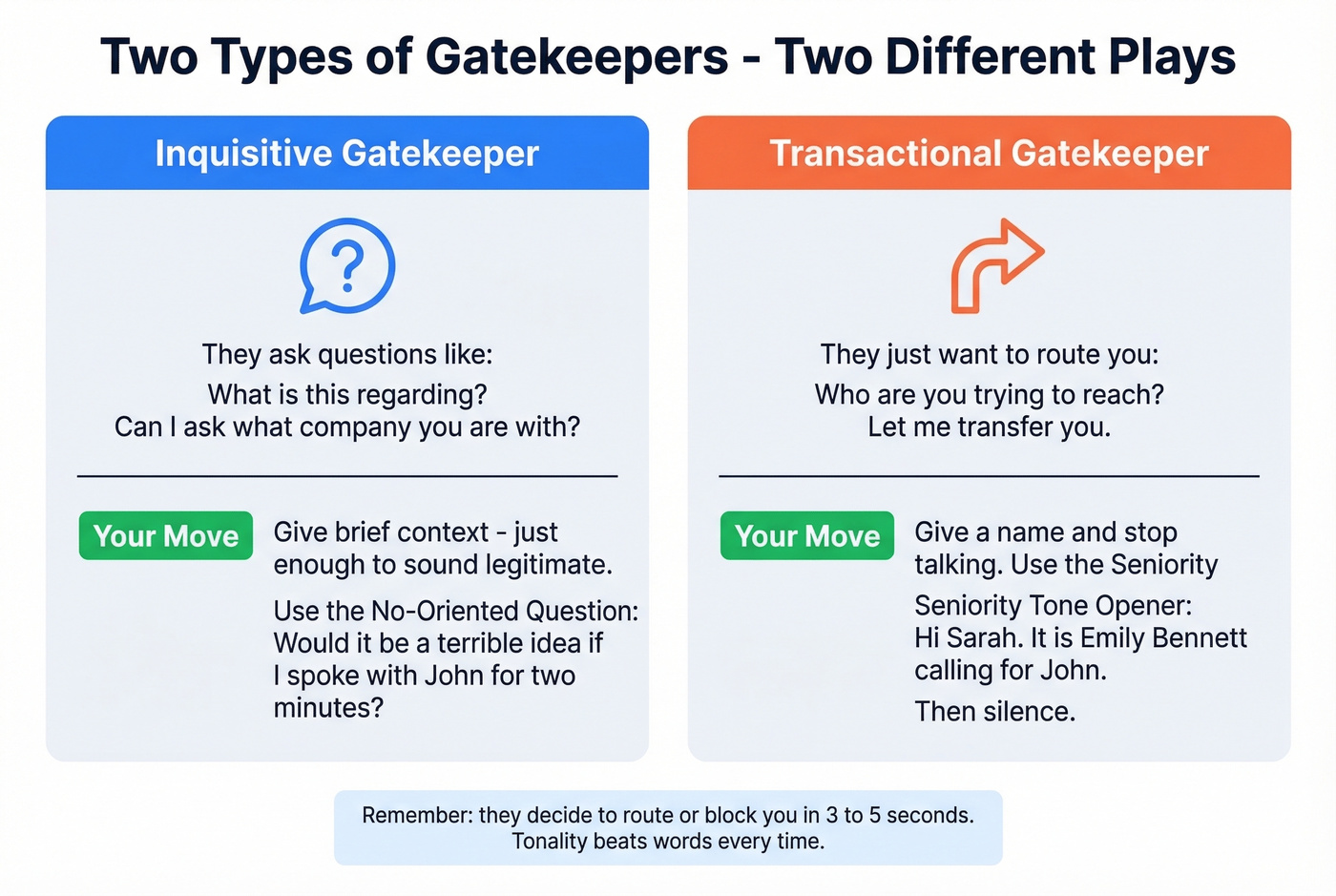
Then stop talking. The silence is the move. This sounds like an expected call from someone senior - no explanation, no pitch, no "I'm calling from XYZ Corp about our solution." The gatekeeper's instinct is to put you through because you sound like you belong. First-name-only variants work even better because they signal familiarity.
We've seen reps who switched from a full company introduction to this first-name-only approach double their route-through rate in a single week. It feels uncomfortable at first, like you're being rude by not explaining yourself, but that discomfort is exactly why it works - most callers over-explain, and gatekeepers have learned to treat over-explanation as a cold call signal.
The No-Oriented Question
"Would it be a terrible idea if I spoke with John for two minutes?"
This comes from Chris Voss's negotiation framework. Asking someone to say "no" feels safer than asking them to say "yes." A similar reframing in a fundraising context produced a 23% increase in conversions. It works because it lowers the gatekeeper's defenses - you're not pushing, you're asking permission in a way that's easy to grant.
Quick-Fire Scripts
Not every gatekeeper interaction needs a full strategy. Three you can deploy in under ten seconds:
The Voicemail-Then-Confirm: Leave a voicemail for the decision-maker. Call back five minutes later. "I just left John a voicemail - could you confirm his email address so I can follow up?" You're not asking to be put through. You're asking for a small, reasonable thing.
The Time-Box: "Have you got 30 seconds for me to explain the nature of my call?" Respectful, specific, easy to say yes to.
The Warm Callback: "I'm following up on an email I sent - they'll know what it's regarding." The key: actually send the email first. A quick note the day before makes this truthful.
When They Say "Send an Email"
"Send an email" is the gatekeeper's default deflection. Your response: "Happy to - what's their direct email?" Now you've turned a block into intel. If they give you a generic inbox, follow up with: "And their direct line for when I follow up?"
Even a failed call should produce information you can use tomorrow.
The 60-Second Pre-Call Routine
What you do in the 60 seconds before dialing matters more than your script.
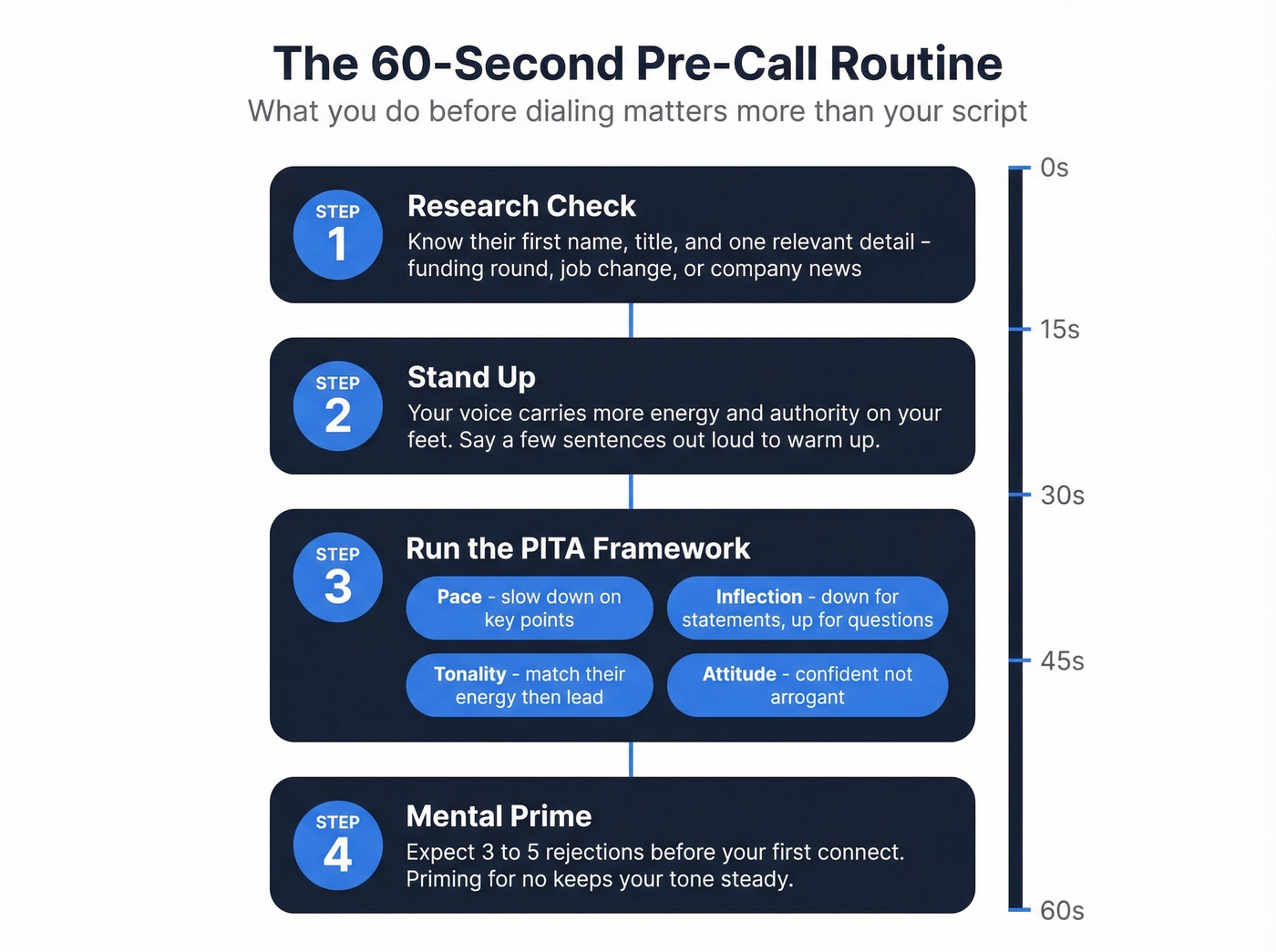
Research check: Know the prospect's first name, title, and one relevant detail - a recent funding round, job change, or company news. Stand up. Your voice carries more energy and authority when you're on your feet. Warm your voice by saying a few sentences out loud so your first words of the hour aren't to a prospect.
Then run the PITA framework: Pace (slow down on key points), Inflection (downward = statement, upward = question), Tonality (match their energy, then lead), Attitude (confident, not arrogant). And expect 3-5 no's before you start. Mental priming for rejection keeps your tone steady when it happens.

You just read the data: mobile numbers deliver up to 7x more connects than switchboards. Prospeo gives you access to 125M+ verified mobile numbers with a 30% pickup rate - the highest in the industry. At $0.10 per number, you pay only when a verified mobile is found.
Skip the gatekeeper entirely - start dialing decision-makers direct.
When to Call (and When Not To)
| Window | Why It Works |
|---|---|
| Before 8:30am | Gatekeeper not yet at desk; decision-maker often answers direct |
| 11am-12pm | Peak answer rates across industries |
| 4pm-5pm | Second peak; end-of-day availability |
| After 5:30pm | Gatekeeper gone; decision-maker still working |
| Tue/Wed | Highest connect days |
The best times to cold call are 11am-12pm and 4pm-5pm based on Zendesk data. Tuesday and Wednesday are the top connect days. But here's the gatekeeper-specific insight: call before 8:30am or after 5:30pm. Decision-makers are at their desks during off-hours. Gatekeepers aren't. Timing alone is one of the most underrated ways to reach decision-makers without going through the front desk.
The Warm-Up Sequence
By the time you dial on Day 3, you're not cold anymore.
Day 1: Personalized email. Keep it 100-200 words. Reference something specific in the subject line - personalized subjects are 26% more likely to be opened. A recent hire, a funding round, a shared connection. Personalized emails boost response rates by 112% compared to generic templates.
Day 2: Social connection request. Keep it under 175 characters. No pitch. Just a brief note referencing your email or a shared interest.
Day 3: Call. Reference the email. "I sent you a note Tuesday about [topic] - wanted to put a voice to it." Even if you don't connect live, the call itself nearly doubles your email reply rate - 3.44% vs 1.81% for email alone. If a gatekeeper asks what it's regarding, you can honestly say you're following up. This warm approach makes navigating gatekeepers far easier than a purely cold dial.
Mistakes That Get You Blocked
Pitching the gatekeeper. They can't buy. Give context, not a demo.
Not using the prospect's first name. "I'm calling for the VP of Operations" screams cold call. "I'm calling for Sandra" doesn't.
Concealing the reason for your call. Vagueness triggers blocking. Be brief and direct.
Talking more than 60 seconds. If you're spending a minute with a gatekeeper, you've already lost that call.
Not asking for best callback time. Even a failed call should produce intel. "When's the best time to reach Sandra directly?" Skip this if you already have their mobile - you don't need the gatekeeper's help at that point.
Reading a generic script. Gatekeepers hear dozens of these daily. They can spot a script in the first three words. Sound like a human.
What Top Reps Do Differently
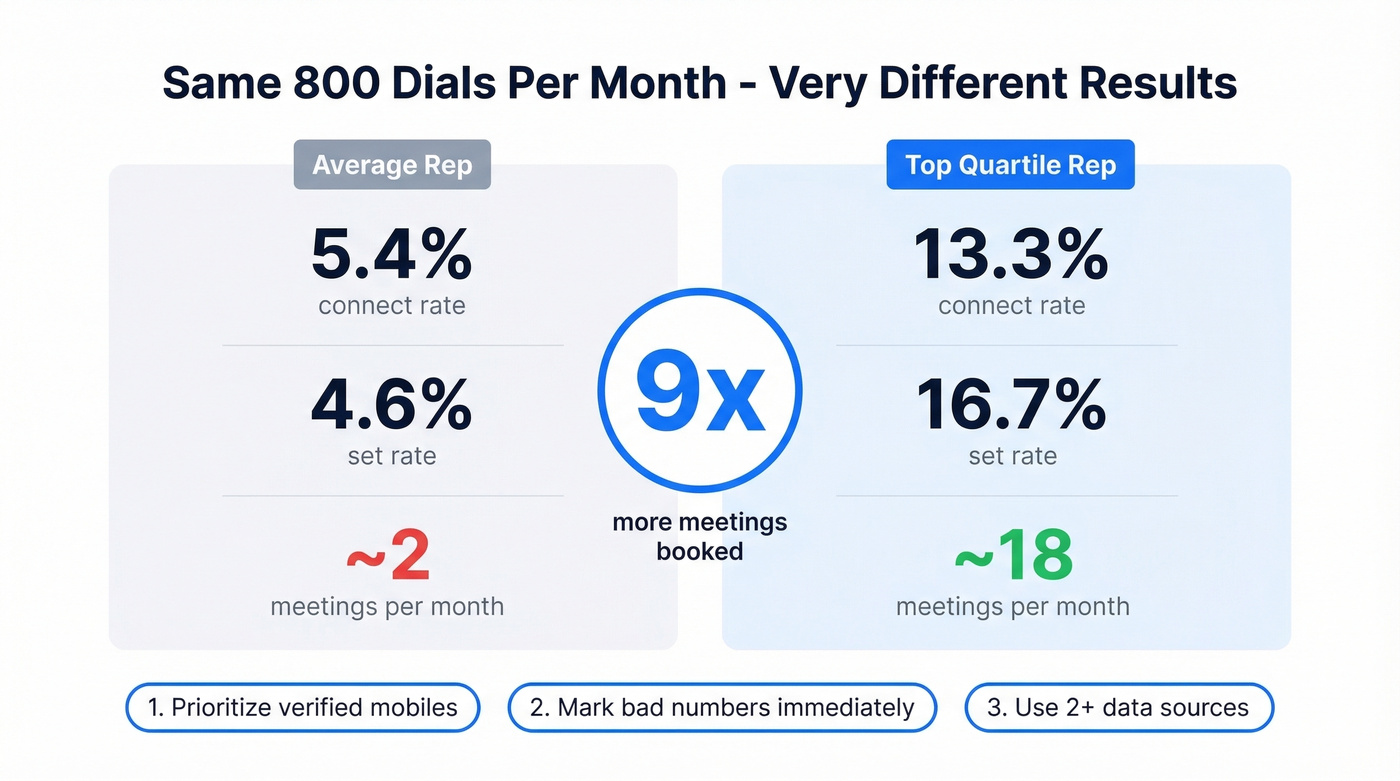
The gap between average and elite isn't charisma - it's data quality. Top-quartile reps hit a 13.3% connect rate vs 5.4% for average reps. Their set rate runs 16.7% vs 4.6%. Let's run the math on 800 dials per month: an average rep books roughly 2 meetings. A top rep books 18. That's a 9x gap from the same activity volume.

That difference comes down to three habits. First, top reps prioritize direct dials and verified mobiles - they're calling the decision-maker's cell, not the front desk. Second, they mark bad numbers immediately so they never waste a dial on a dead line twice. Third, they use at least two data sources, because no single provider covers every contact. Cell phone numbers alone can boost connect rates by up to 3x.
If you want a repeatable process, build a cold calling system that pairs better data with consistent execution.
On r/sales, the consensus is blunt: cold calling works if you have good data and enough volume. One practitioner noted that with a 5% connect rate and 200+ dials per day, you can book at least one meeting daily. But that 5% assumes you're calling real numbers. If your data provider is feeding you switchboard lines and disconnected numbers, you're not doing outbound - you're doing busywork.
In our experience, effective gatekeeper handling starts long before you pick up the phone. It starts with the quality of your sales prospecting data.
Your pre-call routine is only as good as the data behind it. Prospeo's 300M+ profiles refresh every 7 days, so the direct dials and verified emails you pull are current - not stale switchboard numbers from six weeks ago. Teams using Prospeo book 35% more meetings than Apollo users.
Replace 19-dial connect rates with single-digit ones.
FAQ
How do you get past the gatekeeper in sales?
The fastest method is skipping them entirely by calling the decision-maker's mobile number directly. When you do reach a gatekeeper, use a confident, first-name tone and stop talking after your opener - they decide to route or block in 3-5 seconds based on how you sound, not what you say.
How many calls does it take to reach a decision-maker?
About 19 dials through a switchboard, ~13 with a direct dial, and single-digit dials with a verified work mobile. The number type matters more than the number of attempts - switching from switchboard to mobile data can cut your required dials by 7x.
Do gatekeeper scripts still work in 2026?
Scripts give you structure, but tonality is what gets you through. Gatekeepers hear scripted pitches all day. The reps who connect sound like they belong - confident, brief, and familiar. Pair a strong opener with verified direct numbers and you'll rarely need a script at all.
What's the best time to call to avoid gatekeepers?
Call before 8:30am or after 5:30pm. Decision-makers are often at their desks during these off-peak windows while gatekeepers aren't. During business hours, Tuesday and Wednesday between 11am-12pm see the highest answer rates across industries.