

Global Database Pros and Cons (2026 Review)
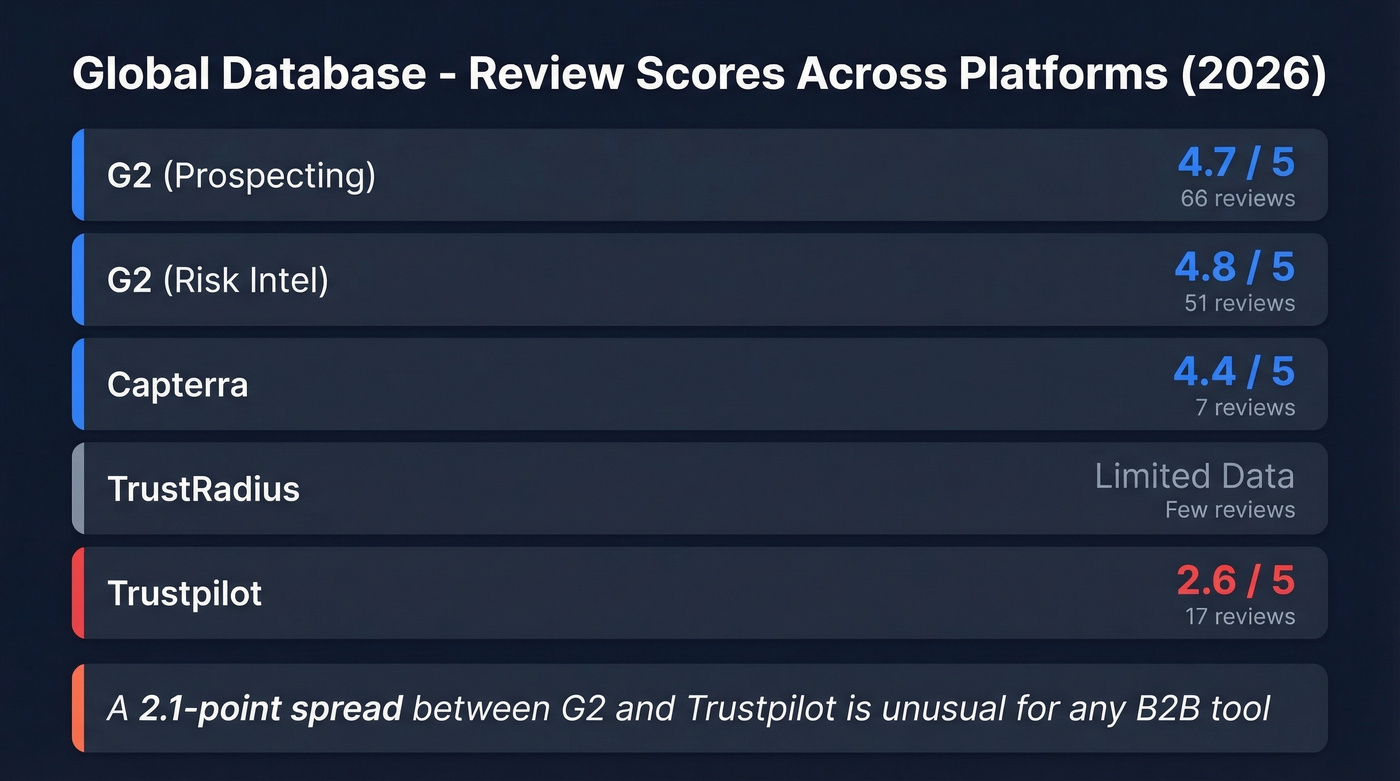
The vendor claims ~300M companies worldwide, yet third-party listings show 80M+ business profiles - a gap nobody explains. Trustpilot sits at 2.6 stars. G2 shows 4.7. That's a 2.1-point spread, which is unusual for any B2B tool and worth digging into.
Understanding the global database pros and cons matters because this platform actually runs two distinct product lines - Prospecting and Risk Intelligence - and the experience varies wildly depending on which one you're using.
Quick Verdict
Strong for compliance-heavy use cases like KYC, AML, and supplier risk screening. Murkier value for pure sales prospecting, especially at opaque enterprise pricing. The G2 rating of 4.7/5 from 66 reviews clashes hard with Trustpilot's 2.6/5 from 17. That kind of gap usually means the product rewards power users who invest serious time but punishes everyone else.
Key Advantages
We've reviewed dozens of B2B data platforms, and Global Database earns its G2 rating in a few specific areas:
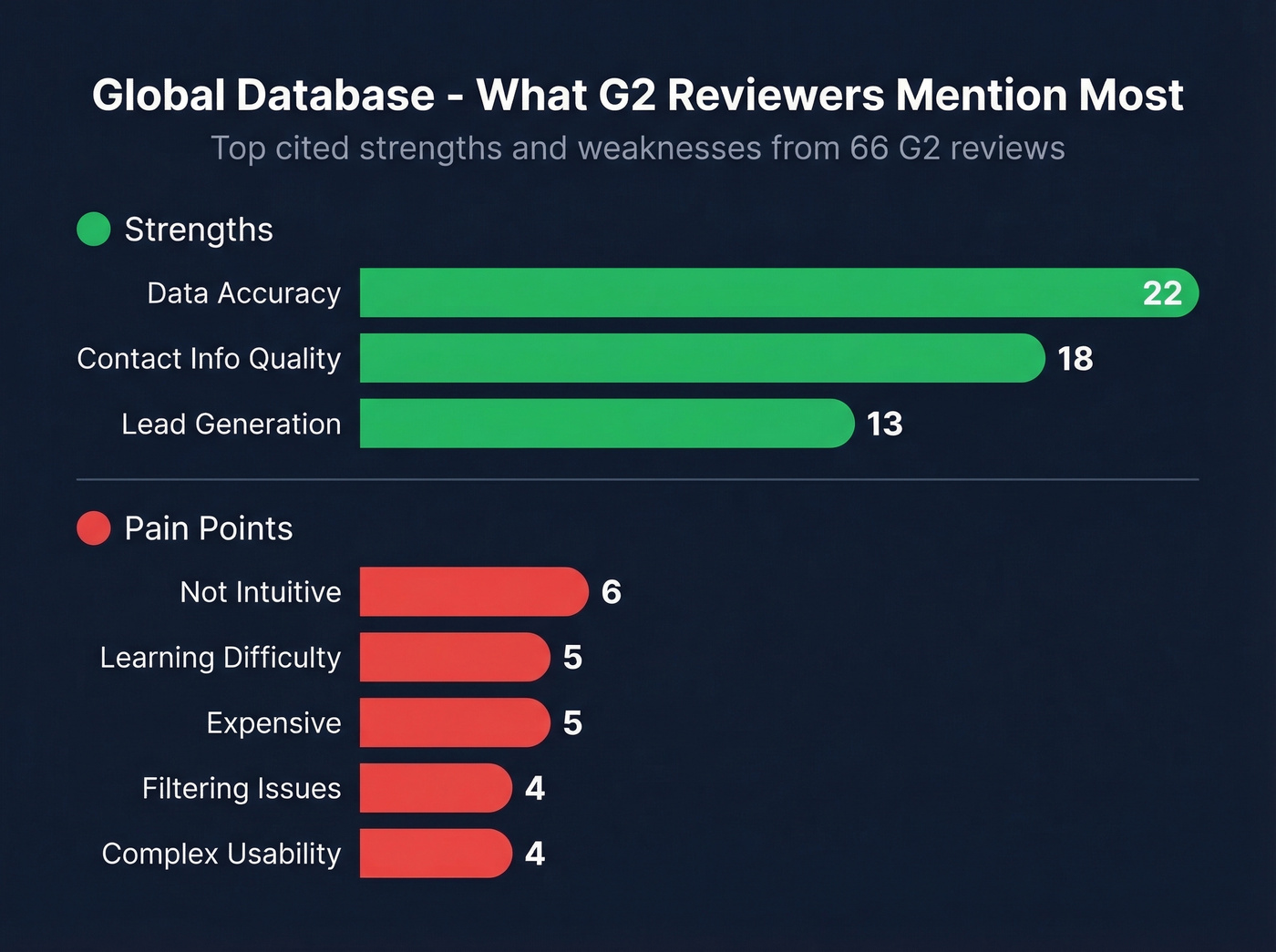
Data accuracy is the most-cited strength with 22 G2 mentions. Coverage spans 195 countries with 100M+ verified contacts and daily updates. The breadth is genuinely impressive for international prospecting - few competitors match that geographic range.
Contact information quality gets 18 G2 mentions, with lead generation close behind at 13. Over 100 search filters let you slice by industry, SIC code, company size, and seniority. That's a lot of knobs to turn.
CRM integrations work out of the box with Salesforce, HubSpot, Slack, Marketo, and Mailchimp. In our testing, no custom middleware was needed for basic workflows, which is a relief given the learning curve complaints we'll get to.
G2 category scores run high - Meets Requirements 9.6, Ease of Setup 9.7, Quality of Support 9.7. Capterra's Customer Service sub-rating hits a perfect 5.0, which is notable given the Trustpilot complaints about support.
The platform is GDPR and CCPA compliant, using AI-assisted verification layered with human validation across multiple sources. For regulated industries, that's a real differentiator.
Risk Intelligence rates 4.8/5 on G2. Dashboard customization, UBO mapping, and compliance insights are where this platform genuinely stands apart. Banking compliance teams and supply chain managers rate it particularly highly for sanctions screening and supplier risk monitoring. If compliance is your primary use case, this is the product worth evaluating - not the prospecting side.
Notable Drawbacks
G2 reviewers flag five recurring pain points: "Not Intuitive" leads with 6 mentions, followed by "Learning Difficulty" at 5, "Expensive" at 5, "Filtering Issues" at 4, and "Complex Usability" at 4. That's a lot of friction for a tool scoring 9.7 on Ease of Setup. The initial configuration is fine, but daily usage has a steeper curve than the setup score suggests.
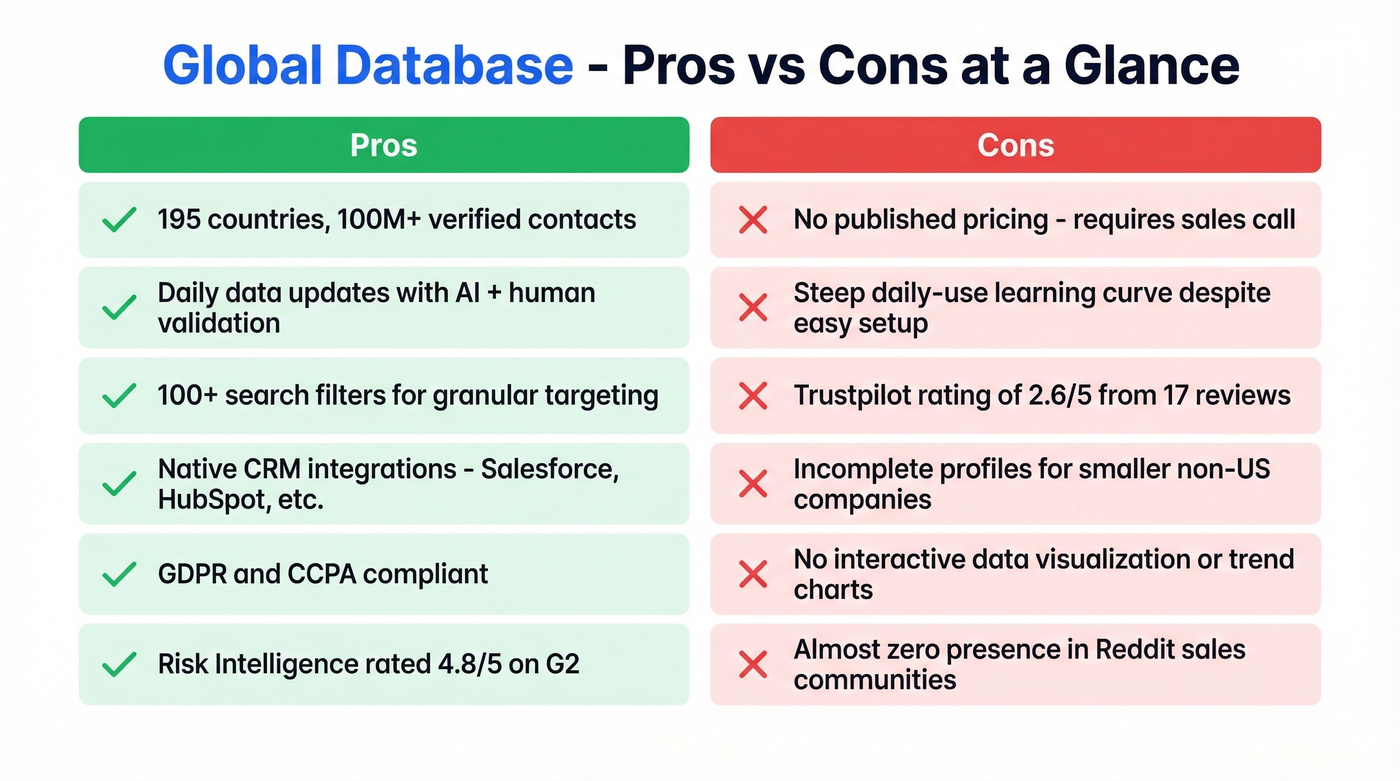
Even the Risk Intelligence product, despite its 4.8/5 rating, gets dinged for limited reporting customization and complex initial configuration.
Capterra reviewers flag incomplete profiles for smaller suppliers outside North America and slow-updating risk scores where public records are limited. They also want better data visualization - interactive charts and trend graphs for executive reporting are conspicuously absent.
Here's the thing: Global Database is notably absent from Reddit's B2B data discussions. Threads on r/sales and r/LeadGeneration rarely mention it, which limits independent user sentiment for a tool claiming 300M companies. When a product doesn't show up in the places where practitioners actually talk shop, that's a data point in itself.
The Trustpilot Problem
The 2.6/5 from 17 Trustpilot reviews is hard to ignore. Complaints include allegations of fabricated financial data versus actual financial statements, support non-responsiveness, and one reviewer reporting a contact success rate below 5%. Verified positive reviews from late 2024 praised data precision and detailed due diligence reports, though more recent sentiment hasn't been as favorable.
We've seen this G2-Trustpilot gap before. It usually signals a product that works well for power users who invest time but frustrates buyers expecting quick wins.

Global Database scores well for compliance but stumbles on prospecting transparency. Prospeo delivers 300M+ profiles with 98% email accuracy, 125M+ verified mobiles, and a 7-day data refresh - at $0.01/email with pricing published on the website.
Skip the sales call. Start prospecting in under two minutes.
Ratings Across Platforms
| Platform | Rating | Reviews | Updated |
|---|---|---|---|
| G2 (Prospecting) | 4.7/5 | 66 | 2026 |
| G2 (Risk Intel) | 4.8/5 | 51 | 2026 |
| Capterra | 4.4/5 | 7 | Mar 2026 |
| TrustRadius | Limited data | Few reviews | 2026 |
| Trustpilot | 2.6/5 | 17 | Mar 2026 |
Pricing Breakdown
Global Database doesn't publish pricing. You'll fill out a form, talk to sales, and get a custom quote. Based on where similar B2B intelligence platforms land, expect $3,000-$15,000/year for small teams and $15,000-$60,000+/year for enterprise deployments with API access, compliance modules, and higher export limits. One G2 reviewer noted that at this price point, they expected proactive account management rather than transactional support tickets.
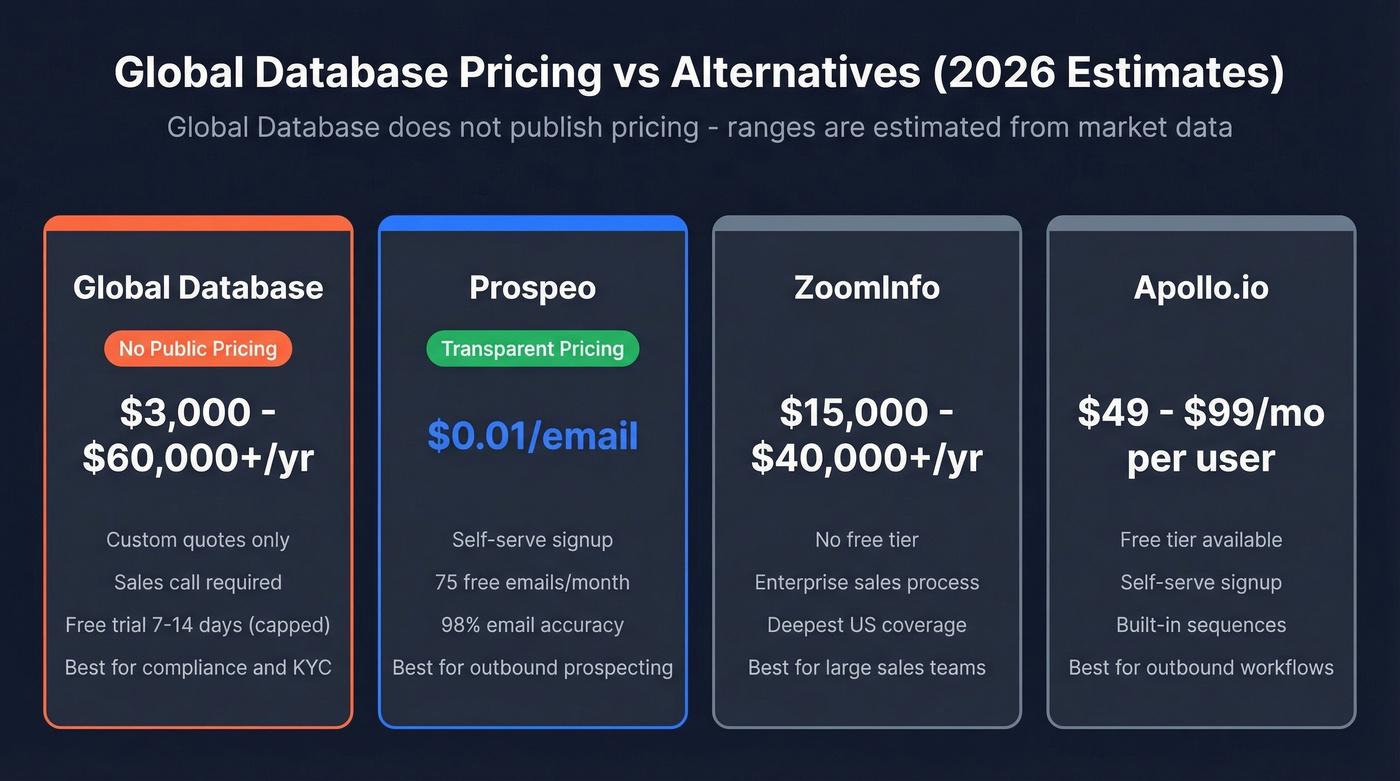
A free trial is available - typically 7-14 days with capped export credits, requested through their sales team. Requiring a quote in 2026, when competitors publish pricing on their websites, tells you who this product is built for. It's not the self-serve crowd.
Let's be honest: if your primary use case is outbound prospecting rather than compliance, you're probably overpaying. Global Database's real moat is risk intelligence and KYC workflows. For pure email-and-phone prospecting, the market has better options at a fraction of the cost.
Who Should Use It
Compliance teams running KYC/AML/sanctions screening across multiple jurisdictions. Enterprise orgs that need multi-country company intelligence with UBO mapping and financial history in one platform. If a sales-led buying process is standard at your company anyway, the opaque pricing won't bother you.
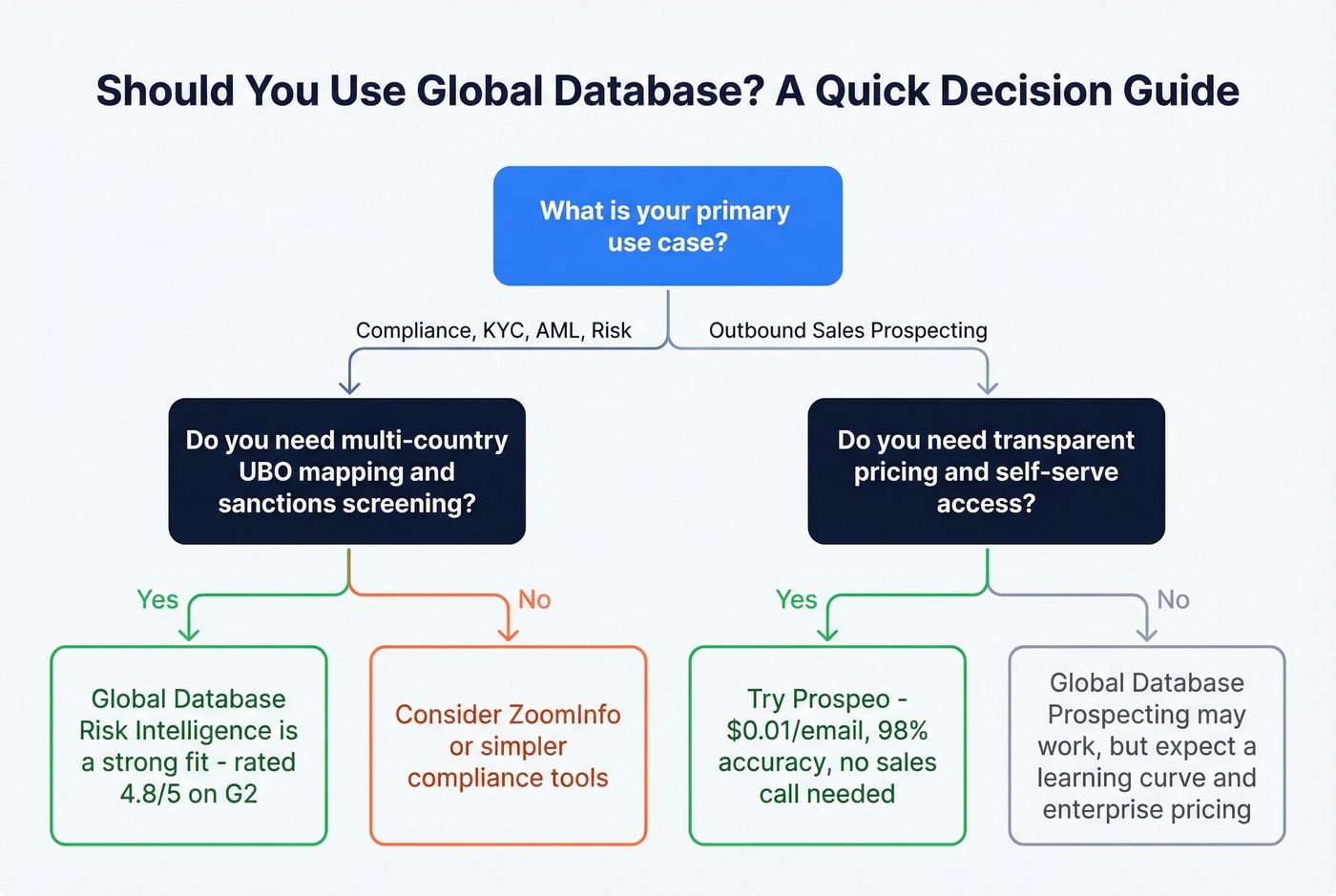
Skip it if you primarily need verified emails and direct dials for outbound, want transparent self-serve pricing, or need a short learning curve. For those use cases, you'll get more value elsewhere.
Alternatives Worth Considering
ZoomInfo is the obvious enterprise comparison - larger contact database, deeper US coverage, $15,000-$40,000+/year with no free tier. If you're already evaluating enterprise-priced tools, ZoomInfo's workflow breadth is hard to beat. But you're paying enterprise prices either way.
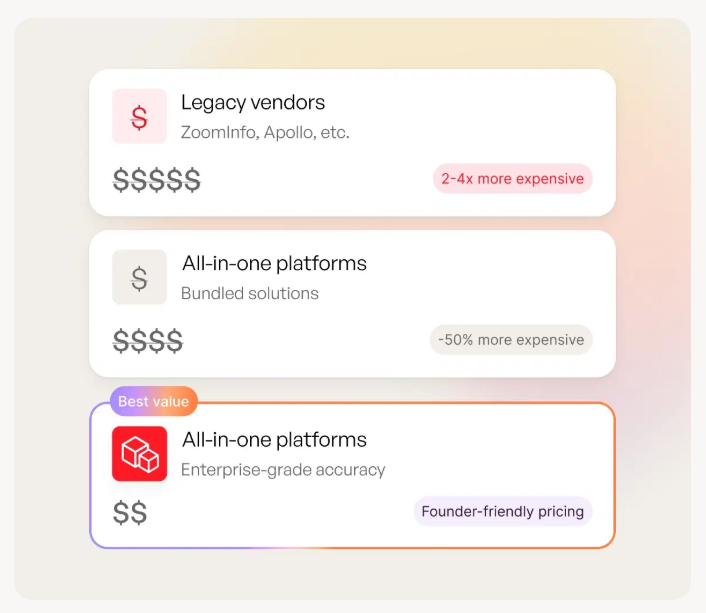
Apollo.io offers a free tier with paid plans from ~$49-$99/mo per user - less depth on compliance data, but outbound workflows just work if sequencing is what you need. If you're building a modern outbound motion, it helps to map your lead generation workflow and pick tools that match it. Lusha takes a browser-extension-first approach at ~$49/mo per user with a free tier of 5 credits/month, best for quick contact lookups rather than deep company intelligence.
When a platform hides pricing and scores 2.6 on Trustpilot, you deserve a better option. Prospeo gives you 30+ search filters, 98% verified emails, and self-serve access - no quotes, no contracts, no surprises.
Transparent data, transparent pricing. That's the whole point.
FAQ
Does Global Database offer a free trial?
Yes - expect 7-14 days with capped export credits. There's no self-serve signup; you'll need to request access through their sales team, which typically involves a demo call before activation.
Why is the Trustpilot score so low?
The 2.6/5 rating reflects complaints about support responsiveness, financial data accuracy, and poor contact success rates. G2's 4.7/5 skews positive because it attracts invested power users rather than early churners. Neither score tells the full story on its own.
What's a cheaper alternative for B2B email prospecting?
Prospeo starts at ~$0.01 per email with 98% accuracy and a free tier of 75 emails/month. Apollo.io and Lusha also offer free plans, though with lower verification rates and less frequent data refreshes.
What are the biggest strengths and weaknesses in 2026?
The biggest strengths are international company coverage across 195 countries, strong compliance and risk intelligence tools, and high G2 satisfaction scores. The biggest weaknesses are opaque pricing, a steep daily-use learning curve, and a Trustpilot rating that suggests inconsistent experiences outside the compliance use case.