


GrowMeOrganic vs QuickMail: Which Cold Email Tool Actually Delivers?
GrowMeOrganic vs QuickMail is a common comparison, but these tools solve different problems. GrowMeOrganic tries to be "prospecting + sending" in one place. QuickMail is a sending engine built to protect deliverability.
30-second verdict:
- QuickMail wins if you care about deliverability, run multiple inboxes or clients, and already have a data source.
- GrowMeOrganic wins if you want prospecting and sending in one tool and can tolerate data quality tradeoffs.
Pricing Side by Side
Both offer 14-day trials. QuickMail's trial doesn't auto-charge, which we wish every SaaS company copied.
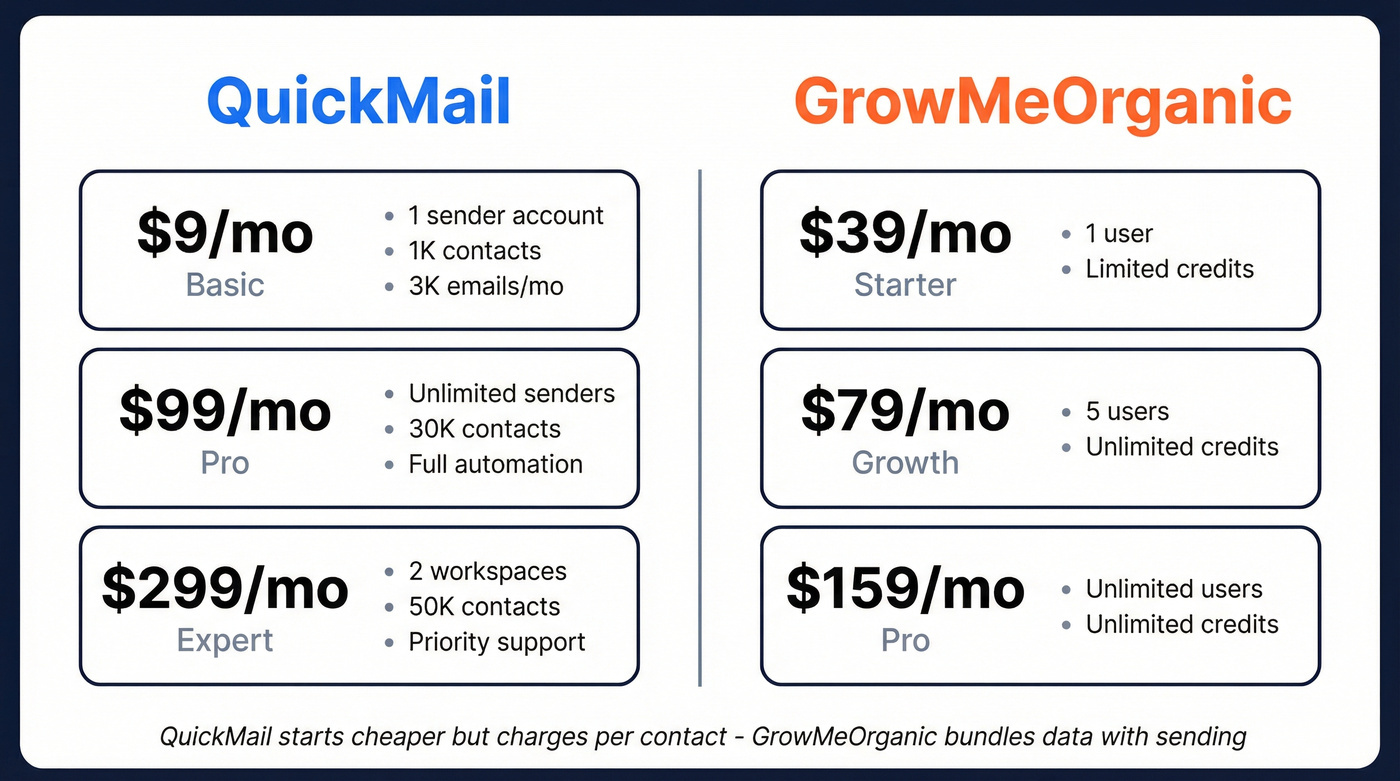
| Tier | QuickMail | GrowMeOrganic |
|---|---|---|
| Entry | $9/mo - 1 sender, 1K contacts, 3K emails | $39/mo - Starter (1 user) |
| Mid | $99/mo - unlimited senders, 30K contacts | $79/mo - Growth (5 users, unlimited credits) |
| Top | $299/mo - 2 workspaces, 50K contacts | $159/mo - Pro (unlimited users, unlimited credits) |
You'll sometimes see slightly different GrowMeOrganic pricing quoted elsewhere ($49/$99/$199). Check their site for the latest.
All-in-One vs Sending-Only
If you want one login to find leads and send sequences, GrowMeOrganic is the all-in-one bet. Want the sending layer to be rock-solid while plugging in your own leads? QuickMail is the cleaner architecture.
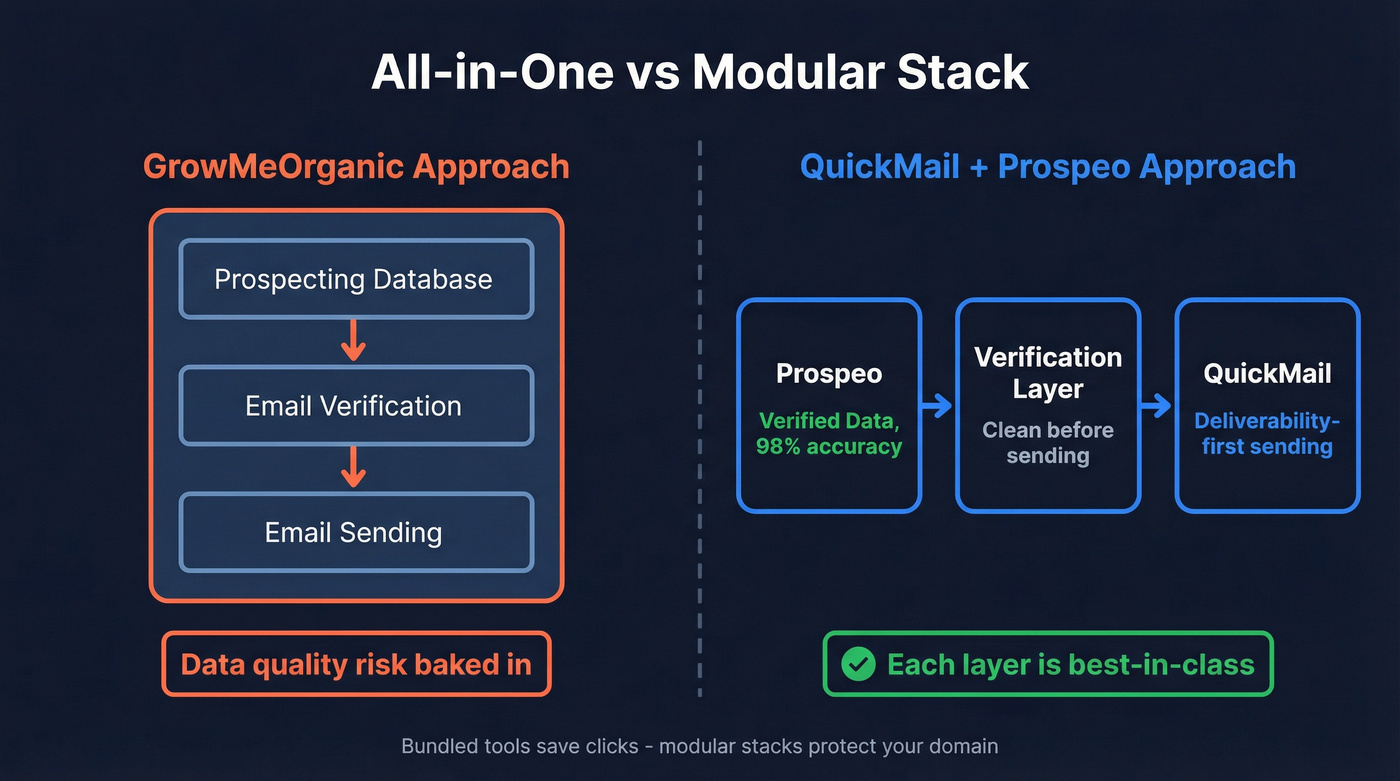
Here's the thing: if your average deal size sits below five figures, you don't need an all-in-one platform. You need clean data and a sending tool that stays out of trouble. Most teams should build that combo instead of gambling on a bundled database that may or may not hold up under scrutiny.
Deliverability Compared
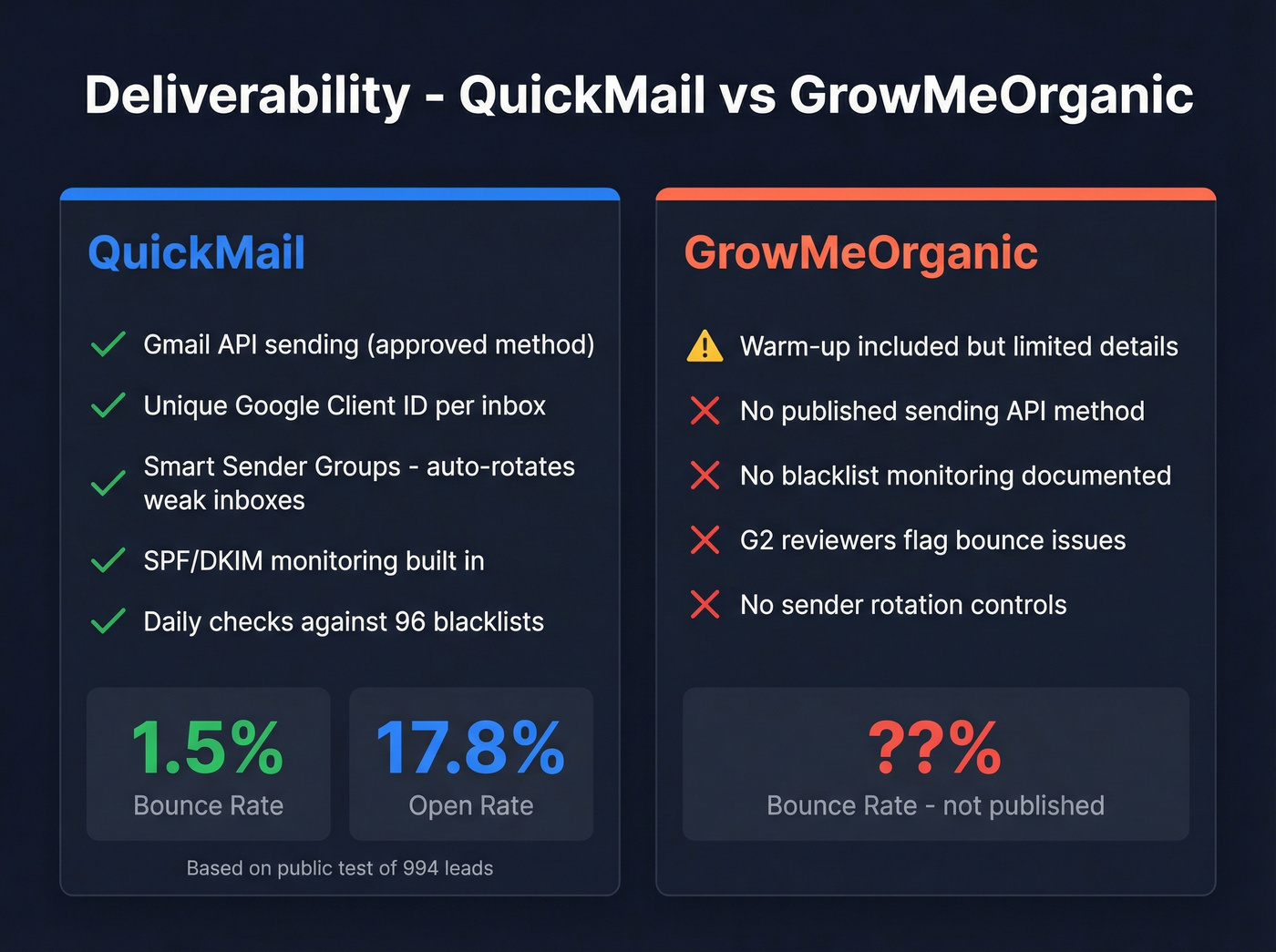
QuickMail is built like a deliverability-first product. It sends via Gmail's approved sending API, and the founder has explained how each inbox gets its own Google Client ID. Smart Sender Groups rotate weaker inboxes out automatically. SPF/DKIM monitoring runs alongside daily checks against 96 blacklists. A public test on 994 leads showed 1.5% bounces and 17.8% opens.
Two practical context points that matter in 2026:
Gmail accounts for 27.5% of leads uploaded to QuickMail. That's exactly why Gmail-specific sending infrastructure is worth caring about. And once you're a bulk sender hitting 5,000+ emails per day, Gmail and Yahoo compliance expectations get stricter - DMARC alignment and complaint control stop being optional. QuickMail is simply closer to that reality than most competitors.
GrowMeOrganic doesn't publish the same depth of deliverability mechanics. It includes warm-up, but at least one G2 reviewer flags bounces and reliability issues. In our experience, when a tool can't clearly explain its sending approach, you're the one paying for the learning curve - with your domain reputation.

GrowMeOrganic bundles unreliable data. QuickMail ships no data at all. Prospeo gives you 300M+ profiles at 98% email accuracy on a 7-day refresh cycle - then pushes clean contacts straight into QuickMail, Instantly, or any sending tool via native integrations.
Stop gambling your domain reputation on unverified emails.
Data Quality Reality Check
Look - GrowMeOrganic's database is the whole pitch, and it's also the biggest risk.
On G2, a reviewer described the emails as "not even 12%" accurate. A Reddit thread testing multiple email finders, GrowMeOrganic included, described an 80% miss rate. Product Hunt reviews stack up similar complaints: buggy workflows, messy exports, and data that needs heavy cleanup before it's usable.
This is where the "unlimited credits" idea falls apart. Volume means nothing if the underlying emails aren't reliable. One bad upload can spike bounces, tank reputation, and turn your next month of outbound into a deliverability rehab project that eats weeks of productive selling time.
QuickMail avoids this entire mess by not selling data at all. That's honest, but it means you must bring your own verified list.

What Users Actually Say
| QuickMail | GrowMeOrganic | |
|---|---|---|
| G2 Rating | 4.7/5 (116 reviews) | 4.0/5 (12 reviews) |
| Praised for | Automation, support, ease of use | Lead gen, affordability |
| Criticized for | Learning curve, limited reporting, occasional bugs | Data accuracy, bugs, poor support |
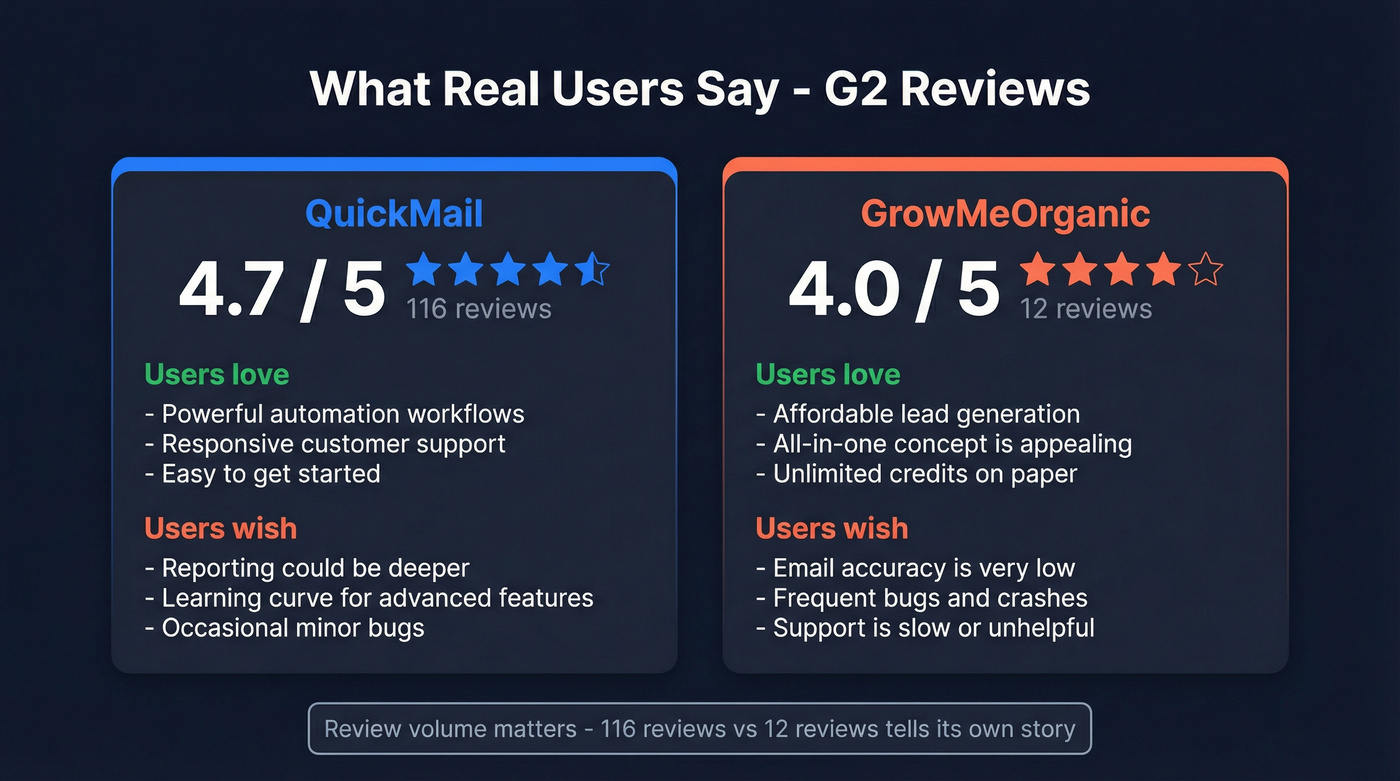
The review volume gap matters. QuickMail has far more feedback, and the criticism is mostly "power tool" friction - the kind you'd expect from a feature-rich platform. GrowMeOrganic's criticism is more fundamental: people are upset about the reliability of what they're paying for.
The Missing Piece - Verified Data
Neither tool guarantees you clean emails. GrowMeOrganic's built-in data is inconsistent. QuickMail intentionally provides no prospect database at all.
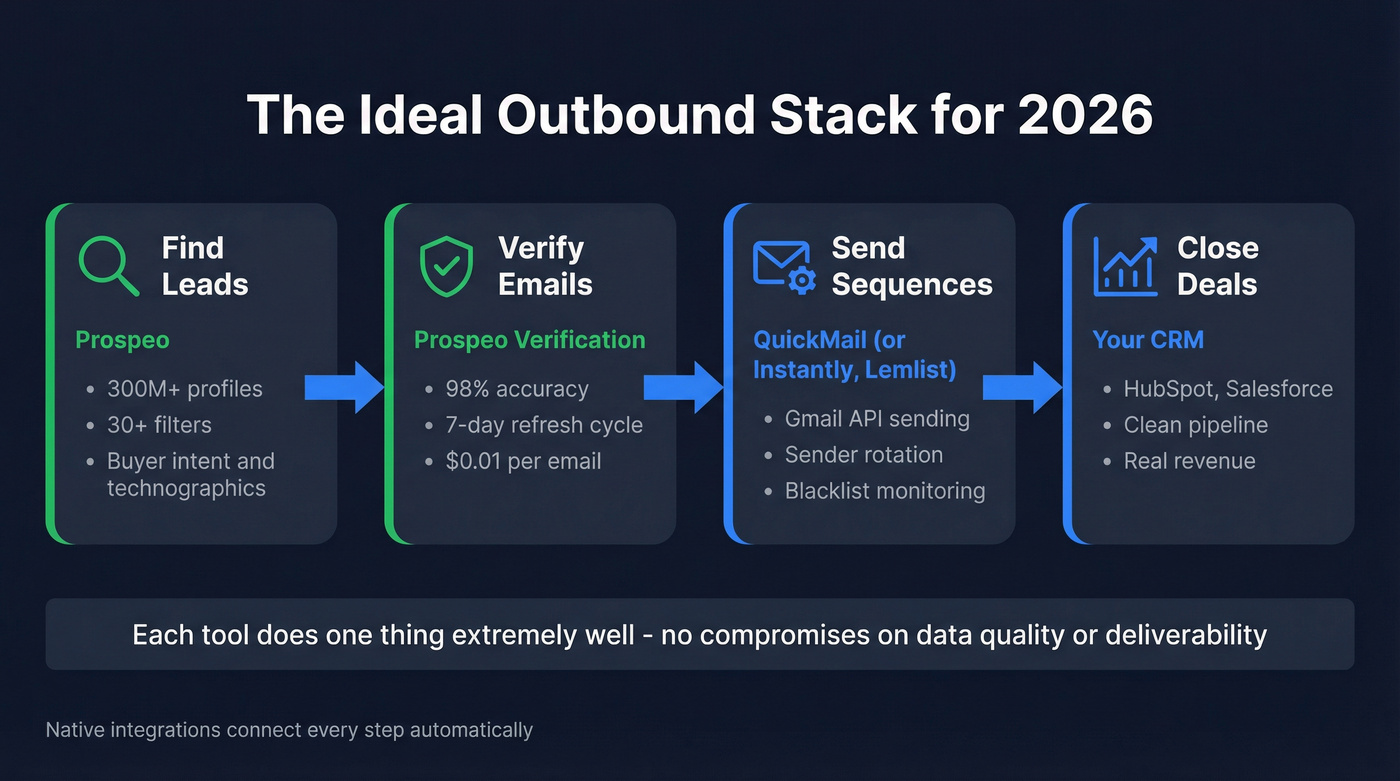
Prospeo fills that gap: 300M+ professional profiles, 143M+ verified emails, and 98% email accuracy on a 7-day data refresh cycle. You can filter with 30+ criteria - buyer intent, technographics, job changes, headcount growth - verify in bulk, enrich records, and push contacts into tools like Instantly, Lemlist, Smartlead, HubSpot, or Salesforce via native integrations. Or just export a clean CSV for QuickMail. Pricing is self-serve with a free tier (75 emails/month), and paid plans work out to about $0.01 per email.
Unlimited credits mean nothing at 12% accuracy. One verified list from Prospeo - 30+ filters, buyer intent, technographics - outperforms any mass export. At $0.01 per email, verification costs less than a single bounced domain recovery.
Replace unlimited bad data with accurate data that actually converts.
FAQ
Can I use GrowMeOrganic and QuickMail together?
Yes. Use GrowMeOrganic to pull a list, then send from QuickMail - but run the list through a verification tool first so you're not importing bounces into your sending inboxes. At $0.01 per verified email, the cost is negligible compared to a domain reputation hit.
Does QuickMail include a prospect database?
No. QuickMail is sending-only, so you need a separate source for leads and verification before you import contacts.
Which tool has better deliverability?
QuickMail, by a clear margin. The Gmail API approach, sender rotation, and blacklist monitoring are built for staying compliant and keeping bounce rates down. GrowMeOrganic doesn't document comparable deliverability controls, and user reviews flag bounce-rate problems tied to its built-in data.
Is GrowMeOrganic's "unlimited credits" worth it?
Unlimited credits sound great until accuracy drops below 15%. Multiple G2 and Product Hunt reviewers report exactly that. A smaller, verified list from a dedicated data provider will outperform a massive unverified export every time - both in reply rates and domain health.