

Harmonic vs LeadGibbon: Two Very Different Tools
Comparing Harmonic vs LeadGibbon is like comparing a Bloomberg terminal to a pocket calculator. One's a startup intelligence platform built for VCs who want to discover the next breakout company before anyone else. The other is a lightweight email finder for people who just need a working address. The fact that they show up in the same search tells you how muddled the sales tools category has gotten - especially when nearly 45% of marketing data is inaccurate to begin with.
Here's the thing: if you landed on this comparison looking for a prospecting tool, neither of these is what you need. Harmonic is for investors. LeadGibbon is a bare-bones email scraper. The right answer is probably a dedicated B2B data platform. Keep reading.
30-Second Verdict
- Pick Harmonic if you're in venture capital, growth equity, or corporate development and need a startup discovery engine with AI-powered screening and network mapping.
- Pick LeadGibbon if you're an SDR or solo founder who needs cheap email lookups without a contract.
What Each Tool Actually Does
What Is Harmonic?
Harmonic isn't a sales prospecting tool in any traditional sense. It's a startup discovery platform designed for investors and corporate development teams who need to find early-stage companies before they hit the radar.

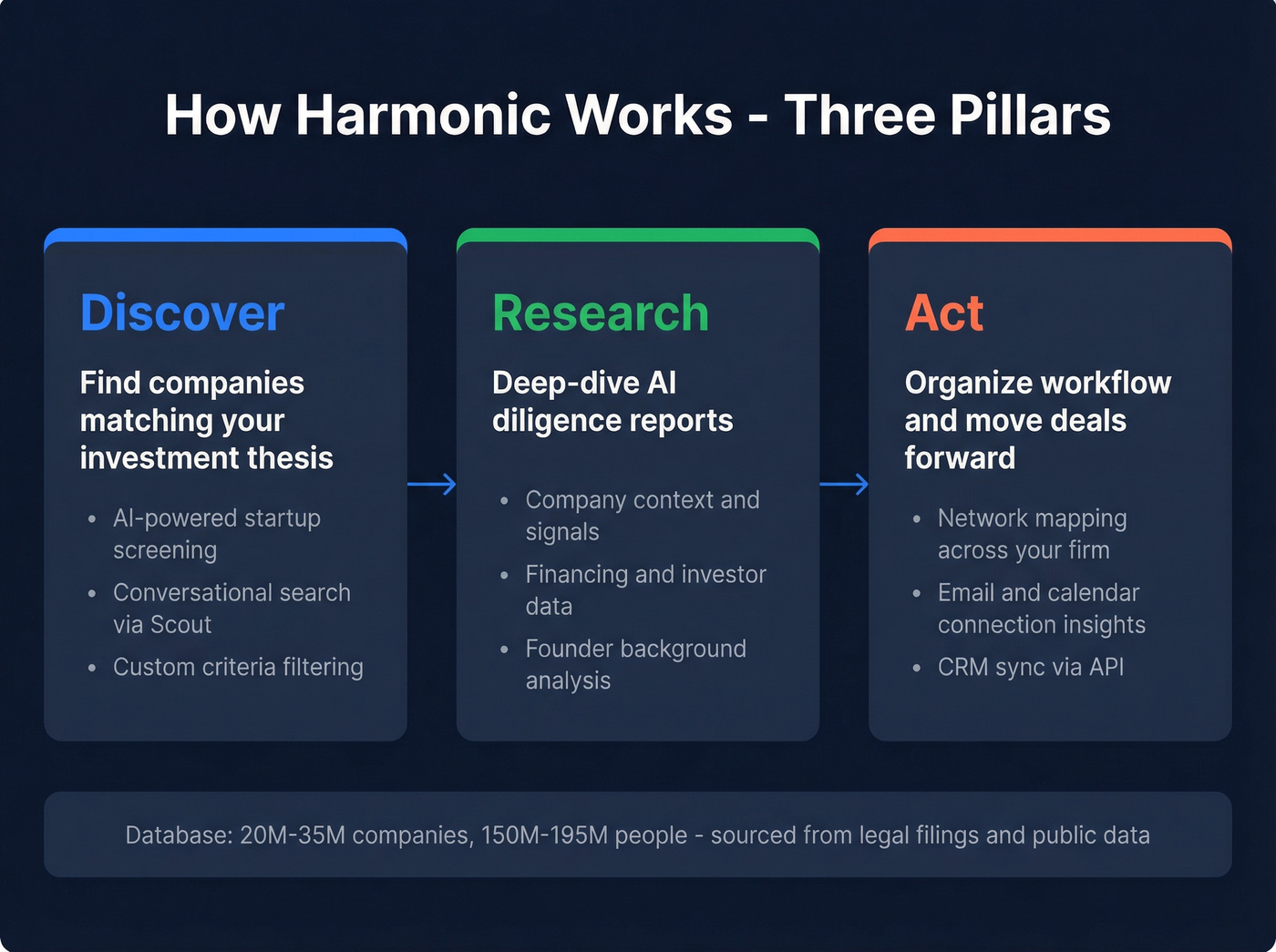
The database size varies by access tier - the enterprise console exposes 35M company records and 195M people records, while Harmonic's own FAQ conservatively lists 20M+ companies and 150M+ people. Data comes from legal filings and dozens of public sources.
The real differentiator is Scout, Harmonic's AI agent that lets you search conversationally, screen companies against custom criteria, and generate research reports - think "show me Series A SaaS companies in fintech with at least two ex-Stripe founders." For deal sourcing, it's genuinely impressive.
The platform breaks into three pillars: Discover (find companies matching your thesis), Research (AI diligence reports and deeper company context), and Act (organize workflow and move opportunities forward). Network mapping pulls in your firm's connections - email, calendar events, CRM engagements - to show who at your firm already knows someone at a target company. Add-ons include financing and investor data plus no-code CRM sync via API.
Harmonic's AI screening is powerful, but it's only as good as the underlying data freshness - something worth pressing on during a demo. The single reviewer on G2 gave it 3.5/5 and described the platform as overwhelming and complex, which tracks for a tool this dense.
Pricing isn't published. Based on what we've seen from similar VC-grade platforms, expect roughly $5K-$25K+/year depending on access tier and firm size. You can check Harmonic's pricing page directly, but don't expect a number without a sales call.
Where LeadGibbon Falls Short
LeadGibbon is about as simple as email finders get. It's a Chrome extension that pulls email addresses from professional profiles, verifies them via a company-server ping, and lets you sync or export via Google Drive. It also includes phone number credits - 25 on the Basic plan, 50 on Pro, 125 on Business - but the core product is email lookup.
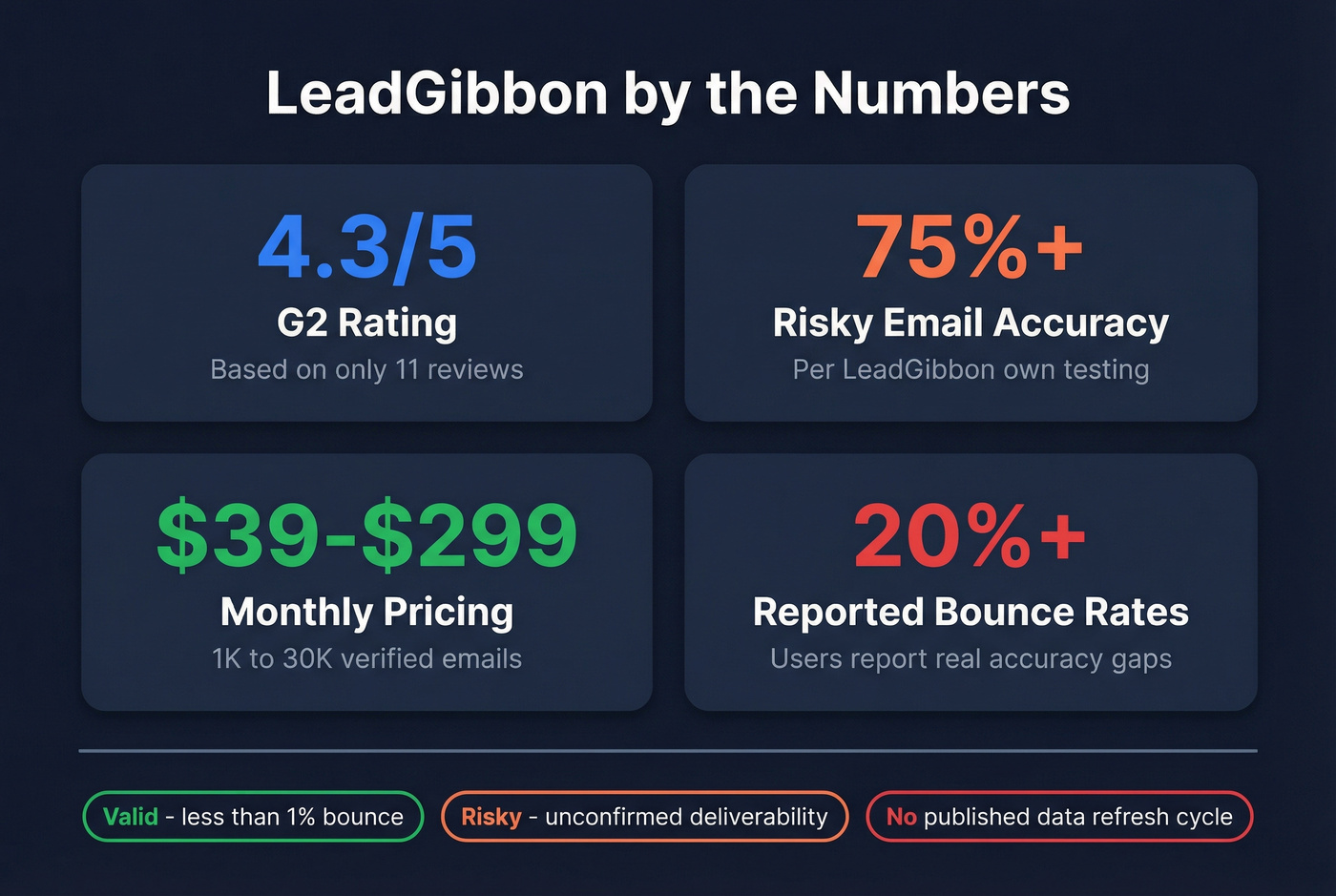
The verification system labels emails as "Valid" (less than 1% bounce chance) or "Risky" (when deliverability can't be determined). In LeadGibbon's own testing, those "Risky" guesses are correct more than 75% of the time. Accept-all and "Risky" results don't count against your credits, which is a nice touch. All plans include the same feature set: email pattern data, duplicate detection, unlimited saved searches, and Google Drive sync.
Pricing is straightforward: $39/mo for 1,000 verified emails, $99/mo for 10,000, or $299/mo for 30,000. No contracts. A free tier gives you 15 credits per week.
Here's where I'd push back on LeadGibbon: the 4.3/5 rating across 11 reviews on G2 sounds decent, but the consistent complaints tell a different story. Users describe inconsistent accuracy, stale emails and phone numbers, and format-based guesses rather than truly verified addresses. In our experience, lightweight email finders like this tend to struggle once you move beyond major U.S. markets. The praise centers on ease of use and responsive support - nice, but it doesn't help when half your emails bounce.
Community discussion around both tools is thin. Neither Harmonic nor LeadGibbon has significant Reddit presence, which itself tells you something about their market penetration relative to bigger players.

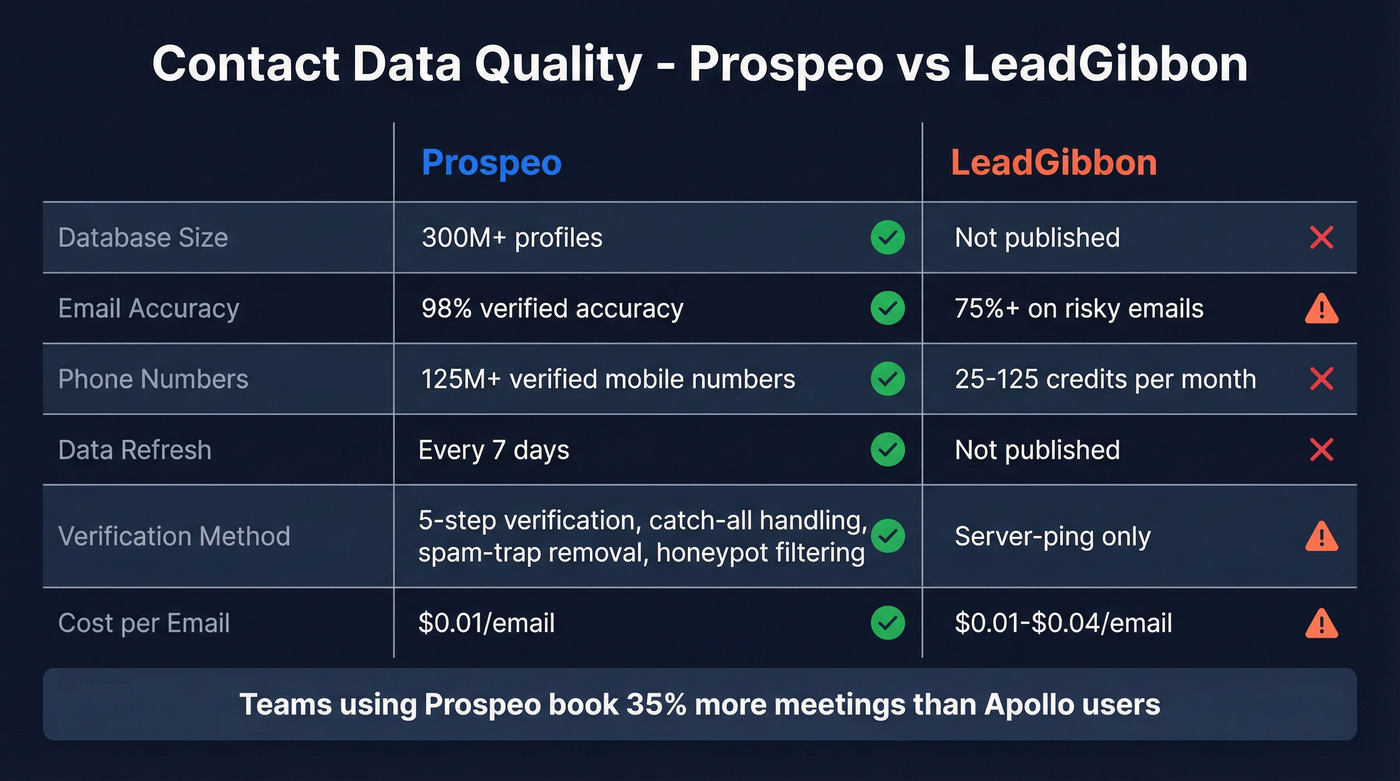
Harmonic is built for investors. LeadGibbon users report bounce rates north of 20%. If you need verified contact data - not startup intelligence - Prospeo gives you 300M+ profiles with 98% email accuracy, 125M+ direct dials, and a 7-day refresh cycle. At $0.01/email, the "cheap" tool is the accurate one.
Stop choosing between overbuilt and underbuilt. Get the data that actually connects.
Side-by-Side Feature Comparison
| Feature | Harmonic | LeadGibbon |
|---|---|---|
| Category | Startup intelligence | Email finder |
| Database | 20M-35M cos, 150M-195M people | Not published |
| Pricing | ~$5K-$25K+/yr | $39-$299/mo |
| Free tier | No | 15 credits/week |
| Verification | N/A | Server-ping |
| Data refresh | Weekly (bulk data delivery) | Not published |
| Ideal user | VCs, corp dev | SDRs, solo founders |
| Chrome extension | No | Yes |
| CRM integration | API + warehouse delivery | Google Drive sync |
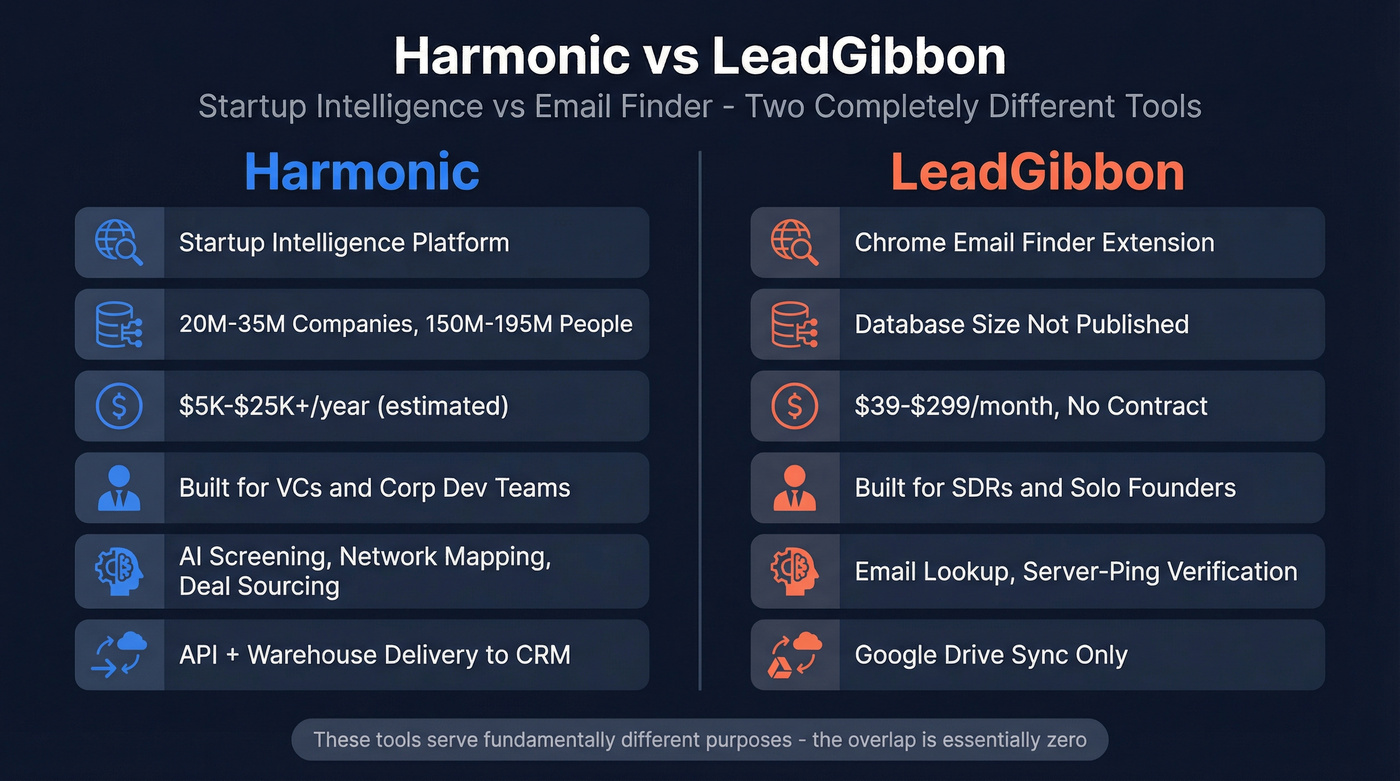
This table almost doesn't make sense. These tools serve fundamentally different purposes. Harmonic helps you discover which startups to invest in; LeadGibbon helps you find someone's email address. The overlap is essentially zero, which is why declaring a "winner" row by row would be misleading.
The real question is whether either tool solves your actual problem.
When to Pick Each Tool
When Harmonic Makes Sense
Use Harmonic if you're sourcing deals in VC, growth equity, or corporate development and need real-time startup signals, AI-powered screening, and network mapping across your firm's existing relationships. It's a specialized tool for a specialized workflow, and nothing else on the market does exactly what it does.
Skip Harmonic if you're an SDR building cold email lists. It's the wrong category entirely - you'll pay enterprise pricing for a tool that doesn't do what you need.
When LeadGibbon Makes Sense
Use LeadGibbon if you need quick, cheap email lookups and you're comfortable with a smaller database. It's fine for lightweight prospecting on a tight budget - say, a solo founder sending 50 cold emails a week who doesn't want to commit to a bigger platform yet.
Skip LeadGibbon if you need a large verified database, direct dials at scale, or consistent accuracy across industries and geographies. Users report real gaps once you move beyond major markets, and the lack of a published data refresh cycle is a red flag for anyone running ongoing campaigns. We've seen teams burn through credits only to discover their bounce rates are north of 20% - at that point, the "cheap" tool isn't cheap anymore.
A Better Fit for Contact Data
If you searched Harmonic vs LeadGibbon because you need verified contact data - not startup intelligence - Prospeo is built for exactly that. The database spans 300M+ profiles with 98% email accuracy and 125M+ verified mobile numbers, all refreshed on a 7-day cycle. Most competitors update every four to six weeks. That weekly refresh is genuinely rare and it shows in deliverability.

LeadGibbon's server-ping verification and unpublished refresh cycle leave you guessing. Prospeo runs 5-step verification with catch-all handling, spam-trap removal, and honeypot filtering - refreshed every 7 days, not whenever they get around to it. Teams using Prospeo book 35% more meetings than Apollo users.
Verified emails that land in inboxes, not bounce folders.
FAQ
Is Harmonic an email finder?
No. Harmonic is a startup discovery and intelligence platform built for VCs and corporate development teams. It doesn't find or verify individual email addresses - for that, you need a dedicated B2B data platform with verification built in.
How much does LeadGibbon cost?
LeadGibbon starts at $39/month for 1,000 verified emails and 25 phone numbers. Pro runs $99/month for 10,000 emails and 50 phones, and Business is $299/month for 30,000 emails and 125 phones. A free tier provides 15 credits per week with no commitment.
Is this a fair comparison?
Not really - and we've been upfront about that throughout. Harmonic is a startup intelligence platform for investors; LeadGibbon is a budget email finder for salespeople. They serve completely different use cases. If you're comparing them because you need contact data for outbound sales, a dedicated B2B data platform with verified emails and direct dials will outperform both for that workflow.