

How to Draft a Follow-Up Email That Actually Gets a Reply
You open a blank compose window and type "Just wanted to follow up..." Stop. That sentence has never convinced anyone to reply. Belkins analyzed 16.5M cold emails across 93 business domains and found the first email pulls an 8.4% reply rate, with every follow-up after that declining. The problem isn't that you're following up. It's that most follow-ups say nothing new.
Here's the thing most guides won't tell you: the real follow-up killer isn't weak copy - it's bad data. Emails that bounce or land in spam never get a chance to be read, and they poison your sender reputation for every message that follows.
What Actually Works (Quick Version)
Before you write a single follow-up, nail these three things:
- Use the objection framework, not "just checking in." Each follow-up addresses a specific reason the prospect hasn't replied - cost, urgency, trust, need, or interest.
- Cap at 3 follow-ups, then recycle. Four total emails. After that, shelve the prospect for 2-3 months and try a fresh angle.
- Verify your list first. If your bounce rate bounce rate tops 2%, your domain reputation starts taking damage fast.
How Many Follow-Ups Should You Send?
Three. Not five, not seven, not the mythical "80% of sales require 5+ follow-ups" stat that nobody can source.
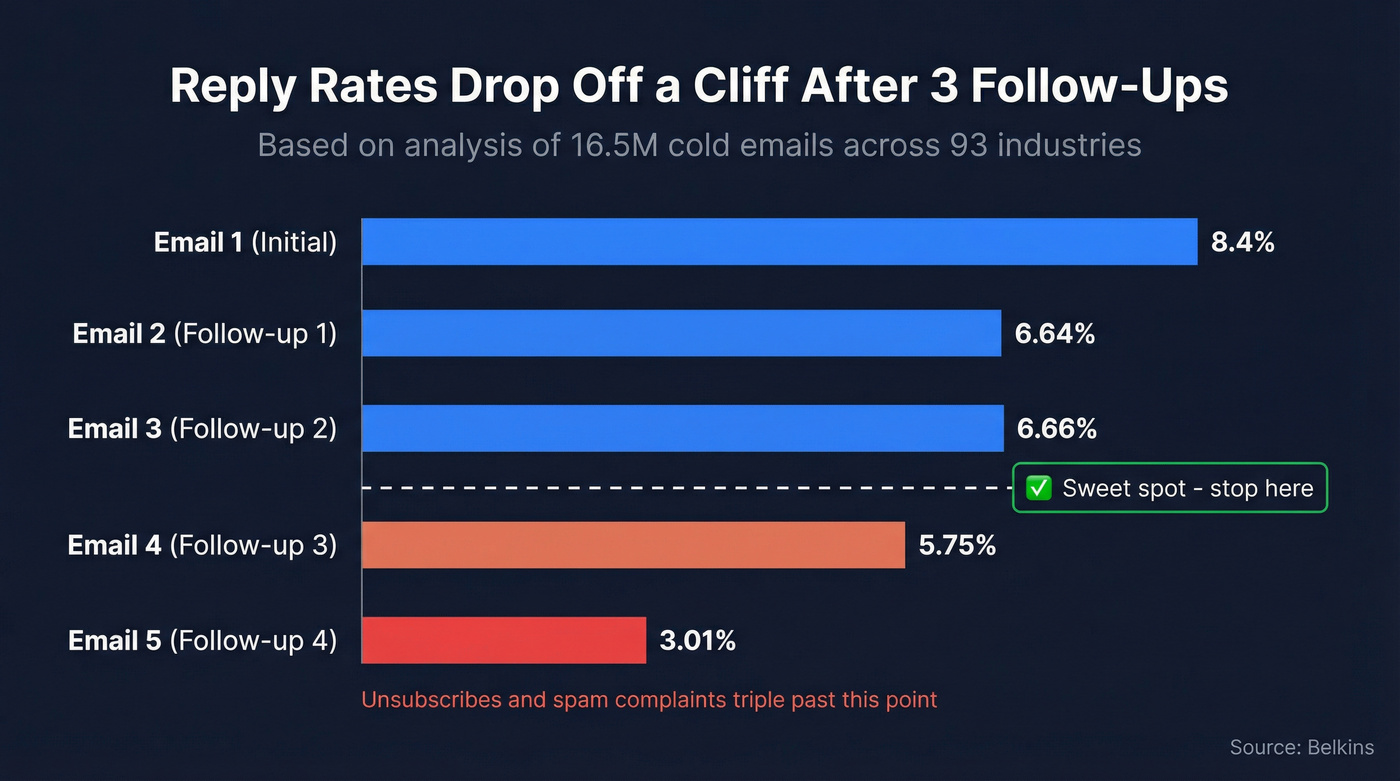
The dataset tells a clearer story: sending a 4th follow-up (5th email total) more than triples unsubscribe and spam complaint rates. Look at the founder segment - reply rates hold steady through the second follow-up (6.64% to 6.66% to 6.94%), then fall off a cliff at 5.75% and 3.01%. The practitioner stop rule on r/coldemail is consistent: 3 follow-ups, then recycle into a new campaign with a different angle. For context, a solid cold email reply rate sits around 5-6%; anything above 10% is strong.
Writing Your Follow-Up (Step by Step)
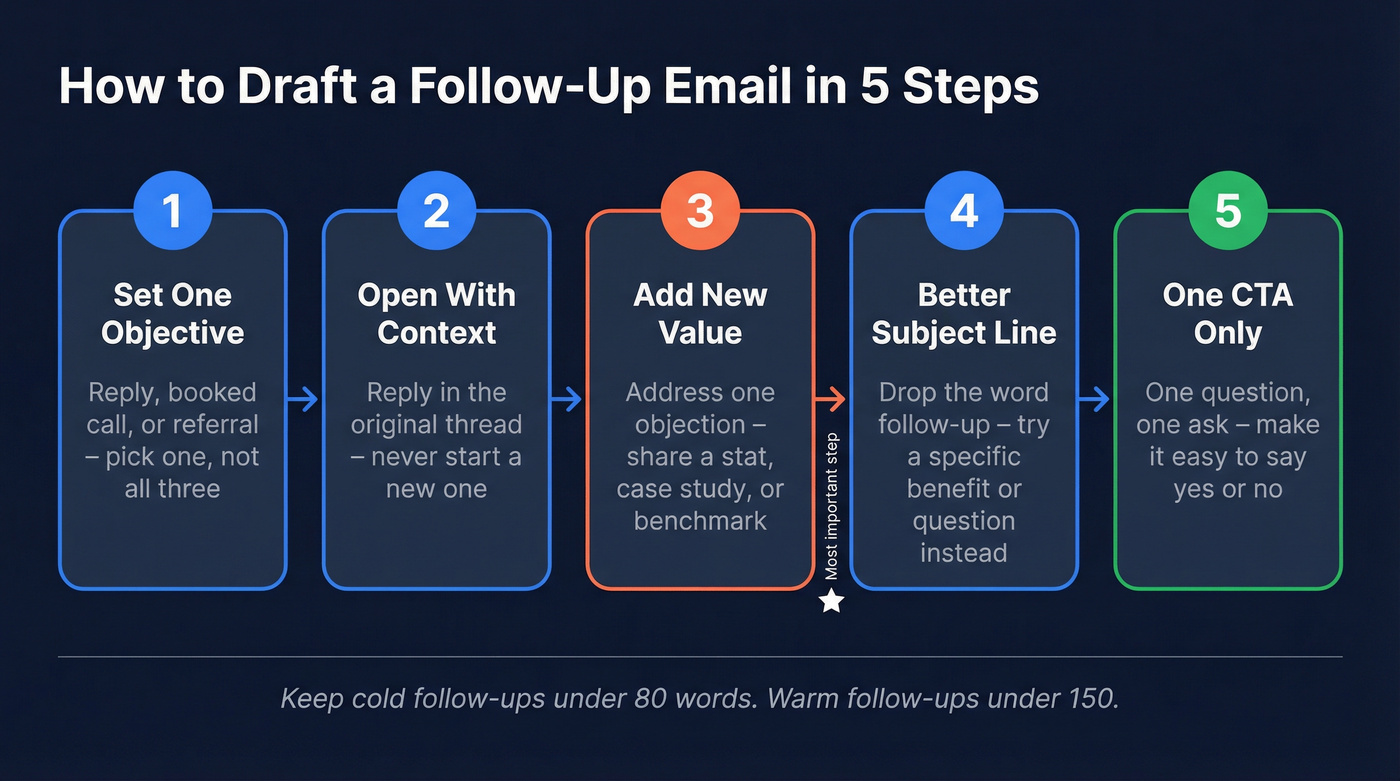
Step 1: Set One Objective
Every follow-up needs exactly one goal - a reply, a booked call, or a referral. Not all three. Decide before you write.
Step 2: Open With Context
Reply to your original thread. Don't start a new one. This gives the recipient instant context and signals you're a real person continuing a conversation, not a bot firing batch emails.
Step 3: Add New Value
This is where 90% of follow-ups fail. Instead of repeating your first email, address a specific reason the prospect hasn't responded. GMass breaks this into five objections: no need, cost concern, no urgency, distrust, or simply don't want it. Map one objection to each follow-up.
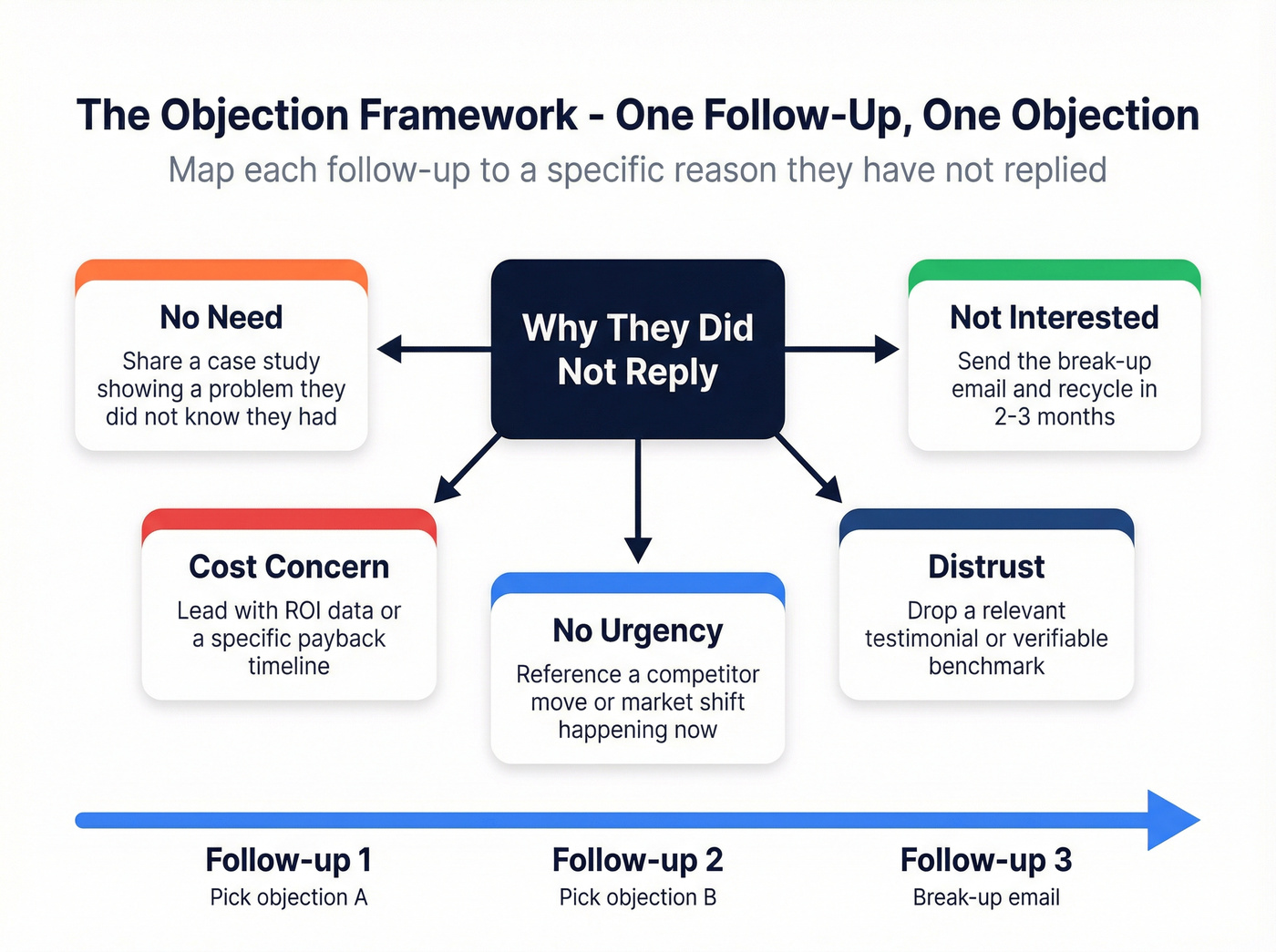
The reciprocity play works here - give something useful before you ask for anything. A relevant case study or benchmark makes the reply feel like a fair exchange, not a favor. We've tested this across dozens of outbound campaigns, and the pattern is remarkably consistent: the follow-up that shares a specific, relevant number outperforms the one that just restates the pitch.
Step 4: Write a Better Subject Line
Using "follow-up" in a subject line is one of the easiest ways to get ignored. NetHunt flags this as one of the most common mistakes. "Quick benchmark for [Company]" beats "Following Up" every time. If you're replying in-thread, the subject line is already set - but for standalone follow-ups, treat the subject line like a second first impression.
Step 5: Close With One CTA
One ask. "Would a 15-minute call on Thursday work?" is a CTA. "Let me know your thoughts, here's a case study, and feel free to book time on my calendar" is three CTAs pretending to be one.
For later follow-ups, give an easy out - "If this isn't a priority, no worries" reduces friction and often triggers replies. People are more willing to engage when they don't feel cornered.

You just read that a 5% bounce rate poisons your sender reputation for every follow-up after. Prospeo's 5-step email verification catches bad addresses before you hit send - 98% accuracy, refreshed every 7 days. Teams using Prospeo cut bounce rates from 35% to under 4%.
Fix your list before you fix your copy. Start free with 75 verified emails.
Follow-Up Email Templates
Twenty-two templates won't help if you don't understand why each one exists. Here are five that demonstrate the framework - use them as starting points when you need to draft a follow-up email quickly.
Cold outreach - addresses "no urgency" (send 2-3 days after initial email):
Hi [Name], I shared a quick idea about [specific problem] last week. Since then, [Company in their space] published results showing [relevant metric]. Worth a 10-minute call? - [You]
Post-meeting recap - reinforces trust (send same day or next morning):
[Name], great conversation today. Three takeaways: [1], [2], [3]. I'll send the proposal by [date]. You mentioned [pain point] - want me to include a section on that?
Post-interview thank-you - demonstrates fit (send within 24 hours):
Hi [Name], thanks for the conversation about the [Role] position. Your point about [specific challenge] stuck with me - at [Previous Company], I tackled something similar by [brief approach]. Looking forward to next steps.
Sales proposal follow-up - addresses cost concern (send 3-5 days after proposal):
[Name], one thing about the proposal: teams our size typically see [specific ROI metric] within [timeframe]. Happy to walk through the math. Does [day] work?
Break-up email - final touch (send 5-7 days after last follow-up):
Hi [Name], I've reached out a few times and don't want to be a pest. If [problem] isn't a priority right now, totally get it. I'll check back in a few months.
Skip the break-up email if you're following up on a warm intro or an inbound lead - it reads as passive-aggressive in those contexts. Save it for cold outreach only.
Mistakes That Kill Your Reply Rate
Kill these phrases: "Just bumping this up" - add a new data point instead. "Touching base" or "Circling back" - state why you're writing. "I hope this email finds you well" - skip the pleasantry, open with context.
We've seen teams tank their reply rates with one structural mistake more than any other: repeating the first email word-for-word. Other killers include adding more than one link (deliverability hit plus it looks like marketing) and writing more than 150 words in a cold follow-up. Let's be honest - if your follow-up is longer than the original email, something's gone wrong.
The consensus on r/coldemail is that plain text outperforms HTML for cold follow-ups. Tracking pixels convert your message to HTML and can trigger spam filters. Turn off open tracking. And verify your list before hitting send - a 5% bounce rate doesn't just lose those contacts, it poisons your sender reputation for every email after.
The Deliverability Fix Most Guides Skip
Your follow-ups can't work if they never reach the inbox. The #1 reason they don't? Bad data.
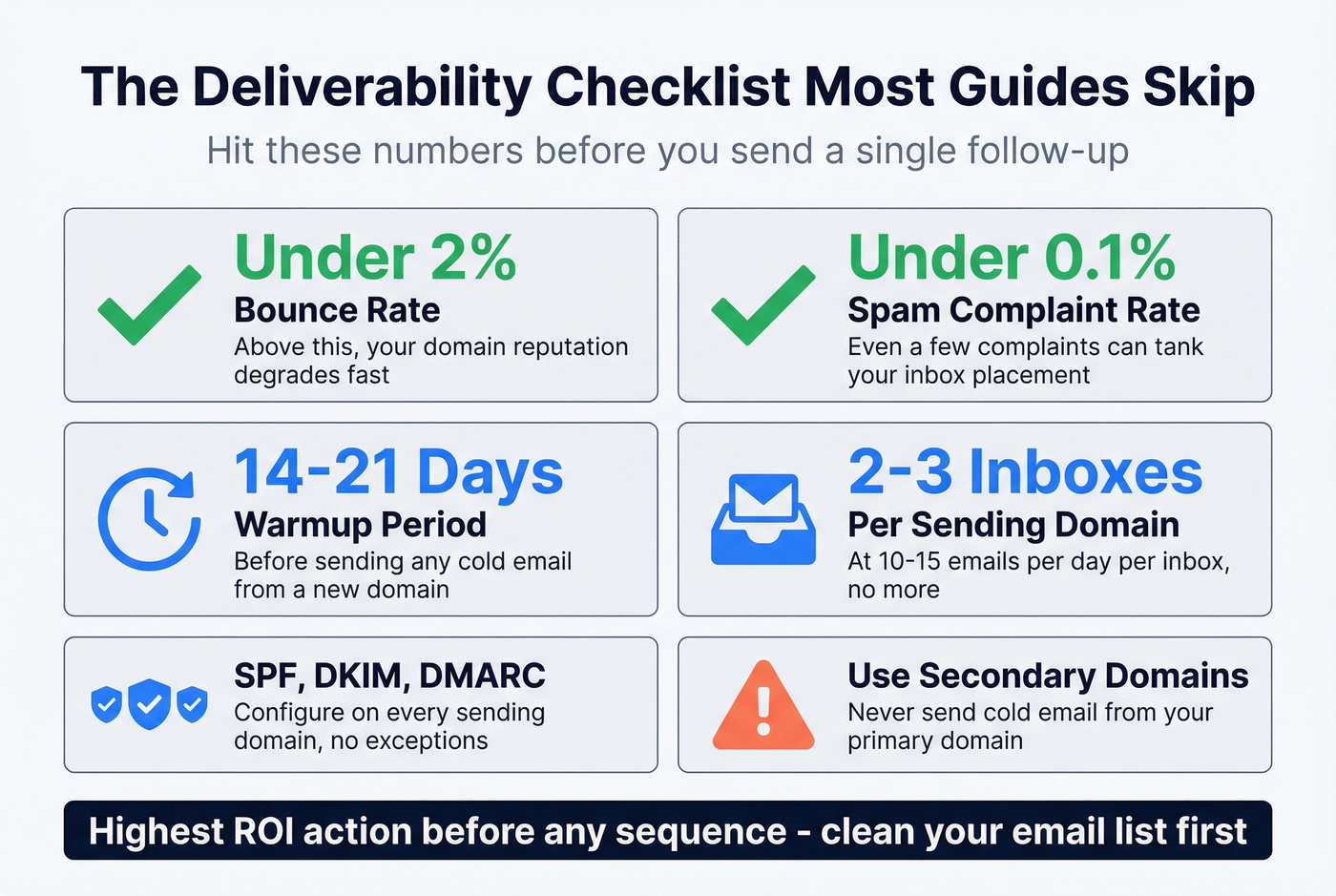
Here's the operational checklist:
- Bounce rate under 2%. Above that, your domain reputation degrades.
- Spam complaints under 0.1%.
- SPF, DKIM, and DMARC configured on every sending domain.
- Send from secondary domains, not your primary.
- Warm up 14-21 days before any cold email.
- 2-3 inboxes per domain at 10-15 emails/day per inbox.
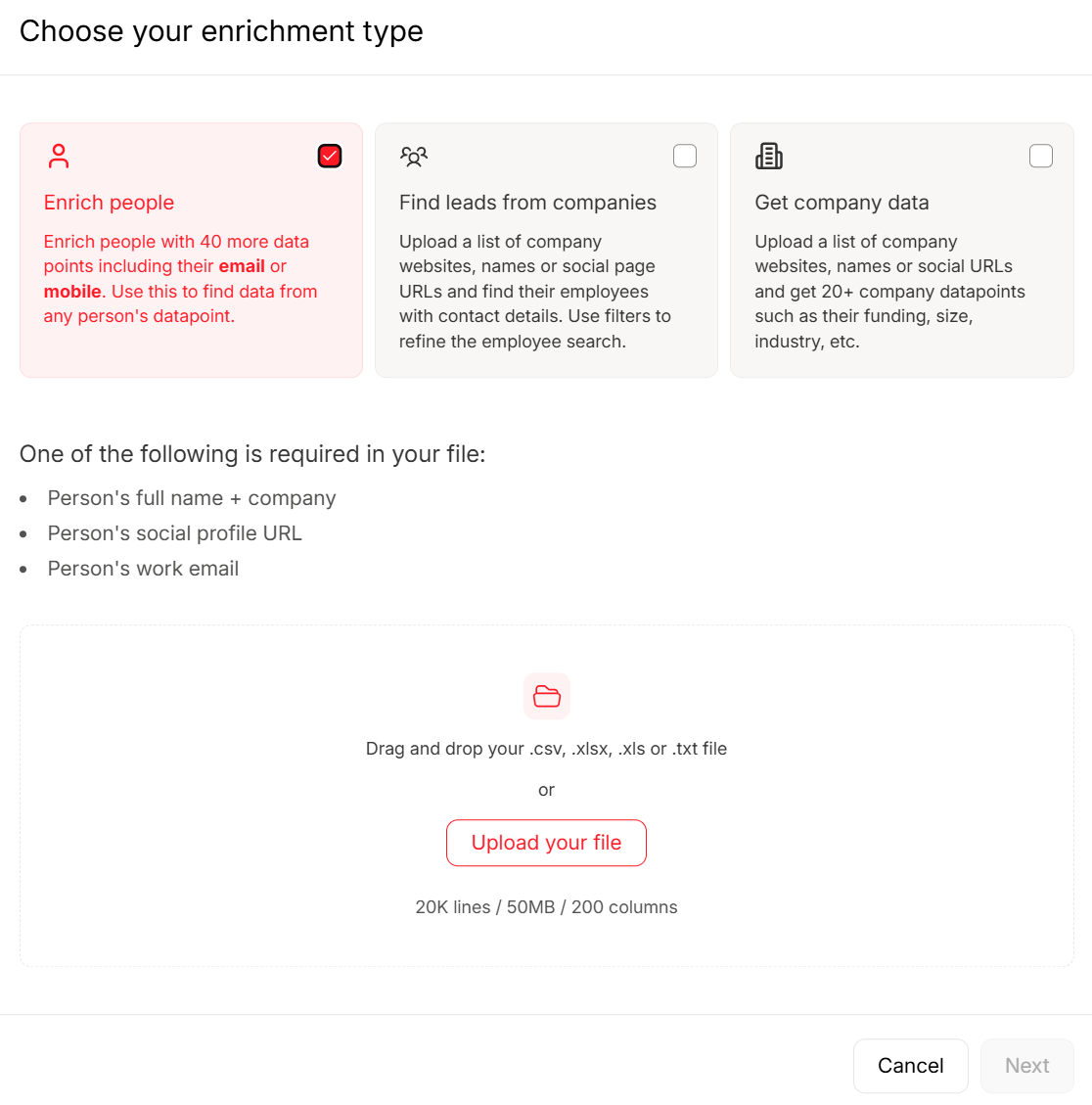
In our experience, the single highest-ROI action before launching a follow-up sequence isn't rewriting copy - it's cleaning your list. Prospeo's email verification runs a 5-step process including catch-all handling, spam-trap removal, and honeypot filtering, delivering 98% accuracy. Upload a CSV, verify in bulk, and export a clean list before your next sequence. The free tier gives you 75 verifications per month, enough to test the workflow without spending a dollar.
Hot take: If your average deal size is under $8k, you don't need better follow-up copy. You need a clean list and a shorter sequence. Most teams would double their reply rate by verifying emails and cutting from seven follow-ups to three - no copywriting course required.
The best follow-up framework means nothing if you're emailing outdated addresses. Most data providers refresh every 6 weeks - by then, your prospect has changed roles. Prospeo refreshes every 7 days across 300M+ profiles, so your follow-ups reach real people at current companies.
Stop following up with ghosts. Get emails that are accurate this week, not last month.
FAQ
How long should a follow-up email be?
Under 80 words for cold outreach, under 150 for warm. Shorter emails consistently outperform longer ones - every dataset we've reviewed confirms this, and anything over 150 words in a cold sequence sees measurable reply-rate drops.
What's the best day to send a follow-up?
Tuesday and Wednesday deliver the highest reply rates. Friday response rates drop by nearly half compared to midweek, and Monday inboxes are too crowded from weekend catch-up.
How do I know if my follow-ups are reaching the inbox?
Check your bounce rate. Above 2% means your domain reputation is degrading with every send. Run your list through a bulk verification tool before launching - remove invalid addresses, re-launch the sequence on a clean list, and watch the difference.