

How to Find Direct Phone Numbers That Actually Pick Up
You just ran 200 dials. Fourteen picked up. The rest? Voicemail, switchboards, disconnected lines, and one fax machine you didn't know still existed.
Your SDR team isn't underperforming - they're dialing bad data. 72% of cold calls never reach a human, and poor data quality costs businesses $12.9 million per year on average. The problem isn't cold calling itself. It's that most "verified" phone numbers in your CRM are anything but. Knowing how to find direct phone numbers - real ones, that ring a real person - is the single highest-leverage skill in outbound sales right now.
What follows: the actual methods for finding direct dials that connect, free tactics for small batches, paid tools with real pricing and accuracy benchmarks, and the data quality tricks that separate teams booking meetings from teams leaving voicemails.
What You Need (Quick Version)
Before you read 3,500 words, here's the shortcut:
10 numbers: Use the Google dorking method in Section 3. Free, surprisingly effective, about 15 minutes.
European direct dials specifically: Cognism Diamond. Phone-verified by humans, checked against 15+ DNC lists. Expensive, but the best EMEA coverage in the market.
A free all-in-one platform (with inconsistent phone data): Apollo's free tier gets you started. Just know the phone numbers skew toward switchboard lines and voicemail boxes.
Why Direct Dial Phone Numbers Change Everything
Cold calling success rates dropped to 2.3% in 2026. It now takes an average of 8 attempts to reach a prospect, up from 3.68 in 2007. At 209 calls per appointment, the math is brutal.
But those stats reflect the average caller dialing average data.
Direct dials change the equation completely.
A direct dial rings a specific person's desk or mobile phone. No receptionist. No "let me transfer you." No phone tree. Cognism's State of Cold Calling Report puts their cold calling success rate at 11.3% vs. the 2.7% industry average - and the biggest variable is phone-verified mobile numbers.
C-level executives are surprisingly reachable when you have the right number: 39% connect on the first call, 72% by the second. Direct dials connect 3-5x more often than calling a company's main line. When you're reaching the right person on the first ring, dials-to-conversation drops from 8+ attempts to as low as 1.55.
Local presence dialing amplifies this further: 27.5% answer rate for local area codes vs. 7% for toll-free numbers. That's nearly 4x improvement just from how the number appears on caller ID - and 94% of recipients believe unidentified calls are fraudulent, so recognizable caller ID matters more than ever. Stack that with a verified direct dial and you're in a different league than the rep dialing switchboard numbers from a stale list.
The ROI math is simple. If your team makes 200 calls per day on switchboard numbers at a 2.7% connect rate, that's ~5 conversations. The same 200 calls on verified direct dials at even a modest 10% connect rate? Twenty conversations. Four times the pipeline from the same effort.
82% of buyers accept meetings from proactive outreach. 49% prefer phone calls as first contact. The demand-side willingness is there. The bottleneck is reaching them.
Free Methods to Find Direct Phone Numbers for Sales
Paid tools make sense at scale. But if you need a handful of numbers - or you're validating whether cold calling works for your market before investing - these methods cost nothing but time.
Google Search Operators (The Dorking Method)
Google indexes more spreadsheets, directories, and contact lists than most people realize. The right search operators surface them in seconds.
Start with this pattern for finding decision-maker contact lists:
"company name" + ("vice president" OR director) + location -jobs
The -jobs exclusion filters out job postings, which dominate results otherwise.
For finding actual spreadsheets with phone numbers and emails:
"USA" + hospital + manager + (purchasing OR procurement) filetype:xls
This returns spreadsheets of hospital managers across the US - with phone numbers and emails included. I've seen this exact query pull usable contact data that would cost hundreds of dollars from a data vendor.
For targeting a specific company:
"general mills" + ("vice president" OR "director") inurl:list filetype:xlsx
This returned 72 decision makers including email and cell phone numbers in one search.
Use wildcards to discover titles you didn't think to search:
"vice president of * at IKEA"
Google fills in the blanks - VP of Supply Chain, VP of Sustainability, VP of Retail Operations - all from public pages.
For conference attendee lists (goldmine for direct dials):
Sydney + (cto OR cio OR ceo) inurl:attendee
The limitation: this works for maybe 10-20 lookups before the time investment exceeds what a paid tool would cost. But for targeted research on high-value accounts, it's unbeatable.
Email Signature Mining
Check your existing email exchanges. Many professionals include direct phone numbers - often mobile numbers - in their email signatures. This is the most overlooked free source because it's already sitting in your inbox.
Search your email for the prospect's company name plus "cell" or "mobile." You'd be surprised how often a colleague already has the number buried in a thread from six months ago.
Company Websites and About Pages
Small and mid-size businesses frequently list direct lines on their About, Team, or Contact pages. This is especially useful for local businesses, real estate firms, and SMB owners who want to be reached.
Check the leadership or team page first - founders and C-suite at companies under 50 employees often list their numbers publicly. Less effective for enterprise targets, where you'll hit a generic 1-800 number.
Social Media and Messaging App Verification
Facebook About sections and Instagram bios sometimes include phone numbers, particularly for founders, consultants, and small business owners.
Real talk: key decision-makers at mid-market and enterprise companies rarely leave phone numbers visible on social media. This method works best for SMB outreach and founder-led sales.
One underrated trick: once you've found a number through any method, plug it into WhatsApp. If a profile photo and name appear, the number is active and likely belongs to the right person. Telegram and Signal work similarly. It's the fastest free verification method available.
Public Directories and Google Maps
Whitepages, Yellow Pages, and Google Maps remain useful for finding small business owner phone numbers. Google Maps listings often include direct lines that bypass the main office number. These directories work best for owner-operators and local businesses - for B2B enterprise contacts, you'll need to move to paid tools.
Paid Tools to Find Direct Dial Phone Numbers
Free methods hit a wall around 20-30 lookups. After that, you need a tool - and the differences between them are bigger than most comparison articles admit.
Here's how the major players stack up on the metrics that actually matter for phone numbers:
| Tool | Phone Coverage | Pricing | Best For |
|---|---|---|---|
| Apollo.io | 30-60% | Free / $49-119/mo; included | Budget all-in-one |
| Cognism | 55-70% (Diamond) | ~$27,500/yr; ~$1-3/num | European markets |
| ZoomInfo | 60-75% | ~$15K-45K/yr; ~$0.80-1/num | US enterprise depth |
| Kaspr | 50-85% (varies) | Free / $49-79/mo; $0.28-0.50/num | EU Chrome users |
| Clay | 40-60% (waterfall) | ~$149/mo | Custom workflows |
| Seamless.AI | ~40-55% | ~$79-149/mo; ~$0.15-0.30/num | Volume dialers |
| UpLead | 50-65% | $99/mo; ~$0.58/num | Email + phone combo |
| LeadIQ | 45-60% | Free / $200/mo; $10/num | Salesforce SDRs |
| Lusha | 40-55% | ~$29-36/mo; ~$0.40-0.70/num | Quick lookups |
| RocketReach | 40-60% | $39/mo; ~$0.23/num | Starter teams |
Now let's break each one down.
Prospeo
Use this if: You're tired of paying for "verified" numbers that go straight to voicemail. You want the highest pickup rate in the market without signing an annual contract.
Skip this if: You need an all-in-one dialer suite - Prospeo is purpose-built for data accuracy and pairs with any sequencer.
Prospeo's Mobile Finder covers 125M+ verified mobile numbers with a 30% pickup rate - that's not a coverage stat, it's an actual connection rate. Behind the mobile finder is a 300M+ profile database with 5-step verification, the same infrastructure that delivers 98% email accuracy. Every number runs through a 7-day refresh cycle, which matters because B2B data decays 2.1% per month. Most competitors refresh every 4-6 weeks.
At ~$0.10 per number (10 credits), the unit economics crush everything else on this list. Meritt, a Prospeo customer, tripled their connect rate to 20-25% after switching - their bounce rate dropped from 35% to under 4%.
The free tier gives you 75 emails and 100 credits per month. No credit card, no sales call, no contract. That's enough to test whether the data quality difference is real for your ICP before committing a dollar.
Apollo.io
Use this if: You're budget-constrained, need an all-in-one platform, and can live with phone data that's hit-or-miss.
Skip this if: Phone connect rates are your primary KPI.
Apollo earned its 4.7/5 G2 rating across 9,250 reviews - as a prospecting and email platform, not a phone data source. The 275M+ contact database, built-in sequencing, and generous free tier make it the obvious starting point for most SMB teams.
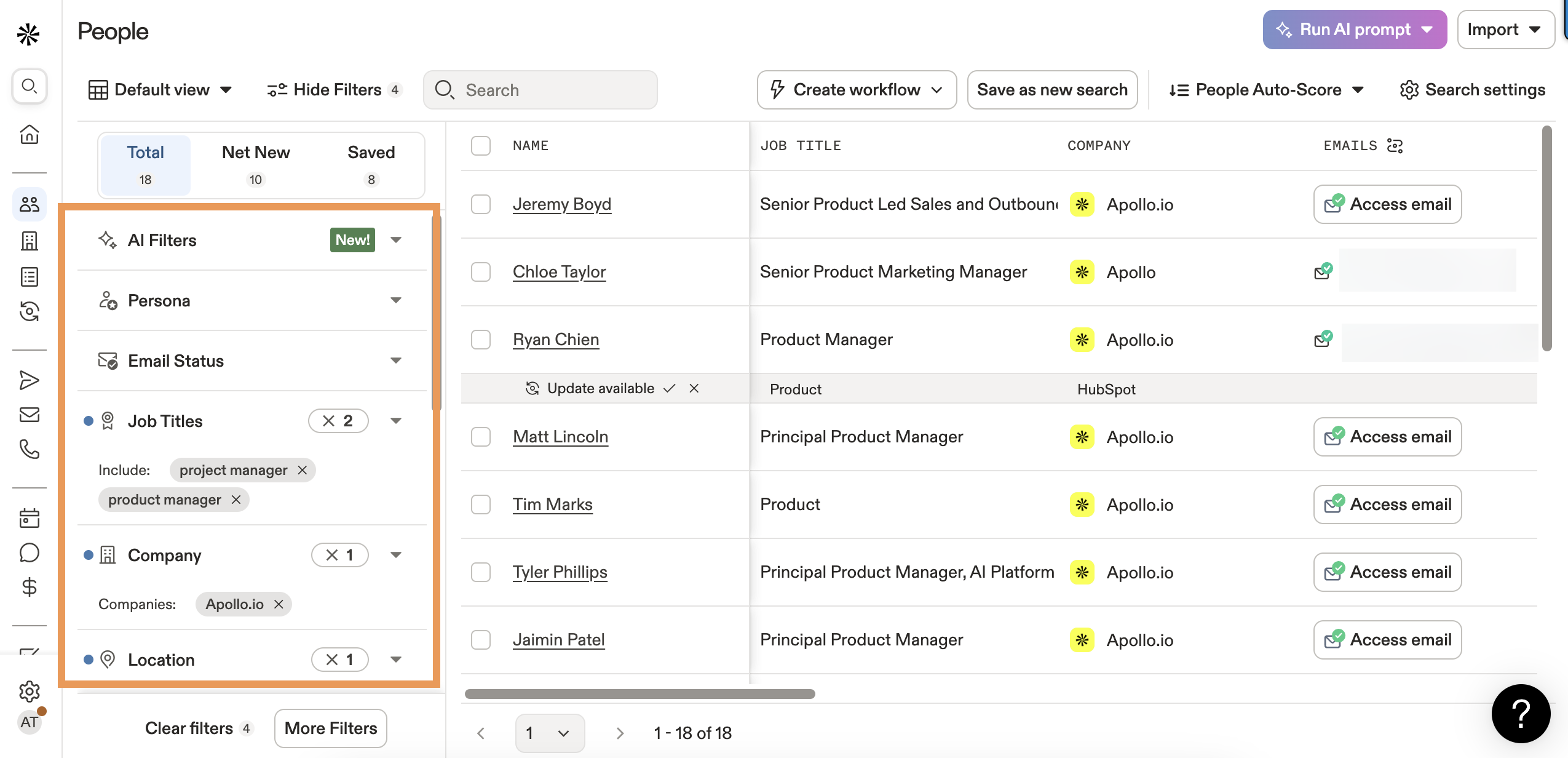
But phone numbers are the weakest part of an otherwise strong platform. Independent tests show 30-60% phone coverage, and the numbers you do get skew toward switchboard lines. One Reddit user in r/LeadGeneration put it bluntly: the numbers "end up being voicemail lines or generic front-desk numbers." Apollo touts 91% email accuracy, but real-world bounce rates run 15-35% in independent testing.
Pricing is transparent: free tier, then $49/mo (Basic), $79/mo (Professional), or $119/mo (Organization, minimum 3 users). Phone numbers are included in your credits - no per-number surcharge. Genuinely good value if you're primarily an email-first team that occasionally dials.
Cognism - The EMEA Gold Standard
Use this if: You're selling into European markets and need phone-verified mobile numbers that are actually GDPR compliant.
Skip this if: Your entire TAM is North America and you're watching your budget.
Cognism's Diamond Data is the gold standard for European direct dials. They phone-verify mobile numbers with actual humans - not AI pattern matching, not database scraping. A person calls the number and confirms it reaches the right contact. They also screen against 15+ Do-Not-Call lists, which matters enormously if you're dialing in the UK, Germany, or France.
The 4.5/5 G2 rating (1,200 reviews) reflects genuine satisfaction from EMEA-focused teams. Phone coverage runs 55-70% with Diamond Data, and Cognism's own report shows an 11.3% cold calling success rate vs. the 2.7% industry average. Where Cognism wins over ZoomInfo: EMEA compliance and mobile verification. Where ZoomInfo still wins: US database depth and total phone volume.
Diamond pricing starts at ~$27,500/year ($25K platform fee + $2,500/user), plus $3,000-$8,000 in setup fees. Annual contracts only. You can negotiate 15-35% discounts with proper timing, but this is still a serious investment.
ZoomInfo - The Enterprise Tax
ZoomInfo's 135M+ verified phone numbers and 60-75% phone coverage make it the largest phone database in B2B. For US-focused enterprise teams, the depth is unmatched.
But here's my frustration with ZoomInfo: most teams don't need it. If your average deal size is under $25K or your team is under 20 reps, you're paying for a Ferrari to drive to the grocery store. The #1 complaint on Reddit isn't the data - it's the price. And specifically, paying for modules you don't use.
Professional plans start at $15,000-$18,000/year. Advanced runs $22,000-$28,000. Elite hits $35,000-$45,000+. Annual contracts only, and renewals routinely increase 10-20%. One r/sales_intelligence user described the renewal quote as "making my eyes water."
The data is good. The value equation only works at scale.
Kaspr
Kaspr's 90% accuracy on European contacts is its headline stat - and it's real, based on user reports. For US data, accuracy drops significantly, so know your market before committing.
The free tier (5 phone credits/month) lets you test before paying. Starter runs $49/mo for 100 phone credits, Business is $79/mo for 200. Add-on credits cost $0.28-$0.36 each.
Clay
Clay's 4.8/5 G2 rating - the highest on this list - tells you something. Technical RevOps teams love it because its waterfall enrichment queries 75-100+ data providers sequentially. If Provider A doesn't have the number, it automatically tries Provider B, then C. Starting at ~$149/mo, it's not cheap, but the coverage you get by combining sources often beats any single provider.
The tradeoff: Clay has a real learning curve. If you want a simple "search and export" experience, look elsewhere.
The Rest (Quick Takes)
Seamless.AI runs ~$79-149/mo depending on the plan (they hide pricing behind "Contact sales," which tells you everything about their sales culture). Phone accuracy sits around 60% per user reports, and credits burn through faster than expected at 50 lookups/day.
UpLead starts at $99/mo for 170 credits with a 95% email accuracy guarantee and real-time verification. Phone coverage runs 50-65%. Solid mid-market option if you value email accuracy and want phones as a bonus.
LeadIQ charges 10 credits per phone number. At the Pro plan's $200/mo for 200 credits, that's $10 per phone number. For phone-heavy workflows, the math is punishing.
Lusha Pro runs ~$29-36/mo, making it one of the cheapest entry points. But 40-55% phone coverage and frequent reports of phone numbers simply missing from results mean you're getting what you pay for.
RocketReach starts at $39/mo with 40-60% phone coverage. A decent starter tool for teams that need basic contact data across email and phone without committing to an enterprise platform.
The Credit Trap - What Phone Numbers Actually Cost
The sticker price on a data tool's pricing page tells you almost nothing about what phone numbers actually cost per dial. Credit systems vary wildly, and the gotchas are where vendors make their real money.
Here's what you're actually paying per phone number:
| Tool | ~Cost Per Number | How It Works |
|---|---|---|
| Apollo.io | Included | Bundled in plan, but 30-60% coverage |
| RocketReach | ~$0.23 | Per-lookup credit |
| Kaspr | $0.28-$0.50 | Per-credit pricing, add-ons available |
| BetterContact | ~$0.40 | Waterfall across 20+ sources |
| UpLead | ~$0.58 | 1 credit = 1 contact (email + phone) |
| ZoomInfo | ~$0.80-$1.00 | Bulk credits, top-ups extra |
| Cognism | ~$1-$3 | Unlimited exports, but high platform fee |
| LeadIQ | $10.00 | 10 credits per phone number |
LeadIQ's 10-credit-per-phone structure is the most egregious example. At the base Pro rate, you're paying $10 for a single phone number. Credits don't roll over month-to-month. If you're building call lists of 500+ contacts, that's $5,000/month just for phone data.
Credit overages are a real line item that teams routinely underestimate. We've seen teams double their expected spend once they scale outreach past the initial plan limits. The vendors know this - it's why the entry price looks reasonable.
The Waterfall Approach - Why Single-Source Tools Fail
CRM data decays 30-40% per year. People change jobs, get new phone numbers, switch companies. A single-source tool - no matter how large its database - has coverage gaps that compound over time.
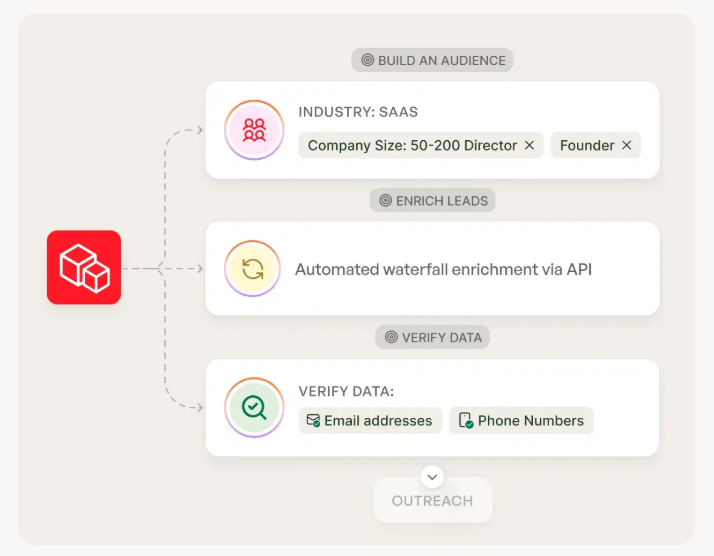
The waterfall approach solves this by querying multiple data providers sequentially. If Provider A doesn't have a number for your prospect, the system automatically tries Provider B, then C, then D. Each provider has different strengths - one might excel at US tech companies, another at European manufacturing.
Tools that offer waterfall enrichment:
- Clay queries 75-100+ providers and lets you build custom enrichment logic. The most flexible option, but requires technical setup.
- BetterContact runs waterfall across 20+ sources with a simpler interface. They tested mobile numbers across 100,000 enrichments to identify the best vendor combinations.
I've run head-to-head tests where the "best database" lost because a single-source tool simply didn't have coverage for a specific industry vertical. The team using waterfall enrichment found 40% more valid numbers from the same prospect list.
Single-source is a single point of failure.
Compliance - What You Need to Know Before You Dial
Finding the number is step one. Dialing it legally is step two - and the penalties for getting this wrong are severe enough to sink a startup.
TCPA (United States): $500-$1,500 per unsolicited call. Major settlements reach tens of millions. You must call between 8am-9pm local time, honor opt-outs within 10 business days, and maintain suppression lists for 4+ years. The National DNC Registry applies to B2B calls - this surprises a lot of teams.
GDPR (Europe): B2B cold calling can rely on "legitimate interest," but you must conduct a Legitimate Interest Assessment before dialing. This isn't optional paperwork - it's a legal requirement. Italy fined TIM EUR27.8 million for unsolicited calls. France hit Futura Internationale with a EUR500,000 penalty.
CCPA (California): The B2B exemption expired January 1, 2023. Business contacts now have the same opt-out rights as consumers. Fines run up to $2,663 per unintentional violation and $7,988 per intentional one.
UK PECR: The UK fined a company GBP100,000 for making 614,342 unsolicited calls to TPS-registered numbers.
Your compliance checklist:
- Screen every list against the National DNC Registry before dialing
- Check state-level DNC lists (many states maintain their own)
- Call only during permitted hours (8am-9pm recipient's local time)
- Honor opt-outs within 10 business days
- Maintain suppression lists for 4+ years minimum
- For EMEA: conduct a Legitimate Interest Assessment and document it
- Use a tool with built-in DNC screening (Cognism checks 15+ lists automatically)
Which Method Is Right for You?
The best approach depends on your team size, budget, and target market:
| Scenario | Recommended Approach | Monthly Cost |
|---|---|---|
| Enterprise, 20+ reps | ZoomInfo or Cognism | $15K-$45K+/yr |
| European market focus | Cognism Diamond or Kaspr | $49/mo - $27.5K/yr |
| Budget under $100/mo | Apollo free + Kaspr Starter | $0-$49/mo |
| Custom waterfall workflows | Clay + enrichment sources | $149+/mo |
For most teams between 5 and 20 reps doing outbound in North America, Prospeo hits the sweet spot: verified mobiles at $0.10/number, 30% pickup rate, no annual contract, and a free tier to validate the data against your ICP before spending anything.
If you're selling into EMEA and compliance is non-negotiable, Cognism Diamond is worth the premium. If you're a technical team that wants maximum control, Clay's waterfall approach gives you the most flexibility.
No single tool wins every use case. But in our experience, the pattern is clear: the teams that obsess over data quality, not database size, are the ones booking meetings from cold calls.

Stop paying for bounced emails. Run your bake-off exports through Prospeo and only send to verified contacts. You can start free (no credit card, no contracts), and pricing stays predictable at about ~$0.01/email.
FAQ
What's the difference between a direct dial and a switchboard number?
A direct dial rings a specific person's desk or mobile without routing through a receptionist or phone tree, connecting 3-5x more often than switchboard numbers. For cold calling, that's the difference between 5 conversations per day and 20 from the same dial volume.
How accurate are B2B phone number tools in 2026?
Independent tests show phone coverage ranges from 30% to 85% depending on provider and region. B2B data decays 2.1% per month, so accuracy hinges on refresh frequency. Prospeo refreshes every 7 days; most competitors refresh every 4-6 weeks, which explains why "verified" numbers go stale fast.
Can I find direct dial phone numbers for free?
Yes, for small volumes - Google search operators, email signatures, company websites, and public directories work for 10-20 lookups. Beyond that, the time cost exceeds what a paid tool charges. Prospeo's free tier (75 emails + 100 credits/month, no credit card) bridges the gap before you commit to a paid plan.
Is it legal to cold call using direct dial numbers?
In most jurisdictions, yes - with conditions. You must screen against Do-Not-Call lists, call during permitted hours (8am-9pm local), and honor opt-outs. TCPA violations carry $500-$1,500 fines per call. GDPR requires a documented Legitimate Interest Assessment for B2B calls in Europe.
How many calls does it take to reach a prospect?
The current average is 8 attempts per prospect, up from 3.68 in 2007. With verified direct dials, some teams report dropping to 1-2 dials per conversation. The quality of your phone data is the single biggest variable - not your script, not your timing, not your dialer.